
Blank RFID Media
UHF RFID Blank Label
Print-and-Encode Roll

Quick answer
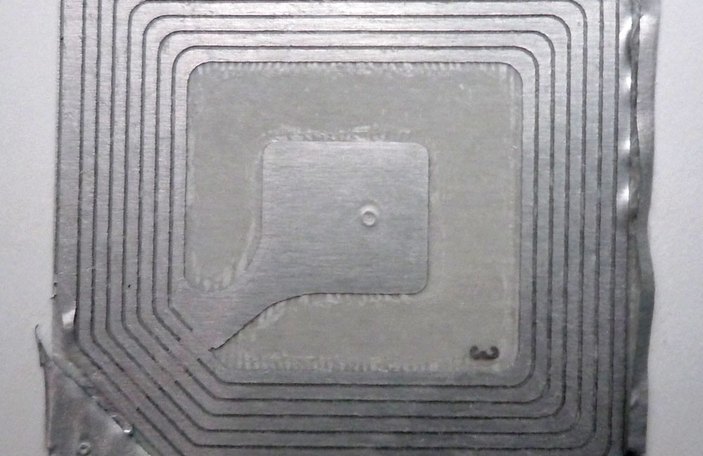
UHF RFID blank labels are pre-made rolls with embedded UHF inlays and a blank printable face, matched to your printer for 99.5%+ encode yield. The inlay X-offset sits in your printer's antenna sweet spot, versus 85-92% first-pass yield with generic placement. Five stock sizes (4×6, 4×4, 4×2, 3×1, 2×1 in) ship in 3-5 business days from MOQ 1 roll, SGTIN-96 / SSCC-96 / GIAI-96 EPC encoded via ZPL ^RF, NiceLabel, BarTender, CODESOFT and Loftware.
- Ready to print — load the roll, design your label in ZPL or NiceLabel, and print-and-encode in a single pass on your existing Zebra / SATO / Printronix RFID printer.
- Stock sizes — 4×6, 4×4, 4×2, 3×1 and 2×1 inch labels available for fast 3-5 business day shipment from MOQ 1 roll (500-2,000 labels per roll size-dependent).
- Compatible with all major RFID label printers — Zebra ZT400 / ZT600 series, SATO CL4NX Plus, Printronix T6000, TSC and Honeywell. Inlay X-offset matched to your printer for 99.5%+ first-pass encode yield.
Used in these industries
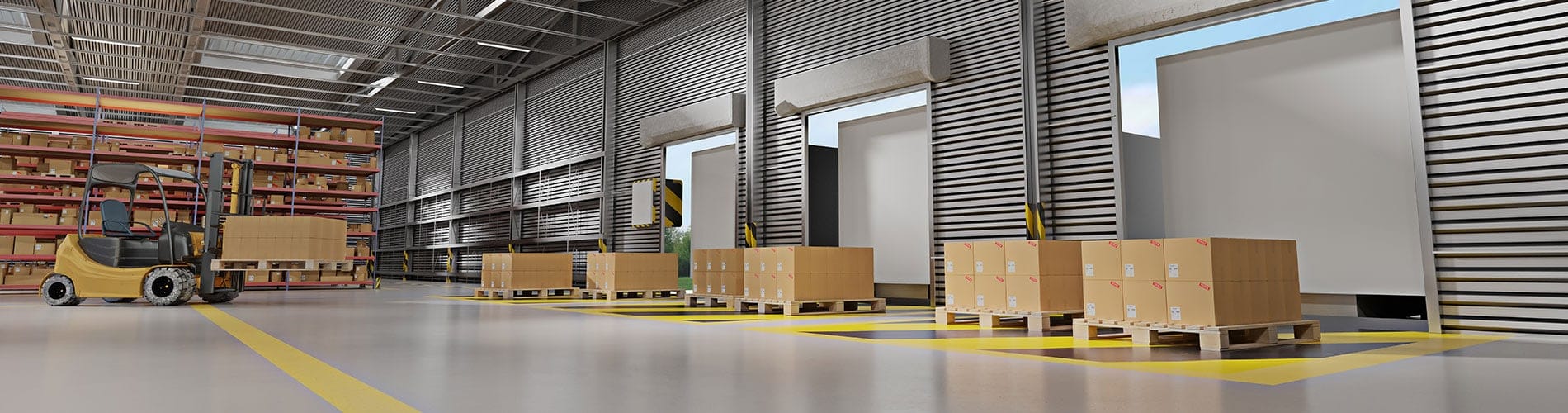
Deployments where this product is referenced on our industry landing pages.

At a glance
Use these short answers to decide whether this page matches the project before moving into the detail.
Frequency + chip silicon
UHF 860-960 MHz RAIN per ISO/IEC 18000-63:2015 Impinj M730 (Monza R6) — entry-tier high-volume default
Stock label sizes (5 SKUs)
4×6 in (100×150 mm) — shipping / pallet labels (M750 96 mm), 500/roll 4×4 in (100×100 mm) — carton labels (M730 70 mm), 1,000/roll
Next step
Ready to move forward? Start your inquiry to get specific answers for this project.
Request blank RFID label quote- Face stock — direct thermal vs thermal transfer
-
- Direct thermal — no ribbon needed, 3-12 month print fade
- Thermal transfer — wax / wax-resin / resin ribbon, years of durability
- Synthetic PP / PET — moisture + chemical resistance
- Coated paper — premium glossy / matte finish
- FSC-certified — sustainability programme compliant
- Adhesive options
-
- Acrylic permanent — general-purpose smooth surfaces
- Cold-chain (−30 °C to +60 °C) — refrigerated / frozen storage
- Aggressive permanent — corrugated + wood + textured
- Removable / repositionable — temporary application
- FDA 21 CFR 175.105 indirect-food-contact PSA
- RFID printer compatibility matrix
-
- Zebra ZT411 RFID + ZT421 RFID — most popular mid-range
- Zebra ZT610 RFID + ZT620 RFID — high-speed industrial
- SATO CL4NX Plus RFID — intelligent media handling
- Printronix T6000 RFID — high-volume DC
- TSC MB240T RFID — desktop / bench compact
- Honeywell + cab + Datamax + Toshiba RFID printers
- Inlay X-offset matrix (printer write zone)
-
- Zebra ZT411 / ZT421: 20-40 mm from leading edge
- SATO CL4NX Plus: 15-35 mm from leading edge
- Printronix T6000: 25-45 mm from leading edge
- TSC MB240T: 10-30 mm from leading edge
- Mismatched X-offset: 8-15% void-rate at scale
- Per-printer-model matched inlay = 99.5%+ first-pass encode yield
- ZPL ^RF + NiceLabel RFID Designer encoding
-
- ZPL ^RFW,h,E,12,1^FDH,serialHexData^FS — write 96-bit EPC
- Header byte 0x30 + filter + partition + GS1 Company Prefix + item ref + 38-bit serial
- NiceLabel RFID Designer GUI wizard for SGTIN-96 / SSCC-96 / GRAI / GIAI
- BarTender + CODESOFT + Loftware equivalent RFID wizards
- SAP / Oracle / REST API hooks for ERP-managed serial pools
- EPC encoding standards
-
- GS1 SGTIN-96 — serialised GTIN per GS1 EPC TDS 2.0
- GS1 SSCC-96 — Serial Shipping Container Code
- GS1 GRAI-96 — Global Returnable Asset Identifier
- GS1 GIAI-96 — Global Individual Asset Identifier
- GS1 Digital Link URI for Sunrise 2027 alignment
- Custom EPC for closed-loop supply chains
- Auburn ARC certification matrix
-
- Category A — apparel / on-body free air (4×2 / 3×1 in)
- Category B — CPG in corrugated (4×4 in M730)
- Category C — mixed case in freight (4×6 in M750)
- Category D / D1 — high-density dense-pack (4×6 in M750)
- Walmart T2/T3 + Target + Macy's + Kroger mandate alignment
- ARC test report per chip + label-size combo on request
- Procurement + lead time
-
- MOQ 1 roll (500-2,000 labels size-dependent)
- Lead time 3-5 business days for stock items
- Custom MOQ 5,000 with 12-15 business-day lead time
- Per-printer-model inlay X-offset optimisation at quote
- Test roll for printer + workflow validation before bulk
- Chip-comparison matrix included with every quote
- Print + encode workflow
-
- Step 1: Load blank RFID label roll into RFID-enabled thermal printer
- Step 2: Design label layout in ZebraDesigner / NiceLabel / BarTender / CODESOFT
- Step 3: Map EPC data field to barcode or database record
- Step 4: Print + encode in single pass at printer speed
- Step 5: Apply printed RFID label to product / carton / pallet / asset
- Failed-encode auto-void with 'X' overprint + retry on next label
- Standards + compliance
-
- ISO/IEC 18000-63:2015 EPC Gen2v2 RAIN RFID
- GS1 EPC TDS 2.0 + Digital Link URI 1.3
- FCC Part 15.247 (US) + ETSI EN 302 208 (EU)
- Auburn ARC Categories A/B/C/D/D1
- GS1 Sunrise 2027 + EU ESPR 2024/1781 forward-compat
- RoHS / REACH compliant materials
Commercial terms
- MOQ
- Varies by SKU — stock items from 100 pcs; custom production typically 200-1,000 pcs
- Lead time
- Production 2-3 weeks after artwork and encoding sign-off; reorders on a 3-4 week cycle
- Samples
- Free samples and RF test report with every order; courier at customer cost
- Payment
- 50% T/T deposit, 50% before shipment; Net 30/60 for established accounts; LC for large orders
- Shipping
- FOB Shenzhen / Yantian; DHL, FedEx or EMS air freight; sea LCL / FCL for volume
- Response
- Itemized quote within one business day, Mon-Fri (UTC+8)
Challenges operations teams face when sourcing RFID label media
- Pre-printed RFID labels require a minimum order of 10,000-50,000 pieces and a 3-6 week lead time — unsuitable for operations that need to label multiple SKUs in varying quantities on a daily basis.
- Sourcing RFID labels from generic office-supply distributors often results in inlay placement mismatched to the printer's RFID antenna position, causing encoding failure rates above 5% and wasted labels at scale.
- Organisations running Zebra ZT411 or ZT421 printers frequently order standard labels only to discover the inlay sits outside the printer's write zone — resulting in failed encoding and a costly re-order of correctly positioned media.
- Direct-thermal RFID labels selected for outdoor asset labels fade within 90 days of sun exposure; procurement teams must re-specify to thermal-transfer media, delaying rollouts by weeks.
- Buying pre-encoded labels for seasonal promotions or short-lived SKUs ties up budget in large label runs that become obsolete when product lines change. Print-on-demand with blank RFID media eliminates this waste.
How Proud Tek UHF RFID blank labels eliminate media sourcing and encoding problems
Generic office-supply RFID label media — guess inlay position + wrong adhesive
- Generic inlay placement → 4.2% encode void rate at Zebra ZT421 = USD 1,800/mo loss
- Pre-printed MOQ 10,000-50,000 + 3-6 week lead = obsolete on SKU change
- Direct thermal selected for outdoor asset → print fade at 90 days
- Cold-chain corrugated peeling 20% in 48 hours (wrong adhesive)
- No chip-option guidance → arbitrary M730 vs M750 vs UCODE 9 choice
Proud Tek X-offset matched + DT/TT recommended + 1-roll MOQ (this page)
- Per-printer X-offset matched (Zebra 20-40mm / SATO 15-35mm / Printronix 25-45mm)
- MOQ 1 roll + 3-5 day lead-time = same-week start
- Direct thermal vs thermal transfer recommended in writing per use-case
- Cold-chain (−30 to +60 °C) PSA standard option, no upcharge
- Chip-comparison matrix per quote (sensitivity + memory + reader compat)
- Inlay placement is optimised for your specific printer model at the time of order. Specify your Zebra, SATO or Printronix model and we position the inlay in the exact write zone, achieving 99.5%+ first-pass encoding yield.
- Stock sizes (4×6, 4×4, 4×2, 3×1, 2×1 inch) ship in 3-5 business days from inventory, enabling same-week start of print operations without waiting for a custom label run.
- Direct thermal and thermal transfer face stocks are both available. Direct thermal for short-life shipping labels, thermal transfer (with resin ribbon) for durable asset and compliance labels that last for years.
- Compatible with all major label design platforms (ZebraDesigner, NiceLabel, BarTender, CODESOFT). No new software investment required; the blank media loads into your existing design and printing workflow.
- Minimum order from one roll (500 labels for 4×6 size) means operations can test media with their printer and workflow before committing to a larger inventory, with zero up-front risk.
Per-tap data published from a Proud Tek UHF RFID blank label
- X-offset measured from leading edge to inlay antenna centre.
- Per-printer write-zone window: 10-45 mm range across major RFID printers.
- Mismatched: chip not coupled to printer RFID field → label voided.
- Auto-void retry: printer overprints 'X' + advances + retries next label.
- Matched: 99.5%+ first-pass encode yield (vs 85-92% generic placement).
Print and encode workflow
- Step 1Step 1 — load the blank RFID label roll into your RFID-enabled thermal printer.
- Step 2Step 2 — design your label layout in your label software (ZebraDesigner, NiceLabel, BarTender, CODESOFT).
- Step 3Step 3 — map the EPC data field to your barcode or database record.
- Step 4Step 4 — print: the printer simultaneously prints the visual content and encodes the EPC data on each label.
- Step 5Step 5 — apply the printed RFID label to your product, carton, pallet or asset.
- Step 6The entire process happens at printer speed — no separate encoding step required.
Stock label sizes
| Size | Inlay | Labels/roll | Face stock | Application |
|---|---|---|---|---|
| 4×6 in | Impinj M750 (96 mm) | 500 | Direct thermal | Shipping labels |
| 4×6 in | Impinj M750 (96 mm) | 500 | Thermal transfer | Shipping labels (durable) |
| 4×4 in | Impinj M730 (70 mm) | 1,000 | Direct thermal | Carton labels |
| 4×2 in | Impinj M730 (50 mm) | 2,000 | Thermal transfer | Product labels |
| 3×1 in | NXP UCODE 8 (27 mm) | 2,000 | Thermal transfer | Item labels, jewelry |
Direct thermal vs thermal transfer
| Feature | Direct thermal | Thermal transfer |
|---|---|---|
| Ribbon required | No | Yes (wax, wax-resin or resin) |
| Print durability | 3-12 months | Years (resin ribbon) |
| Heat sensitivity | Print darkens in heat / sunlight | Stable in all conditions |
| Cost per label | Lower (no ribbon cost) | Higher (ribbon cost) |
| Best for | Shipping labels, short-life applications | Asset labels, product ID, compliance labels |
UHF RFID blank label timeline — from generic office-supply media to X-offset matched + Sunrise 2027
- 2005 — Walmart RFID supplier mandate + Zebra R-PAX RFID printer
Walmart RFID supplier mandate launches; Zebra R-PAX (R110Xi) introduces first major industrial RFID thermal printer. Establishes print-and-encode workflow as industry pattern.
- 2014-2018 — ZPL ^RF command + Auburn ARC + ISO/IEC 18000-63:2015
ZPL ^RF command syntax + Auburn ARC certification matures across categories. ISO/IEC 18000-63:2015 EPC Gen2v2 ratified. GS1 EPC TDS 2.0 publishes SGTIN-96 / SSCC-96 / GIAI / GRAI binary encoding.
- 2015 — RAIN Alliance founded
RAIN Alliance founded — UHF RFID industry consortium. Standardises Auburn ARC certification + retailer-mandate test methodology + best-practice encode-yield benchmarking.
- 2018-2020 — Zebra ZT411 RFID + SATO CL4NX Plus + Printronix T6000
Mid-range industrial RFID printers (Zebra ZT411, SATO CL4NX Plus, Printronix T6000) reach print-and-encode reliability + cost-parity with non-RFID printers. Inlay X-offset matching becomes standard procurement requirement.
- 2020-2022 — NiceLabel RFID Designer + BarTender RFID wizard
NiceLabel + BarTender + CODESOFT + Loftware ratify RFID-encoding GUI wizards for SGTIN-96 / SSCC-96 / GIAI / GRAI. ERP-managed serial pool integration via SAP + Oracle + REST API.
- 2020 — GS1 Sunrise 2027 + 2-D-at-POS migration target
GS1 announces Sunrise 2027 — global retail industry migration target for 2-D barcodes (GS1 DataMatrix + GS1 QR Digital Link) coexisting with UPC / EAN at POS by 2027. Triple-identifier print-and-encode becomes default.
- 2024 — EU ESPR 2024/1781 DPP + GS1 Digital Link forward-compat
EU ESPR 2024/1781 DPP framework + textile / battery / electronics phased rollout 2027-2030. Blank RFID label rolls pre-encoded with GS1 Digital Link URI become DPP carrier-ready.
- 2026 — Today: UHF RFID blank label standard print-and-encode practice
Operating notes from retail-supplier-mandate, e-commerce-fulfilment-centre, manufacturing-wip-tracking, healthcare-specimen-tracking, food-beverage-cold-chain and 3pl-billing-audit programmes converge on Impinj M730/M750 + NXP UCODE 8/9 + Auburn ARC A/B/C/D + 5 stock sizes + Zebra ZT411 RFID print-and-encode + ZPL ^RF + NiceLabel RFID Designer as the default architecture.
Useful next pages
Use these linked product, guide and comparison pages to keep the next click specific and practical.
Related products
Other RFID label products.
Chip-level technical reference
Deep-dive specifications and chip-family comparisons relevant to this SKU.
FAQ
Can I order just one roll to test?
Yes. Stock blank RFID labels are available from 1 roll (500 labels for 4×6, or up to 2,000 labels for smaller sizes). This lets you test print-and-encode performance with your specific printer and software before committing to a larger order. Stock items ship in 3-5 business days.
What label software do I need?
Any label design software that supports RFID encoding: ZebraDesigner Pro (free with Zebra printers), NiceLabel, BarTender, CODESOFT, or Loftware. These tools let you design the visual label layout and map EPC data fields to your database. Most support both SGTIN-96 and custom EPC formats. NiceLabel RFID Designer + BarTender + CODESOFT all expose SAP / Oracle / REST API hooks for ERP-managed serial pools.
What if my printer cannot encode the label?
If encoding fails (bad inlay), RFID printers automatically void the label (print an X or blank over it), advance to the next label and retry. This 'void and retry' feature ensures you never apply a label with a non-functional RFID chip. Our labels have a 99.5%+ inlay yield rate, so voids are rare.
What is the inlay X-offset and how does it differ across Zebra ZT411, SATO CL4NX and Printronix T6000?
Inlay X-offset is the distance from the leading edge of the label to the centre of the RFID inlay's antenna — measured along the direction of label travel through the printer. Each RFID printer has a characteristic write-zone window where its internal RFID antenna can reliably encode the chip: Zebra ZT411 / ZT421 have an encode window roughly 20-40 mm from the leading edge; SATO CL4NX Plus has 15-35 mm; Printronix T6000 has 25-45 mm; TSC MB240T has 10-30 mm. If the inlay sits outside that window, the chip is not coupled to the printer's RFID field during the encode cycle and the label is voided. We position the inlay X-offset to the centre of the specified printer's write zone, which raises first-pass encode yield from industry-typical 85-92% (with generic placement) to 99.5%+ on our optimised rolls.
How do I use ZPL ^RF commands and NiceLabel RFID designer to write SGTIN-96 EPC data during printing?
Zebra ZPL uses the ^RF command to write to RFID memory banks — syntax ^RFW,h,E,12,1^FDH,serialHexData^FS writes 12 hex words (96 bits) to the EPC bank. For SGTIN-96 encoding, the ZPL template computes header (0x30) + filter + partition + GS1 company prefix + item reference + serial, typically via a GS1 encoder library (zxing, custom JavaScript) that produces the 24-hex-character EPC string. NiceLabel's RFID Designer (built into PowerForms Desktop / PowerForms Web / Cloud) provides a GUI wizard for SGTIN-96, SSCC-96, GRAI and GIAI encoding formats per GS1 TDS 2.0 — the user specifies GS1 company prefix + GTIN + starting serial, and NiceLabel handles the bit-packing. BarTender, CODESOFT and Loftware offer equivalent RFID wizards. For fully automated line-of-business integration, all four platforms expose SAP, Oracle and REST API hooks that pull the next serial from an ERP-managed pool so your factory floor never needs to manually increment.
Sources & references
Primary standards, OEM datasheets and regulatory documents cited by this article. All URLs were verified on the access date shown below.
- GS1 EPC Tag Data Standard (TDS) 2.0 — SGTIN-96 + Digital Link URI encoding
GS1 EPC TDS 2.0 — SGTIN-96 / SSCC-96 / GIAI-96 / GRAI-96 binary encoding spec for blank RFID label print-and-encode workflow.
- ISO/IEC 18000-63:2015 — RAIN RFID air interface protocol (EPC Gen2v2)
UHF RAIN RFID 860-960 MHz air-interface standard — basis for Impinj Monza + NXP UCODE chip families used in blank RFID label rolls.
- Zebra Technologies — ZPL II Programming Guide (^RF RFID commands)
Zebra ZPL II Programming Guide — ^RFW command syntax + write-zone specifications. Reference for ZT411 / ZT421 / ZT621 RFID print-and-encode workflow.
- NiceLabel (Loftware) RFID Designer documentation
NiceLabel RFID Designer (PowerForms Desktop / Web / Cloud) — GUI wizard for SGTIN-96 / SSCC-96 / GRAI / GIAI encoding per GS1 TDS 2.0.
- Impinj M700 Series Tag Chip Datasheet (M730 / M750 / M770)
Impinj M730 (Monza R6) — entry-tier high-volume default. M750 (Monza R6-P) high-sensitivity. M770 extended-memory variant. Per-printer-X-offset matched.
- NXP UCODE 8 UHF RFID IC Datasheet
NXP UCODE 8 / 8m — alternative high-sensitivity RAIN chip family. UCODE 9 + UCODE 9xm available for premium SKU + DPP forward-compat.
- SATO CL4NX Plus — RFID Industrial Printer Specifications
SATO CL4NX Plus RFID — intelligent media handling + 15-35 mm X-offset window. Per-SATO-model inlay-position matching for optimal encode yield.
- Printronix Auto ID — T6000 RFID Industrial Printer Specifications
Printronix T6000 RFID — high-volume DC industrial printer with 25-45 mm X-offset window. Per-Printronix-model inlay-position matching.
- Auburn University RFID Lab ARC — Automotive, Retail, Consumer test program
Auburn ARC categories A/B/C/D — per-chip + per-label-size certification reference. Walmart T2/T3 + Target + Macy's + Kroger retailer mandate alignment.
- GS1 Digital Link URI standard — Sunrise 2027 alignment
GS1 Digital Link 1.3 — Sunrise 2027 + EU ESPR DPP forward-compatibility URI in user memory of blank RFID labels.
Proud Tek is a Shenzhen-based RFID & NFC manufacturer supplying hotel chains, transit operators, event venues and retail brands worldwide. Every order includes free samples, RF testing and dedicated project support.
Get a Quick Quote
Tell us about your project and we'll respond within one business day. Fields marked (asterisk) are required.