
Industrial RFID
RFID Asset Tracking for Warehouses
Quick answer
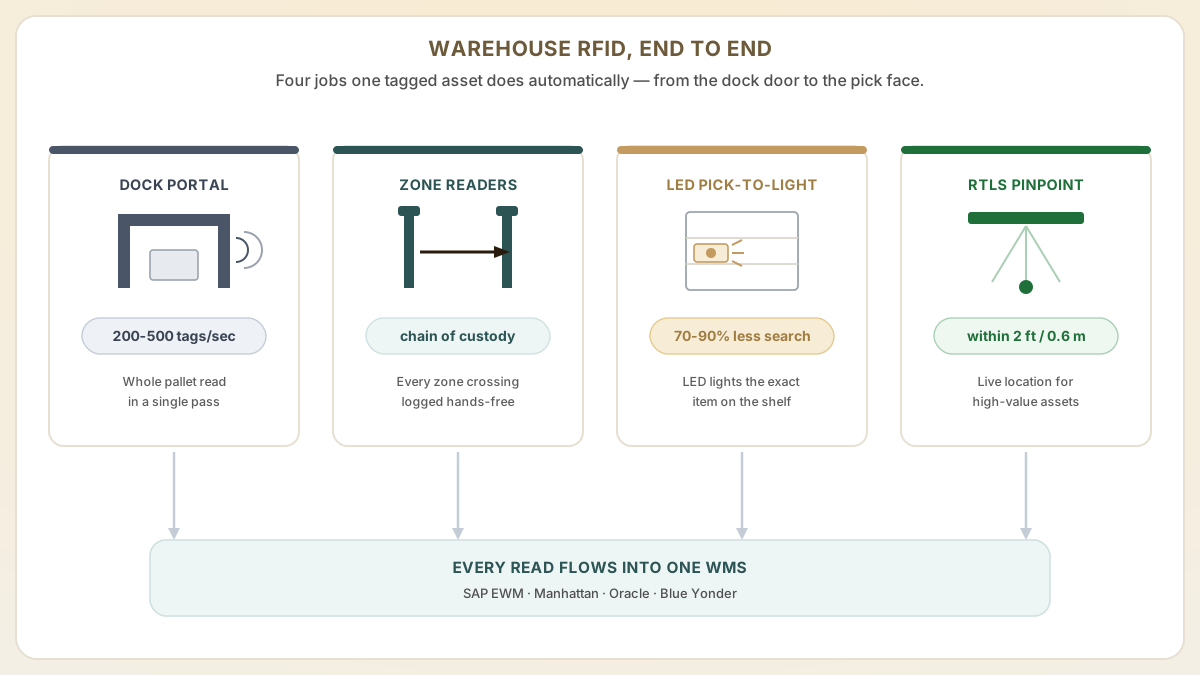
RFID warehouse asset tracking lifts inventory accuracy to 95-99% and reads 200-500 tags per second at UHF dock-door portals, replacing line-of-sight barcode scans. This guide covers UHF vs HF frequency selection, LED pick-to-light tags, portal deployment, RTLS and warehouse management system (WMS) integration.
- UHF RFID enables bulk reading of hundreds of tagged assets per second at portal readers and dock doors, eliminating manual barcode scanning.
- LED-enabled RFID tags provide visual pick-to-light location of individual items in dense storage, reducing search time by 70-90 percent.
- Portal readers at dock doors and zone transitions create automatic chain-of-custody records without operator intervention.
At a glance
Use these short answers to decide whether this page matches the project before moving into the detail.
Key takeaway
UHF RFID enables bulk reading of hundreds of tagged assets per second at portal readers and dock doors, eliminating manual barcode scanning.
Why warehouses need RFID asset tracking
Every warehouse has a ghost asset: the pallet the system swears is in Zone C and that is provably not in Zone C. It is somewhere in the building, and finding it has just...
Next step
Ready to move forward? Start your inquiry to get specific answers for this project.
Plan your warehouse RFID deploymentWhy warehouses need RFID asset tracking
Every warehouse has a ghost asset: the pallet the system swears is in Zone C and that is provably not in Zone C. It is somewhere in the building, and finding it has just become someone's entire afternoon. That is the quiet tax of line-of-sight tracking — the cost is rarely the scanning, it is the searching. Warehouses manage high volumes of assets (pallets, containers, tools, returnable transport items (RTIs) and high-value equipment) that move between zones, facilities and customers. Barcode-based tracking requires line-of-sight scanning of each item individually, creating bottlenecks at receiving, putaway, picking and shipping.
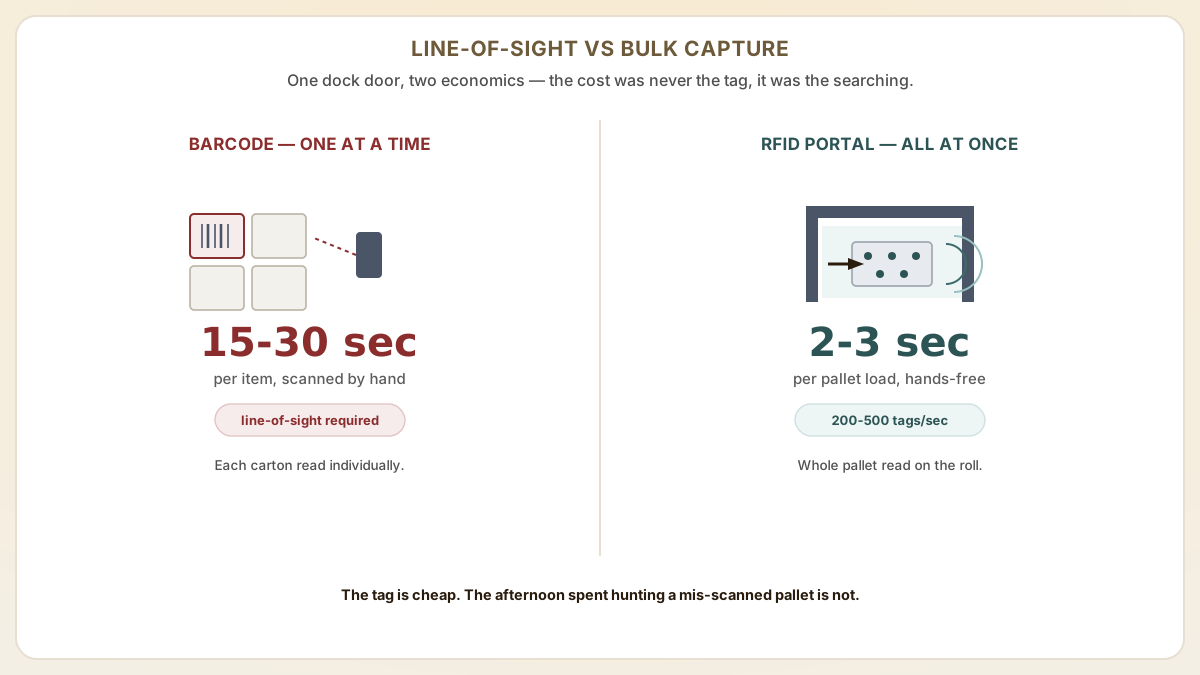
RFID eliminates the line-of-sight requirement. A UHF portal reader at a dock door reads all tagged items on a pallet or in a truck simultaneously as they pass through, capturing 200-500 tag reads per second. This transforms receiving and shipping from a per-item scanning process into an automatic bulk-capture process, reducing dock-door dwell time and labor cost.
- Manual barcode scanning at dock doors takes 15-30 seconds per item; RFID portal readers capture an entire pallet load in 2-3 seconds.
- Cycle counting with handheld RFID readers is 5-10 times faster than barcode scanning, enabling weekly full-inventory counts instead of quarterly audits.
- Real-time location data from zone readers enables WMS integration for automated inventory position updates.
What's the difference between UHF and HF for warehouse applications?
Warehouse RFID deployments overwhelmingly use UHF (860-960 MHz) for its long read range and high throughput. HF (13.56 MHz) has niche applications for item-level tracking at workstations.
For most warehouse asset tracking applications (pallet tracking, RTI management, dock-door portals and forklift-mounted reading) UHF is the clear choice. HF is used when the application requires short-range precision, such as tool check-out at a crib window or item-level identification at a packing station. For the full physics-and-cost breakdown behind the frequency decision, see UHF vs HF RFID.
| Attribute | UHF (860-960 MHz) | HF (13.56 MHz) |
|---|---|---|
| Read range | 1-12 meters (fixed readers) | 3-10 cm (contactless) |
| Bulk read speed | 200-500 tags/second | 1-5 tags/second |
| Best for | Pallets, dock doors, zone transitions, vehicle ID | Item-level at workstations, tool crib check-out |
| Tag cost | $0.05 – $0.50 (label/inlay) | $0.10 – $1.00 (label/inlay) |
| Metal/liquid interference | Requires on-metal tags or spacing | Less affected but shorter range |
| Common chips | Impinj Monza R6, NXP UCODE 8/9 | NXP ICODE, NTAG |
| Standards | ISO 18000-63, EPC Gen2v2 | ISO 15693, ISO 14443 |
How do you handle LED-enabled tags for visual item location?
Finding a specific item in a warehouse with thousands of storage locations is a major time cost — you know it is in the building, which is precisely the problem. LED-enabled RFID tags add a visual indicator that lights up when the tag is queried, guiding the picker to the item, not down the wrong aisle first.
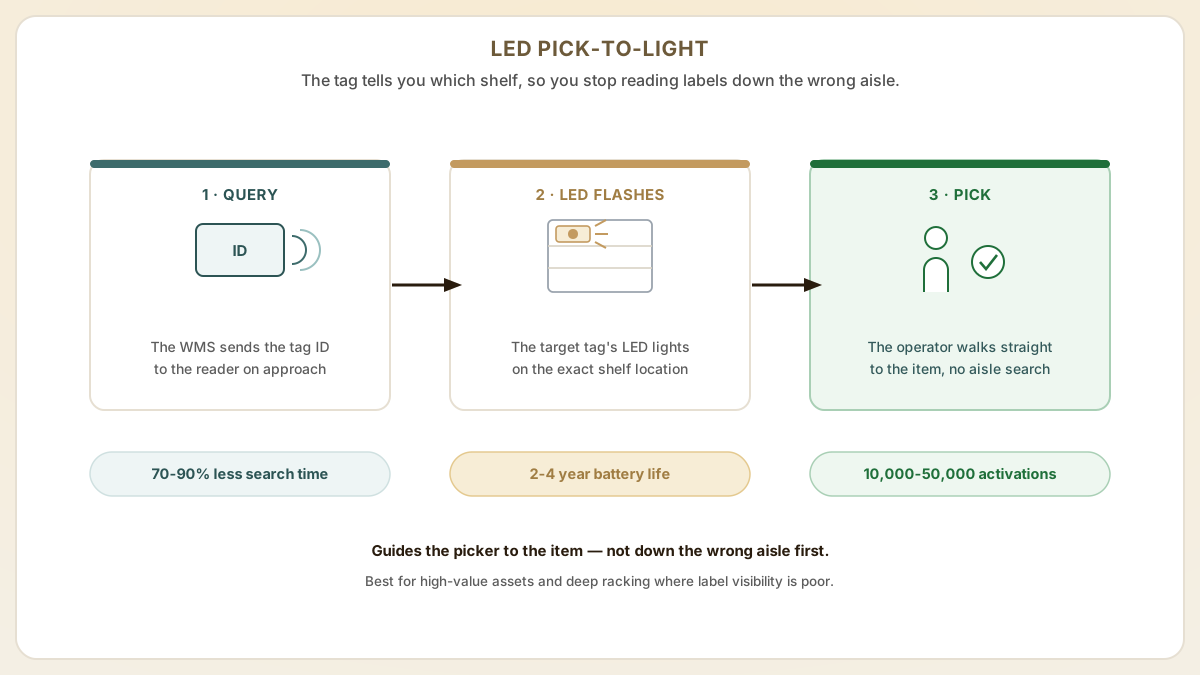
- The LED tag contains a small battery and an LED that activates when the tag receives a specific command from the reader. The operator searches for the tag ID and the LED flashes on the target item or shelf location.
- Search time reduction: operators report 70-90 percent reduction in time spent locating specific items in dense racking compared to label-reading visual search.
- Battery life on LED tags is typically 2-4 years depending on activation frequency, with most tags supporting 10,000-50,000 LED activations.
- LED tags are particularly valuable for high-value assets, returnable containers and items stored in deep racking where label visibility is poor.
- Integration with WMS pick lists allows the system to automatically activate the LED on the next pick item as the operator approaches the zone.
How does portal reader deployment at dock doors and zone transitions work?
Portal readers are fixed UHF reader systems installed at physical transition points (dock doors, zone boundaries, conveyor entries) to automatically capture all tagged items passing through.
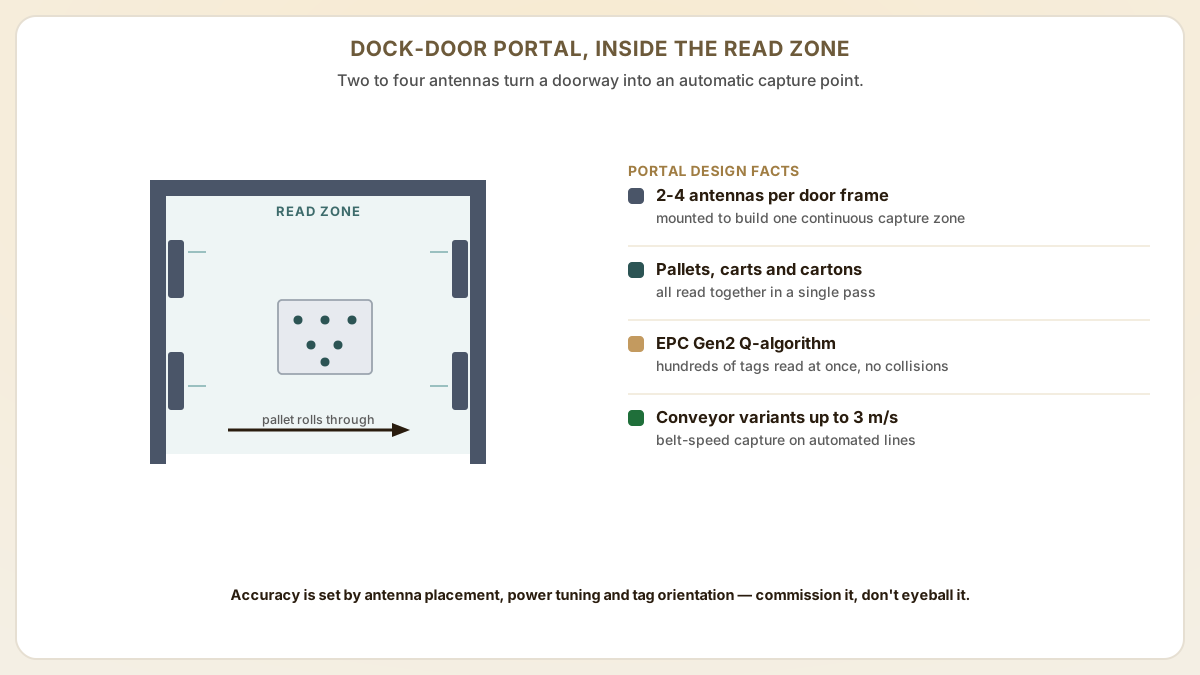
- A dock-door portal typically uses 2-4 antennas mounted on the door frame to create a read zone that captures tags on pallets, carts and individual cartons.
- Zone-transition portals installed at aisle entries or between warehouse sections provide real-time location updates as assets move through the facility.
- Conveyor-mounted readers capture tags on items moving along automated material handling systems at belt speeds up to 3 meters per second.
- Portal reader accuracy depends on antenna placement, power level tuning and tag orientation diversity. Professional site survey and commissioning are essential — eyeball the antenna mounts instead and you build a portal that reliably reads everything except the pallet actually rolling through it.
- Anti-collision protocols (EPC Gen2 Q-algorithm) ensure that hundreds of tags are read simultaneously without data loss.
How do WMS integration and data architecture work?
RFID readers generate high-volume tag-read data that must be filtered, deduplicated and mapped to business events before it is useful in a warehouse management system.
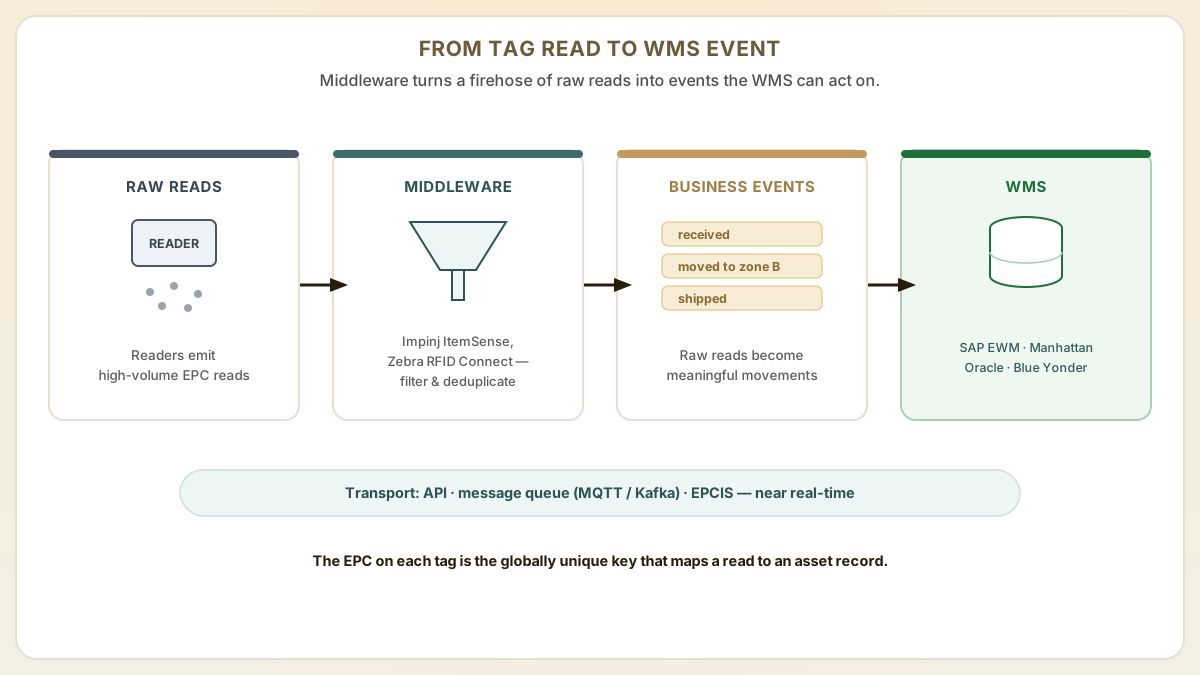
- RFID middleware (e.g., Impinj ItemSense, Zebra RFID Connect) processes raw tag reads into business events: 'asset received,' 'asset moved to zone B,' 'asset shipped.'
- EPC (Electronic Product Code) on each tag provides a globally unique identifier that maps to the asset record in the WMS database.
- Event-based integration via API or message queue (MQTT, Kafka) pushes RFID events to the WMS in near real-time, updating inventory positions within seconds of a physical move.
- Dashboard reporting provides real-time facility views showing asset counts by zone, dock-door throughput metrics and exception alerts for missing or misrouted items.
- Major WMS platforms — SAP EWM, Manhattan SCALE / Active WM, Oracle WMS, Blue Yonder WMS — all accept RFID event streams via REST APIs or EPCIS. CPCON's 2026 enterprise guide budgets 4-8 weeks per platform for first-pass middleware integration; the rfidtaghy 99.9% accuracy framework adds that bidirectional sync with the WMS plus configurable confidence thresholds and automatic re-read triggers is what separates 'reads land somewhere' from production-grade audit-trail data.
What does a defensible warehouse RFID accuracy benchmark actually look like?
Vendor brochures throw around '99% accuracy' loosely. When you commit your warehouse to a number in front of finance or a brand-customer SLA, you need an audit trail back to a published benchmark. The references below are the standard sources we cite for warehouse asset-tracking accuracy claims.
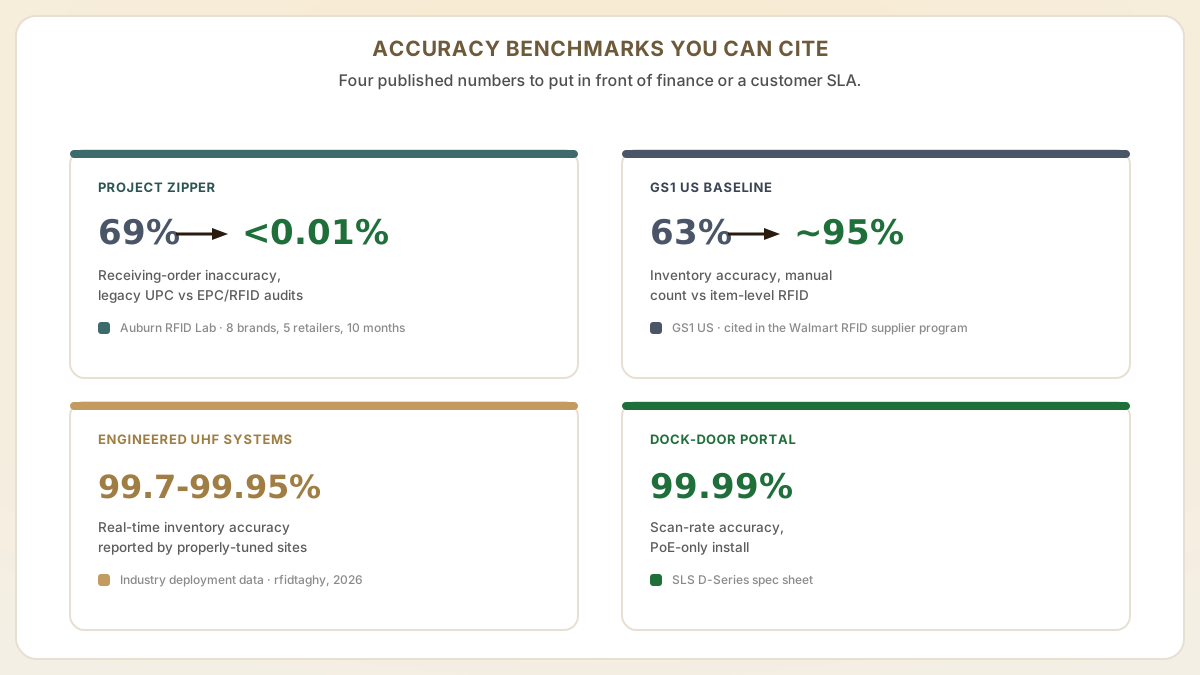
- Auburn RFID Lab — Project Zipper (8 brands + 5 retailers, 10 months): legacy UPC receiving audits recorded inaccuracy in 69% of orders; EPC/RFID audits recorded inaccuracy in less than 0.01%. This is the cleanest published apples-to-apples dataset and the source most commonly cited in retail-mandate compliance discussions.
- GS1 US baseline (cited in the Walmart RFID supplier program): item-level RFID lifts retail inventory accuracy from a 63% manual-count baseline to ~95% — the same step-change that justifies the supplier mandates from Walmart, Target, Macy's, Nordstrom and Kohl's.
- Industry deployment data (rfidtaghy 2026): warehouses with properly engineered UHF RFID systems consistently report 99.7-99.95% real-time inventory accuracy and reduce labor by up to 40%. The four pillars cited as required for these results: purpose-built tag selection, multi-antenna fixed-reader infrastructure with adaptive dwell time, API-integrated WMS middleware, and ongoing calibration/governance.
- Dock-door portal benchmark (SLS D-Series spec sheet): Wave-antenna dock-door portals operate at 99.99% scan-rate accuracy with PoE-only install, and the architecture is compatible with Impinj R420/R700 and Zebra FX9600/FX7500 readers. This is the published number to use when scoping new dock-door coverage.
- Healthcare cross-reference (CPCON 2026 enterprise guide): a hospital that previously needed two weeks and 30 staff to physically count medical equipment completed the same task in two days with three technicians after RFID — a 75-95% reduction in count time. The same multipliers translate directly to warehouse cycle-counts.
How do real-time location systems (RTLS) extend basic asset tracking?
Basic RFID asset tracking answers 'where was the asset last seen?' at the granularity of a portal or zone. Real-time location systems (RTLS) layered on top of RFID infrastructure answer 'where is the asset right now?' to the meter level. Choosing between portal-only and full RTLS is a cost-vs-precision decision that most warehouses make in two phases.
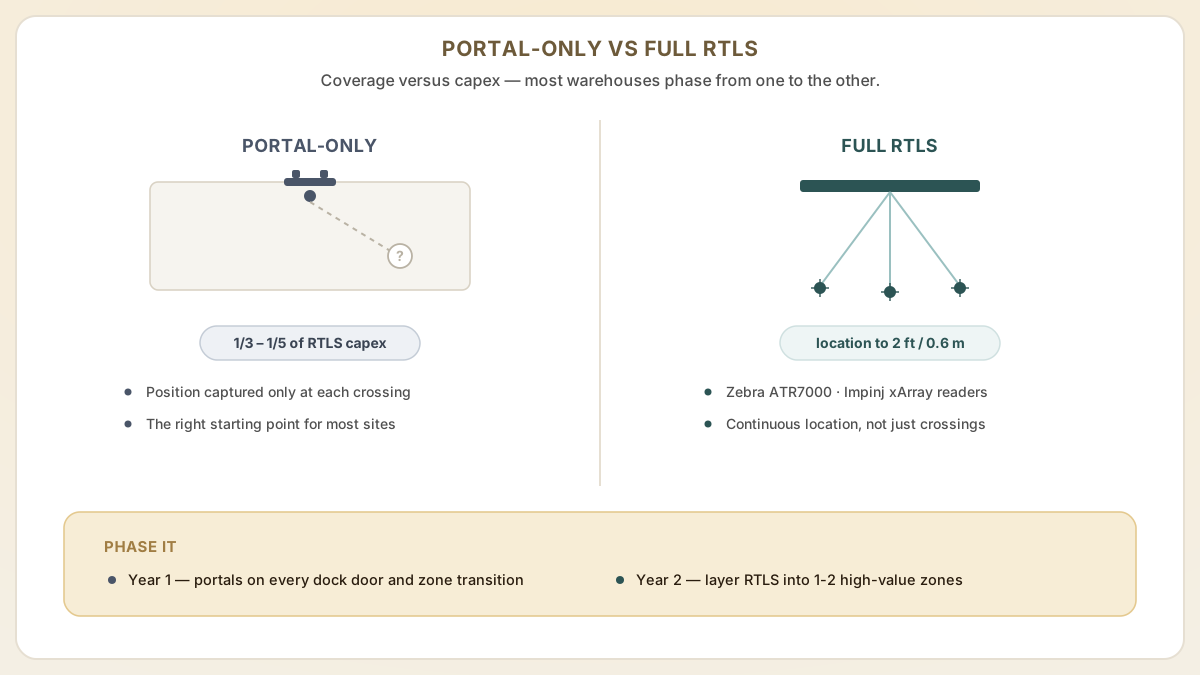
- Zebra ATR7000 ceiling-mounted RTLS reader: electronically steered, processes hundreds of narrow flashlight-style beams simultaneously, delivers asset location accuracy within 2 ft / 0.6 m or less. Best fit for high-value mobile assets in well-defined zones (forklift positioning, RTI tracking, finished-goods staging).
- Impinj xArray Gateway: ceiling-mounted reader covering a 40-foot diameter at a 15-foot mounting height, distinguishing 52 distinct antenna beams for location assignment within the read zone. Linear-polarized antennas read tags in any orientation — useful for mixed-product zones where tag orientation cannot be controlled.
- Coverage trade-off: portal-only deployments are 1/3 to 1/5 the capex of full RTLS, but only see asset position at portal-crossing events. RTLS is justified when the asset population is small but high-value (medical equipment, specialized tools, RTIs), when assets dwell in zones rather than transit through portals, or when search-and-find time is the dominant cost.
- Phasing recommendation: deploy portal-only across all dock doors and zone transitions in year 1, layer RTLS on top in 1-2 high-value zones in year 2 once handheld-pinpoint and portal data identify which zones produce the most search-time loss.
- Hybrid integration: modern warehouse data platforms (Impinj IoT, Zebra Savanna) ingest both portal events and RTLS streams into a unified asset-state model, so the WMS sees a single source of truth regardless of which reader generated the read.
Useful next pages
Use these linked product, guide and comparison pages to keep the next click specific and practical.
LED RFID tags
Visual-location RFID tags with LED indicators for warehouse pick-to-light applications.
Vehicle and asset tags
UHF tags for vehicles, containers and large assets in warehouse and logistics environments.
Warehouse RFID resources
Related guides for warehouse RFID deployment and tag selection.
Independent warehouse RFID references
Authoritative third-party sources behind the benchmarks and architecture guidance in this article.
FAQ
How many portal readers do I need for a warehouse?
The number depends on your facility layout and tracking requirements. At minimum, install portals at every dock door (receiving and shipping) and at transitions between major zones. A 50,000 square foot warehouse with 4 dock doors and 3 internal zones typically needs 6-8 portal read points. A professional site survey identifies the optimal locations and antenna configurations.
Does RFID work on metal assets and containers?
Standard UHF label tags perform poorly on metal because the metal surface detunes the tag antenna. On-metal tags use a spacer layer (foam or ceramic) between the tag and the metal surface to maintain performance. These tags cost $0.50-$3.00 more than standard labels but deliver reliable read ranges of 2-6 meters on metallic assets.
What is the read accuracy of a warehouse RFID portal?
A properly installed and tuned dock-door portal achieves 99.5-99.9 percent read accuracy for tagged items passing through the read zone. Accuracy depends on tag quality, antenna placement, reader power settings and tag orientation diversity. Items with tags facing away from all antennas or shielded by liquid or metal may require additional antenna positions or tag placement guidelines.
Can RFID replace barcodes in my warehouse?
RFID can replace barcodes for most tracking functions, but many operations maintain both. RFID excels at bulk reading, automated portals and visual search. Barcodes remain useful for point-of-use verification, label readability by humans and integration with systems that expect barcode data. A common approach is RFID for asset tracking and movement, with a barcode printed on the same label for manual fallback.
How do I tag existing inventory for RFID tracking?
Initial tagging of existing inventory requires a one-time effort to apply RFID tags to all tracked assets and register each tag's EPC in the WMS. For a 10,000-asset warehouse, expect 2-4 weeks with a tagging team of 2-3 people. Tags can be applied as adhesive labels, zip-tie hang tags, or bolt-on mounts depending on the asset type. Many operations phase the tagging by zone or asset category over 4-8 weeks. CPCON's 2026 enterprise guide adds that ghost-asset rates of 15-30% are common in pre-RFID asset registers — so the first physical tagging pass is also the cleanup pass that produces the largest one-time depreciation and insurance savings.
How does a warehouse choose between portal-only RFID and full RTLS coverage?
Portal-only deployments capture asset events at portal-crossing moments (dock-door entry, zone transition, conveyor divert) and are the right starting point for most warehouses — capex is 1/3 to 1/5 of full RTLS. Full RTLS adds ceiling-mounted readers like the Zebra ATR7000 (sub-2-foot accuracy via electronically steered beams) or Impinj xArray (52 distinct beams across a 40-foot diameter from a 15-foot mounting height) and continuously locates assets between portal events. RTLS is justified when assets dwell in zones rather than transit (medical equipment, RTIs, high-value tools), when search-and-find time dominates labor cost, or when audit/compliance requires moment-by-moment custody records. Most warehouses phase: portal-only across all docks and zone transitions in year 1, then layer RTLS into 1-2 high-value zones in year 2.
What WMS platforms have proven RFID integration paths?
All major WMS platforms have production-grade RFID integration paths: SAP EWM, Manhattan SCALE / Active WM, Oracle WMS, Blue Yonder WMS, Microsoft Dynamics 365 SCM, and Infor WMS. The integration pattern is consistent: an RFID middleware layer (Impinj ItemSense, Zebra Savanna, or vendor-supplied middleware) deduplicates raw EPC reads, applies business rules, and pushes inventory events into the WMS via REST, EPCIS or message queue (MQTT/Kafka). CPCON's 2026 enterprise guide budgets 4-8 weeks per platform for first-pass middleware integration with deepest pre-built connectors for SAP and Oracle. Plan integration testing during the pilot phase rather than after full rollout — finding an unmapped EPC structure during production go-live is the single most common cause of stalled deployments.
Sources & references
Primary standards, OEM datasheets and regulatory documents cited by this article. All URLs were verified on the access date shown below.
Proud Tek is a Shenzhen-based RFID & NFC manufacturer supplying hotel chains, transit operators, event venues and retail brands worldwide. Every order includes free samples, RF testing and dedicated project support.
Get a Quick Quote
Tell us about your project and we'll respond within one business day. Fields marked (asterisk) are required.