
RFID Technology
UHF vs HF RFID
Which Frequency to Choose?
Quick answer
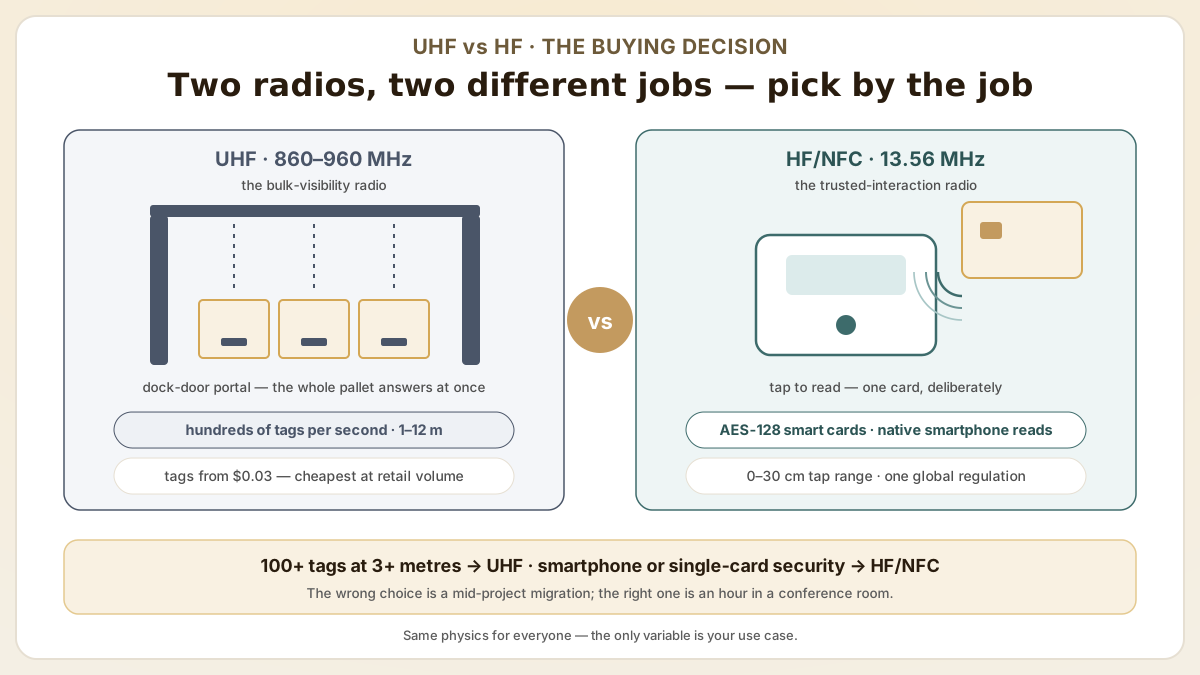
Choose UHF (860–960 MHz) to read 100+ tags at 1–12 m; choose HF (13.56 MHz) when smartphone taps or card-grade security decide the project. Physics, tag costs from $0.03 labels to $2.50 smart cards, standards, and the six questions that settle the frequency in a conference room instead of on the loading dock.
- UHF (860–960 MHz) owns the bulk jobs — hundreds of tags per second at 1–12 m: logistics, retail inventory, vehicle identification and supply-chain management.
- HF/NFC (13.56 MHz) owns the trust jobs — AES-128 smart cards at tap range: access control, payments, authentication, patient identification and consumer engagement.
- Choosing wrong is the expensive part: a mid-project frequency migration costs far more than an hour with the six-step framework below — run it before any purchase order clears.
At a glance
Use these short answers to decide whether this page matches the project before moving into the detail.
Key takeaway
UHF (860–960 MHz) owns the bulk jobs — hundreds of tags per second at 1–12 m: logistics, retail inventory, vehicle identification and supply-chain management.
Why does RF frequency matter?
Every few months a procurement team calls having quietly bought the wrong radio. The story barely varies: someone orders HF tags because the samples scanned perfectly on...
Next step
Ready to move forward? Start your inquiry to get specific answers for this project.
Get frequency selection adviceWhy does RF frequency matter?
Every few months a procurement team calls having quietly bought the wrong radio. The story barely varies: someone orders HF tags because the samples scanned perfectly on the lab bench, then stands on the loading dock learning that HF 'short range' means a forklift nearly has to touch the pallet to register a read. Frequency is the one RFID decision you can't patch in firmware after the purchase order clears — it sets an RFID system's fundamental physical characteristics (read range, data rate, penetration through materials, multi-tag handling and antenna size), and physics does not accept change requests. This post assumes you have already narrowed the shortlist to the two commercial workhorses; if LF is still in the running, start with the full three-band tour and come back.
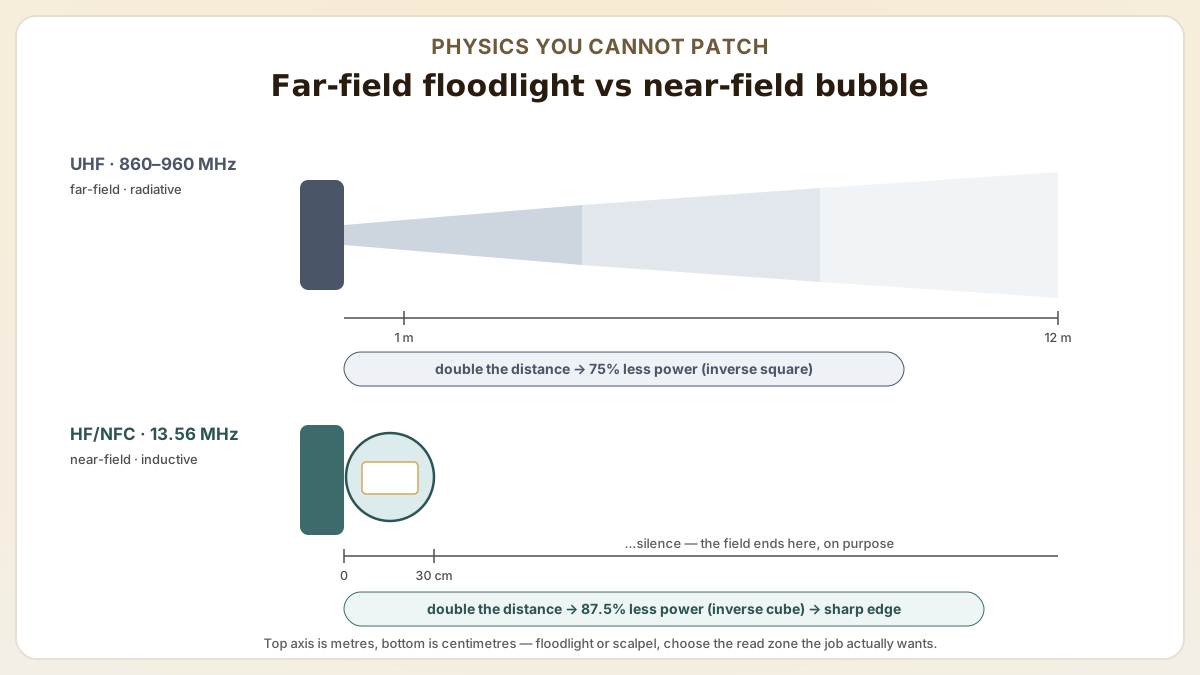
UHF (860–960 MHz) uses electromagnetic far-field coupling, enabling read ranges of 1–12+ meters with passive tags. The short wavelength (~33 cm) allows compact reader antennas and high-gain directional designs. HF (13.56 MHz) uses inductive near-field coupling, limiting read range to 0–30 cm with passive tags. The longer wavelength (~22 m) means the tag's coil antenna and the reader antenna must be in close proximity to exchange energy.
- Far-field coupling (UHF) follows inverse-square-law power decay. Doubling the distance reduces received power by 75 percent.
- Near-field coupling (HF) follows inverse-cube-law decay. Doubling the distance reduces received power by 87.5 percent, creating a naturally sharp read-zone boundary.
- UHF waves reflect off metal surfaces and are absorbed by water. Performance is degraded near metals and liquids without specialized tag designs.
- HF near-field energy is less affected by metals and liquids at typical read ranges, making HF more reliable for applications involving metallic objects or liquid-filled containers.
How do the technical specs compare?
Ten parameters decide most UHF-vs-HF debates, and the table below runs them side by side. In practice three of them settle the argument — read range, smartphone support and tag cost — while the other seven exist to break ties and win meetings.
| Parameter | UHF (860–960 MHz) | HF (13.56 MHz / NFC) |
|---|---|---|
| Typical passive read range | 1–12 m (portal readers), 30 cm – 5 m (handheld) | 0–30 cm (tap-to-read) |
| Data rate | 40–640 kbps | 106–848 kbps |
| Multi-tag reading | Hundreds of tags per second (anti-collision) | Single tag per field (some ISO 15693 multi-read) |
| Tag antenna size | Small — 10 × 10 mm to 100 × 15 mm dipole/patch | Large — 30 × 30 mm to 85 × 54 mm coil |
| Tag cost (high volume) | $0.03 – $0.10 | $0.08 – $0.30 |
| Security / authentication | Basic (EPC Gen2 access password) to moderate (RAIN RFID Authentication) | Strong (AES-128 mutual auth, DESFire, Java Card) |
| Smartphone compatibility | No native smartphone support | Yes: all modern smartphones include NFC (13.56 MHz) |
| Global frequency regulation | Varies by region (EU: 865–868 MHz, US: 902–928 MHz) | Globally harmonized at 13.56 MHz (ISM band) |
| Primary standards | ISO 18000-6C (EPC Gen2), GS1 EPCglobal | ISO 14443 (NFC), ISO 15693, NFC Forum |
| Metal/liquid impact | High: requires on-metal/liquid-tolerant tag designs | Low: near-field coupling is more tolerant |
Which application suits each frequency?
Most applications sort themselves in about ten seconds, and the router below does exactly that. Warehouse portals do not negotiate: UHF. Payments do not negotiate: HF. The interesting lane is the contested middle, where either band works and secondary requirements — security, consumer access, installed-base compatibility — make the call. That middle lane is also where a vendor's favourite frequency quietly becomes your requirement if you arrive without one.
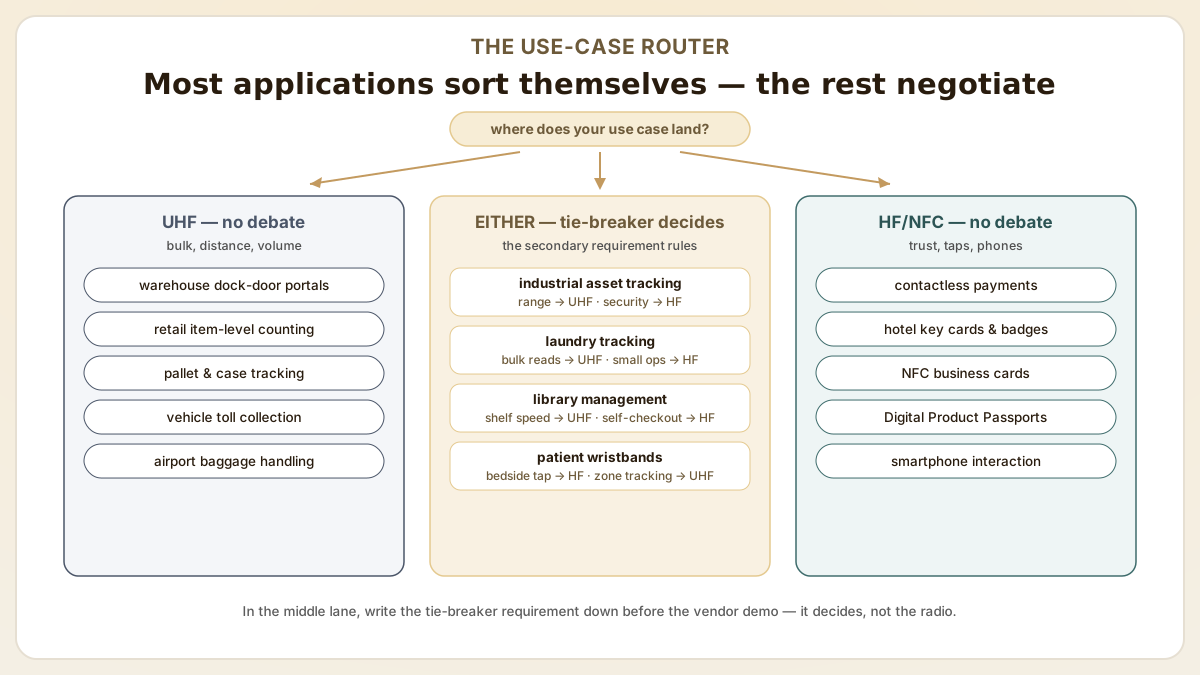
- UHF-only applications: warehouse dock-door portals, retail item-level inventory counting, supply-chain pallet/case tracking, vehicle toll collection, airport baggage handling.
- HF/NFC-only applications: contactless payments, hotel key cards, access-control badges, NFC business cards, Digital Product Passports, consumer smartphone interaction.
- Either frequency (decision depends on requirements): industrial asset tracking (UHF for range, HF for security), laundry tracking (UHF for bulk-read, HF for smaller operations), library book management (UHF for shelf-scanning speed, HF for self-checkout terminals), healthcare patient wristbands (HF for bedside tap, UHF for zone-level tracking).
How do dual-frequency and multi-technology approaches work?
Sometimes the correct answer to 'UHF or HF?' is an unhelpful 'yes'. Plenty of mature deployments run both frequencies in different parts of the workflow — and dual-frequency tags carry both a UHF and an HF chip in one label, so the same carton can talk to a dock door at distance and to a smartphone at tap range without being re-tagged.
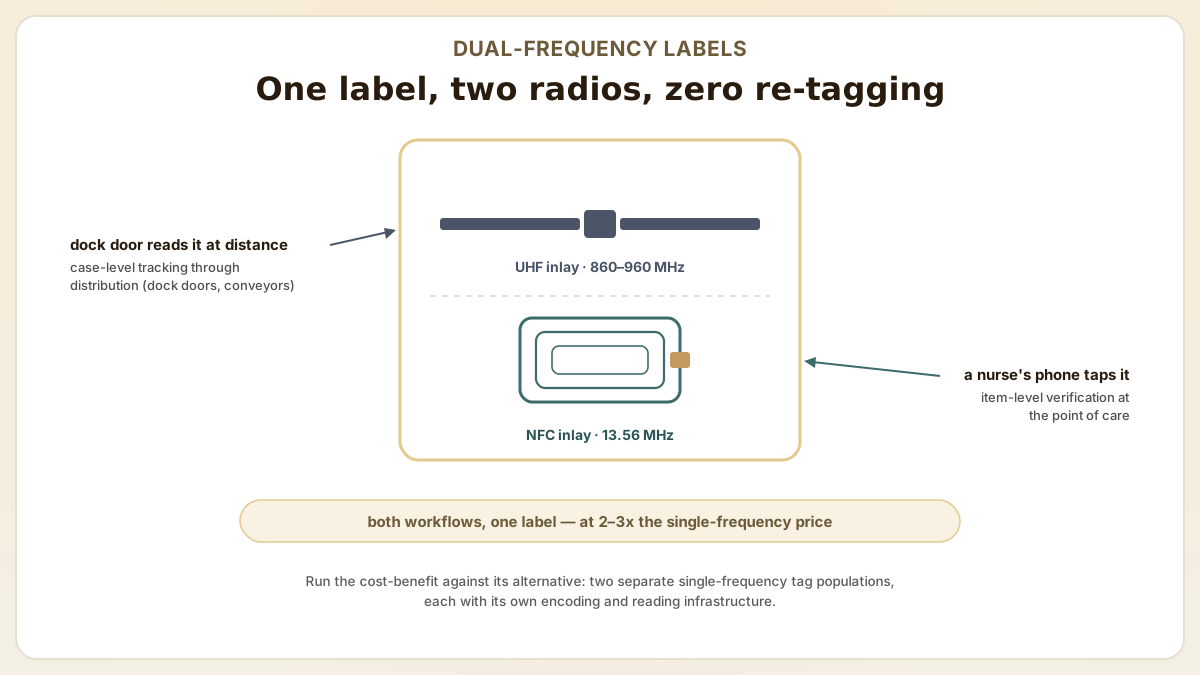
A pharmaceutical supply chain might use UHF RFID for case-level tracking through distribution (dock doors, conveyor readers) and NFC for item-level patient verification at the point of care (nurse's smartphone tap). Dual-frequency tags embed both a UHF inlay and an NFC inlay in the same label, enabling both workflows without re-tagging.
- Dual-frequency tags cost 2–3x more than single-frequency tags due to the two chip modules and additional antenna complexity.
- Dual-frequency readers that handle both UHF and HF in a single device are available from major reader manufacturers, simplifying infrastructure for hybrid deployments.
- Migration scenarios (transitioning from one frequency to another) benefit from a dual-technology phase where both systems operate in parallel.
- Cost-benefit analysis should compare dual-frequency tagging against maintaining two separate single-frequency tag populations with different encoding and reading infrastructure.
What decision framework should a B2B project team run?
Run the framework below before you let a single vendor demo a reader — it is far cheaper to settle the frequency question in a conference room than to rediscover it on the loading dock. The six gates are sequential on purpose: each one either eliminates a frequency or waves you through to the next. The last gate, total cost of ownership, is where the cheap-tag, expensive-reader trade-off usually ambushes the spreadsheet.
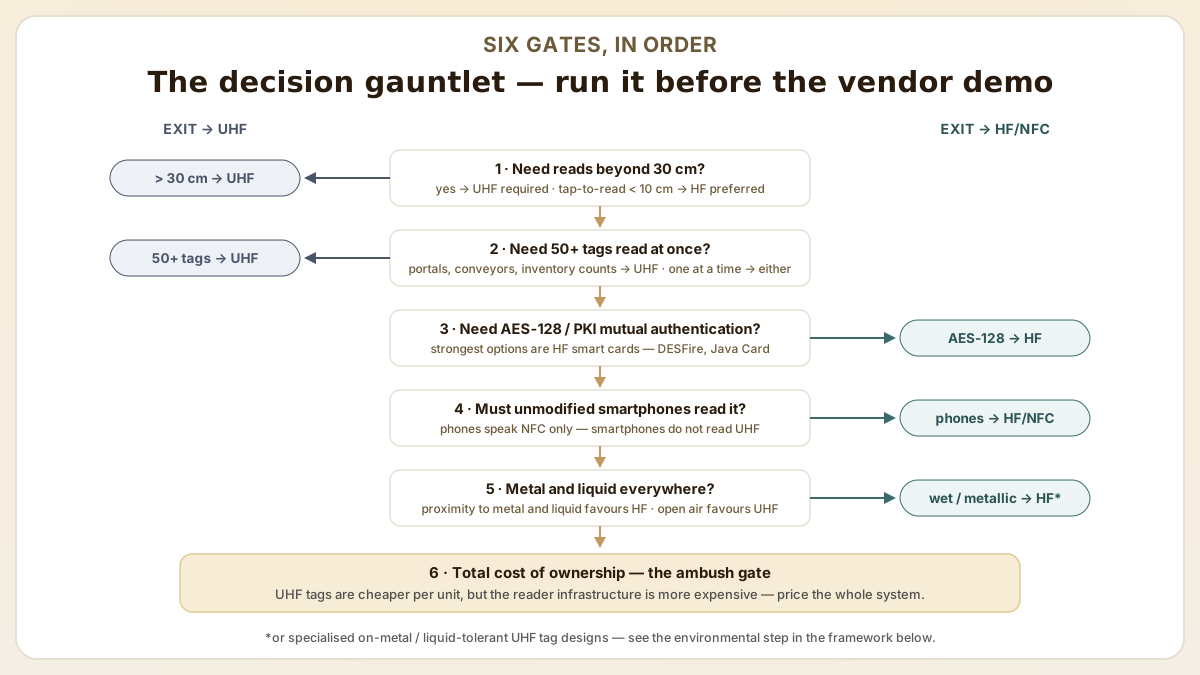
- Step 1: Define the required read range. If you need more than 30 cm passive read range, UHF is required. If tap-to-read (< 10 cm) is sufficient, HF/NFC is preferred.
- Step 2: Determine multi-tag requirement. If you need to read 50+ tags simultaneously (conveyor, portal, inventory count), UHF is required. If single-item interaction is the norm, either frequency works.
- Step 3: Evaluate security requirements. If mutual authentication with AES-128 or PKI is required, HF smart cards (DESFire, Java Card) provide the strongest options. UHF authentication is improving but less mature.
- Step 4: Check smartphone access requirement. If consumers or field workers need to interact with tags using unmodified smartphones, NFC/HF is the only option. Smartphones do not read UHF.
- Step 5: Assess environmental factors. Metal and liquid proximity favors HF. Open-air, long-range, line-of-sight scenarios favor UHF.
- Step 6: Calculate total cost of ownership including tags, readers, middleware, integration and ongoing maintenance. UHF tags are cheaper per unit, but reader infrastructure is more expensive.
Real-world deployments — what leading retailers and brands actually picked
The abstract debate settles quickly once you look at what actually ships in volume across retail, healthcare, manufacturing and the maker community — nobody tags 1.5B+ items a year on a hunch. Each frequency has anchor verticals where it dominates outright, and a contested middle ground where the choice follows adjacent process design rather than physics.
- Apparel & fast-fashion (UHF dominant) — Decathlon (1.5B+ items tagged annually with UHF inlay sewn into care label), Inditex/Zara (every garment gets a UHF chip-on-hangtag since 2014), Lululemon (98% inventory accuracy with UHF, ROI <12 months), Uniqlo (self-checkout RFID basket reads 30 garments in 2 seconds), Macy's (250M+ UHF tags/year, 20% improvement in inventory accuracy). UHF chosen for bulk-read speed and back-room cycle counts.
- Cosmetics & luxury authentication (HF/NFC dominant) — LVMH, Kering, Estée Lauder, Chanel, Hermès all use NTAG 424 DNA or similar HF chips embedded in or under the package label so consumers can tap-to-verify with a smartphone (no app required). UHF doesn't fit here because the consumer interaction needs phone-to-tag proximity, not bulk-read distance.
- Healthcare hybrid (HF for clinical, UHF for assets) — Hospital wristbands and patient ID use HF/NFC (works through wet linens and on the body). Surgical instruments and high-value mobile equipment (infusion pumps, ventilators) use UHF for bulk asset tracking through ceiling-mounted reader portals. Pharmaceutical pack-level serialization under DSCSA Phase 3 uses 2D DataMatrix today, with NTAG 424 / UHF tag overlays added by manufacturers wanting consumer engagement and tamper evidence.
- Industrial & manufacturing (UHF dominant for assets, LF for harsh on-metal) — Boeing tags 9,000+ tools per assembly bay with UHF; automotive tier-1 suppliers use UHF on returnable packaging, totes and pallets; oil & gas tags pipeline assets with ruggedised UHF or LF (LF wins where the asset is buried in steel and water).
- Access control & payment (HF dominant) — Hotel keys, office badges, transit cards, Apple Wallet keys, Google Wallet keys — all use HF 13.56 MHz (MIFARE DESFire EV3, HID Seos, MIFARE Plus, FeliCa, Calypso). UHF in access control exists only for hands-free vehicle entry (parking gates, fleet yards) where a 4-6 m read range matters.
Decision matrix — how to score HF vs UHF for your project in 30 minutes
Most HF-vs-UHF decisions stall because the team argues one factor at a time — range on Monday, cost on Wednesday, security whenever the CISO walks past. A weighted scorecard across the seven dimensions below produces a defensible answer in under an hour and, rarer still, survives stakeholder review.
- Read-range requirement — If the use case requires reading at >50 cm, UHF wins by default. <10 cm and a smartphone is the reader, HF wins. 10-50 cm is the contested zone where short-range UHF (Impinj R720) and long-range HF (FEIG MR101) both work and the tie-breaker is the next dimensions.
- Bulk-read throughput — UHF reads 200-1,000 tags/second per reader. HF reads 1-3 tags/second (anti-collision serial, not bulk parallel). If you need to count a tote of 50 items in <5 seconds, UHF; if you tap one card at a time, HF.
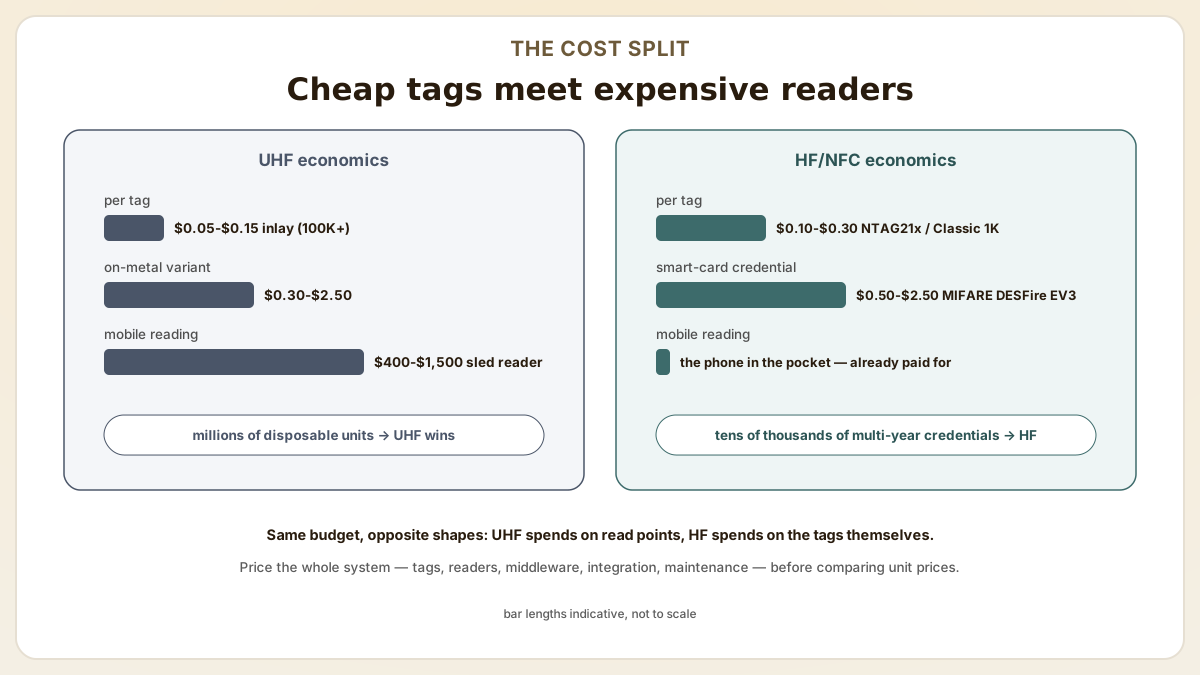
- Smartphone integration — HF/NFC is built into every Android (since 2010) and iPhone (since iPhone 7, 2016). UHF requires a separate sled-style reader ($400-$1,500 like Zebra RFD40, TSL 1128, Impinj Speedway sleds) — there is no smartphone with native UHF in 2026. If your workflow includes consumer or field-tech smartphone reads, HF.
- Security and applet flexibility — HF 13.56 MHz spans MIFARE Classic (Crypto-1, broken), MIFARE DESFire EV3 (AES-128, EAL5+), MIFARE Plus, NTAG 424 DNA (SUN/SDM), HID iCLASS Seos, FeliCa, Calypso, JCOP Java Cards. UHF Gen2 has TID-based authentication and the Gen2v2 untraceable / authenticate commands but the chip-level crypto ecosystem is much smaller — NXP UCODE DNA (AES-128 per ISO/IEC 29167-10) and Impinj M775 (PRESENT-80 per ISO/IEC 29167-11, NOT AES) are the two mainstream UHF chips with on-chip crypto engines; M770 / M780 / M781 have Protected Mode but no crypto engine. For high-assurance access control or payment, HF; for serialised inventory with anti-counterfeit overlay, UHF DNA chips fit but with less ecosystem maturity.
- Liquid and metal environment — As covered earlier, HF tolerates water and human bodies; UHF requires special on-metal tags ($0.30-$2.50) and water-tolerant designs. Use environment as a hard filter before optimising for cost.
- Tag unit cost target — UHF inlay $0.05-$0.15 in 100K+ volumes; HF NTAG21x or MIFARE Classic 1K $0.10-$0.30; MIFARE DESFire EV3 card $0.50-$2.50. If you tag millions of disposable units, UHF; if you tag tens of thousands of credentials carried for 1-3 years, HF.
- Regulatory and global rollout — UHF varies by region (FCC vs ETSI vs SRRC vs ARIB); HF 13.56 MHz is universal and identical worldwide under ISO 14443 / 15693 / 18092. Multi-region rollouts that ship the same SKU to 20+ countries skew toward HF for that reason.
- Score all seven, weight them by what the project actually optimises for, and the debate usually stops being theological and starts being arithmetic. If the two frequencies still tie after honest scoring, congratulations — you are a genuine dual-frequency use case, and the hybrid-deployment section above was written specifically for you.
Useful next pages
Use these linked product, guide and comparison pages to keep the next click specific and practical.
UHF RFID tags
UHF passive tags for logistics, laundry, vehicle identification and bulk-read applications.
HF / NFC products
NFC cards, stickers and smart cards for access control, payments and consumer engagement.
Frequency selection technical references
Standards and vendor white papers used to justify HF vs UHF design choices.
FAQ
Can I use UHF RFID with a smartphone?
No. Standard smartphones do not include UHF RFID readers. Smartphones contain NFC (13.56 MHz) radios for contactless payments and tag reading. To read UHF tags with a mobile device, you need a dedicated UHF sled or Bluetooth-connected UHF handheld reader that pairs with the smartphone.
Is UHF RFID more secure than HF?
No. HF smart cards (MIFARE DESFire, Java Card) offer significantly stronger security with AES-128/256 mutual authentication, encrypted communication and hardware-protected key storage. UHF EPC Gen2 provides basic access-password protection. The RAIN RFID Authentication extension adds cryptographic features to UHF, but the ecosystem is less mature than HF smart-card security.
Why are UHF tags cheaper than NFC tags?
UHF tag volume is driven by retail and logistics applications that consume tens of billions of tags annually, creating massive manufacturing scale. UHF chip architectures are simpler (memory-focused, minimal crypto) and use lower-cost silicon processes. NFC chips include more complex features (cryptographic coprocessors, larger memory, multi-application support) and are produced in smaller volumes.
Can one reader handle both UHF and HF tags?
Dual-frequency readers exist but are uncommon and more expensive than single-frequency units. Most deployments use dedicated UHF readers for logistics/inventory and dedicated HF/NFC readers for access control and consumer interaction. If your project requires both frequencies, plan for separate reader infrastructure at the relevant points in the workflow.
Does UHF RFID work well near metal and liquids?
Standard UHF tags perform poorly near metal (signal reflection) and liquids (signal absorption). Specialized on-metal UHF tags use a spacer or ground-plane design that actually improves performance when mounted on metal. Liquid-tolerant tags use flag or standoff designs. These specialty tags cost 2–5x more than standard labels.
If we already have HF NFC for badges, should we add a parallel UHF system for inventory?
Yes — this is the most common mature deployment pattern. HF and UHF coexist without RF interference because their bands are 60+ MHz apart and the antennas/readers are physically separate. Apparel retailers (Inditex, Macy's), hospitality groups (Marriott, Hilton) and large hospitals run parallel HF (door access, employee ID, hotel keys, patient wristbands) and UHF (back-of-house inventory, asset tracking, supply receiving) with separate reader infrastructure. Plan two BOMs and two integration tracks but you can share the IT/middleware layer.
Will UHF eventually replace HF in payment and access control?
Unlikely in the next 5-10 years. Payment standards (EMVCo, EMV Contactless) and physical access control standards (HID, OSDP, mobile credential platforms) are deeply tied to HF 13.56 MHz, the smartphone NFC stack, and the cryptographic ecosystem (DESFire, Seos, JCOP applets, FeliCa). Migrating these would require re-certifying tens of thousands of card and reader products and replacing every smartphone NFC controller. UHF is winning the inventory and supply-chain layer; HF remains the credentialing and payment layer; LF persists in animal ID, harsh-on-metal industrial, and legacy access. The market is converging on a multi-frequency architecture, not a single winner.
Sources & references
Primary standards, OEM datasheets and regulatory documents cited by this article. All URLs were verified on the access date shown below.
Proud Tek is a Shenzhen-based RFID & NFC manufacturer supplying hotel chains, transit operators, event venues and retail brands worldwide. Every order includes free samples, RF testing and dedicated project support.
Get a Quick Quote
Tell us about your project and we'll respond within one business day. Fields marked (asterisk) are required.