
Contactless Shielding
RFID Blocking Cards
Passive & Active Shielding

Quick answer
RFID blocking cards sit inside a standard wallet slot and shield the cards around them from unauthorised 13.56 MHz reads — either passively (faraday-cage metallic shielding layer) or actively (battery-powered jamming circuit that emits a noise burst when a reader field is detected). The right product depends on the actual threat model: EMV contactless payment cards are already largely protected by tokenisation and transaction caps, while access-badge UID enumeration and e-passport cross-border privacy are more substantive concerns.
- Single card shields the wallet slot. Passive (metallic layer) blocks 13.56 MHz ISO/IEC 14443 reads of cards within 2–3 cm radius; active (jamming circuit) radiates a counter-signal when a reader is detected.
- ISO/IEC 7810 ID-1 form factor (85.6 × 54 × 0.8 mm) — fits any wallet slot alongside credit, transit and access cards.
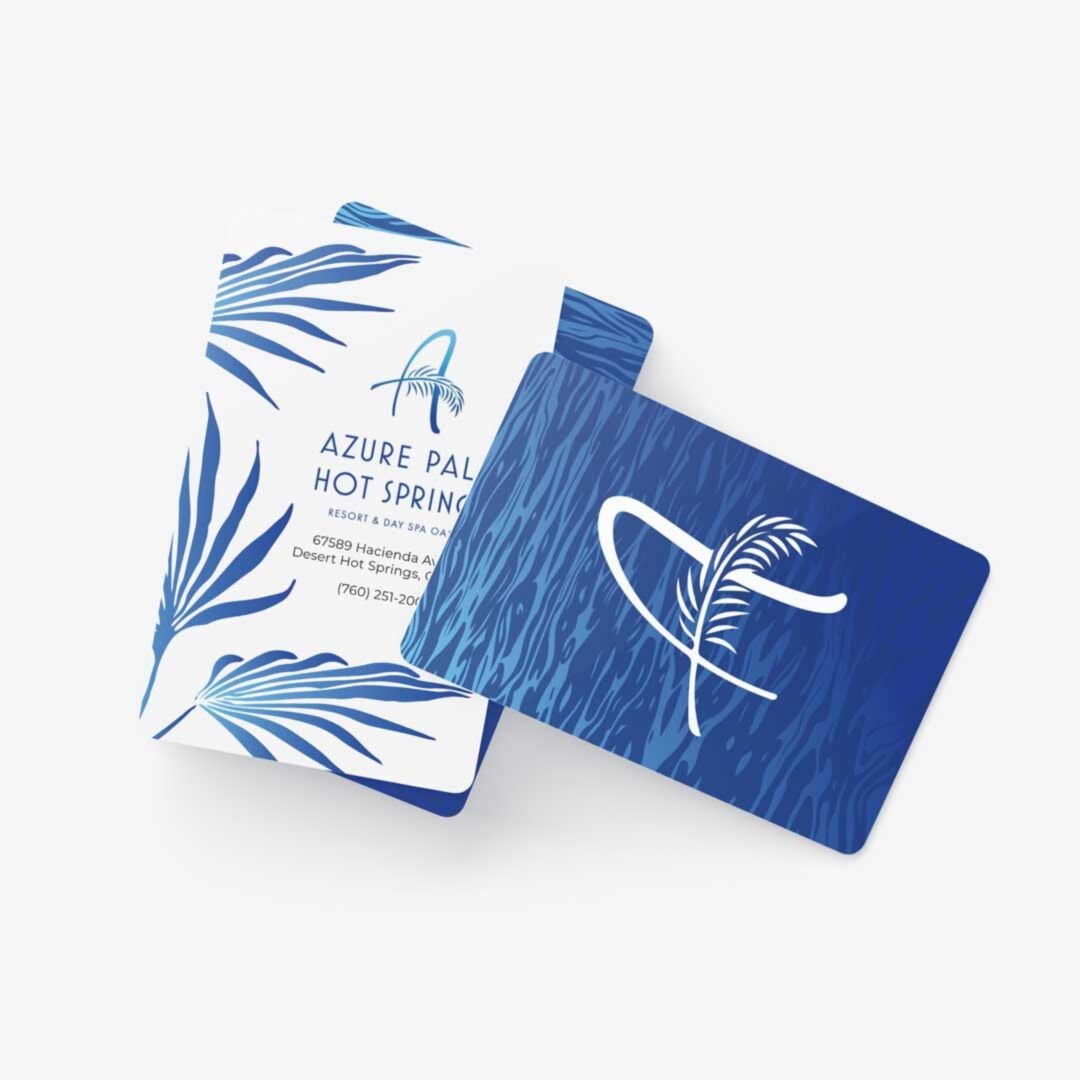
- Custom print to bank / network co-brand, corporate gift, retail pack or government agency livery; spot UV + foil stamping + LED indicator window options.
Used in these industries
Deployments where this product is referenced on our industry landing pages.
At a glance
Use these short answers to decide whether this page matches the project before moving into the detail.
Blocking frequency
Primary target: 13.56 MHz ISO/IEC 14443 + ISO/IEC 15693 + NFC Forum Type 2/4/5 — the band contactless payment, access, transit and e-passport cards operate in. Secondary...
Faraday cage mechanism (passive)
A thin metallic (aluminium or copper) layer laminated between PVC / PET-G sheets short-circuits the 13.56 MHz magnetic field. Skin depth at 13.56 MHz in aluminium is ~22...
Next step
Ready to move forward? Start your inquiry to get specific answers for this project.
Request blocking card quote- Active jamming mechanism
-
- Coin-cell battery powers a 13.56 MHz carrier detector + noise-generator circuit.
- When the detector senses an incoming reader field above a threshold (~1 A/m), the circuit radiates a noise burst that raises the signal-to-noise ratio at the reader beyond the ISO/IEC 14443 decoding envelope.
- Optional LED indicator window lights up during the jamming burst — visible user-feedback that the card is active.
- Coin-cell (CR2016 / CR2032) life 2–3 years at typical urban exposure rate.
- Card body construction
-
- ISO/IEC 7810 ID-1 (85.6 × 54 × 0.76–0.84 mm) PVC / PET-G laminate body.
- Passive variant: 100–200 µm aluminium or copper shielding layer between PVC sheets; edge-sealed to prevent corrosion.
- Active variant: flexible printed circuit + coin-cell slot in a ~0.80 mm profile; LED indicator window optional.
- Full CMYK offset + digital printing on both sides; spot UV, foil stamping, embossing and co-brand lithography available.
- Threat-model reality — EMV contactless
-
- EMV contactless tokenises the PAN: the card transmits a dynamic cryptogram, not the 16-digit PAN itself.
- EMV contactless transaction caps (EUR 50, GBP 100, USD 100 typical) limit single-read exploitation; higher amounts require chip-and-PIN or device biometric.
- Cardholder Verification Method (CVM) limit and consecutive-offline-transaction counter give further cap-based protection.
- FTC guidance notes real-world skimming fraud on EMV contactless is rare relative to card-not-present and magstripe fraud.
- Threat-model reality — access badges and transit
-
- MIFARE Classic 1K, HID Prox and many legacy access chips use static UIDs and broken (Crypto-1) or no crypto — UID enumeration in a crowd is trivially feasible on a EUR 150 Flipper Zero or Proxmark3.
- Transit cards with static UID (TfL Oyster, Metrocards) can be passively enumerated and linked to a holder's movements.
- UID linkage to identity is the more substantive privacy threat the blocking card addresses, rather than direct payment fraud.
- Threat-model reality — e-passport
-
- ICAO 9303 e-passports run Basic Access Control (BAC) or Password Authenticated Connection Establishment (PACE) — the chip will not talk until the reader provides the MRZ-derived key.
- The passport cover and biometric page already contain a metallic shielding layer in most issuing states — effectively a built-in faraday cage.
- Independent blocking card provides redundant shielding for cross-border travel privacy posture.
- Academic and consumer-protection evidence
-
- Kasper & Paar (2015) and earlier Kfir & Wool (2005) demonstrated relay-attack feasibility — but required attacker hardware well beyond opportunistic criminality.
- Nohl et al. (2007–2008) + Garcia et al. (2008) proved MIFARE Classic Crypto-1 breakable — the clearest residual access-badge threat.
- Which? (UK consumer body) and Consumer Reports (US) testing of commercial blocking wallets confirms passive shielding works physically but notes limited real-world fraud-risk reduction on EMV contactless.
- US Federal Trade Commission consumer guidance discusses contactless fraud but does not list blocking products as a primary countermeasure.
- Co-branding and premium finishing
-
- Bank + card-network co-brand — Visa, Mastercard, UnionPay network marks permitted under licence; print fidelity matched to bank-card production standards.
- Spot UV + foil stamp + microtext + embossing for premium corporate-gift profile.
- LED indicator window (active variant) + transparent zone cut-out for on-card clear element.
- Full CMYK offset on PVC core; digital personalisation layer for variable serial numbers / registration codes.
- Packaging and retail readiness
-
- Blister pack + shelf-ready header card with FTC-compliant marketing claims — we supply supporting test data for the 13.56 MHz attenuation claim.
- Individual card sleeves (paper or PVC) from 500-unit MOQ for corporate welcome-kit inclusion.
- Branded gift-box with foam tray for premium customer-acquisition campaigns.
- Multi-pack carton (3 / 5 / 10 cards) for travel-accessory and retail wallet-set bundling.
- Performance testing and documentation
-
- Per-batch 13.56 MHz attenuation test on an ISO/IEC 10373-6 reference reader — attenuation curve 0–30 cm logged for each design.
- Active variant: coin-cell voltage + jamming-signal strength tested at 25 °C and 40 °C temperature points.
- Durability testing per ISO/IEC 10373-1 — dimensional, bending, torsion, peel, UV exposure.
- Test report shipped with order; compliance with FTC advertising substantiation requirements for US market claims.
- Edge cases and user-experience notes
-
- The blocking card shields every 13.56 MHz card in the wallet — transit, access and payment alike. Users need to remove it or reposition the wallet to tap a card.
- Two-slot wallet design keeps the blocking card on one side and a single 'ready-to-tap' card on the other.
- Active-variant battery is not user-replaceable on most consumer designs — 2–3 year card life.
- Phone-based payments (Apple Pay, Google Pay) bypass the wallet entirely — blocking cards do not affect them.
Commercial terms
- MOQ
- Varies by SKU — stock items from 100 pcs; custom production typically 200-1,000 pcs
- Lead time
- Production 2-3 weeks after artwork and encoding sign-off; reorders on a 3-4 week cycle
- Samples
- Free samples and RF test report with every order; courier at customer cost
- Payment
- 50% T/T deposit, 50% before shipment; Net 30/60 for established accounts; LC for large orders
- Shipping
- FOB Shenzhen / Yantian; DHL, FedEx or EMS air freight; sea LCL / FCL for volume
- Response
- Itemized quote within one business day, Mon-Fri (UTC+8)
What an RFID blocking card actually does — and what it is not
An RFID blocking card is a physical-layer countermeasure: it short-circuits (passive) or jams (active) the 13.56 MHz magnetic field that ISO/IEC 14443 and ISO/IEC 15693 readers generate. It is a legitimate piece of consumer and corporate-gift inventory — but the threat-model framing in marketing copy is often looser than the underlying evidence supports.
The physics works. Faraday cage shielding with ~100 µm of aluminium gives ~30 dB of attenuation at 13.56 MHz, which is enough to drop reader-card coupling below the ISO/IEC 14443 decoding threshold. Active jamming cards go further — they radiate a counter-signal during any detected reader field.
The threat model is narrower than marketing suggests. EMV contactless payment cards tokenise the PAN, cap single-tap transaction amounts (EUR 50 / GBP 100 / USD 100) and authenticate the merchant — skimming is feasible but yields little exploit surface. Legacy access badges (MIFARE Classic, HID Prox, EM4100) with static UIDs and broken or absent crypto are a more substantive concern, as are transit-card UID-to-holder linkage and cross-border e-passport privacy.
This is a product that works as advertised for its physical function and sells honestly when the threat-model framing is precise. Branded blocking cards for banks, corporate gifts and travel-accessory retail are legitimate; claims that they stop 'epidemic' payment fraud are not supported by FTC, Consumer Reports or Which? data.
Active jamming vs passive shielding — pick the mechanism for the spec
Active jamming (battery-powered)
- Coin-cell-powered 13.56 MHz detector + noise generator radiates a counter-signal on detection of a reader field.
- Effective across the entire wallet — the jammer does not need to be adjacent to the protected card.
- Optional LED indicator window — visible confirmation that the card is working.
- 2–3 year coin-cell life; thicker form factor (~0.80 mm monolithic).
- Higher unit cost; typical use in government / defence badge-portfolio protection and premium retail SKUs.
vs passive shielding (metallic layer)
- Aluminium or copper foil layer laminated inside a PVC / PET-G card body; no battery, no electronics.
- Effective radius ~2–3 cm: shields cards it is adjacent to, not the whole wallet — user positions it between cards that should be taplable and cards that should be shielded.
- No LED indicator; effectiveness confirmed by POS-test or test-reader fail.
- Unlimited life; thinner (~0.50–0.80 mm); cheaper per unit.
- Typical use in bank co-brand promo, corporate gift, travel-accessory retail and consumer welcome kits.
Threat-model honesty — where skimming risk is real and where it is marketing
EMV contactless transaction caps and the real fraud surface. EMV contactless — the protocol behind Visa payWave, Mastercard PayPass and equivalent schemes — tokenises the PAN, binds each cryptogram to a specific transaction and enforces a single-tap cap that sits at roughly EUR 50 in the eurozone, GBP 100 in the UK and USD 100 in the US (higher thresholds require device-based Cardholder Verification via PIN or biometric). A passive reader in a crowd can in principle coax a contactless cryptogram from an unshielded card, but the output is a non-reusable EMV cryptogram capped at that same transaction limit — not a reusable PAN. The more substantive RFID-blocking argument is not payment fraud; it is UID enumeration on legacy access-badge estates (MIFARE Classic, HID Prox, EM4100 — still tens of millions of credentials deployed) and transit-card movement linkage. Position the product honestly: physical shielding works; the real threat sits on access and transit estates, not on EMV contactless. (Sources: EMV Contactless Specifications (EMVCo) + UK Finance Annual Fraud Report + FTC consumer fraud guidance + Consumer Reports / Which? blocking-wallet testing.)
- EUR 50 / GBP 100 / USD 100
Proud Tek RFID blocking card — specifications and customisation
- Passive variant: 100–200 µm aluminium or copper shielding layer in ISO/IEC 7810 ID-1 PVC / PET-G body; ~30 dB attenuation at 13.56 MHz; effective 2–3 cm radius.
- Active variant: CR2016 or CR2032 coin-cell + detector + noise-generator circuit + optional LED indicator window; 2–3 year life; full-wallet coverage.
- Printing: CMYK offset on PVC core + digital personalisation layer; spot UV, foil stamping, embossing, microtext; bank + card-network co-brand under licence.
- Packaging: blister pack + shelf-ready header, individual sleeves, branded gift box or multi-pack carton for travel-accessory retail.
- Compliance documentation: ISO/IEC 10373-6 reference-reader attenuation curve per batch, ISO/IEC 10373-1 card-body durability, FTC advertising-substantiation-ready.
- MOQs: passive variant 500 pieces / lead time 10–15 business days; active variant 1,000 pieces / lead time 15–20 business days.
Deployment patterns — where branded blocking cards land
- Bank + card-network co-brand promotion — issued with new contactless cards to close the security-perception gap that caps contactless adoption in conservative markets.
- Corporate welcome-kit / employee gift — premium foil-stamped design with company logo, distributed at onboarding or at conferences.
- Travel-accessory retail — bundled in wallet sets alongside passport holders and luggage tags; consumer-pack MOQs from 500.
- Government / defence access-badge portfolio protection — active variant issued alongside smart-ID credentials to shield static-UID legacy badges from enumeration.
- Insurance + loyalty promotional — card issued with a registration / activation code serialised on the back to link to customer accounts.
User-experience notes and edge cases
- A blocking card shields every 13.56 MHz card in the wallet — tap-to-pay, transit and access cards alike. Users must remove it or reposition the wallet to tap.
- Two-slot wallet design keeps the blocking card in one slot and a single 'ready-to-tap' card on the opposite side — the common deployment pattern.
- Coin-cell on active variants is typically non-user-replaceable; card life tracks battery life (2–3 years).
- Phone-based payments (Apple Pay, Google Pay, Samsung Pay) use tokenised on-device credentials and are unaffected by the blocking card — users holding a phone and a wallet together still have wallet protection.
- E-passports already include a metallic shielding layer in the cover on most issuing states; a blocking card is redundant shielding rather than primary protection.
Roadmap — contactless shielding from foil wallets to on-card jamming
- 2005 — Kfir & Wool relay attack
Kfir & Wool publish the first peer-reviewed relay-attack analysis against ISO/IEC 14443 — demonstrating feasibility but also highlighting hardware requirements well beyond opportunistic criminality.
- 2007 — MIFARE Classic broken
Nohl + Plötz present the Crypto-1 reverse engineering at 24C3; Garcia et al. follow with full key-recovery attacks (ESORICS 2008, CARDIS 2008) — the substantive access-badge threat model.
- 2008 — EMV contactless rollout
Visa payWave and Mastercard PayPass reach mass deployment; the tokenisation + transaction-cap architecture that limits real-world contactless payment fraud is standardised.
- 2012 — Foil-wallet retail arrives
Faraday-cage wallets and single-card shielding products reach consumer retail — Consumer Reports and Which? begin testing the category.
- 2015 — Active jamming cards ship
Coin-cell powered active-jamming cards with LED indicators enter enterprise and defence procurement for access-badge portfolio protection.
- 2018 — ICAO PACE replaces BAC
PACE (Password Authenticated Connection Establishment) replaces BAC in ICAO 9303 e-passports, further narrowing the cross-border skimming threat model.
- 2022 — UK Finance fraud data
UK Finance Annual Fraud Report confirms contactless fraud remains < 1% of card fraud losses — the regulatory evidence base for honest blocking-card marketing.
- 2026 — Today
RFID blocking cards sit as legitimate consumer-security and corporate-gift inventory with well-characterised passive and active variants. From buyer conversations across consumer-wallet-shielding, bank-co-brand-promotion, corporate-welcome-kit, travel-accessory-retail and access-badge-portfolio-protection blocking-card programmes.
Useful next pages
Use these linked product, guide and comparison pages to keep the next click specific and practical.
Related card products
Other RFID card products and related chip deep-dives.
FAQ
Does the blocking card affect my transit pass or building access card?
Yes — the blocking card shields every 13.56 MHz card nearby, including transit passes, access badges and contactless payment cards. The usual deployment pattern is a two-slot wallet with the blocking card on one side and a single 'ready-to-tap' card on the opposite side; the user turns the wallet around to tap. Some users carry two blocking cards (one each side) and remove one when they need to tap. Phone-based payments (Apple Pay, Google Pay) are unaffected because the token lives on the phone, not in the wallet.
How do I know it is working?
Active blocking cards with LED indicator windows light the LED during a detected reader burst. Passive blocking cards can be tested by trying to tap a protected card at a POS terminal or test reader while the blocking card is in the same slot — the transaction should fail; remove the blocking card and it should succeed. Our per-batch test report includes the 13.56 MHz attenuation curve measured on an ISO/IEC 10373-6 reference reader — attenuation of ~30 dB at 2–3 cm is the typical passive spec.
Is RFID skimming a real threat?
It is a real physical capability but the practical threat varies by credential type. EMV contactless payment cards tokenise the PAN, cap single-tap amounts (EUR 50 / GBP 100 / USD 100 typical) and authenticate the merchant — UK Finance and FTC data show contactless payment fraud is rare relative to card-not-present and magstripe fraud. The more substantive threat sits on legacy access badges with static UIDs (MIFARE Classic, HID Prox, EM4100) and transit cards where UID enumeration links to a holder's movements, plus cross-border e-passport privacy. Position the product on those threat models rather than payment-fraud marketing copy.
What is the MOQ, lead time and packaging option?
Passive blocking cards: MOQ 500, lead time 10–15 business days. Active blocking cards with coin-cell + LED: MOQ 1,000, lead time 15–20 business days. Packaging options from 500 units: blister pack with shelf-ready header, individual card sleeves, branded gift box, or multi-pack carton (3 / 5 / 10 cards) for travel-accessory retail. Per-batch 13.56 MHz attenuation test report (ISO/IEC 10373-6 reference reader) + ISO/IEC 10373-1 durability report + FTC advertising-substantiation data ship with every order.
Sources & references
Primary standards, OEM datasheets and regulatory documents cited by this article. All URLs were verified on the access date shown below.
- ISO/IEC 14443 series — Proximity cards air-interface
Defines the 13.56 MHz proximity air-interface the blocking card attenuates.
- ISO/IEC 10373-6:2020 — Test methods for contactless cards
Reference-reader test methodology for measuring the attenuation curve of a blocking card.
- ISO/IEC 7810:2019 — Identification cards, Physical characteristics
ID-1 85.6 × 54 mm card body spec governing wallet-slot fit.
- EMVCo Contactless Specifications for Payment Systems
Canonical EMV contactless protocol — tokenisation, dynamic cryptogram, transaction caps that shape the real skimming threat model.
- Kfir & Wool — Picking virtual pockets using relay attacks on contactless smartcard systems
First peer-reviewed relay-attack analysis — foundational threat-model paper.
- Garcia, de Koning Gans, Muijrers, van Rossum, Verdult, Schreur, Jacobs — Dismantling MIFARE Classic
Full Crypto-1 key-recovery attack — the substantive access-badge threat model the blocking card addresses.
- UK Finance Annual Fraud Report
Regulator-published UK contactless and card-present fraud data — evidence base for honest marketing claims.
- US Federal Trade Commission — Consumer guidance on RFID skimming
FTC consumer guidance — does not list RFID-blocking products as a primary countermeasure, frames threat narrowly.
- ICAO Doc 9303 — Machine Readable Travel Documents
E-passport standard including BAC / PACE access-control — the protection layer that makes passport shielding redundant for most issuing states.
Proud Tek is a Shenzhen-based RFID & NFC manufacturer supplying hotel chains, transit operators, event venues and retail brands worldwide. Every order includes free samples, RF testing and dedicated project support.
Get a Quick Quote
Tell us about your project and we'll respond within one business day. Fields marked (asterisk) are required.