
RFID & NFC Labels
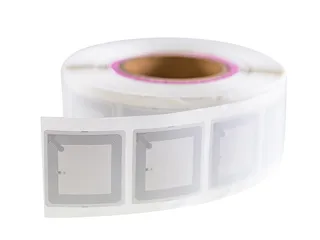
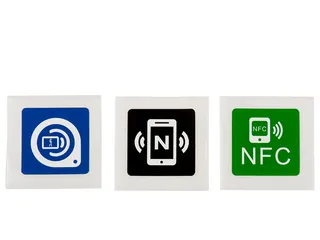
NTAG213 NFC Labels & Stickers
Proud Tek's NTAG213 NFC labels are 13.56 MHz stickers for product links: NXP's NFC Forum Type 2 chip with 144 bytes of user memory holds an NDEF message of up to 137 bytes — a web address of up to 132 characters after https://www. Each label carries a 7-byte UID, password protection and an ECC originality signature; a static link identifies the product but does not authenticate it. Made in Proud Tek's Shenzhen factory; free samples and bulk quotations available.
NTAG213 NFC labels for product links, digital instructions and tap-to-web projects. Choose the label construction around your packaging surface, artwork and intended phone or reader. Send the quantity, label dimensions and encoding requirements to request an NTAG213 quotation or a sample for your pilot.
Need authenticated dynamic messages for a connected-product project? Compare our NTAG424 DNA label before selecting the chip.
Free standard samples · Quotation within one business day
Product details
Choose NTAG213 for a product link
For a label that opens product information, an instruction page or your own landing page, start with the actual URL and the intended user journey. Test the encoded record before approving artwork so the printed call to action matches what the tap does. If you are still choosing between a tap and a printed QR code for the same link, our RFID vs QR code guide compares the two.
| Chip characteristic | NTAG213 |
| NFC interface | 13.56 MHz; ISO/IEC 14443 Type A; NFC Forum Type 2 Tag |
| User memory | 144 bytes; an NDEF message of up to 137 bytes as delivered |
| Identifier | Manufacturer-programmed 7-byte UID |
| Memory controls | Configurable password protection and read-only locking |
| Label construction | Confirm face material, adhesive, antenna and dimensions in the quotation |
The interface and memory values are chip specifications from the NXP NTAG21x data sheet. They do not establish the read range, weather resistance or adhesive performance of a finished label.
NTAG213, NTAG215 and NTAG216 labels compared
| Chip | User memory | Largest NDEF message | UID | Password | NFC counter | Operating distance |
| NTAG213 | 144 bytes | Up to 137 bytes | 7-byte | 32-bit | Yes | Reader and antenna dependent |
| NTAG215 | 504 bytes | Up to 492 bytes | 7-byte | 32-bit | Yes | Reader and antenna dependent |
| NTAG216 | 888 bytes | Up to 868 bytes | 7-byte | 32-bit | Yes | Reader and antenna dependent |
Measure the complete encoded NDEF message, including its overhead. A longer record may need a larger chip; extra memory alone does not improve the label antenna or confirm phone compatibility. If only the web content changes, a URL you control can keep the label useful without rewriting it.
*The three chips differ almost only in memory. All of them carry a manufacturer-programmed 7-byte UID, 32-bit password protection, an automatic NFC read counter and an ECC originality signature, with 10-year data retention and 100,000 write cycles, per the NXP NTAG21x data sheet. The 100 mm operating distance in that data sheet is a chip reference measured with a test antenna and depends on field strength and antenna geometry; a finished sticker antenna is smaller, so a label reads at a shorter distance.
Which NTAG213 label suits your project
Start from the record you need to store and how the tag will be used, then pick the smallest chip that holds it comfortably.
- URL and product-link tags: an NTAG213 label holds a typical web address with room to spare: up to 132 characters after https://www. Measure the complete encoded record, not the visible URL, and keep the destination on a page you control so the content can change without re-encoding the label.
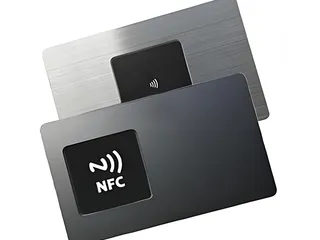
- Business cards and profile tags: a short link to a hosted profile fits NTAG213. A full vCard can exceed the 137-byte NDEF message an NTAG213 takes. Measure the complete record before selecting NTAG215 or NTAG216, and test how the target phones open it.
- Gaming and amiibo-style tags: figure data images of this kind need 504 bytes, which is why they use NTAG215. We supply blank, rewritable NTAG215 labels; you are responsible for the data you write and for any rights in it.
- Product authentication: a static NDEF URL identifies a product but does not authenticate it, because the record can be copied to another tag. For cryptographic verification, evaluate the NTAG424 DNA label, and define the dynamic-message verification and key-management responsibilities with your integrator.
Specify the label around the surface
- Mounting surface: identify paperboard, plastic, glass or metal, and tell us whether the contents include liquid. Test the sample in its final position on the filled package.
- Dimensions and artwork: supply the available area, shape, print file and any serial number or QR-code requirement. Available constructions and finishing are confirmed for the quoted label.
- Use conditions: describe indoor or outdoor exposure, cleaning and expected service life. Select and test the finished adhesive and face material for those conditions.
- Supply format: specify individual labels or rolls and, if relevant, your applicator requirements.
Agree the encoding before the batch
Tell us whether you need blank labels, the same URL on every label or individual records, and the data format you will send, such as a serial-to-URL file. The lock state is agreed in the quotation, and a sample demonstrates the exact delivery state. We read every encoded label back to check the record, and a data report accompanies each encoded order; labels printed with a serial number also come with a file pairing each label's UID with its serial, and both come as Excel, CSV or XML (encoding service).
- Write and read the full record with your intended tools, then check the destination on your target phones or reader.
- Decide who owns the destination URL and who will maintain the page after the labels are applied.
- Approve the record and future update process before enabling permanent read-only locks.
- For a project requiring cryptographic message validation, assess NTAG424 DNA labels with your integrator.
What to include in your NTAG213 enquiry
Send quantity, destination country, required date, label dimensions, mounting surface, artwork and encoding needs. If replacing a label, include the chip identification and reader or phone models. We can use those details to discuss a suitable sample and prepare a quotation with the agreed construction and delivery configuration.
For reader-based credentials, compare MIFARE stickers. Browse RFID readers when selecting encoding or test equipment; confirm support for your chip and software. See the full RFID labels range for other sticker formats.
Match the chip to what the tag stores
Compare the complete encoded record with the available user memory, then check the finished label and the encoding tool. The table gives a starting point for common payloads; the quotation confirms the offered chip and construction.
| Chip | User memory | Payload planning | Confirm before ordering |
| NTAG213 | 144 bytes | A short product link or hosted-profile URL; measure the encoded record. | The NDEF message can use up to 137 bytes; leave headroom and test the chosen label on its surface. |
| NTAG215 | 504 bytes | A larger record or several records that exceed NTAG213 capacity. A full vCard must be measured. | Check the complete record, encoding tool and quoted label construction. |
| NTAG216 | 888 bytes | Larger multi-record or offline data, within the available capacity. | Check the complete record and tools; compare prices for the same construction and quantity. |
Most projects never approach the limit. The common pattern is a short link on the tag and the rich content behind a URL you control, so NTAG213 is the usual choice and the destination can change without re-encoding. Buy more memory only when the data itself has to live on the tag, such as a full contact record, several records or an offline payload. The chips share a command set, but the encoding software must support the selected variant, its memory bounds and configuration addresses. Test a change of chip with the intended tools.
How much of a URL actually fits
An NDEF message does not use the whole user-memory figure. It sits inside a short TLV wrapper — a type byte (0x03), a length field and the message, then a 0xFE terminator only when space remains — and each record in the message carries its own header. User memory starts at page 4. As delivered, an NTAG213 starts it with a 5-byte Lock Control TLV, so the NDEF TLV begins at page 5, byte 1. That leaves at most 137 bytes for the NDEF message on NTAG213; NTAG215 and NTAG216 allow 492 and 868 bytes.
A web address is stored as a URI record: a single prefix byte stands in for a common scheme (0x02 for https://www., 0x04 for https://, 0x03 for http://), then the remaining characters as text. So https://www. costs one byte, not twelve. After the 4-byte record header and the prefix byte, an NTAG213 label holds up to 132 characters after https://www.; plan for fewer, to leave headroom. Long tracking parameters, a vCard or a second record are what push a design towards NTAG215 or NTAG216. Measure the complete encoded record during sample testing, not the visible URL. Our NTAG213 vs NTAG215 vs NTAG216 comparison works through the byte count and maximum URL length for each chip. The NDEF generator and tag capacity checker shows the encoded bytes of your link and the space left on NTAG213, NTAG215 and NTAG216.
Reading the label on iPhone and Android
A label carrying a well-formed https link record needs no app on a current phone; our NFC cards guide explains which iPhones read it in the background and how Android handles it. What is specific to a label is where it sits:
- Placement: an iPhone reads at its top edge, so put the tap mark where a customer can bring that edge to it on the finished pack. On Android the antenna sits in a different place from model to model; try the label on the handsets your customers use.
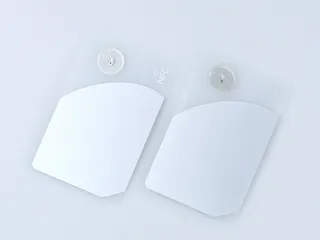
- Metal surfaces: a label placed directly on metal is detuned and may stop reading. Specify an on-metal construction for a metal surface and test it in place.
- Reads on Android but not iPhone: the chip is usually one iOS does not read natively, such as MIFARE Classic, rather than a defective label; NTAG213 avoids that mismatch. See MIFARE stickers for reader-based credential chips.
Password protection and its limits
NTAG21x offers a 32-bit password (PWD) and a 16-bit acknowledge (PACK). AUTH0 sets the first protected page. PROT selects write-only protection (0) or read/write protection (1); protected operations require a successful PWD_AUTH. A configured AUTHLIM limit can permanently block the protected access after too many unsuccessful attempts. Check these settings on the sample before issuing a batch.
Treat this as a deterrent against casual rewriting, not as authentication. The password is a single 32-bit secret, often shared across a batch, and it does nothing to stop a static NDEF record being copied byte-for-byte onto another tag: the copy carries the same URL and reads identically. The originality signature supports checking the chip’s NXP origin; it does not authenticate the payload or the product. For a project that must cryptographically verify each tap, evaluate the NTAG424 DNA label, with a configured dynamic message and a verification service agreed with your integrator.
How NTAG213, 215 and 216 memory is laid out
NTAG21x memory is a flat address space of four-byte pages. Encoding tools and reader firmware address pages (0x00, 0x04, 0x28 and so on), not byte offsets, because READ and WRITE operate on whole pages. The three chips share the same layout; only the size of the user region and the address of the configuration block move up as memory grows.
| Memory region | NTAG213 | NTAG215 | NTAG216 | Function |
| UID + BCC0 (BCC1 shares page 2) | pages 0–1 | pages 0–1 | pages 0–1 | 7-byte serial number, manufacturer-programmed and read-only |
| Internal / static lock | page 2 | page 2 | page 2 | Static lock bytes write-protect pages 3–15 |
| Capability container | page 3 | page 3 | page 3 | NFC Forum Type 2 CC; set once, usually locked |
| User memory (NDEF) | pages 4–39 | pages 4–129 | pages 4–225 | 144 / 504 / 888 bytes user memory; NDEF message up to 137 / 492 / 868 bytes as delivered |
| Dynamic lock bytes | page 40 (0x28) | page 130 (0x82) | page 226 (0xE2) | Write-protect user pages above 15 |
| CFG0 / CFG1 | pages 41–42 | pages 131–132 | pages 227–228 | Mirror, AUTH0 start page, access and counter settings |
| PWD | page 43 (0x2B) | page 133 (0x85) | page 229 (0xE5) | 32-bit password; write-only, reads return zero |
| PACK | page 44 (0x2C) | page 134 (0x86) | page 230 (0xE6) | 16-bit password acknowledge returned after PWD_AUTH |
| Address range | 0x00–0x2C | 0x00–0x86 | 0x00–0xE6 | 45 / 135 / 231 four-byte pages in total |
The 24-bit NFC read counter and the ECC originality signature are chip features, not user pages. When enabled, the counter increments once per tap, on the first READ or FAST_READ after the tag enters the field, and is returned by READ_CNT; the signature is read with READ_SIG and verified against NXP's public key to confirm genuine silicon. Neither consumes NDEF space. A WRITE always replaces a full four-byte page, so a reader changing a few bytes must read the page, modify it and write it back.
The NTAG21x command set
The command set is short and shared across the family. A tap runs anti-collision, then the reader can identify the chip, read or write pages, and optionally authenticate. Every command is a one-byte opcode followed by its parameters.
| Command | Opcode | What it does |
| GET_VERSION | 0x60 | Returns eight bytes identifying the chip; the storage-size byte distinguishes NTAG213, 215 and 216 |
| READ | 0x30 | Reads 16 bytes (four pages) from the requested start page |
| FAST_READ | 0x3A | Reads a contiguous range of pages in one command; used for bulk NDEF reads |
| WRITE | 0xA2 | Writes one four-byte page |
| COMPATIBILITY_WRITE | 0xA0 | Legacy write retained for older Type 2 readers; still writes a single page |
| PWD_AUTH | 0x1B | Submits the 32-bit password; the tag returns the PACK on success |
| READ_CNT | 0x39 | Returns the 24-bit NFC read counter when the counter is enabled |
| READ_SIG | 0x3C | Returns the 32-byte ECC originality signature over the UID |
| SECTOR_SELECT | — | Used on larger-memory chips to page between sectors; not applicable to NTAG21x, whose memory fits one address space |
GET_VERSION helps a reader identify the variant. The encoding software must then use the correct memory bounds and configuration addresses; shared command names alone do not establish support for every capacity. Test reading, writing and the final lock settings on the selected sample.
Specify your NTAG213 labels
Discuss your specification →Frequently asked questions
Is NTAG213 large enough for my URL?
Usually. As delivered, an NTAG213 takes an NDEF message of up to 137 bytes, which is a URL of up to 132 characters after https://www. Check the complete encoded message against that limit, and use the final URL and encoding tool during sample testing; a short visible URL is not the same as the full encoded record.
Can an NTAG213 label be applied to metal?
Metal can interfere with a standard label antenna. Specify the exact surface and request a suitable construction for evaluation. Approve a sample on the actual object; do not assume a standard paper label will work on metal.
Can I change the destination after the labels are printed?
If the label points to a URL you control, you can manage the content served by that URL. Changing the record stored on the chip depends on its access and locking settings: the password holder can rewrite a password-protected label, but NTAG21x lock bits are one-way and cannot be cleared once set. Agree that distinction before ordering, and approve the encoded record before any lock bit is set.
Is an NTAG213 label an authentication solution?
A label that opens a static web address does not by itself authenticate the physical product. If your project needs cryptographic message validation, compare NTAG424 DNA labels and agree the verification workflow with your integrator.
What should I test before placing a bulk label order?
Test the encoded content, tap position, print readability and adhesive on the final package with your intended phones or reader. Include any application equipment and use conditions in the pilot. Approve the sample and data requirements before the batch.
Which NTAG chip do amiibo-style tags use?
They use NTAG215, because the figure data image needs its 504 bytes of user memory; NTAG213 with 144 bytes is too small for that record. We supply blank, rewritable NTAG215 labels for you to encode, and you are responsible for the content you write and any rights in it.
Does an NTAG213 label read on iPhone without an app?
Yes, if the label holds an https link record. From the iPhone XS on, the phone picks the link up without an app while it is in use, prompting for unlock if the screen is locked; iPhone 7, 8 and X first need NFC Tag Reader opened from Control Centre (iOS 14 or later). Only link records trigger this, so a contact or plain-text record written to the label needs an app on iPhone. Hold the label to the top edge of the phone, and test the encoded sample on the models used in your project.
How can I confirm a label uses genuine NTAG silicon?
GET_VERSION identifies the reported chip variant, and READ_SIG returns an ECC originality signature over the UID that a suitable tool can check against NXP’s public key. NXP describes this as an originality check with a degree of confidence. Use it alongside supplier traceability and sample acceptance; it does not authenticate the stored content or the tagged product.
Buyer guides
- How NFC Tags Work with iPhone & Android How NFC tags work with iPhone and Android: the 13.56 MHz link, NDEF records, background reading, metal interference, and fixes when a tag won't scan.
- How to Program NFC Tags (Android & iPhone) How to program NFC stickers and cards on Android and iPhone: NDEF records, NFC Tools and NXP TagWriter, desktop readers, locking and pre-encoding.
- NFC vs RFID: The Difference Between NFC and RFID Explained NFC vs RFID explained for buyers: NFC is a 13.56 MHz subset of RFID. Compare range, modes, smartphone support and standards, and choose the right one.
Ready to specify your order?
Send the product, quantity and application so we can confirm the options and pricing for your project.