RFID Tags
Custom RFID Tags (Non-Standard)
Custom RFID tags start from your drawing, not a catalogue — on-metal, epoxy-sealed, cable-tie or embeddable, in LF, HF or UHF — engineered in Proud Tek's Shenzhen factory for the object they live on.
Custom RFID tags made to your drawing or use case: on-metal tags, rugged tags sealed in epoxy or in ABS, PC or PPS housings, cable-tie and hanging tags, embeddable tags for tools, pallets and returnable containers, and tamper-evident constructions, in LF, HF or UHF. Proud Tek designs and produces them in its Shenzhen factory.
Each design follows the same path: your requirement, a feasibility check, a drawing and samples, a test on your own objects and readers, then the order. IP, temperature, chemical and wash ratings are stated for the specific design and verified in a sample test agreed with you. A new housing shape may need a mould (tooling), and the 2–3 week lead time shown for standard items does not apply to a new custom design.
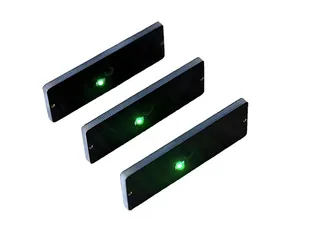
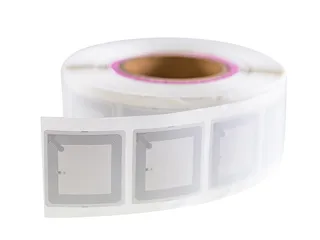
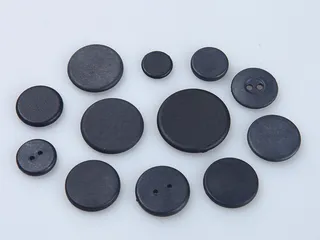
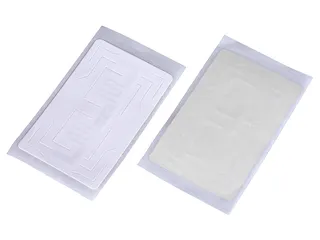
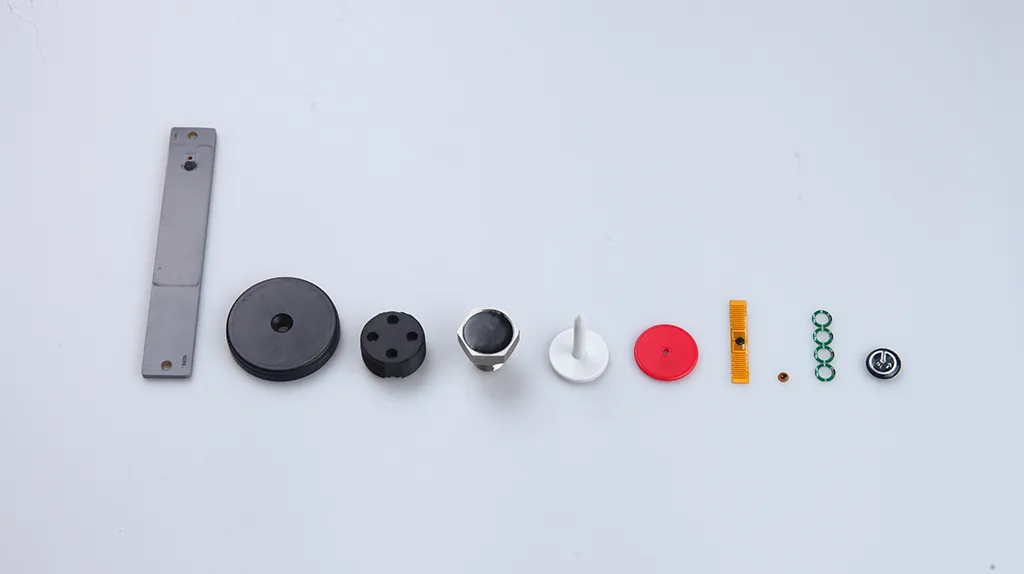
Photos: examples of rigid and embeddable tag formats, and a flexible on-metal UHF tag with an LED. They show construction types, not a stock list; the chip, size and ratings of a quoted tag are confirmed per design.
Free standard samples · Quotation within one business day
Product details
What counts as a custom RFID tag
A custom (non-standard) RFID tag is built around the object, surface and environment rather than taken from a standard label or card. The chip is a standard part from a maker such as NXP, Impinj, Alien or EM Microelectronic; the antenna, housing, fixing and encoding are made to order. Proud Tek designs and produces these tags in its Shenzhen factory, to your drawing or from a description of the use case.
On-metal and anti-metal tag mean the same thing: a tag built to read while mounted on metal. Hard tag on this page means a rigid, encapsulated tag, not a retail security tag.
Constructions we design and produce
Proud Tek produces six custom constructions: on-metal, encapsulated, cable-tie and hanging, embeddable, PCB-based and tamper-evident.
| Construction | Typical use | Settle before sampling |
| On-metal (anti-metal) tag: rigid or flexible UHF tag with a spacer layer, or an HF tag with a ferrite layer | IT assets and racks, machinery, steel containers, drums, kegs, gas cylinders | Metal type and curvature, fixing, regional band, read direction |
| Rugged encapsulated tag: an inlay sealed in epoxy or in an ABS, PC or PPS housing | Outdoor and yard assets, pallets, industrial laundry (PPS) | Sunlight, water, chemicals, impact and heat cycles; the rating is confirmed in the agreed sample test |
| Cable-tie and hanging tag | Pipes, hoses, cables, valves, bundles, sacks | Tie material and loop size; whether removal must destroy the tag |
| Embeddable tag | Tools, wooden or plastic pallets, crates, moulded parts | Pocket size, surrounding material (especially metal), potting method |
| PCB-based tag (FR4 or flexible circuit) | Small assets and parts where a thin, stiff tag is needed | A small antenna reads at a shorter distance; test on the object |
| Tamper-evident construction | Seals on doors, cases, meters and containers; labels that must not be moved | What removal must do: stop the tag reading, tear the face, or record an opening |
Several already exist as standard products: the PPS and silicone laundry tags, the on-metal MIFARE sticker, the LED UHF tag in on-metal and PCB versions, ABS, FR4 and epoxy-coated DESFire tags, and the tamper-evident windshield tag. Start from one of those if it is close; if a printed label or a bare inlay is enough, see UHF RFID labels and UHF RFID inlays.
Why metal and liquids change the design
The material behind a tag changes how its antenna behaves. A standard UHF label stuck directly on steel is detuned and may not read at all, and liquid behind a UHF tag reduces its range. Impinj describes metal as reflecting RF signals and liquids as absorbing RF energy (Impinj on hard-to-tag items).
On-metal UHF tags use a spacer layer or an antenna designed for a metal surface; HF on-metal tags add a ferrite layer behind the antenna. Both are thicker than a plain label. A drum, keg or gas cylinder usually needs a flexible on-metal tag, a housing shaped to the curve, or a rigid tag on a flat mounting point; send the diameter and the mounting position. A read distance only means something when it is measured on the actual object with the actual reader.
LF, HF or UHF: choose by the reading task
Choose the frequency from how the tag will be read, not from the housing: passive UHF RFID (also marketed as RAIN RFID) reads many tags at a distance, HF suits close, deliberate reads including NFC phones, and LF suits existing 125 kHz systems.
| Band | Standard or chip example | How it is read | Custom tags it suits |
| LF, 125 kHz class | EM4305: 100–150 kHz, ISO 11784/11785 compliant | Short range, close to the reader | Existing 125 kHz systems; disc, fob and epoxy formats. Standard items: 125 kHz stickers and EM4305 cards |
| HF, 13.56 MHz | ISO/IEC 15693 (ICODE SLIX2); NFC Forum Type 2 (NTAG21x) | Shorter range than UHF; desk, handheld or gate readers; NFC phones read both NTAG (Type 2) and ICODE SLIX2 (Type 5) | Tool issue at a counter, inspection taps with a phone, HF laundry systems |
| UHF | GS1 EPC Gen2, standardised as ISO/IEC 18000-63 | Longer range, many tags in one read | Pallets, returnable containers, IT assets, yard and outdoor assets |
UHF tags are tuned for a regional band: 865–868 MHz in Europe under ETSI EN 302 208 and 902–928 MHz in the United States under FCC 47 CFR 15.247, so tell us every country of use. The air interface is GS1's EPC Gen2 standard: a Gen2 reader in the matching band can inventory the tag whatever Gen2 chip it carries.
Chip options
The chip sets memory, sensitivity and security; the construction sets where the tag reads. Figures are the chip makers' published data, not ratings of a finished Proud Tek tag; the chip and its availability are confirmed in the quotation.
| Chip | Band and protocol | Memory | Why choose it |
| NXP UCODE 9 | UHF, EPC Gen2v2.1 | 96-bit EPC; no user memory; factory-locked 96-bit TID | ID-only tags; -24 dBm read sensitivity per NXP |
| Impinj M780 / M781 | UHF, Gen2v2 / ISO 18000-63 | M780: 496-bit EPC and 128-bit user memory. M781: 128-bit EPC and 512-bit user memory | Long EPCs such as SGTIN-198 (M780) or service data on the tag (M781); -23.5 dBm read sensitivity per Impinj |
| Impinj M730 / M750 | UHF, Gen2v2 / ISO 18000-63 | M730: 128-bit EPC, no user memory. M750: 96-bit EPC and 32-bit user memory | ID tags; -24 dBm read sensitivity per Impinj |
| Impinj M830 / M850 | UHF, Gen2v2 / ISO/IEC 18000-63 | M830: 128-bit EPC. M850: 96-bit EPC and 32-bit user memory | Newer generation (July 2023); drop-in compatible with M700 antenna designs, per Impinj |
| Alien Higgs-9 | UHF, Gen2 / ISO/IEC 18000-6C | 1,024 bits shared: 96-bit EPC nominal (up to 496) and up to 688-bit user memory, not both at maximum; 48-bit unique TID | Larger user memory on an Alien chip |
| NXP ICODE SLIX2 | HF, ISO/IEC 15693; NFC Forum Type 5 | 2.5 kbit user memory | ISO 15693 reader systems and NFC phone reads; originality signature |
| NXP NTAG213 / NTAG216 | HF, NFC Forum Type 2 | 144 or 888 bytes user memory | NFC phone taps, such as opening an inspection record from the tag |
| EM Microelectronic EM4305 | LF, 100–150 kHz | 512-bit EEPROM, 32-bit UID | 125 kHz systems; ISO 11784/11785 compliant |
Choose user memory when data must travel with the object, such as a tool's service date; otherwise an EPC-only chip, with the record held in your software, is simpler.
Identifiers and encoding
A custom tag can be supplied encoded to your numbering scheme. GS1's EPC Tag Data Standard gives EPC encodings for two asset keys: the GRAI (Global Returnable Asset Identifier) for items shipped and returned for reuse, such as crates, pallets and beer kegs (GS1 GRAI summary), and the GIAI (Global Individual Asset Identifier) for a single asset you keep, such as a computer, a vehicle or a piece of transport equipment (GS1 GIAI summary).
Encoding, locking and passwords are agreed in the quotation through the RFID encoding service. We read back each tag we encode, and every encoded order comes with a data report. Printed or laser-marked numbers, barcodes and logos can be added where the housing allows; numbered tags come with an Excel, CSV or XML list pairing each tag's UID, TID or EPC with the number marked on it.
From requirement to order
Every custom tag goes through five steps; the production order follows only after the sample has passed your test.
- Requirement. You describe the object, surface, environment, reader and data. A drawing or a photo of the mounting position helps.
- Feasibility. We propose a construction, chip and size, and say plainly what cannot be met, such as a read distance the size cannot give or a rating the material cannot reach.
- Drawing and sample. We confirm a drawing with dimensions, materials and fixing, then make samples. If no existing housing fits, a new mould (tooling) is needed; the quotation states whether tooling applies and its terms. A setup fee applies to customised samples.
- Test in your environment. You test the samples on the real object, with your readers, in the conditions the tag will meet: washing, outdoor exposure, heat, chemicals or impact. Agree the pass and fail criteria first.
- Order. The approved sample, drawing and encoding record become the order specification. Production lead time is confirmed at order, after sample approval.
Ratings are confirmed per design
This page gives no IP, temperature, chemical or wash rating: a rating belongs to a specific construction and test, not to a family of tags. Tell us the conditions; the rating is confirmed for the proposed design, then verified in a sample test agreed with you.
- Water and dust: IP codes are defined in IEC 60529. Ask which test a rating is based on, not only for the code.
- Temperature: the working range and any peaks, such as paint curing, autoclaving or a hot wash, with duration and cycles. A chip's datasheet range is not the finished tag's rating.
- Chemicals and washing: name the chemicals, concentrations, temperatures and cycle count. For laundry, the laundry tracking guide lists what a wash-process specification should contain.
- Mechanical: impact, abrasion, vibration and pressure. Say how the tag is fixed; the fixing is part of the test.
Common requests and how they are built
For asset tagging, the choice is mostly between an on-metal, an encapsulated and an embedded UHF tag; the surface, fixing and handling decide which. The GS1 key column uses the identifiers above: GRAI for assets shipped and returned, GIAI for assets you keep.
| Request | Usual construction | Typical GS1 key | Watch point |
| IT asset or rack tag | Small on-metal UHF tag, adhesive or screw-fixed; asset number printed or laser-marked if needed | GIAI | Read direction inside a rack; mixed metal and plastic cases |
| Outdoor or waterproof asset tag | Encapsulated tag or sealed housing, screwed or riveted to the asset | GIAI | Sunlight, water ingress and temperature cycles, checked in the agreed sample test |
| Drum, keg or gas-cylinder tag | Flexible on-metal tag, a housing shaped to the curve, or a rigid tag on a flat mounting point | GRAI if shipped and returned | Diameter and mounting position, handling impact, filling and cleaning process |
| Pallet tag | Tag nailed, screwed or embedded in a wooden or plastic pallet; on-metal for steel pallets | GRAI | Which faces must be read; forklift impact |
| Returnable container tag | Tag embedded, riveted or moulded into a crate, tote or bin | GRAI | Washing process, stacking, many containers read together |
| Tamper seal tag (the RFID part of a seal) | A tamper-evident tag, or a tag insert for your seal body, that stops reading when removed or broken | Your seal number | ISO 17712 covers mechanical freight-container seals; Proud Tek does not claim the seal body or that classification |
| UHF hard tag | Rigid encapsulated UHF tag in epoxy or an ABS, PC or PPS housing | GIAI, or GRAI if shipped and returned | Not a retail anti-theft (EAS) tag; EAS function is not claimed |
System context: RFID tool tracking, RFID inventory tracking and supply chain identification.
What is an RFID seal tag?
An RFID seal tag is a one-time seal, or the tag inside one, whose number can be read by radio as well as by eye. A tamper-evident tag or label shows an opening to the reader: it stops reading, or its chip records an opening. In a bolt or cable seal, the seal body shows tampering and the tag carries the number. Proud Tek makes the RFID part: tamper-evident tags and labels, and tag inserts for seal bodies, each confirmed per drawing and sample.
| How it shows tampering | How it is read | Typical use |
| Break-on-removal: cuts through the face and antenna make it tear when peeled, as on our windshield tag | Your UHF or HF reader; a tag that no longer reads is flagged | Doors, cases, meters, cartons |
| Detection loop: an NTAG424 DNA TagTamper chip, with the feature enabled, records a permanent Open status at its next read after the loop is broken; it cannot be reset (NXP data sheet, section 10) | NFC phone or HF reader; status in the NDEF (SDM) message or by command. Chip variant confirmed in the quotation | Cases, boxes, bottles |
| Seal body from a seal maker (bolt, cable or pull-tight) shows tampering; our insert carries the seal number and can be designed to break when the seal is cut or the tag removed, confirmed on samples | Your UHF handheld or gate reader | Containers, trailers and railcars (bolt or cable); pull-tight where an indicative seal is enough |
RFID seals for shipping containers
An RFID container seal is a one-time bolt or cable seal with a passive RFID tag inside, so your UHF handheld or gate reader can log the seal number with the shipment. Proud Tek makes the tag insert; the seal body and its ISO 17712 certificate come from the seal maker. ISO 17712 classes mechanical freight-container seals as indicative, security or high-security (I, S or H), and a class mark requires accredited laboratory testing. For CTPAT importers, CBP's minimum security criteria require a high-security seal meeting the current ISO 17712 standard on shipments that can be sealed; qualifying cable and bolt seals both count. Battery-powered electronic seals (ISO 18185) are a separate device we do not supply.
For a seal tag, add to your enquiry: the seal body (drawing or sample), what opening must do, and whether the encoded EPC must match the printed seal number or the chip's UID or TID is printed or exported as the number; intact and opened samples are then tested.
RFID tags for hydraulic hoses and cables
An RFID hose tag is a rugged tag fixed to a hydraulic hose assembly with a cable tie, strap or clamp, or on the hose fitting. Its ID links the assembly to your maintenance record (part number, installation date, inspections) and is read with your handheld reader or, for HF tags, an NFC phone. Proud Tek makes the tag, not the hose, fittings, UHF readers or software; the same constructions suit cables and pipes.
| Design point | Confirmed on drawing and samples |
| Metal: wire-braid or spiral-wire hose, as in ISO 1436 and ISO 3862, and metal fittings | An on-metal design (UHF spacer or HF ferrite) that reads on your hose; on textile-reinforced or thermoplastic hose, the sample shows whether a standard tag reads |
| Fixing: tie, strap or clamp on the hose, or on the fitting | Material and size on the drawing; the tag stays put under vibration and flexing |
| Fluids: hydraulic fluid leaks, cleaners, pressure washing | Name the fluid and cleaners, plus sunlight and heat; no chemical rating is claimed here |
What to send for a quotation
- Existing tag: if you are replacing a tag you use now, send a sample or its datasheet.
- Object and surface: steel, aluminium, plastic, wood or glass; flat or curved; a photo of the mounting position.
- Space: maximum length, width and thickness, or a drawing.
- Fixing: adhesive, screws, rivets, cable tie, embedding or moulding-in.
- Environment: indoor or outdoor, temperature range and peaks, water, chemicals, washing, impact.
- Reading: reader make and model, countries of use, required read distance and direction, and how many tags are read together.
- Chip and data: chip if your system specifies one, memory needs, numbering scheme, locking and the fields you need in the data report.
- Marking and tamper behaviour: print, laser marking, barcode or QR code; what removal must do.
- Commercial: sample quantity, order quantity, annual volume, destination and target date.
If something is unknown, say so; the feasibility step settles it. Send the details through the inquiry form; we reply with a quotation within one business day of a workable enquiry.
What we confirm per order
| Item | Confirmed in the quotation or on the approved sample |
| Chip | Chip model, memory configuration and availability for the batch |
| Construction | Drawing with dimensions, materials, fixing and colour |
| Tooling | Whether an existing housing fits or a new mould is needed, and the tooling terms |
| Band | UHF regional tuning, or the LF or HF standard |
| Ratings | The conditions the design is made for (quotation) and the conditions the approved sample passed (order specification) |
| Encoding and marking | Numbering, locking, passwords, data-report fields, printed or laser marks |
| Samples | Sample quantity and the setup fee for customised samples |
| Lead time and terms | Production lead time after sample approval, minimum quantity, price, packing and delivery |
The 2–3 week standard lead time does not apply to a new custom design.
What Proud Tek does not supply
We make the tags. We do not supply UHF fixed or handheld readers, reader antennas, label printers or encoders, race-timing systems, software or WMS integration, or BLE beacons. Our RFID readers are desktop NFC readers and a handheld 134 kHz reader for FDX-B animal tags. Your integrator or reader vendor supplies the rest; we send samples for their tests.
Plan the application
Frequently asked questions
Do I need an on-metal tag, and is anti-metal the same thing?
On metal, yes: metal directly behind a standard UHF label detunes the antenna, and the label may not read at all. On-metal and anti-metal are two names for one thing, a tag built to read while mounted on metal. A UHF version uses a spacer layer or an antenna designed for a metal surface; an HF version adds a ferrite layer behind the antenna. Both are thicker than a plain label, so send the metal type, curvature, fixing and the space available, and read a sample on the actual object with your reader. On plastic, glass or wood, a standard UHF RFID label may be enough.
What IP rating and temperature range do your custom tags have?
None is stated on this page, because a rating belongs to one construction and one test. Tell us the conditions: water or dust exposure, the working temperature range and any peaks with their duration and cycle count, chemicals and washing. The quotation states the conditions the design is made for. The sample is then tested on your object and in your process, and the conditions it passed are written into the order specification.
How long does a custom RFID tag take?
We reply with a quotation within one business day of a workable enquiry; for a new design that quotation covers the proposed construction and the samples, and production lead time is confirmed after sample approval. Samples follow once the drawing is confirmed, and a setup fee applies to customised samples. If a new housing shape needs a mould (tooling), the quotation says so and gives the tooling terms. The general 2–3 week lead time applies to standard items, not to a new custom design.
Do you make RFID bolt seals or tamper-evident seal tags?
We make the RFID part: tamper-evident tags and labels, and tag inserts for a seal body. A break-on-removal tag tears through its antenna and stops reading; an enabled NTAG424 DNA TagTamper chip records a permanent Open status at its next read after its loop is broken (variant confirmed in the quotation). In a bolt or cable seal, the seal body shows the tampering and the insert can be designed to break with it, confirmed on samples. We do not claim ISO 17712 classification for any product: it covers mechanical freight-container seals, so a certified seal body and its certificate come from the seal maker. Send the seal design and we confirm whether a tag fits it.
How do you attach an RFID tag to a hydraulic hose?
With a cable tie, strap or clamp around the hose, or on the hose fitting. On wire-reinforced hose and metal fittings the tag usually needs an on-metal design; on textile-reinforced or thermoplastic hose, a sample read shows whether a standard tag works. Send the hose type and reinforcement, outside diameter, fluid and space available; fixing and fluid exposure are checked on samples.
Is a UHF hard tag the same as a retail anti-theft tag?
Not here. On this page a hard tag is a rigid, encapsulated UHF tag for assets, pallets or containers. Retail security tags that also work with electronic article surveillance (EAS) gates are a different product, and EAS function is not claimed. If a tag must work with a store's EAS system, name the system in your enquiry.
Which frequency should a tool or pallet tag use?
It depends on how it is read. UHF suits reading many pallets or containers at a dock door or with a handheld UHF reader. HF suits tools issued one at a time at a counter or checked with an NFC phone. LF suits existing 125 kHz systems. The RFID tool tracking page compares the options for tools.
Do you supply the readers, beacons and software?
Not UHF readers, beacons or software. We make the tags; UHF fixed and handheld readers, printers and encoders, race-timing systems, software or WMS integration and BLE beacons come from your integrator or reader vendor. The only readers we list are desktop NFC readers and a handheld 134 kHz reader for FDX-B animal tags, under RFID readers. If you are deciding between tags and beacons, see NFC vs Bluetooth.
Buyer guides
- How to Read an RFID Tag Quotation, Line by Line What decides RFID card and tag prices, and how to compare quotations line by line: unit-price basis, tooling, encoding, samples, freight and Incoterms.
- RFID RFP Template: Questions to Ask Every Supplier An RFID RFP template for distributors: the supplier questions that produce comparable quotes, and how to read the replies against one specification.
- RFID MOQ, Explained: How Minimums Form and How to Discuss Them How RFID MOQ forms from chip lots, inlay rolls, print sheets and setup — and how buyers can discuss a smaller pilot or first order honestly.
Ready to specify your order?
Send the product, quantity and application so we can confirm the options and pricing for your project.