Analytics cookies. Can we use Google Analytics and its cookies to see how visitors use this site? Change this any time under Cookie settings in the footer. Privacy policy
An RFID windshield tag is a UHF label for the inside of a windscreen — read at a distance by gate antennas — for tolling, parking and gated communities where stopping to tap a card is not an option.
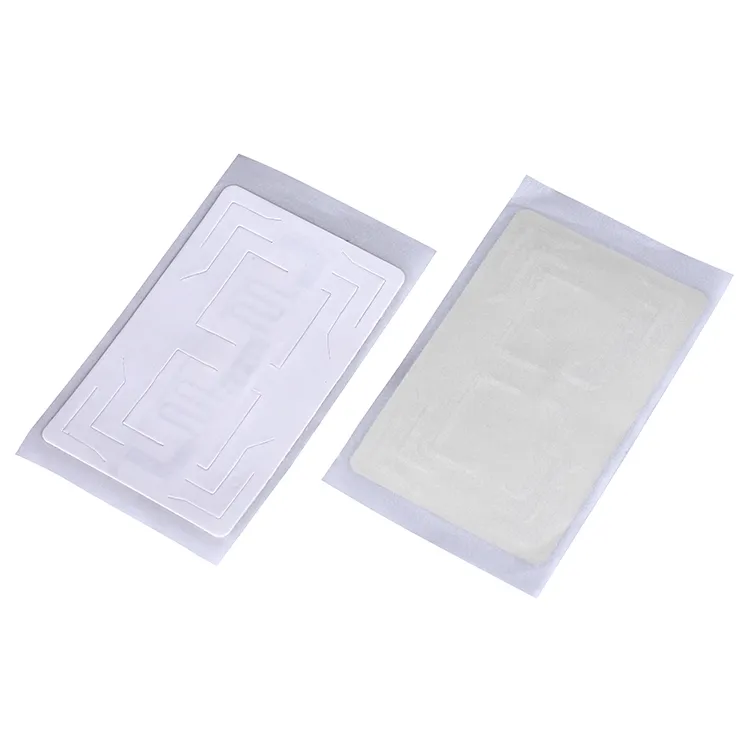
An RFID windshield label is a specialized tag designed to be affixed to the inside of a vehicle’s windshield. This label uses Radio Frequency Identification (RFID) technology to enable fast and contactless identification of the vehicle. The label typically contains a unique identifier that can be read by RFID readers positioned at toll gates, parking garages, security checkpoints, or other entry and exit points.
Proven construction: this windshield tag uses an inlay construction that is widely used for vehicle identification.
Customization: we offer antenna customization for the RFID windshield tag.
Personalization: Logo printing and other personalization can be provided.
How the windshield tag is built
The tag is a printed paper label with a UHF inlay inside it. From the outside in: a paper face that carries your print, the inlay with an aluminium antenna etched on a thin PET film and the chip bonded to it, a pressure-sensitive adhesive, and a release liner. The label is applied to the inside of the windshield with the print facing into the car, and is read from outside through the glass. The antenna is not a generic inlay. Glass sits directly against it and shifts its resonant frequency, so the antenna geometry is tuned for the dielectric of automotive glass. That is what the "antenna customised for glass" feature above refers to, and it is why a general-purpose UHF label stuck to a windshield reads poorly.
Tamper evidence: how the dummy kerf works
A vehicle credential is only useful if it stays with the vehicle it was issued to. The tamper-evident version has a pattern of die cuts, the dummy kerf, through the paper face and the antenna layer. While the tag sits on the glass the cuts are harmless. When someone tries to peel the tag off to move it to another car, the face tears along the cuts and the antenna breaks, so the tag stops reading; there is no way to transfer it intact. The cuts are visible under close inspection and do not affect the print. A standard version without the cuts is available for fleets that move tags between pool vehicles or use the tag for tracking rather than access.
Chip options
Chip
EPC memory
User memory
Notable feature
NXP UCODE 9
96 bits
None
Read sensitivity of -24 dBm, better than the -23 dBm of UCODE 8 (no longer manufactured), whose antenna designs it can re-use; the default when only an ID is needed
NXP UCODE 9xe
128 bits
None
The same -24 dBm read sensitivity with a 128-bit EPC; NXP's drop-in replacement for UCODE 9 and UCODE 8 where a system uses 128-bit EPCs
NXP UCODE DNA
224 bits
3 kbit
AES-128 authentication per ISO/IEC 29167-10: the reader can challenge the tag and prove it is genuine, which no other chip in this list can do
Impinj Monza 4QT
128 bits
512 bits
QT technology: a public and a private data profile, so the true EPC and user data can be hidden from unauthorised readers
Alien Higgs-9
96 bits, extendable to 496
688 bits
Large memory for vehicle details stored on the tag; 48-bit TID
NXP UCODE G2XM
240 bits
512 bits
Earlier generation with extended memory, still specified by some existing systems
All of them are EPC Class 1 Gen 2 / ISO/IEC 18000-63 chips and read on any Gen2 reader; the chip changes memory, sensitivity and security, not the reader. One security point matters for vehicle access: the EPC of any chip in the table can be read and written to another tag, so a system that grants access on the EPC alone can be fooled by a cloned tag. The TID is locked at the factory and cannot be copied, and access software should check it; UCODE DNA goes further with a cryptographic challenge that a clone cannot answer.
Encoding, locking and printing
We encode the EPC to your numbering scheme from the number list you send, permalock it if you want it fixed for life, and set the kill password you specify so that nobody else can disable the tag. On chips with a settable access password (for example Higgs-9 or Monza 4QT) we also set the access password you specify; on UCODE 9 and 9xe the access password is fixed at zero by NXP, so permalocking the EPC is what stops it being rewritten. On the face we print your logo, a serial number and a barcode or QR code that matches the EPC, so a guard or an installer can identify a tag without a reader. Each tag is read back once it is encoded, the order is delivered with a data report, and a file in Excel, CSV or XML lists every tag's TID and EPC against its printed serial for enrolment in your access software (RFID encoding service). The two standard sizes are 86 × 54 mm and 86 × 25 mm; the narrow one fits along the edge of the glass beside the mirror mount.
Where to place it and the glass problem
Position. Behind the rear-view mirror or in the upper passenger-side corner, out of the driver's view and at the height most gantry and pole readers are aimed at. Use the same position on every vehicle so the reader antenna is aimed once.
Application. Clean, dry glass, pressed on from the centre outwards. The pressure-sensitive adhesive reaches full bond strength over the following one to three days.
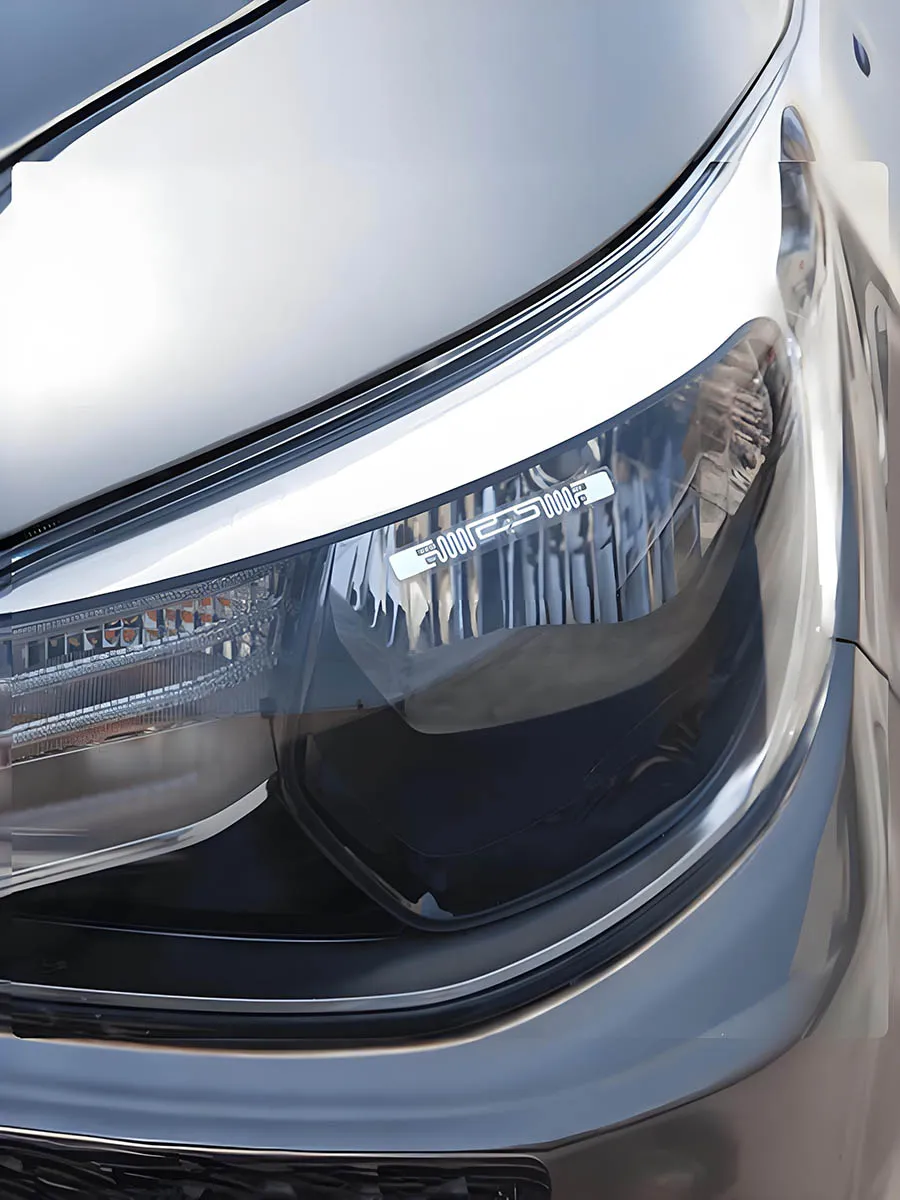
Metallised and heated glass. Many newer cars have an infrared-reflective metallic coating in the windshield, or heating wires in the glass, and both block UHF. These cars usually have an uncoated sensor window behind the mirror; if there is none, the tag goes elsewhere, and the RFID headlight sticker is made for exactly this case.
Tint film. Ordinary dyed tint does not block UHF; metallic tint film does.
Environmental limits
The specification above lists a working temperature of 0–40 ℃ and storage at -10 to 60 ℃ with 60–90 % humidity. Those are the figures we publish, and a windshield in summer sun or a winter car park can go beyond them. Tags of this construction are widely used in such conditions, but if your fleet sits in a climate that regularly exceeds them, ask for the test data for the batch you are quoted and run a sample set through a full season before the rollout.
Windshield tag or headlight tag?
The windshield tag is the right choice for most cars: it is inexpensive, prints well, is tamper-evident and is read from the front. The headlight sticker is the answer for metallised windshields, motorcycles, and fleets where the tag must sit outside the cabin. Both are compared with the other vehicle tag types on the vehicle RFID identification page.
Before you order
Reader and region: the reader make and model, and the regional band (865–868 MHz in Europe, 902–928 MHz in the Americas, other bands elsewhere); the antenna is tuned per band.
Tamper-evident or standard.
Chip: UCODE 9 or 9xe for ID-only systems (9xe where a UCODE 8 system used 128-bit EPCs), UCODE DNA where clone resistance matters, Monza 4QT or Higgs-9 where data lives on the tag.
EPC scheme, passwords and locking, and the fields the data report should carry.
Print: logo, serial, barcode or QR code; size 86 × 54 or 86 × 25 mm.
Vehicle mix: how many have metallised or heated glass.
Samples: 20–50 tags to test on your own reader and vehicles before the full run.
What Proud Tek makes and supplies
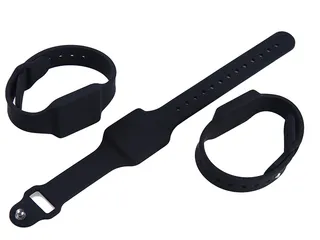
The windshield tags, encoded, locked and printed to your specification, with the TID/EPC list, and the headlight sticker for vehicles that cannot use them. We also make the UHF wristbands and the other RFID labels that share this inlay technology. We do not supply UHF readers, antennas, barrier controllers or access software; we supply samples for your reader vendor's or integrator's tests.
Plan the application
Frequently asked questions
How far can the windshield tag be read?
The specification gives 3–9 m. Where in that range you land depends on reader power and antenna gain, the regional band, the chip (UCODE 9 has the best sensitivity), the glass, and how well the tag position lines up with the reader antenna. Gantry readers at a barrier typically work at 3–6 m. Reader placement is discussed on the vehicle RFID identification page.
Will the tag work on my windshield?
On plain laminated glass, yes. Windshields with an infrared-reflective metallic coating or heating wires block UHF; most such cars have an uncoated sensor window behind the rear-view mirror where the tag will read. If there is no window, or the vehicle is a motorcycle, use the RFID headlight sticker instead. Tell us how many vehicles in your fleet have coated glass and we will supply both types for testing.
How is the tag tamper-evident?
Die cuts through the face and the antenna, called a dummy kerf, make the tag tear and the antenna break when it is peeled off, so it cannot be moved to another vehicle in working order. A standard version without the cuts is available for pool vehicles and tracking uses. Other tamper-evident constructions are listed under RFID labels.
Which chip should I choose?
UCODE 9 or UCODE 9xe when the system only needs an ID; both read at -24 dBm, and 9xe keeps the 128-bit EPC of UCODE 8, which NXP no longer manufactures. UCODE DNA when cloned tags are a real risk, because it authenticates with AES-128 under ISO/IEC 29167-10. Monza 4QT or Higgs-9 when vehicle data must be stored on the tag itself. The choice does not affect the reader; every option is an EPC Gen2 chip. See the vehicle RFID identification page for the system-level trade-offs.
Can the tag be cloned?
The EPC can be read and written to another tag, so an access system that checks only the EPC can be fooled. The TID is factory-locked and unique, and access software should check it as well; the tamper cuts stop the original tag being moved. For sites where cloning is a serious threat, UCODE DNA answers a cryptographic challenge that a copy cannot. The vehicle RFID identification page covers the tamper and security tiers.
Can you encode our numbers and print them on the tag?
Yes. We write your EPC scheme from your list, permalock it if required, set the kill password (and the access password on chips that support one; UCODE 9 and 9xe do not), and read every tag back. The face is printed with your logo, a serial number and a barcode or QR code that matches the EPC, in 86 × 54 mm or 86 × 25 mm, and the list we supply pairs each tag's TID and EPC with its printed serial. Printing options for our other RFID labels apply here too.
What temperatures does the tag tolerate?
The published specification is 0–40 ℃ working and -10 to 60 ℃ storage at 60–90 % humidity. Windshields in hot or cold climates can exceed those figures, so if your vehicles sit in such conditions ask for the test data for the batch you are quoted, through the contact page, and trial a sample set over a full season before rolling out.
Do you supply the readers and barrier controllers?
No. We produce and encode the tags and the headlight stickers in our Shenzhen factory, and supply samples for your reader vendor's or integrator's tests. UHF readers, antennas, barrier controllers and access software come from them. What to ask a reader vendor for is outlined on the vehicle RFID identification page.
Buyer guides
How to Read an RFID Tag Quotation, Line by LineWhat decides RFID card and tag prices, and how to compare quotations line by line: unit-price basis, tooling, encoding, samples, freight and Incoterms.