RFID Tags
RFID Tag with LED Light
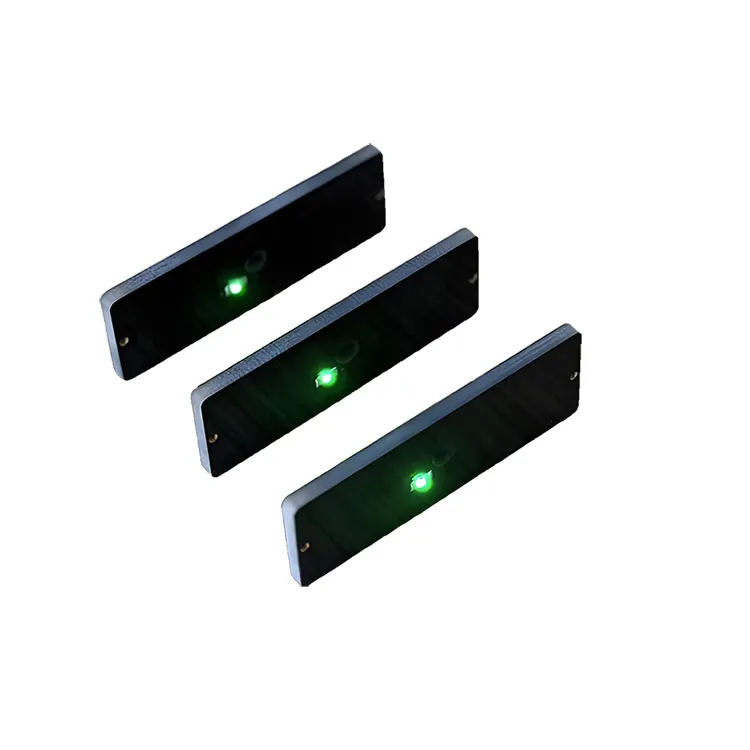
The RFID tag with LED light pairs a passive UHF EPC Gen2 chip with a visible LED that lights when the reader addresses the tag, so a search command makes one tagged item glow among many for fast, error-free picking. It suits store, warehouse, cable, document and asset locating. Confirm reader and antenna support, size and material, then request samples to validate the workflow.
Free standard samples · Quotation within one business day
Product details
A UHF tag that lights up the item you are looking for
An RFID tag with an LED light is a passive UHF tag with a small light-emitting diode on the label. It uses the EPC Gen2 air interface, standardised as ISO/IEC 18000-63, in the 860–960 MHz band, so it reads like any other UHF tag. The difference is that the reader can command one specific tag to light its LED, which turns an inventory read into a visual search: instead of walking a shelf checking numbers, the operator sees the one item glow. That makes it useful for picking, for locating a cable or file in a bundle, and for showing exactly which item a reader has selected.
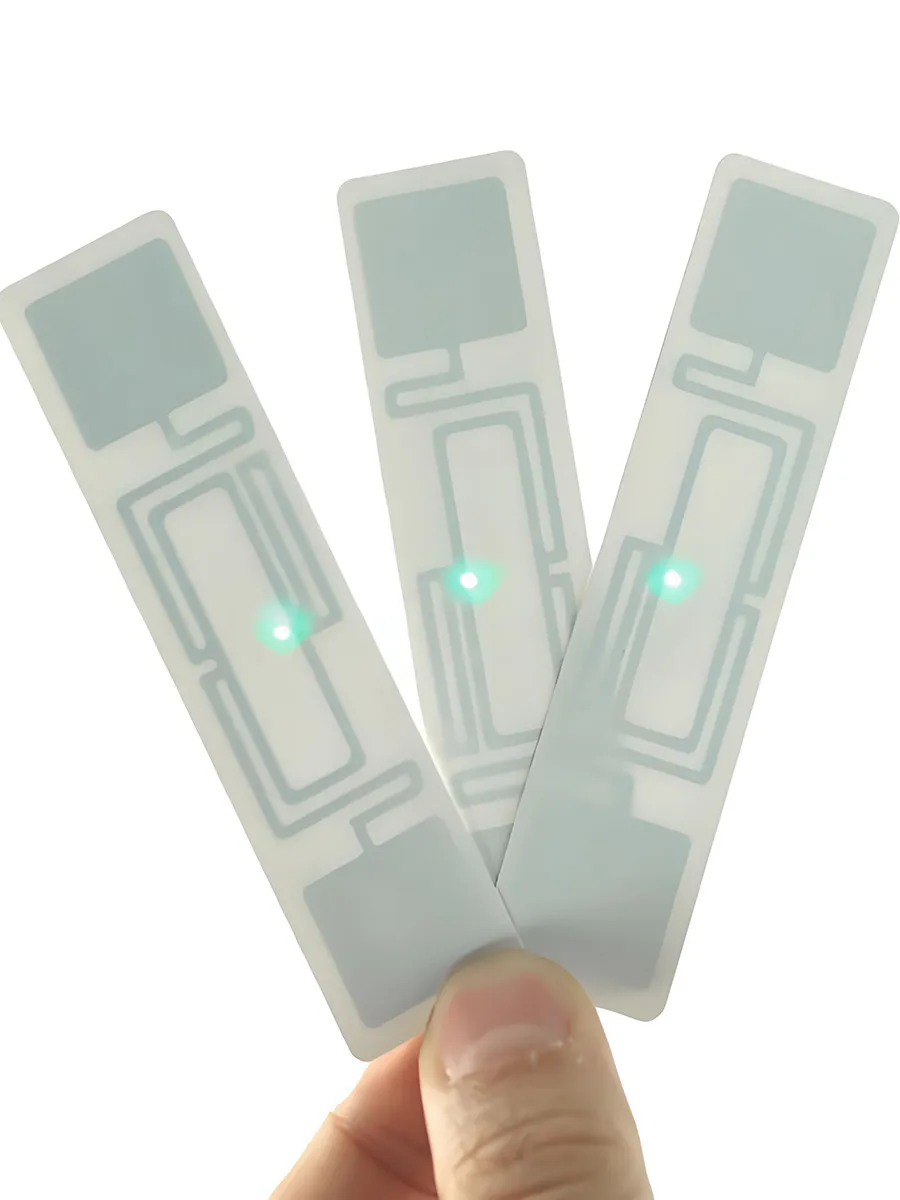
Specification
| Item | RFID Tag with LED light |
| Material | Paper, PVC, PET, FR4 (including on-metal versions) |
| Dimension | 55 × 12 × 1.8 mm or customised |
| Air interface | Passive UHF, EPC Gen2 / ISO/IEC 18000-63 |
| Frequency | 860–960 MHz |
| LED | Passive, field-powered; lights when the reader addresses the tag |
| Using times | At least 100 (LED activations) |
| Tested read range | Up to 6 m under test conditions; confirm with your reader and antenna |
| Marking | Laser-engraved number or logo, chip encoding |
How the LED is powered
The LED has no battery. The tag harvests energy from the reader's UHF field, the same energy that powers the chip, and lights the LED when the reader addresses that particular tag with a search or select command. Because the light draws on harvested energy, it needs more field strength than a plain read: the tag has to be close enough to the antenna, and the reader has to output enough power, for the LED to glow reliably. In practice the lighting distance is shorter than the distance at which the tag can simply be read, and it depends on the reader, the antenna and the surface the tag is on. Treat the tested figures as a starting point and validate them in your own setup.
Where a light on the tag helps
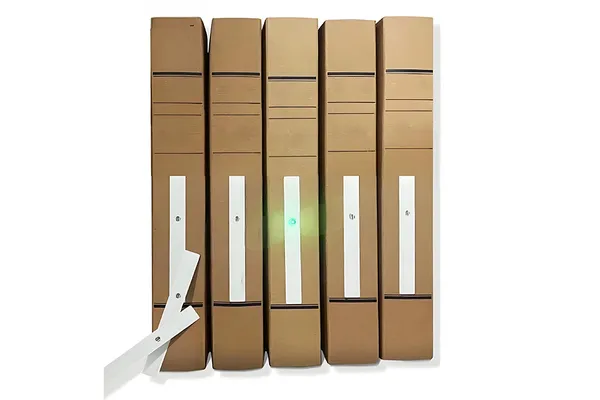
- Order picking and item locating: the operator queries an item and the matching tag lights, so the right box, file or cable is found by eye rather than by reading numbers.
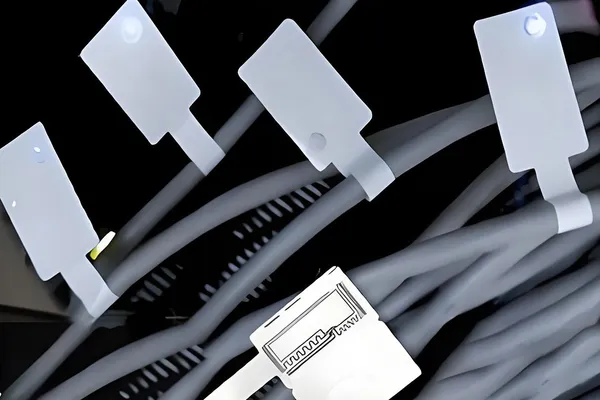
- Cable and document management: identify one cable in a bundle or one file in a rack without tracing every label.
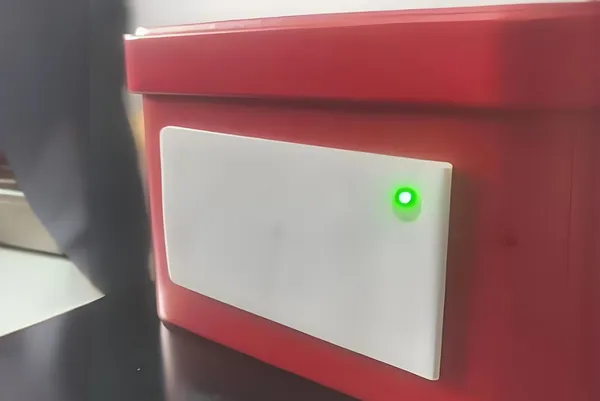
- Reader and antenna testing: because the LED shows exactly which tag a reader has selected, it is a practical tool for checking read zones, antenna aim and reader position during commissioning.
- Demonstrations and training: the visible response makes RFID behaviour easy to show and to teach.
Limits to plan for
- Lighting range is shorter than reading range. The LED needs more harvested energy than a plain read, so plan the antenna position and reader power around the lighting distance, not the read distance.
- Reader support is required. The reader software must implement the search or select command that lights the tag; confirm your reader and SDK support it before ordering.
- On-metal versions differ. Metal detunes UHF tags, so use the on-metal construction on metal surfaces and test it in place.
- LED activations are finite. The LED is rated for at least 100 activations; suit the workflow to that rather than continuous signalling.
- One tag lights at a time. The value is pinpointing a single item, so the workflow should query one item and light its tag rather than expecting a whole shelf to glow at once.
None of these are reasons to avoid the tag; they are the numbers to design around. A short pilot with your own reader, antenna and the actual items settles the lighting distance and confirms the search command works end to end before a batch is committed.
Ordering and customisation
Proud Tek has manufactured RFID and NFC products in its Shenzhen factory since 2008. LED UHF tags are offered as a paper or PVC label, an on-metal tag or a rigid PCB tag, with laser-engraved numbering and chip encoding for the selected chip and material. Pricing is quote-only against your specification, and the standard lead time is 2–3 weeks after sample approval. Free standard samples are available so you can confirm the lighting workflow with your reader; customised samples carry a setup fee. Send the reader and antenna model, the surface and size, and the quantity through the contact page and we will confirm reader support and supply samples.
See the full RFID tags range for standard UHF and specialist tags, and the RFID supply chain guide for how item-level identification and encoding fit an inventory workflow. We supply the tags; the reader, antenna and picking software come from your integrator.
Plan the application
Frequently asked questions
How does the LED light without a battery?
The tag is passive: it harvests energy from the reader's UHF field, the same energy that powers the chip, and lights the LED when the reader addresses that specific tag. There is no battery, so the LED only glows while the tag is in a strong enough reader field and the reader sends the command to light it.
How far away will the LED light?
The lighting distance is shorter than the plain read distance because the LED needs more harvested energy. The tested read range is up to 6 m under test conditions, but the tag has to be closer, with enough reader power, for the LED to glow reliably. Validate the lighting distance with your reader, antenna and surface.
What do I use an LED RFID tag for?
Visual locating: order picking, finding one cable in a bundle or one file in a rack, and any workflow where seeing the item glow is faster than reading numbers. Because the LED shows exactly which tag a reader selected, it is also a practical tool for testing read zones and antenna position during commissioning.
Does my reader need to support anything special?
Yes. The reader software must implement the search or select command that lights the tag. Confirm that your reader and SDK support it before ordering, and test a sample so the lighting behaviour works end to end in your application.
Can the tag be used on metal?
Use the on-metal construction for metal surfaces; a standard label detunes on metal and will not perform. Because metal affects UHF behaviour, test the on-metal version in its actual position before committing to a batch.
What do you need to prepare a quote?
Send the reader and antenna model, the surface the tag mounts on, the size and material, whether you need an on-metal or PCB construction, and the quantity and destination. Pricing is quote-only, standard lead time is 2–3 weeks after sample approval, and free standard samples are available for workflow testing.
Buyer guides
- How to Read an RFID Tag Quotation, Line by Line What decides RFID card and tag prices, and how to compare quotations line by line: unit-price basis, tooling, encoding, samples, freight and Incoterms.
- RFID RFP Template: Questions to Ask Every Supplier An RFID RFP template for distributors: the supplier questions that produce comparable quotes, and how to read the replies against one specification.
- RFID MOQ, Explained: How Minimums Form and How to Discuss Them How RFID MOQ forms from chip lots, inlay rolls, print sheets and setup — and how buyers can discuss a smaller pilot or first order honestly.
Ready to specify your order?
Send the product, quantity and application so we can confirm the options and pricing for your project.