RFID Tags
PPS RFID Laundry Tag
PPS (polyphenylene sulfide) button tags are the rigid-format option for HF laundry tracking: the heat-resistant plastic housing survives industrial washing, drying and pressing that would destroy a paper label.
A rigid PPS button tag with an HF chip, ICODE SLIX or SLIX2 (ISO/IEC 15693, 13.56 MHz), for item-level identification of linen and uniforms in HF laundry systems. We sample and quote every PPS button shown here. Match the chip and fixing to your reader and textile, then check washing, drying and pressing with a sample trial before ordering.
Free standard samples · Quotation within one business day
Product details
A rigid HF button for item-level identification
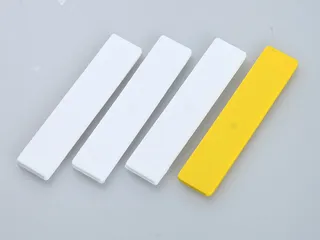
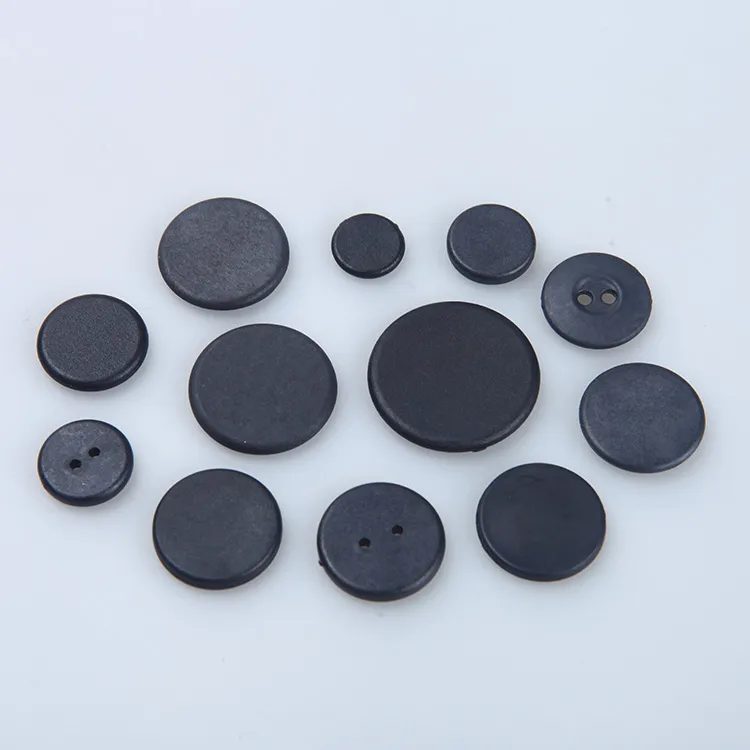
The PPS laundry tag is a moulded button or disc that encloses an HF chip and antenna. It is sewn on or held in a pocket or bag, and its identifier links each linen or uniform item to a record in your laundry software. The photos show buttons in several diameters, some with two fixing holes; the quotation and the sample confirm the offered model’s diameter, thickness and hole arrangement. The PPS material alone does not establish wash life.
Specification
| Item | PPS laundry tag |
| Material | PPS, rigid moulded button |
| Size | Confirm the offered model’s diameter, thickness and fixing-hole arrangement. |
| Chip | NXP ICODE SLIX or SLIX2; the quotation names the exact chip. |
| Frequency and protocol | 13.56 MHz (HF); ISO/IEC 15693 and ISO/IEC 18000-3. |
| Multi-tag reading | Chip anti-collision; validate the load and throughput with the offered tag, reader and antenna on wet and dry linen. |
| Reading distance | Measure at the intended checkpoint with the offered tag and reader. |
| Installation | Sewing or pocket insertion, subject to the offered model’s installation instructions. |
| Temperature in laundry use | Up to 180 °C, from field experience in laundry use; not a pressing limit, and no process stage, dwell time or pressure is attached. |
| Process limits | No wash-cycle count is given for the PPS button; check washing, drying, pressing and any sterilisation on samples. |
| Marking and encoding | Encoding with read-back, and a UID-to-number list for numbered buttons (see the FAQ); laser engraving is agreed per order. |
ICODE SLIX or SLIX2
Both are NXP HF chips for ISO/IEC 15693 and ISO/IEC 18000-3. Each has a 64-bit unique identifier (UID) that is set in production and cannot be changed, and an anti-collision function that lets a reader address several tags in its field. They differ in memory and security features:
| Feature | ICODE SLIX | ICODE SLIX2 |
| NXP lifecycle status | Not recommended for new designs | Active |
| User memory | 896 bits (28 blocks of 4 bytes) | 2,528 bits (79 blocks of 4 bytes), plus one block used as a 16-bit counter |
| Originality signature | Not listed | 32-byte ECC signature |
| Passwords (32-bit) | EAS and AFI | Read access, write access, privacy mode, label destroy, and EAS and AFI |
| Compatibility | — | Backwards compatible with SLIX |
NXP marks ICODE SLIX as not recommended for new designs and names ICODE SLIX2 (for the 23.5 pF version) and ICODE 3 as its successors. This page covers SLIX and SLIX2; specify SLIX2 for a new programme unless the installed system requires SLIX. If your software writes data to the tag, uses passwords or checks originality, name those SLIX2 features and test them on the sample with your reader. Confirm the chip named in the quotation for each batch. Chip data: NXP ICODE SLIX and ICODE SLIX2 data sheets. A chip’s features do not establish the finished tag’s read distance or wash life.
HF readers and read points
The reader must support ISO/IEC 15693; a reader built only for ISO/IEC 14443 cards is not enough, although both work at 13.56 MHz. Anti-collision is a chip feature, not a finished-tag throughput rating: measure the proposed tag at each checkpoint with your reader and antenna, wet and dry, before setting a load or distance target. A laundry that runs UHF inventory should evaluate the textile or silicone UHF tags; the textile page compares all three formats.
Wash limits to confirm for a PPS button
In real laundry use the PPS button has handled temperatures up to 180 °C. That is field experience, not a guaranteed limit: it names no dwell time, pressure or process stage and does not transfer to the textile or silicone tags, so check it on buttons run through your line. The laundry tracking guide sets out the full wash-process specification and, in its test-record section, the record to keep for that trial. On a rigid button, the points that differ are:
- Pressing and ironing: the press, ironer or tunnel-finisher temperatures and times the button passes through.
- Fixing: stitches through the fixing holes or a closed pocket, never through the moulded RFID area; inspect the fixing after extraction and finishing.
- Failure criteria: a cracked or deformed button or a lost fixing counts, as does a missed read at the agreed reader settings.
Proud Tek makes the PPS tags in its Shenzhen factory. Tell us your reader, the chip your system expects, the items and the wash process through the contact page or the sample button; the quotation names the offered chip, button size and any encoding or laser marking.
Plan the application
Frequently asked questions
Is the PPS tag HF or UHF?
Should we choose ICODE SLIX or SLIX2?
For a new programme, specify SLIX2: NXP marks ICODE SLIX as not recommended for new designs and names SLIX2 (for the 23.5 pF version) and ICODE 3 as its successors. Choose SLIX only where the installed system requires it, and confirm the chip named in the quotation for each batch. SLIX2 also has more user memory (2,528 bits against 896), a 32-byte originality signature and password-protected read, write and privacy functions, and it is backwards compatible with SLIX. Test the sample with your reader.
How many tags can be read at once?
ICODE chips support anti-collision, but there is no fixed finished-tag group count. Test the intended wet and dry linen load with the offered tag, reader and antenna arrangement.
What temperatures does the PPS tag withstand?
Laundry use has seen the PPS button handle up to 180 °C. With no dwell time, pressure or process stage attached, that experience does not by itself cover your press, ironer or a sterilisation step. Include your temperatures, dwell times, chemistry and extraction in the enquiry, as listed in the laundry tracking guide, and confirm the button on samples run through your line.
How is the PPS tag attached?
Sewing or pocket insertion may be suitable, subject to the offered model's fixing design and instructions. Avoid stitching through the RFID area. Tell us the item and available space so the quoted dimensions and attachment can be checked on a sample.
How many wash cycles will it survive?
We give no wash-cycle count for the PPS button, and no per-model wash report exists. Wash life depends on your chemicals, temperatures, pressure and fixing, not on the material name, so trial the buttons on your linen, noting the cycles completed and any failures, before you fix a target.
Can you laser-engrave and encode the tags?
The ICODE chip in each button carries a UID fixed at the factory. Where we write data to the buttons, we read every one back afterwards and send a data report with the order; buttons that carry a number come with an Excel, CSV or XML file linking each UID to the marked number. Engraving a number or logo by laser is settled in the quotation for the offered button. The RFID encoding service covers the process; check the agreed format on a sample in your software.
Buyer guides
- RFID Laundry Tags: Tag Types, Wash Durability and Reader Fit Choosing RFID laundry tags? Compare PPS, silicone and textile types, match the tag to your wash process and reader, and validate samples before ordering.
- How to Read an RFID Tag Quotation, Line by Line What decides RFID card and tag prices, and how to compare quotations line by line: unit-price basis, tooling, encoding, samples, freight and Incoterms.
- RFID RFP Template: Questions to Ask Every Supplier An RFID RFP template for distributors: the supplier questions that produce comparable quotes, and how to read the replies against one specification.
Ready to specify your order?
Send the product, quantity and application so we can confirm the options and pricing for your project.