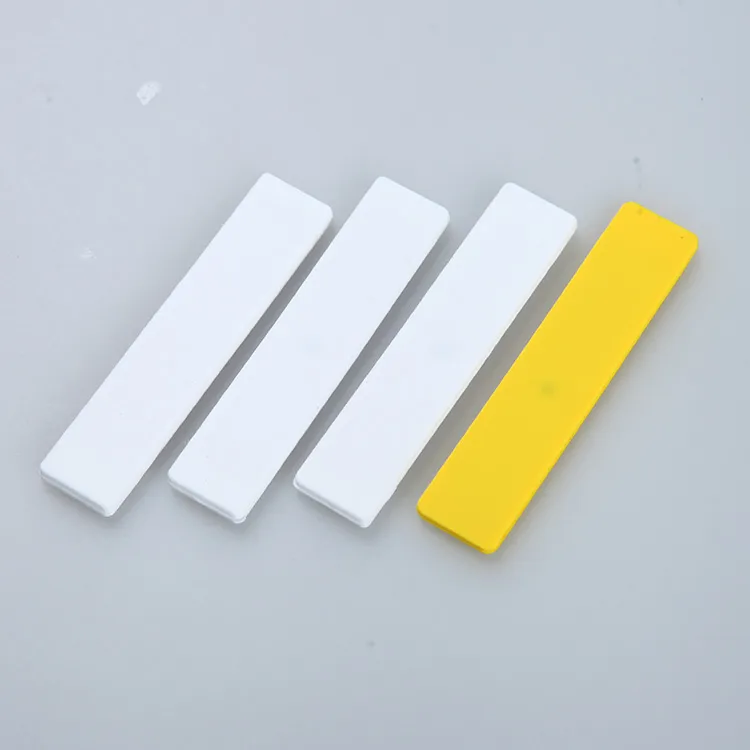
RFID Tags
Silicone RFID Laundry Tag
Silicone-encapsulated UHF laundry tags trade the rigidity of PPS buttons for flexibility — the soft silicone body sewn into a seam moves with the garment, suiting fitted uniforms and delicate textiles where a hard tag would be felt.
A flexible, silicone-encapsulated UHF RFID laundry tag for garments, uniforms and other textiles where a tag that bends with the fabric fits a seam or pocket. Samples and quotations are available for every silicone tag listed here: confirm the offered model, chip, band and attachment, then test samples with your own reader and wash process before ordering.
Free standard samples · Quotation within one business day
Product details
A flexible UHF tag for garments
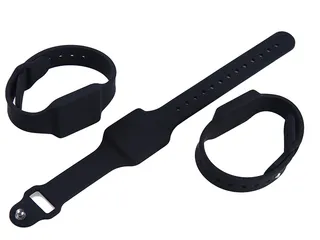
The silicone laundry tag encloses a UHF chip and antenna in a silicone body that bends with the fabric, as the second photo shows. Consider it for garments, uniforms and other items where a flexible tag suits a seam or pocket. Check the offered tag’s dimensions, thickness and edges on the actual fabric, including comfort where the garment is worn. Your laundry software matches the tag’s identifier to the garment’s record, and the reader and software workflow decide how items are counted or sorted.
Confirm the offered model
| Item | Silicone-encapsulated UHF laundry tag |
| Material | Silicone body |
| Dimensions | Request the offered model’s dimensions, thickness and tolerances |
| Band | UHF; confirm the model’s regional operating band for your country |
| Chip and memory | Confirm the exact chip, part number, EPC and any user memory, and current availability |
| Attachment | Seam or pocket, following the offered model’s installation instructions |
| Process limits | Field figures from real laundry use appear below; trial samples in your own process |
| Ingress protection | No IP rating is stated for this tag; state any immersion requirement in the enquiry and test it on samples |
| Reader performance | Test with your reader, antennas and representative wet and dry loads |
| Encoding and marking | EPC written to your scheme and verified tag by tag (FAQ below); marking options are agreed per model |
Chip and reader checks
| Check | Provide or confirm | Sample acceptance |
| Offered chip | Exact chip, part number, memory and supply status for the proposed tag | Compare the sample's chip and data layout with the quoted specification |
| Reader and band | Reader model, antenna setup, country of use and required UHF protocol | Read with the intended settings at each planned checkpoint |
| Textile load | Item type, tag position, metal carts and wet or dry packing density | Record missed reads and throughput with representative loads |
| Data handoff | EPC or serial scheme and any visible number | Check the sample tags’ encoded data against your software records |
A chip offered in another laundry format is not evidence that it is available in this silicone construction. Request the proposed tag’s product reference and data sheet, and confirm any chip substitution and its reader performance with a new sample. Check the band for your country in the UHF frequency lookup.
Choosing between formats? The textile laundry tag page compares the woven textile, silicone and PPS tags, and the PPS tag is the HF option for ISO/IEC 15693 systems.
What the silicone tag has come through in use
These figures are field experience from the silicone tag’s real laundry use. They belong to the silicone tag alone: the textile and PPS tags have their own.
| Stage | From laundry use |
| Laundry uses | At least 100, guaranteed by Proud Tek |
| Washing | +60 °C (140 °F) for 10 minutes |
| Drying | +60 °C (140 °F) for 30 minutes |
| Water-extractor press | 60 bar |
| Sterilisation | +121 °C (250 °F) for 15 minutes |
Only the number of uses is guaranteed; the washing, drying, press and sterilisation rows are experience, not guaranteed, and each is its own exposure. How many of those uses included the sterilisation step, and which sterilisation method was used, was not recorded, so that row does not qualify the tag for a hospital cycle. We recommend putting samples through your own washing, extraction and finishing and logging them in the structure of the wash test record in the laundry guide.
Wash limits to confirm for a silicone tag
Use the wash-process specification in the laundry tracking guide, which also lists what a test record should contain. What to confirm for a flexible silicone tag:
- Garment finishing: tunnel-finisher or press temperatures and times, as well as washing, extraction and drying.
- Flexing and retention: after extraction and finishing the seam or pocket still holds the tag, and the body is not torn or split.
- Sterilisation, if your cycle includes it: steam needs its own trial on samples, whatever the body material and the figure above.
Proud Tek makes the silicone tags in its Shenzhen factory. Send the garment types, reader, country of use, wash process and quantity through the contact page or the sample button, and we will propose a silicone model with its chip, band and marking options for a sample trial.
Plan the application
Frequently asked questions
How many wash cycles will the silicone tag survive?
At least 100 laundry uses: that is the silicone tag’s field experience from real laundry use, and Proud Tek guarantees the count. Wash chemistry, heat, extraction, finishing and the way the tag is fixed still matter in your process, so we recommend putting samples through your garments’ actual process and logging the result in the structure the laundry tracking guide gives before agreeing a service-life target.
Can the tag go through sterilisation?
The silicone tag’s field experience includes a sterilisation step at +121 °C (250 °F) for 15 minutes, but neither the sterilisation method nor the number of sterilisation cycles was recorded, so that figure does not qualify the tag for your process. Do not infer suitability from silicone or a dry-heat figure either. Provide your full cycle, including temperature, dwell time, pressure and repeated exposure, and validate the tag and attachment in that process before approval.
UHF or HF for laundry?
Use the protocol and regional band your reader system requires. The silicone tag is UHF; confirm the offered model’s band for your country of use. For an ISO/IEC 15693 HF system, the PPS laundry tag is the 13.56 MHz option. Range and bulk reading depend on the offered tag, reader, antennas and load.
How is the silicone tag attached?
A seam or fabric pocket may be suitable, depending on the offered model and item. Share the fabric, tag position and laundry process, then confirm installation instructions. Avoid stitching through the chip or antenna and test the attachment on the actual fabric.
What read range should I expect?
No fixed distance applies to every offered silicone tag. Measure read performance with the intended reader and antennas, representative packing density, wet and dry textiles and any metal carts at each planned checkpoint.
Can you laser-engrave a number or logo?
Whether a number or logo can be laser-marked on the offered model is agreed in the quotation. Once encoded, every silicone tag is read back to check its data, and the order arrives with a data report; if the tags are numbered, a file in Excel, CSV or XML links every EPC or TID to the number on the tag. The RFID encoding service explains the steps. Check a sample and its data in your software before the batch.
Buyer guides
- RFID Laundry Tags: Tag Types, Wash Durability and Reader Fit Choosing RFID laundry tags? Compare PPS, silicone and textile types, match the tag to your wash process and reader, and validate samples before ordering.
- How to Read an RFID Tag Quotation, Line by Line What decides RFID card and tag prices, and how to compare quotations line by line: unit-price basis, tooling, encoding, samples, freight and Incoterms.
- RFID RFP Template: Questions to Ask Every Supplier An RFID RFP template for distributors: the supplier questions that produce comparable quotes, and how to read the replies against one specification.
Ready to specify your order?
Send the product, quantity and application so we can confirm the options and pricing for your project.