Analytics cookies. Can we use Google Analytics and its cookies to see how visitors use this site? Change this any time under Cookie settings in the footer. Privacy policy
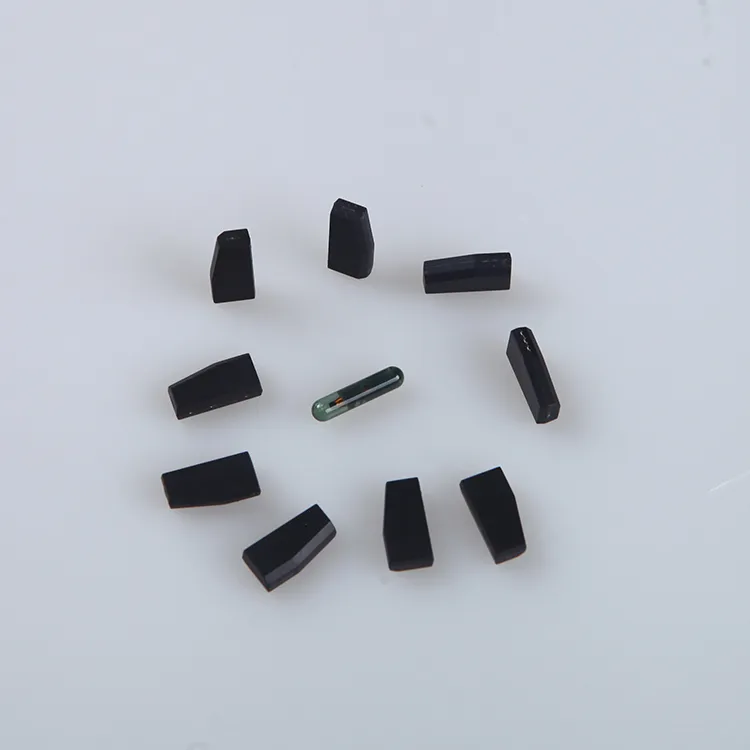
A car transponder chip is the RFID heart of a vehicle key — a tiny glass-tube or EMC-packaged chip that answers the immobiliser's challenge — so only a correctly programmed key starts the engine.
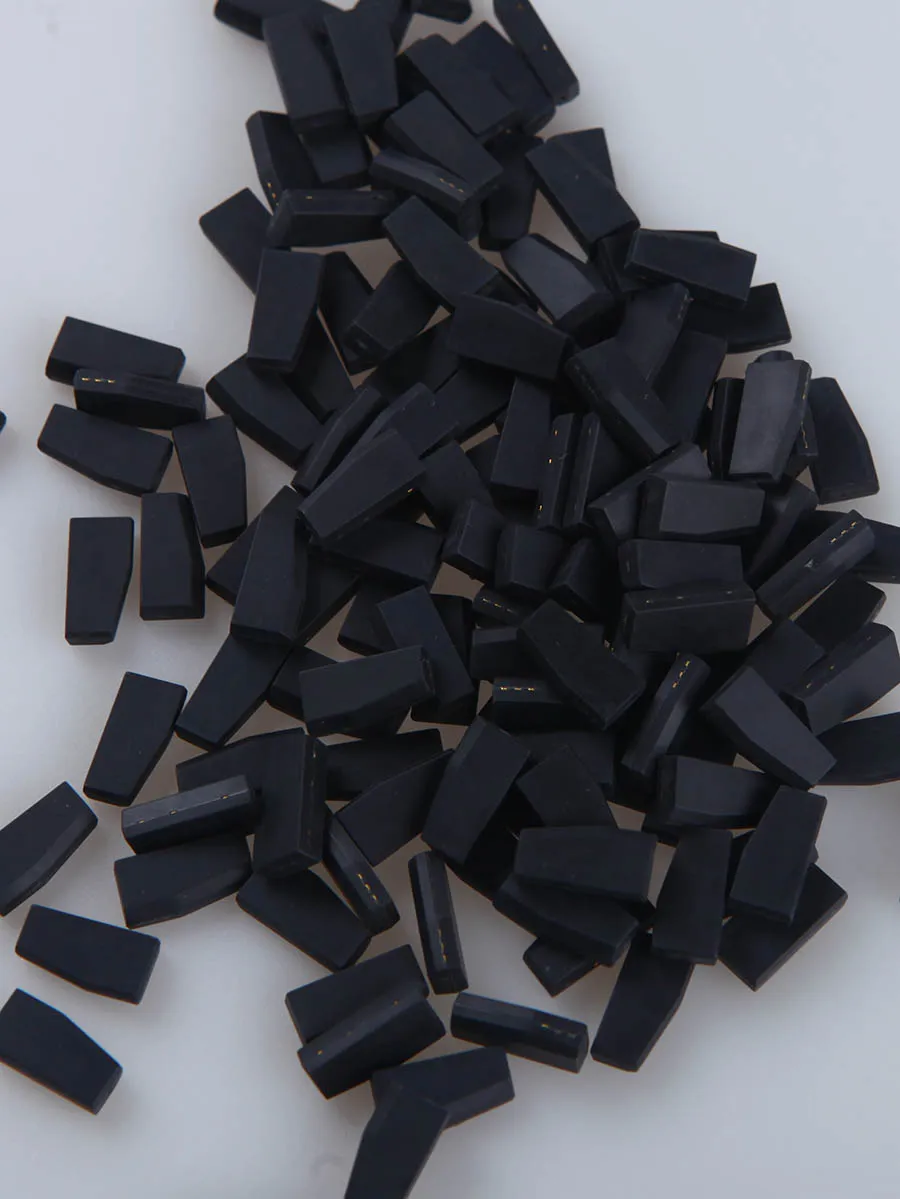
Car transponder chips are small RFID components embedded in vehicle keys that communicate with the immobiliser so the engine only starts with the correct key. Supplied in glass-tube or EMC formats with fixed or rewritable UIDs. Confirm the vehicle's chip protocol and personalisation before ordering.
Free standard samples · Quotation within one business day
Product details
Features
1, Compact Size
Designed to be small and easily embedded into space-constrained housings.
2, Enhanced Reading Performance
Each car transponder chip is optimized for reliable, stable reading and writing performance.
3, Excellent Consistency
Specifically designed for car key applications, ensuring flawless operation without compromising functionality.
Specification:
Item
Car Transponder Chip
Material
EMC /Glass Tube
Working frequency
125KHz, 134.2KHz
Optional Chip
T5577, EM4200, EM4305, Hitag Etc.
Waterproof level
IP68
Storage Temperature
-40℃ ~+170℃
Operating Temperature
-20℃ ~+85℃
Encryption:
1), Fixed UID:NXP7935, 7936. 7937, 7938TI 4D63(40 bit), 4D60(40 bit), TI4C, TI 4D60(80 bit), TI 4D83(80 bit), Megmos 48, Temic 8C, 48/8C/46/35/37/3848/8C/46/35/37/38 + TI 4D83(80-bit)48/8C/46/35/37/38 + TI 4D83(80-bit) + SPI (MCU)2), Re-writable UIDNXP 7936 / 46TI 4D63(40-bit)TI 4D83(80-bit)Megmos 48
Personalization
Laser printing logo and number
Application
Smart automobile key
Immobilizer
Since 2000, nearly all vehicles come equipped with an immobilizer system. To start the engine, the driver must use a car key embedded with an RFID transponder, which is much harder to duplicate than a traditional mechanical key. This system has greatly reduced car theft and is now a standard feature in modern vehicles.
Both the ECU (Engine Control Unit) and the RFID transponder in the immobilizer system share a secret value. They exchange this confidential data through a secure process known as encrypted mutual authentication.
When monitored, the communication between these two devices appears as a random signal, making it nearly impossible to interpret. By verifying both the mechanical key blade and the RFID transponder, the system ensures that the engine cannot be started without the correct car key.
What a car transponder chip is
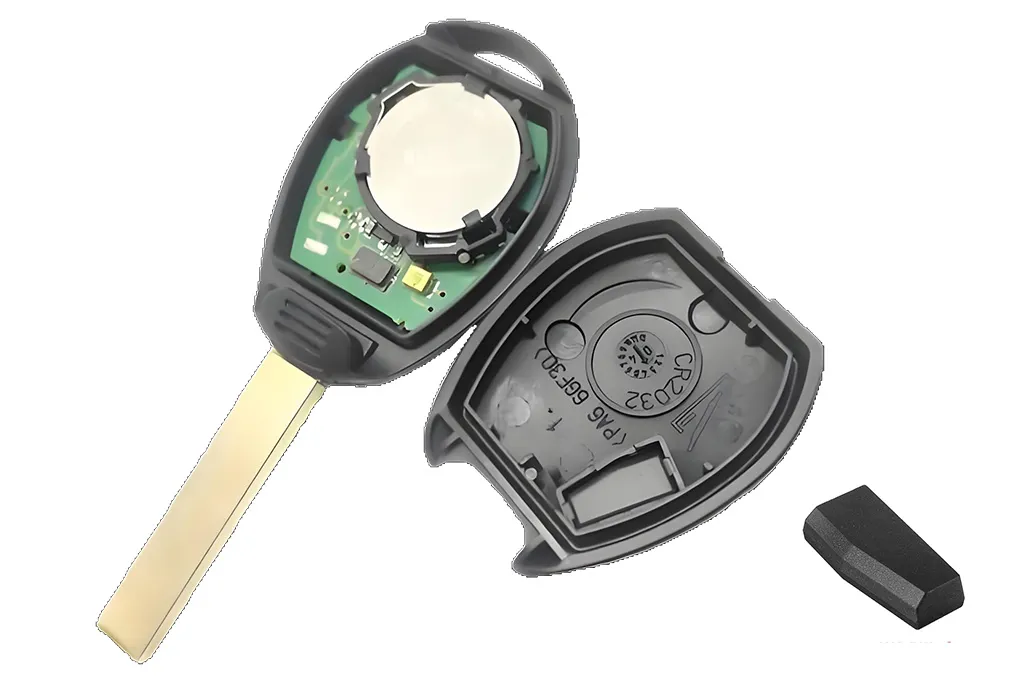
A car transponder chip is a small passive RFID device built into the head of a vehicle key or key fob. It has no battery: when the ignition antenna energises it, it answers the immobiliser with a stored code, and the engine control unit only allows a start if that code is valid. Since about 2000, nearly all cars have shipped with such an immobiliser, which is why a modern key is far harder to copy than a plain cut blade. The chips run in the low-frequency band, 125 kHz for the HITAG and Megamos families and 134.2 kHz for the Texas Instruments types, and come as a small glass tube, a carbon or ceramic slug, or a moulded (EMC) package that drops into the key housing.
Which chip is which
Immobiliser chips are usually referred to in the trade by 'ID' numbers as well as their real part names. The label tells a locksmith which technology, and which programming tool, a key needs. The table below maps the common labels to the underlying chips; always confirm the exact chip against the actual vehicle or a working key, not the ID label alone.
Common label
Underlying chip or family
Band
Commonly seen on
ID46
NXP HITAG 2 (PCF7936 and relatives), Philips/NXP Crypto
125 kHz
Renault, Fiat, Opel/Vauxhall, Honda, Nissan and some BMW CAS systems, among many others
ID48
Megamos Crypto (EM Microelectronic)
125 kHz
VAG group (Volkswagen, Audi, SEAT, Skoda) and some Porsche and Volvo
ID4C
Texas Instruments fixed-code, read-only
134.2 kHz
Older Toyota, Honda and Ford keys
ID4D (4D60/63/70/80 and so on)
Texas Instruments DST crypto
134.2 kHz
Toyota, Ford, Mazda, Hyundai and Kia, among others
T5577
Microchip/Atmel programmable LF transponder
125 kHz
A blank encoded to present open 125 kHz formats; used to clone fixed-code keys and for some aftermarket keys
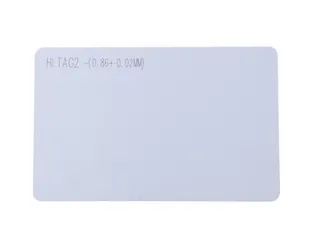
HITAG 2 is an NXP part. On our verified HITAG 2 card page its crypto mode is the one used in vehicle immobilisers, and it works at 125 kHz. Megamos, the VAG-group chip commonly labelled ID48, is an EM Microelectronic part. The Texas Instruments 4C and 4D types work at 134.2 kHz. The T5577 is a programmable 125 kHz transponder (Microchip ATA5577C) that can be written to present open, fixed-code formats, which is why it is used to clone read-only keys; it cannot reproduce a crypto (challenge-response) transponder.
Cloning versus programming: what a key actually needs
Two different jobs are both loosely called 'copying a key', and the chip decides which is possible.
Fixed-code chips (older read-only types, and a T5577 blank encoded to match) can be cloned: a programmer reads the original's code and writes it to the new chip, and the immobiliser cannot tell them apart.
Crypto chips (HITAG 2 / ID46, Megamos / ID48, TI DST / 4D) use a secret key and a challenge-response exchange, so a simple read does not copy them, although published attacks recover the key of some of them, including HITAG 2 (Verdult, Garcia and Balasch, USENIX Security 2012). A new key has to be programmed to the car: the transponder is written with the right data and the immobiliser is taught to accept it, usually through the OBD port with dealer or aftermarket key-programming equipment and, on many cars, a PIN or security code tied to the vehicle.
Either way the work needs a transponder programmer or key-programming tool that supports the specific chip and vehicle. We supply the chips; we do not program keys to vehicles or defeat immobiliser security.
Glass, carbon and EMC formats
The same chip is offered in more than one body. A glass-tube transponder is the classic cylindrical bead that sits in the key head; a carbon or ceramic slug is a robust alternative; and an EMC (moulded) package is shaped to drop into a particular key housing. The transponders we supply are rated IP68 and can be laser-marked with a logo or number. Tell us the housing you are fitting and we match the format.
A note on immobiliser transponders versus gate and parking systems
The transponder in a key is a low-frequency immobiliser device that works over a few centimetres at the ignition. It is a different thing from the vehicle RFID used at car-park barriers, gates and yards, which is a UHF windshield tag read from several metres. If your project is reading vehicles as they approach a gate rather than authorising an engine start, see our vehicle RFID identification guide instead.
Before you order
The exact chip or ID type your vehicle uses, or a working key or your reader details so it can be confirmed; do not rely on the ID label alone.
The format: glass tube, carbon/ceramic slug or EMC moulded package, and the housing it must fit.
Fixed or rewritable, and whether you need a blank (for example a T5577) or a specific crypto part.
Any laser marking (logo or number).
Quantity and delivery date; note that we supply the chips and do not program keys to vehicles.
What Proud Tek supplies
We supply car transponder chips in glass, carbon and EMC formats on HITAG, Megamos, Texas Instruments and T5577-class parts, quote-only, with laser marking on request. Proud Tek has manufactured RFID products in Shenzhen since 2008; standard samples are free and standard lead time is 2 to 3 weeks. We do not program keys to vehicles, defeat immobiliser security, or advise on bypassing it. Start on the contact form, by email or on WhatsApp; see the HITAG 2 card for the 125 kHz crypto part, or browse all RFID tags.
Plan the application
Frequently asked questions
What is the difference between an ID46 and an ID48 chip?
ID46 is the aftermarket label for the NXP HITAG 2 / Philips Crypto family (PCF7936 and relatives), seen on Renault, Fiat, Opel, Honda and others. ID48 is Megamos Crypto, developed for the VAG group (Volkswagen, Audi, SEAT, Skoda). Both are 125 kHz. Confirm the exact chip for your vehicle rather than relying on the ID label.
Can you clone my car key?
It depends on the chip. Fixed-code, read-only chips can be cloned. Crypto chips (HITAG 2 / ID46, Megamos / ID48, TI DST / 4D) are not copied by a simple read, although published attacks recover the key of some of them, including HITAG 2 (Verdult et al., 2012); a new key has to be programmed to the car with the right tool. We supply the transponder chips only; we do not program keys to vehicles.
How do I know which chip my car uses?
Send us a working key, the chip or ID number marked on it, or your key-programming reader details, and we confirm the part. Do not guess from the model year alone, because the same model can use different chips across markets and trims.
Glass tube or EMC package: which do I need?
It depends on the key housing. A glass-tube transponder is the classic cylindrical bead; an EMC (moulded) package is shaped for a particular housing; a carbon or ceramic slug is a robust alternative. Tell us the housing and we match the format. Our transponders are rated IP68.
Is a transponder chip the same as the key remote?
No. The transponder is the passive immobiliser device that authorises the engine start over a few centimetres. The remote that locks the doors is a separate, battery-powered radio circuit. A key can contain both, but they are different parts.
What is a T5577 used for in car keys?
The T5577 (Microchip ATA5577C) is a programmable 125 kHz blank that can be encoded to present open, fixed-code formats. It is used to clone read-only keys and for some aftermarket keys. It cannot reproduce a crypto (challenge-response) transponder such as HITAG 2 or Megamos.
Do you program keys to vehicles?
No. We supply the transponder chips. Programming a crypto key to a car needs a key-programming tool that supports that chip and vehicle, and often a security PIN, which is work for a locksmith or dealer, not something we do or supply the codes for.
Buyer guides
How to Read an RFID Tag Quotation, Line by LineWhat decides RFID card and tag prices, and how to compare quotations line by line: unit-price basis, tooling, encoding, samples, freight and Incoterms.