
EU Compliance
EU ESPR Digital Product Passport for Apparel
Quick answer
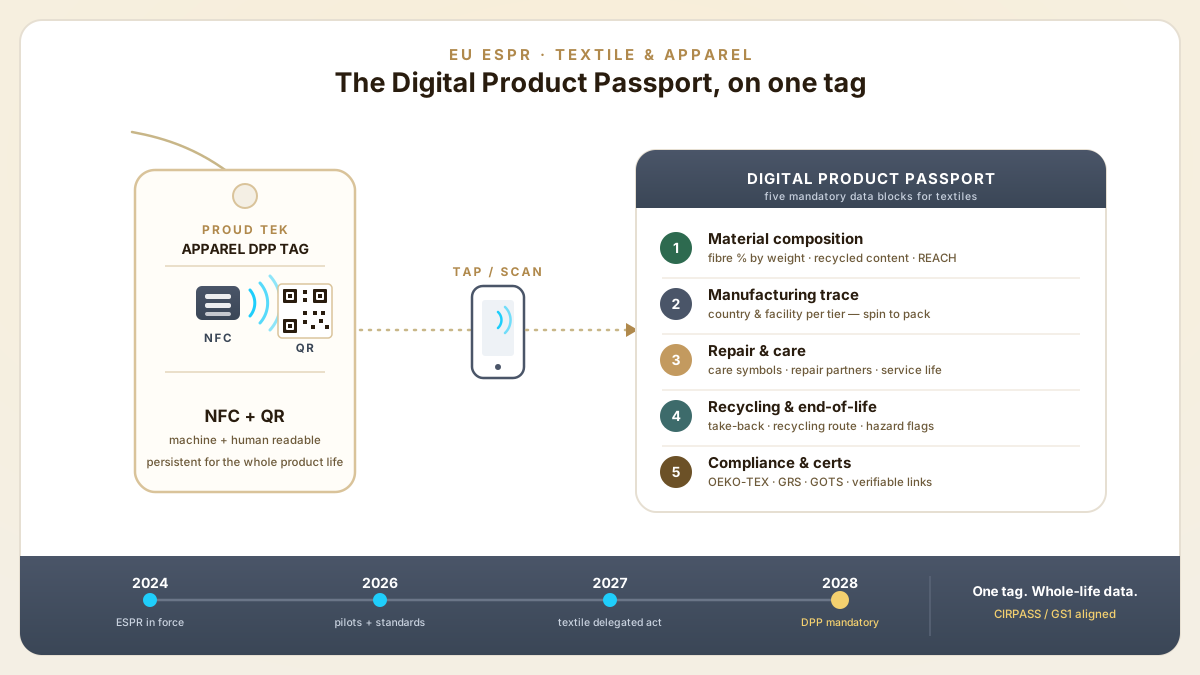
The EU ESPR Digital Product Passport (DPP) requires apparel brands to attach scannable identifiers carrying material, repair, and end-of-life data. Implementation needs NFC or QR + a backend product-data API.
- EU ESPR (Ecodesign for Sustainable Products Regulation) requires DPPs for textiles starting 2027, with mandatory categories expanding through 2030.
- DPP data carriers must be human-readable (QR) plus machine-readable (NFC) for accessibility, persistence over the product's full life, and resale-market interoperability.
- Compliant programs combine NTAG 424 DNA NFC chips for tamper-evident authenticity with a backend data architecture aligned to ISO 22877 and EU CIRPASS standards.
At a glance
Use these short answers to decide whether this page matches the project before moving into the detail.
Key takeaway
EU ESPR (Ecodesign for Sustainable Products Regulation) requires DPPs for textiles starting 2027, with mandatory categories expanding through 2030.
What is the EU ESPR Digital Product Passport for apparel?
Every apparel compliance lead sits through the same recurring meeting: someone asks when, exactly, the Digital Product Passport becomes mandatory, and the honest answer...
Next step
Ready to move forward? Start your inquiry to get specific answers for this project.
Get an EU DPP NFC quoteWhat is the EU ESPR Digital Product Passport for apparel?
Every apparel compliance lead sits through the same recurring meeting: someone asks when, exactly, the Digital Product Passport becomes mandatory, and the honest answer is a date-shaped cloud that drifts a little further out each time Brussels publishes a new working plan. The temptation is to wait for certainty — and the brands that wait are precisely the ones who end up retrofitting passports onto a live catalog in a panic. So here is the shape of it. The EU ESPR makes the Digital Product Passport a mandatory transparency mechanism for products sold into the EU, and apparel and textiles are the first major category in scope. Every garment must carry data — attached via QR code, NFC tag, or RFID identifier — that stays readable at every stage of its life, from the cutting table to the recycling bin.
- Regulation: ESPR (2024/1781) entered force July 2024; DPP for textiles becomes mandatory between 2027-2028 via category-specific delegated acts.
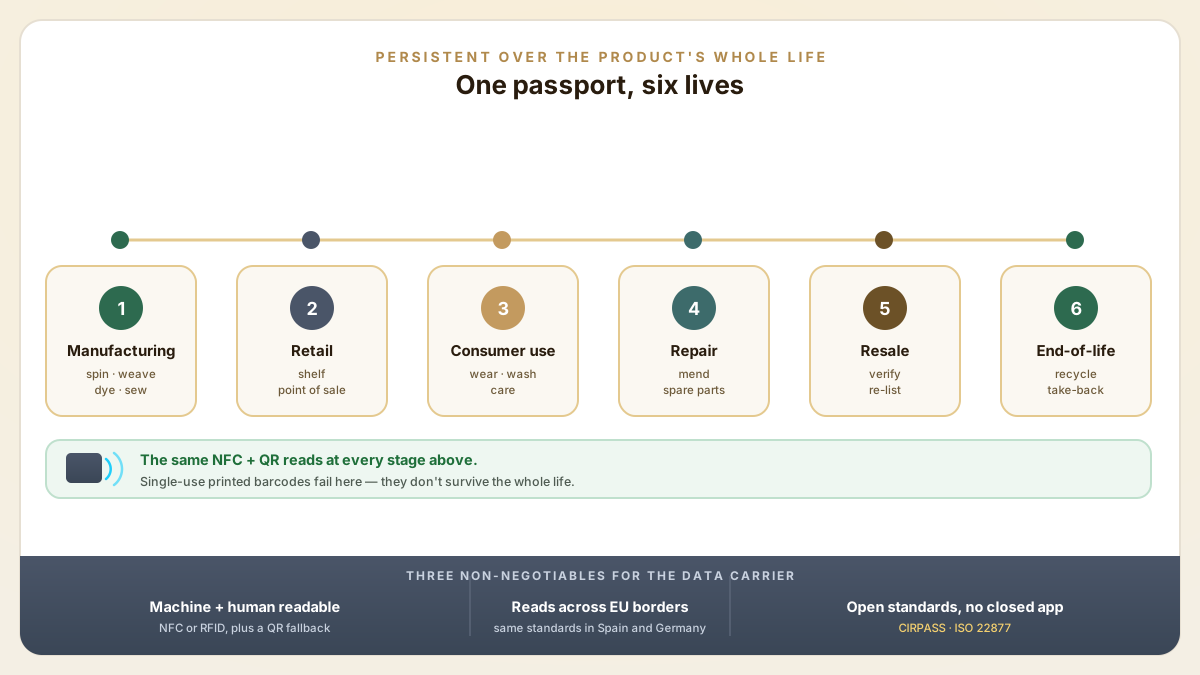
- Data carrier requirement: machine-readable (NFC, RFID, QR) plus human-readable equivalent. Most brands use NFC + QR combo for both phone-tap and printed-fallback access.
- Persistent over product life: the DPP must remain accessible during manufacturing, retail, consumer use, repair, second-hand resale and end-of-life recycling. Single-use barcodes do not satisfy this requirement.
- Cross-border interoperability: a passport readable in Spain must be readable in Germany using the same standards. Brands cannot use proprietary closed apps to satisfy DPP — open standards (CIRPASS, ISO 22877) are required.
- Granularity: minimum at SKU level (style + size + color); higher-end brands and EU regulators expect item-level (unique serial number per garment) for premium and high-impact categories.
What data must apparel DPPs contain?
A passport is only as trustworthy as the data behind the code, and 'we'll populate that field later' is how a brand ends up shipping a garment whose fibre content officially reads 'to be confirmed.' The EU's draft delegated acts spell out the mandatory fields; the real trap is building exactly to today's minimum, which is the reliable way to be right back here re-engineering the whole schema the day the next delegated act lands. Design past the minimum now — it is cheaper than doing it twice.
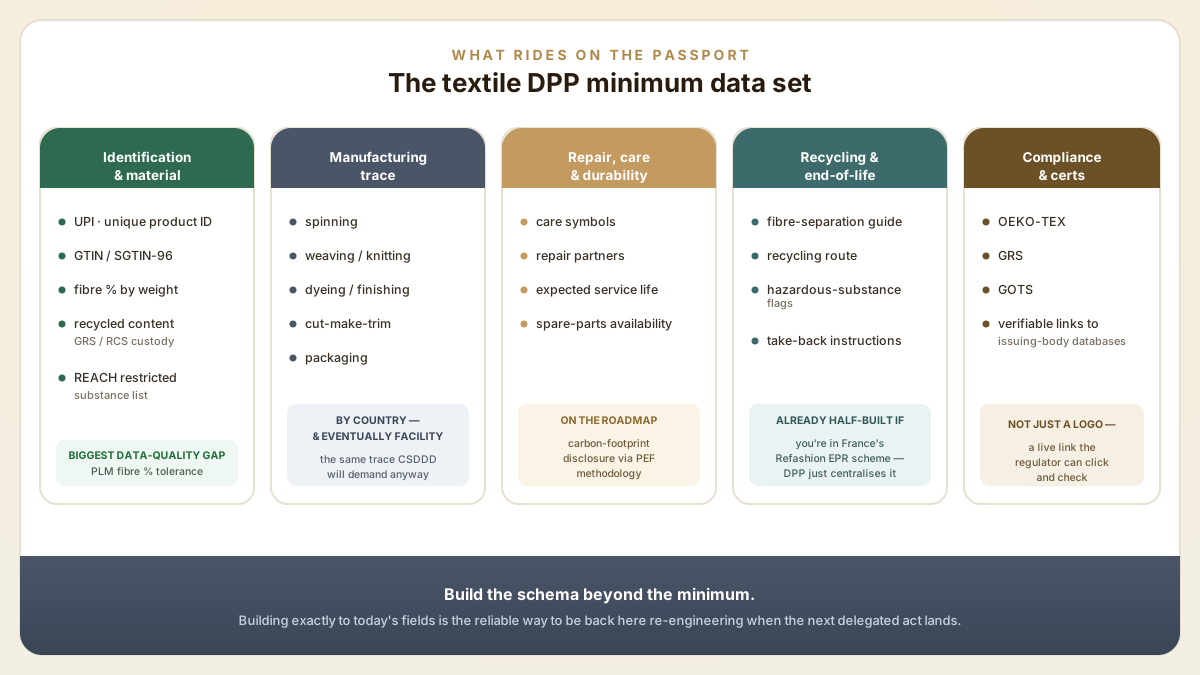
- Material composition by weight: every fiber and chemical input declared with percentage and origin country. Includes recycled content claims and certification references.
- Manufacturing trace: country and (eventually) facility identifier for spinning, weaving, dyeing, sewing and packaging. Required for due-diligence regulations layered on top of ESPR.
- Repair and care: recommended care instructions, list of repair partners, expected useful life, spare-parts availability where applicable.
- Recycling and end-of-life: instructions for separation, recycling pathway recommendation, hazardous-substance flags if any.
- Compliance references: certifications attached (OEKO-TEX, GRS, GOTS, etc.) with verifiable links to issuing-body databases.
How do you implement DPP for an apparel brand?
Implementing a DPP is really two projects wearing one trench coat: a physical-tag program and a backend data system that have to meet, on schedule, at the factory door. Skip either and you get the classic failure mode — a beautiful tag pointing at an empty database, or a pristine database nobody can actually scan. The five steps below mirror what early-mover brands (Bestseller, Zalando, H&M) executed across their 2025-2026 pilots.
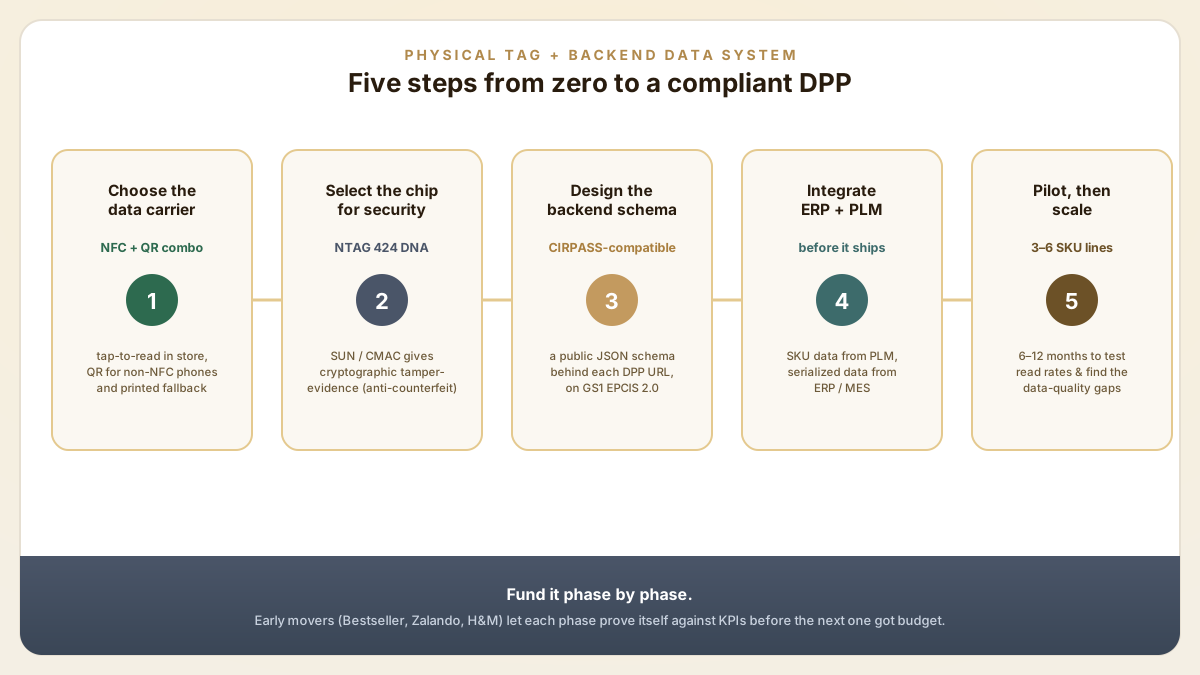
- Choose data carrier: most brands settle on NFC + QR combo. NFC tap-to-read for in-store and consumer experience; QR code for non-NFC phones and printed-receipt fallback.
- Select chip with security needs: for premium brands targeting anti-counterfeit, NTAG 424 DNA SUN/CMAC provides cryptographic tamper-evidence beyond what plain NFC chips offer.
- Design backend data architecture: a public-facing JSON schema (CIRPASS-compatible) sits behind each DPP URL. Use a SaaS DPP platform or build on a standard supply-chain data layer (GS1 EPCIS 2.0).
- Integrate with ERP and PLM: SKU-level data (composition, manufacturing) flows from PLM; serialized-unit data (production date, batch) flows from ERP/MES. Both must reach the DPP backend before the garment leaves the factory.
- Pilot 3-6 SKU lines for 6-12 months: validate read rates, consumer engagement, and retail-staff workflows before scaling to full catalog. Most pilots find data-quality gaps that require ERP cleanup.
What does an apparel DPP program cost?
Here is the counterintuitive part of DPP budgeting: the tag — the one component you can actually hold in your hand — is the cheapest line on the invoice. The real money lives in data infrastructure, the integration labor to feed it, and ongoing audit. What you will ultimately pay bends on three things: chip choice, brand size, and how mature your PLM/ERP already is.
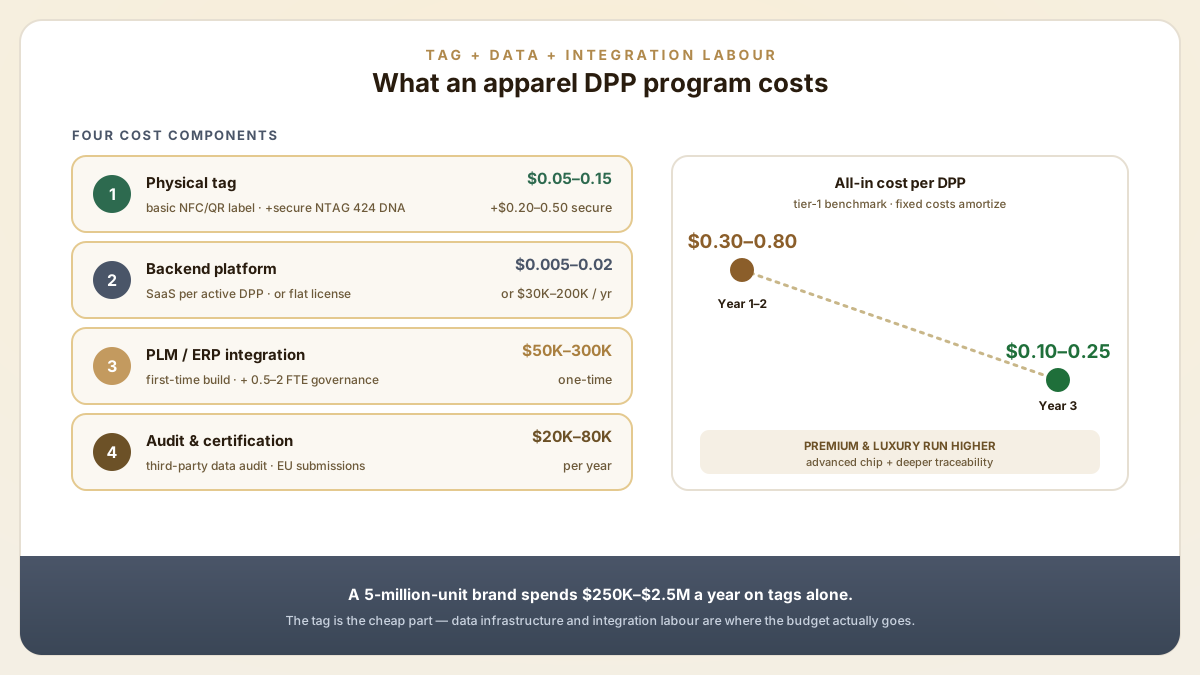
- Tag cost: $0.05-0.15 per garment for basic NFC/QR labels at volume. NTAG 424 DNA secure tags add $0.20-0.50 each. Total tag spend for a 5M-unit/year brand is $250K-$2.5M annually.
- Backend platform: SaaS DPP platforms charge $0.005-0.02 per active DPP per month, or flat licenses $30K-$200K/year. Self-hosted is cheaper at scale but requires devops capacity.
- PLM/ERP integration: $50K-$300K one-time for first-time integration with mature PLM (Centric, FlexPLM, Lectra). Ongoing data quality and governance adds 0.5-2 FTE.
- Audit and certification: $20K-$80K/year for third-party audit of DPP data accuracy, plus regulatory submissions to EU databases as required by sector delegated acts.
- Total program cost benchmark: tier-1 brands run $0.30-0.80 per DPP all-in (first 2 years), trending to $0.10-0.25 by year 3 as fixed costs amortize. Premium and luxury programs run higher due to advanced chip and traceability requirements.
Updated 2025-2028 timeline for textile DPP delegated acts
Good news first: the textile delegated act finally has a timeline specific enough to build a capex plan around. The dates below come from the EU 2025-2030 ESPR Working Plan (adopted April 2025) and the Joint Research Centre's preparatory-study schedule, cross-checked against Repass's fashion-brand tracker. Now the catch — two other obligations land before DPP enforcement even begins, so read all the way to the bottom of the timeline before you slot anything into a budget.
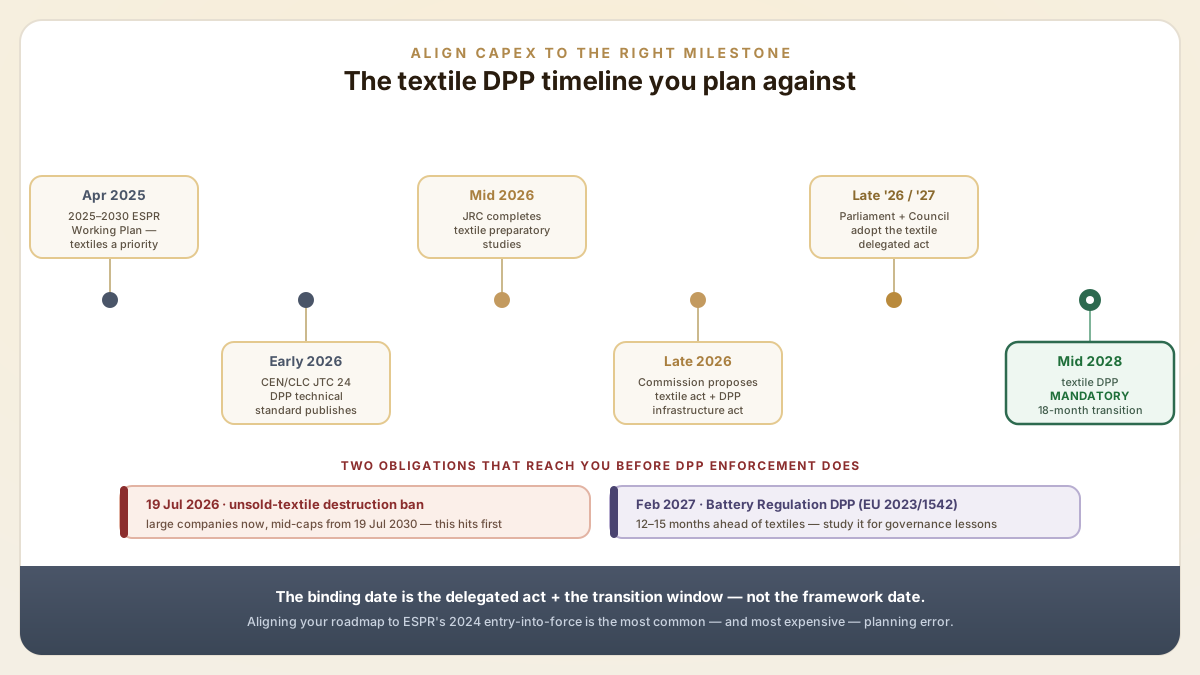
- April 2025: European Commission adopts the 2025-2030 ESPR Working Plan; textiles and apparel listed as priority categories for early regulation.
- Early 2026: publication of standard CEN/CLC JTC 24 (DPP technical standard) — defines the data carrier and registry interaction model textiles will inherit.
- Early-to-mid 2026: Joint Research Centre completes preparatory studies for the textile delegated act (material composition, durability metrics, repair indicators).
- Late 2026: European Commission (KOM) proposal for the textile delegated act, plus the act on DPP infrastructure (registry, service providers, data carriers, digital credentials).
- Late 2026 / early 2027: adoption of textile delegated act by the European Parliament and Council.
- Mid 2028 (18-month transition): textile DPPs become mandatory for first-wave categories — companies need compliant systems live before this date.
- Concurrent obligation already binding: ESPR ban on destruction of unsold textiles in force from 19 July 2026 for large companies (medium-sized companies covered from 19 July 2030). This kicks in BEFORE the DPP enforcement date and is the first ESPR obligation most apparel brands meet.
- Reference precedent: the Battery Regulation (EU 2023/1542) goes live February 2027 with its own battery DPP — textile teams should study that rollout for governance lessons since it precedes textiles by 12-15 months.
What is the EU ESPR DPP timeline brands actually need to plan against?
If you take one thing from this page, take this: ESPR is a framework, and frameworks do not set your deadline — the delegated act plus its transition window does. Apparel and textiles are first in the queue, which is why 'ESPR is a 2024 regulation' is both perfectly true and completely useless for planning purposes. Below is the roadmap that actually maps to binding dates, plus the concurrent obligations that reach you sooner than the DPP itself.
- ESPR (EU 2024/1781) entered force July 2024 as a framework — it sets architecture, not product-level requirements. The first textile-specific delegated act is expected in 2027 with a minimum 18-month transition, putting effective enforcement in 2028 for first-wave product groups (per CIRPASS, Intertek and EU Green Forum guidance).
- Concurrent obligations to plan against: the ban on destruction of unsold textiles (in force for large companies from July 2026, mid-cap from July 2030) and waste-related EPR schemes already live in France, Netherlands and proposed elsewhere — these reach you before DPP enforcement does.
- Overlapping regulatory stack: CSRD (Corporate Sustainability Reporting Directive) and CSDDD (Corporate Sustainability Due Diligence Directive) demand much of the supply-chain trace data DPP will surface. Brands building DPP-ready data layers solve CSRD/CSDDD reporting at the same time — sequence the program to harvest both wins.
- Pilot / sandbox period: 2026-2027 is when most early-mover brands (H&M, Bestseller, Zalando, Inditex, Decathlon) run sandboxed DPPs against draft delegated acts. CIRPASS and the EU Commission's DPP working groups solicit pilot input — joining is the cheapest way to influence final field schemas.
- Global ripple: EU DPP is becoming a de facto global standard. China's evolving carbon-footprint scheme and several US-state right-to-repair / extended-warranty bills are converging on DPP-shaped data; a brand DPP infrastructure built for EU 2027 generally satisfies emerging requirements elsewhere with light schema deltas.
What does the EU DPP minimum data set actually look like for textiles?
You do not have to wait for the final delegated act to know, roughly, what the passport will demand. The European Parliament's STUD/2024/757808 study and the CIRPASS reference architecture already sketch the textile minimum dataset in enough detail to pre-build the data pipeline now — rather than speed-running it against an 18-month transition later, which is nobody's idea of a good quarter.
- Identification block: unique product identifier (UPI), GTIN/SGTIN where applicable, manufacturer name + EU-registered economic operator, batch / serial as required for the product class. Most brands map this onto existing GS1 SGTIN-96 if they already run an RFID program — a single SGTIN serves both Walmart-style mandates and EU DPP.
- Material composition: fiber-by-fiber percentage by weight, recycled content claims with chain-of-custody references (GRS, RCS), restricted substances declarations under REACH. Single largest data-quality gap for most brands — PLM systems often store percentage at a tolerance the regulator will not accept.
- Manufacturing trace: country (and likely facility identifier in later delegated acts) for each tier — spinning, weaving / knitting, dyeing / finishing, cut-make-trim, packaging. Aligns with the trace depth CSDDD will independently require.
- Repair / care / durability: care symbols, expected service life proxy, repair-partner references, spare-parts availability where relevant. Carbon-footprint disclosure is on the roadmap for textiles in line with PEF (Product Environmental Footprint) methodology.
- End-of-life: take-back instructions, recycling pathway recommendation, hazardous-substance flags, fiber-separation guidance. Brands with ECP/EPR scheme membership in France (Refashion) already produce most of this data — DPP centralizes it.
Useful next pages
Use these linked product, guide and comparison pages to keep the next click specific and practical.
EU DPP-ready NFC tags
NTAG 424 DNA secure NFC tags, label formats and DPP backend integration.
ESPR timeline tracker
Quarter-by-quarter implementation timeline references for textile DPP.
Regulatory and standards reference
Authoritative EU and standards-body resources for ESPR and DPP architecture.
FAQ
When does the EU ESPR DPP become mandatory for apparel?
The ESPR framework regulation entered force July 2024. Textile-specific delegated acts will phase mandatory DPP between 2027 (pilot categories) and 2030 (full catalog). Brands should run pilots in 2026 to be prepared for first-wave categories.
Can I satisfy DPP with QR code alone?
Maybe — depends on the final delegated act. Current draft text accepts QR + URL, but most brands prefer NFC + QR combo because NFC enables tap-to-read consumer experience and survives wash cycles better than printed QR.
What chip should I use for an EU-compliant DPP?
Standard NFC like NTAG213/215/216 satisfies the read requirement. Brands seeking anti-counterfeit additionally require NTAG 424 DNA's tamper-evident SUN authentication. Choice depends on whether DPP is purely informational or also a brand-protection tool.
How does DPP differ from existing care labels?
Care labels are static printed text; DPPs are digital, updateable and machine-readable. DPPs carry far more data (manufacturing trace, repair partners, recycling routes) and enable post-purchase interactions (warranty registration, resale verification) that printed labels cannot.
Can I reuse my Walmart / Target SGTIN-96 RFID program for EU DPP?
Largely yes for identification, partly no for data carrier. The serialized SGTIN-96 you already encode for Walmart/Target item-level mandates is a valid product identifier for DPP. However, EU DPP requires consumer-accessible read (NFC-tap or QR) — pure UHF EPC Gen2 inlays are supply-chain reads, not consumer reads. Many brands deploy a dual-tech approach: keep UHF for store/DC operations and add NFC + QR (or a dual-frequency inlay) so the same item supports both retail-mandate read-rate audits and consumer-facing DPP.
How does DPP intersect with CSRD and CSDDD reporting?
Heavily. CSRD (sustainability reporting) and CSDDD (supply-chain due diligence) require much of the same upstream data DPP carries — fiber composition, country of origin, supplier identity, CO2 footprint. Brands that build a single product-level data spine (often anchored on PLM + supply-chain platform) feed CSRD reports, CSDDD due-diligence files and DPP records from the same source of truth, which is materially cheaper than running three siloed compliance projects.
What lessons should textile teams take from the EU Battery Passport rollout?
The Battery Regulation (EU 2023/1542) implements DPP for industrial batteries and EV batteries from February 2027 — about 12-15 months before textiles is expected to enforce. Three lessons textile programs should harvest from battery rollout: (1) the battery DPP requires far more granular supply-chain trace than industry was producing pre-regulation, prompting many manufacturers to scramble for tier-3 supplier data. Textile brands should start tier-2/3 supplier mapping now. (2) Battery DPP backend platforms have consolidated into ~5-7 viable vendors (Circulor, Minespider, Everledger, others) — textile DPP is likely to follow the same consolidation; multi-vendor testing now is cheaper than vendor switching later. (3) Battery DPPs are anchoring on ISO/IEC 18004 (QR), GS1 standards and the EU CIRPASS reference architecture — building textile programs on the same foundation is the lowest-risk choice.
What happens if I miss the DPP deadline for a product line?
Non-compliant products cannot be placed on the EU market once the delegated act enforcement date passes. Penalties are set at member-state level and typically include withdrawal orders, market-surveillance fines (often percentage of EU turnover for repeat infringement) and reputational risk. Importers and EU-based authorized representatives carry joint liability with non-EU brands — meaning the EU side of your supply chain pushes back hard if your DPP records are incomplete.
Proud Tek is a Shenzhen-based RFID & NFC manufacturer supplying hotel chains, transit operators, event venues and retail brands worldwide. Every order includes free samples, RF testing and dedicated project support.
Get a Quick Quote
Tell us about your project and we'll respond within one business day. Fields marked (asterisk) are required.