
RFID Sustainability
RFID Tracking for the Circular Economy
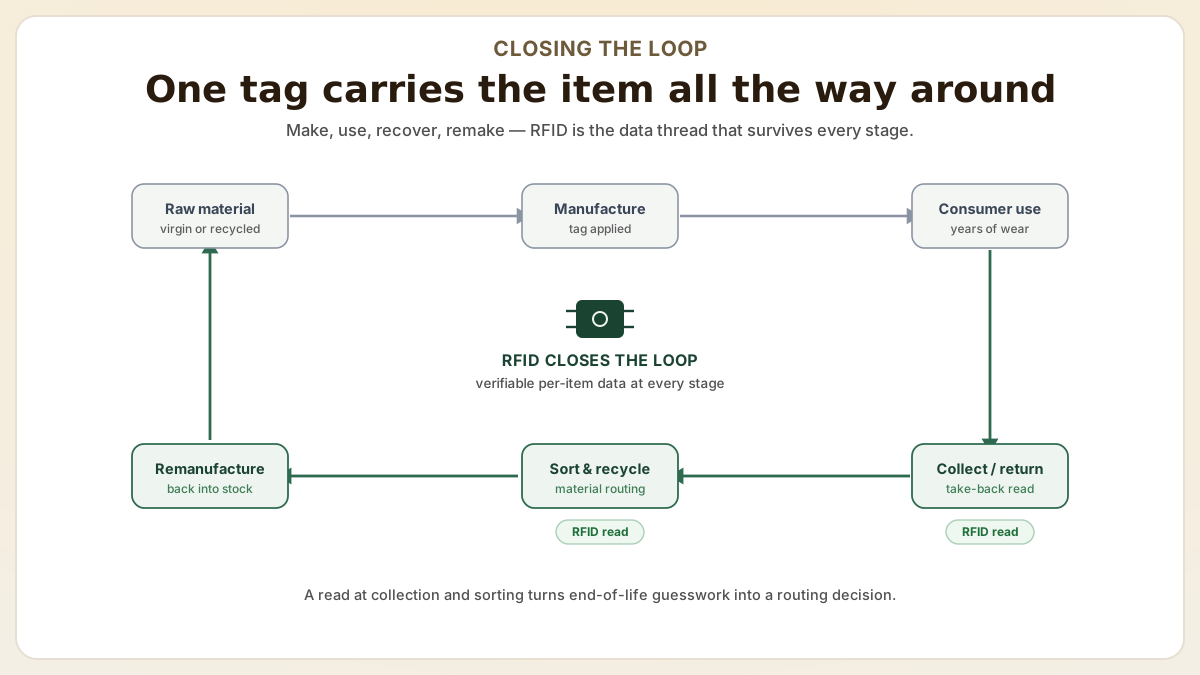
Quick answer
RFID turns circular-economy claims into verifiable per-item data — cutting reusable-packaging loss from 5-15% to 1-3% and satisfying EU rules like the battery passport compulsory from February 2027. This guide covers material tracking, automated recycling sortation, take-back economics and the Digital Product Passport reshaping apparel, batteries and electronics.
- Cradle-to-cradle tracking. RFID tags follow products from raw material through manufacturing, consumer use, collection, sorting, recycling and re-manufacturing, closing the loop with verifiable data.
- Recycling automation: UHF RFID tags enable automated sorting at recycling facilities, separating materials by type, color and composition at conveyor speed based on the tag's encoded product data.
- Regulatory compliance: RFID-based Digital Product Passports meet EU ESPR requirements for sustainability transparency, material composition disclosure and recycling instructions.
At a glance
Use these short answers to decide whether this page matches the project before moving into the detail.
Key takeaway
Cradle-to-cradle tracking. RFID tags follow products from raw material through manufacturing, consumer use, collection, sorting, recycling and re-manufacturing, closing the loop with verifiable data.
How RFID enables sustainability and circular economy
Every sustainability claim a brand makes eventually meets the same awkward question: prove it. 'Recyclable,' 'made with recycled content,' 'send it back when you're done...
Next step
Ready to move forward? Start your inquiry to get specific answers for this project.
Discuss sustainability RFID solutionsHow RFID enables sustainability and circular economy
Every sustainability claim a brand makes eventually meets the same awkward question: prove it. 'Recyclable,' 'made with recycled content,' 'send it back when you're done' — easy to print on a hangtag, hard to substantiate for one specific garment moving through a sorting line two years later. RFID is the unglamorous middle layer that turns those claims into per-item data a recycler, an auditor, or a regulator can actually read. There is a mild irony in closing the loop by adding a chip and an antenna to every product, and the better programs design around it rather than pretend it isn't there. The three panels below trace that path: printed claim, chip, verifiable record.
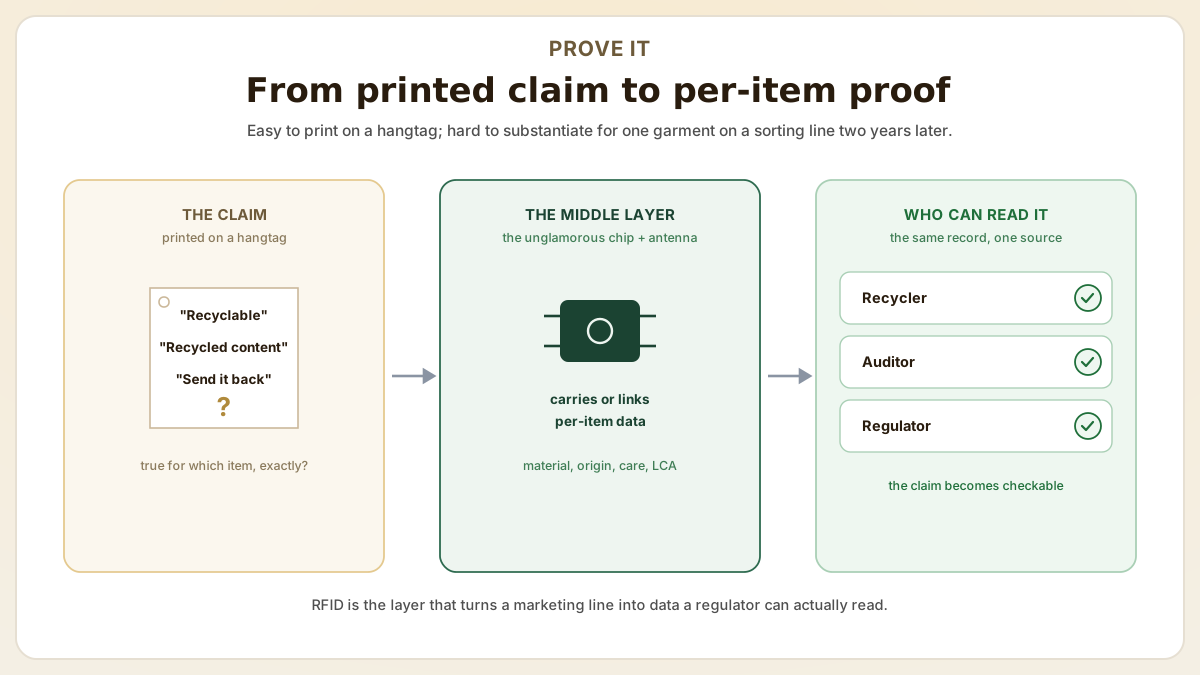
- Material composition tracking: RFID tags carry or link to detailed material data (fiber content, chemical treatments, recycled content percentage), enabling informed recycling decisions at end of life.
- Product take-back programs. Brands issuing RFID-tagged products can identify returned items, verify their origin, assess condition and route to the appropriate circular channel (resale, refurbishment, recycling).
- Resale and rental verification. RFID tags provide authentication and provenance for resale platforms and rental services, verifying product authenticity and tracking usage history across multiple owners or rental cycles.
- Automated recycling sorting: UHF RFID readers on conveyor lines read product tags and automatically sort items by material type, enabling higher-purity material recovery than manual or optical sorting alone.
- Carbon footprint documentation: RFID tags link to lifecycle assessment data, enabling brands to document per-product carbon footprint from manufacturing through distribution for ESG reporting and consumer transparency.
- Repair and refurbishment tracking. RFID-tagged products carry repair history, spare part information and service records, supporting the right-to-repair movement and extending product useful life.
Where are RFID tag considerations for circular economy used?
A tag that contaminates the recycling stream of the very product it was meant to help recycle is worse than no tag at all. That gives circular-economy RFID a second design brief the supply-chain version never had to think about: survive the product's entire life, then get out of the way cleanly at the end of it. The two-part brief below spells out what that takes.
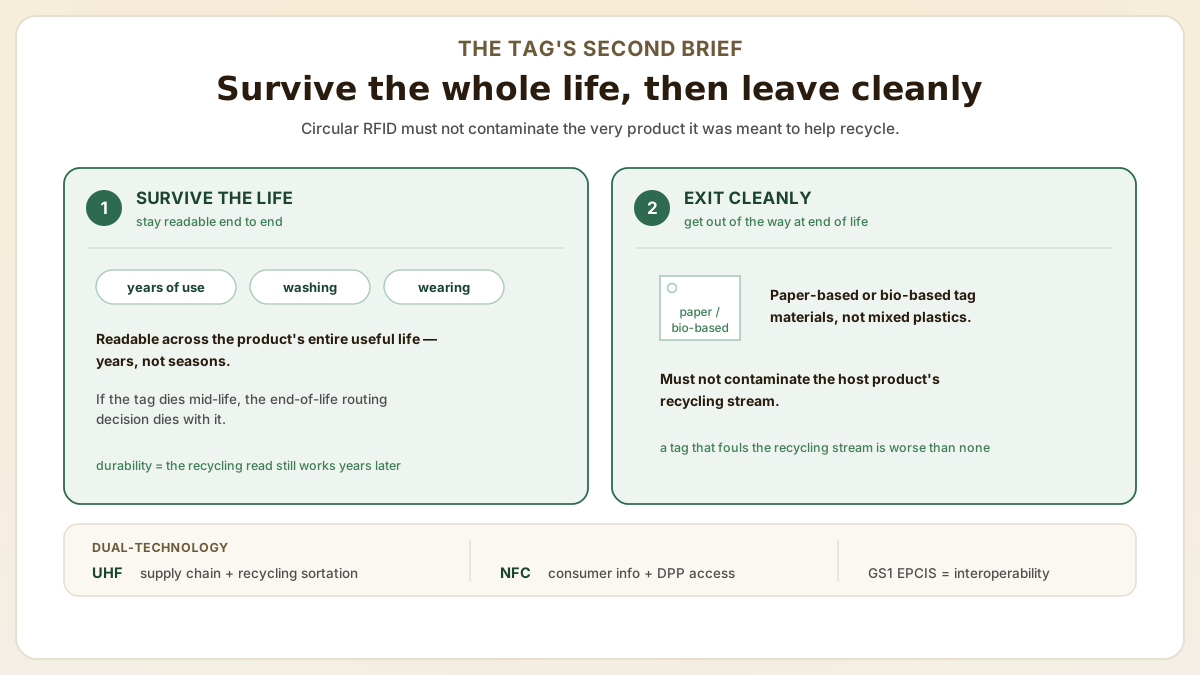
- Tag recyclability: paper-based UHF RFID labels and bio-based materials minimize the environmental impact of the tag itself. Tags should not contaminate the recycling stream of the host product.
- Lifecycle durability: tags must survive the product's entire useful life (years of consumer use, washing, wearing) to remain readable for recycling and end-of-life decisions.
- Dual-technology approach: UHF tags for supply chain tracking and automated recycling sorting, plus NFC for consumer-facing sustainability information and DPP access, are often used together.
- Encoding for circularity: tag memory should include material codes, care instructions, recycling codes and links to cloud-based lifecycle data that can be updated as the product moves through circular channels.
- Industry collaboration: standardized RFID data structures (GS1 EPCIS) enable interoperability across brands, retailers, recyclers and regulators in the circular economy ecosystem.
Which industries lead RFID circular-economy adoption?
RFID-enabled circular-economy programs scale fastest where takeback flows are dense and product value is high. These five sectors drove most circular RFID volume in 2026. The leaderboard below pairs each sector with the number driving it.
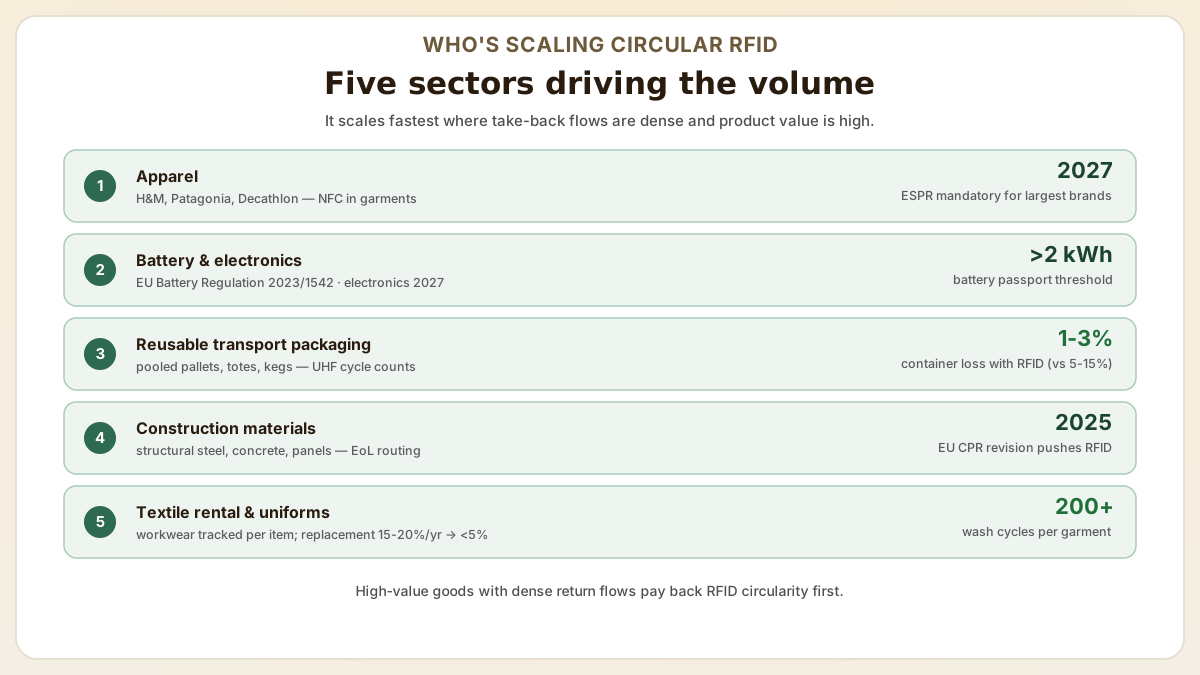
- Apparel: H&M, Patagonia and Decathlon embed NFC tags in garments to enable post-purchase repair, resale and recycling routing. EU PEFCR and ESPR regulations make this mandatory for the largest brands by 2027.
- Battery and electronics: EU Battery Regulation (2023/1542) mandates a battery passport readable via QR + NFC for batteries >2 kWh. Scope expands to consumer electronics in 2027 under ESPR delegated acts.
- Reusable transport packaging: pooled pallets, totes and beer kegs use UHF RFID to track cycle counts and identify damage early. Container loss runs 5-15% annually without RFID; 1-3% with.
- Construction materials: structural steel, concrete elements and bulk panels are tagged for end-of-life recycling routing. EU CDPR (Construction Products Regulation) revision pushed RFID adoption in this sector starting 2025.
- Textile rental and uniforms: workwear rental services achieve 200+ wash cycles per garment by RFID-tracking individual items, reducing replacement rate from 15-20% per year to <5%.
Real brand programmes — what Allbirds, Patagonia, Nike, H&M and Inditex do with NFC chips
The brands leading sustainable apparel and footwear have made specific public commitments tied to NFC-tagged product. The patterns below show what consumer-engagement, repair-routing and recycling models actually work in 2026. The grid below lays out each brand's playbook; for the regulatory backdrop, see our EU ESPR Digital Product Passport guide for apparel.
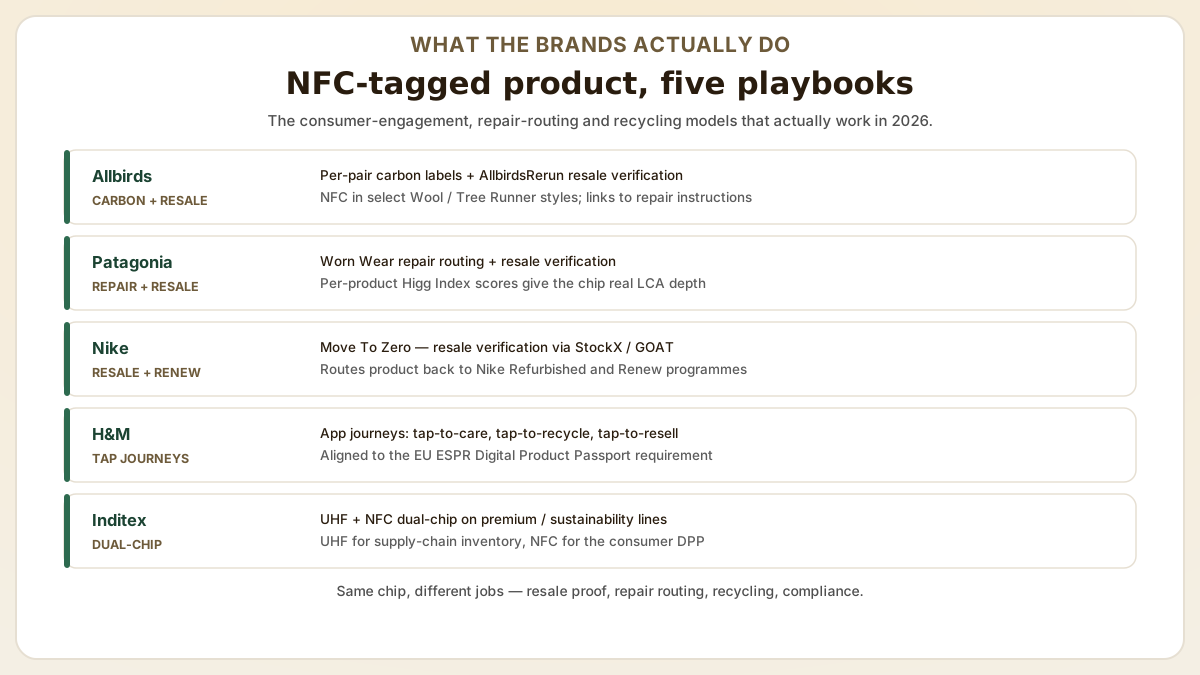
- Allbirds — per-product carbon labels publicly displayed on the Allbirds.com product page; NFC chips in select Wool Runner and Tree Runner styles support resale verification at AllbirdsRerun (the official resale channel) and link to repair instructions. Carbon Fund commitment offsets per-pair manufacturing emissions.
- Patagonia Worn Wear — NFC chips in select premium garments enable repair routing through Patagonia repair centres and verify resale items on the Worn Wear platform. Patagonia publishes per-product Higg Index environmental impact scores, providing the LCA depth needed to make the NFC chip's data carrier valuable.
- Nike Move To Zero — NFC chips on premium sneakers and apparel enable resale verification (StockX, GOAT) and circular-design routing back to Nike's Refurbished and Renew programmes. Tied to Nike's commitment to halving emissions across operations and supply chain by 2030.
- H&M Move + H&M Group — pilots NFC-tagged garments with consumer-facing tap-to-care, tap-to-recycle and tap-to-resell journeys via the H&M app. Aligned with H&M's commitment to 100% recycled or other sustainably sourced materials by 2030 and the EU ESPR Digital Product Passport requirement.
- Inditex (Zara, Bershka, Pull&Bear) — phased rollout of UHF + NFC dual-chip on premium and sustainability-positioned product lines starting 2024-2025. UHF for source-tagging supply chain inventory; NFC for consumer-facing DPP. Commitment to net-zero emissions by 2040 and 25% recycled content by 2025.
EU Battery Regulation 2023/1542 — the most concrete circular-economy RFID/NFC mandate to date
The EU Battery Regulation (Regulation (EU) 2023/1542) is the most concrete circular-economy RFID/NFC mandate now in force. Knowing the timeline and technical requirements helps any battery, EV or industrial-equipment supplier plan their implementation. The timeline below marks when each requirement bites.
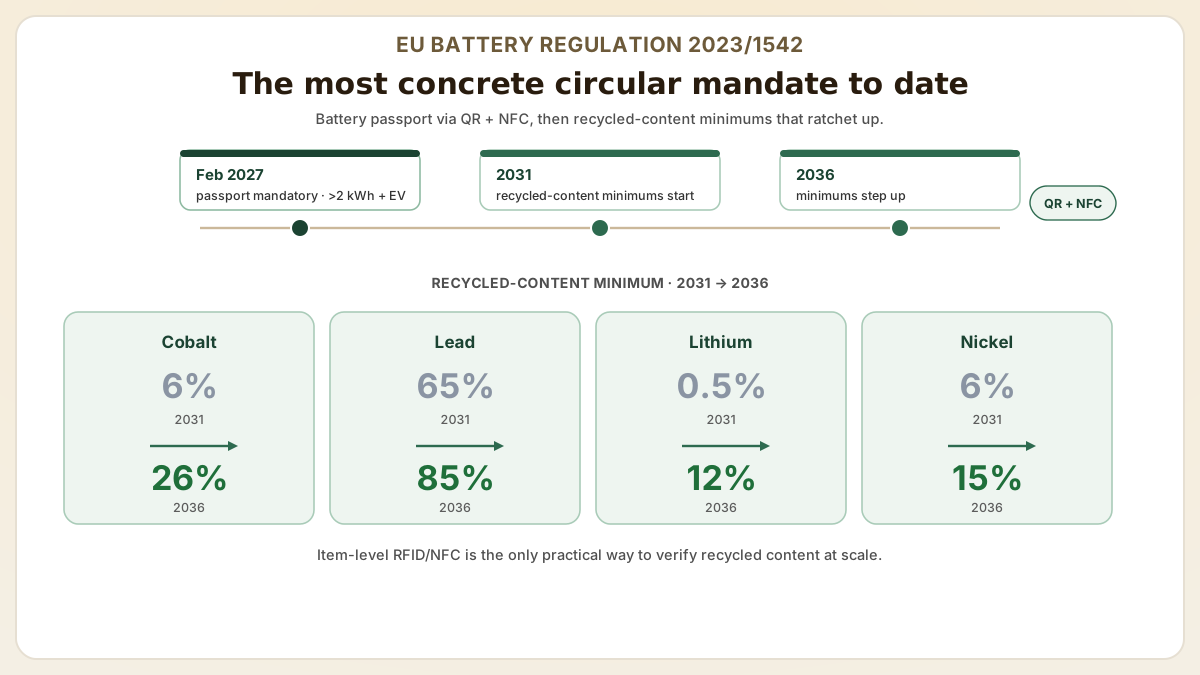
- Scope and timeline — applies to all batteries placed on the EU market: portable, EV, industrial >2 kWh and light means of transport (e-bikes, scooters). Battery passport mandatory from February 2027 for industrial batteries >2 kWh and EV batteries.
- Required data carrier — accessible via QR code + NFC tag on each battery. Tag must point to a public registry record containing battery composition, manufacturer, capacity, lifecycle metrics, recycling instructions and carbon footprint per ISO 14067.
- Recycled content thresholds — minimum recycled content for cobalt, lead, lithium and nickel rises from 6/65/0.5/6% (2031) to 26/85/12/15% (2036). RFID/NFC tracking is the only practical way to verify recycled content at item level.
- Major OEMs already implementing — CATL (China), LG Energy Solution (Korea), Samsung SDI (Korea), Northvolt (Sweden), Panasonic (Japan), Gotion High-tech, BYD Auto. EV makers VW, BMW, Mercedes-Benz, Stellantis and Tesla all sourcing battery passports for European markets.
- Supplier and integrator opportunities — NFC NTAG 213/216/424 DNA + ferrite backing for on-metal battery casing application; high-temperature variants for in-cell tagging; QR + NFC dual-carrier the dominant choice. Backend platforms include Circulor, Authena, EVRYTHNG/Avery Atma.io, Kezzler and SAP GreenToken.
Useful next pages
Use these linked product, guide and comparison pages to keep the next click specific and practical.
Sustainability RFID products
Tags and labels supporting circular economy goals.
Circular-economy regulation and brand references
Authoritative regulatory text and brand commitments shaping circular RFID demand.
FAQ
Are RFID tags themselves recyclable?
Standard RFID labels consist of a paper or PET face, a PET-based antenna on a PET substrate, and a tiny silicon chip. Paper-faced labels on paper products can go through paper recycling (the chip is filtered out). For textile recycling, the tag is typically removed during disassembly. We are developing bio-based antenna substrates and paper-only tag constructions to improve RFID tag recyclability as the industry moves toward fully circular solutions.
How does RFID help automated recycling sorting?
UHF RFID readers installed above recycling conveyor lines read the product tag as items pass, identifying the exact material composition (e.g., 95% cotton, 5% elastane). The system routes each item to the correct processing stream (fiber-to-fiber recycling, downcycling, energy recovery) based on the encoded data, achieving higher material purity and recovery rates than optical sorting alone.
Is RFID required for EU Digital Product Passports?
The EU ESPR regulation requires a machine-readable data carrier linked to a unique product identifier. NFC tags, QR codes and UHF RFID are all acceptable carriers. NFC is gaining preference for consumer-facing products because of the premium tap interaction and built-in authentication capability. Many brands are choosing NFC for the consumer interface and UHF for internal supply chain tracking.
Which DPP backend platforms are most commonly chosen for RFID/NFC-tagged DPP programmes?
The DPP backend market in 2026 is led by EVRYTHNG (Avery Dennison Atma.io), Authena, Adent, Circulor (battery and minerals provenance), Kezzler, IBM Trust Your Supplier, SAP GreenToken and Optel Vision. Smaller players include Spherity, ScanTrust and Aura Blockchain Consortium for luxury. Vendor selection depends on industry vertical (Circulor for batteries/EV, Atma.io for general retail, Authena for luxury and FMCG), data ownership model (private vs public ledger), GS1 EPCIS compliance, integration depth with ERP (SAP S/4HANA, Oracle, Dynamics) and per-item license cost. Most enterprise programmes pilot 2-3 vendors before committing.
How do takeback and reverse-logistics RFID programmes actually pay for themselves?
Three revenue streams typically combine to make takeback economics work. (1) Material recovery — high-purity recycled fibre (cotton, wool, polyester, nylon) sells at 2-5x the price of mixed-stream recovered material; RFID-driven sortation enables that purity. Worn Wear, ThredUP and Decathlon Second Life resale platforms add another revenue line. (2) Avoided regulatory fines and EPR (Extended Producer Responsibility) fees — France EPR for textiles, Germany Verpackungsgesetz, Netherlands UBC. RFID-tracked takeback cuts EPR fees 15-40%. (3) Brand value and CRM data — the consumer who taps a chip to recycle becomes a re-engagement opportunity worth $5-$25 per re-purchase event. Combined, RFID takeback usually pays back in 2-4 years for premium brands and 3-5 years for mass-market.
Sources & references
Primary standards, OEM datasheets and regulatory documents cited by this article. All URLs were verified on the access date shown below.
- Regulation (EU) 2023/1542 — Batteries and waste batteries (battery passport)
Battery passport via QR + NFC mandatory from February 2027 for industrial batteries >2 kWh and EV batteries; sets rising recycled-content minimums for cobalt, lead, lithium and nickel.
- Regulation (EU) 2024/1781 — Ecodesign for Sustainable Products Regulation (ESPR)
Framework for ecodesign requirements and the Digital Product Passport, whose machine-readable data carrier can be NFC, QR or UHF RFID.
Proud Tek is a Shenzhen-based RFID & NFC manufacturer supplying hotel chains, transit operators, event venues and retail brands worldwide. Every order includes free samples, RF testing and dedicated project support.
Get a Quick Quote
Tell us about your project and we'll respond within one business day. Fields marked (asterisk) are required.