
Industrial RFID
How to Waterproof RFID Tags for Outdoor Use
Quick answer
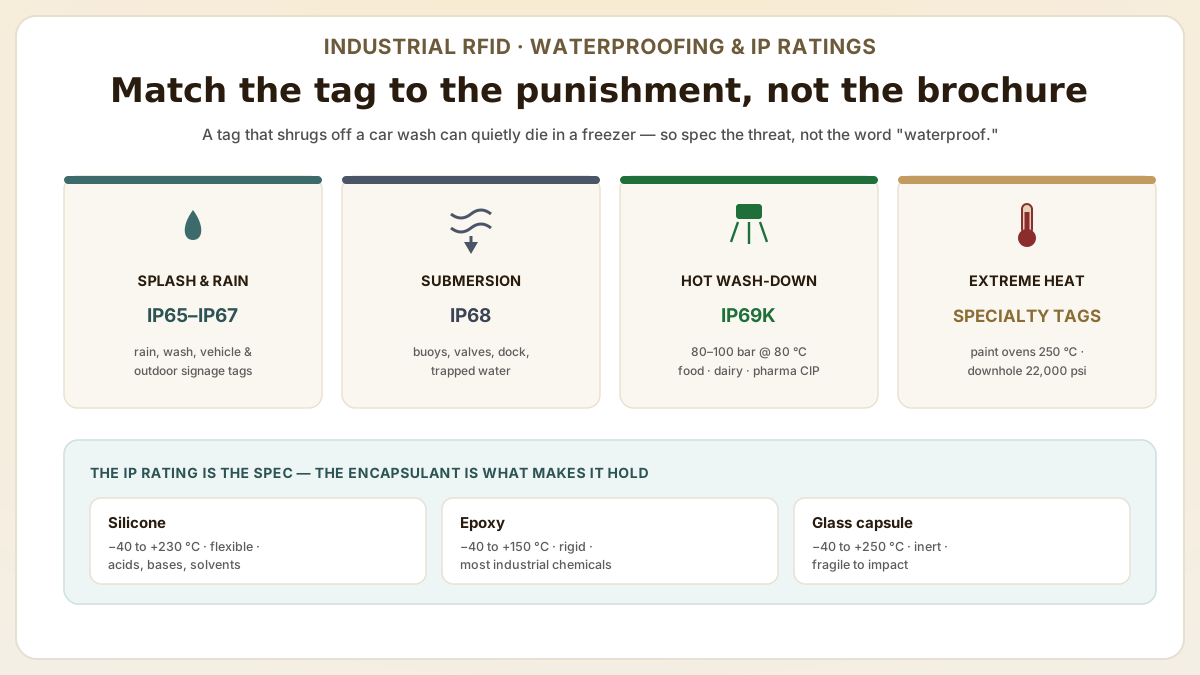
Waterproofing an RFID tag means encapsulating its chip and antenna to a target IP rating — IP67 for temporary immersion, IP68 for continuous submersion, IP69K for high-pressure hot wash-down — and matching the encapsulant (silicone, epoxy or glass) to the punishment rather than the brochure. This guide covers IP ratings, encapsulation materials, chemical resistance and lifecycle performance for B2B industrial buyers and system integrators deploying outdoor, laundry and wet-environment tags.
- IP67/IP68-rated RFID tags withstand continuous water immersion, high-pressure washing, UV exposure and temperature extremes encountered in outdoor industrial environments.
- Silicone-encapsulated RFID tags provide the best combination of waterproofing, chemical resistance and flexibility for textile, laundry and wearable applications.
- Tag encapsulation material choice affects read range, mechanical durability and chemical compatibility. Matching the encapsulant to the application environment is critical for tag longevity.
At a glance
Use these short answers to decide whether this page matches the project before moving into the detail.
Key takeaway
IP67/IP68-rated RFID tags withstand continuous water immersion, high-pressure washing, UV exposure and temperature extremes encountered in outdoor industrial environments.
How do you handle IP ratings and what they mean for RFID tags?
An RFID tag's job description sometimes reads like a dare: get boiled, bleached, and tumble-dried more times than the garment it is sewn into; ride a cattle ear through...
Next step
Ready to move forward? Start your inquiry to get specific answers for this project.
Discuss waterproof tag optionsHow do you handle IP ratings and what they mean for RFID tags?
An RFID tag's job description sometimes reads like a dare: get boiled, bleached, and tumble-dried more times than the garment it is sewn into; ride a cattle ear through a winter; sit forgotten at the bottom of a puddle; or take a point-blank jet of scalding caustic detergent and keep answering the moment a reader calls. 'Waterproof' is the spec buyers ask for, but it is rarely the right question — the tag that shrugs off a car wash can quietly die in a freezer. The right question is which particular punishment the tag has to survive. The Ingress Protection (IP) rating system (IEC 60529) defines how well an enclosure protects against solid particles and liquid ingress. For RFID tags deployed outdoors or in wet environments, the IP rating is the primary specification for environmental durability.
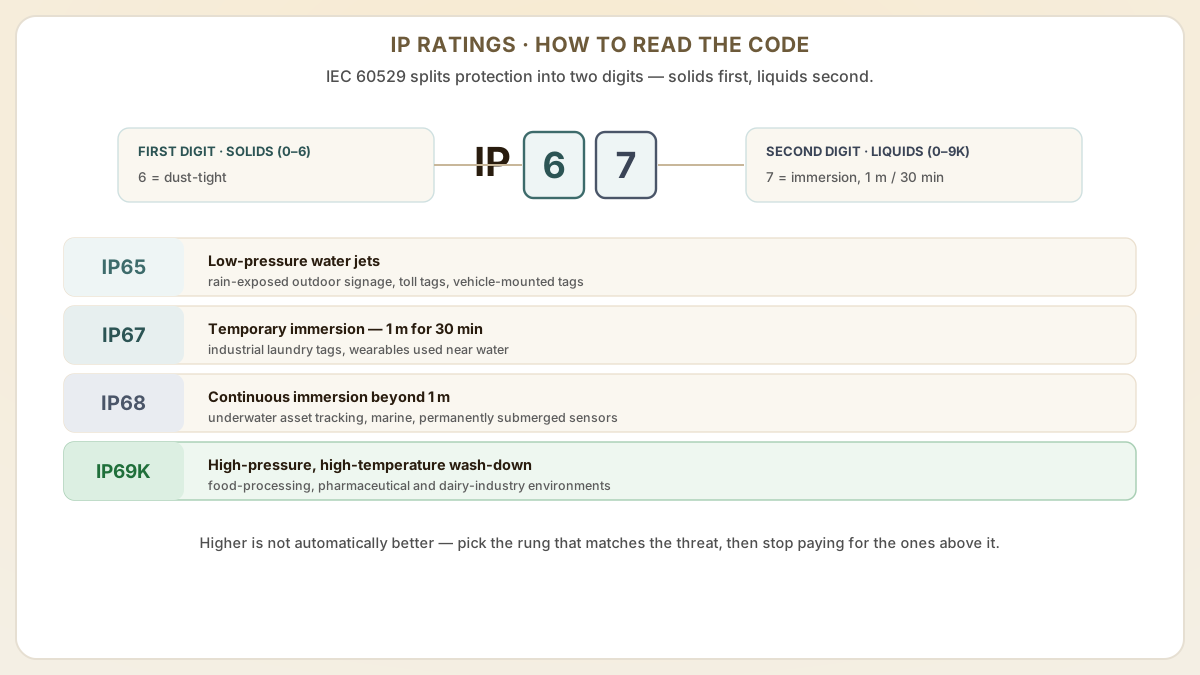
An IP rating consists of two digits: the first indicates protection against solids (0–6), the second against liquids (0–9K). IP67 means the tag is dust-tight (6) and can withstand temporary immersion in water up to 1 meter for 30 minutes (7). IP68 indicates continuous immersion beyond 1 meter at manufacturer-specified conditions. IP69K adds resistance to high-pressure, high-temperature spray washing.
- IP65: Protected against low-pressure water jets. Suitable for outdoor signage, toll tags and vehicle-mounted applications exposed to rain.
- IP67: Protected against temporary immersion. Suitable for industrial tags, laundry tags and wearables used near water.
- IP68: Protected against continuous immersion. Suitable for underwater asset tracking, marine applications and permanently submerged sensors.
- IP69K: Protected against high-pressure, high-temperature wash-down. Essential for food-processing, pharmaceutical and dairy-industry environments.
How do encapsulation materials and their properties work?
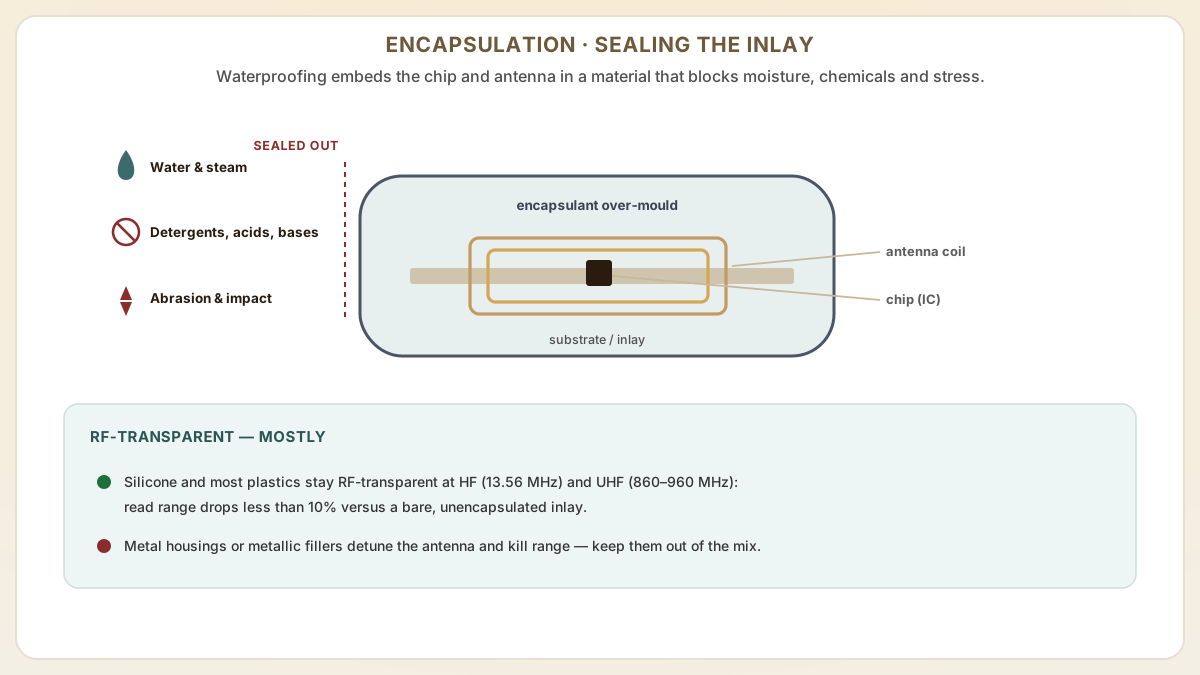
RFID tag waterproofing is achieved through encapsulation — embedding the chip and antenna inside a protective material that seals out moisture, chemicals and mechanical stress.
| Material | IP rating achievable | Temperature range | Chemical resistance | Flexibility | RF transparency |
|---|---|---|---|---|---|
| Silicone rubber | IP68 / IP69K | −40 °C to +230 °C | Excellent: acids, bases, solvents | High: bends without damage | Excellent at HF and UHF |
| Epoxy resin | IP67 / IP68 | −40 °C to +150 °C | Good: most industrial chemicals | None: rigid | Good at HF, moderate at UHF |
| ABS / polycarbonate housing | IP67 / IP68 | −20 °C to +80 °C | Moderate: resists mild chemicals | None: rigid shell | Good at HF and UHF |
| Polyurethane (PU) | IP67 | −30 °C to +100 °C | Moderate: resists oils, fuels | Moderate: semi-flexible | Good at HF and UHF |
| Glass capsule | IP68 | −40 °C to +250 °C | Excellent: inert to all chemicals | None: fragile to impact | Excellent at LF and HF |
Where are silicone RFID tags for laundry and textile used?
Industrial laundry is one of the most demanding environments for RFID tags. Tags must survive 200+ wash cycles at 60–85 °C, tumble drying at 80 °C, ironing or pressing at 180 °C and exposure to alkaline detergents and bleach.
- Silicone-encapsulated UHF laundry tags are sewn into or heat-sealed onto garments, linens, uniforms and healthcare textiles.
- Tags rated for 200+ industrial wash cycles at 75 °C typically last 2–3 years in commercial laundry operations.
- Small form factors (20 × 10 × 3 mm) minimize impact on garment comfort and appearance.
- Bulk-read capability allows automated laundry sorting: a UHF reader in the laundry chute or sorting conveyor reads all tagged items as they pass.
- Tag-read data integrates with laundry-management software to track wash counts, garment lifecycle, loss rates and PAR-level optimization.
How do outdoor and environmental deployment guidelines work?
Outdoors is not one environment so much as a rotating set of ways to age a tag: UV radiation, temperature cycling, wind-driven rain, and potential chemical exposure from fertilizers, road salt or industrial emissions. Designing for the worst of them, rather than the average, is the difference between a tag that lasts and one that quietly becomes a warranty claim.
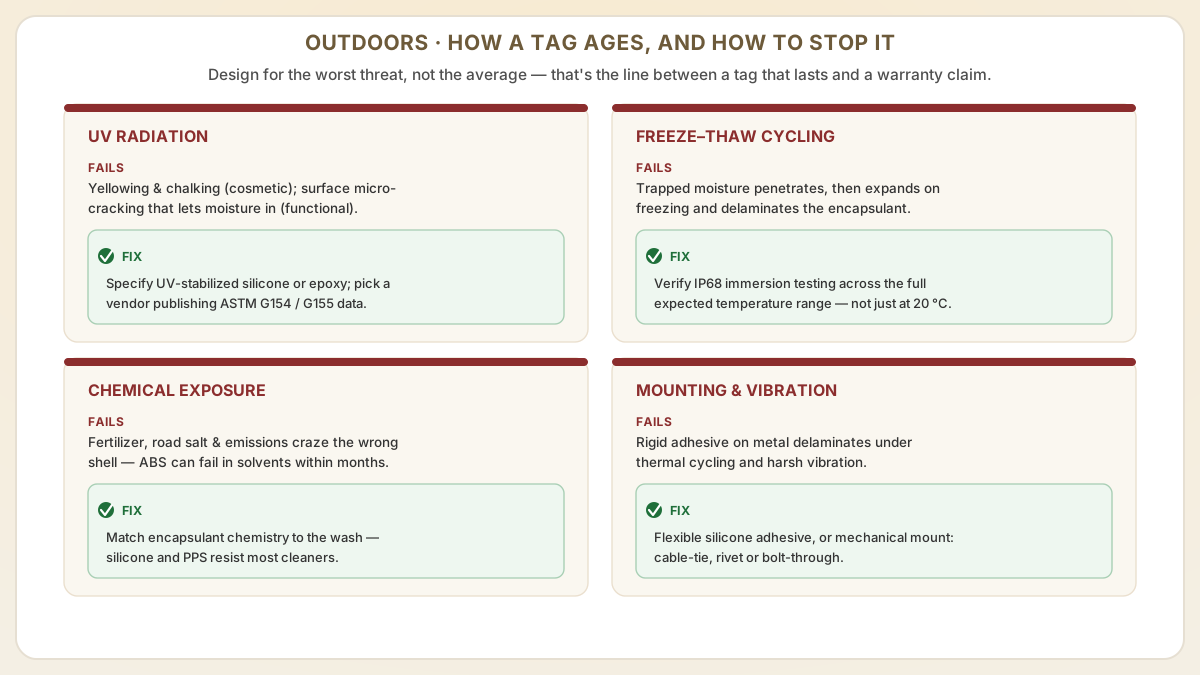
- UV stabilizers in the encapsulation material prevent degradation from solar radiation. Specify UV-stabilized silicone or epoxy for tags exposed to direct sunlight.
- Temperature cycling (freeze-thaw) can cause delamination if moisture penetrates the encapsulant and expands during freezing. Verify IP68 immersion testing at the expected temperature range.
- Mounting method must account for thermal expansion: adhesive-bonded tags on metal surfaces should use flexible adhesive (silicone-based) rather than rigid epoxy to prevent delamination during temperature cycling.
- Cable-tie, rivet or bolt-through mounting options provide mechanical retention independent of adhesive, suitable for harsh vibration environments.
- Anti-static formulations are available for tags deployed in explosive atmospheres (ATEX/IECEx zones) where electrostatic discharge must be controlled.
IP67 vs IP68 vs IP69K — what each rating actually requires
The IP code is precisely defined by IEC 60529 and ISO 20653, and the three ratings most relevant to outdoor and industrial RFID deployments — IP67, IP68, and IP69K — protect against very different threats. Choosing the right one is a cost-versus-environment trade-off rather than 'higher is better' since IP69K tags routinely cost 2-4x what IP67 tags cost. The summary below maps each rating to the test that earns it and the deployments where it's actually needed.
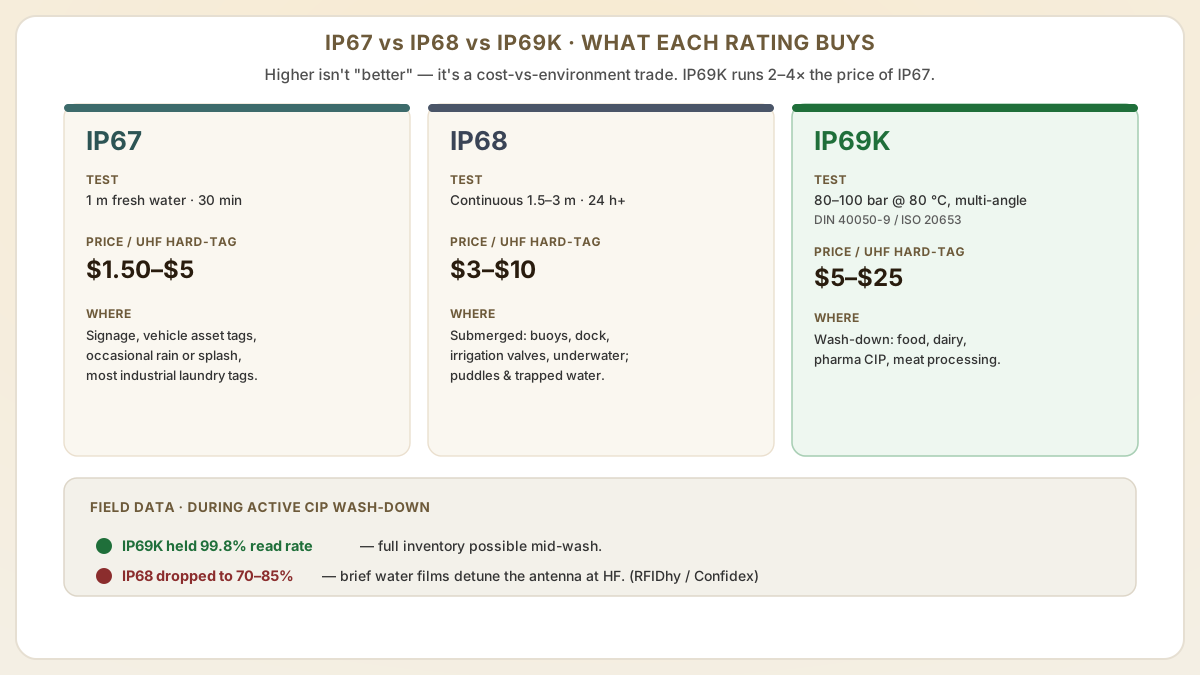
- IP67 (dust-tight + immersion 30 min @ 1 m). The IP67 test immerses the device in 1 m of fresh water for 30 minutes at room temperature. Suitable for outdoor signage, vehicle-mounted asset tags, equipment subjected to occasional rain or accidental splash, and most industrial laundry tags. Typical price for a UHF IP67 hard-tag is $1.50-$5 depending on memory and read range.
- IP68 (continuous immersion). IP68 means the device survives continuous immersion under conditions specified by the manufacturer — usually 1.5-3 m of fresh water for 24 hours or longer. Required for permanently submerged asset tracking (buoys, dock infrastructure, irrigation valves, underwater equipment), and for outdoor tags that may sit in puddles or trapped water for extended periods. Typical price $3-$10 per tag.
- IP69K (high-pressure, high-temperature wash-down). The DIN 40050-9 / ISO 20653 IP69K test uses 80-100 bar water at 80 °C directed from multiple angles. This is the standard wash-down condition in food processing, dairy, pharmaceutical CIP (clean-in-place) lines, and meat processing where USDA/FDA hygiene rules require pressure cleaning at full operating temperature. Typical price $5-$25 per tag for IP69K-rated UHF hard-tags from Confidex Captura Ironside, Xerafy MICRO Industrial, and HID EXO.
- Field-reported real-world performance. RFIDhy and Confidex have published case studies showing IP69K tags maintaining 99.8% read rate during active CIP wash-down, while IP68 tags in the same line dropped to 70-85% during wash because of brief water films that detuned the antenna at HF. For lines that have to be inventoried while wash is in progress, the IP69K premium pays for itself within the first cleaning cycle.
- Plate-out and chemical compatibility. Many wash-down environments use caustic detergents (sodium hydroxide), peracetic acid sanitizers, or chlorinated cleaners. The IP rating measures water resistance, not chemical resistance. For high-pH or oxidizing wash chemistries, specify the encapsulation chemistry explicitly — silicone and PPS resist most cleaners; ABS housings can craze and fail in concentrated solvents within months.
High-temperature and harsh-environment specialty tags
Several outdoor and industrial applications go beyond the IP-rating conversation entirely — autoclave sterilization, paint shop curing ovens, high-pressure downhole tools, and hot-asphalt road infrastructure all require tags rated to temperatures and pressures that destroy normal RFID inlays. The vendor lineup below covers most of the production options available in 2026.
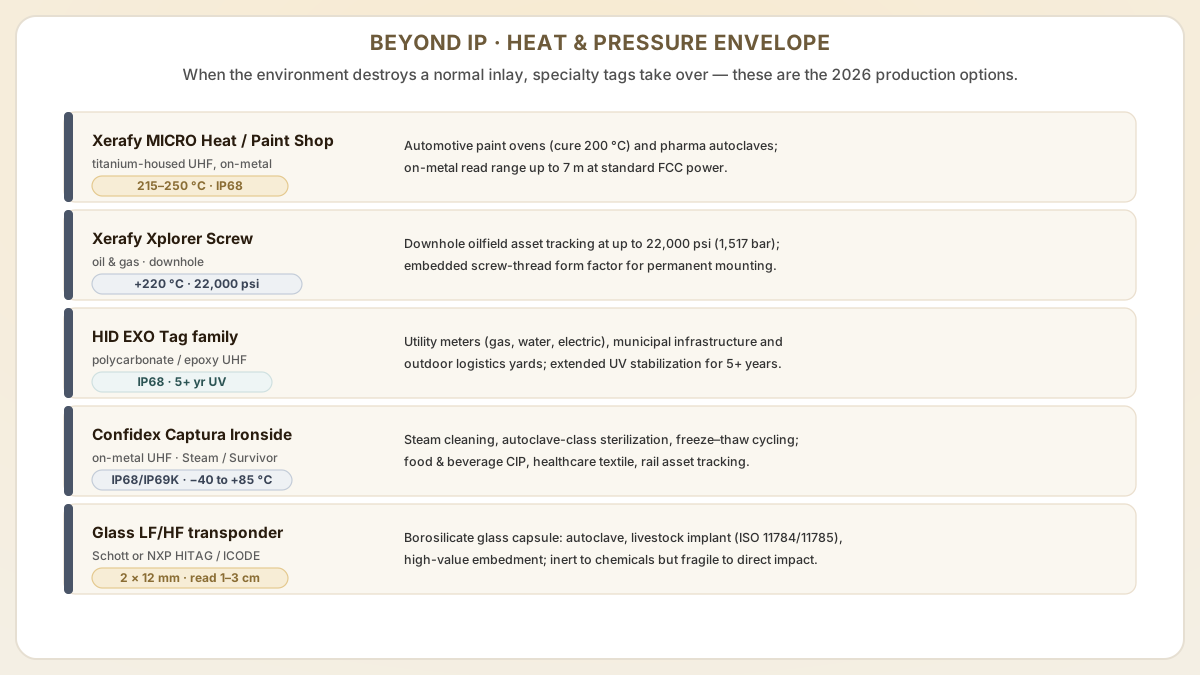
- Xerafy MICRO Heat / MICRO Paint Shop. Xerafy's micro-form-factor titanium-housed UHF tags survive up to 215 °C (MICRO Heat) and 250 °C (MICRO Paint Shop), with IP68 rating. Used in automotive paint lines that cure at 200 °C and in pharmaceutical autoclaves. Read range on metal up to 7 m at standard FCC power.
- Xerafy Xplorer Screw and similar oil-and-gas tags. Rated for +220 °C and pressures up to 22,000 psi (1,517 bar) for downhole oilfield asset tracking. Embedded-in-tool form factor with screw thread for permanent mounting.
- HID EXO Tag family. Polycarbonate and epoxy outdoor UHF tags rated to IP68 with extended UV stabilization for 5+ years of direct outdoor exposure. Used in utility (gas, water, electric meters), municipal infrastructure, and outdoor logistics yards.
- Confidex Captura Ironside Steam and Survivor lines. IP68/IP69K UHF on-metal tags rated for steam cleaning, autoclave-class sterilization, and freeze-thaw cycling from -40 °C to +85 °C. Most widely deployed in food and beverage CIP, healthcare textile RFID, and rail asset tracking.
- Glass-encapsulated LF/HF transponders. Schott or NXP HITAG/ICODE chips inside biocompatible borosilicate glass capsules (2 x 12 mm typical) survive autoclave sterilization, livestock implantation, and contact with most industrial chemicals. Used in animal identification (ISO 11784/11785), surgical instrument tracking, and high-value asset embedment in concrete or composite. Trade-off is fragility to direct impact and very short read range (1-3 cm).
Useful next pages
Use these linked product, guide and comparison pages to keep the next click specific and practical.
Industrial waterproof RFID tags
Silicone-encapsulated RFID tags designed for industrial laundry, textile tracking and wet environments.
Waterproof RFID wearables
Silicone RFID wristbands for water parks, resorts and outdoor events where waterproofing is essential.
IP rating and rugged tag references
Standards and vendor documentation for outdoor RFID specification work.
FAQ
What IP rating do I need for outdoor RFID tags?
IP65 is sufficient for rain-exposed applications where the tag is not submerged (vehicle windshield tags, outdoor signage). IP67 is required for tags that may be temporarily submerged or exposed to high-pressure cleaning. IP68 is needed for permanently submerged applications. IP69K is essential for food-processing or pharmaceutical environments with high-pressure, high-temperature wash-down requirements.
How many wash cycles can a silicone RFID laundry tag survive?
Industrial-grade silicone RFID laundry tags typically survive 50–100 wash cycles at 75 °C with standard alkaline detergent; textile tags run 200–300 cycles and rigid PPS versions 300–500. Actual lifecycle depends on wash temperature, chemical exposure, mechanical action intensity and drying method.
Does waterproof encapsulation reduce RFID read range?
Minimally. Silicone and most plastics are largely RF-transparent at both HF (13.56 MHz) and UHF (860–960 MHz) frequencies. Read-range reduction is typically less than 10 percent compared to an unencapsulated inlay. Metal housings or metallic fillers in the encapsulant will significantly reduce range and should be avoided.
What is the difference between IP68 and IP69K, and when does IP69K matter?
IP68 means continuous immersion in fresh water under conditions specified by the manufacturer (typically 1.5-3 m for 24+ hours). IP69K is a different test from DIN 40050-9 / ISO 20653 that uses 80-100 bar water at 80 °C directed at the device from multiple angles — the standard wash-down condition for food processing, dairy, pharmaceutical CIP, and meat processing lines. IP69K is required when hygiene rules force pressure cleaning at full operating temperature, and field data shows IP69K-rated tags maintain near-100% read rate during active wash while IP68 tags drop to 70-85% because of brief water films. Outside of high-pressure hot wash-down environments, IP68 is sufficient and the price premium for IP69K is not justified.
Can RFID tags survive UV exposure for 5+ years of outdoor mounting?
Yes, with the right encapsulant and mounting. Silicone, polycarbonate, and epoxy formulations with UV stabilizers are routinely rated for 5-10 year outdoor exposure. The failure modes to design around are encapsulant yellowing and chalking (cosmetic, doesn't affect read), surface micro-cracking that lets moisture penetrate during freeze-thaw (functional failure), and adhesive degradation if the tag is bonded rather than mechanically fastened. For 5+ year outdoor deployments, specify UV-rated encapsulant explicitly, use mechanical mounting (cable tie, rivet, bolt-through) rather than adhesive on outdoor metal, and pick a vendor that publishes accelerated weathering test data (ASTM G154 or G155). HID EXO, Xerafy Outdoor series, and Confidex Survivor B all publish weathering data.
Sources & references
Primary standards, OEM datasheets and regulatory documents cited by this article. All URLs were verified on the access date shown below.
- Xerafy OUTDOOR series — rugged outdoor RFID tags
Manufacturer reference for IP68, UV-resistant outdoor UHF tags and their mounting options.
- NXP HITAG (LF) transponders
LF transponder ICs compliant with ISO 11784/11785 animal-identification standards.
Proud Tek is a Shenzhen-based RFID & NFC manufacturer supplying hotel chains, transit operators, event venues and retail brands worldwide. Every order includes free samples, RF testing and dedicated project support.
Get a Quick Quote
Tell us about your project and we'll respond within one business day. Fields marked (asterisk) are required.