
Eco RFID
Coconut Shell RFID Wristbands for Eco Events
Quick answer
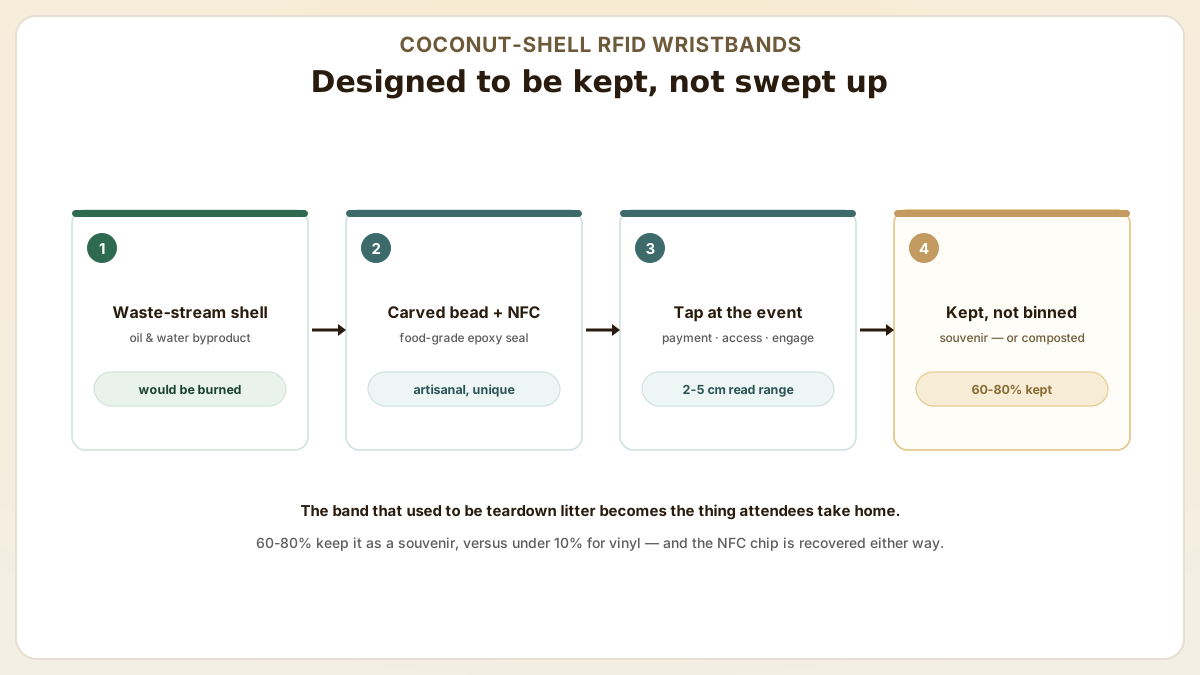
Coconut-shell RFID wristbands swap a throwaway vinyl band for a hand-carved, biodegradable bead with an embedded NFC chip — and 60-80% of attendees keep them as souvenirs instead of grinding them into the mud, versus under 10% for vinyl. How the material, NFC functions, customization, event logistics and defensible sustainability claims work for eco-conscious music festivals, corporate retreats and resort experiences.
- Coconut-shell RFID wristbands replace plastic wristbands with a natural, biodegradable material that attendees value as a keepsake rather than discarding at event end.
- Each coconut-shell bead is hand-carved and embedded with an NFC chip, creating a unique, artisanal accessory that reinforces sustainable-event branding.
- The NFC chip enables the same cashless payment, access control and attendee-engagement functions as standard silicone or vinyl RFID wristbands.
At a glance
Use these short answers to decide whether this page matches the project before moving into the detail.
Key takeaway
Coconut-shell RFID wristbands replace plastic wristbands with a natural, biodegradable material that attendees value as a keepsake rather than discarding at event end.
Why coconut shell for RFID wristbands?
Walk a festival field at dawn on teardown day and the story is always the same: snapped vinyl wristbands trodden into the mud, each one a monument to a single event's wo...
Next step
Ready to move forward? Start your inquiry to get specific answers for this project.
Order coconut shell samplesWhy coconut shell for RFID wristbands?
Walk a festival field at dawn on teardown day and the story is always the same: snapped vinyl wristbands trodden into the mud, each one a monument to a single event's worth of access control. Coconut-shell wristbands start from a different premise — that the thing on an attendee's wrist might be worth keeping instead of sweeping up. The events industry generates significant single-use plastic waste from wristbands, badges and lanyards. Coconut-shell RFID wristbands address this by using a renewable, waste-stream material as the primary substrate — a coconut byproduct that would otherwise be burned. The lifecycle below traces where that material comes from and where it ends up.
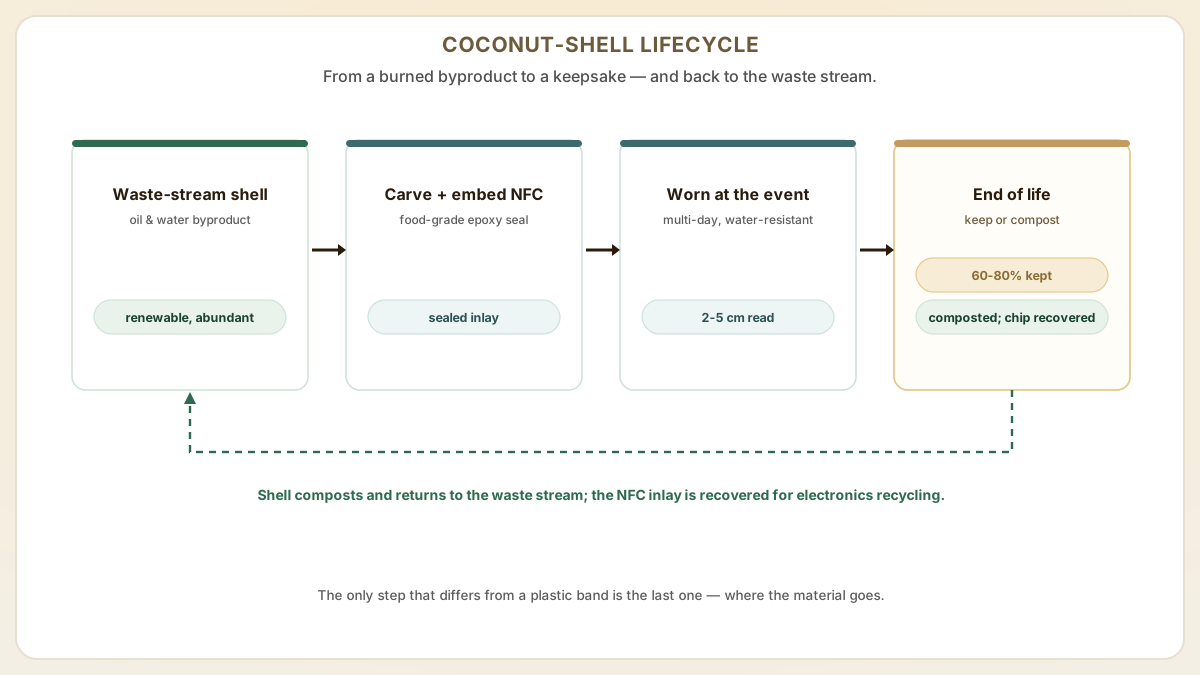
Coconut shells are a byproduct of coconut oil and coconut water production. They are abundant, renewable and typically discarded or burned as waste. Repurposing this material into wearable RFID accessories creates value from a waste stream while eliminating virgin plastic from the event-wristband supply chain.
- Coconut shell is naturally durable, water-resistant and lightweight. Properties that suit multi-day outdoor event wear.
- The natural grain and color variation of coconut shell makes each wristband unique, creating a premium, handcrafted aesthetic.
- Attendees perceive coconut-shell wristbands as souvenirs rather than disposable access tokens. Reducing post-event waste by 60–80 percent compared to vinyl wristbands.
- The material is biodegradable and compostable at end of life (after removing the NFC chip insert).
How do NFC chip integration and functionality work?
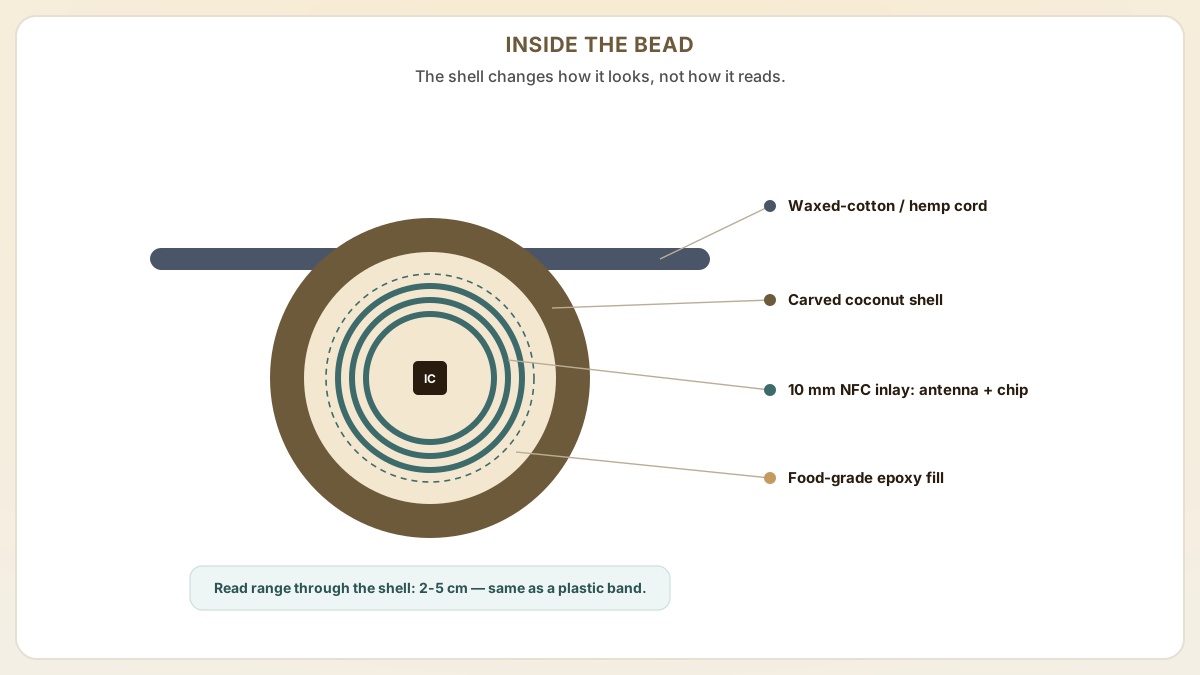
The NFC chip is embedded inside the coconut-shell bead during manufacturing, sealed with food-grade epoxy to protect against moisture and impact — including the occasional crowd-surf. Electrically the wristband behaves like any other NFC credential: the shell changes how it looks, not how it reads. The cutaway below shows how the inlay sits inside the carved bead, and the table maps each tap to the chip it needs.
| Function | How it works | Chip requirement |
|---|---|---|
| Cashless payments | Tap wristband at POS reader to charge event credit or linked account | NTAG213/215 or MIFARE Ultralight |
| Access control | Tap at gate reader to validate ticket and zone access | NTAG213/215 or MIFARE Classic |
| Social media integration | Tap at photo-booth or experience station to auto-post or collect media | NTAG213 (URL record) |
| Attendee engagement | Tap at sponsor activations to collect loyalty points or enter contests | NTAG213/215 |
| Post-event souvenir | Tap with phone to access event photos, playlists, memories page | NTAG213 (URL record) |
What design and customization options exist?
Coconut-shell RFID wristbands are customizable across five axes — shell carving, bead shape, color treatment, cord and packaging — each one a lever for event branding and sustainability messaging.
- Shell bead shapes: disc, oval, rectangular, barrel. All accommodate a standard 10 mm NFC inlay inside the cavity.
- Surface treatments: natural finish (clear lacquer), dyed color, laser-engraved logos or text.
- Cord options: waxed cotton, hemp, recycled polyester, paracord. Adjustable sliding-knot or breakaway-clasp closure.
- Multi-bead designs: primary bead with NFC chip plus decorative natural beads (wood, seed, bone) for a more elaborate aesthetic.
- Packaging: recycled kraft-paper bags or compostable pouches with event branding and sustainability story printed in soy-based ink.
- Minimum order quantities typically start at 500 units with 3–4 week production lead time.
How do event operations and logistics work?
Deploying coconut-shell RFID wristbands at events follows the same operational workflow as standard RFID wristbands, with minor adjustments for the natural-material form factor. The flow below walks one band from the encoding desk to its end-of-life.
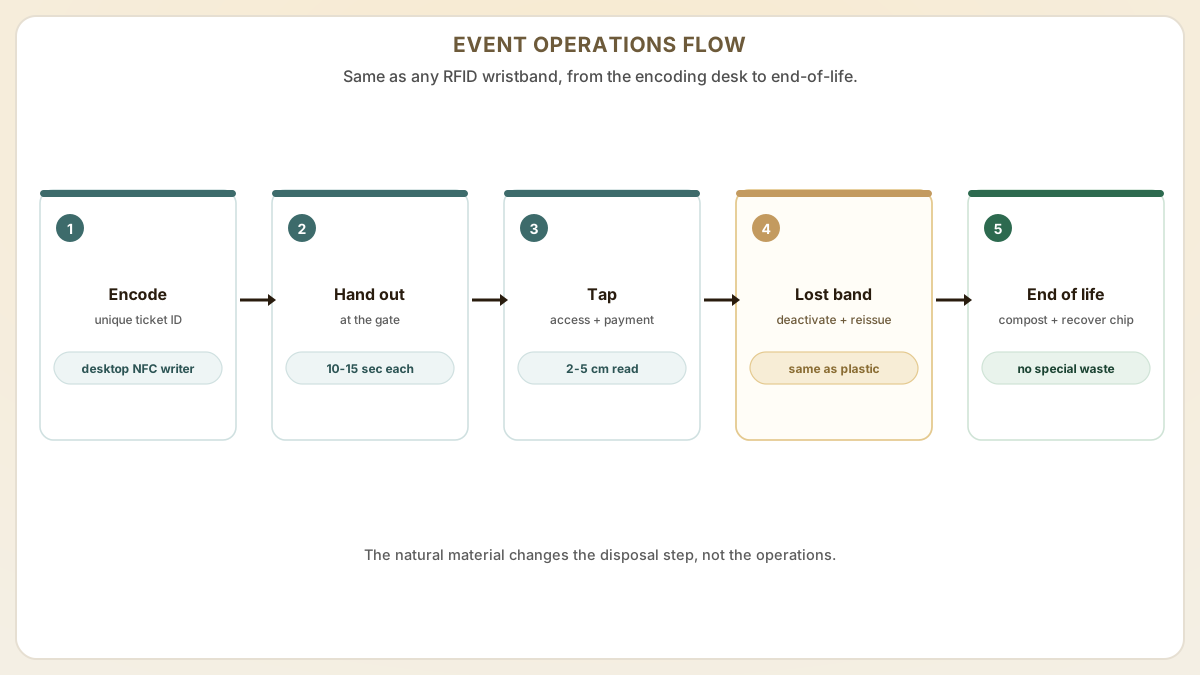
- NFC encoding is performed before distribution using standard desktop NFC writers. Each wristband is assigned a unique ticket ID linked to the attendee's registration record.
- Distribution at entry gates takes 10–15 seconds per attendee: scan registration barcode or QR code, match to pre-encoded wristband, hand to attendee.
- Read range through coconut shell is comparable to standard plastic wristbands — 2–5 cm with handheld NFC readers and POS terminals.
- Lost-wristband replacement uses the same deactivation-and-reissue process as standard RFID wristbands.
- Post-event, uncollected wristbands require no special waste handling. The coconut shell composts naturally, and the small NFC inlay can be separated for electronics recycling.
How do coconut-shell wristbands compare with other eco-material options?
Coconut shell is one of several biodegradable substrate options on the market alongside wood, bamboo, RPET, hemp and Tyvek. The right choice depends on event aesthetic, durability requirement and how attendees are expected to dispose of the band. The matrix below scores the main options so you can defend the pick to a sponsor.
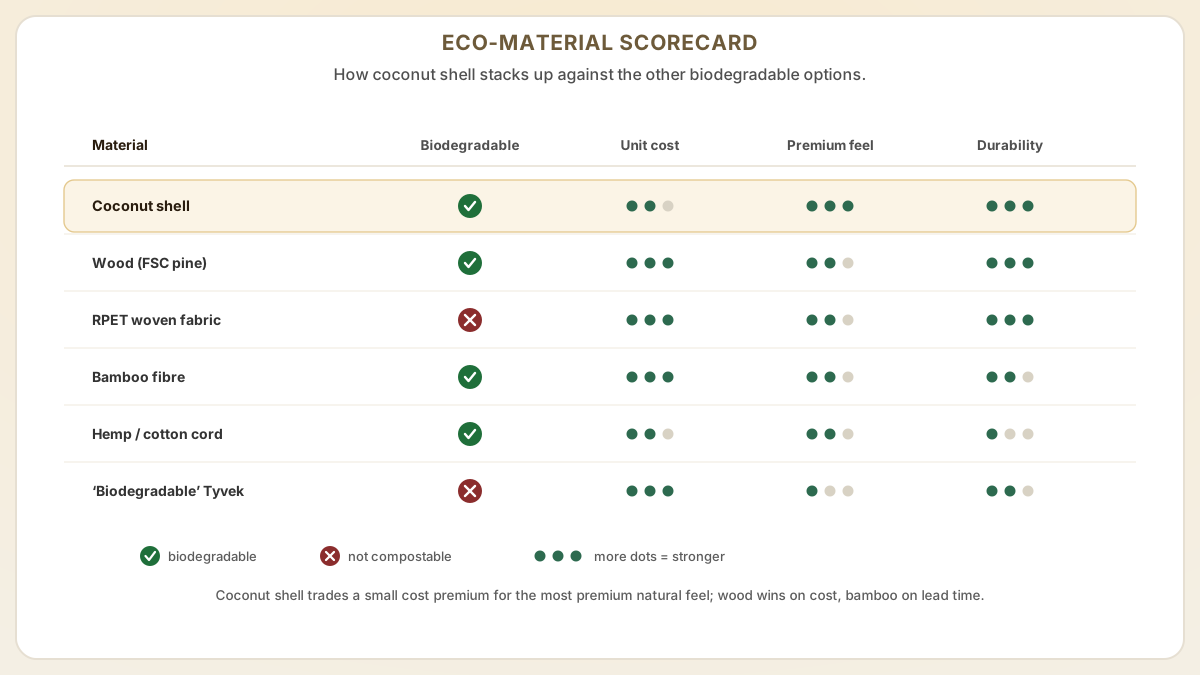
- Coconut shell vs. wood (bamboo, FSC pine): wooden NFC bands offer cleaner laser engraving and tighter cost control at scale ($1.20-$2.50 vs. $1.50-$3.00 for coconut shell), while coconut shell provides natural curvature and grain variation that reads as more premium for resort and lifestyle brands. Both are biodegradable substrate with a small electronics inlay that should be separated for recycling.
- Coconut shell vs. RPET woven fabric: RPET (recycled-PET polyester) bands cost less and offer richer sublimation print, but are still a plastic material that does not biodegrade. Coconut shell costs more but delivers a true 'natural-material on the wrist' positioning that resonates with eco-themed festivals and ESG-driven corporate retreats.
- Coconut shell vs. bamboo fiber: bamboo is renewable and fully compostable, but bamboo wristband forms tend to be flat printed plates rather than the carved bead aesthetic. Coconut shell wins on tactile differentiation; bamboo wins on lower MOQ and faster lead time.
- Coconut shell vs. hemp/cotton cord wristbands: hemp and organic cotton are softer against the skin and excellent for kids' programs, but they tear more easily over a 4-day festival and absorb sweat. Coconut shell beads on a hemp cord combine the look-and-feel of natural fibre with the structural integrity needed for multi-day wear.
- Coconut shell vs. Tyvek with biodegradable claim: 'biodegradable Tyvek' is the kind of phrase that should make a procurement lead reach for the datasheet. Most Tyvek bands are HDPE recyclable but not compostable in home or municipal facilities. If carbon footprint is a hard procurement criterion, coconut shell or wood (with documented sourcing) is the more defensible answer.
What sustainability claims can you defensibly make to attendees and sponsors?
Eco-material wristbands often get over-marketed — 'plastic-free,' 'carbon-neutral,' 'ocean-positive,' each adjective one audit away from a retraction. Buyers and sponsors will scrutinize claims; the safest and most credible positioning is anchored to specific, measurable substitutions rather than vague 'green' language. The framework below sorts the claims worth making from the ones that invite a retraction.
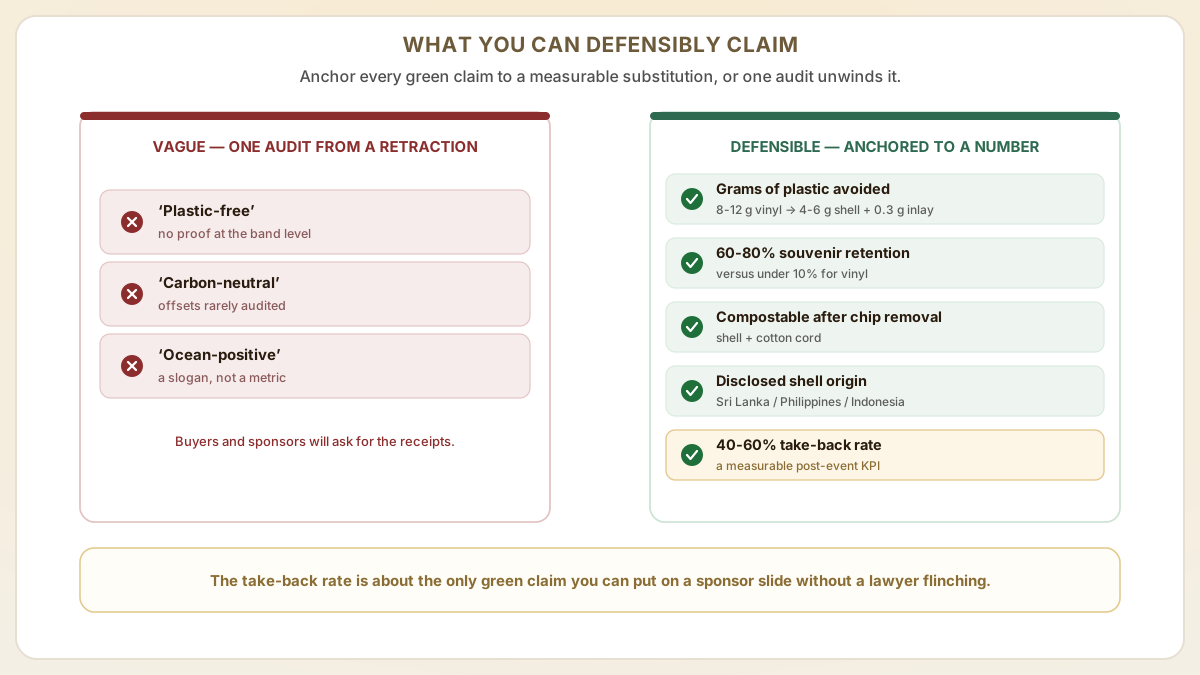
- Plastic-substitution claim: state the gram-weight of plastic avoided per wristband ('replaces an 8-12g vinyl band with 4-6g of natural coconut shell + a 0.3g NFC inlay'). This is verifiable and stops audits cold.
- Souvenir-retention claim: cite the 60-80% post-event retention rate observed for natural-material bands vs. <10% for vinyl bands. Each retained band is one fewer unit going to waste, which is the underlying environmental gain.
- Compostability nuance: shell + cotton cord biodegrade in industrial composting in months; the NFC inlay does not. Always pair the compostability claim with 'after the small electronics inlay is removed' to avoid greenwashing complaints.
- Sourcing transparency: coconut shell is a co-product of coconut oil and water production, primarily sourced from Sri Lanka, Philippines and Indonesia. Disclose the country of shell origin and whether the supplier participates in any fair-trade or smallholder cooperative program — sponsors with ESG mandates will ask.
- End-of-life take-back: pair the eco-material band with a clearly signposted take-back station at exits where attendees who do not want to keep the band can drop it for chip recovery and shell composting. The take-back rate (target: 40-60% of distributed bands) becomes a measurable post-event sustainability KPI — and about the only green claim you can put on a sponsor slide without a lawyer flinching.
Useful next pages
Use these linked product, guide and comparison pages to keep the next click specific and practical.
Coconut shell RFID wristbands
Natural coconut-shell wristbands with embedded NFC chips for eco-conscious events and brand experiences.
Event RFID wristbands
Full range of RFID wristband options for festivals, conferences and hospitality events.
Eco-wristband vendor reference
Public competitor pages for buyers benchmarking coconut-shell and other natural-material RFID wristbands.
FAQ
Are coconut-shell RFID wristbands waterproof?
Coconut shell is naturally water-resistant, and the NFC chip inside is sealed with epoxy. The wristband can withstand rain, splashing and brief submersion. It is not rated for extended underwater use. For water parks or swimming applications, silicone wristbands are a better choice.
How much do coconut-shell RFID wristbands cost compared to standard wristbands?
Coconut-shell wristbands typically cost $1.50–$3.00 per unit at volumes of 1 000–5 000 units, compared to $0.50–$1.50 for standard silicone or fabric RFID wristbands. The premium is justified by the sustainability story, souvenir value and differentiated attendee experience.
Can coconut-shell wristbands be reused for future events?
The NFC chip can be reprogrammed with a new event URL or credential for subsequent events. The physical wristband can be reused if the attendee returns it. However, most organizers position the wristband as a keepsake. The souvenir value reduces post-event waste and reinforces brand recall.
What is the minimum order quantity for custom coconut-shell wristbands?
Most manufacturers offer minimum orders of 500 units for standard designs and 1 000 units for fully custom shapes, colors and laser engraving. Production lead time is 3–4 weeks including NFC chip integration and encoding. Rush orders may be available at a premium.
Can coconut-shell RFID wristbands be used for cashless payment at festivals?
Yes. The embedded NFC chip (typically NTAG213/215 or MIFARE Ultralight EV1) is the same chip family used by leading cashless platforms (Tappit, Glownet, Weezevent). The natural shell affects appearance only — read range, write speed and platform compatibility match a standard plastic band. Confirm the specific chip family with your cashless vendor before placing the order, as some platforms standardize on DESFire EV2 for the wallet application.
Are eco-material wristbands actually more sustainable than reusable silicone?
It depends on the use case. A silicone band reused across 5+ events has a lower per-event footprint than a single-use coconut-shell band even though silicone is petrochemical-derived. Coconut shell wins when (a) attendees want to keep the band as a souvenir (silicone bands are usually returned and re-issued), (b) the event audience cares about visible sustainability messaging, or (c) the band is sized for a specific event date and cannot be reused. Run the comparison on a per-event amortized basis, not on raw material counts.
Sources & references
Primary standards, OEM datasheets and regulatory documents cited by this article. All URLs were verified on the access date shown below.
Proud Tek is a Shenzhen-based RFID & NFC manufacturer supplying hotel chains, transit operators, event venues and retail brands worldwide. Every order includes free samples, RF testing and dedicated project support.
Get a Quick Quote
Tell us about your project and we'll respond within one business day. Fields marked (asterisk) are required.