
Eco RFID
Wooden NFC Cards for Eco-Friendly Branding
Quick answer
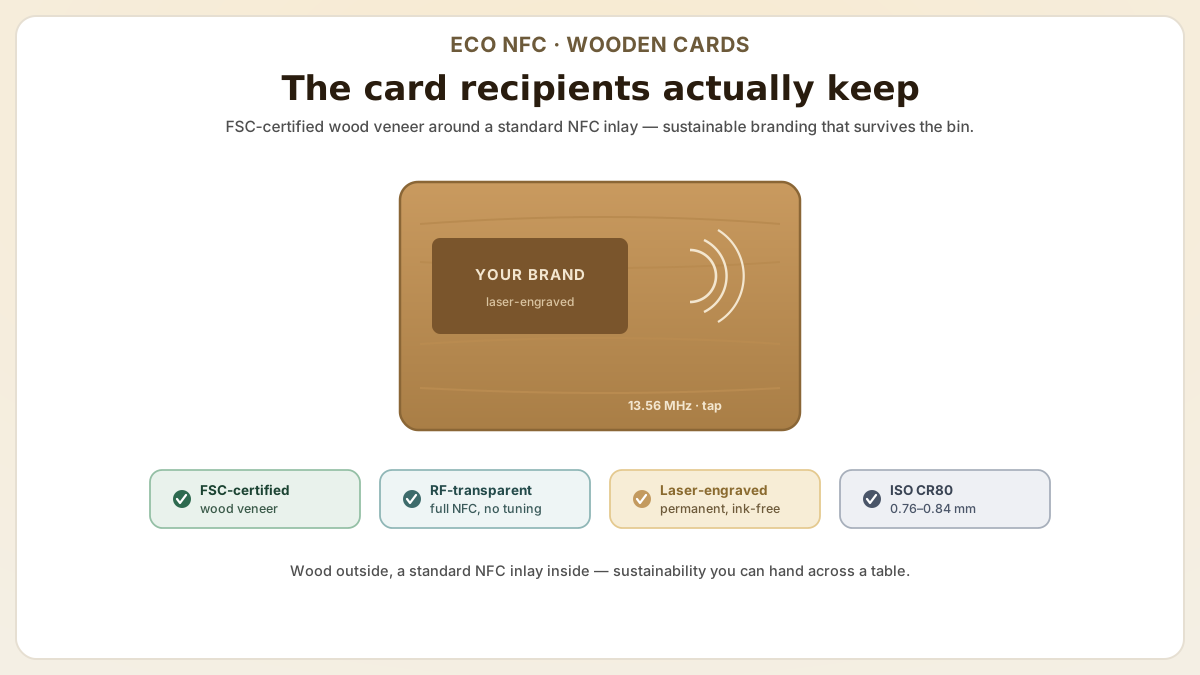
Wooden NFC cards wrap a standard 13.56 MHz NFC inlay in FSC-certified wood veneer (0.3-0.6 mm) at ISO CR80 size — the rare corporate giveaway recipients actually keep instead of binning. This B2B guide covers wood species, NFC construction, printing and laser engraving, durability, the branded-platform vs white-label decision, and the sustainability certifications that survive a procurement audit.
- Wooden NFC cards communicate sustainability values through material choice while delivering the same contactless functionality as PVC cards.
- Natural wood grain ensures every card is visually unique, reinforcing the premium and artisanal brand positioning that eco-conscious companies seek.
- FSC-certified wood sourcing and biodegradable adhesives enable verifiable sustainability claims that withstand regulatory and consumer scrutiny.
At a glance
Use these short answers to decide whether this page matches the project before moving into the detail.
Key takeaway
Wooden NFC cards communicate sustainability values through material choice while delivering the same contactless functionality as PVC cards.
Why wooden NFC cards resonate with B2B buyers
Every conference ends with the same ritual: a hotel desk littered with business cards, most of them in the bin before the lanyard comes off. The wooden one tends to surv...
Next step
Ready to move forward? Start your inquiry to get specific answers for this project.
Request wooden card samplesWhy wooden NFC cards resonate with B2B buyers
Every conference ends with the same ritual: a hotel desk littered with business cards, most of them in the bin before the lanyard comes off. The wooden one tends to survive the cull — recipients turn it over, run a thumb across the grain, and slot it into a wallet instead of the recycling. That small act of retention is the whole business case. Corporate procurement teams are under increasing pressure to choose sustainable materials for branded items, and wooden NFC cards meet that demand while creating a distinctive tactile experience that differentiates the brand in networking environments.
Unlike recycled PVC or bioplastic cards that look and feel similar to standard plastic, wooden cards are immediately recognizable as a different material. This tactile distinctiveness drives higher card retention rates. Recipients keep wooden cards as novel objects rather than discarding them after a single event — and not being thrown away is the highest compliment a business card can realistically earn.
- Sustainability reporting frameworks (GRI, CDP) increasingly require procurement teams to demonstrate material substitution efforts.
- Wooden cards weigh 3-5 grams in CR80 format, comparable to standard PVC, and fit in standard card slots and wallets.
- NFC functionality is unaffected by the wood substrate. Wood is RF-transparent and does not interfere with 13.56 MHz signals.
- Custom laser engraving on wood produces a permanent, ink-free mark that will not fade, chip or peel.
How do wood species and material properties work?
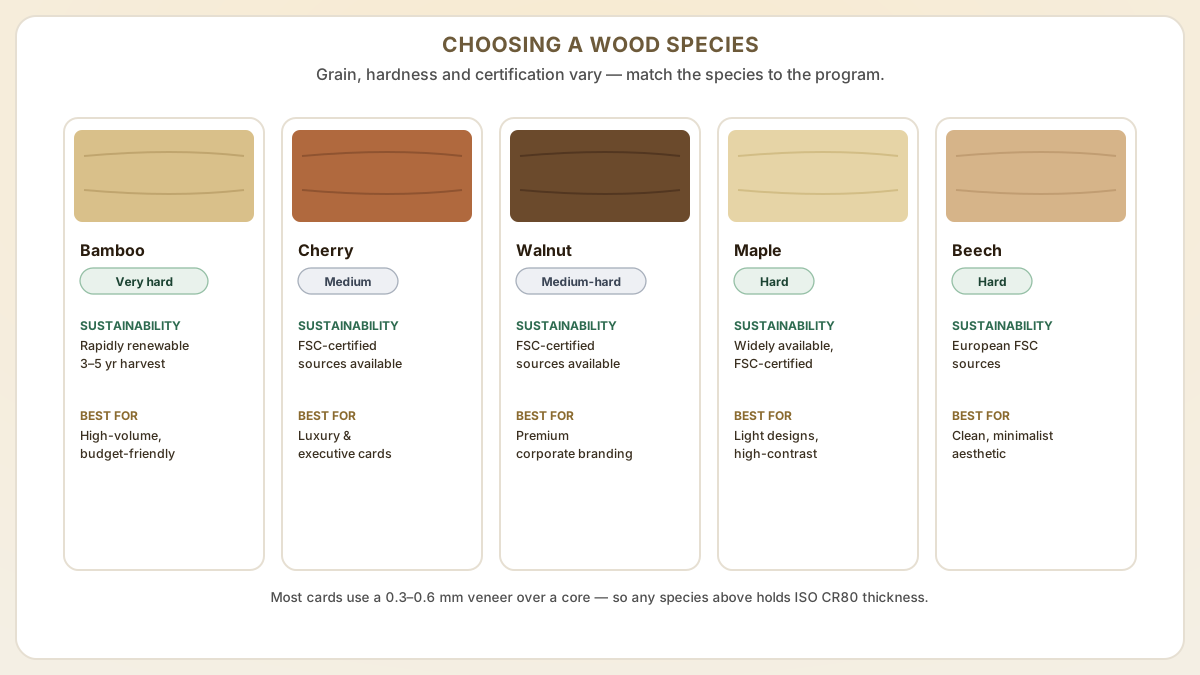
The choice of wood species affects the card's appearance, durability, workability and sustainability credentials. Most wooden NFC cards use veneers (0.3-0.6 mm) laminated to a core layer rather than solid wood, enabling consistent thickness and structural stability. The five species below compare at a glance — and wood is one of several sustainable card substrates worth weighing.
| Wood species | Color / grain | Hardness | Sustainability | Best for |
|---|---|---|---|---|
| Bamboo | Light tan, straight grain | Very hard | Rapidly renewable (3-5 year harvest) | High-volume programs, budget-friendly |
| Cherry | Warm reddish-brown, fine grain | Medium | FSC-certified sources available | Luxury and executive cards |
| Walnut | Dark chocolate brown, pronounced grain | Medium-hard | FSC-certified sources available | Premium corporate branding |
| Maple | Pale cream, subtle grain | Hard | Widely available, FSC-certified | Light-colored designs, high contrast engraving |
| Beech | Light pink-tan, fine uniform grain | Hard | European FSC sources | Clean, minimalist design aesthetic |
How do NFC integration and card construction work?
Wooden NFC cards are constructed as a sandwich: a thin wood veneer on each face, bonded to a central core layer that houses the NFC antenna and chip. The core is typically a flexible PET or paper-based inlay. The cross-section below shows how the layers stack — and why the wood never gets in the signal's way.
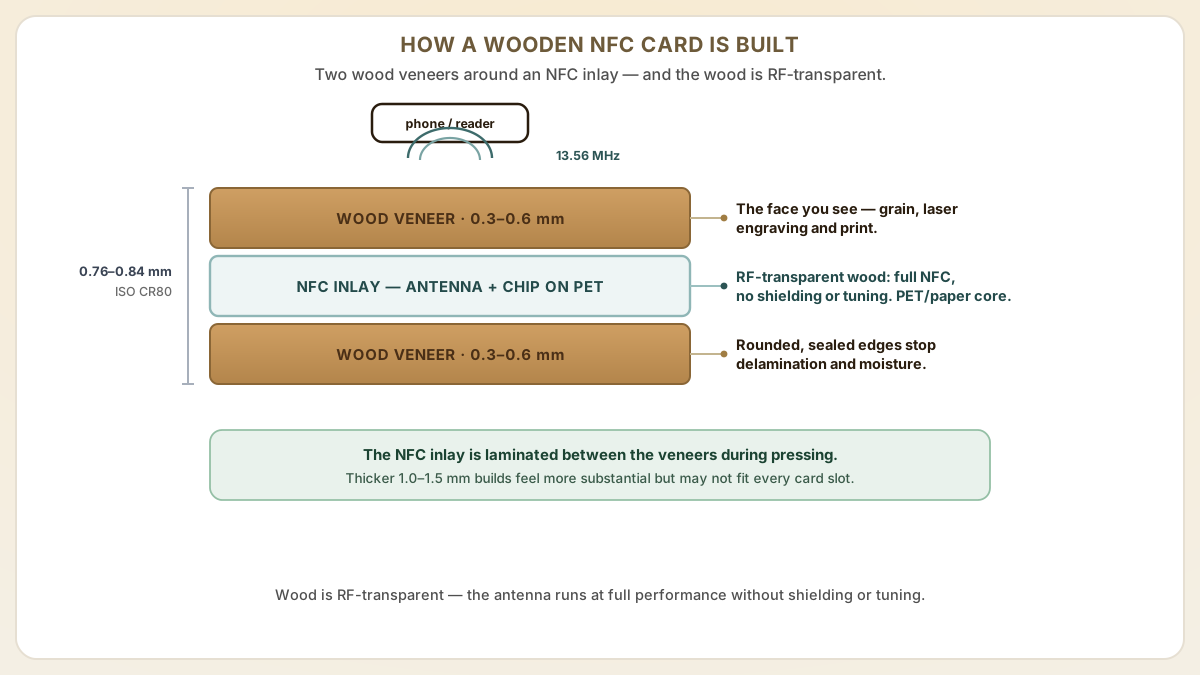
- The NFC inlay (antenna + chip on PET substrate) is positioned between the two wood veneers during lamination.
- Total card thickness matches the ISO CR80 standard of 0.76-0.84 mm. Thicker cards (1.0-1.5 mm) are available for a more substantial feel but may not fit all card slots.
- Wood veneer is RF-transparent, so the NFC antenna operates at full performance without shielding or tuning adjustments.
- Edge finishing (rounded corners, sealed edges) prevents delamination and moisture ingress that could swell the wood layers.
- Hot-stamping, silk-screen printing and UV digital printing are all compatible with wood veneer surfaces, though results vary by grain pattern and porosity.
How do printing and marking techniques work?
Wooden cards accept a different set of marking techniques compared to PVC. The natural grain pattern affects ink adhesion and visual contrast, requiring design adjustments. The five methods below are ranked from the go-to to the one that cracks veneer — laser engraving leads; embossing is the trap.
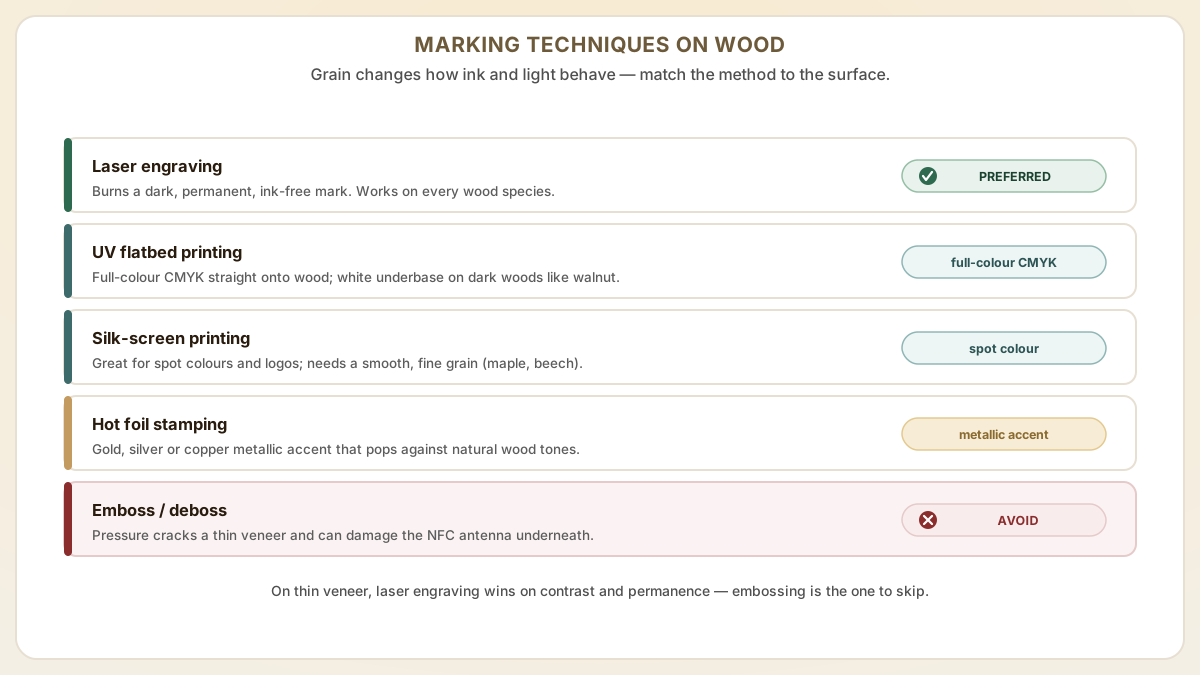
- Laser engraving is the preferred marking method. It burns the wood surface to create a darkened mark with high contrast and permanence. Works on all wood species.
- UV flatbed printing applies full-color CMYK images directly to the wood surface. White ink underbase is required for color accuracy on dark woods like walnut.
- Silk-screen printing works well for spot colors and logos but requires a smooth surface. Fine-grained species like maple and beech produce the best results.
- Hot foil stamping (gold, silver, copper) creates a metallic accent that contrasts effectively with natural wood tones.
- Avoid embossing and debossing on thin wood veneers. The pressure can crack the veneer and damage the NFC antenna underneath.
How do sustainability certifications and compliance work?
Verifiable sustainability claims require documentation from the supply chain. Procurement teams should request specific certifications when sourcing wooden NFC cards.
- FSC (Forest Stewardship Council) chain-of-custody certification verifies the wood was sourced from responsibly managed forests.
- PEFC (Programme for the Endorsement of Forest Certification) is an alternative to FSC recognized in European procurement frameworks.
- Bamboo products may qualify as rapidly renewable material under LEED and other green building standards.
- Adhesive and lamination materials should be formaldehyde-free and comply with REACH regulations for European distribution.
- End-of-life: Wood veneer cards are not fully biodegradable due to the PET NFC inlay, but the wood portion composts naturally. Communicate this nuance accurately in sustainability messaging.
How wooden NFC cards stack up against V1CE, TAPiTAG, Mobilo, and Popl bamboo lines
Most B2B buyers comparing wooden NFC cards run a build-vs-buy decision against established branded platforms. V1CE, TAPiTAG, Mobilo, Popl, and L-Card all offer wood/bamboo lines as their eco-positioning tier. Knowing the price points and platform tradeoffs helps procurement teams decide between a SaaS-bundled card vs a white-label custom wood card pointing to their own subdomain. The matrix below lines up price, model and data ownership side by side.
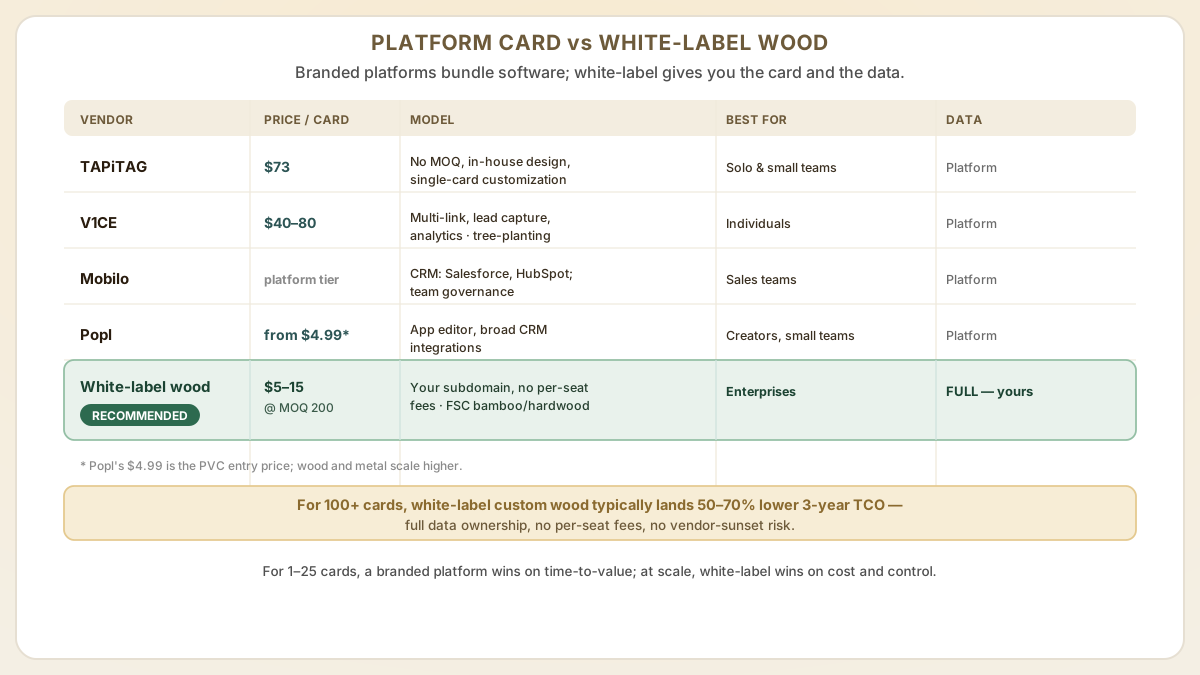
- TAPiTAG (Ireland-based, ships globally) — wooden card range at $73 per card retail covers bamboo, white bamboo, black bamboo, oak, walnut, cherry, herringbone. No minimum order, single-card customization, in-house design team handles logo and finish. Best fit for solo professionals or small teams who want zero-effort branded card delivery.
- V1CE — bamboo NFC business card line tied to the V1CE platform with multi-link sharing, lead capture, and analytics. Premium positioning at the $40-$80 per card range. Tree-planting commitment per purchase. Best fit for individuals who want a polished platform experience.
- Mobilo — wooden cards within the broader Mobilo platform; wood is the eco tier alongside metal and PVC. Focus on enterprise CRM integrations (Salesforce, HubSpot) and team governance, not the wood material itself. Best fit for sales teams that want every tap routed to a CRM with audit trails.
- Popl — bamboo and wood options in the broader product range; entry pricing starts around $4.99 PVC scaling up for wood/metal. App-driven editor, broad CRM integrations. Best fit for individual creators and small sales teams that prioritize price accessibility.
- White-label custom wood (this guide's recommendation for enterprises) — laser-engraved with your branding, FSC-certified bamboo or hardwood, NFC chip programmed to your own subdomain (cards.yourcompany.com). $5-$15 per card at MOQ 200, no per-seat fees, full data ownership. Tradeoff: requires in-house web hosting or a static profile page; no CRM out of the box.
ESG and sustainability claims you can defend in a procurement audit
Wooden NFC cards are an easy ESG win — but only if the supporting documentation holds up. Procurement audits and CDP/GRI reporting now scrutinize material claims tightly. The five claims below are defensible when paired with documentation from your supplier; the supporting paperwork should arrive with every shipment. The checklist below pairs each claim with the exact document to request — and flags the one overclaim that invites a greenwashing complaint.
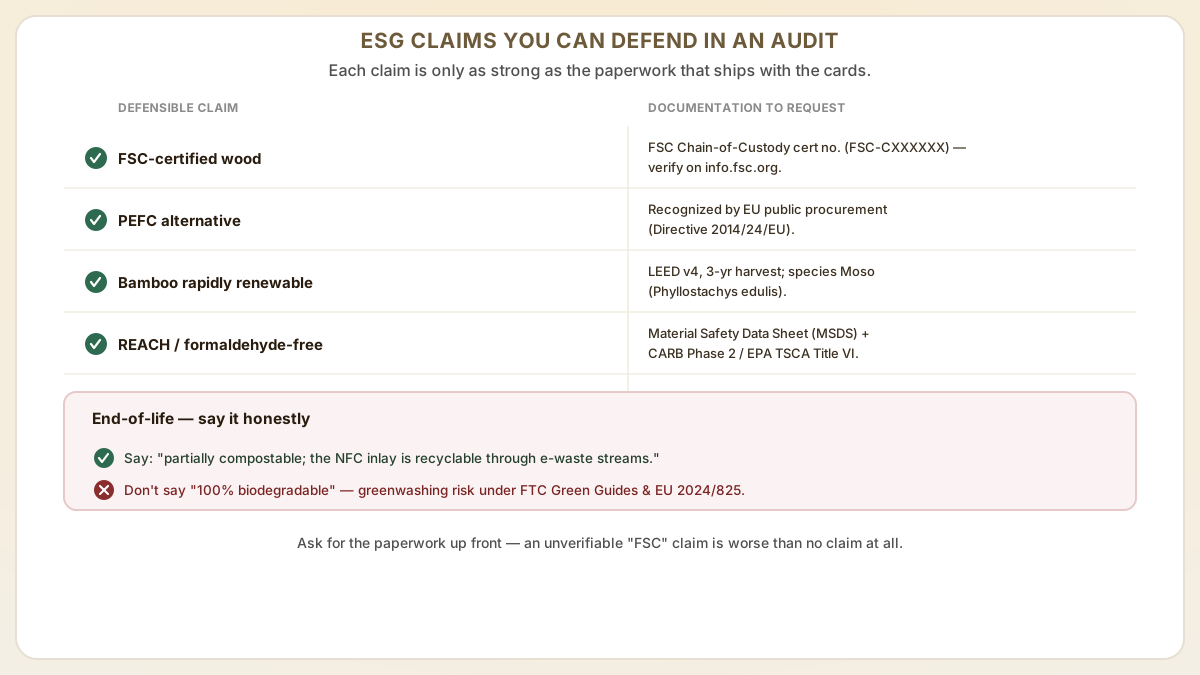
- FSC chain-of-custody certificate: the physical document trace from forest to card. Ask your supplier for the FSC Chain of Custody certificate number (format FSC-CXXXXXX) and verify on info.fsc.org. Without this paperwork, 'FSC-certified wood' is an unverifiable marketing claim.
- PEFC alternative: Programme for the Endorsement of Forest Certification — recognized by EU public procurement frameworks (Directive 2014/24/EU). Acceptable substitute for FSC in European-headquartered organizations. Same documentation discipline applies.
- Bamboo rapid-renewable claim: bamboo qualifies as 'rapidly renewable material' under LEED v4 (3-year harvest cycle) and is accepted in BREEAM material assessments. Supplier should provide harvest origin and species (Moso = Phyllostachys edulis is the standard).
- REACH and formaldehyde compliance: wooden cards laminated with formaldehyde-free adhesives (e.g., soy-based or PVA) avoid REACH SVHC concerns for European distribution. Request a Material Safety Data Sheet (MSDS) and CARB Phase 2 / EPA TSCA Title VI compliance for North American sale.
- End-of-life honesty: the wood veneer is biodegradable; the embedded NFC inlay (PET substrate + copper antenna + silicon chip) is not. Communicate this nuance accurately. The most defensible end-of-life claim is 'partially compostable, with the NFC inlay recyclable through e-waste streams' — overclaiming '100% biodegradable' invites greenwashing complaints under FTC Green Guides and EU Empowering Consumers Directive (2024/825).
Useful next pages
Use these linked product, guide and comparison pages to keep the next click specific and practical.
Wooden NFC card products
Explore wood species, NFC chip options and custom engraving for eco-friendly cards.
Related sustainable NFC products
Additional eco-friendly NFC and RFID products for sustainability-focused procurement.
Sustainability certifications and wooden card platforms
FSC and PEFC certification verification plus competitor wooden-card catalogs.
FAQ
Are wooden NFC cards as durable as PVC cards?
Wooden NFC cards are surprisingly durable for daily use. The laminated construction resists bending and snapping. However, they are more susceptible to moisture damage if submerged and can show surface scratches more visibly than PVC. A clear protective coating extends surface life significantly.
Can wooden NFC cards be customized with individual names?
Yes. Laser engraving supports variable data, so each card can have a unique name, title or QR code engraved during production. Variable engraving is efficient down to single-unit runs, making it ideal for executive card programs.
Do wooden NFC cards comply with ISO CR80 card dimensions?
Yes. Standard wooden NFC cards are manufactured to ISO/IEC 7810 CR80 dimensions (85.6 x 54 mm) with a thickness of 0.76-0.84 mm. This ensures compatibility with standard card wallets, badge holders and card slots.
What is the minimum order quantity for wooden NFC cards?
Most suppliers offer MOQs of 50-100 cards for wooden NFC cards with standard laser engraving. Full-color printed wooden cards may have higher minimums of 200-500 due to print setup costs. Custom wood species selections may require 100+ units.
Should we pick TAPiTAG / V1CE bamboo cards or a white-label custom wood card?
For 1-25 cards (solo professionals, small founder teams), TAPiTAG and V1CE win on time-to-value — single-card MOQ, in-house design, ready in 5-10 business days. For 100+ cards (sales teams, full enterprises), white-label custom wood from a manufacturer pointing to your own subdomain delivers 50-70% lower TCO over 3 years, full data ownership, no per-seat platform fees, and no vendor sunset risk (a real concern after Linq's pivot to AI in February 2026).
Will wooden cards survive 12 months in a leather wallet?
Yes, with caveats. The PET-core construction (wood veneer / PET inlay / wood veneer sandwich) resists bending well — better than solid wood. Daily wallet use shows surface scuff after 6-9 months, especially on lighter species like maple and bamboo. A clear UV-protective topcoat extends visible-finish life to 18-24 months. The NFC chip itself outlasts the cosmetic wear by years (10+ year data retention rated by NXP). For client-facing executives who refresh cards every 12-18 months due to title changes, wood durability is more than sufficient. For 5-year service-life expectations, recommend metal or PVC instead.
Sources & references
Primary standards, OEM datasheets and regulatory documents cited by this article. All URLs were verified on the access date shown below.
Proud Tek is a Shenzhen-based RFID & NFC manufacturer supplying hotel chains, transit operators, event venues and retail brands worldwide. Every order includes free samples, RF testing and dedicated project support.
Get a Quick Quote
Tell us about your project and we'll respond within one business day. Fields marked (asterisk) are required.