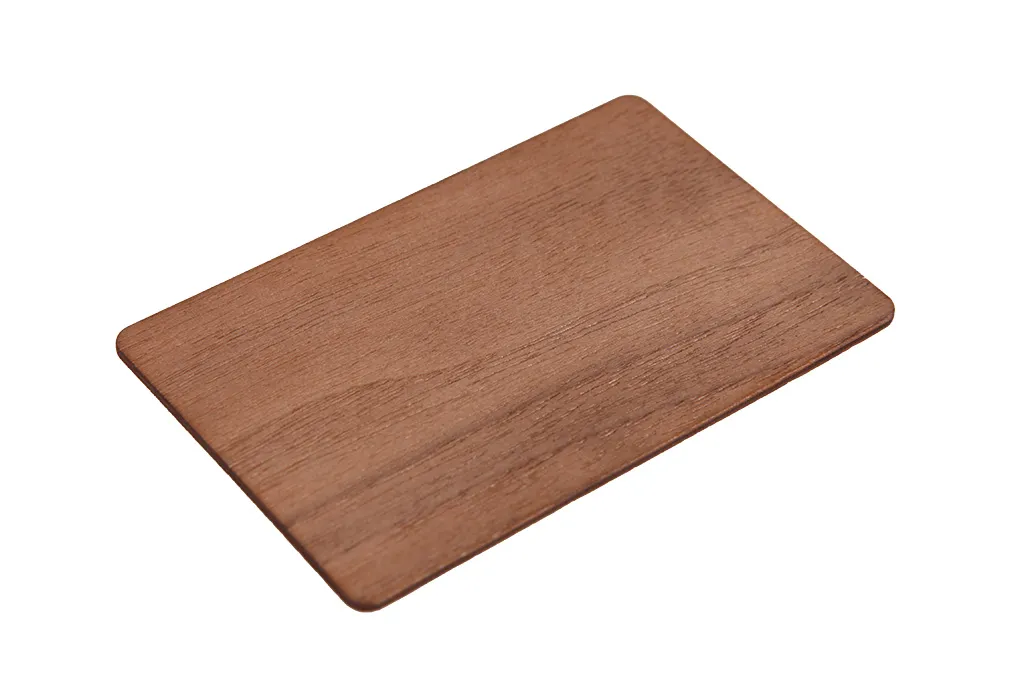
S70 wood card
A wood card body with a MIFARE Classic 4K chip.
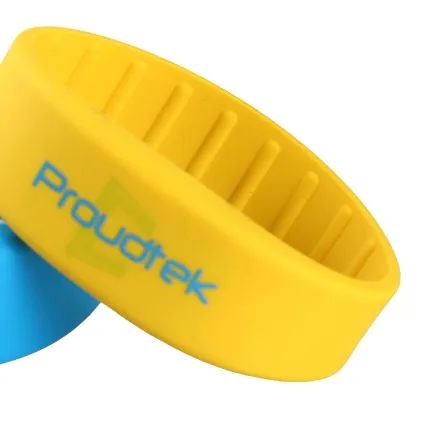
S70 silicone wristband
A wearable MIFARE Classic 4K credential for hotels, gyms and water parks.
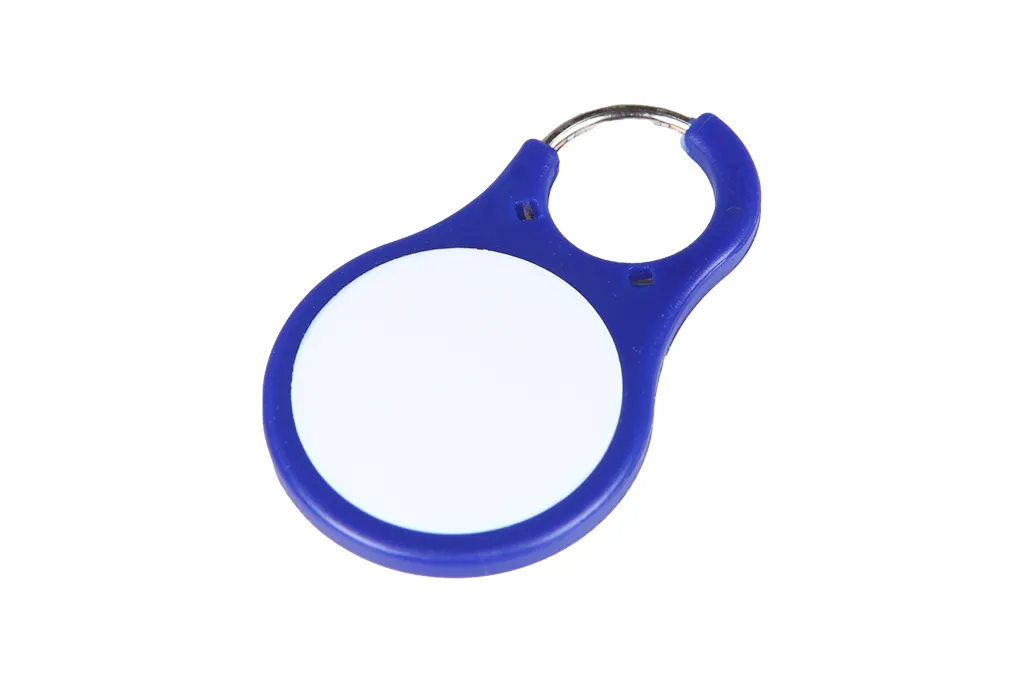
S70 key fob
The same chip in a key fob for access systems.
RFID Cards
The MIFARE Classic 4K card carries a genuine NXP S70 chip, the Classic EV1 4K (MF1S70): 4096 bytes in 40 sectors, eight of them large 16-block sectors. It shares its commands, keys and broken Crypto-1 security with the 1K, so order it when a system specifies S70 or genuinely needs the extra sectors, and test a sample in the installed readers.
Free standard samples · Quotation within one business day
A MIFARE Classic 4K card is a 13.56 MHz ISO/IEC 14443 Type A card built on NXP’s MIFARE Classic 4K chip, the S70; the current part is the Classic EV1 4K, MF1S70. Apart from memory, the SAK and ATQA values and NXP’s originality check (1K only), it shares the 1K’s command set, two keys per sector, UID options and Crypto-1 cipher, all explained on the MIFARE Classic card page. What the 4K adds is memory: 40 sectors instead of 16, four times the bytes.
A door or hotel credential uses only a few blocks, and a 4K adds no security, so 1K is the default. A 4K is worth specifying when the system names S70, or when sectors rather than bytes run out:
Two cautions. A system written for the 1K directory (MAD1) can use a 4K card with the extended directory (MAD2) without changes, but, as NXP’s application note says, it then reaches only the lower 1K. And if the extra memory is meant for several parties sharing one card securely, a 4K Classic gives each of them more room but not more protection: MIFARE DESFire, with separate AES-keyed applications, or MIFARE Plus, in 2 KB or 4 KB with AES in security level 3, are the secure multi-application options.
NXP organises the 4096-byte EEPROM as 32 sectors of 4 blocks followed by 8 sectors of 16 blocks, 40 sectors in all, with 16-byte blocks throughout. The small sectors repeat the 1K layout; the large ones are what make a 4K different to program.
| Region | Blocks (address) | Layout | Data per sector |
| Sector 0 | 0–3 (00h–03h) | Manufacturer block, 2 data blocks, trailer | 32 bytes |
| Sectors 1–31 | 4–127 (04h–7Fh) | 3 data blocks + trailer in block 3 | 48 bytes |
| Sectors 32–39 | 128–255 (80h–FFh) | 15 data blocks + trailer in block 15 | 240 bytes |
| Total | 256 blocks | 40 sectors, 4096 bytes | About 3440 bytes of data |
A reader tells a 4K from a 1K by the SAK it returns on selection: 18h for the 4K, 08h for the 1K. The ATQA shows the UID length: 0042h for the 7-byte UID version of the 4K and 0002h for the 4-byte NUID version.
Our 4K cards use the genuine NXP part in production today, the MIFARE Classic EV1 4K from the MF1S70 family; we do not substitute a compatible chip. What EV1 changed in both sizes is set out on the MIFARE Classic card page. These are the 4K-specific points from NXP’s MF1S70 datasheet:
| Item | MIFARE Classic EV1 4K (MF1S70) |
| UID versions | 7-byte UID (MF1S700…) or 4-byte NUID (MF1S703…), fixed at the factory; both are available, and the order names the one required |
| ATQA / SAK | 0042h (7-byte UID) or 0002h (NUID) / 18h |
| Memory | 4096 bytes: 32 sectors of 4 blocks + 8 sectors of 16 blocks |
| User data (approx.) | 3440 bytes |
| NXP originality check | Not supported (1K EV1 only) |
| Write endurance / retention | 200,000 cycles typical, 100,000 minimum / at least 10 years |
| Operating distance | Up to 100 mm, depending on antenna geometry and reader configuration |
| Lifecycle | NXP: not recommended for new designs |
A system that relies on NXP’s originality check to confirm genuine chips cannot apply it to 4K EV1 cards. For the 4K, the assurance is the NXP part number the supplier states on the order; a sample test in the real system shows that the card works, not that the chip is genuine. The MIFARE Classic card page explains the “MIFARE-compatible” chips with published backdoor keys that make this matter, and why we build on NXP EV1 instead.
The 4K uses the same broken Crypto-1 cipher as the 1K, EV1 included, so it can be copied just as easily; more memory adds no protection. The security analysis, the choice between a 4-byte and a 7-byte UID and the measures that limit risk on an installed Classic system are explained on the MIFARE Classic card page. For new secure systems NXP refers customers to MIFARE DESFire and MIFARE Plus.
The S70 chip goes into the same formats as the 1K: ID-1 cards in PVC, PET-G or wood, key fobs, silicone wristbands and MIFARE stickers. Printing and numbering options are those listed for the MIFARE Classic card, and numbered 4K cards come with a file (Excel, CSV or XML) tying each UID to the printed number. For encoding through our RFID encoding service, send the map of all 40 sectors, including which of sectors 32–39 are used and how their access-bit groups are set. We verify every encoded 4K card by reading it back, and a data report accompanies each encoded order. Whether we load your keys is agreed in the quotation, as is any key handover.
A wood card body with a MIFARE Classic 4K chip.
A wearable MIFARE Classic 4K credential for hotels, gyms and water parks.
The same chip in a key fob for access systems.
We make MIFARE Classic 4K cards, fobs, wristbands and stickers with genuine NXP S70 chips, printed and personalised to your specification. Send the chip (S70 with a 4-byte or 7-byte UID), format, artwork, encoding requirement and quantity through the inquiry form, by email or on WhatsApp, and test a sample in your readers before the order. We do not supply access-control readers, locks or software, and we do not duplicate cards from systems the buyer does not administer. Related choices: MIFARE Classic card, MIFARE Plus card, MIFARE DESFire EV2 cards, hotel key cards and all RFID cards.
Technical reference: NXP MIFARE Classic EV1 4K datasheet (MF1S70YYX_V1), MIFARE Application Directory note AN10787 and MIFARE Classic product page. Chip documentation describes IC capabilities; it does not establish stock or a finished card’s compatibility with your system.
When the system specifies S70 (MF1S70), or when a 1K runs out of sectors or bytes: several independent applications with their own keys, or records stored on the card. Under NXP’s MIFARE Application Directory a 1K has 15 application sectors and a 4K 38. For a single door or hotel credential a 1K is enough; it is covered on the MIFARE Classic card page.
As 40 sectors. Sectors 0–31 have 4 blocks of 16 bytes (blocks 0–127) and sectors 32–39 have 16 blocks (blocks 128–255). The trailer with Key A, the access bits and Key B is block 3 of a small sector and block 15 of a large one, and in the large sectors each set of access bits covers five data blocks. About 3440 bytes hold data.
Not automatically. Both sizes use the same commands and Crypto-1, but the reader identifies the chip by its SAK (08h for 1K, 18h for 4K), and the system software decides which card types and sectors it accepts. NXP notes that a system written for the 1K application directory can use a 4K card with the extended directory but reaches only the lower 1K. Test a sample in the installed readers first.
No. Both sizes use the same Crypto-1 cipher, which is broken on EV1 as on older chips, so a 4K can be copied as easily as a 1K. Choose 4K for memory, not security. For new secure systems NXP refers customers to MIFARE DESFire and MIFARE Plus, and the MIFARE Classic card page explains why and what limits the risk meanwhile.
It is NXP’s current Classic 4K chip and the one our 4K cards carry. NXP makes it with a 7-byte UID or a 4-byte NUID, and we supply both; it answers SAK 18h, is rated for 200,000 write cycles typical and at least 10 years of data retention, and, unlike the 1K EV1, does not support NXP’s originality check. NXP marks Classic EV1 as not recommended for new designs.
The S70 chip goes into ID-1 cards in PVC, PET-G or wood, key fobs, silicone wristbands and MIFARE stickers, so one system can issue several credential types. Cards ship blank in the transport configuration or encoded to your sector map; state the format, printing and encoding in the enquiry and test a sample of each format in your readers.
Send the product, quantity and application so we can confirm the options and pricing for your project.