A wooden RFID or NFC card is a standard contactless inlay housed in a wood or bamboo body instead of laminated PVC. Electrically it works like any other 13.56 MHz card: the reader powers the chip through its antenna, so the card body is a matter of appearance and feel, not radio performance, provided the antenna is tuned for the material. Proud Tek checks that tuning per material and pilots samples before a run.
Wooden cards suit hotel keys, membership and loyalty cards, event passes and NFC business cards. Start by confirming the reader or lock system the card must work with, then choose the body and finish. Browse wooden RFID and NFC cards or the Eco RFID card page for PLA, paper and other bodies, and send your system details for a compatibility check.
Table of Contents
Wood and bamboo bodies
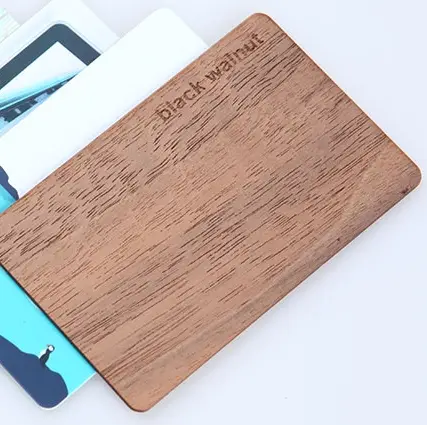
Most wooden cards use a thin natural veneer over the inlay rather than solid timber, which keeps the card close to normal card thickness while showing real grain. Common choices fall into two groups:
- Light woods such as birch, maple and bamboo give a pale surface with high contrast when laser-engraved.
- Darker woods such as walnut and cherry give a richer tone, where printed or foiled artwork often reads better than engraving.
Grain, colour and hardness vary between batches of natural material, so the practical step is to approve a physical sample of the exact wood before a production run rather than specifying a species from a description alone. A wood or veneer card also handles differently from laminated PVC; test bending, everyday carrying and your reader’s range with a sample instead of assuming a fixed service life.
Finishes and personalisation
The finish is where a wooden card earns its place, and the wood type decides which method suits it:
- Laser engraving burns the design into the surface for a permanent, tonal mark. It works best on light woods and is well suited to logos, serial numbers and QR codes.
- UV or digital printing puts full-colour artwork on the wood surface, useful for darker woods or multi-colour brand marks.
- Variable data such as sequential numbers, barcodes or QR codes can be added; state any relationship required between a printed number and the chip identifier.
Supply artwork with the wood tone in mind, because a natural background is not a neutral white and affects how colours appear.
NFC and RFID chip options
The card body does not restrict the chip. Choose the chip from the application, the same way you would for a PVC card:
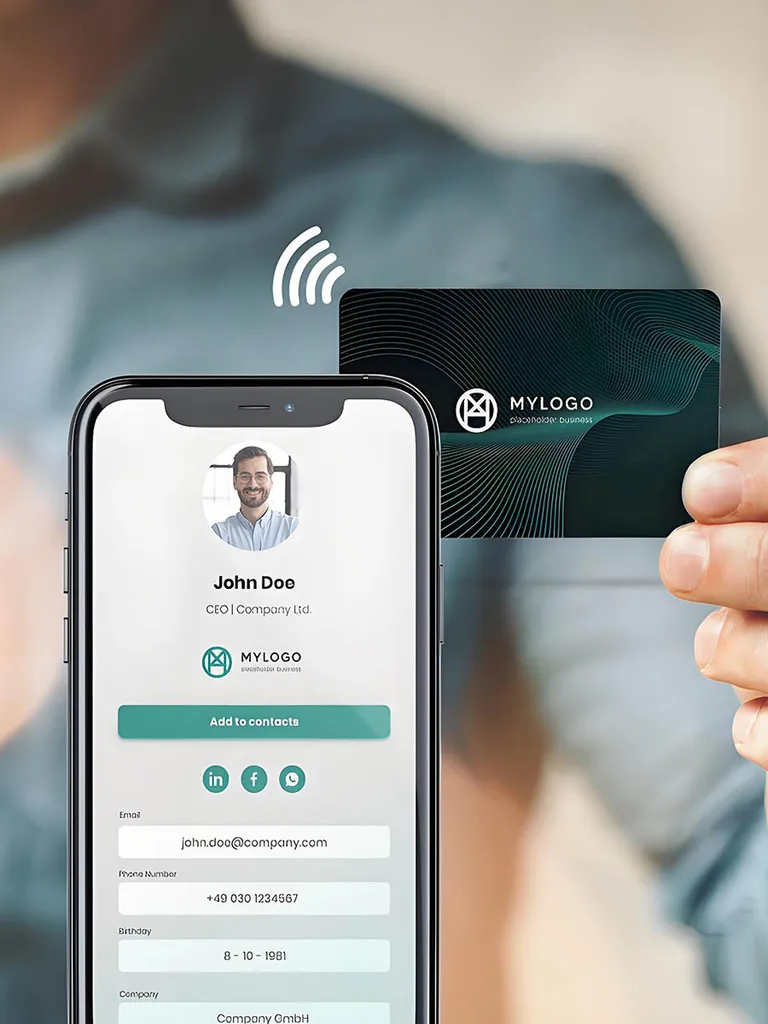
- NFC tap applications (business cards, review and menu links, product engagement) typically use NTAG 213 or NTAG 216, which are read by ordinary NFC phones. See the NFC business card format for a common example.
- Access control and hotel keys use the chip the lock or reader system accepts, such as MIFARE Classic on legacy systems or MIFARE DESFire on newer AES-based systems. For hotel use, the lock decides the chip; see the hotel key card solution guide.
Low-frequency 125 kHz and UHF chips can also be housed in a wood body where the system requires them. Confirm the exact chip against the reader or lock specification, and note that reading an identifier does not by itself prove the card works in the application.
Environmental claims
A wooden card is not wood all the way through. The chip, the antenna and the carrier that holds them are not wood, so a finished wooden RFID card is not described as biodegradable, compostable or recyclable, and no forest certification is claimed for the wood. A material name is not evidence of an environmental property: if your programme will print an environmental statement, check the exact wording with us against what we state for the material. For other bodies, compare paper and PLA cards, and match the choice to how the card is used and disposed of; the PLA page explains what its industrial-composting statement covers.
How to order from Proud Tek
Proud Tek has manufactured RFID and NFC products in its Shenzhen factory since 2008. To specify a wooden card order:
- Send the reader or lock system, the required chip, the wood or bamboo choice, the finish, the artwork and the quantity.
- Proud Tek confirms the chip, the antenna tuning for the material and the available finishing, and prepares a sample.
- Request samples. Standard product samples are free; customised samples carry a setup fee. Approve the physical sample for wood tone, engraving or print and reader range before the batch.
- On approval, the standard product lead time is generally 2–3 weeks; large-order schedules are confirmed individually. Pricing is by quotation against the confirmed specification.
Start a card enquiry through the inquiry form, or by email or WhatsApp, and keep the approved sample and specification for repeat orders.