RFID Tags
Custom RFID Antenna Design: Inlays Tuned to Your Product
A standard inlay is tuned for a reference material, not for your product — put it on metal, liquid or a body and the antenna detunes, and the read you measured on the bench disappears. Custom antenna design tunes the inlay to the item it will actually sit on, across LF, HF and UHF.
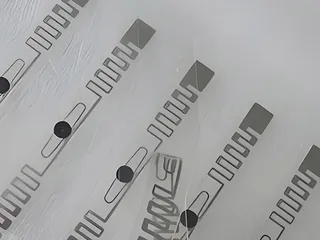
A design service for RFID inlays tuned to your product: antenna design and sampling on PET, paper or FR4, tested on the real item before production. Share the item, reader and band, and we will design, sample and measure the inlay for it.
Free standard samples · Quotation within one business day
Product details
An antenna tuned to your product — in brief
Custom RFID antenna design is a service, not a shelf product: we design an antenna and inlay for the item your tag will sit on, then sample it and test it on that item before production. It covers LF, HF and UHF, on the standard inlay substrates PET, paper and FR4. The process runs from your requirements through design and simulation, sampling, testing on the real item, and volume production once the prototypes pass your checks.
What changes with the item
An antenna is tuned to what sits next to it. Metal reflects the signal, liquid absorbs it, and a body detunes it, so an inlay tuned for free space or a reference card loses performance on a different material. That is why a standard inlay can read well on the bench and poorly on your product: the bench is not the item. A custom design starts from the item itself — what it is made of, where the tag sits on it, and how it will be read.
The same item can need a different antenna for a different job. A tag for a metal asset, a tag on a liquid-filled bottle and a tag worn on skin are three different designs, even when the chip and the band are the same. Tell us the item and the read you need, and the design follows from those two facts rather than from a catalogue part.
The design process
The process is the same for every item, and each step is agreed before the next starts. What we need from you at the start is the item itself or a sample of it, where the tag will sit, the reader you use, the frequency band, and how the tag will be read.
- Requirements: the item or a sample of it, the tag position, the reader, the band and how the tag will be read.
- Design and simulation: the antenna is designed for the item and checked in simulation before anything is made.
- Sampling: prototype inlays are made to the design.
- Testing on the real item: the prototypes are tested on your item with the reader setup you use, and the results are measured, not assumed.
- Samples and production: once the prototypes pass your checks, the inlay goes into volume production to the agreed design.
The first design is not always the last. If the prototypes do not read the way the job needs, the design is revised and sampled again — that iteration is part of the service, not a failure of it. What changes between rounds is the antenna, not the item: the item stays fixed, and the design moves until the measured read matches the requirement. Agree in advance how many rounds the quotation covers, and what counts as a pass, so the design does not drift without an end.
What you get
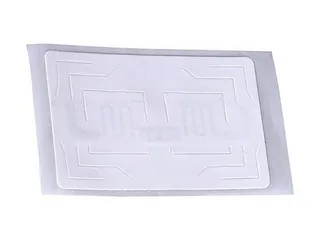
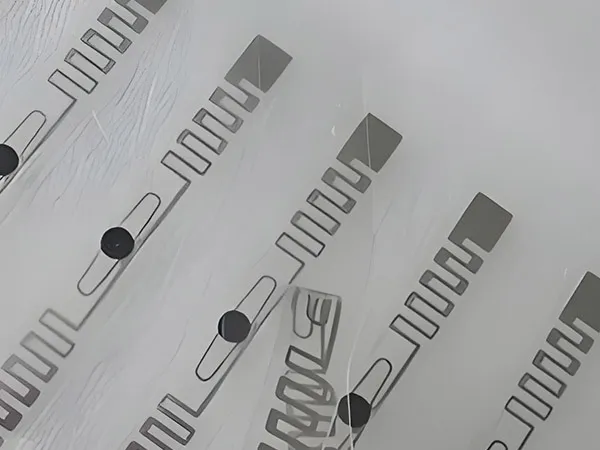
At the end of the design you receive prototype inlays made to the design, plus test data measured on your item with the reader setup you use. The data comes from the measurements on the real item, so it describes the inlay you will actually buy — not a reference card, and not a figure from another product. Volume production follows the agreed design once the prototypes pass your checks, and the UHF inlay is the form the production inlays take. The test data is measured with the reader setup you use, at the tag position you specified, so it describes your job rather than a laboratory bench. Keep a set of the prototype inlays with the test data: if the item or the reader changes later, the prototypes and the data are the record of what was agreed.
| Stage | You receive |
| Design | An antenna design tuned to your item |
| Sampling | Prototype inlays made to the design |
| Testing | Read data measured on the real item |
| Production | Volume inlays to the agreed design |
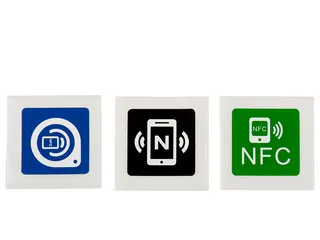
If the item changes after the design — a new material, a new position, a different reader — say so before production, because the design is tuned to the item as specified. A changed item is a new design check, not a change of label. For a finished label rather than a bare inlay, the UHF RFID labels and custom RFID tags cover the labelled forms, and the NFC sticker is the NFC option where a phone tap is the read.
Before you order
- The item: the item itself or a sample of it, its material, and where the tag will sit on it.
- Reader and band: reader model, frequency band (LF, HF or UHF), and how the tag will be read.
- Substrate and finish: PET, paper or FR4, and how the inlay will be finished into your label or product.
- Read you need: what the tag has to do in use, so the design is checked against it.
- Samples and testing: prototype inlays tested on the real item with your reader setup before production is agreed.
- Volume: the expected volume after the design, so production is quoted on the agreed design.
Ordering information
| Minimum order | Not applicable — design service |
| Samples | Free standard samples; setup fee applies to customized samples |
| Lead time | 2–3 weeks standard production |
| Pricing | Confirmed in the quotation |
| Quotation | Within 1 business day |
Frequently asked questions
Why can't I use a standard inlay on my product?
A standard inlay is tuned for a reference material. Put it on metal, liquid or a body and the antenna detunes, so the read you measured on the bench does not carry over to your product. A custom design tunes the antenna to the item it will actually sit on.
What do you need from me to start a design?
The item itself or a sample of it, where the tag will sit, the reader you use, the frequency band, and how the tag will be read. The more of the real item we can test on, the closer the design matches your use.
Which band should I choose — LF, HF or UHF?
It depends on the application: the item, the read you need, the reader you already have and the environment. Share those requirements and we will propose the band with the design.
Do you test on my actual product?
Yes — testing on the real item is part of the process. The design is checked against the item it will sit on, not only against a reference card, and the test data comes from those measurements.
What do I get at the end of the design?
Prototype inlays made to the design, plus test data measured on your item with the reader setup you use. Volume production follows the agreed design once the prototypes pass your checks.
What materials can the inlay use?
PET, paper and FR4 are the standard inlay substrates; the choice depends on the item, the environment and how the inlay will be finished. Confirm the substrate with the design.
Can you make the inlays in volume after the design?
Yes — once the design is agreed and the prototypes pass, the inlay goes into volume production to that design. Pricing is confirmed in the quotation.
Buyer guides
- How to Read an RFID Tag Quotation, Line by Line What decides RFID card and tag prices, and how to compare quotations line by line: unit-price basis, tooling, encoding, samples, freight and Incoterms.
- RFID RFP Template: Questions to Ask Every Supplier An RFID RFP template for distributors: the supplier questions that produce comparable quotes, and how to read the replies against one specification.
- RFID MOQ, Explained: How Minimums Form and How to Discuss Them How RFID MOQ forms from chip lots, inlay rolls, print sheets and setup — and how buyers can discuss a smaller pilot or first order honestly.
Ready to specify your order?
Send the product, quantity and application so we can confirm the options and pricing for your project.