Where WIP disappears
A job that is on the plan but not on the line is work in progress that nobody can see. It sits in a queue between stations, on a pallet that was moved, or in a pile whose paper traveller was lost — and the plan still says it is at the previous station. The gap between where the plan says a job is and where it actually is grows with every handover, and it is usually found at final inspection, when it is too late to recover the time.
The fix is not more walking the floor. It is a record of where each job was last seen, made at the moment it moves, so the line's state can be read from the system instead of reconstructed from memory. RFID supplies the 'last seen' record: a reader logs the job's identifier as it passes, and the production system holds the history.
Supervisors get the same view. The scan history shows which station is holding work and which jobs have been waiting longest, so the morning meeting starts from the line's actual state instead of from each station's report. Over weeks, the history shows where jobs consistently wait, which is the evidence for moving a reader, rebalancing a station or fixing a handover — decisions made from the record, not from whoever shouted loudest.
Readers at each stage
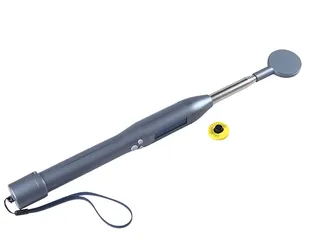
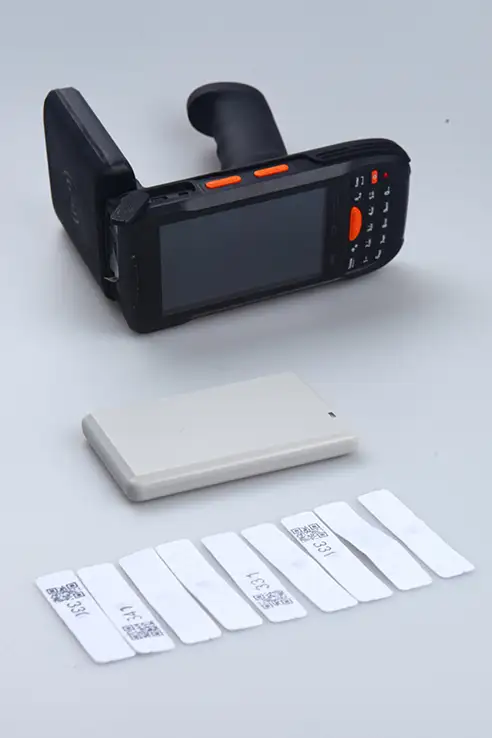
A fixed UHF reader at the entry and exit of each workstation logs a job as it arrives and as it leaves, which gives the time spent at that stage without anyone stopping to scan. A handheld reader covers the places a fixed reader cannot: goods-in, the rework bench, the quarantine shelf, and any station that moves.
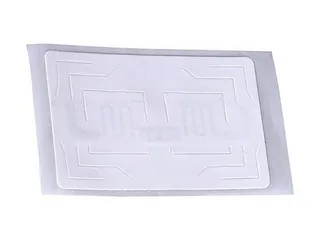
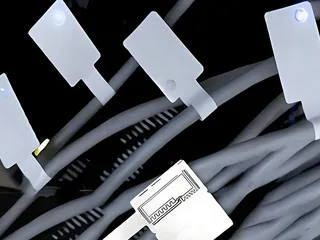
The tag rides on whatever carries the job: a job card, a material bin, a pallet or a tote. The form follows the carrier — a label on a bin, a cable-tie tag on a pallet — and the reader does not care which, as long as the tag is presented the same way at every station.
| Stage | Reader | What is tagged |
|---|---|---|
| Goods-in and kitting | Handheld reader | Material bins and job cards |
| Each workstation | Fixed reader at entry and exit | Job card, bin or pallet |
| Rework and quarantine | Handheld reader | The job, flagged for rework |
| Packing and dispatch | Fixed reader at the packing bench | Pallet or tote |
What the tag carries
Only the job identifier. The routing, the quantities, the operator, the quality record and the history all live in the production system; the tag is the key that looks the job up. Keeping the tag to an identifier means a tag can be reissued, a job can be re-planned, and no production data is stranded on a tag that is thrown away with a pallet.
That also keeps the tag cheap and the same across the line: one label construction for bins, one tie tag for pallets, rather than a different tag for every product. Where a bin or pallet is reused, the tag is re-associated with the next job in the system instead of being rewritten.
Exceptions and rework
Most of the value is in the exceptions. A job scanned at the wrong station, a job that has sat at one stage far longer than its routing allows, or a job sent back for rework — each of these is visible at the moment it happens, at the station where it happens, instead of surfacing at final inspection.
Rework gets its own loop: the job is flagged in the system, routed back to the station that owns the fix, and scanned back in when it returns. The history shows how many times a job went round the loop and where it spent its time, which is the evidence for fixing the process rather than blaming the operator.
A held job is a decision, not a disappearance: put it on hold in the system with a reason, and it stops counting as WIP in progress while it waits for parts, a drawing or a decision.
What Proud Tek manufactures for WIP tracking
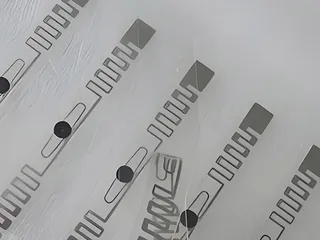
We manufacture the tags and the handheld: UHF labels for bins and job cards, UHF inlays where the tag is built into your own carrier, cable-tie tags for pallets and totes, and the R901 Bluetooth handheld for spot checks, goods-in and rework benches. Tag constructions are confirmed on samples against your bins, pallets and readers before an order.
We do not supply fixed UHF readers, the production or MES system, or the integration between readers and that system; those come from your integrator or reader vendor, and we test our tags against the readers they specify. Start on one line or one section: tag a sample run, prove the reads at each station, and extend from there.
Published 2026-11-22 · Updated 2026-11-22