The problem: searching shelves
A file that cannot be found is not lost — it is somewhere on a shelf, in a box, on a desk, or in someone else's office, and finding it means opening boxes until it turns up. Archives, legal files, medical records and engineering drawings all grow the same way: shelves fill, box labels fade, the register says a file is in room three and the shelf says otherwise.
The cost is not the search itself. It is the audit that cannot be completed, the case that cannot be answered, the retention review that stalls because nobody can prove what is on the shelves. A file system that cannot be inventoried is a liability, not an archive.
Labels on spines
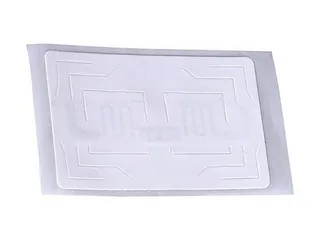
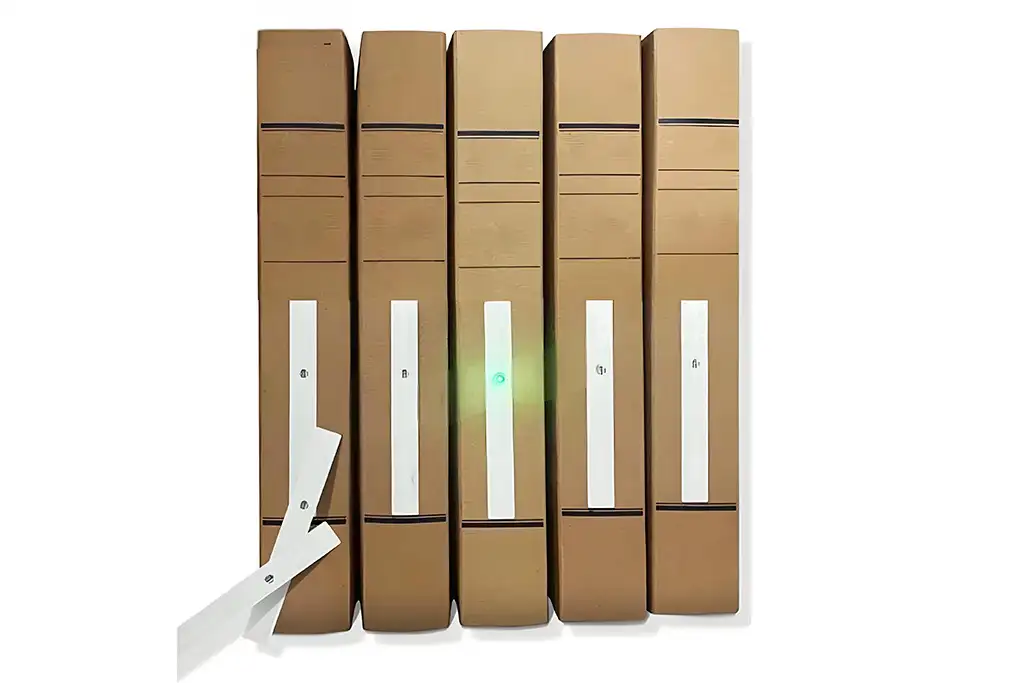
A UHF label on the spine of a box or the edge of a folder turns the shelf into something a reader can list. The label is printed with the file reference and a barcode alongside, so the shelf still reads by eye and by barcode scanner — RFID is added, not substituted.
One label per box or folder, carrying only the file's identifier; the contents, the owner, the retention date and the loan history live in the records system. Where a single box has to be found in a row of identical boxes, a tag with an LED can be triggered from the reader to light up, which turns the search into a glance.
Shelf inventory with a wand
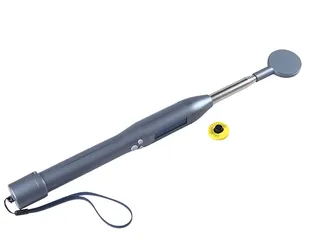
A handheld reader swept along a shelf lists every box and folder in range, and the list is compared against the register: everything present, everything missing, everything that is on the wrong shelf. The inventory is a walk along the shelves, not a day of opening boxes.
A missing file is found by absence — the sweep lists what is there, and the register shows what should be there. The difference is the search list, and it is short: check the desk, the last borrower, the return shelf. The R901 handheld is the wand for this job: it reads the shelf, shows the result, and the list goes back to the records system.
The sweep also catches misfiling. A box on the wrong shelf shows up in the sweep of that shelf and against the register of another, so misfiled boxes are found by the inventory instead of by the person who needed the file. Over time the exception list shrinks as the shelves are brought back in line, and the next inventory starts from a register that matches the shelves.
Check-in, check-out and audit
Borrowing is a scan, not a note on a pad: the file is scanned out to a person and a due date, and scanned back in when it returns. The register always knows who has a file and how long they have had it, which ends the search that starts with 'who had it last?'
An audit is a full sweep against the register — every shelf, every box, every folder — and the result is a list of exceptions: missing, misfiled, overdue, and files whose retention date has passed. Retention and disposal follow from the same list: a file whose date has passed is flagged for review, not found by accident.
Retention dates ride on the same record. A file's retention date is held in the records system against its identifier, so the audit list already shows which files are due for review and which are due for disposal. Disposal itself is a system action — the file is scanned out for destruction and the record closed — rather than a box quietly emptied.
What Proud Tek manufactures for file tracking
We manufacture the labels and the handheld: UHF labels for box spines and folders, UHF inlays where the label is built into your own folder or box, the R901 handheld for shelf inventory, and RFID library tags where the archive is books rather than files. Label constructions are confirmed on samples against your boxes, folders and shelving before an order.
We do not supply the records-management software or the integration between the reader and that software; those come from your integrator or records-system vendor, and we test our labels against the readers they specify. If your archive also holds books, the library tags page covers the book half of the same system.
Published 2026-11-22 · Updated 2026-11-22