
RFID Tags
RFID Cable Tie Tags: UHF Tags for Cables, Pipes and Assets
An RFID cable tie tag is a tag and a fastener in one piece: the tie threads through itself and locks around a cable, a pipe or a pallet, so the identification stays with the item instead of peeling off it. The UHF chip inside reads like any EPC Gen2 tag, but the form fits where a flat adhesive label cannot — a bundle of cables, a conduit, a hose or a pallet slat.
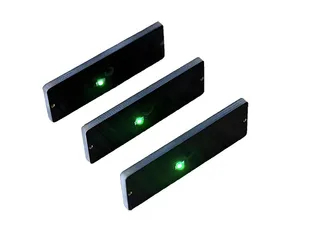
A UHF RFID cable tie tag for cable management, asset tracking and outdoor or industrial use, built to the EPC Gen2 air interface (ISO/IEC 18000-63). An LED version is available that lights when the reader addresses the tag, so one cable in a bundle can be found by eye. Confirm the tie length, the chip and the reader support, then test samples on your own cables before ordering.
Free standard samples · Quotation within one business day
Product details
A tag that ties itself to the item — in brief
A cable tie tag carries a UHF chip and antenna in a tie that fastens around the item it identifies. Thread the tie around a cable, a pipe, a hose or a pallet slat, pull it tight and lock it: the tag is mechanically fixed, so it cannot peel off the way an adhesive label can, and it stays with the item through handling, vibration and weather. The chip reads to the EPC Gen2 air interface, standardised as ISO/IEC 18000-63, so it works with the UHF readers and software you already use.
Where the tie form wins
A flat adhesive label needs a flat, clean surface and a bond that survives the item's life. Cables, pipes and hoses rarely offer one: they are curved, they move, they get handled, and in outdoor or industrial use they get wet and dirty. A tie does not depend on adhesion at all — it locks around the item, so the identification survives where a label would lift, peel or fall off.
- Cable management: identify each cable in a rack, a tray or a bundle — data centres, communications rooms and control panels — without tracing the cable end to end.
- Pipes and hoses: tag a line where a label would not hold on a curved or wet surface, and keep the identification with the pipe through maintenance.
- Pallets and crates: fasten the tag to a slat or a frame where there is no flat face for a label, and read the pallet without opening it.
- Outdoor and industrial assets: fix the tag to equipment, fencing or tooling where handling and weather work against adhesives.
Reading tags in a bundle
UHF reads without line of sight and reads several tags at once, which is what makes a cable tie tag useful in a bundle: the reader counts the cables in a tray without each one being handled. But a bundle still needs planning. Tags close together, metal nearby and the reader's position all affect the count, and the read you get on a bench is not the read you get in a packed tray. Test the count with your own reader, the real cables and the real packing density before ordering.
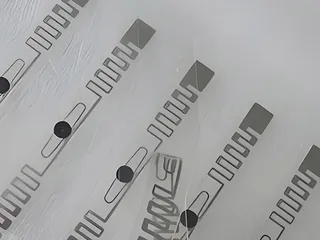
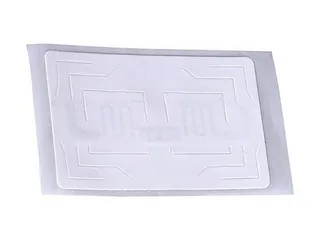
Where the job is finding one cable rather than counting them all, the LED version below changes the workflow from reading numbers to seeing the cable glow. For flat surfaces where an adhesive label does fit, the UHF RFID labels are the alternative, and the UHF inlays are the starting point for a custom construction. We supply the tags; the reader, antenna and asset software come from your integrator.
LED version (optional)
An LED version is available, built on our LED tag line: the tag is still a passive UHF tag to EPC Gen2 / ISO/IEC 18000-63 in the 860–960 MHz band, but it carries a small LED that lights when the reader addresses that particular tag. The photo above shows it on a cable: the tag is tied to the cable and the LED is the part that answers the search. The LED version is an option, not the standard tie tag — order it where finding one cable by eye is the job.
The LED version follows the LED tag line's specification: materials of paper, PVC, PET or FR4, including on-metal versions; 55 × 12 × 1.8 mm or customised; the LED is passive and field-powered, lighting when the reader addresses the tag; at least 100 activations; and a tested read range of up to 6 m under test conditions, which you should confirm with your own reader and antenna. The full specification is on the RFID tag with LED light page.
Two limits carry over from the LED tag. The lighting distance is shorter than the plain reading distance, because the LED needs more harvested energy than a read — plan the antenna position and reader power around the lighting distance, not the read distance. And the reader software must implement the search or select command that lights the tag, so confirm your reader and SDK support it before ordering the LED version.
Before you order
- Item and fixing: what the tie fastens around — cable, pipe, hose, pallet slat — its diameter and material, and the tie length you need.
- Chip and band: the exact chip and the UHF band for your country, and the reader and antenna you will use.
- LED or plain: whether you need the LED version for finding one cable by eye, and confirmation that your reader software supports the search or select command.
- Environment: outdoor or industrial exposure, and any metal the tag will sit on — ask about the on-metal construction where it applies.
- Data and marking: the identifier scheme to encode on each tag, and any printed number or marking.
- Quantity and samples: quantity for the first order, and a sample trial on your own cables and bundles with your own reader before ordering.
Ordering information
| Minimum order | Confirmed in the quotation |
| Samples | Free standard samples; setup fee applies to customized samples |
| Lead time | 2–3 weeks standard production |
| Pricing | Confirmed in the quotation |
| Quotation | Within 1 business day |
Plan the application
Frequently asked questions
What is a cable tie tag?
A UHF RFID tag built into a cable tie: the tie threads through itself and locks around a cable, a pipe or a pallet, so the tag is mechanically fixed to the item instead of stuck to it. The chip reads to the EPC Gen2 air interface (ISO/IEC 18000-63), like any UHF tag.
Why a tie instead of an adhesive label?
Adhesive labels need a flat, clean surface and a bond that survives the item's life. Cables, pipes and hoses are curved, move and get handled, and in outdoor or industrial use they get wet and dirty — conditions where labels lift and peel. A tie locks around the item, so the identification stays on because it is tied on, not stuck on.
How do I find one cable in a bundle?
Use the LED version. It is a passive UHF tag whose LED lights when the reader addresses that particular tag, so the matching cable glows among the bundle and is found by eye instead of by reading numbers. The LED version follows the LED tag line's specification — at least 100 activations, and a tested read range of up to 6 m under test conditions. Confirm your reader software supports the search or select command that lights the tag.
Does the LED version need a battery?
No. The LED is passive and field-powered: the tag harvests energy from the reader's UHF field, the same energy that powers the chip, and lights the LED when the reader addresses that tag. There is no battery, so the LED only glows while the tag is in a strong enough reader field.
Can the R901 wand read cable tie tags?
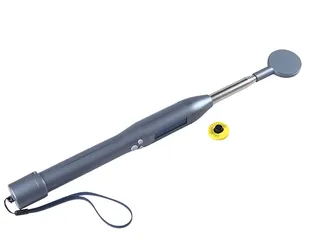
No. The R901 Bluetooth RFID scanner is a 134 kHz low-frequency reader for FDX-B animal ear tags to ISO 11784/11785; it does not read UHF tags, because those are a different frequency and protocol. Cable tie tags need a UHF reader — tell us the reader and antenna you use and we will confirm the tags against them.
Can it be used outdoors or on metal?
The tie fixing suits outdoor and industrial use because it does not depend on adhesion. Where the tag sits on metal, ask about the on-metal construction — metal detunes UHF tags, so a standard construction will not perform on a metal surface. Test the offered version in its actual position before committing to a batch.
What do I send for a quotation?
Send what the tie fastens around and its diameter, the chip and UHF band, whether you need the LED version, the environment and any metal nearby, the identifier scheme to encode, and the quantity. The RFID encoding service explains how the identifier is written to each tag. Pricing is confirmed in the quotation, standard lead time is 2–3 weeks, and free standard samples are available for a trial on your own cables.
Buyer guides
- How to Read an RFID Tag Quotation, Line by Line What decides RFID card and tag prices, and how to compare quotations line by line: unit-price basis, tooling, encoding, samples, freight and Incoterms.
- RFID RFP Template: Questions to Ask Every Supplier An RFID RFP template for distributors: the supplier questions that produce comparable quotes, and how to read the replies against one specification.
- RFID MOQ, Explained: How Minimums Form and How to Discuss Them How RFID MOQ forms from chip lots, inlay rolls, print sheets and setup — and how buyers can discuss a smaller pilot or first order honestly.
Ready to specify your order?
Send the product, quantity and application so we can confirm the options and pricing for your project.