RFID Tags
RFID Animal Ear Tags: FDX-B 134.2 kHz Tags in a TPU Shell
An RFID animal ear tag is a button that carries the animal's identity: a 134.2 kHz FDX-B chip to ISO 11784/11785 in a TPU shell, fitted to the ear so the animal can be identified in the pen, at the crush or at the gate without handling it. The number on the tag is the number in the herd record — one animal, one tag, one identifier.
TPU button ear tags with nominal 134.2 kHz FDX-B for cattle, sheep, goats and pigs. Test the tag and its output with your herd, reader and animal identification software before ordering.
Free standard samples · Quotation within one business day
Product details
An FDX-B ear tag in a TPU shell — in brief
An RFID animal ear tag is a small button fitted to the animal's ear, carrying a 134.2 kHz FDX-B chip to ISO 11784 and 11785 inside a TPU shell. The chip holds the animal's unique identifier, so the animal can be read in the pen, at the crush or at the gate and matched to its herd record — for weighing, vaccination, movement and traceability — without the animal being handled to read a number. The tag stays on the animal for its working life, and the reader is held to the ear, not the other way round. Confirm the tag type and your reader, then test samples with your own animals before ordering.
FDX-B and the 134.2 kHz standard
FDX-B at 134.2 kHz is the format ISO 11784 and 11785 define for animal identification, so tags and readers from different makers work to the same standard: a tag from one supplier reads on a reader from another, as long as both follow the standard. The chip carries the animal's unique identification number, and the reader reads it close-up — low-frequency animal tags are read a few centimetres from the reader head, not from across a yard. That short range is part of the design: it reads one animal at a time, which is what identification in a pen needs.
Ask whether the reader supports ISO 11784/11785 FDX-B at a nominal 134.2 kHz. Run a sample through the installed or handheld reader and confirm the identifier format in the record system. Reading distance and output format depend on the equipment and setup.
The TPU shell and button form
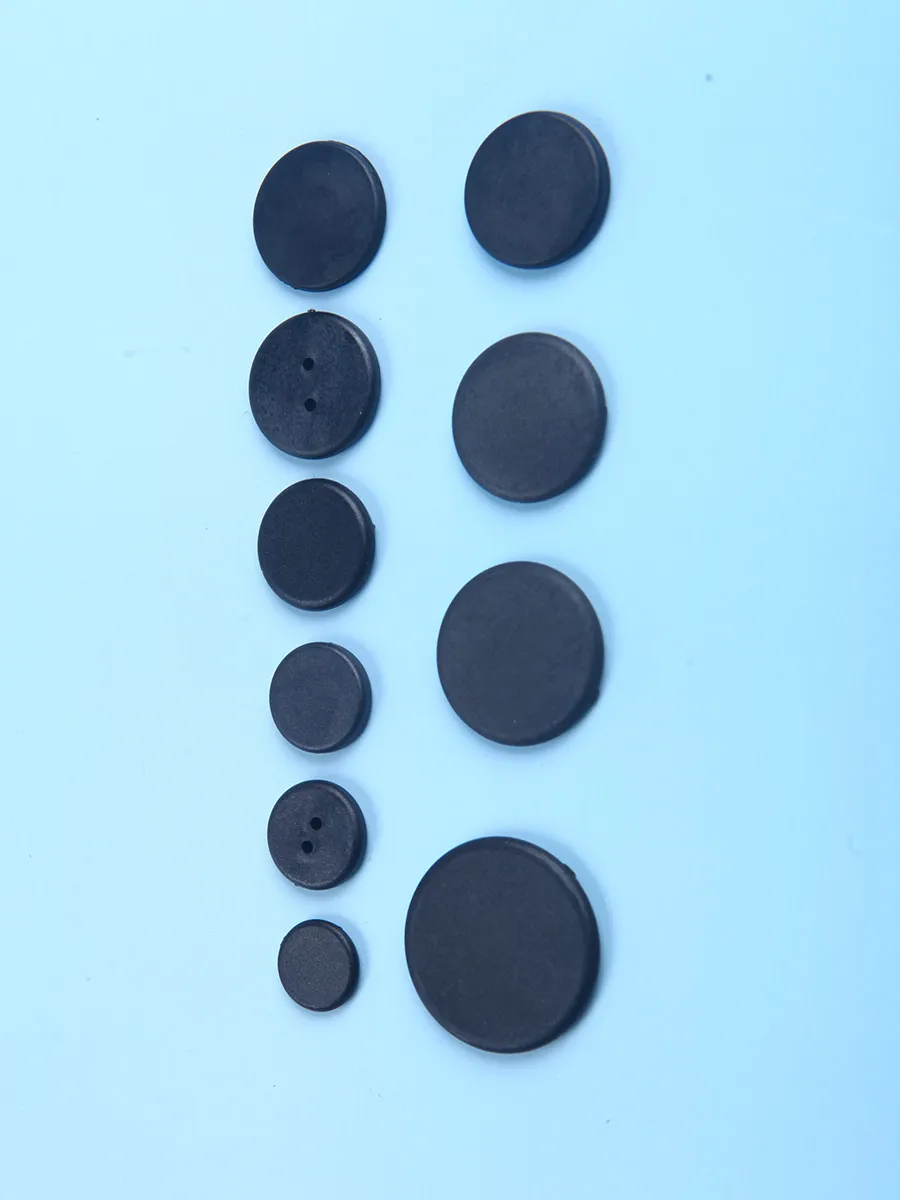
The tag is a button in a TPU shell — the round form in the photo, in several sizes, some with two small holes. The TPU shell is the part that meets the ear and the weather, and our factory has confirmed it can make the TPU shell for this tag. The button sits on the ear and is read in place: the reader is brought to the tag, the tag is not taken off the animal to be read. Confirm the offered model's sizes and fixing method with us, and check the tag on your own animals before ordering a batch.
What the shell does not change is the chip inside: the same 134.2 kHz FDX-B chip to ISO 11784/11785, carrying the same unique identifier, whatever the shell. If your scheme needs a visible number printed on the button as well as the chip inside, agree the marking in the quotation — the printed number and the chip number should match, and the order should arrive with a file tying each printed number to its chip identifier.
Reading in the field
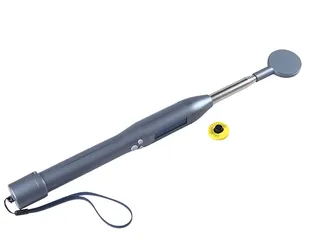
In the field the reader is the R901 Bluetooth RFID scanner: a handheld 134.2 kHz wand that reads FDX-B tags to ISO 11784/11785. Its reading range is about 5 to 8 cm to an ear tag, as listed in its specification — that is the reader's range, not the tag's — and the telescopic handle extends from 45 to 120 cm, so the wand reaches the ear without crowding the animal. The 2.08-inch screen shows the tag ID as it is read, so the number can be checked on the spot.
The R901 sends the ID as Bluetooth keyboard input to a compatible host. Open the intended text field, run a test scan and check the ID and separator. Browse the RFID readers to compare the readers we supply.
Before you order
- Animals and tag type: the species — cattle, sheep, goats or pigs — and confirmation that your scheme uses 134.2 kHz FDX-B to ISO 11784/11785.
- Reader: the reader you will use — the R901 wand in the field, or a fixed reader at a gate — and confirmation that it reads FDX-B.
- Sizes and fixing: the offered model's sizes and fixing method, checked on your own animals.
- Identifier scheme: the numbering your herd record uses, and whether the button should also carry a printed number matching the chip.
- Host device and app: for the R901, the phone, tablet or PC you will pair with and the app the ID will be typed into.
- Quantity and samples: quantity for the first order, and a sample trial with your own animals and reader before ordering.
Ordering information
| Minimum order | Confirmed in the quotation |
| Samples | Free standard samples; setup fee applies to customized samples |
| Lead time | 2–3 weeks standard production |
| Pricing | Confirmed in the quotation |
| Quotation | Within 1 business day |
Frequently asked questions
What is FDX-B?
FDX-B is the full-duplex format for animal identification at 134.2 kHz, defined by ISO 11784 and 11785. The tag carries the animal's unique identification number, and any reader built for FDX-B to those standards reads it — so the tag is not tied to a single reader brand.
How is an FDX-B ear tag different from a UHF ear tag?
They use different frequencies and protocols, and they do not read on each other's readers. FDX-B is 134.2 kHz low frequency to ISO 11784/11785 — the standard format for livestock identification, read close-up, one animal at a time. A UHF ear tag is read by a UHF reader instead. If your scheme, your reader or your traceability rules specify FDX-B, buy FDX-B; the two formats are not interchangeable.
What is the TPU shell?
The tag's outer shell is TPU — the button form in the photo, in several sizes. Our factory has confirmed it can make the TPU shell for this tag. The shell is the part that meets the ear and the weather; the chip inside is the same 134.2 kHz FDX-B chip to ISO 11784/11785. Confirm the offered model's sizes and fixing method with us.
What reader do I need?
Choose a reader that supports 134.2 kHz FDX-B under ISO 11784/11785. The R901 scanner specification lists about 5 to 8 cm for an ear tag. Check actual distance and the recorded ID on a sample with your installed or handheld reader.
How close does the reader need to be?
About 5 to 8 cm to an ear tag with the R901 wand, as listed in its specification — that is the reader's range, not the tag's. Low-frequency animal tags are read close-up: hold the wand near the tag, check the ID on the screen, and treat the figure as a guide for planning the approach rather than a guaranteed distance.
Which animals does it suit?
Cattle, sheep, goats and pigs — the livestock these tags are made for. Confirm the offered model's sizes against the species you run, and test the tag and fixing on your own animals before ordering a batch.
What do I send for a quotation?
Send the species, the tag type (134.2 kHz FDX-B to ISO 11784/11785), the reader you will use, the identifier scheme, whether the button should carry a printed number matching the chip, and the quantity. The RFID encoding service explains how the identifier is written to each tag. Pricing is confirmed in the quotation, standard lead time is 2–3 weeks, and free standard samples are available for a trial with your own animals.
Buyer guides
- How to Read an RFID Tag Quotation, Line by Line What decides RFID card and tag prices, and how to compare quotations line by line: unit-price basis, tooling, encoding, samples, freight and Incoterms.
- RFID RFP Template: Questions to Ask Every Supplier An RFID RFP template for distributors: the supplier questions that produce comparable quotes, and how to read the replies against one specification.
- RFID MOQ, Explained: How Minimums Form and How to Discuss Them How RFID MOQ forms from chip lots, inlay rolls, print sheets and setup — and how buyers can discuss a smaller pilot or first order honestly.
Ready to specify your order?
Send the product, quantity and application so we can confirm the options and pricing for your project.