
NFC vs. RFID Explained
What Is the Difference Between NFC and RFID?
Quick answer
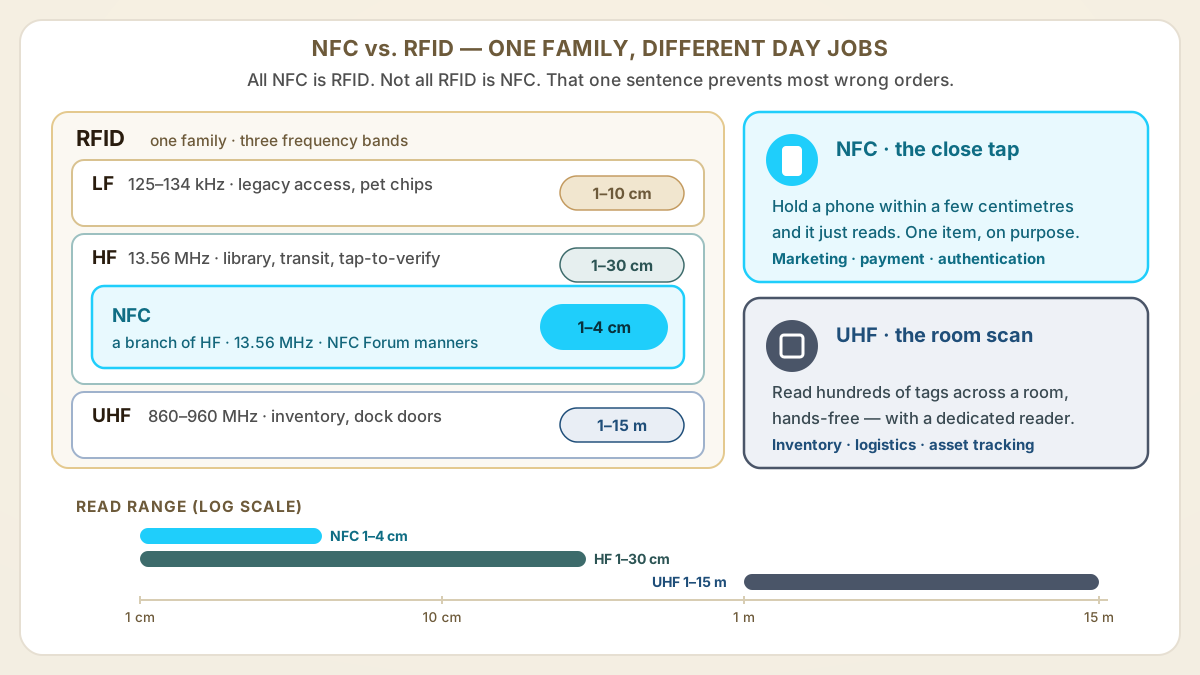
NFC and RFID get thrown around like synonyms — which is a bit like calling every rectangle a square. They are not the same, and the twist is sneakier than the mix-up itself: NFC is actually a subset of RFID. Here is what really separates the two wireless technologies, minus the jargon, plus a clear answer to which one fits which job.
- NFC is a type of RFID — not a rival to it. It runs at 13.56 MHz (the same frequency as HF RFID) and follows NFC Forum standards for data exchange, purpose-built for short-range, one-to-one conversations between a device and a tag.
- Range is the headline difference. NFC works at 1-4 cm (tap distance), while UHF RFID reads at 1-15 meters. That single gap decides which technology fits which application.
- Proud Tek manufactures both. NFC tags for consumer interactions, tap-to-pay, and phone programming, plus UHF RFID tags for long-range inventory, logistics and asset tracking.
At a glance
Use these short answers to decide whether this page matches the project before moving into the detail.
Key takeaway
NFC is a type of RFID — not a rival to it. It runs at 13.56 MHz (the same frequency as HF RFID) and follows NFC Forum standards for data exchange, purpose-built for short-range, one-to-one conversations between a device and a tag.
What are the differences between NFC and RFID?
Two engineers can argue for twenty solid minutes about whether the tag on a marketing campaign is 'NFC' or 'RFID' — and then realize they have been describing the exact...
Next step
Ready to move forward? Start your inquiry to get specific answers for this project.
Get technology recommendationWhat are the differences between NFC and RFID?
Two engineers can argue for twenty solid minutes about whether the tag on a marketing campaign is 'NFC' or 'RFID' — and then realize they have been describing the exact same radio the whole time. It is the most expensive vocabulary mix-up in procurement: it is how you end up with a pallet of UHF labels no phone will ever read, or a drawer of NFC stickers a dock-door portal will never notice. The differences are real, they are worth getting right, and they start with the one number that quietly decides most projects: range.
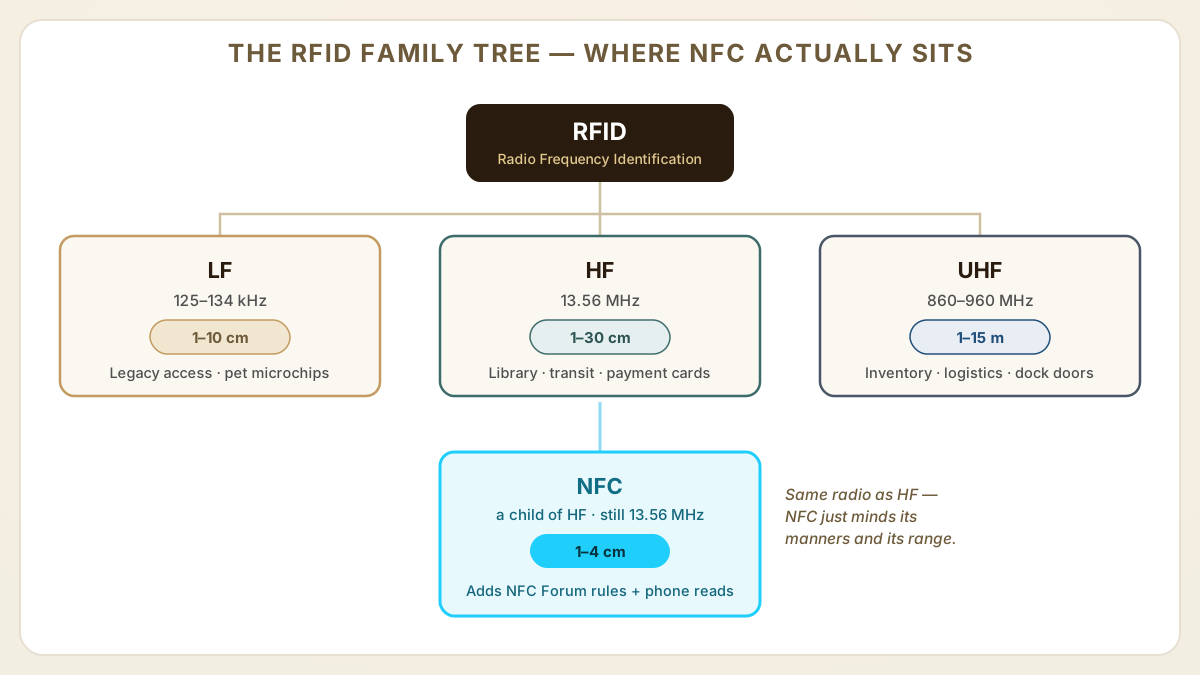
- Frequency: NFC operates at 13.56 MHz only. RFID spans three frequency bands: LF (125-134 kHz), HF (13.56 MHz, which includes NFC), and UHF (860-960 MHz). Each frequency has different range, data rate and material penetration characteristics.
- Read range: NFC: 1-4 cm (intentionally short for security). HF RFID: 1-30 cm. UHF RFID: 1-15+ meters. LF RFID: 1-10 cm. The short range of NFC is a feature, not a limitation, as it prevents unintended reading.
- Communication mode: NFC supports two-way communication (peer-to-peer, card emulation, reader mode). Standard RFID tags are passive devices that only respond to reader interrogation. They cannot initiate communication.
- Smartphone compatibility: NFC tags are readable by virtually all modern smartphones (iPhone 7+, Android with NFC). UHF RFID tags require dedicated RFID readers that smartphones do not have. This is the key distinction for consumer-facing applications.
- Data exchange standards: NFC uses the NFC Data Exchange Format (NDEF) defined by the NFC Forum for structured data records (URLs, text, contacts). RFID uses GS1 EPC standards for product and asset identification. Different data standards serve different application needs.
When to use NFC vs. UHF RFID
Here is the reassuring part: you almost never have to agonize over this one. Choosing between NFC and UHF RFID is less a debate than a short stroll down a decision tree, and it hinges on two blunt questions — is a human going to hold a phone up to this thing, and do you need to read a whole roomful of them at once? Answer those honestly and the technology mostly picks itself.
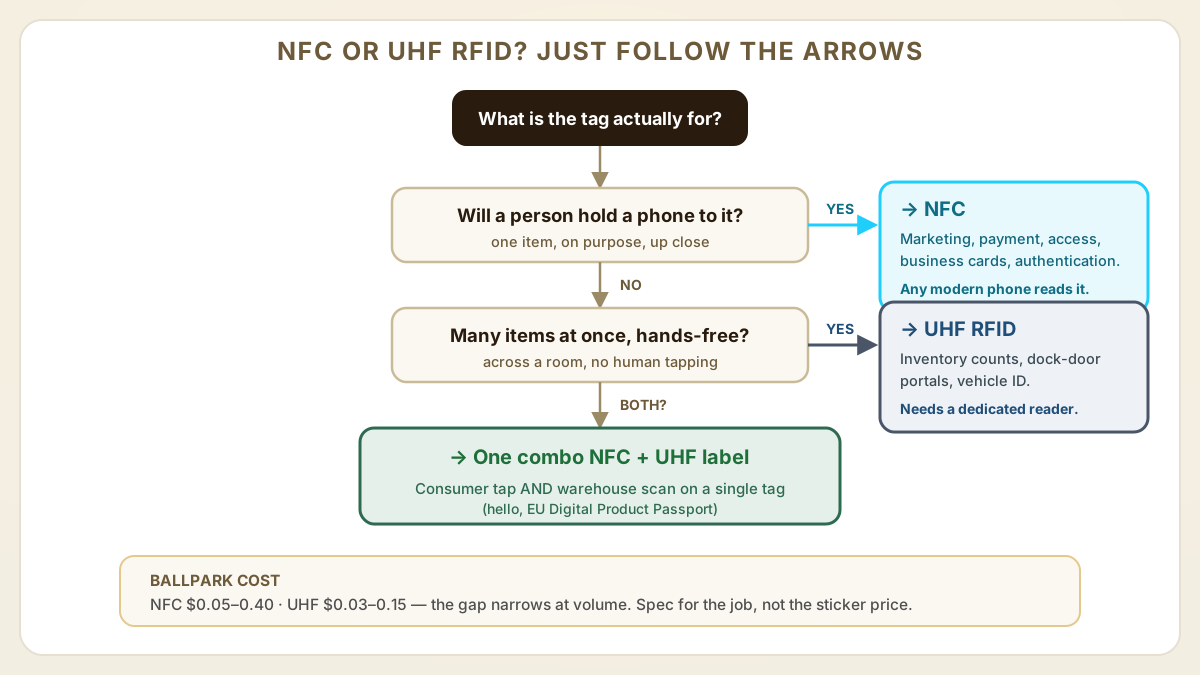
- Use NFC when: the end user needs to interact with a smartphone (marketing, payment, authentication, business cards, smart home), when short range is required for security (access control, payment), or when the use case involves one item at a time.
- Use UHF RFID when: you need to read multiple items simultaneously (inventory counting), when long range is required (dock door portals, vehicle identification), when reads must be automatic without human interaction, or when the tagged items will never need smartphone interaction.
- Use both when: you need consumer-facing smartphone interaction AND supply chain/logistics tracking. Dual-technology tags with NFC + UHF RFID chips serve both needs on a single label (e.g., EU Digital Product Passport applications).
- LF RFID niche — 125 kHz LF RFID is used primarily in legacy access control systems, animal identification (pet microchips), and industrial applications where the short range and material penetration of LF are advantageous.
- Cost consideration: NFC tags cost $0.05-0.40+ depending on chip. UHF RFID labels cost $0.03-0.15. The cost difference narrows at volume. Choose based on application requirements, not cost alone.
What are the most common NFC vs. RFID misconceptions?
Confusion between NFC and RFID does not just fuel dinner-party pedantry — it fuels wrong purchase orders and misbuilt apps. Every one of the five myths below has, at some point, made it onto a real spec sheet and cost someone a retrofit project. Here they are, lined up and debunked before they can do any more damage.
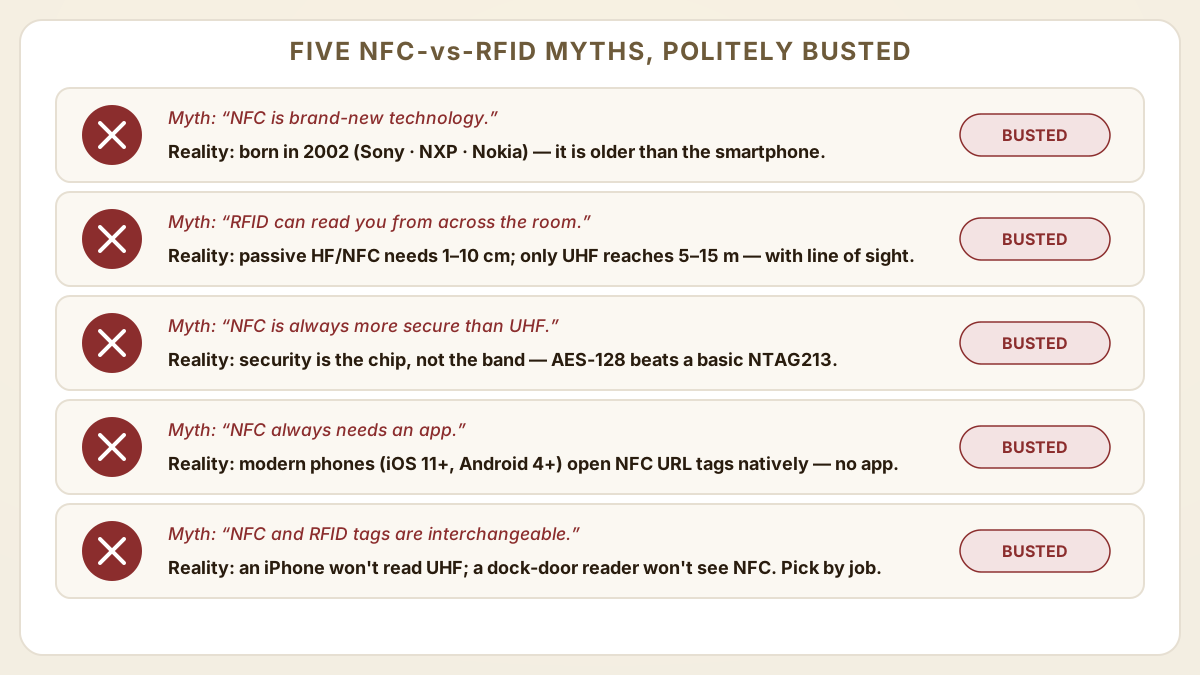
- Myth: NFC is a new technology. Reality: NFC is a subset of HF RFID (13.56 MHz, ISO 14443) developed in 2002 by Sony, NXP and Nokia — it is older than smartphones. The 'new' part is smartphone integration, not the radio protocol.
- Myth: RFID can be read from across a room without consent. Reality: passive HF/NFC RFID requires the reader within 1-10 cm. Only UHF RFID (860-960 MHz) reaches 5-15 m, and even then needs line of sight and unblocked antenna orientation to scan reliably.
- Myth: NFC is always more secure than UHF RFID. Reality: security depends on the chip and protocol, not the frequency. NTAG213 (NFC) has weak security; UHF DESFire-equivalent chips with AES-128 are far more secure than basic NFC.
- Myth: NFC requires an app. Reality: modern smartphones (iOS 11+, Android 4+) read NFC URL records natively, opening the link in the browser without any installed app. Apps are only needed for write operations and custom payloads.
- Myth: RFID and NFC tags are interchangeable. Reality: a UHF RFID tag will not be read by an iPhone (no UHF radio in phones), and an NFC tag will not be detected by a UHF dock-door reader. Choose by use case, not by what is available.
Which ISO/IEC standards govern NFC, HF RFID and UHF RFID?
Procurement specs and integrator contracts are not written in marketing adjectives — they are written in ISO/IEC numbers. Knowing exactly which standard your tag and reader implement is what stands between you and the most expensive kind of surprise: the interoperability mistake you only discover after the tags are printed. Here is the stack, and who actually speaks each layer — your iPhone, or the warehouse portal.
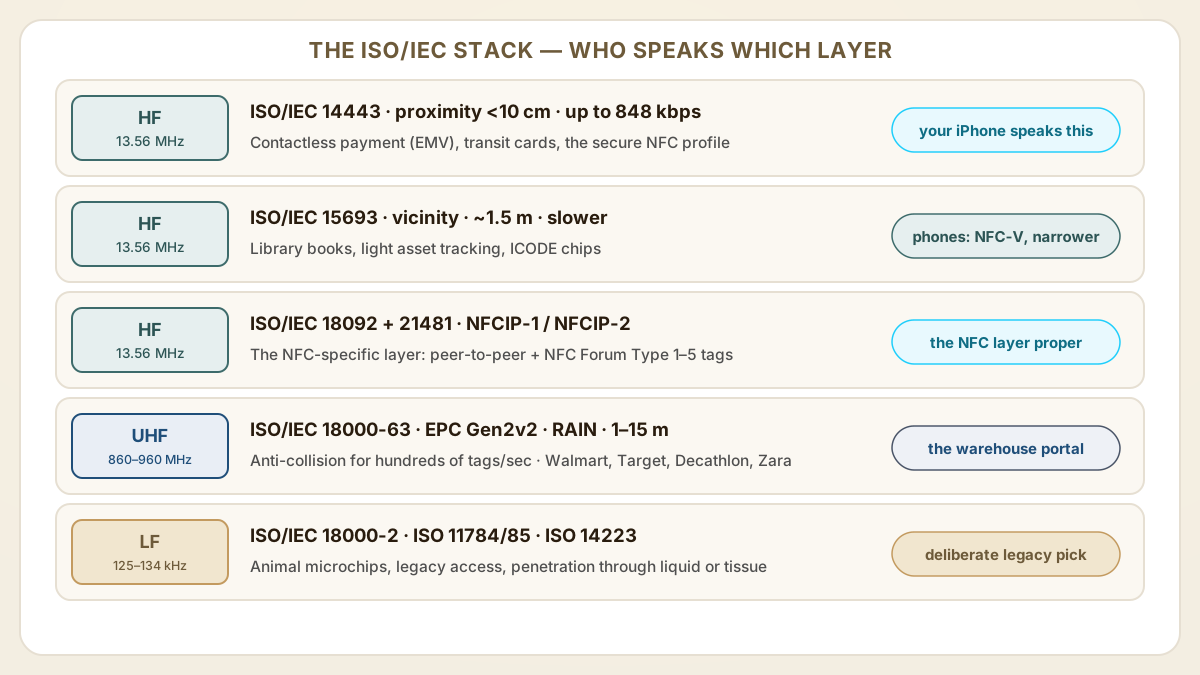
- ISO/IEC 14443 (Type A and Type B): the proximity standard at 13.56 MHz that governs contactless payment cards (EMV), most public-transit cards and the secure NFC profile. Range is intentionally <10 cm with data rates up to 848 kbps. NTAG21x, NTAG 424 DNA and MIFARE DESFire all sit on the 14443 stack — this is the standard your iPhone speaks for tap-to-verify.
- ISO/IEC 15693: the vicinity standard, also at 13.56 MHz, but with a longer ~1.5 m read range and slower data rate. Common for library books, light asset tracking and ICODE chips. Smartphones can read 15693 (via NFC-V) but the ecosystem is narrower than 14443 — verify reader and chip support before committing.
- ISO/IEC 18092 and ISO/IEC 21481 (NFCIP-1 and NFCIP-2): the NFC-specific layers added on top of 14443/15693 to handle peer-to-peer mode, polling sequences and reader/writer behaviour. NFC Forum Type 1-5 tag specs map onto these standards and define what an iPhone or Android can actually parse.
- ISO/IEC 18000-63 (formerly 18000-6C): the UHF RFID air interface — what the industry calls EPC Gen2v2 and the GS1 EPCglobal community calls RAIN RFID. Operates 860-960 MHz with ~1-15 m range, supports anti-collision for hundreds of tags per second, and is the standard used by Walmart, Target, Decathlon, Zara and similar retail mandates.
- ISO/IEC 18000-2 (LF) / ISO 11784/85 (animal ID) / ISO 14223 (advanced animal ID): the LF 125-134 kHz family — niche but important for legacy access control, animal microchips and applications where you need short range plus penetration through liquid or tissue. Specifying LF here is usually a deliberate legacy decision, not a greenfield choice.
How do NFC and UHF RFID interact with the EU Digital Product Passport?
ESPR Regulation 2024/1781 is refreshingly relaxed about how you carry a Digital Product Passport — QR, NFC, RFID, take your pick. That very freedom is where teams tie themselves in knots, because the right answer depends entirely on who is doing the scanning: a shopper with a phone, a customs officer with a portal, or a recycler at the end of the line. Here is how the carrier-neutrality clause actually shakes out in practice.
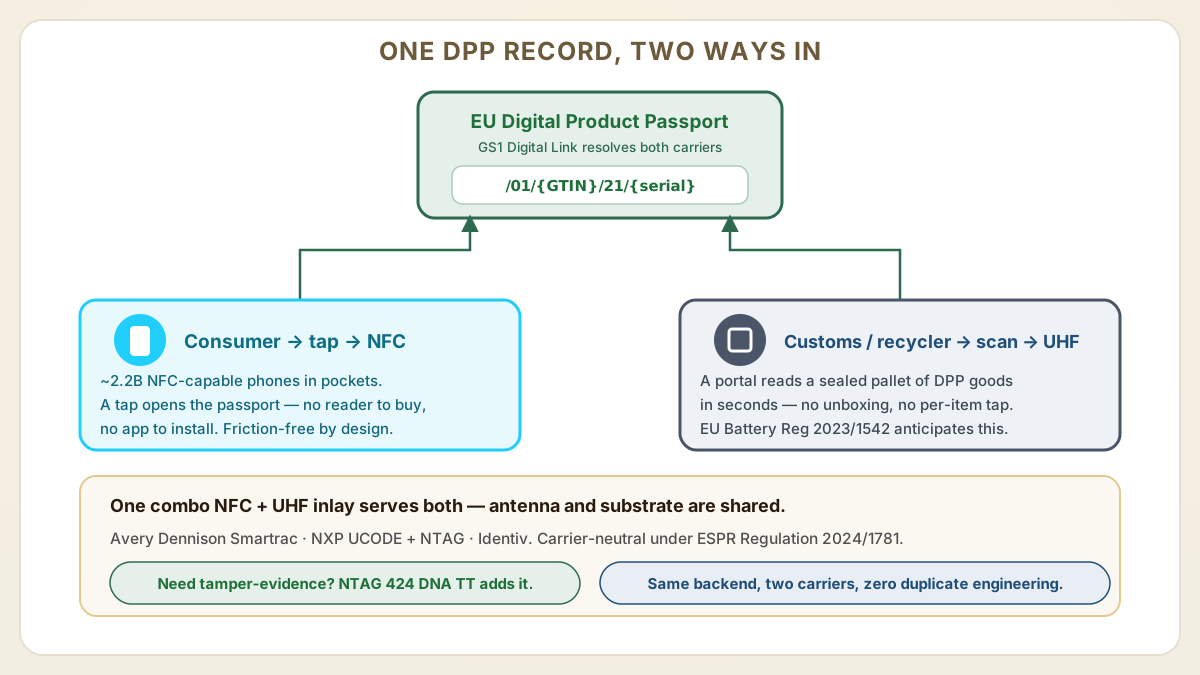
- Consumer-facing DPP scans almost always need NFC. Roughly 2.2B NFC-capable smartphones in active use mean a tap-to-DPP experience is friction-free; UHF RFID requires a dedicated reader the consumer does not own.
- Customs and recycling-yard DPP scans favor UHF RFID. A UHF reader at a port can scan a sealed pallet of DPP-enabled goods in seconds; NFC would require unboxing and individual taps. The EU Battery Regulation 2023/1542 explicitly anticipates this for industrial battery DPP.
- GS1 Digital Link harmonises both. Whether the carrier is NFC or UHF RFID, GS1 Digital Link 1.4.x defines a single URL grammar (`/01/{GTIN}/21/{serial}`) that resolves to the DPP record — meaning the same backend serves both carriers without duplicate engineering.
- Dual-frequency tags are gaining traction. Combo NFC + UHF inlays (e.g., from Avery Dennison Smartrac, NXP UCODE + NTAG, Identiv) let one label satisfy consumer NFC tap and warehouse UHF inventory simultaneously — an emerging standard for textiles and electronics DPP.
- Tamper-evidence usually pushes the answer to NFC. NTAG 424 DNA TT and similar 'TT' chips combine cryptographic authentication with mechanical tamper detection — UHF Gen2v2 has cryptographic suites but few off-the-shelf tamper-evident form factors today.
Useful next pages
Use these linked product, guide and comparison pages to keep the next click specific and practical.
NFC and RFID products
Tags for every frequency and application.
FAQ
Is NFC the same as RFID?
Think of NFC as a well-behaved member of the RFID family rather than a separate thing. It operates at the 13.56 MHz frequency (same as HF RFID) and adds NFC Forum standards for structured data exchange, two-way communication, and smartphone compatibility. All NFC devices are RFID devices, but not all RFID devices are NFC. The term 'RFID' is the broader umbrella and includes LF, HF and UHF technologies that NFC does not cover.
Can my phone read RFID tags?
Your phone can read NFC tags (which are a type of RFID) if it has an NFC reader — and virtually all modern smartphones do. What it cannot do is read UHF RFID tags or LF RFID tags, as these require different reader hardware operating at different frequencies, and no phone ships with it. If your application requires smartphone readability, choose NFC tags.
Which is better, NFC or RFID?
Neither is universally better — they are built for different jobs. NFC excels at consumer interaction, payment, authentication and smartphone-based applications. UHF RFID excels at bulk inventory counting, long-range identification, automated supply chain tracking and applications requiring simultaneous multi-tag reading. Many deployments run both technologies together for complementary capabilities.
Is RAIN RFID the same as UHF RFID?
Effectively yes, with one nuance. RAIN RFID is the marketing name (from the RAIN Alliance) for UHF RFID implementations using ISO/IEC 18000-63 / EPC Gen2v2 air interface. GS1 specifies that it endorses RAIN RFID specifically when tags are encoded per GS1 EPC standards (SGTIN, SSCC, GIAI). All RAIN RFID is UHF RFID, but you can find UHF RFID systems outside GS1 EPC encoding (some industrial proprietary deployments) that the RAIN Alliance does not market under the RAIN brand.
If I add NFC to a UHF RFID label, do I pay double the price?
No — combo NFC + UHF inlays cost roughly 1.4-1.8x a single-chip UHF label, not 2x, because the antenna and substrate are shared. Avery Dennison Smartrac, NXP (UCODE 9 + NTAG 424 DNA combos) and Identiv all sell combo inlays priced typically $0.18-0.40 in volume vs $0.07-0.15 for a UHF-only label. Combo tags are increasingly the default for EU Digital Product Passport pilots in textiles, electronics and battery sectors where one tag must serve both consumer tap and supply-chain dock-door scanning.
Proud Tek is a Shenzhen-based RFID & NFC manufacturer supplying hotel chains, transit operators, event venues and retail brands worldwide. Every order includes free samples, RF testing and dedicated project support.
Get a Quick Quote
Tell us about your project and we'll respond within one business day. Fields marked (asterisk) are required.