
NFC Wearables
NFC Smart Rings
Wearable Contactless Tech
Quick answer
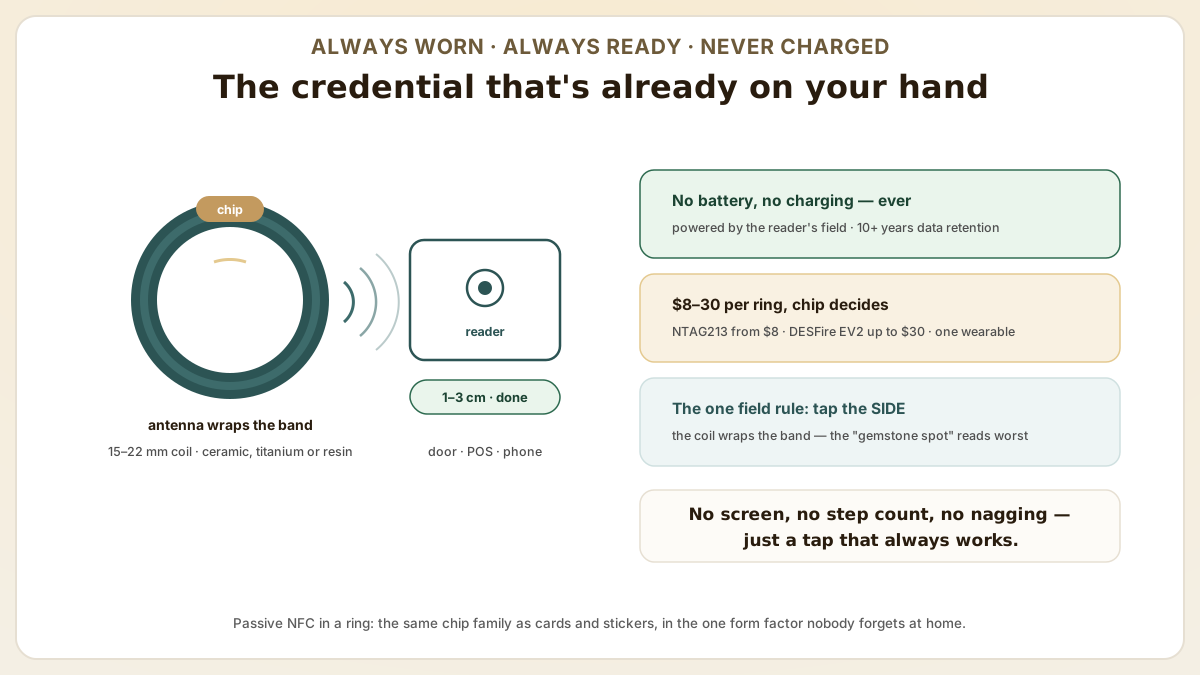
An NFC ring is a battery-free passive tag on your finger: 1-3 cm read range, $8-30 per ring depending on chip, 10+ years of data retention — always worn, always ready. The enterprise guide, minus the sci-fi: chips, materials, iPhone-vs-Android quirks, and the antenna-orientation trick that halves support tickets.
- NFC rings provide always-ready contactless interaction without pulling out a phone or card, reducing access and payment transaction time to under one second.
- Ring-format NFC antennas achieve 1-3 cm read range despite their small size, sufficient for door locks, POS terminals and smartphone taps.
- Corporate NFC ring programs combine physical access, digital identity sharing and brand differentiation in a single wearable device.
At a glance
Use these short answers to decide whether this page matches the project before moving into the detail.
Key takeaway
NFC rings provide always-ready contactless interaction without pulling out a phone or card, reducing access and payment transaction time to under one second.
What an NFC ring does and does not do
Hand someone their first smart ring and there is a fair chance they will wave it at a door from across the room, like a wizard waiting for the lock to obey. The quiet di...
Next step
Ready to move forward? Start your inquiry to get specific answers for this project.
Request NFC ring samplesWhat an NFC ring does and does not do
Hand someone their first smart ring and there is a fair chance they will wave it at a door from across the room, like a wizard waiting for the lock to obey. The quiet disappointment lands a second later: no battery, no screen, no opinion about their heart rate, and it wants to all but touch the reader before anything happens. That gap — between the sci-fi wearable people picture and the genuinely useful passive tag actually on their finger — is where most NFC-ring buying mistakes begin. So before the chips and materials, here is what the ring really does, and what it politely refuses to. An NFC ring is a passive wearable containing a small NFC antenna and chip encapsulated in ceramic, titanium, resin or stainless steel. It functions identically to an NFC card or sticker (storing data that is read by NFC-enabled devices) but in a form factor that is always worn and always ready.
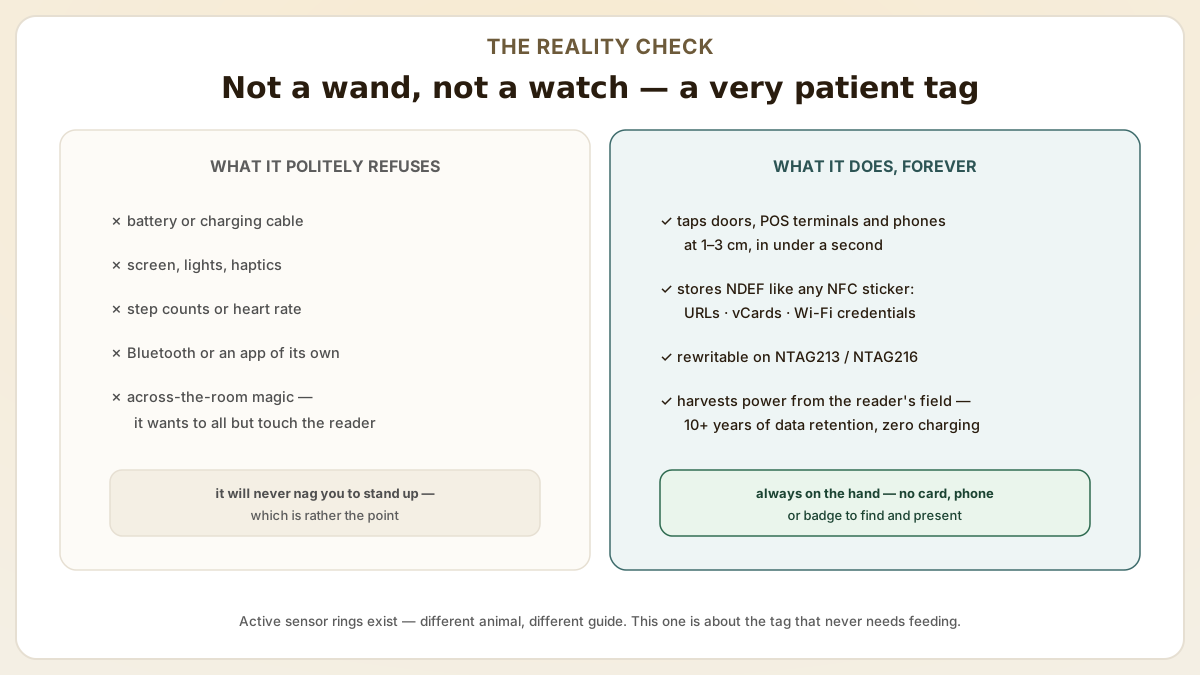
It is worth setting expectations honestly: a passive NFC ring has no battery, no display, no Bluetooth and no fitness tracking. It will never count your steps or nag you to stand up — which is rather the point, and why it is not a smartwatch competitor. Its value is speed and convenience: the ring is always on the hand, so there is no card, phone or badge to find and present.
- NFC rings store the same NDEF records as NFC stickers: URLs, vCards, Wi-Fi credentials, plain text or application-specific data. Writable chips (NTAG213, NTAG216) can be programmed with any NFC writing app.
- Passive rings work indefinitely without charging because they harvest power from the reader's RF field; the chip itself is rated for 10+ years of data retention.
- Active smart rings (with batteries and sensors) exist but serve different use cases. This guide focuses on passive NFC rings.
- Ring-format NFC has inherent range limitations due to the small antenna loop, typically 1-3 cm effective read distance.
What NFC ring chip and antenna options exist?
The constrained ring form factor limits antenna diameter, which directly affects chip options and read performance — a ring asks its chip to live on an antenna the size of the finger it circles. Most NFC rings use antennas between 15 mm and 22 mm in diameter; the table below is the menu that fits.
| Chip | Memory | Ring compatibility | Typical use | Unit cost (ring) |
|---|---|---|---|---|
| NTAG213 | 144 bytes | Excellent: low power requirement | URL, vCard, access credential | $8 – $15 |
| NTAG216 | 888 bytes | Good: needs slightly stronger field | Multi-record NDEF, complex vCards | $10 – $20 |
| MIFARE Classic 1K | 1 KB | Good: widely compatible with access systems | Building access, time-attendance | $10 – $18 |
| MIFARE DESFire EV2 | 2 – 8 KB | Moderate: higher power demand | Multi-application (access + payment) | $15 – $30 |
| EM4200 (125 kHz) | 64-bit read-only | Excellent: simple antenna | Legacy proximity access systems | $6 – $12 |
How do you handle enterprise use cases for NFC rings?
NFC rings earn their place in enterprise settings where the credential being already-on-the-hand is worth real money: gloved hands, full hands, or hands that would otherwise be fishing through pockets forty times a shift. Five patterns cover most deployments.
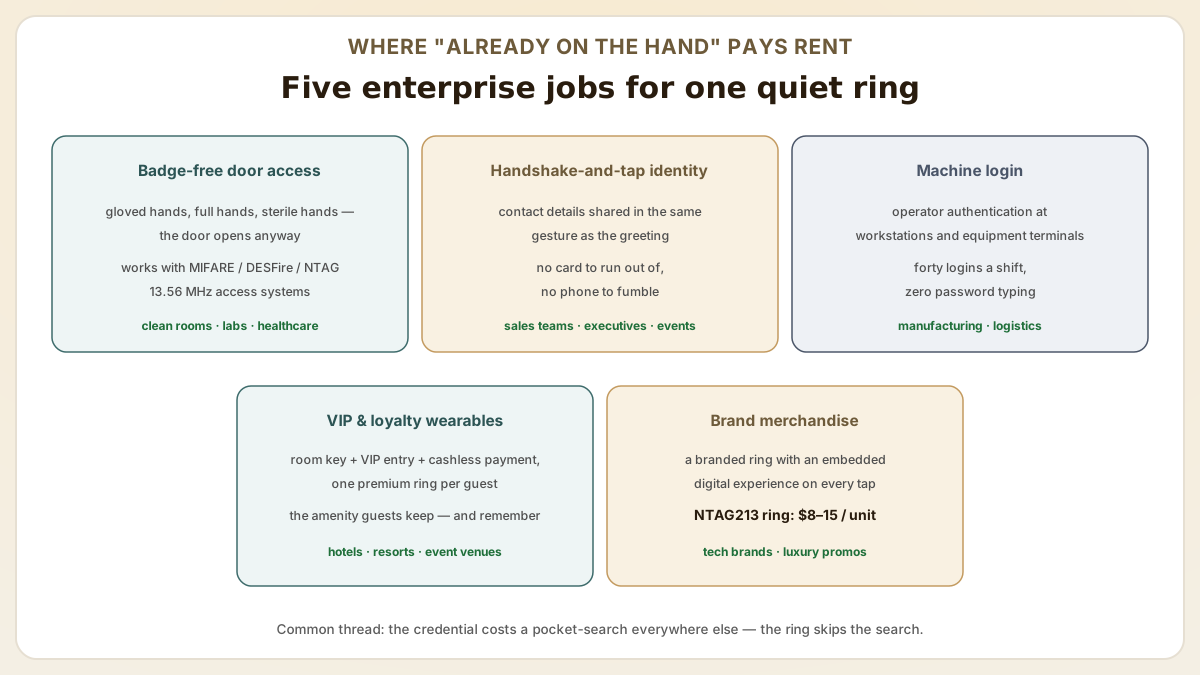
- Physical access control: Employees wear NFC rings programmed as access credentials, enabling door entry without reaching for a badge. Most modern 13.56 MHz access systems based on MIFARE Classic, DESFire or NTAG chips can accept credentials from a ring. Particularly valuable in clean-room, laboratory and healthcare environments where hands may be gloved or occupied.
- Digital identity sharing: Sales teams and executives use NFC rings to share contact details at networking events with a handshake-and-tap gesture.
- Machine login and authentication: In manufacturing and logistics, NFC rings provide fast operator authentication at workstations and equipment terminals.
- VIP and loyalty programs: Hotels and event venues issue NFC rings as premium wearables that grant room access, VIP entry and cashless payment.
- Brand merchandise: Tech companies and luxury brands produce branded NFC rings as premium promotional items with embedded digital experiences. An NTAG213 ring runs $8-$15 per unit.
What sizing, materials and comfort considerations apply?
NFC rings must be comfortable for all-day wear while protecting the chip and antenna from impact, moisture and body chemistry (most rings are rated IP68). Material and sizing choices directly affect wearability and NFC performance.
- Ceramic rings are scratch-resistant and hypoallergenic but brittle. They can crack if dropped on hard surfaces. Read range typically 1-3 cm.
- Titanium rings are lightweight and extremely durable but may slightly reduce NFC read range (typically 1-2 cm) due to the metal's proximity to the antenna.
- Resin and carbon fiber rings are the lightest option and fully transparent to NFC signals, providing the best read range (2-4 cm) in a ring form factor.
- Ring sizing follows standard jewelry sizes (US 5-13). A sizing kit with sample rings in multiple sizes is essential before bulk ordering for a corporate program.
- Antenna placement (inner ring, outer ring or top) affects which part of the hand must be presented to the reader. Inner-ring antennas allow a natural knuckle-tap gesture.
iPhone vs Android: what NFC rings can actually do on each platform
NFC rings deliver wildly different experiences depending on the recipient's phone OS. Android users get the deepest integration (Tasker shortcuts, system-level NFC events, custom apps); iPhone users get a tightly controlled subset (Shortcuts triggers, Background Tag Reading on iPhone XS+). Buyers planning a corporate ring program should decide which behaviors are deal-breakers before sourcing.
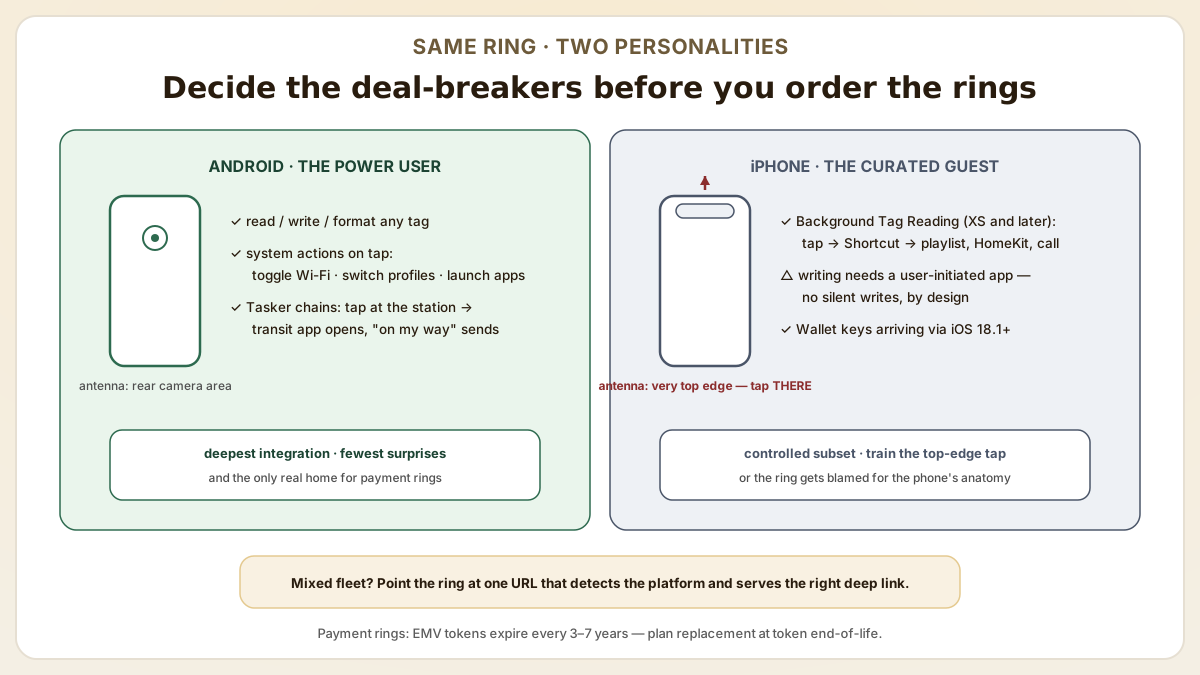
- Android — full programmability via NFC Tools (read/write/format any tag), NFC Tasks (system actions: toggle WiFi, change profiles, launch apps), and Tasker (complex chains: tap ring at train station → open transit app, send WhatsApp 'on my way' to spouse). Read range and antenna sweet spot vary by model — Pixel and Samsung antennas typically sit near the rear camera module.
- iPhone — Background Tag Reading on iPhone XS and later allows tapping a ring to trigger an iOS Shortcut (start workout playlist, run a HomeKit scene, dial a number). Writing arbitrary data still requires a writer app; iPhone won't write to a ring without user-initiated action. Apple Wallet keys (since iOS 18.1 with Secure Element opening) bring tap-to-unlock-car/home keyfob behavior to compatible devices.
- iPhone antenna location matters — the NFC antenna lives at the very top edge of the phone (above the front-facing camera), not the center back. Train recipients to tap the top edge or the user concludes 'the ring is broken.' Most onboarding complaints trace to this.
- Cross-platform corporate fleets need dual planning: write the ring URL to launch a webpage that detects the user agent and renders an iOS-Shortcut-compatible deep link OR an Android intent URL. Most enterprise IAM (Okta, Azure AD) handles both with a single redirect.
- Payment ring caveat — payment rings (McLear, Curve, Visa-partnered) require a Secure Element with EMV tokenization. The token typically expires every 3-7 years per EMV regulation. iPhone payment rings are functionally limited because Apple Pay is locked to Apple Wallet on the phone, not arbitrary NFC accessories — Android wins this category.
Material reliability and the antenna-orientation trick most buyers miss
The single biggest field-reliability issue in NFC ring rollouts is recipients tapping the wrong part of the ring against the reader. Antennas in NFC rings are typically wrapped around the circumference, not on the face — everyone taps where the gemstone would go, and the gemstone spot is the worst seat in the house. Combined with material choice (ceramic vs titanium vs resin), this decides whether the ring works first-time or feels glitchy. A 30-second onboarding video saves 80% of support tickets.
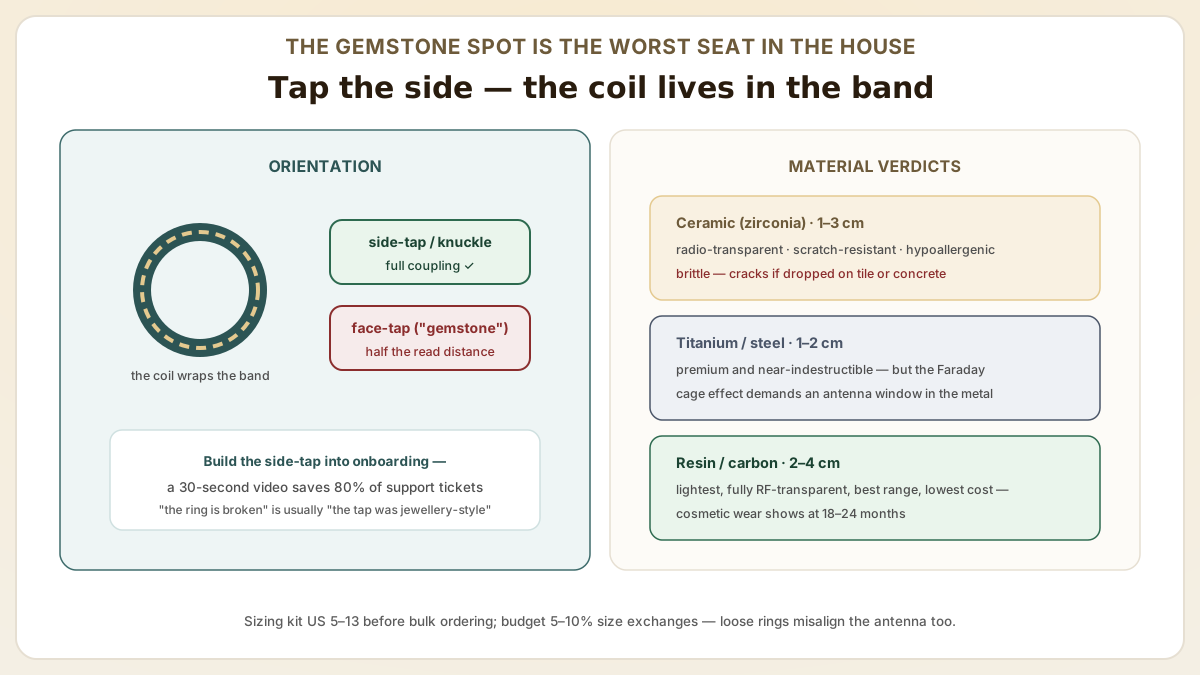
Teach the side-tap, ship the sizing kit, and let the physics do the rest — the ring was never glitchy, it was just being tapped like jewellery instead of worn like an antenna.
- Ceramic (zirconia) — radio-transparent, scratch-resistant, hypoallergenic. The gold standard for daily wear. Tradeoff: brittle under impact (can crack if dropped on tile or concrete). Best fit for executive and consumer wearables. Read range typically 1-3 cm.
- Titanium and stainless steel — premium feel, very durable. NFC signal must pass through a 'window' or gap in the metal because of the Faraday cage effect. Read range 1-2 cm, less consistent than ceramic. Best fit for industrial/access-control use cases where ring durability beats consumer aesthetics.
- Resin and carbon fiber composite — lightest, fully RF-transparent, lowest cost. Best read range (2-4 cm). Less premium feel than ceramic; cosmetic wear (scratches, color fade) appears at 18-24 months. Best for high-volume promotional and event use.
- Antenna orientation trick — the coil wraps around the ring band, so present the SIDE of the ring (or the flat part of a closed knuckle) to the reader for maximum coupling. Tapping the 'face' of the ring — the instinctive move, since that is where a gemstone would sit — yields half the read distance. Build this into the corporate onboarding video.
- Sizing matters more than buyers expect — request a sizing kit (US 5-13) before bulk ordering. A ring that's too tight makes recipients abandon wear within a week. A ring that's too loose changes antenna alignment with the reader and degrades read consistency. Plan for ~5-10% size-exchange budget.
Useful next pages
Use these linked product, guide and comparison pages to keep the next click specific and practical.
NFC ring products
Explore NFC ring options including chip variants, materials and custom branding.
Related NFC wearables and cards
Alternative NFC form factors for access control and identity sharing.
Practical NFC ring guides
Hands-on smart ring guides covering chip selection, antenna orientation, and platform compatibility.
FAQ
Can an NFC ring replace my office access badge?
Yes, if your access control system uses a compatible NFC chip. Most modern access systems based on MIFARE Classic, MIFARE DESFire or NTAG chips can accept credentials from an NFC ring. Check with your access control vendor for chip compatibility before ordering rings.
Is an NFC ring waterproof?
Most NFC rings are rated IP68, meaning they are fully waterproof and can be worn while washing hands, swimming or showering. The passive chip has no electronics that can be damaged by water. However, prolonged saltwater exposure may affect some metal finishes over time.
How long does an NFC ring last?
Passive NFC rings have no battery and no wear-prone components. The NFC chip is rated for 10+ years of data retention. The ring body lasts as long as the material. Ceramic and titanium rings can last decades with normal wear. Resin rings may show cosmetic wear after 2-3 years.
Can I wear multiple NFC rings at the same time?
Yes, but keep NFC rings on different hands or separated by at least two fingers to prevent anti-collision conflicts when tapping a reader. If two NFC rings enter the reader field simultaneously, the reader may fail to identify either one.
Can I program an NFC ring myself?
Yes. NFC rings with writable chips (NTAG213, NTAG216) can be programmed using any NFC writing app on an Android phone or a desktop NFC reader like the ACR122U. Place the ring flat on the reader antenna for the most reliable write connection.
Can I use an NFC ring with Apple Pay or Google Pay?
Apple Pay is locked to Apple Wallet running on iPhone or Apple Watch — third-party NFC rings cannot directly tokenize Apple Pay credentials. Android side, Google Wallet supports HCE (Host Card Emulation) on the phone but NFC rings work as separate-device payment instruments only when partnered with a bank or service that issues an EMV-tokenized credential to the ring chip (McLear, Curve historically). Tokens expire every 3-7 years per EMV rules, so plan for ring replacement at the token end-of-life.
Will an NFC ring open my legacy 125 kHz office building badge reader?
Not without a dual-frequency ring. Most NFC rings operate exclusively at 13.56 MHz (NFC / HF RFID). Legacy office badge systems often use 125 kHz LF RFID (HID Prox, EM4100). The two protocols are physically incompatible — a single antenna can't read both. Dual-frequency rings exist but are bulkier and more expensive ($25-$50). Confirm your access control system's frequency before sourcing rings — ask facilities for the exact reader model (e.g., HID iCLASS SE = 13.56 MHz / NFC compatible; HID ProxPoint = 125 kHz / requires dual-frequency).
Proud Tek is a Shenzhen-based RFID & NFC manufacturer supplying hotel chains, transit operators, event venues and retail brands worldwide. Every order includes free samples, RF testing and dedicated project support.
Get a Quick Quote
Tell us about your project and we'll respond within one business day. Fields marked (asterisk) are required.