
Healthcare Engineering
Autoclave-Compatible RFID Tags
Chip Selection
Quick answer
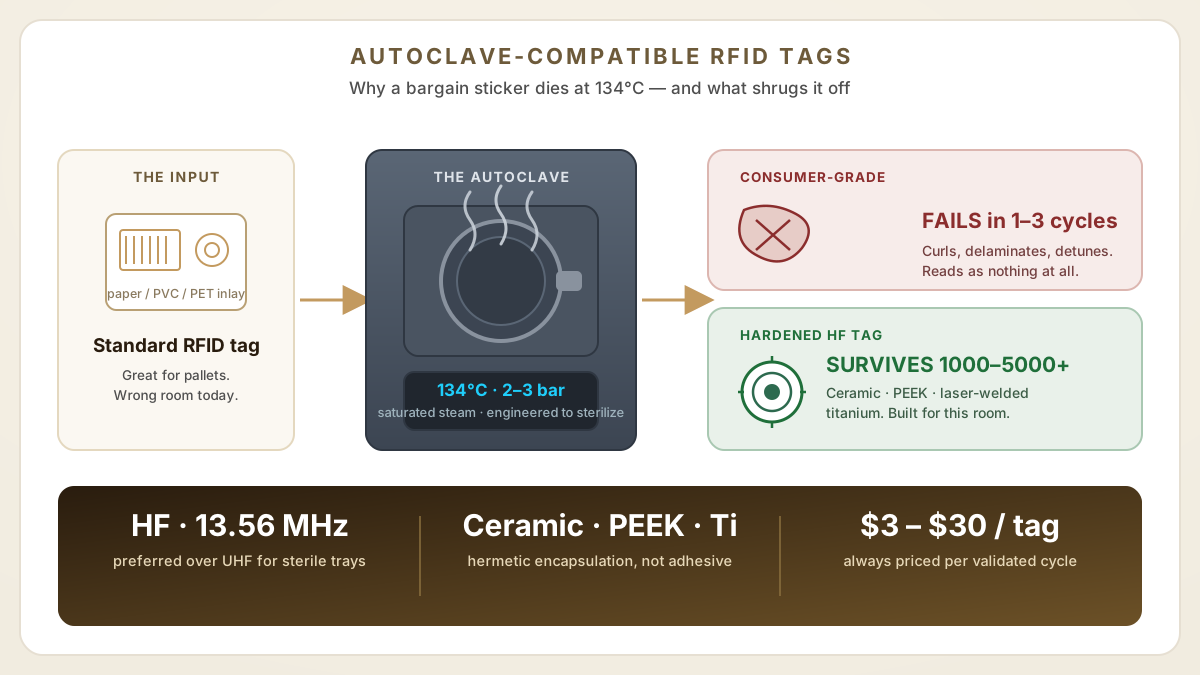
An autoclave's whole job is to obliterate anything alive — and it extends a bargain RFID sticker exactly the same courtesy. Autoclave-compatible tags have to shrug off 134°C steam at 2-3 bar pressure for hundreds to thousands of cycles, and that survival comes down to chip selection, encapsulation and antenna design. Get them right and the tag quietly does its job for years; get them wrong and it fails catastrophically, usually at the least convenient moment.
- Standard PVC and PET RFID tags tap out in 1-3 autoclave cycles; sterile-environment tags need ceramic, PEEK or laser-welded titanium encapsulation rated for 1000-5000+ cycles.
- HF (13.56 MHz) usually beats UHF for sterile work — it reads better through metal trays, collides less in dense tag populations, and simply offers more autoclave-rated chip options.
- Per-tag cost runs $3 (basic ceramic HF) to $30 (premium titanium-encapsulated) — but the number that matters is cost per validated cycle, not the sticker price per tag.
At a glance
Use these short answers to decide whether this page matches the project before moving into the detail.
Key takeaway
Standard PVC and PET RFID tags tap out in 1-3 autoclave cycles; sterile-environment tags need ceramic, PEEK or laser-welded titanium encapsulation rated for 1000-5000+ cycles.
What does an autoclave do to a standard RFID tag?
Take an ordinary RFID label — the kind that tracks a warehouse pallet for years without complaint — and send it through a single autoclave cycle. What comes back is a cu...
Next step
Ready to move forward? Start your inquiry to get specific answers for this project.
Get an autoclave RFID tag quoteWhat does an autoclave do to a standard RFID tag?
Take an ordinary RFID label — the kind that tracks a warehouse pallet for years without complaint — and send it through a single autoclave cycle. What comes back is a curled, discolored wafer that no longer reads as anything. An autoclave is less a harsh environment for electronics than a deliberate one: its whole purpose is to kill anything alive, and it brings that same thoroughness to a consumer-grade sticker. Autoclaves use saturated steam at 121-134°C and 1-2 bar pressure to sterilize medical instruments. The combination of heat, pressure, water vapor and chemistry destroys most consumer-grade RFID tags within a single cycle.
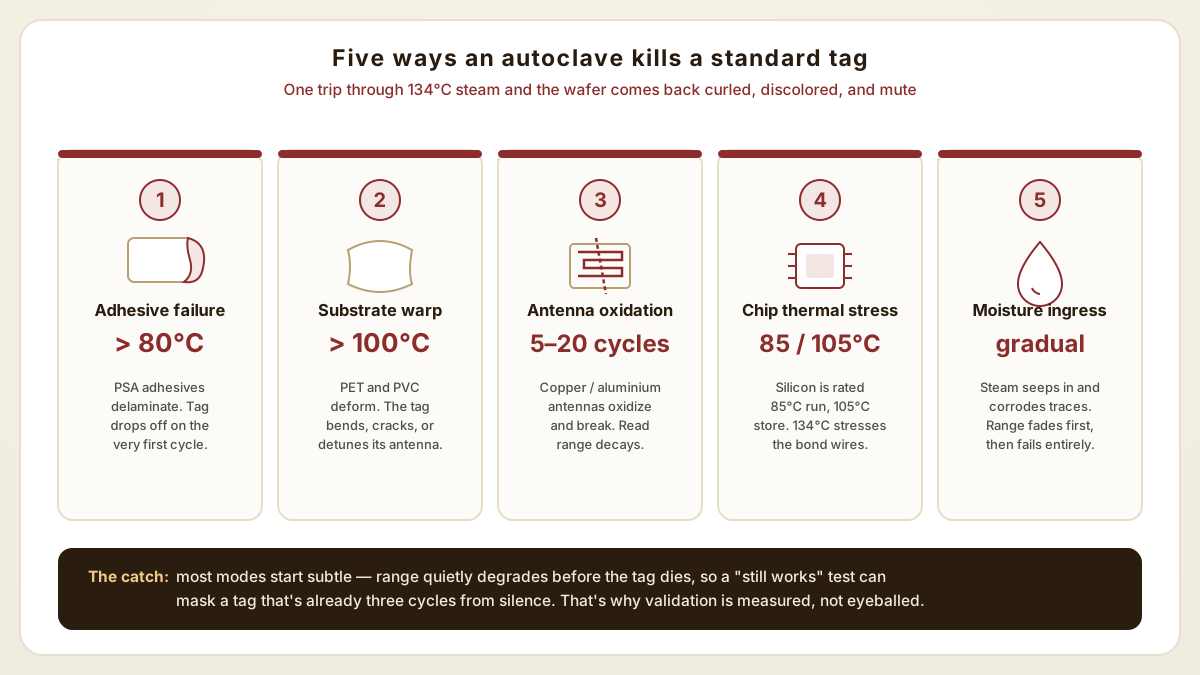
- Adhesive failure: standard pressure-sensitive adhesives delaminate above 80°C. Tag falls off the instrument on first cycle.
- Substrate degradation: PET and PVC plastics deform or warp above 100°C. Tag bends, cracks, or detunes the antenna.
- Antenna oxidation: copper or aluminum antennas oxidize and break over repeated steam exposure. Read range degrades within 5-20 cycles.
- Chip thermal stress: silicon dies are rated to 85°C operating, 105°C storage. Repeated 134°C exposure stresses bond wires and chip-to-substrate interface.
- Moisture penetration: steam migrates into incompletely-sealed tags, corroding internal traces. Failure mode is often gradual: read range degrades, then total failure.
Which RFID chips and packages survive autoclaving?
There's no gritty survival story here — no chip that 'toughs it out.' Tags that come through an autoclave intact were engineered from the outset to, with specialized chips, antennas and encapsulation. The five build patterns below cover most autoclave-rated commercial offerings: the first four earn their keep, and the fifth is a short list of things that will let you down.
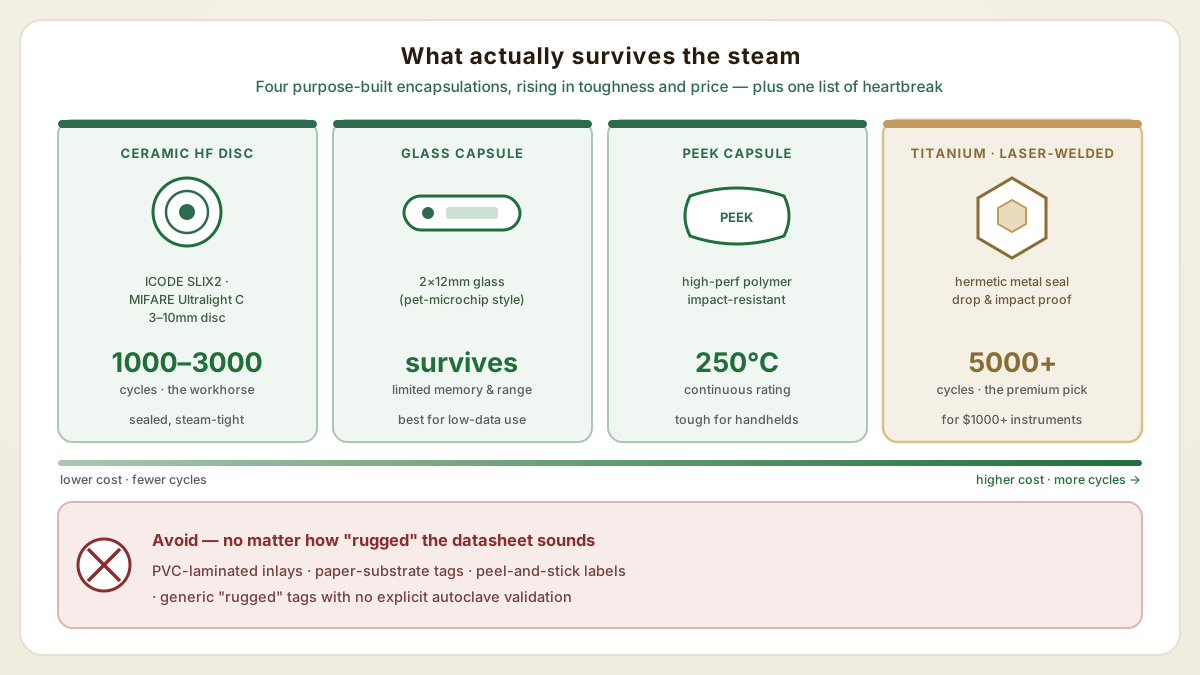
- Ceramic-package HF chips: ICODE SLIX2 or MIFARE Ultralight C in 3-10mm diameter ceramic discs. Sealed encapsulation prevents steam ingress; rated 1000-3000 cycles.
- Glass-encapsulated transponders: 2×12mm glass capsule (similar to pet microchip). Survives autoclave but limited memory and read range. Best for low-data applications.
- PEEK polymer capsules: high-performance polymer rated to 250°C continuous. Slightly larger than ceramic but more impact-resistant for handheld instruments.
- Laser-welded titanium capsules: hermetic-sealed metal package. Highest cycle rating (5000+) and survives drop and impact. Used for premium surgical instruments worth $1000+.
- Avoid: PVC-laminated inlays, paper-substrate tags, peel-and-stick labels, generic 'rugged' tags without explicit autoclave validation.
How do you specify and validate autoclave RFID tags?
'Trust me, it's autoclave-rated' is not a specification. Hospital procurement teams and instrument-tray manufacturers should demand evidence of autoclave validation, not marketing adjectives. The five evidence checkpoints below are the non-negotiable ones — and a vendor who can't produce them is a vendor who hasn't done the testing.
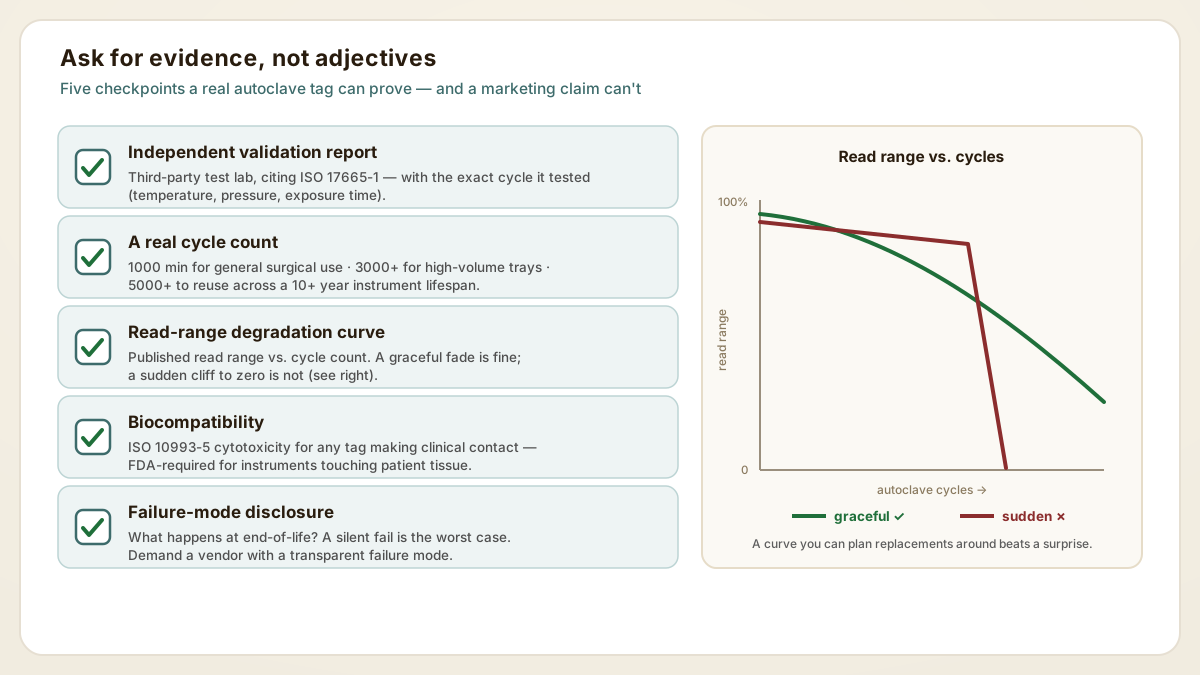
- Validation report: independent test-lab report citing ISO 17665-1 (sterilization validation) or equivalent. Should specify exact cycle parameters tested (temperature, pressure, exposure time).
- Cycle count: minimum 1000 cycles for general surgical use; 3000+ for high-volume trays (general OR, sterile-processing); 5000+ for re-use over instrument 10+ year lifespan.
- Read-range degradation curve: published data showing read range vs cycle count. Graceful degradation is fine; sudden failure is not.
- Biocompatibility: ISO 10993-5 cytotoxicity testing for any tag making clinical contact. Required by FDA for instruments touching patient tissue.
- Failure-mode disclosure: vendor states what happens at end-of-life — does the tag silently fail (worst case), display 'tag worn' status, or drop reads gradually? Choose vendors with transparent failure modes.
Which standards and certifications should the validation evidence cite?
True autoclavability is a regulatory and quality-systems claim, not a marketing one — which means the proof lives in document numbers, not brochure superlatives. Industry-published engineering guidance on 134°C tag design consistently anchors autoclave-rated RFID claims to ISO 17664 (reprocessing validation), AAMI ST79 (steam sterilization in healthcare facilities), and ISO 17665-1 (sterilization-process validation). Hospital sterile-processing departments (CSSD/SPD) and tray OEMs should expect an explicit stack of references — not a single citation — before accepting an autoclave claim.
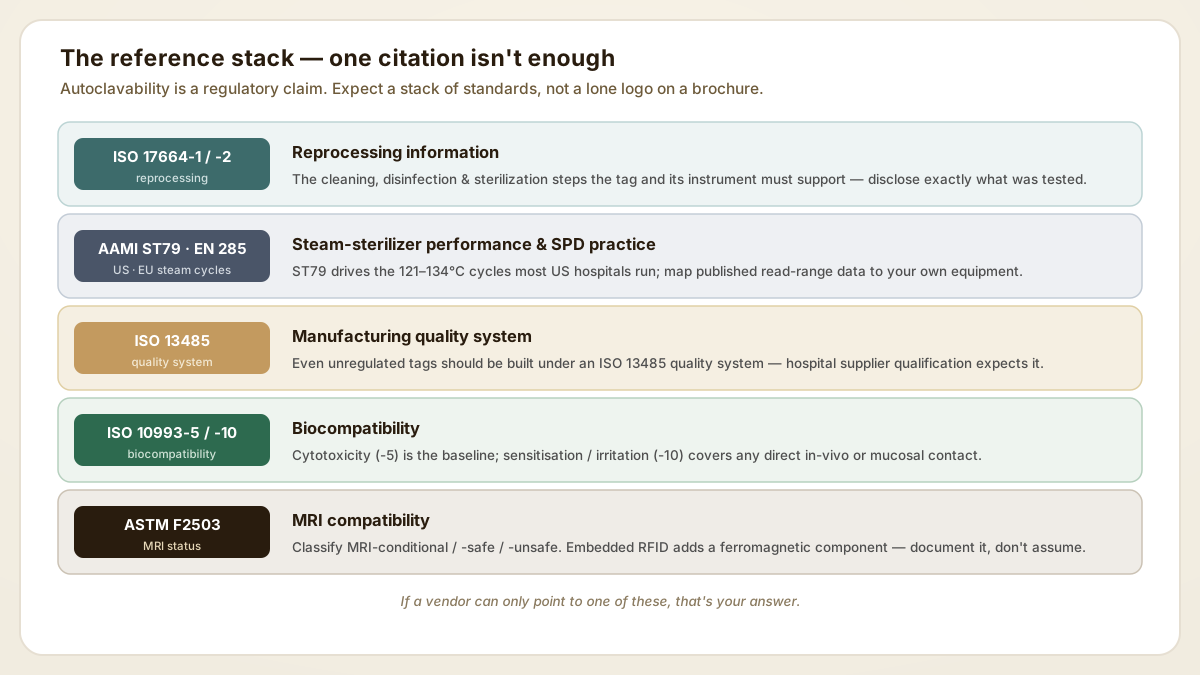
- ISO 17664-1 / -2: reprocessing information that the tag (and any instrument it is attached to) must support, including cleaning, disinfection and sterilization steps. The tag vendor should disclose which exact reprocessing protocols were tested, not just 'sterilization compatible'.
- AAMI ST79 (US) and EN 285 (EU): steam sterilizer performance and SPD operating practice. ST79 in particular drives 121-134°C cycle parameters most US hospitals use; tag vendors that publish read-range data after 'ST79-compliant' cycles let SPD managers map results to their own equipment.
- ISO 13485 manufacturing system: even though most RFID tags are not themselves FDA-regulated devices, sterile-environment vendors should manufacture under ISO 13485 — industrial-RFID vendors publish ISO 13485 statements that align with hospital supplier-qualification expectations.
- ISO 10993-5/-10 biocompatibility: required when the tag (or capsule) contacts tissue, reused fluids, or post-clean instrumentation. Cytotoxicity (-5) is the baseline; sensitisation/irritation (-10) extends evidence for any direct in-vivo or mucosal-contact application.
- MRI compatibility (ASTM F2503): instruments potentially used in MRI suites need MRI-conditional, MRI-safe or MRI-unsafe classification per ASTM F2503. Embedded RFID introduces a small ferromagnetic component, so vendors should document MRI status — not assume tags are safe.
Where do autoclave RFID programs typically fail in real hospitals?
Here's the plot twist that catches program managers off guard: most autoclave RFID failures aren't chip failures at all. They're program-level failures that surface 6-18 months after rollout, long after everyone declared the pilot a success. Reviewing industry case material — sterile-processing trade publications plus Mayo Clinic and Cleveland Clinic SPD case studies cited by Medical Design Briefs — the same five culprits keep turning up.
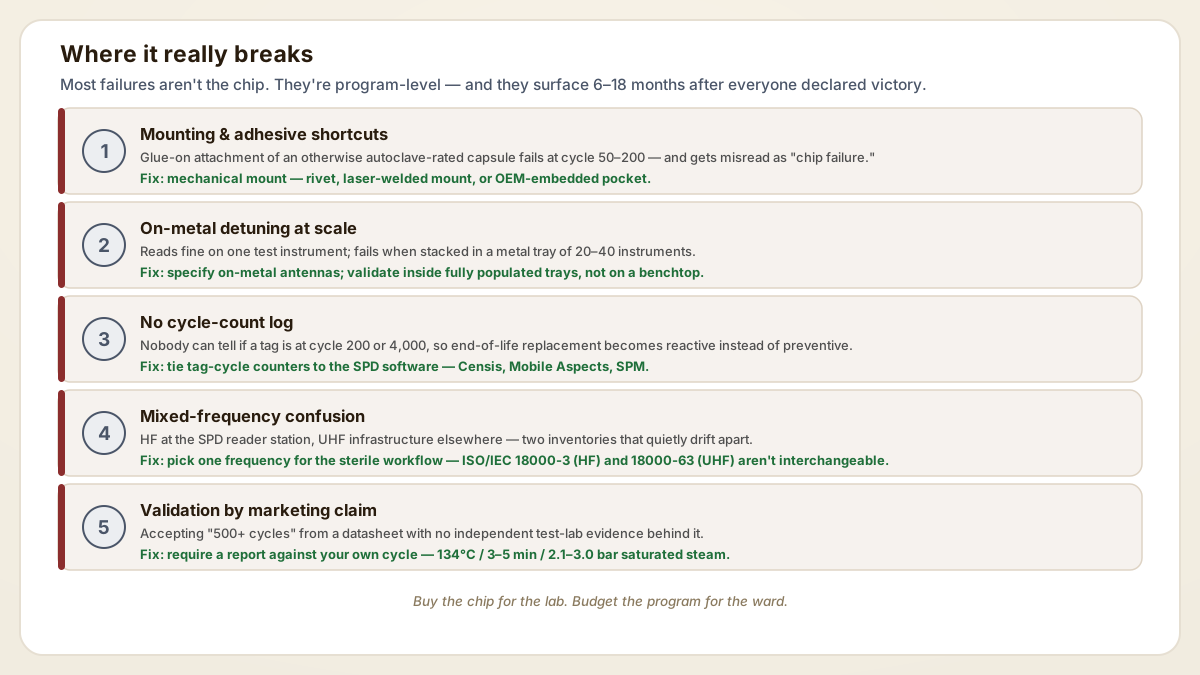
- Mounting and adhesive shortcuts: glue-on or pressure-sensitive-adhesive attachment of an otherwise autoclave-rated capsule. Adhesive failure typically appears between cycle 50 and 200 and is misread as 'chip failure'. Use mechanical attachment (rivet, laser-welded mount, OEM-embedded pocket) per published vendor deployment guidance and tray OEM specifications.
- On-metal detuning at scale: a tag that reads well on a single test instrument can fail when stacked in a metal tray containing 20-40 instruments. Specify on-metal-rated antennas and validate read rates inside fully populated trays — not on a benchtop — before scaling.
- No cycle-count log: SPD teams cannot tell if a tag is at cycle 200 or cycle 4,000 unless the back-end system tracks this. Without cycle logs, end-of-life replacement becomes reactive (after a missed read) instead of preventive. Tag-cycle counters tied to the SPD WMS or instrument-tracking software (e.g. Censis, Mobile Aspects, SPM) close this gap.
- Mixed-frequency confusion: a hospital running HF (13.56 MHz) tags at the SPD reader station but UHF (860-960 MHz) infrastructure for asset tracking elsewhere creates dual inventories that drift apart. Choose one frequency for the sterile workflow and document the rationale; ISO/IEC 18000-3 (HF) vs 18000-63 (UHF) compatibility is not interchangeable.
- Validation-by-marketing-claim: accepting '500+ cycles' from a datasheet without independent test-lab evidence. Require a written validation report against the cycle parameters in your own SPD (typically 134°C / 3-5 min / 2.1-3.0 bar saturated steam) before a tag enters clinical service.
Useful next pages
Use these linked product, guide and comparison pages to keep the next click specific and practical.
Autoclave-rated RFID tags
Ceramic, PEEK and titanium-capsule HF tags validated to 1000-5000+ sterilization cycles.
Standards and reference material
Authority documents for SPD and tray OEMs evaluating autoclave-rated RFID claims.
FAQ
Can I autoclave a standard RFID label by accident?
Once might leave you with a degraded tag that still reads at short range — just far enough to lull you into trusting it. Repeated cycles destroy it outright. If your sterile processing department accidentally autoclaves a non-rated tag, retire it; partial-failure tags are worse than dead ones because they create false confidence.
What's the difference between EtO and steam autoclave for RFID?
Ethylene oxide (EtO) sterilization runs a gentle 50-60°C with chemical exposure, and most modern RFID tags — even non-autoclave-rated ones — walk away fine. Steam autoclave at 121-134°C is a different beast entirely; only purpose-built tags survive it.
How do I attach an autoclave RFID tag to an instrument?
Three legitimate options: (1) embedded in the instrument handle during manufacture (cleanest, but needs OEM cooperation), (2) laser-welded onto the handle by a certified vendor, or (3) mechanically attached via a stainless-steel rivet through a pre-drilled hole. Whatever you do, avoid adhesive-only attachment — glue and 134°C steam have irreconcilable differences.
Will RFID tags trigger MRI machine alarms?
RFID tags contain small amounts of metal (chip silicon, antenna copper) that an MRI's powerful magnetic field very much notices. Some tags are MRI-conditional; others are flatly MRI-unsafe. Any instrument that might wander into an MRI suite needs explicit MRI-conditional certification under ASTM F2503 — not an assumption.
How do autoclave-rated RFID tag claims compare across HF and UHF chemistries?
It's less a rivalry than a division of labor. Industry-published validation matrices on 134°C tag design show HF (13.56 MHz) tags using ICODE SLIX2 / MIFARE-class chips dominate ceramic and small-format autoclave designs because HF tolerates liquid and dense metal trays better than UHF, while UHF (860-960 MHz) tags using Impinj Monza R6-P or M730/M830 chips appear in larger PEEK or polyimide form factors where read range matters more than sterile-field penetration. The right answer depends on whether you need sponge/in-vivo detection (HF), tray inventory at portal speeds (UHF), or both — and many hospitals run mixed chemistries on purpose.
Do autoclave-rated tags require an FDA 510(k) clearance?
Usually no — with a few important exceptions. The tag itself is not usually FDA-regulated unless it makes therapeutic or diagnostic claims (e.g. embedded in a sponge sold as an RSI-prevention adjunct, or embedded in an implantable). When the tag is purely an asset-identifier embedded in a reusable instrument, FDA pathways apply to the instrument under existing 21 CFR 820 design-controls, and the tag becomes a component subject to the instrument manufacturer's risk-management file (ISO 14971). Clinical-contact applications such as RFID-tagged surgical sponges (Stryker SurgiCount, RF Surgical / now Stryker) do hold FDA clearances — but that clearance covers the sponge-and-tag system, not the bare tag.
Proud Tek is a Shenzhen-based RFID & NFC manufacturer supplying hotel chains, transit operators, event venues and retail brands worldwide. Every order includes free samples, RF testing and dedicated project support.
Get a Quick Quote
Tell us about your project and we'll respond within one business day. Fields marked (asterisk) are required.