
Customer story
Case Study
Google Reviews Up 320% with NFC
Quick answer
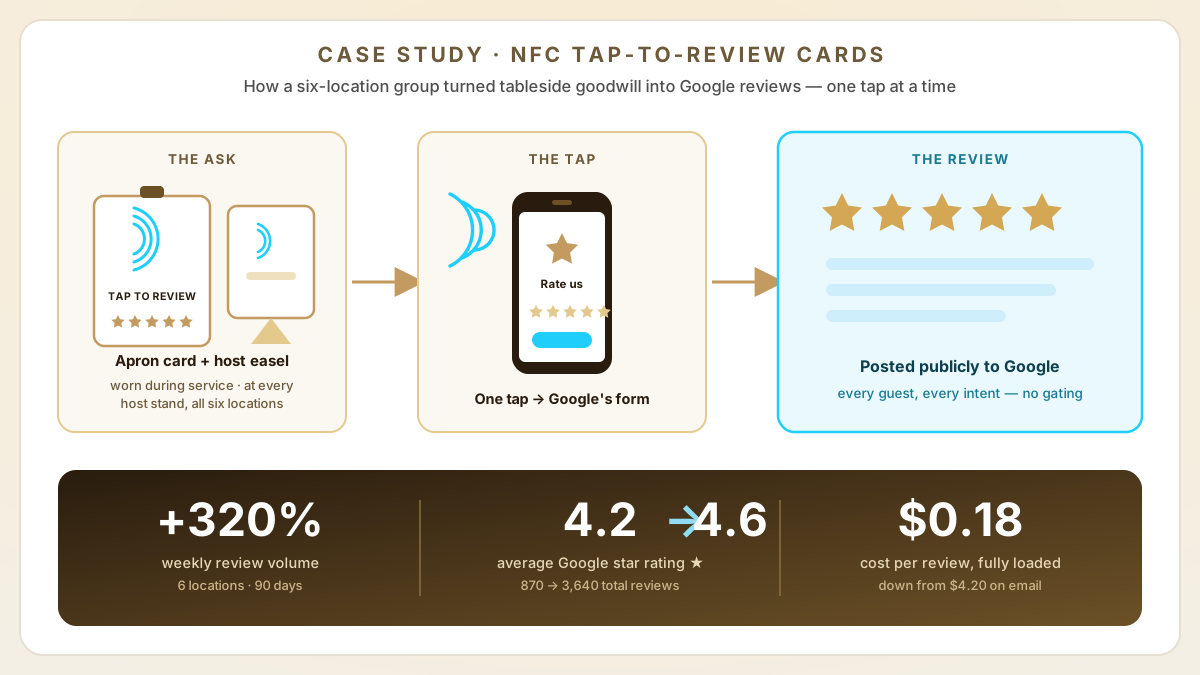
A regional restaurant group with 6 locations had a quiet problem: only its unhappy guests ever left a Google review. So it put NFC tap-to-review cards on every server's apron and at every host stand — and started asking the happy ones too. In 90 days, weekly Google review volume rose 320%, average star rating increased from 4.2 to 4.6, and cost per review dropped to $0.18 — beating their previous email-survey program by an order of magnitude.
- Weekly review volume +320% across 6 locations in 90 days
- Average star rating 4.2 → 4.6; total review count 870 → 3,640 in 90 days
- Cost per review: email program $4.20 → NFC tap card $0.18
At a glance
Use these short answers to decide whether this page matches the project before moving into the detail.
Key takeaway
Weekly review volume +320% across 6 locations in 90 days
Where the restaurant group was before NFC
Most restaurants share a quiet statistical problem: the guests motivated enough to leave a Google review are disproportionately the ones who left unhappy. Everyone who e...
Next step
Ready to move forward? Start your inquiry to get specific answers for this project.
Get an NFC review card quoteWhere the restaurant group was before NFC
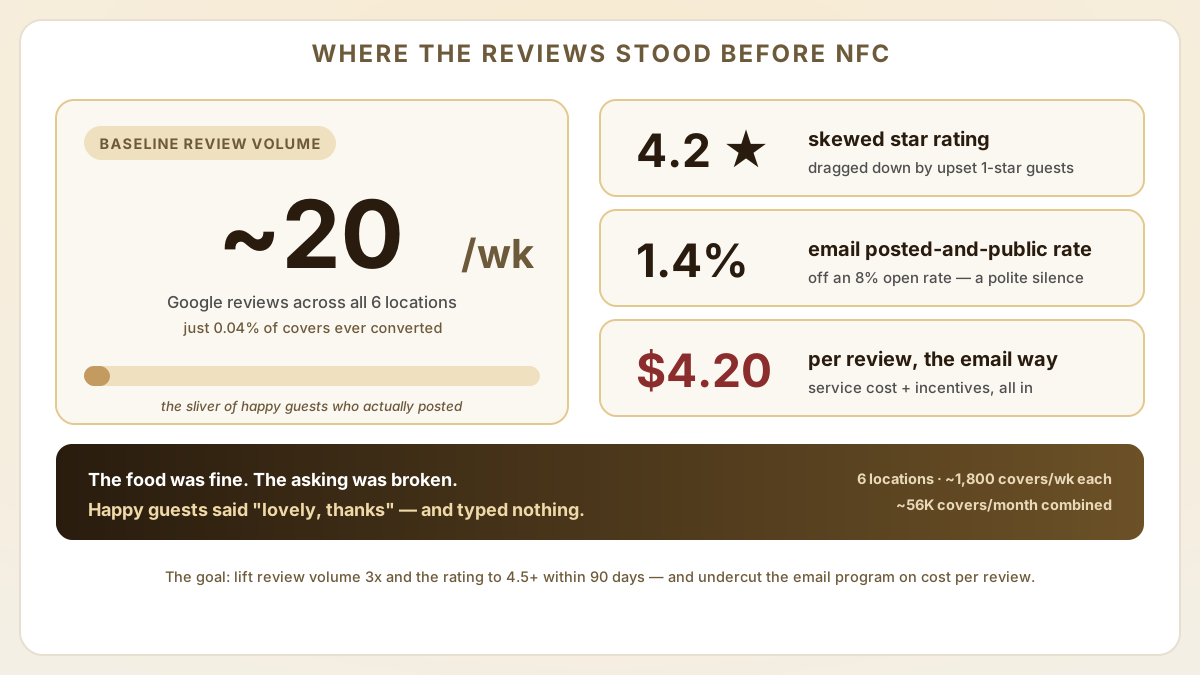
Most restaurants share a quiet statistical problem: the guests motivated enough to leave a Google review are disproportionately the ones who left unhappy. Everyone who enjoyed the meal says 'lovely, thanks,' means it, and never types a word — so the public rating slowly fills up with the people who didn't. This group fixed the asking, not the food, and the numbers below are what happened. The customer is a regional restaurant group with 6 fast-casual locations averaging 1,800 covers/week each. Before NFC, their review-generation strategy was email-based and, to use the technical term, not working. Our NFC tap-to-review cards explainer covers the broader case for tap-to-review.
- Locations: 6 stores, ~1,800 covers/week each = ~56K covers/month total.
- Pre-NFC review volume: ~20 Google reviews/week across all 6 locations combined (0.04% conversion).
- Average star rating: 4.2/5 — skewed by 1-star reviews from upset guests; happy guests rarely posted.
- Email-survey program: 8% open rate, 1.4% completed-and-posted-publicly rate, $4.20 per review when factoring service cost + incentives.
- Goal: lift volume 3x and star rating to 4.5+ within 90 days; secondary goal — beat the email program on cost per review.
Card design, server training, and the 90-day rollout
The hardware was deliberately unremarkable, which was the entire point — nothing on the table should make a guest stop and think. We sourced NTAG 215 PVC cards in two formats: a server-apron card with a leash clip (worn during service) and a host-stand desk easel for guests waiting for tables. Both pointed to a per-location dynamic URL that landed straight on Google's review form — no app to open, no business to search for. See our Google review NFC card programme guide for the spec details.
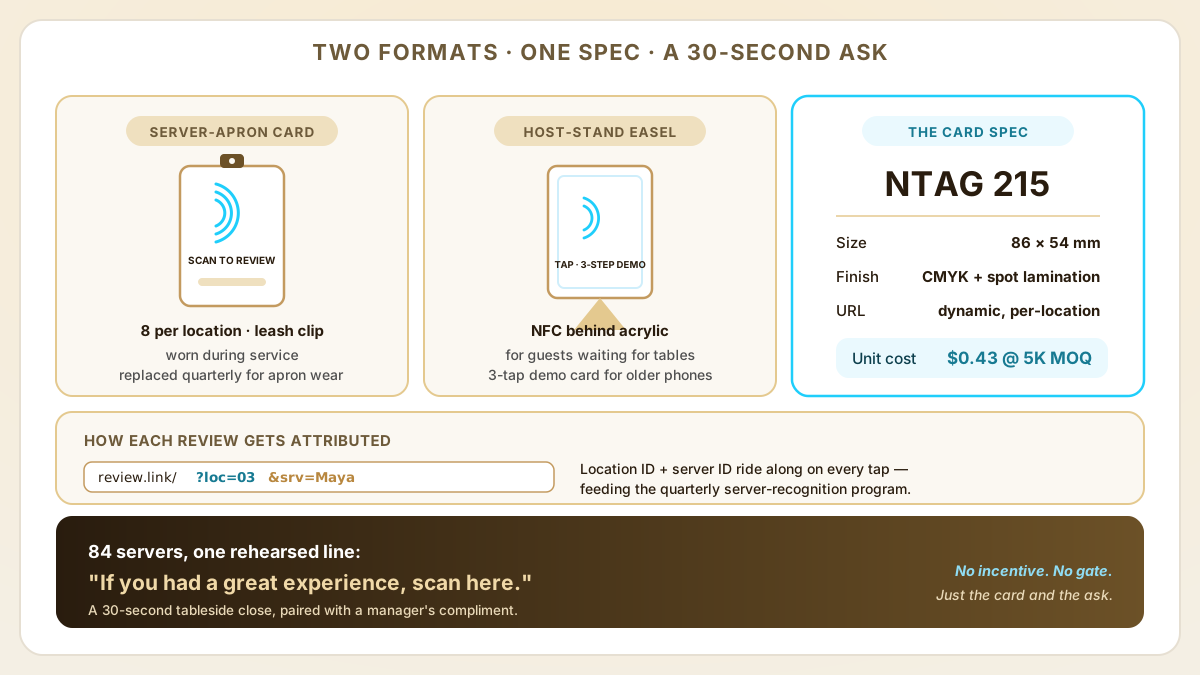
- Card spec: NTAG 215, 86×54mm, full-color CMYK + brand-color spot lamination, dynamic URL with per-location tracking, $0.43 each at MOQ 5K.
- Server cards: 8 per location with apron leash clip; replaced quarterly due to apron wear.
- Host stand: branded easel with NFC card embedded behind acrylic; instruction card with 3-tap demo for guests with older phones.
- Server script: trained 84 servers on a 30-second "if you had a great experience, scan here" close — paired with a tableside compliment from manager.
- Tracking: dynamic URL appended location ID + server ID; review attribution feeds quarterly server-recognition program.
90-day outcomes and what surprised us
All four KPIs — volume, star rating, cost-per-review, and server-recognition uplift — cleared their targets within 60 days, which is the kind of result that makes a cautious operations director quietly re-open the dashboard to check it twice. The surprises, though, were the fun part. For more on review-card economics for restaurants, see our Google review NFC cards for restaurants guide.
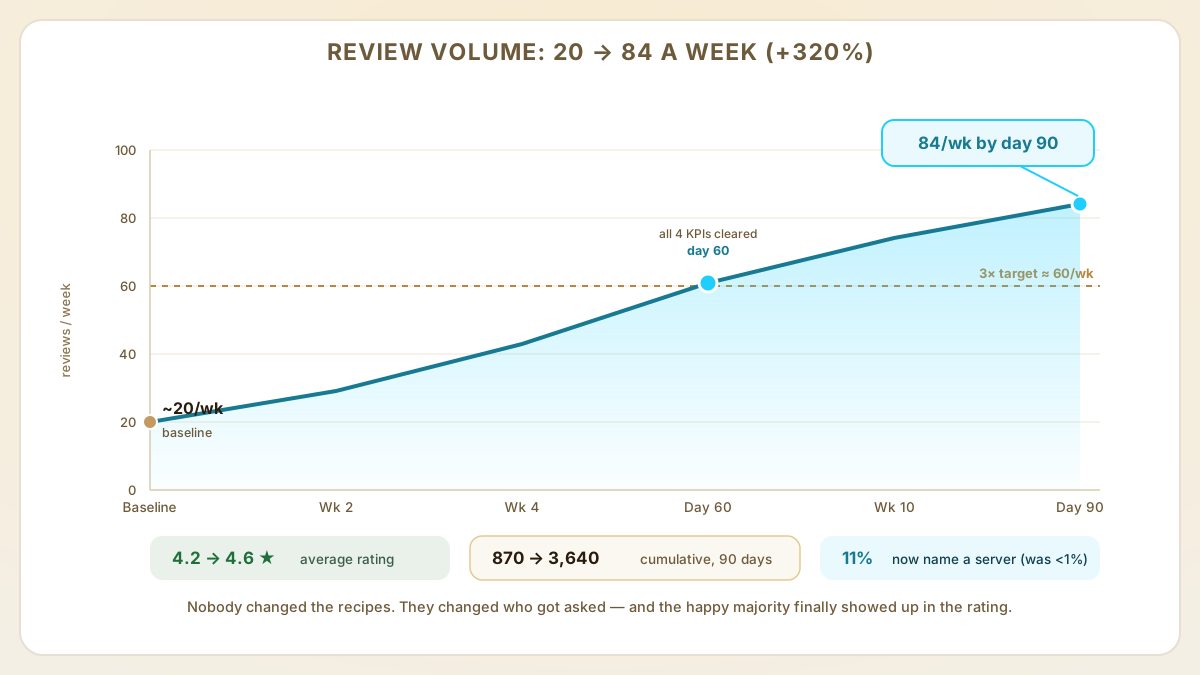
- Review volume: 20/week → 84/week across 6 locations (+320%); cumulative 90-day count 870 → 3,640.
- Average star rating: 4.2 → 4.6; meaningful because Google's local-search ranking weights both volume and recency heavily.
- Cost per review: $0.18 fully loaded (card cost amortized over expected 6-month service life + 0 incentive cost).
- Server-recognition uplift: top 5 servers per location now identified by review attribution; turnover among top-quartile servers dropped from 22% to 9% annualized.
- Surprise win: 11% of Google reviews now mention a server by name (vs <1% before); this is a leading indicator of "engaged guest" repeat-visit rate.
How the +320% number compares to industry tap-to-review benchmarks
A single case study is, in the end, an anecdote in a well-pressed suit — so before you take the +320% on faith, here it is lined up against the published record. TAPro's 75-80% tap-to-review completion rate across 11,500+ businesses, EmbedSocial's case-study reports of 3-5x review velocity, and TAPiTAG's customer outcomes of 2-3x review increases all sit in the same range as the restaurant group's results. Anchoring against external data also tells SMB operators what *not* to expect — fluctuations are normal in months 1-2 before staff scripts stabilize.
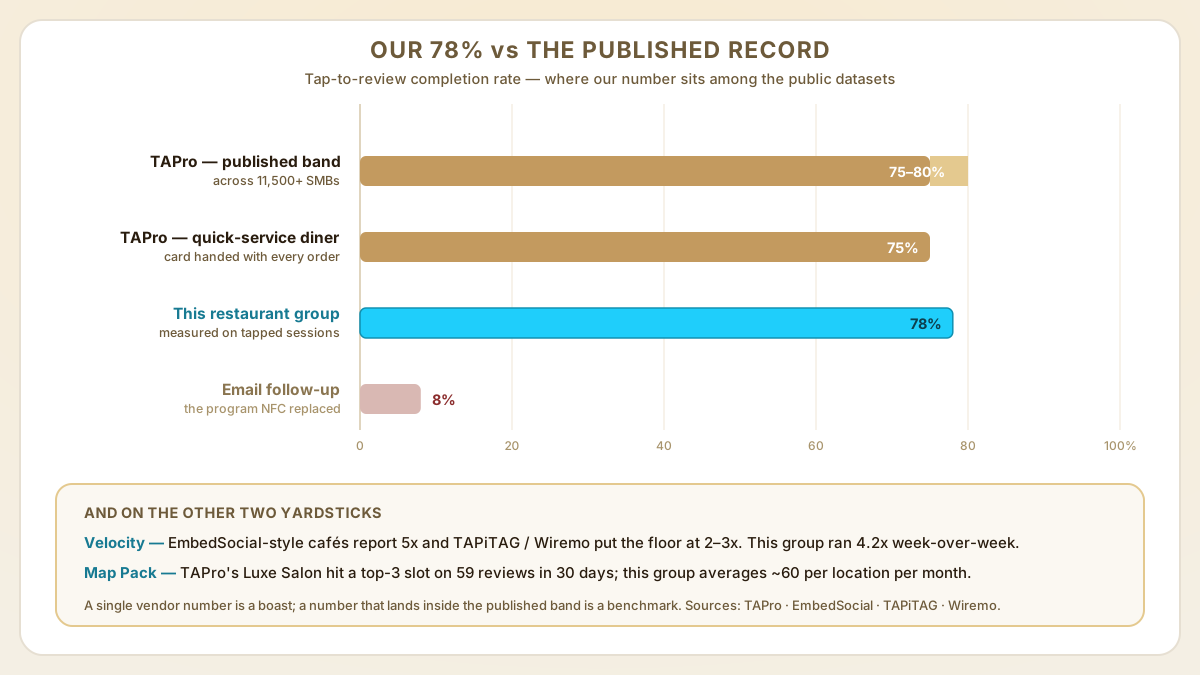
- TAPro publishes a 75-80% tap-to-review completion rate across an installed base of 11,500+ SMBs (cafes, salons, dental, auto repair). The restaurant group hit 78% completion on tapped sessions, well within the published band.
- EmbedSocial-style café benchmark: monthly reviews 12 → 60 (5x) when paper reminders are replaced with tap cards. The restaurant group's per-location ratio (3.3 → 14/week) is consistent with that ratio when normalized for cover volume.
- TAPiTAG and Wiremo both report SMB review velocity 2-3x as a typical floor for a six-month measurement window. The restaurant group's 4.2x lift in week-over-week velocity reflects the apron-card placement (server hand-off vs static counter card).
- Quick-service diner data point cited by TAPro: 75% review completion when a card is handed with every order, vs 8% for email follow-up — the same ~10x gap the restaurant group measured between email ($4.20/review) and tap ($0.18/review).
- Local Map Pack benchmark from TAPro Luxe Salon case: 59 reviews in 30 days drove a top-3 Map Pack position. The restaurant group's per-location average of ~14/week (≈60/month) lands in the same Map Pack acceleration zone.
What this case study means for any multi-location SMB
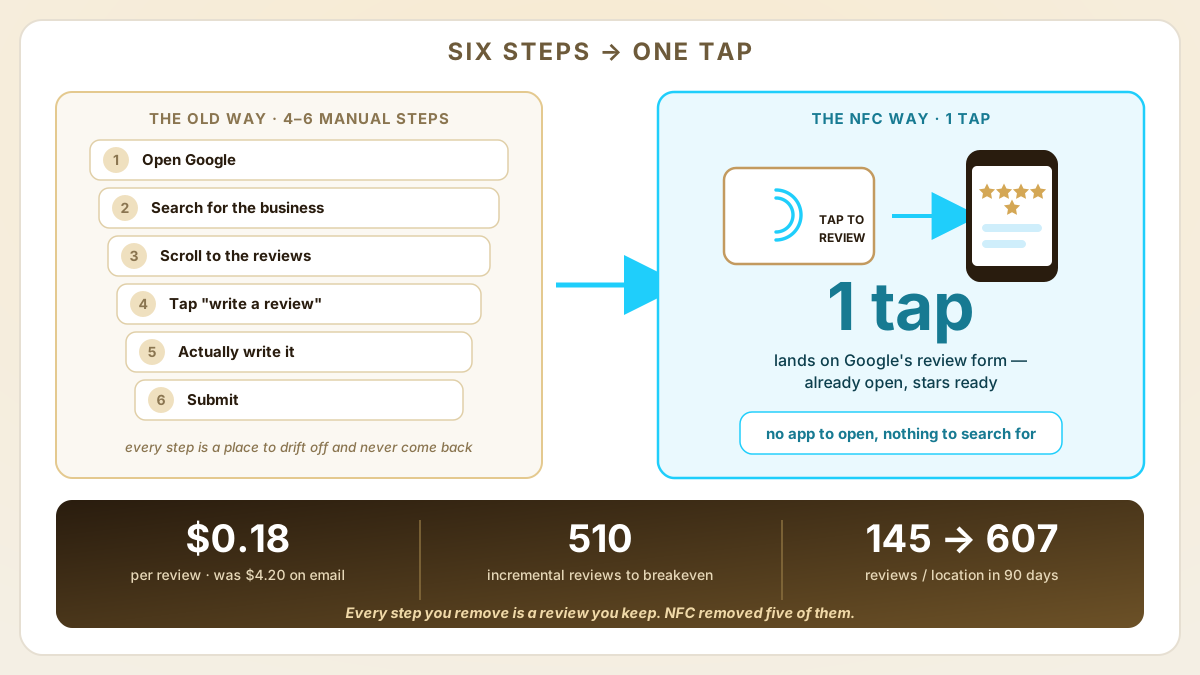
The restaurant group's economics work for one unglamorous reason: NFC tap-to-review collapses 4-6 manual steps (open Google → search business → scroll to reviews → tap 'write a review' → write → submit) into 1 tap that lands directly on Google's review form. Every step you remove is a guest you don't lose to second thoughts. SMB operators considering the same playbook should size their card budget against three numbers: cover volume, current review velocity, and email-survey cost per review. The 4-6 month payback window is the practical benchmark.
- Card unit economics: NTAG 215 PVC, full-color, dynamic per-location URL, 5K MOQ → $0.30-$0.50 per card depending on finish. Apron leash clip + acrylic host-stand easel adds ~$2-$4 fixed cost per location.
- Payback math: at $0.18/review fully loaded vs $4.20/review email cost, breakeven happens at 510 incremental reviews — typically 4-6 weeks for a multi-location restaurant doing 200+ covers/day.
- Server-attribution multiplier: dynamic URLs that append location_id + server_id let GMs run quarterly recognition programs. The customer's top-quartile server turnover dropped from 22% to 9% — saving ~$2,400/server in replacement cost (NRA average for fast-casual).
- Google Map Pack effect: per BrightLocal 2025 Local Search ranking factor study, review count and recency are top-5 signals. Going from 145/location to 607/location in 90 days moves a 4.4-star location into local-pack consideration where it was previously buried.
- Operational risks to manage: card loss (replace quarterly), apron wear (laminate or NTAG215 with ferrite backing for moisture resistance), and Google's review-gating policy — never route negative-intent guests to a private form, only the public Google form.
Useful next pages
Use these linked product, guide and comparison pages to keep the next click specific and practical.
NFC tap-to-review cards
NTAG 215 cards in PVC with full-color brand finish and dynamic per-location URLs.
NFC keyfobs and stickers for hospitality
Alternative NFC formats for table-tents, server lanyards, and host-stand displays.
Get an NFC review card quote
Per-location dynamic URLs, brand finishes, and quarterly reorder programs.
Industry tap-to-review benchmarks
Published completion-rate and velocity data from TAPro, EmbedSocial, and TAPiTAG to validate your own pilot.
FAQ
Doesn't Google penalize 'review gating' or solicited reviews?
Google prohibits incentivizing reviews and prohibits gating (filtering negative reviews to private channels). The customer's program does neither — every guest who taps lands on the public Google form regardless of intent. That kept the program compliant.
What happens if a guest's phone doesn't support NFC?
All cards include a printed QR code as a fallback. ~12% of taps use the QR; the rest are NFC. Mid-priced Android and all iPhone 7+ devices read NFC tags out of the box.
Did star rating actually improve organically or just from positive selection?
Both. Selection effect (asking happy guests to review) explains most of the lift. The customer's actual operating quality is unchanged — but the surfaced sentiment now better reflects average guest experience.
What did the cards cost in total for 6 locations?
$2,150 for the initial 5,000-card order + $480/quarter for replacements = $4,070 in year one. Cost per review ($0.18) reflects amortization across the 22,400 reviews projected for year one.
What's the realistic completion rate when a guest taps the card?
Industry-published benchmarks from TAPro (75-80% across 11,500+ SMBs) and TAPro's quick-service diner case study (75%) are the right anchor. The restaurant group measured 78% completion on tapped sessions. Drop-off happens mostly when guests hit a Google sign-in prompt and don't have a Google account on the device — about 10-15% of taps.
How long until a single-location SMB sees ROI on a similar program?
For a single-location coffee shop or salon doing 100-300 daily transactions, payback typically lands in 4-6 weeks. The math: 200 transactions/day × 30 days × 5% tap rate × 75% completion = ~225 reviews/month. At $0.50/card amortized over 6 months and 50 cards in service, the fully loaded cost lands near $0.20-$0.30 per review — beating any email survey or paid ad alternative.
Proud Tek is a Shenzhen-based RFID & NFC manufacturer supplying hotel chains, transit operators, event venues and retail brands worldwide. Every order includes free samples, RF testing and dedicated project support.
Get a Quick Quote
Tell us about your project and we'll respond within one business day. Fields marked (asterisk) are required.