
Healthcare Operations
Hospital Linen RFID
Joint Commission Ready
Quick answer
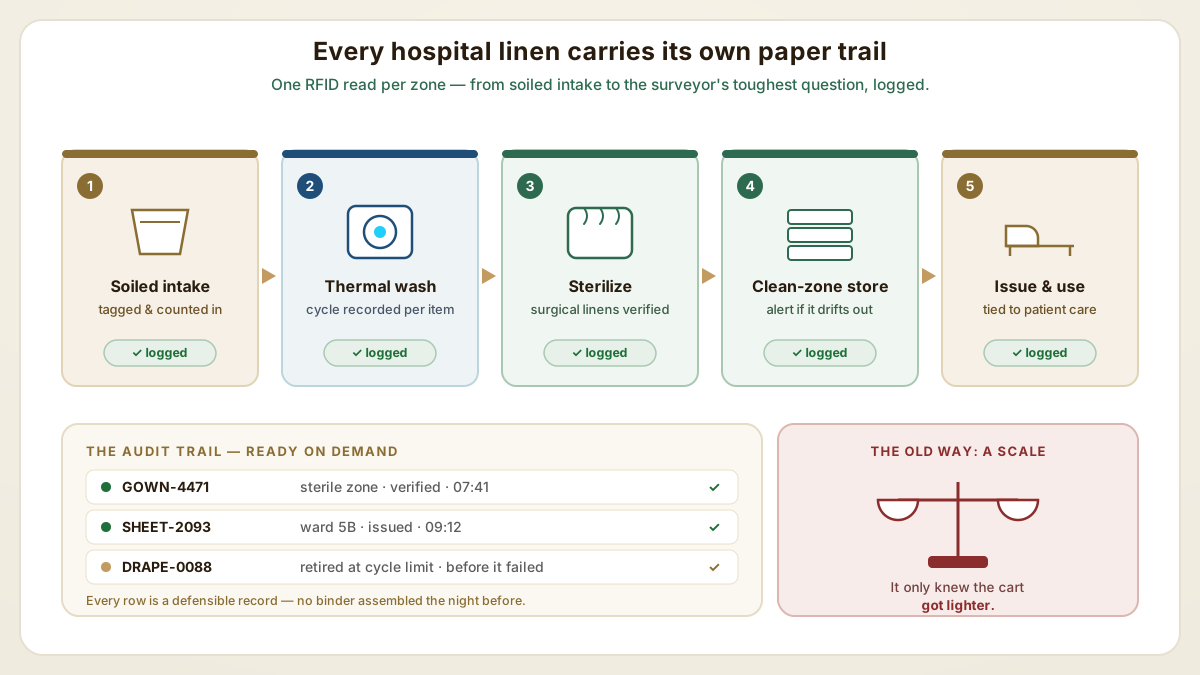
Hospital linen RFID tracks sterile linens through wash, sterilization, distribution and use — turning the loading-dock scale's rough guess into the per-item audit-trail evidence Joint Commission inspectors expect for infection-control compliance.
- Hospital linen loss runs 5-15% per year — for a 200-bed hospital with $1M annual linen spend, that's $50K-150K walking out the door as misrouted, stolen or simply unaccounted-for linens.
- Purpose-built linen RFID survives 200-500 industrial wash cycles (textile 200-300; PPS 300-500) plus autoclave or chemical sterilization — so the per-item lifecycle data Joint Commission audit teams ask for outlives the linen itself.
- One tag, two payoffs: per-linen wash-cycle counting retires fabric before it fails, and the same read log flags the moment a sterile linen wanders out of the clean zone.
At a glance
Use these short answers to decide whether this page matches the project before moving into the detail.
Key takeaway
Hospital linen loss runs 5-15% per year — for a 200-bed hospital with $1M annual linen spend, that's $50K-150K walking out the door as misrouted, stolen or simply unaccounted-for linens.
Why do hospitals need RFID for linen tracking?
A Joint Commission surveyor asks how you can prove a specific sterile gown was laundered to standard before it was issued. For decades the honest answer lived on a loadi...
Next step
Ready to move forward? Start your inquiry to get specific answers for this project.
Get hospital-linen RFID quoteWhy do hospitals need RFID for linen tracking?
A Joint Commission surveyor asks how you can prove a specific sterile gown was laundered to standard before it was issued. For decades the honest answer lived on a loading-dock scale: the cart weighed what it should, so presumably everything inside was fine. A scale, though, cannot tell you which sheet went missing or whether one gown skipped a cycle — it only knows the cart got lighter. Hospital linen tracking has historically been weight-based (weighed at intake, weighed at outtake). RFID trades that educated guess for per-item visibility, addressing infection control, inventory and audit needs in a single read.
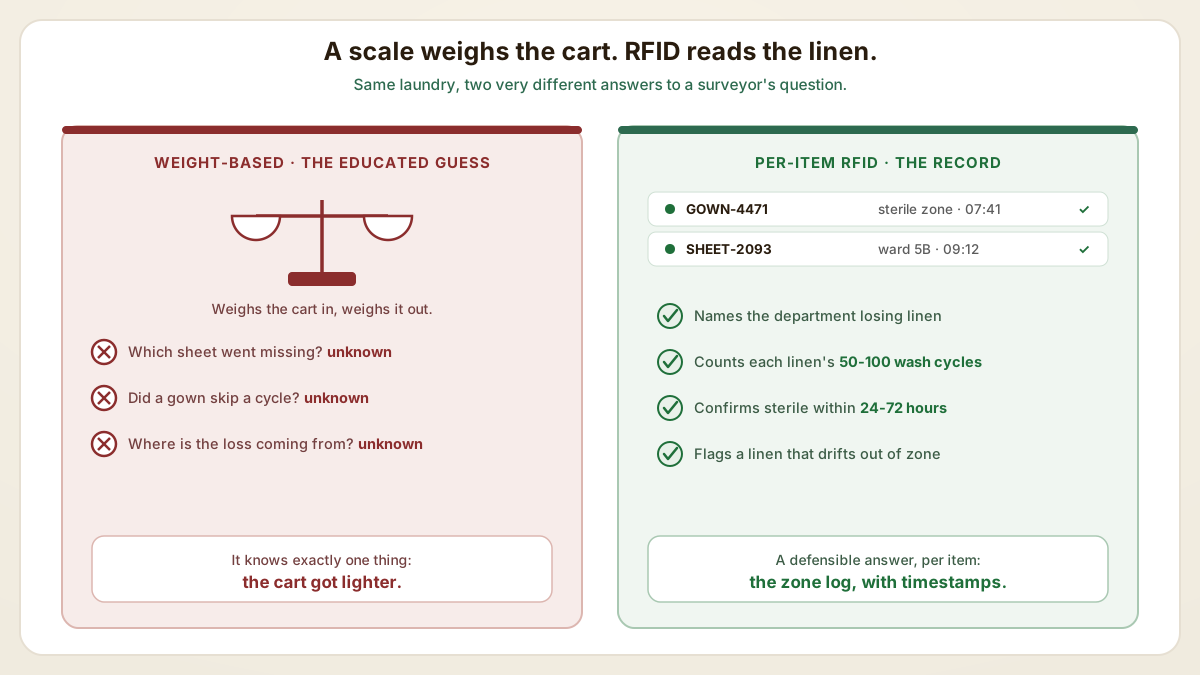
- Zone integrity, logged automatically: the Joint Commission infection-control standard requires linens leaving the sterile zone to stay in their certified-clean state. RFID timestamps every linen as it enters each zone — no clipboard required.
- Loss finally has an address: untracked linen disappears silently. RFID names the department, shift or laundry partner that's losing linen, so remediation is targeted instead of a shrug.
- Wash-cycle compliance: linen rated for 50-100 wash cycles must be retired before fabric failure becomes a patient-care problem. A per-linen cycle counter does the counting no human wants to do.
- Sterile verification on demand: surgical-grade linens must be re-verified as sterile before each procedure. RFID plus an autoclave reader confirms sterilization within the past 24-72 hours.
- Audit evidence without the paperwork: surveyors ask for proof that infection-control protocols were followed. A per-item RFID log is a defensible electronic record — not a binder assembled the night before.
What chip and tag work for hospital linen?
A retail hangtag lives a pampered life next to what hospital linen endures — chemical sterilization, autoclave heat for surgical pieces, and industrial wash cycles by the hundred. The tag has to outlast conditions engineered to sterilize everything else in the room, which is exactly why tag selection matters more here than in standard laundry.
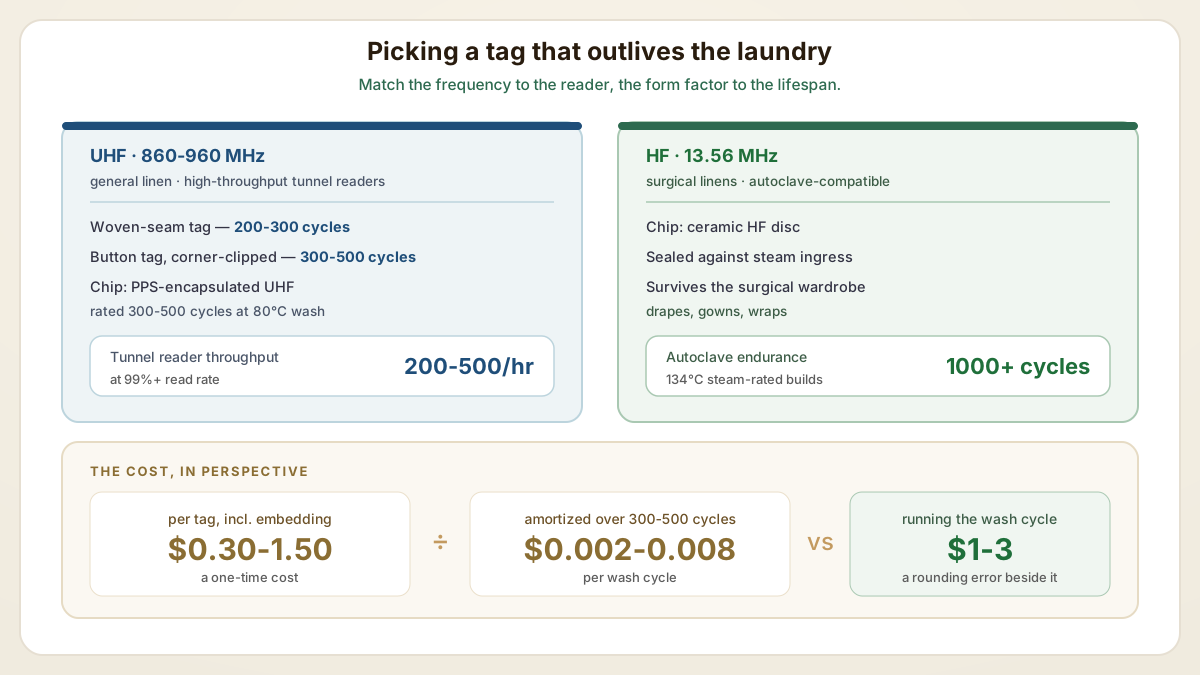
- Frequency follows the reader: UHF (860-960 MHz) for the high-throughput tunnel readers in commercial laundries; HF (13.56 MHz) for surgical linens that need autoclave compatibility.
- Form factor decides lifespan: a tag woven into linen seam rates 200-300 cycles sewn into the seam, while a PPS button clipped to the corner is easier to retrofit and rates 300-500 cycles — mind snag risk at corner placement.
- Chip by duty: PPS-encapsulated UHF for general linen (rated 300-500 cycles at 80°C wash); ceramic HF chips for autoclaved surgical linens (rated 1000+ autoclave cycles).
- Read environment: linen tunnel readers in industrial laundries clear 200-500 items/hour at 99%+ read rate. Hospital intake stations use fixed or handheld readers depending on volume.
- Cost, in perspective: $0.30-1.50 per tag including embedding. Amortized over 300-500 cycles that's $0.002-0.008 per cycle — a rounding error against the $1-3 it costs to run the wash cycle itself.
How do you implement linen RFID at a hospital?
Here's the wrinkle that sinks rollouts: the linen lives in two houses at once — the hospital's central supply department and the contracted laundry vendor's wash floor. Neither side fully controls the other, so coordination isn't a nicety, it's the whole game. The five-step playbook below comes from successful 2024-2026 deployments.
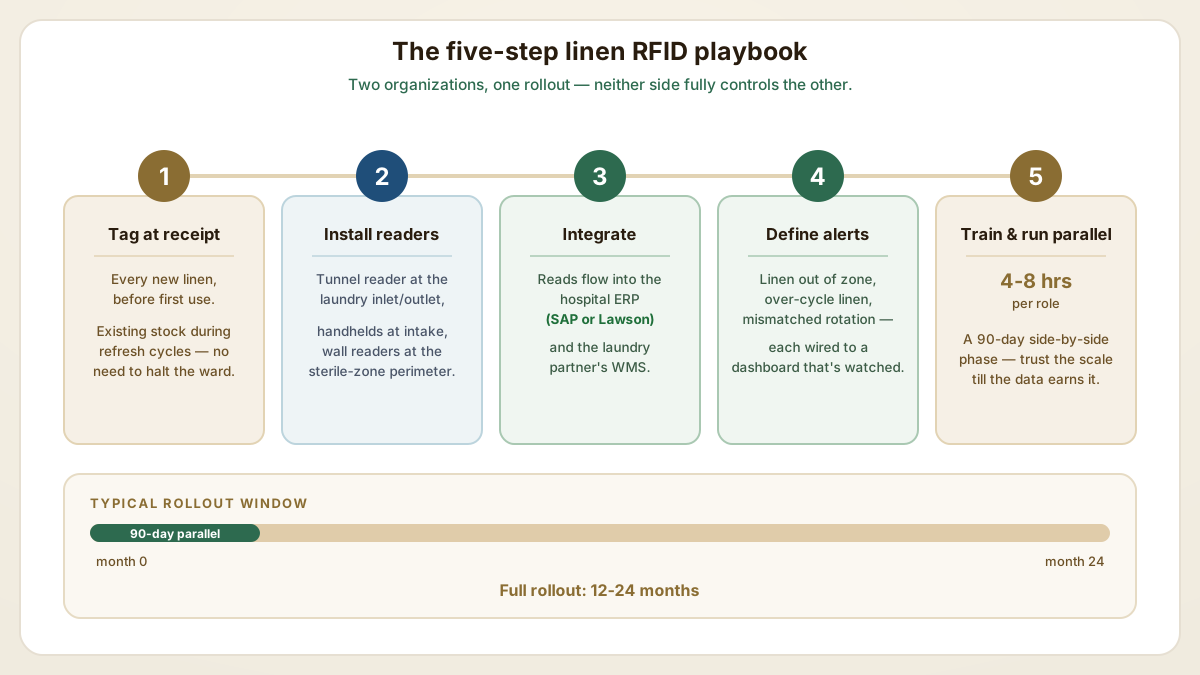
- Tag at receipt: every new linen gets a tag at first receipt, before first use. Existing inventory is tagged during scheduled refresh cycles over 12-24 months — no need to halt the ward to retrofit.
- Install reader infrastructure where linen changes hands: a tunnel reader at the laundry tunnel inlet/outlet, handheld readers at hospital intake/issue points, and wall-mounted readers at the sterile-zone perimeter.
- Integrate with the systems of record: RFID reads flow into the hospital ERP (typically SAP or Lawson) and the laundry partner's WMS, so linen data lands where staff already work.
- Define event types and alerts up front: linen out of zone, over-cycle linen, mismatched rotation — wire each to a dashboard the central-supply manager actually watches.
- Train central-supply and laundry staff: 4-8 hours per role. Most hospitals run a 90-day side-by-side phase before retiring legacy weight-based tracking — trusting the scale until the data earns its replacement.
Which compliance frameworks does the linen audit trail need to satisfy?
Few phrases empty a room like "compliance framework," yet hospital linen answers to several at once, and a surveyor may open on any of them. MEDtegrity's compliance overview, CORE Linen Services' regulatory primer and the AHE (Association for the Health Care Environment) guidelines keep pointing hospital linen programs at the same set of authorities. RFID's real value is having each framework's documentation ready before it is asked for.
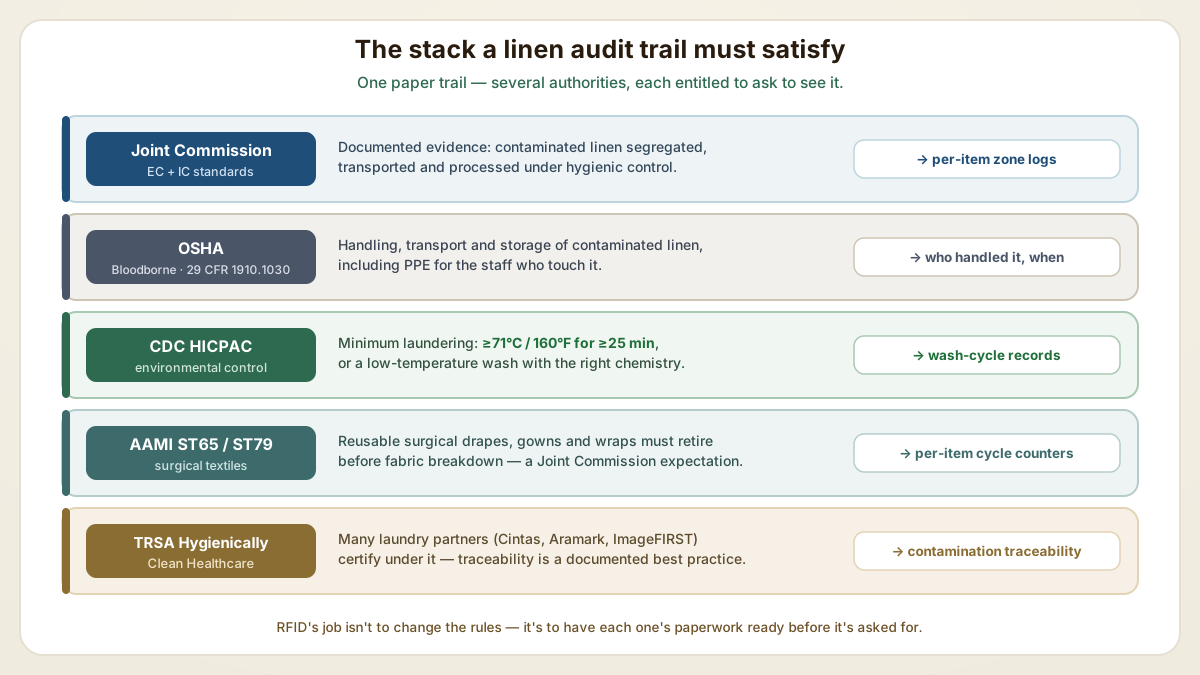
- Joint Commission Environment of Care (EC) and Infection Prevention (IC) standards: surveyors expect documented evidence that contaminated linens are segregated, transported in leak-resistant containers, and processed under controlled hygienic conditions. RFID per-item zone logs are that documented evidence — minus the manual paperwork.
- OSHA Bloodborne Pathogens Standard (29 CFR 1910.1030): regulates handling, transport and storage of contaminated linens, including PPE requirements for handling staff. RFID does not change the PPE requirement, but it records who handled which linen when — exactly what OSHA inspectors can request post-incident.
- CDC Healthcare Infection Control Practices Advisory Committee (HICPAC) Guidelines for Environmental Infection Control in Health-Care Facilities: define the minimum laundering bar (≥71°C / 160°F for at least 25 minutes, or a low-temperature wash with appropriate chemistry). RFID-linked wash-cycle records prove each linen actually passed through a compliant cycle.
- AAMI ST65 / ST79 (when surgical linens are involved): set reusable surgical-textile reprocessing expectations. Per-item cycle counters tied to RFID retire reusable surgical drapes, gowns and wraps before fabric breakdown — a documented Joint Commission expectation in any sterile-processing audit.
- TRSA Hygienically Clean Healthcare certification: many hospital laundry partners (Cintas, Aramark, ImageFIRST and HHS-affiliated providers) are certified under this program, and RFID-driven traceability of contamination events is a documented best-practice within it.
Vendor and laundry-partner selection — what to look for in 2026
Most hospital linen RFID programs do not run in-house — they live inside the contracted laundry partner's wash facility, with hospital intake and sterile-zone readers as the customer-side endpoints. So vendor selection quietly overlaps two RFPs at once — the laundry RFP and the RFID RFP — and the hospital signs for both. Across public vendor literature (Cintas, ImageFIRST, Aramark, plus published RFID-vendor material), five buyer questions reliably separate the vendors who can carry the program from those who cannot.
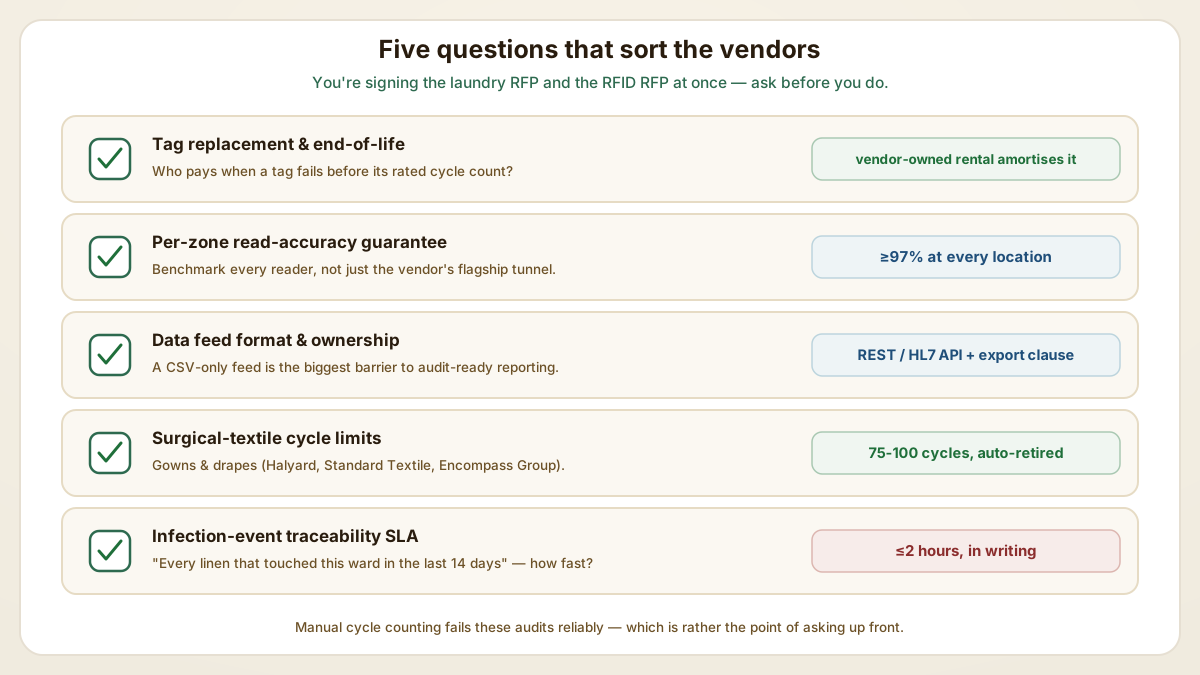
- Tag-replacement policy and end-of-life: who pays when a tag fails before its rated cycle count? The dominant 2025-2026 model is laundry-vendor-owned linen with the hospital paying a per-piece-per-day rental that already amortises tag replacement; hospital-owned linen models leave tag refresh on the hospital's capex budget.
- Per-zone read-accuracy guarantees: laundry tunnel readers commonly hit 99%+ at the wash facility, but sterile-zone perimeter and ward-issue handhelds vary widely. Require a documented site-survey read-rate benchmark (≥97% recommended) at every reader location, not just the vendor's flagship tunnel.
- Data feed format and ownership: per-item event data (received, washed, issued, returned, retired) needs to flow into the hospital's ERP / WMS / EHR-adjacent systems. Require API access (REST or HL7-compatible) plus a contractually owned data-export clause; legacy CSV-only feeds become the single largest barrier to Joint Commission audit-readiness reporting.
- Surgical-textile and barrier-product cycle limits: AAMI-rated reusable surgical gowns and drapes (Halyard, Standard Textile, Encompass Group lines) carry vendor-specified cycle limits, often 75-100 cycles. The RFID + laundry vendor must auto-retire at the cycle threshold and flag near-end-of-life pieces — manual cycle counting fails this audit reliably.
- Infection-event traceability SLA: when an infection cluster is identified, how fast can the laundry partner produce 'every linen that touched this ward in the last 14 days' from RFID logs? Industry-published material describes this as minutes vs days versus weight-based tracking; require an SLA of ≤2 hours for HAI investigation requests.
Useful next pages
Use these linked product, guide and comparison pages to keep the next click specific and practical.
Hospital linen RFID supply
Industrial-laundry RFID tags, autoclave-rated surgical linens and Joint Commission audit-ready dashboards.
Linen-program compliance authority references
Primary regulatory and industry sources cited during Joint Commission, OSHA and CDC linen-program audits.
FAQ
How does RFID linen tracking help with infection control?
Each linen's location and zone history is logged. If a contaminated linen is identified, RFID quickly reveals every other linen that shared its zone or wash cycle, enabling fast quarantine. Without RFID, the investigation can take days; with RFID, minutes.
Can RFID linen survive bleach and chemical sterilization?
Yes — purpose-built linen RFID tags survive 80-90°C wash cycles with industrial detergent and bleach for 300-500 cycles (PPS; woven textile 200-300). Surgical-grade autoclave-rated tags survive 134°C steam for 1000+ cycles. Always specify the actual cycle conditions when ordering tags.
Does RFID linen tracking integrate with our laundry vendor?
Most major US hospital laundry vendors (Cintas, Aramark, ImageFIRST, Healthcare Services Group) support RFID integration. Tag selection and reader installation usually negotiated as part of laundry contract; some vendors prefer their own tag standards.
What's typical payback period for hospital linen RFID?
12-24 months for a 200-bed hospital. Driven 60% by loss reduction (5-15% baseline → <2%) and 40% by labor savings (eliminated manual sorting and counting). Larger hospitals see faster payback due to volume. Multi-site systems often see faster payback than single-site because the laundry-vendor capex is amortised across more facilities.
Who owns the RFID data: the hospital or the laundry vendor?
By default, whoever installs the readers and writes the tags 'owns' the data unless a contract states otherwise. The recommended position is to negotiate hospital ownership with full read/export rights, even when tags are vendor-owned. Joint Commission, OSHA and CDC HICPAC inspections all interview the hospital — not the laundry vendor — so the hospital must be able to produce per-item event history without vendor delay.
How does linen RFID interact with surgical sponge / surgical drape RFID programs?
They are separate workflows. Surgical sponge counting uses HF RFID-tagged sponges that are FDA-cleared for in-vivo detection (Stryker SurgiCount, STERIS ORLocate). Reusable surgical drapes and gowns use industrial-laundry UHF or HF tags rated for autoclave (where applicable) plus chemical wash. The same hospital often runs both — typically through different vendors — and they share little infrastructure, though both feed the central infection-control reporting layer.
Proud Tek is a Shenzhen-based RFID & NFC manufacturer supplying hotel chains, transit operators, event venues and retail brands worldwide. Every order includes free samples, RF testing and dedicated project support.
Get a Quick Quote
Tell us about your project and we'll respond within one business day. Fields marked (asterisk) are required.