
Procurement
How to Choose Hotel Key Card Suppliers
Quick answer
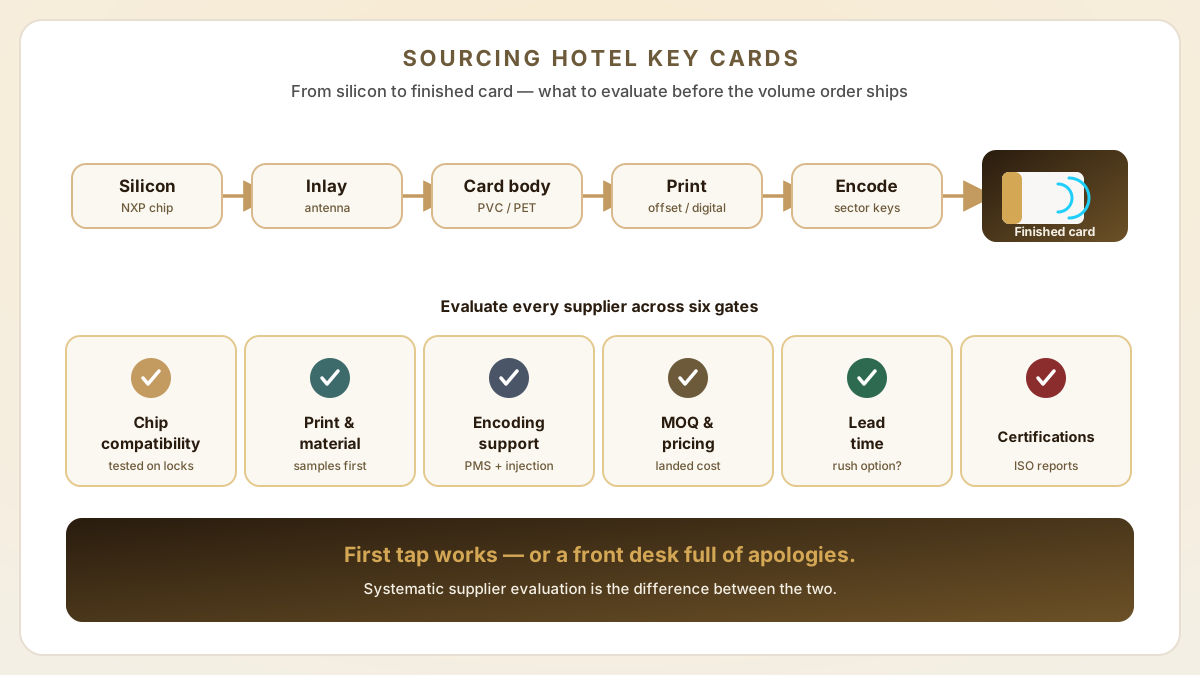
A procurement-team playbook for evaluating hotel key card suppliers. Typical MOQ is 1,000-5,000 units; standard lead time is 10-15 business days. It covers chip compatibility, print quality, encoding support, minimum order quantities and delivery reliability — the difference between cards that work on the first tap and a front desk full of apologies. Built to reduce risk and total cost of ownership.
- Chip compatibility testing before volume commitment prevents the most expensive procurement mistake in hotel RFID.
- Print quality and material grade drive guest perception. Request physical samples under real lighting conditions.
- Lead time, MOQ flexibility and logistics reliability matter as much as unit price for ongoing card programs.
At a glance
Use these short answers to decide whether this page matches the project before moving into the detail.
Key takeaway
Chip compatibility testing before volume commitment prevents the most expensive procurement mistake in hotel RFID.
Why supplier selection matters for hotel key cards
Somewhere right now, a front-desk clerk is apologizing to yet another guest while re-encoding a card that should have just worked. The cards were cheap, the supplier was...
Next step
Ready to move forward? Start your inquiry to get specific answers for this project.
Get supplier comparison samplesWhy supplier selection matters for hotel key cards
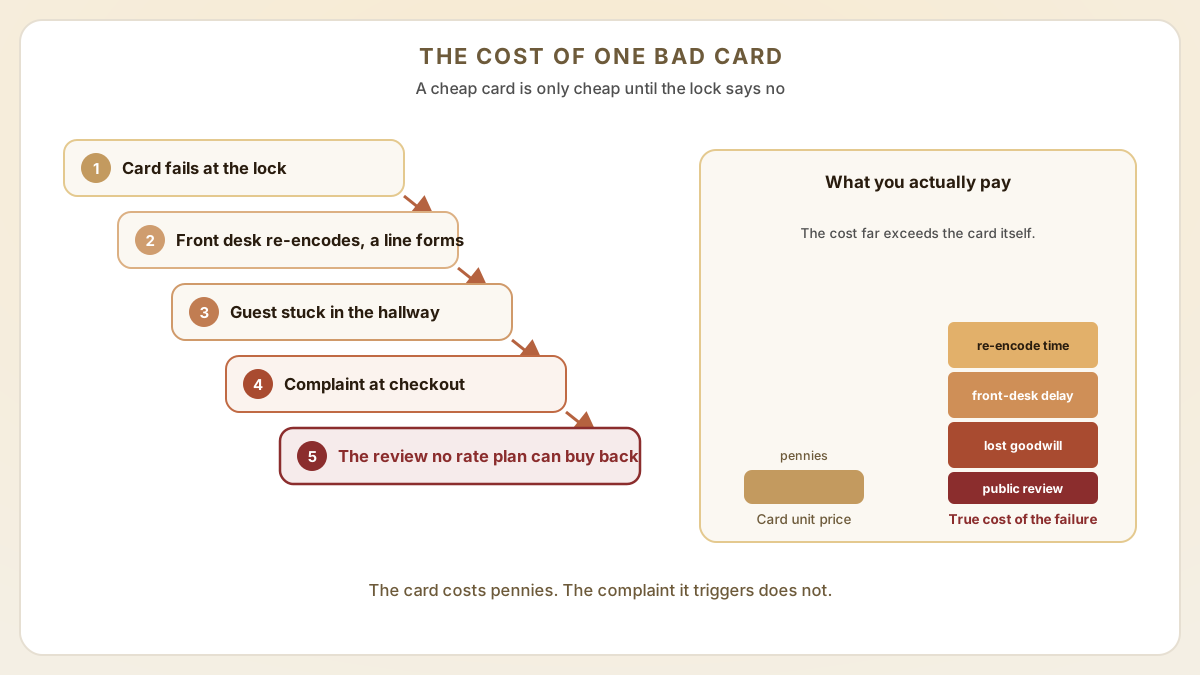
Somewhere right now, a front-desk clerk is apologizing to yet another guest while re-encoding a card that should have just worked. The cards were cheap, the supplier was responsive, and nobody thought to test them on the upper-floor locks before the volume order shipped — the kind of sourcing decision that looks fine on a spreadsheet and surfaces as a guest complaint weeks later. Hotel key cards are a high-volume consumable with direct guest-facing impact. A poor supplier choice results in cards that fail at the lock, fade within weeks, or arrive late during peak season. Systematic supplier evaluation reduces these risks.
Unlike generic PVC card purchases, hotel key cards involve RFID chip selection, lock-system encoding compatibility and brand-standard print requirements. A supplier that excels at blank access cards may lack the print capability or chip sourcing for a branded hotel program. Evaluation criteria must cover the full specification chain from silicon to finished card.
- Card failure at the lock causes guest complaints, front-desk delays and negative reviews — a guest stuck in a hallway, unable to get into their own room, writes the review no rate plan can buy back. The cost far exceeds the card itself.
- Suppliers with hotel-specific experience understand PMS encoder integration, chip sector configuration and lock vendor requirements.
- Dual-sourcing from a primary and backup supplier protects against supply chain disruption, especially for properties consuming 100,000+ cards per year.
How do chip compatibility and encoding capability work?
Ask a hotel-card supplier which chip your locks need. The good ones answer before you finish the question; the rest ask you to email the spec sheet 'so they can check.' That small pause is the whole evaluation in miniature. The first filter is simply whether the supplier can source and correctly configure the exact chip family your lock system requires.
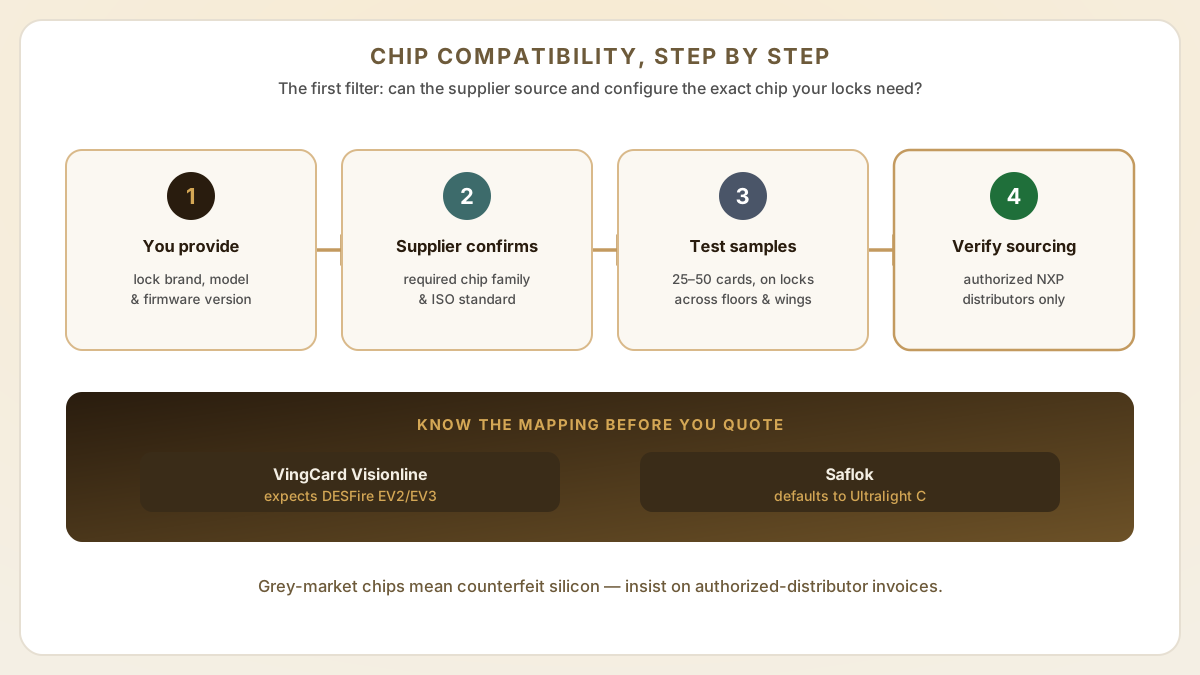
- Hand over your lock brand, model and firmware version up front. A credible supplier confirms the required chip and ISO standard before quoting — not after the cards ship.
- Request a 25-50 card sample set and test on locks across multiple floors and building wings. RF performance varies with antenna tuning — the card that taps cleanly at the front desk can still sulk on an upper floor.
- Ask whether the supplier offers pre-encoding services or sector-key injection during manufacturing, which can reduce front-desk setup time.
- Verify that the supplier sources chips from authorized NXP distributors. Grey-market chips may have inconsistent memory configuration or counterfeit silicon.
- For properties using multiple chip families, confirm the supplier can handle mixed-chip orders without minimum-per-chip-type surcharges.
How do print quality and material evaluation work?
A guest forms an opinion of your brand in the few seconds between the front desk and the elevator, card in hand — and the key card is the only part of that moment you can actually hold. Print quality, color accuracy and material feel communicate brand standards before the guest ever reaches the room.
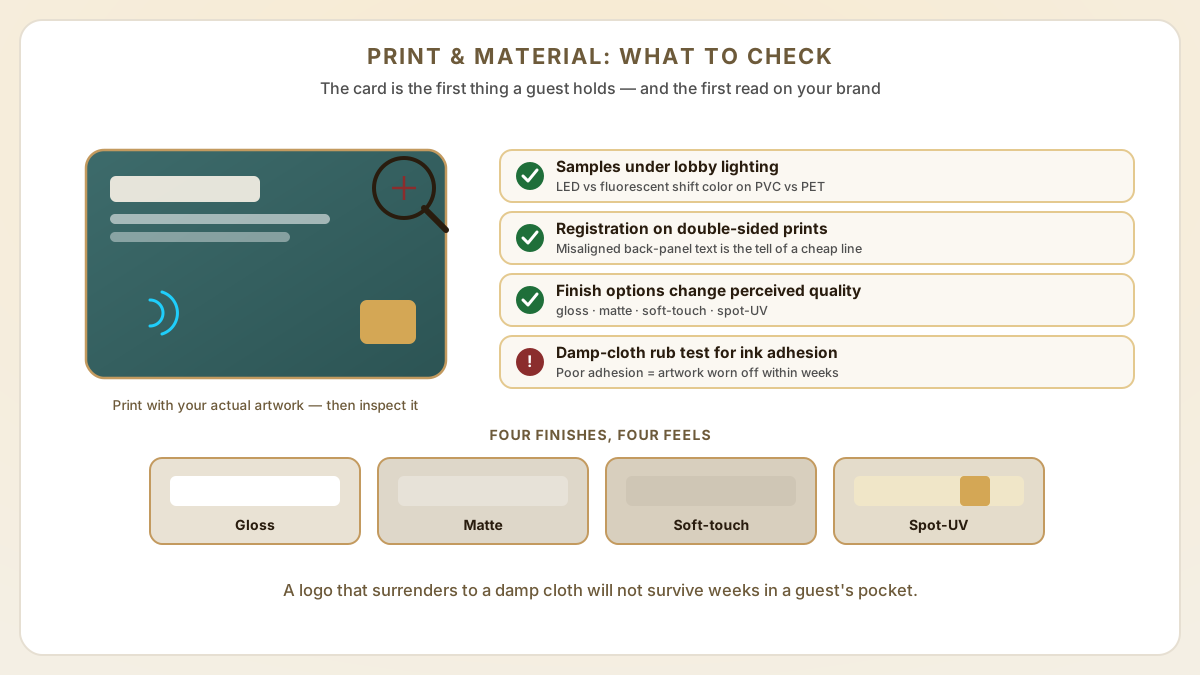
- Request printed samples using your actual artwork files and evaluate under lobby lighting. LED and fluorescent light change how colors render on PVC versus PET substrates.
- Check for registration accuracy on double-sided prints. Misaligned back-panel text is a common defect on lower-cost production lines.
- Evaluate surface finish options: gloss, matte, soft-touch and spot-UV each affect perceived quality and fingerprint visibility.
- Ask about ink adhesion testing, then run it yourself: rub the printed surface firmly with a damp cloth. A logo that surrenders to a damp cloth will not survive weeks of guest handling.
| Evaluation Criterion | What to Check | Red Flag |
|---|---|---|
| Chip compatibility | Sample cards tested on actual locks | Supplier cannot name your lock's chip requirement |
| Print quality | Color accuracy under lobby lighting, registration alignment | No physical sample available before order |
| Encoding support | PMS integration, sector-key injection, encoder compatibility | Supplier unfamiliar with your PMS brand |
| MOQ and pricing | Per-unit cost at 5K, 10K, 50K tiers; setup fees | No tiered pricing or hidden tooling charges |
| Lead time | Standard and rush production timelines with shipping | Vague delivery estimates or no rush option |
| Quality certifications | ISO 9001, ISO 14443 compliance testing | No third-party test reports available |
What MOQ, pricing and logistics terms apply?
The cheapest per-card quote and the cheapest card program are rarely the same supplier. Unit price is only one component of total procurement cost; minimum order quantities, setup fees, shipping terms and inventory management services all decide the true cost per card delivered to the front desk.
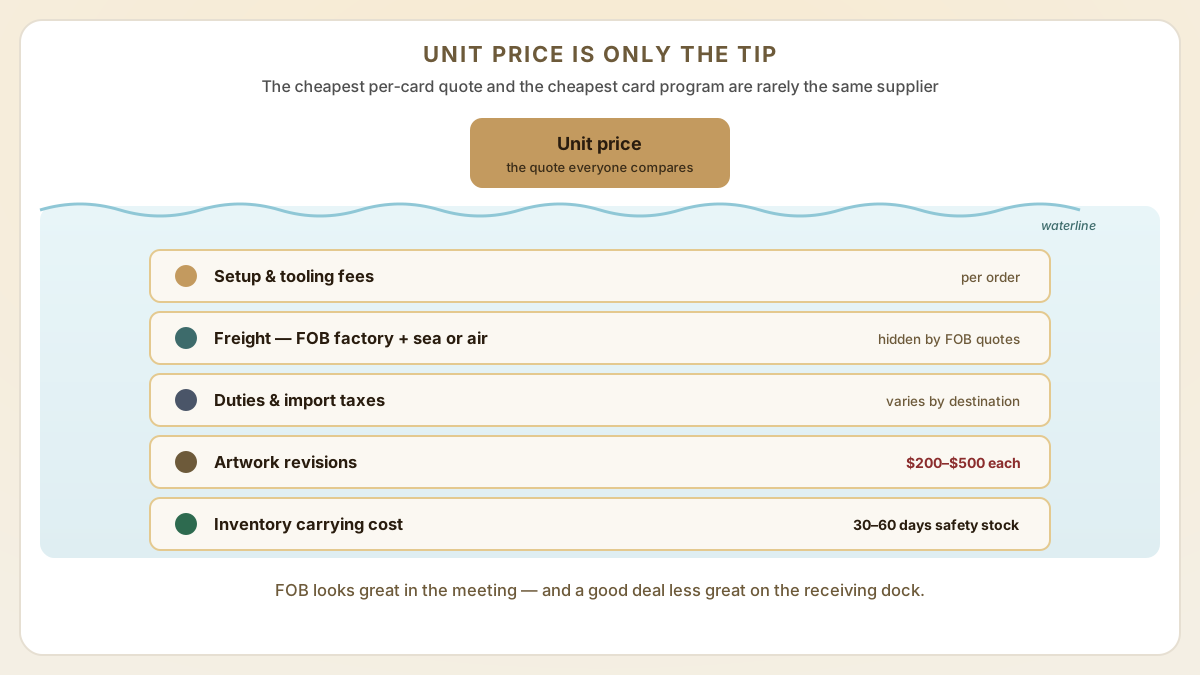
- Standard MOQ for custom-printed RFID hotel cards is typically 1,000-5,000 units. Suppliers offering sub-500 MOQs may charge higher per-unit premiums or setup fees.
- Request landed-cost quotes that include shipping, duties and any import taxes. FOB factory pricing is the quote that looks great in the meeting and a good deal less great on the receiving dock — it hides significant logistics cost for overseas suppliers.
- Ask about blanket purchase agreements: commit to annual volume in exchange for fixed pricing and staggered monthly shipments to reduce storage and cash-flow burden.
- Evaluate the supplier's buffer-stock or consignment program. Some manufacturers hold 30-60 days of safety stock at a regional warehouse for fast replenishment.
- Factor in artwork revision charges. Hotel brands refresh key card designs 1-2 times per year, and plate or screen charges can add $200-$500 per revision.
How do you build a supplier scorecard?
Gut feel is a fine way to choose a lunch spot and a poor way to choose a supplier you will trust with a year of card volume. A structured scorecard removes subjectivity from supplier comparison and gives procurement audits and brand-standard compliance reviews something concrete to point at.
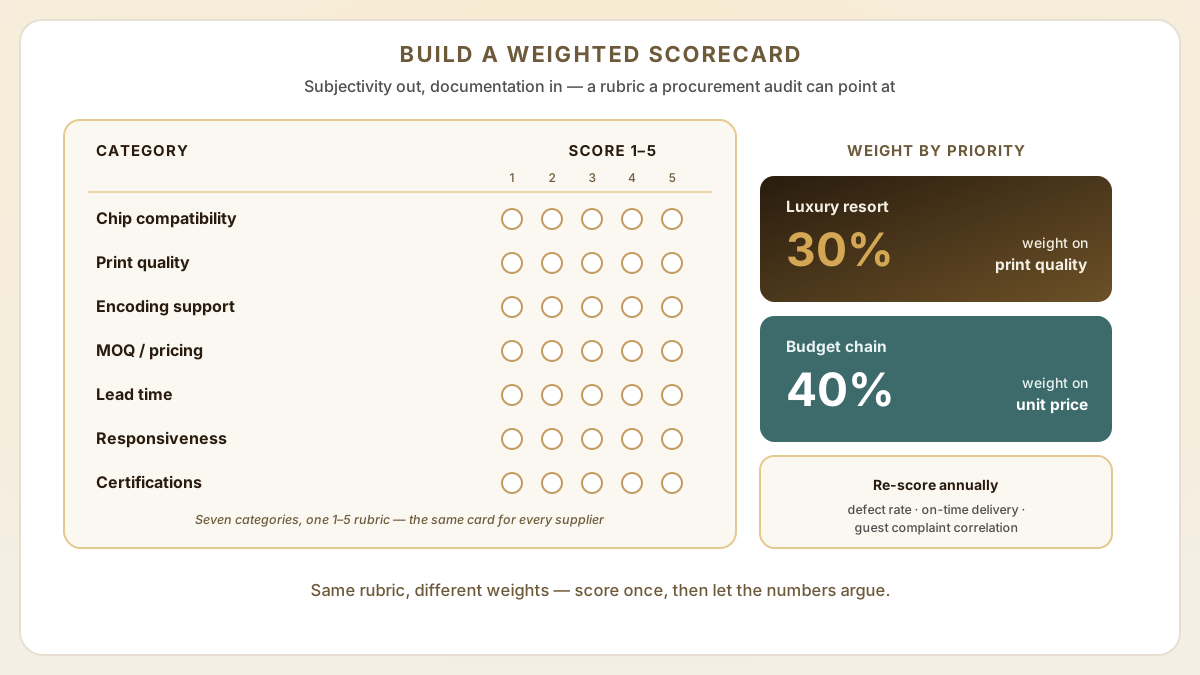
- Score each supplier on a 1-5 scale across categories: chip compatibility, print quality, encoding support, MOQ/pricing, lead time, communication responsiveness and quality certifications.
- Weight categories by your property's priorities. A luxury resort may weight print quality at 30 percent while a budget chain weights unit price at 40 percent.
- Re-evaluate annually using defect rate data, on-time delivery percentage and guest complaint correlation.
- Include a site-audit or virtual-factory-tour requirement for any supplier handling more than $50,000 in annual card volume.
- Track three lagging metrics post-deployment: first-pass encoding yield, lock-side read failure rate, and guest 'room access' NPS sub-score. A supplier whose cards drag any of these by more than 1 standard deviation versus your other supplier should drop a tier in next year's scorecard.
Trading company vs direct factory: how to tell which one is quoting you
Almost everyone who emails you will call themselves 'the factory.' Most of them are not. 70% of suppliers contacting hotel procurement on Alibaba and Made-in-China are trading companies, not the actual factory. Trading companies aggregate orders from multiple factories, mark up 8-15%, and lose accountability when quality slips — there is always an upstream factory to blame. Hotels that buy direct from a factory get cleaner accountability, lower TCO and faster issue resolution — but only if procurement can spot the difference at the RFP stage.
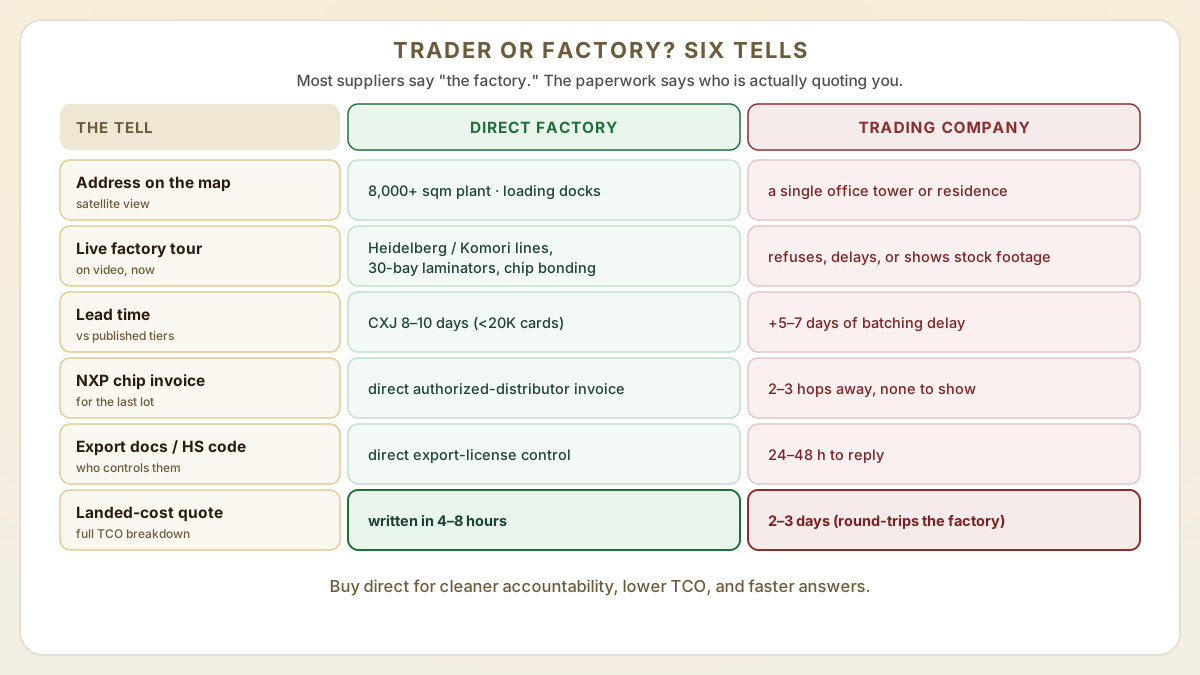
- Ask for the factory address, then map it on a satellite-image platform. A real card factory has visible plant infrastructure (8,000+ sqm building, loading docks, smokestacks). A trading company shows a single office tower or a residential building.
- Request a live video factory tour. A factory will show you offset-print lines (Heidelberg, Komori), card-laminator presses (typically 30-bay carrier-tape lines), and chip-bonding stations. A trader will refuse, delay, or show you generic stock footage that also turns up on other suppliers' sites.
- Compare lead times against published factory tiers: CXJ Card Factory publishes 8-10 days for <20K cards, 12-15 days for 20K-50K, samples 6-7 days. A trader's quoted timeline is the factory's plus the trader's batching delay (often +5-7 days). If a 'factory' quotes 25-day lead time on a 5,000-card order, they are buying from a real factory and adding handling.
- Ask for the factory's NXP authorized distributor invoice for the last chip lot. A real card factory has a direct relationship with NXP-authorized distributors (Chip 1 Exchange, Cardinal, NXP themselves); a trader buys chips through 2-3 hops and cannot produce the original invoice.
- Ask whether they can amend the export packing list and HS code on the commercial invoice. A factory has direct export-license control; a trader has to ask the factory and may take 24-48 hours to reply.
- TCO test: request a landed cost quote that includes per-unit price, freight (FOB Shenzhen + sea freight), customs duty (HS 8523.52 = 0% under USMCA, varies by destination), and any rework/RMA cost basis. A factory writes this in 4-8 hours; a trader's reply takes 2-3 days because they have to round-trip with the factory.
Red flags that should disqualify a hotel keycard supplier
Some suppliers disqualify themselves before the first sales call is over; the only trick is noticing before you have already mailed them your artwork. Most procurement teams never get to a scorecard because they skip the disqualification gate first. These five signals reliably predict downstream defects and should remove a supplier from the shortlist before you spend a week chasing samples.
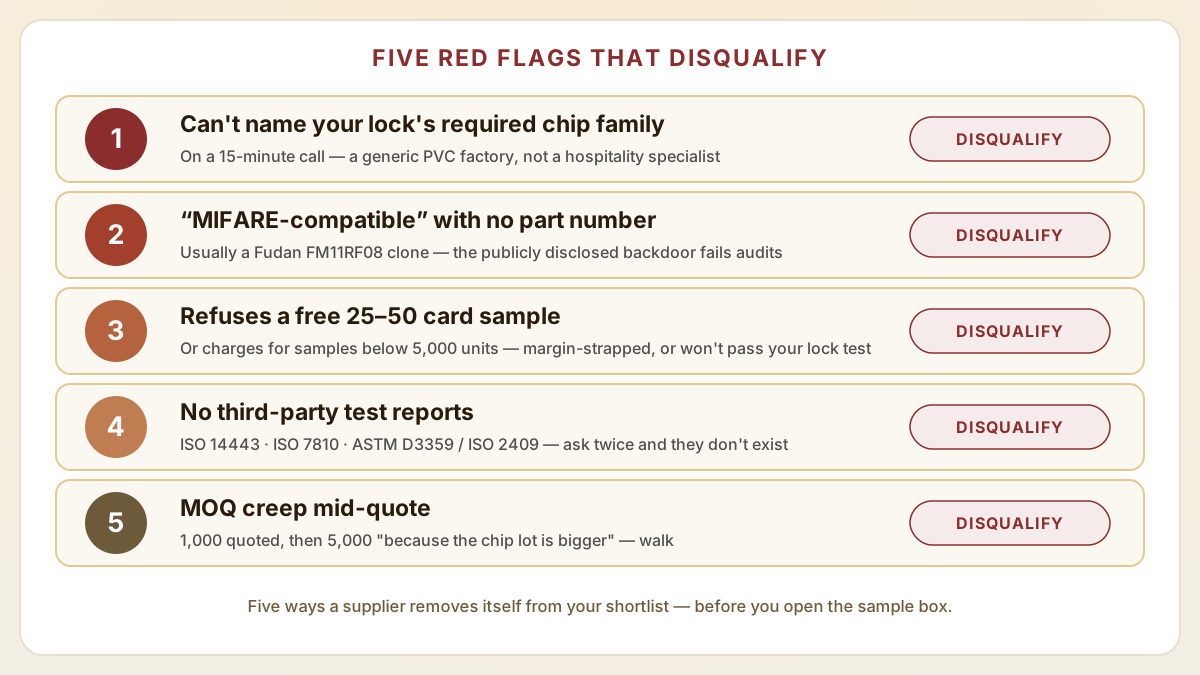
- Cannot name your lock model's required chip family on a 15-minute sales call: a credible hotel-card supplier knows that VingCard Visionline expects DESFire EV2/EV3 and Saflok defaults to Ultralight C. If the salesperson asks you to email the spec because they need to check, they are a generic PVC card factory, not a hospitality specialist.
- Quotes 'MIFARE-compatible' or 'Classic-equivalent' instead of NXP MIFARE Classic 1K with a part number: 'compatible' usually means a Fudan FM11RF08 or FM11RF08S clone, which carries the publicly disclosed backdoor and fails brand security audits. Insist on NXP-authorized distributor invoices for every shipment.
- Refuses to send a 25-50 card sample at no cost, or charges for samples on orders below 5,000 units: the cost of supplier-borne samples is rounding error against the cost of a wrong-chip mistake. Suppliers who refuse samples are either margin-strapped (and will cut other corners) or know their cards will not pass your lock-compatibility test.
- No third-party test reports for ISO 14443, ISO 7810 dimensional, or ink-adhesion (ASTM D3359 / ISO 2409): credible suppliers carry these reports in their sales pack and email them within 24 hours. If you have to ask twice, the reports either don't exist or were generated for a different chip lot.
- MOQ creep mid-quote: a supplier who quoted 1,000 MOQ at first contact then escalates to 5,000 'because the chip lot is bigger now' is testing your discipline. Walk. Smaller MOQs at fair pricing are available — Proud Tek and several reputable factories quote sub-1,000 unit print runs without setup-fee gotchas.
Useful next pages
Use these linked product, guide and comparison pages to keep the next click specific and practical.
Hotel key card products
Explore card formats, chip options and print finishes for hotel deployments.
Printed RFID cards
Custom-printed RFID cards with full-color offset and digital print options.
Sourcing references
Lead-time benchmarks and procurement-risk frameworks we used.
Procurement resources
Comparison tools and solution pages to support your supplier evaluation.
FAQ
What is a reasonable MOQ for hotel key card orders?
For custom-printed RFID hotel cards, 1,000-5,000 units is the standard MOQ at most manufacturers. Blank (unprinted) RFID cards may be available in quantities as low as 200-500. If your property needs fewer than 1,000 branded cards, look for suppliers that offer digital printing with lower setup costs instead of offset.
How do I verify that a supplier uses genuine NXP chips?
Request the NXP chip certificate of authenticity or authorized distributor invoice for the chip lot. You can also verify the chip by tapping a sample card with an NFC phone app like NFC TagInfo. It displays the chip manufacturer, product type and unique identifier, which can be cross-referenced against NXP's published product families.
Should I single-source or dual-source hotel key cards?
Properties consuming over 100,000 cards per year should dual-source to protect against supply chain disruption. Maintain a primary supplier for 70-80 percent of volume and qualify a secondary supplier for the remainder. Both suppliers must pass the same compatibility and print-quality tests.
What lead time should I expect for a standard hotel card order?
Standard production lead time is 10-15 business days for PVC RFID cards with custom printing. Add 5-10 days for international shipping by sea or 3-5 days for air freight. Rush production (5-7 days) is available from most suppliers at a 15-25 percent surcharge. Always place orders 4-6 weeks before anticipated need to account for customs and logistics delays.
How do I evaluate print durability before committing to a supplier?
Request 10-20 printed samples and simulate real-world use: rub the surface with a damp cloth 50 times, bend the card 90 degrees repeatedly, and leave one card in a wallet pocket for two weeks. Check for color fading, ink flaking, surface scratches and lamination peeling. A quality card should show minimal wear after these tests.
Which hotel keycard suppliers are vendor-authorized for ASSA ABLOY, dormakaba and Salto?
Each lock vendor maintains an approved-vendor list. PLI Cards is an ASSA ABLOY authorized vendor for VingCard, dormakaba, MIWA, Onity and SALTO. RFID Hotel is an HSM-approved vendor with branded card programs licensed by Marriott, Hilton, IHG, Hyatt and other parent corporations. Independent factories like Proud Tek can produce the same NXP chip stock and lock-compatible encoding without the brand-license premium — verify by sending the supplier a current guest card to identify the chip and key configuration. For brand-mandated programs (Marriott Bonvoy-branded cards, etc.), only the brand-licensed vendors are eligible regardless of card quality.
Should we negotiate penalty-backed lead times on hotel keycard supply contracts?
Yes for any property consuming over 50,000 cards per year. A penalty-backed clause typically reads: '5% credit on the order value per week of late delivery beyond the agreed ship date, capped at 25%, with right to cancel after 6 weeks.' Suppliers who refuse to sign this clause should be downgraded — they are flagging that on-time delivery is not within their operational control. Suppliers who accept it are signalling factory ownership of the production line and inventory of NXP chips. Pair the penalty clause with a 30/70 deposit structure (30% on PO, 70% on B/L) to keep your cash exposure modest while binding the supplier to schedule.
What is the true total cost of ownership of a hotel keycard program?
Procurement teams that optimize only the 35% unit cost line miss the other 65%. TCO at a typical 200-room property breaks down roughly: 35% chip + card body + printing, 18% encoding labor (front-desk minutes), 12% logistics (freight + customs), 10% inventory carrying cost (cash tied up in 60-90 day safety stock), 8% defective/RMA write-offs, 7% reissuance from lost cards, 5% encoder hardware amortization, 3% supplier qualification and audit cost, 2% disposal/end-of-life handling. The biggest wins usually come from cutting RMA rate (better supplier QC) and inventory carrying cost (vendor-managed inventory or consignment stock at a regional warehouse).
How should we evaluate suppliers offering wooden, bamboo or other sustainable materials?
Five must-haves before placing a wooden-card order. (1) FSC certification of the wood source, with the chain-of-custody certificate number — not just an FSC-styled logo. (2) An RF performance test report on the actual wood-laminate stack, since wood thickness and grain affect 13.56 MHz tuning and a generic PVC antenna design will under-read. (3) End-of-life path documentation: untreated wood is compostable, but wood with NFC adhesive and varnish is not — the supplier should explain disposal. (4) MOQ and lead time: typical wooden-card MOQ is 1,000-2,000 units with 4-6 week lead time, longer than PVC. (5) Production capacity if you scale: niche eco-suppliers max out at 50K-100K cards/month; for a 500-room property you may need a hybrid supplier strategy.
Proud Tek is a Shenzhen-based RFID & NFC manufacturer supplying hotel chains, transit operators, event venues and retail brands worldwide. Every order includes free samples, RF testing and dedicated project support.
Get a Quick Quote
Tell us about your project and we'll respond within one business day. Fields marked (asterisk) are required.