
Hotel Key Card Costs
Hotel Key Card Cost Comparison by Technology
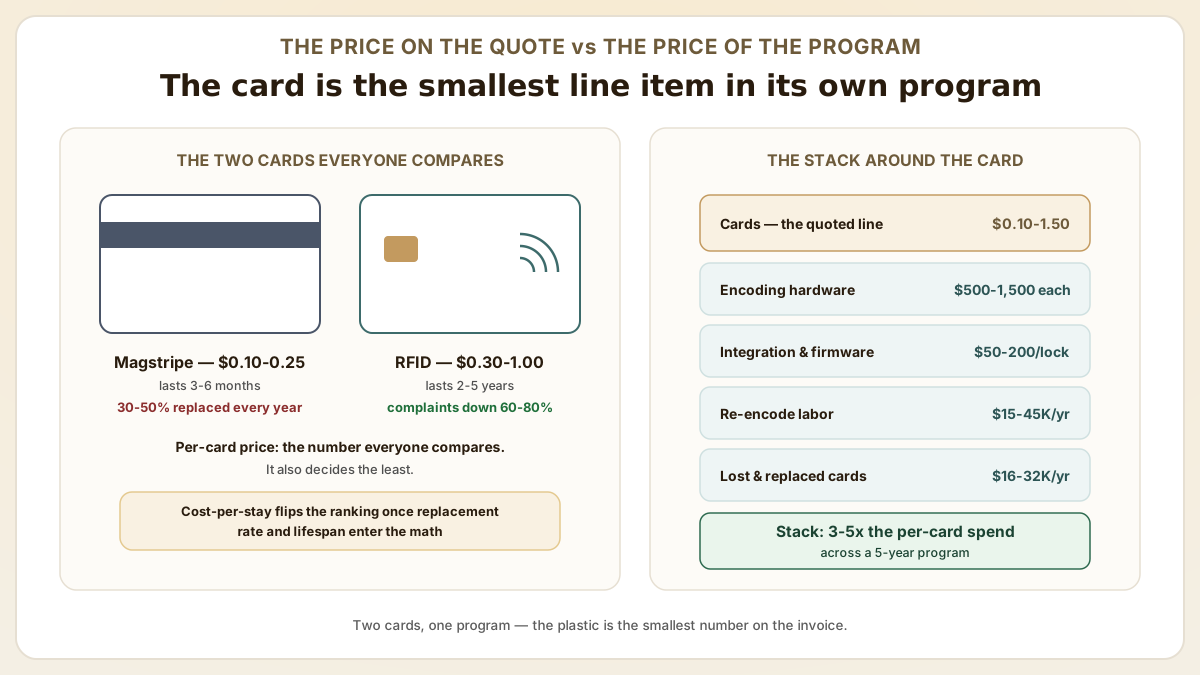
Quick answer
Magstripe hotel key cards cost $0.10-0.25, RFID $0.30-1.00 — and the full cost stack runs 3-5x the per-card price over a 5-year program. This comparison prices procurement by technology — cards, encoders, re-encode labor, replacement rates, lock compatibility — plus the midnight guest the quote never mentions.
- Magstripe cards: $0.10-0.25 per card. Lowest unit cost but highest replacement rate — magnetic stripe cards degrade after 3-6 months and demagnetize from phone proximity, driving 30-50% annual replacement rates. The cheap card is the one you keep re-buying.
- RFID key cards: $0.30-1.00 per card. Higher upfront cost but 2-5 year lifespan. RFID cards are immune to demagnetization, reducing guest complaints and replacement costs by 60-80%.
- True cost-per-stay favors RFID. When factoring in card lifespan, replacement rate and guest satisfaction, RFID key cards often cost less per guest stay than magstripe alternatives.
At a glance
Use these short answers to decide whether this page matches the project before moving into the detail.
Key takeaway
Magstripe cards: $0.10-0.25 per card. Lowest unit cost but highest replacement rate — magnetic stripe cards degrade after 3-6 months and demagnetize from phone proximity, driving 30-50% annual replacement rates. The cheap card is the one you keep re-buying.
What does the full cost stack of a hotel keycard program look like?
Every [hotel keycard](/solutions/hotel-key-cards/) program eventually meets the same guest: front desk, near midnight, room key dead for the third time, having spent the...
Next step
Ready to move forward? Start your inquiry to get specific answers for this project.
Order hotel RFID key cardsWhat does the full cost stack of a hotel keycard program look like?
Every hotel keycard program eventually meets the same guest: front desk, near midnight, room key dead for the third time, having spent the evening in the same pocket as a phone. The card in their hand is the cheap part of that moment; the clerk re-encoding it is not. That gap — between the price on the quote and the cost of everything around it — is the whole subject of this page. The per-unit number procurement teams budget from is the smallest line in the program: hardware, integration, labor, security and lifecycle costs together typically run 3-5x the per-card unit price across a 5-year program. The receipt below itemizes all six lines; only the first one ever appears on a supplier quote.
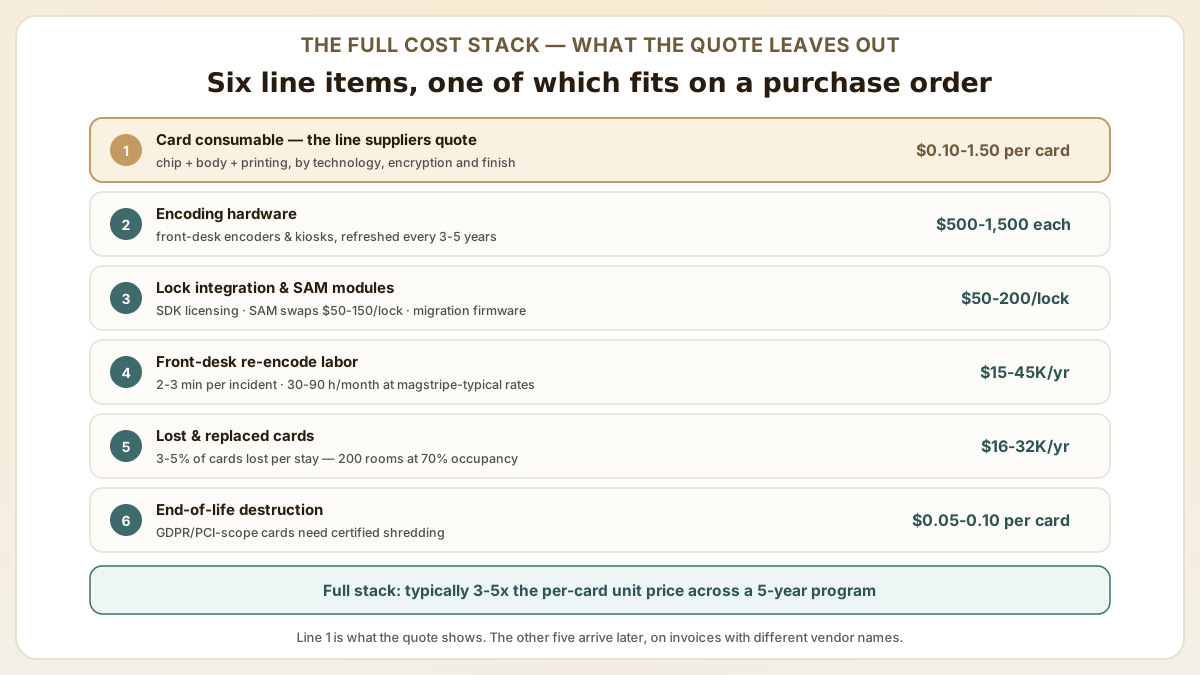
- Card consumable (per-unit chip + body + printing): $0.10-1.50 per card depending on technology, encryption and finish. This is what suppliers quote and what most procurement decisions over-index on.
- Encoding hardware (front-desk encoders, kiosks, network encoders): $500-1,500 per encoder, refreshed every 3-5 years. A 200-room property with 4 desks plans for $4-6K per decade just on encoder hardware.
- Lock-vendor integration and SAM modules: PMS-to-lock SDK licensing, SAM module replacement at lock-vendor cost ($50-150/lock), firmware updates billed at $50-200/lock for major chip migrations.
- Front-desk labor on re-encoding: 2-3 minutes per incident, multiplied by your re-encode rate. At magstripe-typical 15-25% re-encode rates, a 200-room property at 70% occupancy spends 30-90 hours/month of front-desk capacity on key issues alone — equivalent to $15-45K/year in fully-loaded labor.
- Lost-and-replaced cards: average 3-5% of cards lost per stay. At a 200-room property with 70% occupancy, that's $16-32K/year in replacement consumable cost.
- End-of-life handling: cards encoded with guest data may be in GDPR/PCI scope for retention/destruction; certified-shred services run $0.05-0.10 per destroyed card. Cards handled informally create audit risk that brand security teams increasingly track.
How do per-unit costs compare by technology?
Per-card prices run from $0.10-0.25 for magstripe to $0.80-1.50 for banking-grade DESFire EV3, and each step up buys durability or security rather than nicer printing. The ladder below puts all five technologies on one price axis. Note which one is priced like a consumable and wears like one — the cheapest card is the only one whose useful life is measured in months.
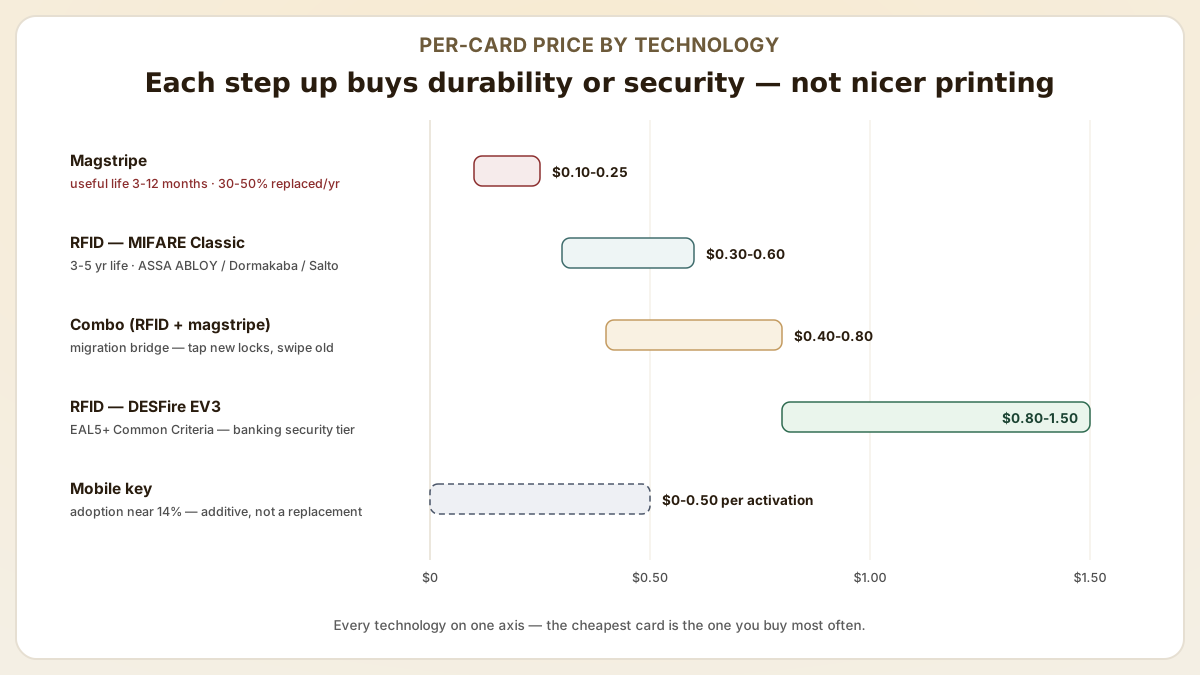
- Magnetic stripe cards: $0.10-0.25 per card with full-color printing. HiCo (high coercivity, 2750 Oe) magstripe cards last longer than LoCo (300 Oe) but still degrade from repeated swiping, phone magnets and wallet friction. Average useful life: 3-12 months.
- RFID contactless cards (MIFARE Classic). $0.30-0.60 per card. No moving parts or exposed magnetic media means cards survive 3-5 years of regular use. Compatible with contactless lock systems from ASSA ABLOY, Dormakaba, Salto and others.
- RFID cards (DESFire EV3). $0.80-1.50 per card. Premium encrypted cards with EAL5+ Common Criteria certification — same security tier as banking cards. Used by luxury hotels, casinos and properties planning Apple/Google Wallet mobile-key rollouts.
- Combo cards (RFID + magstripe). $0.40-0.80 per card. Dual-technology cards for properties transitioning from magstripe to RFID. Guests can use the RFID tap on upgraded locks while the magstripe remains functional on legacy doors.
- Mobile key (phone-based). $0-0.50 per activation depending on the lock system vendor's licensing model. Eliminates physical card cost but requires compatible lock hardware and guest app or wallet adoption (industry-wide adoption sits near 14%; physical cards remain default for ~86% of stays).
How do you analyze total cost of ownership?
Keycard TCO turns on four levers — replacement rate, front-desk labor, programming reliability and lock maintenance — and per-card price is not one of them. The spread below is the one to remember: magstripe fleets get replaced at 30-50% a year, RFID at 5-15%, and every point of that gap is a guest standing at the desk instead of being in their room.
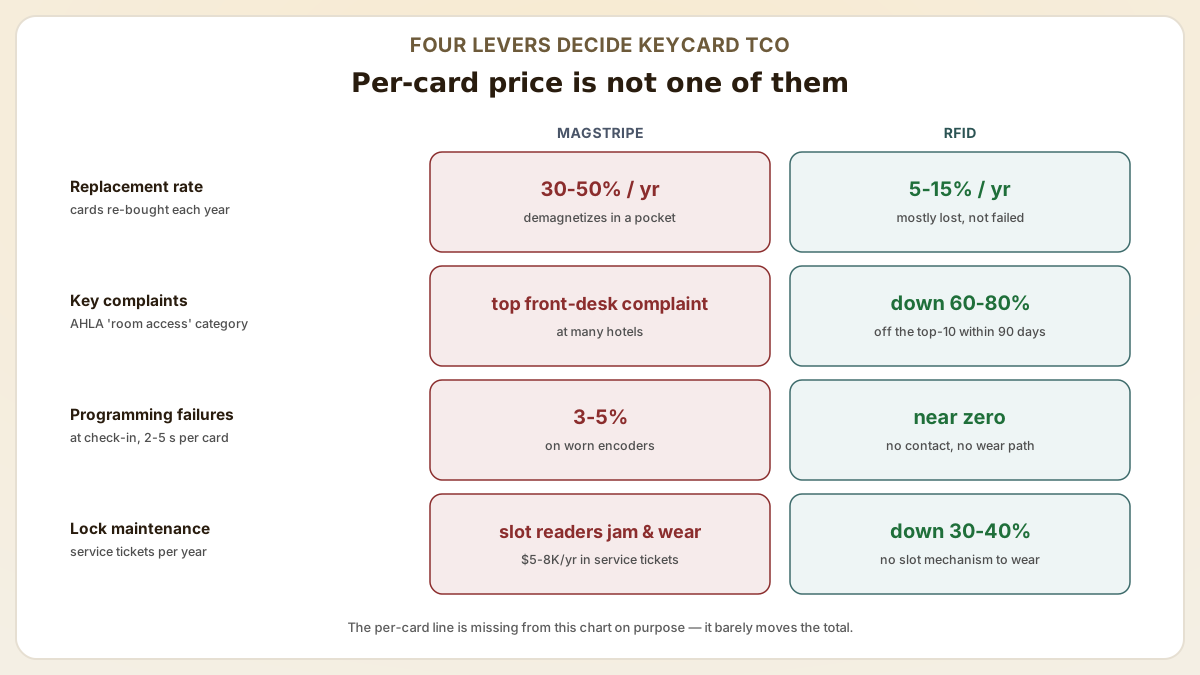
- Replacement rate: magstripe cards have 30-50% annual replacement rates due to demagnetization, physical wear and guest departures. RFID cards have 5-15% annual replacement rates, primarily from lost cards rather than card failure.
- Guest complaint reduction: magstripe card failure is the top front desk complaint at many hotels. Switching to RFID reduces key-related complaints by 60-80%, improving guest satisfaction scores and reducing front desk labor per check-in. AHLA member surveys show 'room access' moves from a top-3 complaint category to outside top-10 within 90 days post-migration.
- Programming time: both magstripe and RFID cards take 2-5 seconds to program at check-in. However, RFID cards experience near-zero programming failures compared to 3-5% failure rates for worn magstripe encoders.
- Lock maintenance: contactless RFID locks have fewer mechanical components than magstripe locks (no card insertion slot to jam or wear), reducing lock maintenance costs over the lock system's lifetime — typical 30-40% reduction in annual lock service tickets per published vendor case data.
- Energy card slot savings. Many hotels use card-slot energy management systems. RFID cards can be thicker and more durable than magstripe cards, reducing card-slot mechanism wear and replacement.
5-year TCO worked example: 250-room mid-scale property
Concrete numbers help CFOs see the math. The example below uses a 250-room/80%-occupancy/50%-key-return property — the same baseline used in OpenKey's published lost-key analysis ($18K/yr in lost keys at this profile) — and runs three scenarios five years out: keep magstripe, swap the cards only, or replace the locks too. All figures are conservative midpoints from published industry data. The chart shows where each path ends up; the table underneath shows the line items that get it there.
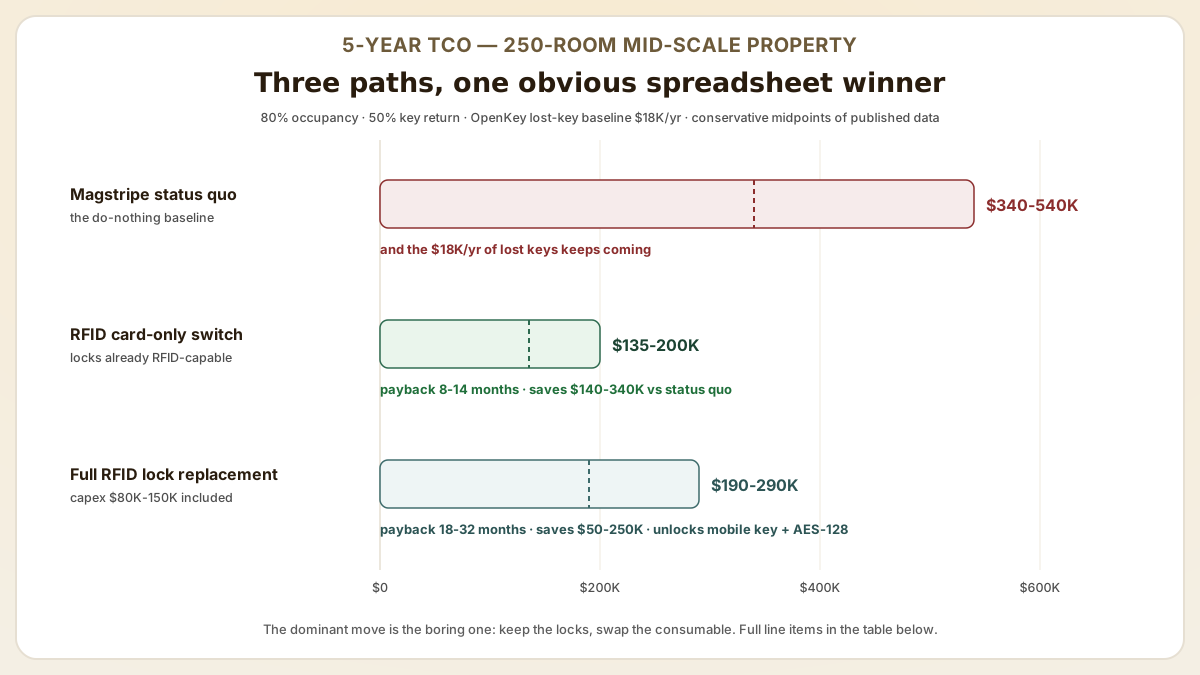
- The RFID-card-only switch (assuming locks already support RFID firmware) is the dominant move on pure ROI — 8-14 month payback at most properties. A surprising number of properties have RFID-capable locks but still ship magstripe consumables because no one ran this math.
- Full lock-replacement payback stretches to 18-32 months but unlocks mobile key, eliminates slot maintenance entirely, and brings AES-128 encryption onto every door — the right move for renovation cycles or new builds.
- Soft-dollar items not included above (guest satisfaction NPS lift of 8-15 points on 'room access', 1-3% repeat-booking improvement at full-service ADR, security-incident exposure mitigation) typically add another $50-150K/year of value at this property scale.
- Vendor-managed inventory (VMI): suppliers like Proud Tek can hold 60-90 days of consignment stock at a regional warehouse, reducing the property's working capital tied up in safety stock by 40-60% — a non-trivial cost line on multi-property portfolios.
| Line item | Magstripe (status quo) | RFID card only (cards swapped, locks already RFID-capable) | Full RFID lock replacement (capex + cards) |
|---|---|---|---|
| Year-1 capex (locks, encoders, integration) | $0 | $3K (encoder refresh) | $80K-150K (250 doors @ $200-400 + integration) |
| Annual card consumable (5 yrs) | $15-25K/yr | $8-15K/yr | $8-15K/yr |
| Annual lost-key replacement | $18K/yr (OpenKey baseline) | $10-12K/yr (cards survive longer) | $10-12K/yr |
| Annual front-desk re-encode labor | $30-45K/yr (20% rate, 2.5 min @ $25/hr) | $2-4K/yr (under 2% rate) | $2-4K/yr |
| Annual lock service tickets | $5-8K/yr (slot-reader maintenance) | $5-8K/yr (until locks are also replaced) | $2-3K/yr (no slot mechanism) |
| 5-year cumulative cost | $340-540K | $135-200K | $190-290K (incl. capex) |
| 5-year savings vs status quo | — | $140-340K | $50-250K |
| Payback period | — | 8-14 months | 18-32 months |
Which cost line item moves most when you switch technology?
If your CFO is walking the magstripe-to-RFID switch line by line, the savings concentrate in three places — and disappointingly little lands in the line everyone checks first, the per-card unit cost. Below, the line items ranked by how far they actually move.
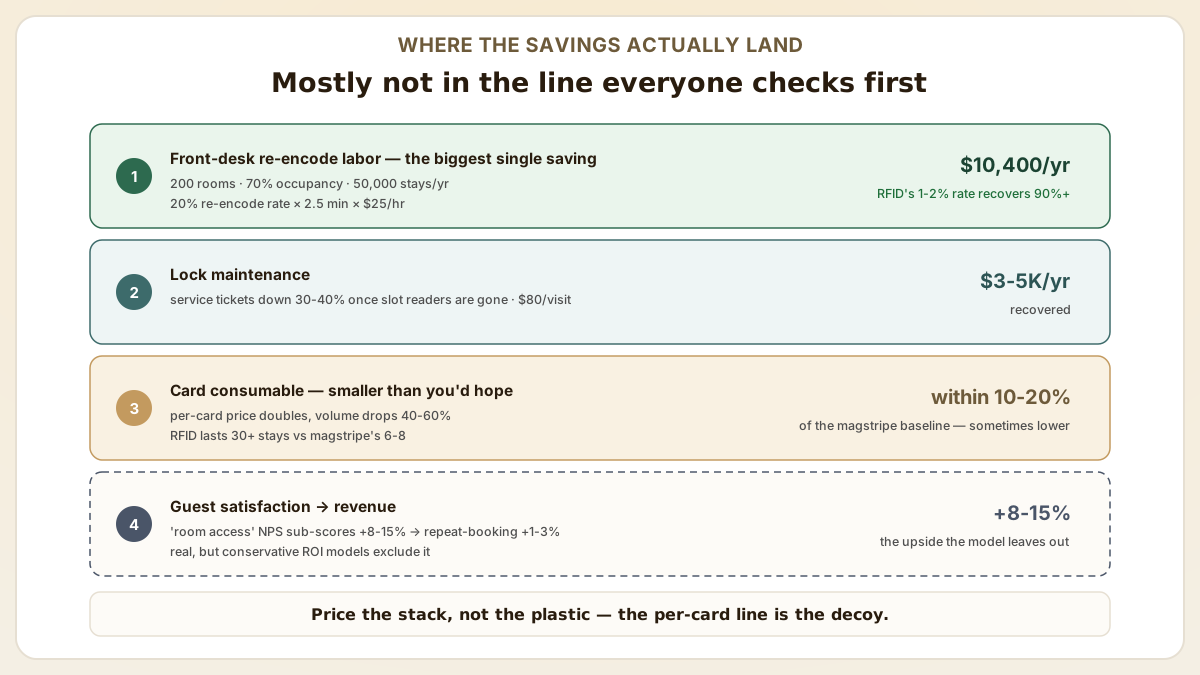
- Front-desk labor: the biggest single saving. A 200-room property at 70% occupancy doing 50,000 stays/year, at 20% magstripe re-encode rate × 2.5 minutes × $25/hr fully-loaded labor = $10,400/year. RFID re-encode rate of 1-2% recovers 90%+ of this. Year-over-year ROI here is real and measurable.
- Card consumable: smaller than expected. Yes, per-card price doubles, but card volume drops 40-60% because RFID cards last 30+ stays vs magstripe's 6-8. Net consumable cost typically lands within 10-20% of the magstripe baseline — sometimes lower.
- Lock maintenance: 30-40% reduction in service tickets after slot-readers are gone. For a 200-room property paying $80/visit, that's $3-5K/year recovered.
- Guest satisfaction → revenue impact: harder to attribute precisely. Properties that successfully migrate report 8-15% improvement in 'room access' NPS sub-scores, which correlate with 1-3% improvement in repeat-booking rate. At full-service ADR, 1% repeat-booking lift is meaningful — but conservative ROI models exclude it.
- Security incident exposure: not a line item until it happens. The 2022 US chain that paid $2M+ to settle magstripe-cloning room-theft litigation moved this from 'theoretical' to 'budget item' for risk-management teams at peer chains. AES-class chip stock is the cheap insurance against repeat scenarios.
Useful next pages
Use these linked product, guide and comparison pages to keep the next click specific and practical.
Hotel RFID key card products
RFID key cards compatible with major hospitality lock systems.
ROI and benchmarking references
Industry-published cost benchmarks for hotel keycard programs.
FAQ
How much do hotels spend on key cards per year?
A 200-room hotel with 70% occupancy goes through approximately 50,000-70,000 key card uses per year (accounting for multi-night stays, two cards per room, and replacements). With magstripe cards at $0.15 each and a 40% replacement rate, annual card cost is approximately $3,000-5,000. Switching to RFID cards at $0.50 each with a 10% replacement rate reduces annual spend to $2,500-3,500 while eliminating most guest complaints and recovering 30-90 hours/month of front-desk labor.
Can I use RFID cards with my existing magstripe lock system?
Not directly: RFID cards require contactless lock hardware with RFID reader modules. However, most major lock vendors (ASSA ABLOY, Dormakaba, Salto, Onity) offer retrofit kits that add RFID capability to existing lock housings without full lock replacement. Proud Tek also supplies dual-technology cards with both RFID and magstripe for properties transitioning gradually.
What RFID chip do most hotel lock systems use?
MIFARE Classic 1K (13.56 MHz) is the most widely deployed hotel key card chip globally, supported by virtually all hospitality lock manufacturers. Properties upgrading for higher security are moving to MIFARE DESFire EV2 or EV3. Some newer Saflok systems use MIFARE Ultralight C as the default. Contact your lock system vendor for the exact chip compatibility requirement before ordering cards.
What is the realistic payback period for switching from magstripe to RFID?
For a 200-room mid-scale property switching cards only (no lock replacement), the payback is 6-12 months — driven primarily by front-desk labor recovery and reduced consumable waste from demagnetized cards. For a property doing the full magstripe-lock-to-RFID-lock replacement, capex of $150-600 per door pushes payback to 18-36 months depending on door count, occupancy and labor rates. The card-only switch (where the lock estate already supports RFID firmware) is the highest-ROI move and most properties haven't done it yet.
Can vendor-managed inventory (VMI) reduce my keycard procurement working capital?
Yes, materially. Suppliers like Proud Tek (and several major card factories) offer consignment-style VMI: they hold 60-90 days of safety stock at a regional warehouse and bill only when the property pulls cards. For a 200-room property with $20K/year card spend, this releases roughly $5-10K of working capital that would otherwise sit in safety stock. The trade-off is a 5-10% per-card premium to cover the supplier's holding cost; on portfolio-level deployments (10+ properties), that premium is usually offset by consolidated freight and pre-encoded delivery. Negotiate a quarterly true-up to keep both sides aligned on actual consumption versus held stock.
Should we be budgeting for mobile key as a cost replacement for cards?
Not yet — and probably not in the next 3-5 years. Industry-wide mobile-key adoption sits at 14% across major chains after a decade of investment. Reasons it stays at single digits: 40-50% of stays still ask for a physical card backup even when offered mobile, accessibility concerns for older guests, and the fact that 100% of properties already have physical lock readers but only 60-70% have BLE/NFC-enabled lock firmware. Plan for mobile key as an additive cost on top of physical card programs, not a replacement. The hybrid model is the industry default through at least 2030.
Sources & references
Primary standards, OEM datasheets and regulatory documents cited by this article. All URLs were verified on the access date shown below.
- American Hotel & Lodging Association (AHLA)
Industry association; member research and resource center on hotel operations and guest-experience benchmarks (room-access complaint data).
- Hotel Tech Report — hotel keyless entry and mobile key
Buyer guide surveying hoteliers on mobile-key adoption and keyless-entry vendors, including OpenKey.
Proud Tek is a Shenzhen-based RFID & NFC manufacturer supplying hotel chains, transit operators, event venues and retail brands worldwide. Every order includes free samples, RF testing and dedicated project support.
Get a Quick Quote
Tell us about your project and we'll respond within one business day. Fields marked (asterisk) are required.