
RFID Engineering
RFID Interference in Metal
Causes and Fixes
Quick answer
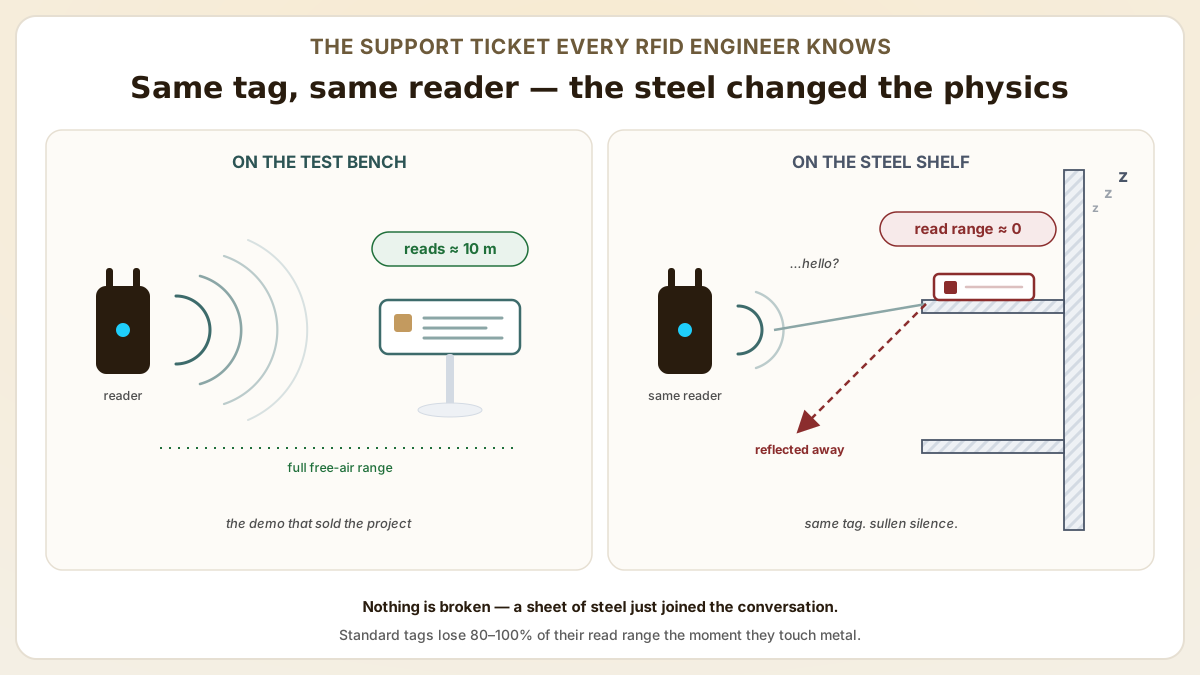
Standard RFID tags can lose 80-100% of their read range on metal — the surface reflects, absorbs, and detunes the very signal the system depends on. Here's the physics in plain English, the anti-metal tag constructions that hand the range back (ferrite-backed, ceramic, foam-spacer, conformal), and the moment the smart move is to switch frequency entirely.
- Metal silences standard tags without breaking anything: direct contact detunes the antenna, reflections carve multipath dead zones, and conductive structures cast shadow zones — an 80-100% read-range loss is normal.
- Four constructions hand the range back: ferrite-backed UHF (restores 50-90% of free-air range), ceramic encapsulation, 2-5 mm foam spacers, and conformal labels that recruit the metal as part of the antenna.
- Tune the room, not just the tag — circularly polarized antennas, medium transmit power (maximum just buys more reflections), and a slight tilt away from metal walls beat any amount of shouting.
At a glance
Use these short answers to decide whether this page matches the project before moving into the detail.
Key takeaway
Metal silences standard tags without breaking anything: direct contact detunes the antenna, reflections carve multipath dead zones, and conductive structures cast shadow zones — an 80-100% read-range loss is normal.
How metal interferes with RFID signals
Metal disrupts RFID four ways at once: it detunes any tag it touches, reflects waves into multipath dead zones, blocks the signal behind solid structures, and ricochets...
Next step
Ready to move forward? Start your inquiry to get specific answers for this project.
Get anti-metal RFID tag samplesHow metal interferes with RFID signals
Metal disrupts RFID four ways at once: it detunes any tag it touches, reflects waves into multipath dead zones, blocks the signal behind solid structures, and ricochets phantom reads into aisles that were never in the plan. Every RFID engineer has fielded the ticket this produces — a tag that read flawlessly on the test bench gets stuck to a steel shelf, or a server rack, or the side of a forklift, and goes completely, sullenly silent. Nothing is broken: the tag is fine, the reader is fine, the encoding is fine. A sheet of metal simply joined the conversation, and it is doing several rude things to the radio physics at once — none of them in your favor. Here is the damage report, worst offender first.
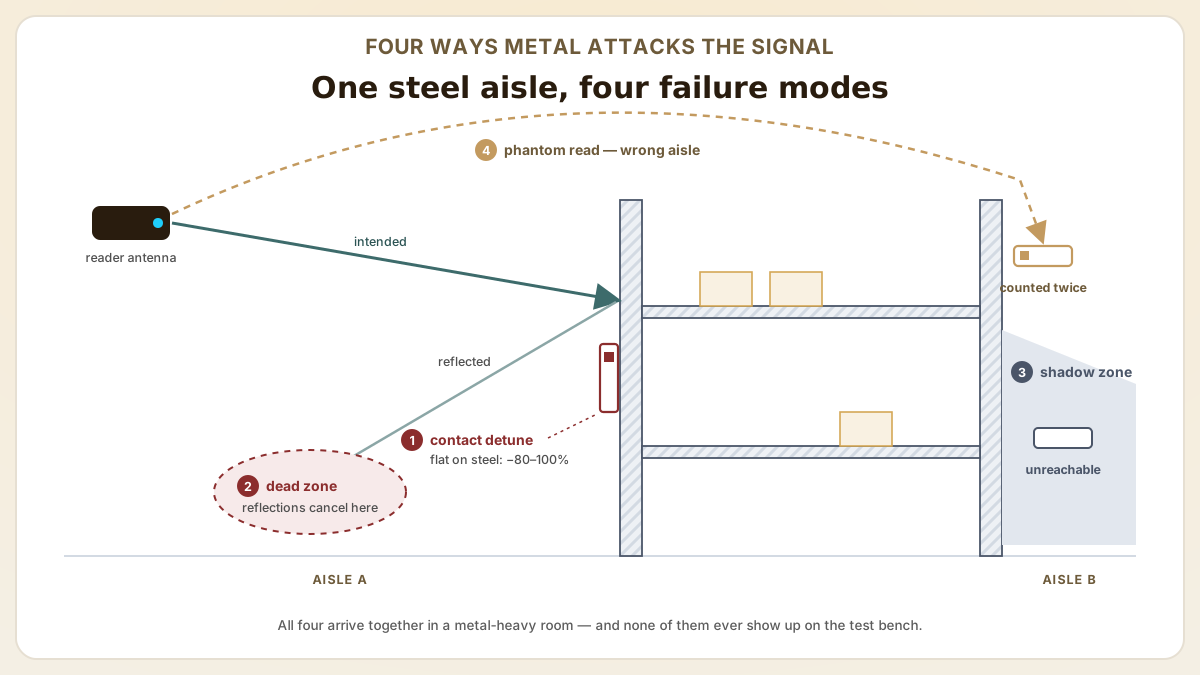
- Antenna detuning: when an RFID tag is placed directly on a metal surface, the metal acts as a ground plane that shifts the antenna's resonant frequency away from the operating frequency, dramatically reducing the tag's ability to absorb energy from the reader and respond. Standard tags can lose 80-100% of their read range on metal.
- RF reflection and multipath. Metal surfaces reflect radio waves like a mirror reflects light. In environments with metal walls, shelving, and equipment, reflected signals create constructive and destructive interference patterns (multipath), producing dead zones where tags cannot be read even though the reader has sufficient power.
- Signal absorption by conductive structures. Metal structures between the reader antenna and the tag block RF propagation, creating shadow zones. Tags hidden behind metal equipment or inside metal enclosures may be completely unreachable.
- Phantom reads and cross-reading. Reflected signals can bounce around corners and read tags in adjacent aisles or zones that should not be in the read field, causing false-positive inventory counts — congratulations, your count now includes items from a different postal code.
Which anti-metal RFID tag solutions work?
Four constructions restore on-metal performance: ferrite backing, ceramic encapsulation, foam spacers, and conformal antennas tuned to recruit the metal itself. Anti-metal tags are not exotic sorcery anymore; they are simply engineered to expect the metal instead of being ambushed by it. The right one comes down to how much thickness you can live with, what your budget looks like, and how much read range you need to claw back.
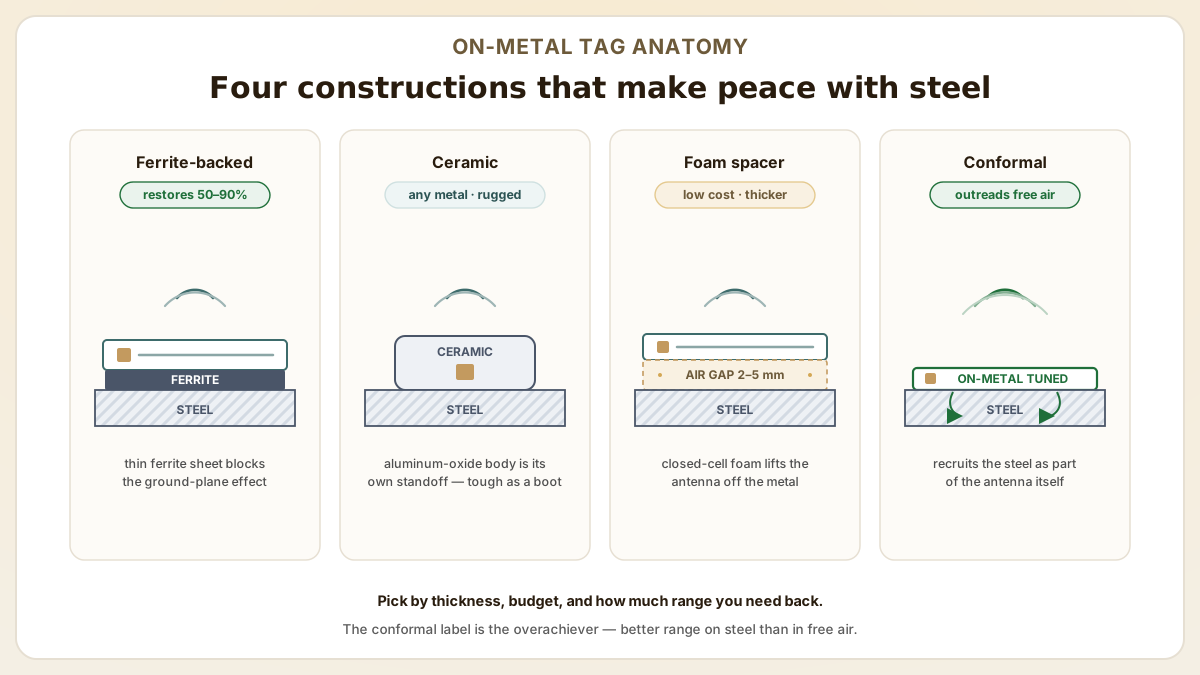
- Ferrite-backed UHF tags use a thin ferrite sheet between the tag antenna and the metal surface. The ferrite absorbs the disruptive ground-plane effect and redirects RF energy to the tag antenna, restoring 50-90% of the tag's free-air read range.
- Ceramic-encapsulated tags (both HF and UHF) house the chip and antenna in an aluminum oxide ceramic body that is inherently non-conductive and provides physical standoff from the metal surface, maintaining consistent performance across different metal types — and it is tough as a boot.
- Foam spacer tags provide a physical air gap (typically 2-5 mm) between the tag and the metal surface using a closed-cell foam layer. The air gap prevents antenna detuning at a lower cost than ferrite, though with a thicker profile.
- Conformal on-metal labels use specialized antenna designs tuned to perform specifically on metal. They actually use the metal surface as part of the antenna system, achieving better range on metal than in free air. The overachievers of the bunch.
How do you handle reader and antenna optimization for metal environments?
Tag selection gets you most of the way; reader configuration gets you the rest. The counterintuitive part is that the instinct every installer has on a bad-read day — crank the reader to maximum power — is usually the wrong move in a metal-rich room, where more power just buys you more reflections to fight. The adjustments that actually help are quieter than that.
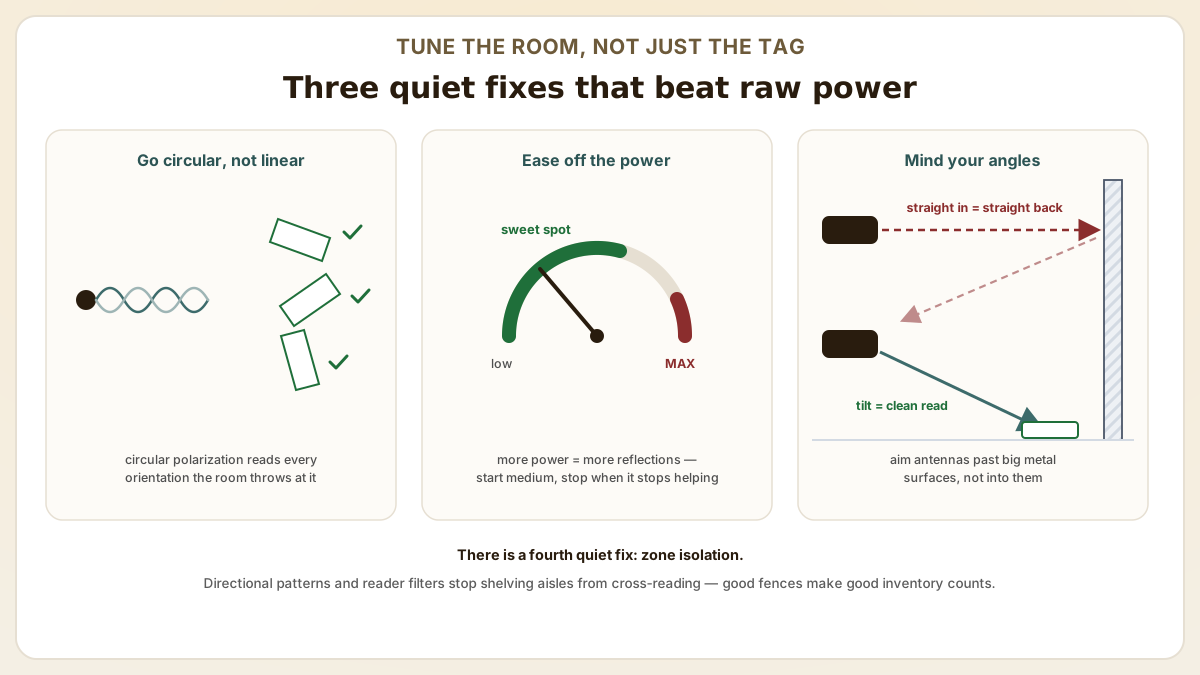
- Use circularly polarized reader antennas instead of linearly polarized ones. Circular polarization maintains consistent read performance regardless of tag orientation and better handles the polarization rotation caused by metal reflections.
- Adjust reader transmit power carefully. In a metal-rich environment, maximum power is not always best because stronger signals create stronger reflections and more multipath interference. Start at medium power and increase gradually while monitoring read rates.
- Position reader antennas to minimize direct illumination of large metal surfaces that would create strong reflections. Angle antennas slightly downward or upward to avoid bouncing the main signal off metal walls and ceilings.
- Implement zone isolation using directional antenna patterns and reader filters to prevent cross-reading between adjacent zones in metal shelving environments. Good fences make good inventory counts.
On-metal tag vendor reference — Confidex, Xerafy, Omni-ID, HID InLine, Murata Magicstrap
Five vendors dominate the on-metal RFID market in 2026, each with a distinct sweet spot by asset type, mounting method and price point. The choice tends to lock you into a 5-10 year deployment, so picking the right family is not a coin-flip. Here is the lay of the land.
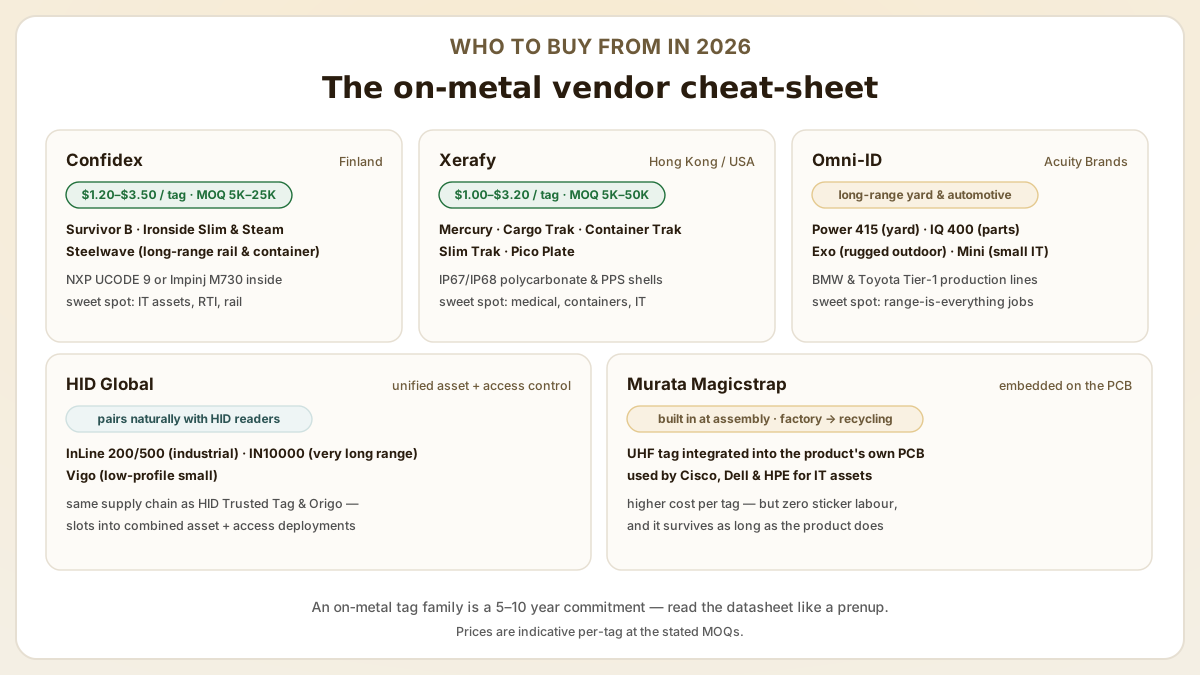
- Confidex (Finland) — Survivor B (general industrial), Ironside Slim (low-profile), Ironside Steam (high-temp laundry/sterilisation), Steelwave (long-range vehicle/container). NXP UCODE 9 or Impinj M730 chips. Strong in IT asset, returnable transport item (RTI) and rail/container markets. Pricing $1.20-$3.50 per tag at 5K-25K MOQ.
- Xerafy (Hong Kong/USA) — Mercury (medical/sterilisation), Cargo Trak (container/rail), Container Trak (ISO container), Slim Trak (IT asset), Pico Plate (small IT/electronics). Tough IP67/IP68 polycarbonate or PPS housings. Pricing $1.00-$3.20 per tag at 5K-50K MOQ.
- Omni-ID (Acuity Brands) — Power 415 (long-range parking/yard), IQ 400 (manufacturing parts), Exo (rugged outdoor), Mini (small IT). Strong in automotive manufacturing (BMW, Toyota Tier 1) and yard-management deployments.
- HID Global — InLine 200/500 family (industrial), IN10000 (very-long-range yard), Vigo (low-profile small) — same supply chain as HID Trusted Tag and Origo so often paired with HID readers in unified asset/access control deployments.
- Murata Magicstrap — embedded UHF tags integrated into manufactured-product PCB during assembly. Used by Cisco, Dell, HPE for IT-asset tracking from factory through end-of-life recycling. Higher cost per tag but eliminates sticker-application labour and improves attachment durability.
HF vs UHF on metal — when to switch frequencies entirely
Sometimes the fix is not a better tag but a different frequency: HF and UHF behave like completely different animals around metal, and the dividing line is simply how far you need to read. Knowing when to switch can rescue a UHF deployment that was doomed from the start.
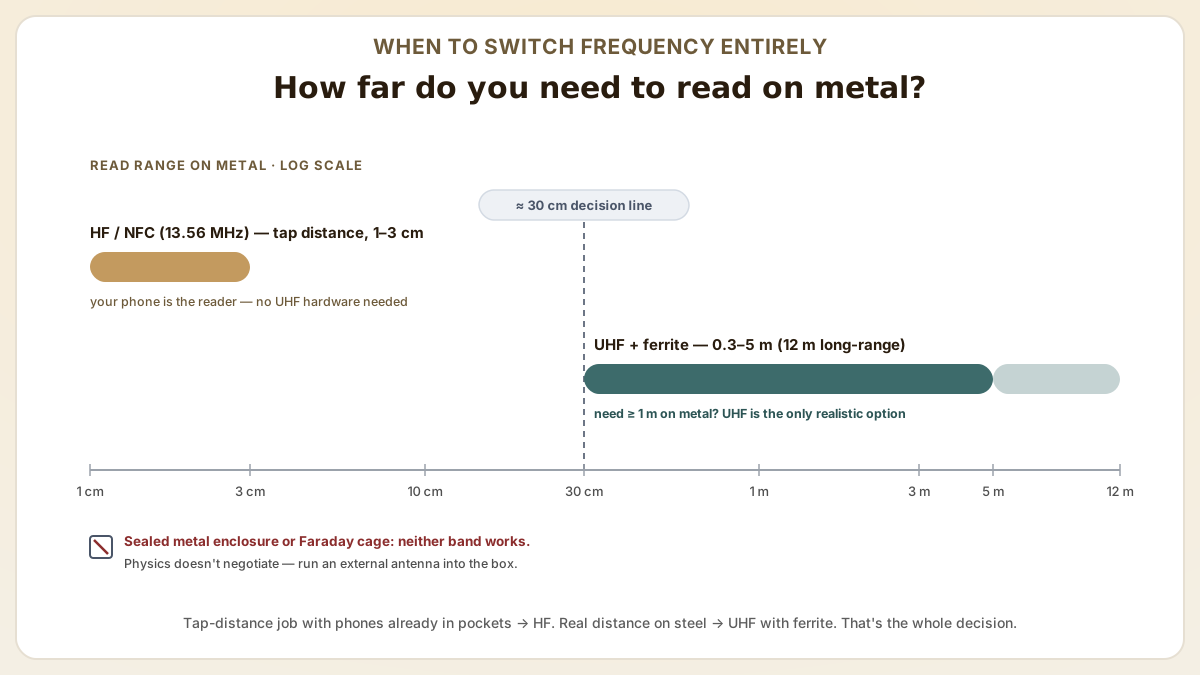
- HF/NFC (13.56 MHz) on small metal — works at very close range (1-3 cm) using NFC-on-metal antennas (NXP NTAG 213/215/216 with ferrite backing). Common for tool-tracking with handheld smartphone scan, electronics serialisation, returnable medical instrument tracking.
- UHF (860-960 MHz) on metal — required for any read-range >30 cm; ferrite-backed inlays restore most range. Standard choice for IT asset tracking, returnable transport items, vehicle access and warehouse rack inventory.
- Frequency switch criteria — if you need ≥1 m read range on metal, UHF is the only realistic option. If you only need tap-distance reads but want smartphone compatibility (no UHF reader needed), HF/NFC on-metal wins. If you're tracking inside a metal enclosure or Faraday cage, neither will work without external antenna penetration.
- Multipath mitigation in dense metal — Impinj Octane firmware Reader Mode tuning (Auto-Set Static, Hybrid, Dense Reader, Reader Mode 1000-1004) and Zebra MotionWorks signal-quality filtering both help. Most deployments find 2-3x read-rate improvement from per-site reader-mode tuning vs default.
- Real deployment patterns — rail-car identification (UHF + Confidex Steelwave at 12 m), data-centre server tracking (UHF Omni-ID Power 415 + Impinj R720 ceiling antennas), hospital surgical instruments (HF NTAG 216 with ferrite backing for autoclave compatibility), vehicle yard management (UHF Confidex Survivor B + Times-7 outdoor antennas).
Useful next pages
Use these linked product, guide and comparison pages to keep the next click specific and practical.
Anti-metal RFID products
Explore tags specifically designed for metal-surface applications.
On-metal tag vendor catalogues
Authoritative datasheets for the dominant on-metal RFID tag families.
FAQ
Can standard RFID tags work on metal if I use a spacer?
Sort of — a 3-5 mm non-conductive spacer between a standard tag and the metal recovers some read range, but performance still lands well short of a purpose-built anti-metal tag. For anything you are betting a deployment on, use tags with ferrite backing or ceramic encapsulation specifically engineered for on-metal performance.
Which frequency is better for metal environments: HF or UHF?
HF (13.56 MHz) RFID is generally less affected by metal reflections than UHF (860-960 MHz) because the shorter wavelength of UHF creates more complex multipath patterns. However, UHF anti-metal tags provide longer read range (1-5 meters) compared to HF tags (1-5 cm). The right choice depends on your read-range requirement, asset type, and environment geometry.
How do I test whether an RFID tag will work in my metal-heavy facility?
Don't guess — test in situ. Request sample tags from Proud Tek and mount them on your actual assets at the actual read positions with your planned reader configuration. Our complimentary sample kits include multiple anti-metal tag form factors so you can benchmark performance before committing to a production volume order.
How do dense-tag environments (data centres, server racks) handle anti-collision when every shelf is metal?
Dense-metal environments compound two problems: per-tag detuning and tag-to-tag collision. The fix is a combined hardware + software stack: ferrite-backed UHF on-metal tags (Confidex Ironside Slim, Xerafy Slim Trak, Omni-ID IQ 400), ceiling-mounted Impinj xSpan or xPortal antenna arrays for top-down read coverage, and reader configuration tuned to Session 1 or 2 with persistent inventoried flag (Impinj Octane Reader Mode 1002 or 1004). With this stack, a 500-rack data centre can achieve 95-99% inventory accuracy on hundreds of thousands of IT assets in a single nightly sweep.
Can liquid containers (chemical drums, IBC totes, water tanks) be tracked with RFID?
Yes, but it requires liquid-rated UHF tags or HF/NFC if the read range can be very short. UHF tags directly on water-filled containers lose 80-95% of free-space range. Solutions: (1) liquid-rated UHF tags with tuned antenna for water-side mounting (Confidex Survivor B Aqua, Xerafy Pico Plate); (2) mount the tag at the top of the container away from liquid contact; (3) switch to HF/NFC if 1-3 cm tap range is acceptable and smartphone reading is desirable; (4) for very-long-range (>5 m) tracking of stacked liquid containers, use overhead antennas + tags on the container's top label area, not the side.
Proud Tek is a Shenzhen-based RFID & NFC manufacturer supplying hotel chains, transit operators, event venues and retail brands worldwide. Every order includes free samples, RF testing and dedicated project support.
Get a Quick Quote
Tell us about your project and we'll respond within one business day. Fields marked (asterisk) are required.