
Hotel Technology
RFID Wristbands for Hotels and Resorts
Quick answer
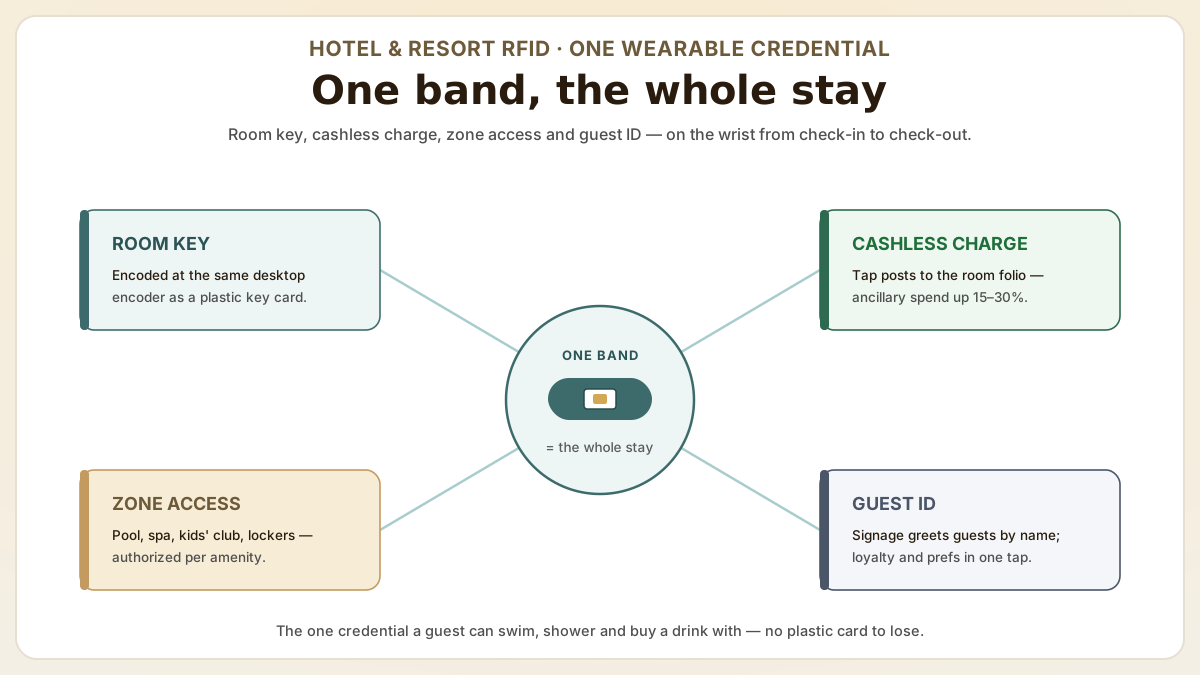
RFID wristbands lift resort ancillary spend 15–30% and cut front-desk key replacements 60–80% by giving guests one waterproof credential for room access, cashless payment and pool/spa entry. This guide covers chip selection, form factors, PMS integration and guest-satisfaction impact across hotels, resorts and cruise lines — the one credential guests actually keep on.
- RFID wristbands replace room key cards with a wearable credential that guests keep on their wrist throughout their stay, eliminating lost-key issues and improving guest convenience.
- Cashless resort charging via RFID wristbands increases ancillary revenue by 15–30 percent by reducing payment friction at restaurants, bars, spas and activity centers.
- Silicone RFID wristbands are waterproof, durable and customizable with resort branding, serving as both a functional credential and a marketing touchpoint.
At a glance
Use these short answers to decide whether this page matches the project before moving into the detail.
Key takeaway
RFID wristbands replace room key cards with a wearable credential that guests keep on their wrist throughout their stay, eliminating lost-key issues and improving guest convenience.
Why resorts are replacing key cards with wristbands
Nobody has ever found a good place to keep a plastic room key while wearing a swimsuit. It rides in a waistband, gets left on a lounger, goes for an unplanned swim — and...
Next step
Ready to move forward? Start your inquiry to get specific answers for this project.
Order hotel wristband samplesWhy resorts are replacing key cards with wristbands
Nobody has ever found a good place to keep a plastic room key while wearing a swimsuit. It rides in a waistband, gets left on a lounger, goes for an unplanned swim — and the front desk hears about it either way. The resort wristband exists because a credential you can swim, shower and buy a drink with beats one you have to keep track of. Traditional hotel key cards work well for standard hotels but create friction in resort environments where guests move between pools, beaches, restaurants and activity areas. Carrying a plastic card in swimwear is inconvenient, and lost or demagnetized cards generate front-desk traffic and guest dissatisfaction.
RFID wristbands solve these problems by providing a wearable, waterproof credential that stays on the guest's wrist from check-in to check-out. The wristband serves as room key, payment token, access credential and loyalty identifier in a single form factor.
- Guest satisfaction scores increase 10–20 percent at resorts that deploy RFID wristbands versus traditional key cards.
- Front-desk key-replacement requests drop by 60–80 percent when wristbands replace loose cards.
- Waterproof silicone wristbands function reliably at pools, water parks and beach areas where key cards fail.
- Wristband branding creates a visible, shareable guest touchpoint. Guests frequently photograph and post wristbands on social media, generating organic marketing impressions.
How do you select chip and frequency for hotel wristbands?
The RFID chip in a hotel wristband must be compatible with existing door-lock infrastructure, PMS integration requirements and any cashless-payment systems.
| Chip | Frequency | Security level | Best for |
|---|---|---|---|
| MIFARE Classic 1K | 13.56 MHz | Moderate (Crypto-1 — compromised) | Budget resorts with legacy lock systems |
| MIFARE DESFire EV2 | 13.56 MHz | High (AES-128 mutual authentication) | Premium resorts, cruise lines, multi-application |
| NTAG213/215 | 13.56 MHz | Basic (password-only) | Guest engagement, URL-linked experiences |
| EM4100 | 125 kHz | None (read-only ID) | Legacy lock systems, water parks |
| MIFARE Ultralight EV1 | 13.56 MHz | Basic (originality signature) | High-volume, cost-sensitive all-inclusive resorts |
How does cashless resort charging work?
RFID wristband-based cashless charging links the wristband's chip UID to a guest folio in the property management system (PMS). When a guest taps their wristband at a POS terminal, the charge is posted directly to their room account. The flow below traces one tap from wrist to folio; for the payment mechanics in depth, see cashless payment with RFID wristbands.
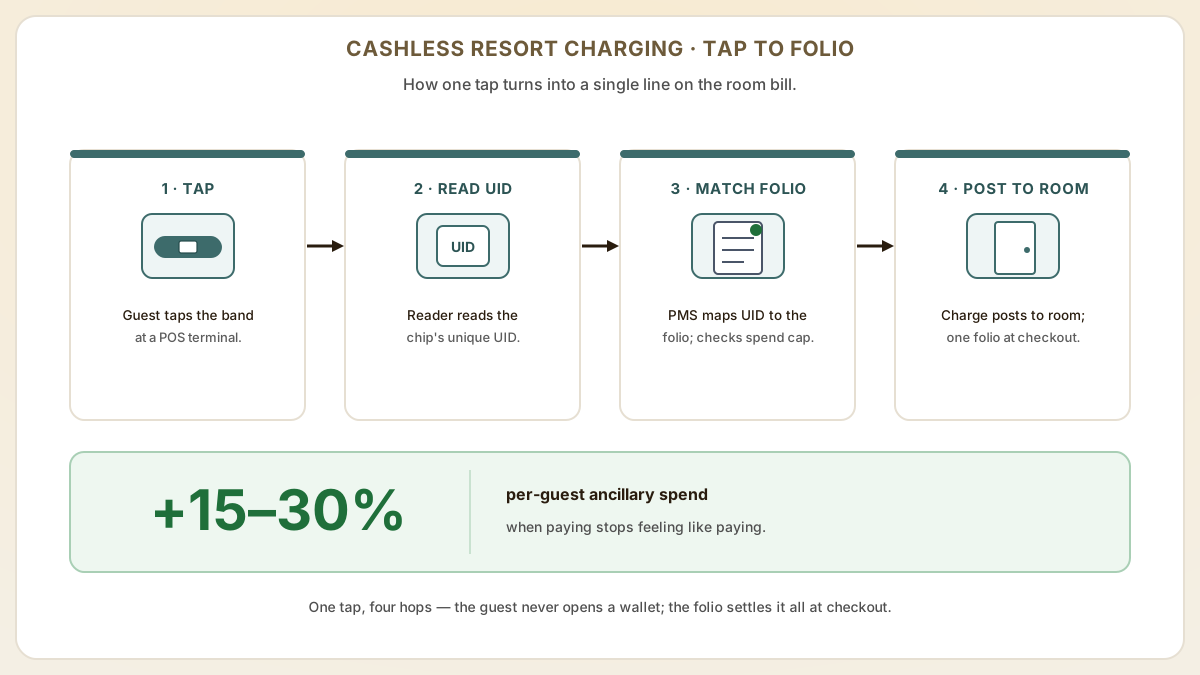
- Cashless wristband systems increase per-guest ancillary spend by 15–30 percent by eliminating the friction of carrying wallets or cards to pool bars, beach restaurants and activity counters.
- Guest spending caps can be configured in the PMS to limit per-transaction or per-stay cashless charges, reducing credit-risk exposure.
- POS integration uses standard NFC readers that read the wristband's chip UID and send a charge request to the PMS via API.
- Checkout settlement consolidates all wristband charges on a single folio, simplifying the guest departure process.
- Some resorts offer pre-loaded credit wristbands for all-inclusive add-ons, creating a prepaid spending model.
How do access control and experience zones work?
Beyond room access, RFID wristbands control entry to restricted areas and personalize the guest experience across the property. The zone map below shows where one credential does the work — the same encoding discipline behind a full event access-control setup.
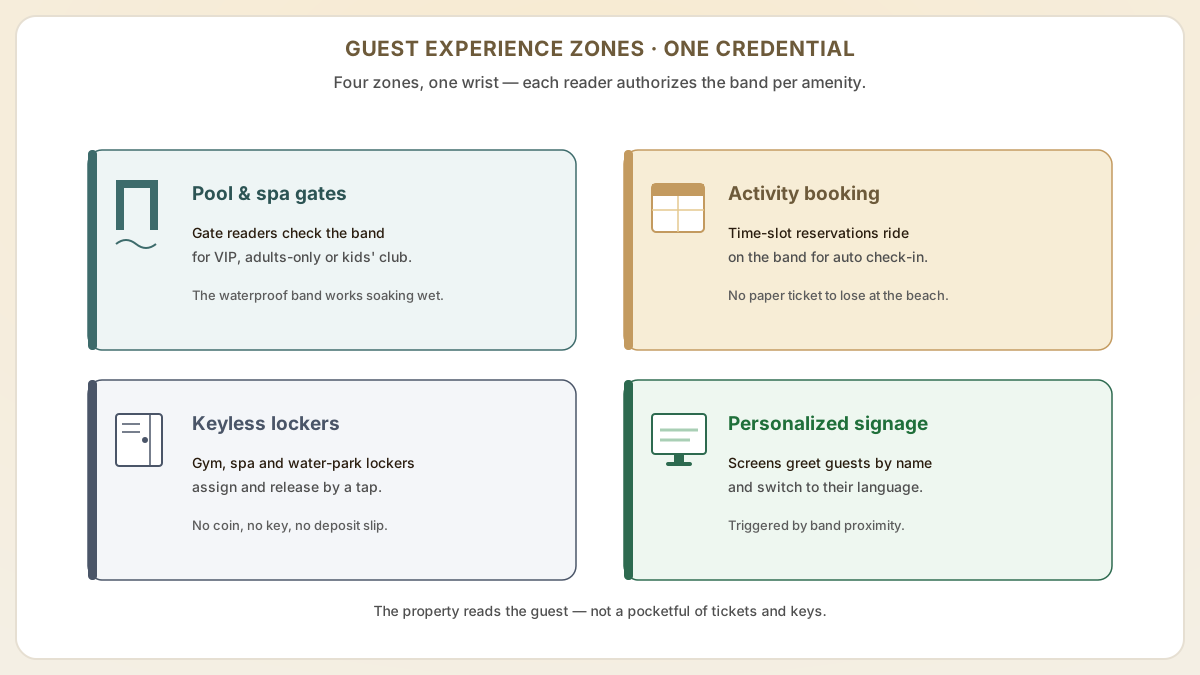
- Pool and spa gates with RFID readers verify that the guest's wristband is authorized for the specific amenity. VIP pool, adults-only spa, kids' club.
- Activity-booking systems encode time-slot reservations onto the wristband, enabling automatic check-in at the activity location.
- Locker systems in gyms, spas and water parks use the wristband for keyless locker assignment and release.
- Personalized digital signage triggered by wristband proximity greets guests by name and displays relevant offers in their language.
How do wristband form factors and customization work?
Resort RFID wristbands are available in multiple materials and closure styles, each suited to different guest demographics and brand positioning. The closure is the part nobody weighs until a snap lets go mid-stay. The lineup below pairs each material with its closure; for a material-only deep dive, compare silicone vs fabric vs Tyvek wristbands.
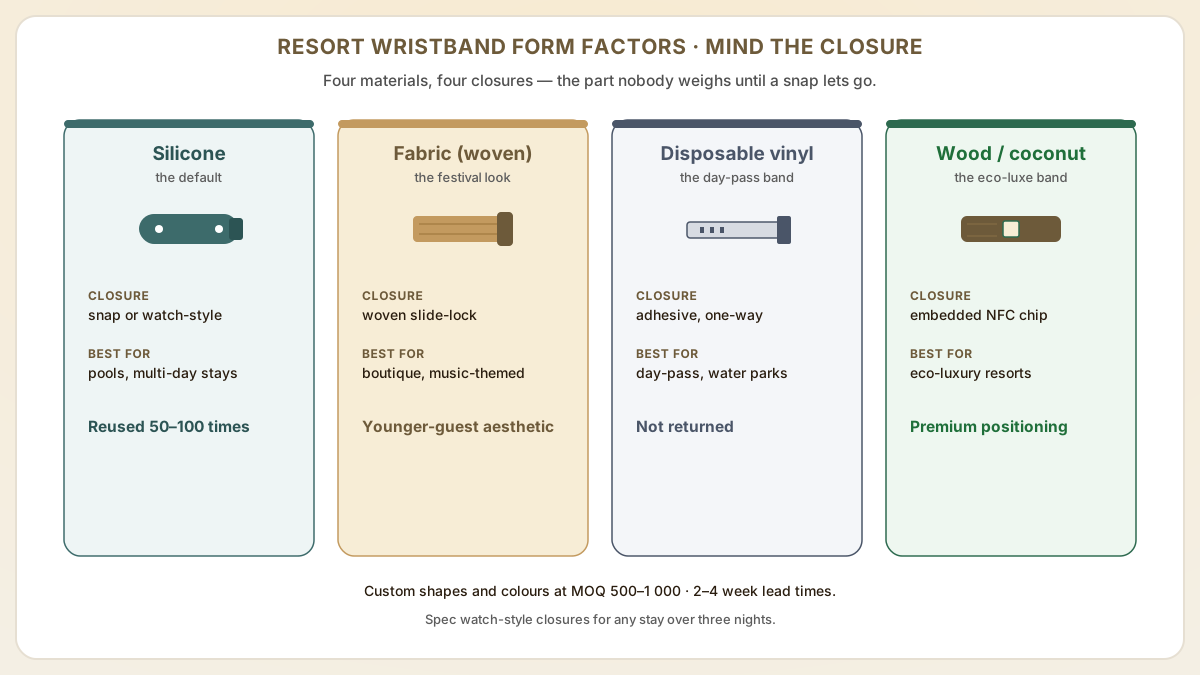
- Silicone wristbands with snap or adjustable watch-style closures are the most common. They are waterproof, comfortable for multi-day wear and available in custom colors with embossed or printed logos.
- Fabric wristbands with woven RFID inlays offer a festival-style aesthetic popular with younger demographics at boutique resorts and music-themed properties.
- Disposable vinyl wristbands with adhesive closure are used for day-pass visitors and water parks where the wristband is not returned.
- Premium wooden or coconut-shell wristbands with embedded NFC chips provide an eco-luxury positioning for sustainability-focused resorts.
- Custom shape and color options are available at minimum order quantities of 500–1 000 units with 2–4 week lead times.
POS and PMS integration partners that matter in 2026
An RFID wristband program is only as good as the back-end stack that processes the taps. Picking a wristband supplier who can name the integration partners — and who has working API connectors to your existing PMS and POS — is the difference between a 90-day pilot and a 12-month system-integrator project.
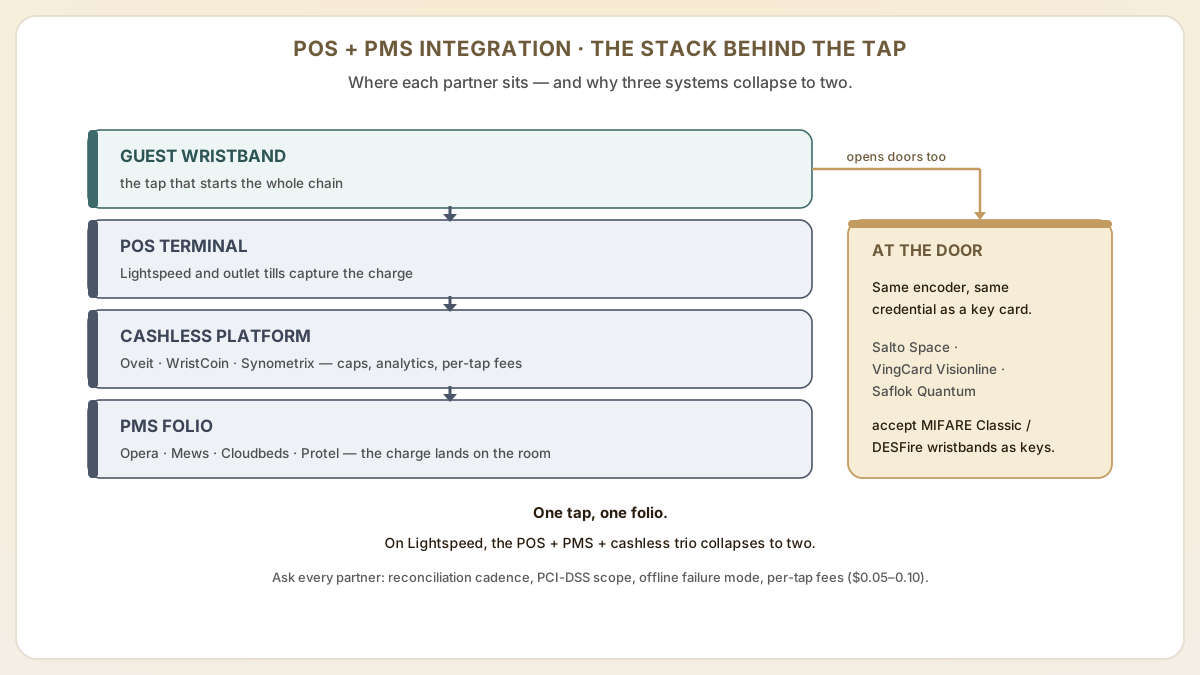
- Oveit (cashless platform): used by Wonderland resort, Venus Waterland, theme-park-hotel groups and luxury Los Cabos properties. Connects to Opera, Mews, Cloudbeds via REST API; reports per-tap analytics and shift-level revenue dashboards. The Los Cabos case (publicly published) recorded 200%+ digital-revenue growth in year one.
- WristCoin / Lightspeed Restaurant POS integration (announced February 2026): native cashless wristband-to-Lightspeed handoff so that resort F&B outlets can post wristband charges to the guest's room folio without a separate POS reconciliation step. Particularly relevant for properties already on Lightspeed.
- Synometrix SYNOPAYMENTS: pure-play wristband cashless POS used by waterparks, festivals and integrated resort complexes. Strong on per-transaction caps, parental controls and multi-tier pricing (cabana vs day-pass).
- Lock-vendor wristband support: Salto Space, ASSA ABLOY VingCard Visionline and dormakaba Saflok Quantum all accept MIFARE Classic/DESFire wristbands as valid credentials at the lock — the wristband is encoded by the same desktop encoder as a card. Confirm the wristband form factor (15-25 mm chip placement on the inner side of the strap) is compatible with the lock's antenna geometry.
- What to ask the integration partner before signing: (1) reconciliation cadence (real-time vs end-of-day batch), (2) PCI-DSS scope (does the integration touch card-of-record data?), (3) failure mode if the wristband-to-PMS link is offline (does the POS queue charges or refuse the tap?), (4) per-transaction fees (some platforms charge $0.05-0.10 per tap on top of card-processing fees), (5) reporting granularity (per-shift, per-outlet, per-guest).
What do real RFID wristband deployments tell us about ROI?
Public case studies from EVEN Hotels, Templepoint Resort, theme-park hotels and Los Cabos all-inclusive properties give us a credible picture of what the wristband economics look like at scale. Three patterns repeat across deployments. The diagram below lays out all three — the same revenue mechanics that play out for RFID event wristbands.
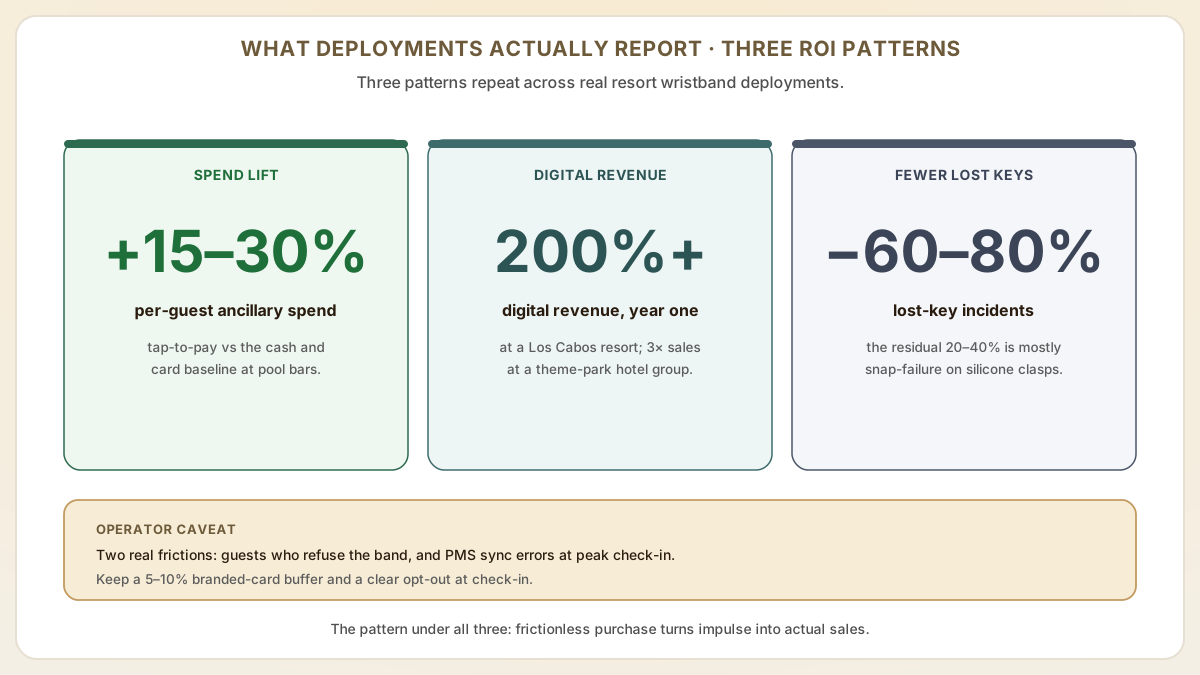
- Per-guest spend lift from cashless tap-to-pay: 15-30% above cash/card baseline at pool bars, beach restaurants and gift shops. EVEN Hotels' published case (PDC Smart Band, $8 guest add-on) reported instant tap transactions completing in roughly half the time of a credit card swipe — translating into shorter pool-bar lines and more transactions per hour.
- Digital revenue compounding: a luxury resort in Los Cabos using NFC/RFID wristbands recorded 200%+ digital revenue growth within the first year of deployment. A theme-park hotel group using identical ad-spend reported 3× sales lift after migrating to the wristband platform. The mechanism is that frictionless purchase converts impulse intent into actual sales at materially higher rates.
- Front-desk replacement-request collapse: wristbands replacing key cards see 60-80% drop in lost-key incidents, because guests don't take wristbands off the way they put down cards. The remaining 20-40% is mostly snap-failure (silicone clasps) which can be reduced by specifying watch-style closures for multi-day stays.
- Brand and social-media externalities: branded silicone wristbands frequently appear in guest-generated Instagram and TikTok content. EVEN Hotels' marketing team reported organic social impressions from guest wristband posts at materially higher reach per dollar than paid social campaigns. The wristband becomes a wearable mini-billboard.
- Operational caveats from operators: properties report two real friction points — guests who refuse the wristband (band cuts perceived as wasteful, or skin sensitivity), and wristband-to-PMS sync errors during high check-in volume that briefly leave guests unable to charge. Plan a 5-10% buffer of branded-card stock as backup credentials, and a clear opt-out at check-in.
Useful next pages
Use these linked product, guide and comparison pages to keep the next click specific and practical.
Hotel RFID wristbands
Purpose-built RFID wristbands for resort room access, cashless charging and guest experience management.
Cashless wristband platform references
Public case studies and platform pages for the integration partners cited above.
Silicone RFID wristbands
Waterproof silicone wristbands with custom branding for pools, spas and outdoor resort areas.
FAQ
Can RFID wristbands work with existing hotel door locks?
Yes, provided the wristband contains the same RFID chip type supported by the lock system. Most modern hotel locks support MIFARE Classic or DESFire chips. The wristband is encoded with the same room credentials as a standard key card using the lock vendor's encoding software.
How do guests return RFID wristbands at checkout?
Resorts typically collect wristbands at checkout and sanitize them for reuse. Silicone wristbands can be reused 50–100 times before replacement. Some properties allow guests to keep wristbands as souvenirs (deactivated at checkout) and absorb the $1–3 per-unit cost as a marketing expense.
Are RFID wristbands safe for children?
Yes. Silicone RFID wristbands are made from medical-grade, hypoallergenic silicone and contain no latex, BPA or phthalates. Pediatric sizes with smaller diameters and softer closures are available. The passive RFID chip emits no radiation. It only responds when in the field of a reader.
What happens if a guest loses their RFID wristband?
The front desk deactivates the lost wristband in the PMS (disabling room access and cashless charging) and issues a replacement wristband encoded with new credentials. The process takes 2–3 minutes — significantly faster than rekeying a traditional magnetic-stripe card.
How do guests handle showering, swimming or sun exposure with the wristband on?
Properly manufactured silicone wristbands with a fully encapsulated chip are rated for continuous water immersion (chlorinated pool water and salt water both), tolerate sunscreen and lotions, and are stable through 5-10 °C cold pool water and tropical 35-40 °C ambient heat. Five real-world failure modes to ask the supplier about: (1) snap-clasp failure (specify watch-style for stays >3 nights), (2) chip antenna fatigue from repeated bending (less common, but spec the inlay's bend-test rating), (3) UV-induced silicone yellowing (UV-stabilized silicone resists this, ask for the supplier's UV test report), (4) skin-contact sensitivity (ask for medical-grade silicone certification, ISO 10993), and (5) RF detuning when wet — well-designed antennas tolerate this but cheap inlays can read 10-15% slower when soaked.
What does WristCoin / Lightspeed integration mean for resorts already on Lightspeed POS?
WristCoin announced its Lightspeed Restaurant POS integration in February 2026, enabling resorts and entertainment venues already running Lightspeed at F&B outlets to add wristband cashless payments without a separate POS reconciliation. Practically: a guest taps their wristband at the pool bar, Lightspeed authorises the charge against the guest folio in the PMS, and the bill posts to the room with the same end-of-day reconciliation as a credit-card swipe. For resorts on Lightspeed this collapses what was previously a 3-system integration (POS + PMS + cashless platform) into 2. Properties on other POS systems should ask their PMS vendor for the equivalent connector — Mews, Opera, Cloudbeds and Protel all have published cashless-wristband integration patterns, but the named-partner depth varies.
How do RFID wristbands handle guests who arrive with their own smartphone wallet expectations?
Resorts using wristbands typically position them as additive to mobile wallet, not a replacement. EVEN Hotels' published model offers the Smart Band as an $8 optional add-on at check-in; guests who decline keep their physical RFID room key and use Apple/Google Wallet for off-property payments. The wristband shines specifically in pool/beach/spa contexts where pulling out a phone is awkward (wet, sandy, theft risk on the lounger). Frame the wristband as a context-specific convenience rather than a universal credential, and adoption climbs to 40-60% of guests at the typical resort. Forcing wristbands creates friction with mobile-key-forward travelers; offering both wins.
Proud Tek is a Shenzhen-based RFID & NFC manufacturer supplying hotel chains, transit operators, event venues and retail brands worldwide. Every order includes free samples, RF testing and dedicated project support.
Get a Quick Quote
Tell us about your project and we'll respond within one business day. Fields marked (asterisk) are required.