
Case study · Industrial laundry
250+ Wash Cycles
Industrial Laundry PPS Tags

Quick answer
A European uniform-rental operator deployed Proud Tek PPS-housed UHF RFID laundry tags across 1.8 million garments in three rental pools (workwear, kitchen wear, healthcare uniform). The PPS housing protects the chip through chemical wash, high-temperature tunnel finishing and 90 °C extractor cycles. Year-1 measured chip survival rate at the 250-cycle mark was 99.4%, replacing a previous textile-laminated tag that hit 91% at 120 cycles.
- Customer profile — European uniform-rental operator running 3 industrial laundries serving 14,000 B2B accounts (manufacturing, kitchen, healthcare).
- Chip selected — NXP UCODE 8 in a PPS plastic housing (heat-sealed, no exposed inlay). 200 mm² antenna optimised for hands-free portal reads on the sort line.
- Survival rate — 99.4% of tags still readable at cycle 250, 97.1% at cycle 350. Replaces a previous textile-laminated tag at 91% at cycle 120.
At a glance
Use these short answers to decide whether this page matches the project before moving into the detail.
Customer profile
European uniform-rental operator, 3 industrial laundry sites, 14,000 B2B accounts, 1.8 M garments in active rotation across workwear / kitchen / healthcare uniform pools.
Chip & form factor
NXP UCODE 8 — UHF RAIN, ISO/IEC 18000-63 + EPC Gen2v2, 128-bit EPC + 64-bit TID. PPS (polyphenylene sulfide) injection-moulded housing, heat-sealed to garment label. Dim...
Next step
Ready to move forward? Start your inquiry to get specific answers for this project.
Request a PPS laundry tag sample pack- Measured results
-
- Chip survival rate at 250 wash cycles: 99.4% (vs 91% at cycle 120 on the previous textile-laminated tag).
- Sort-line read rate: 99.7% on the overhead portal (1.5 m antenna height, 12 garments/sec belt speed).
- Manual sorting labour: -54% across all three sites after deployment of the RFID-driven sortation.
- Lost-garment write-offs: -38% YoY because mis-sorted items now flag at the portal instead of arriving at the wrong customer.
Why the previous textile tag failed at 120 cycles
The legacy textile-laminated tag was a thermal-bonded PET layer holding an HF inlay. Three failure modes accumulated:
- Chemical wash (alkaline detergent + chlorine bleach at 65 °C) embrittled the PET laminate after roughly 60 cycles, leading to inlay delamination.
- Tunnel finisher reached 195 °C for 4 minutes per pass — outside the HF inlay's continuous-use spec.
- Mechanical agitation in the extractor (G-force 800) snapped the etched-aluminium antenna after fatigue accumulation around the 120-cycle mark.
Why PPS + UCODE 8 — and the alternatives rejected
Switching from HF (13.56 MHz) to UHF RAIN (860–960 MHz) was an architectural decision driven by the sort-line read-rate requirement. UHF allowed hands-free portal reads at 1.5 m antenna height with 12 garments / second belt speed — HF couldn't deliver that throughput. PPS was chosen over silicone and textile lamination because it combines high-temperature continuous-use rating with a chemical-resistant outer shell.
- Silicone housing — considered, rejected because silicone abrades against the extractor drum after ~150 cycles and the antenna eventually breaks.
- Textile lamination — the legacy approach, rejected for the reasons above (chemical embrittlement + heat).
- Ceramic housing — overkill, 4× the unit cost and not flexible enough to survive garment folds.
- PPS — high glass-transition temperature (218 °C), chemically inert to detergent, dimensionally stable in the extractor.
Production & lifecycle economics
The unit cost of a PPS tag is about 4× the legacy textile tag, but the survival rate is 4× higher and the labour savings on the sort line dwarf the tag cost. The customer modelled total cost of ownership across a 5-year horizon and reported a 2.1-year payback on the tag-cost increase alone, without counting sort-line labour savings.
- PPS tag unit cost (FOB Shenzhen, 1 M MOQ): $0.42–0.55 / tag depending on antenna and chip variant.
- Heat-seal installation: 2.4 seconds per garment using a continuous heat-sealing press supplied by the customer's tag-installation vendor.
- Failure mode at end-of-life: tag delamination from garment label, not chip failure. Chips often survive into the 400+ cycle range and are sometimes re-attached when garments are re-issued.
Sort-line read rate and the portal geometry
The customer runs Impinj R700 fixed readers under each portal, with four Times-7 A6034 circular-polarised antennas configured in a square geometry around the conveyor. Tags are read on multiple antennas during the 2-second portal pass, so a momentary null on one antenna is recovered by another. The 99.7% portal read rate is measured at the customer's largest site (workwear pool, 480,000 garments / year throughput).
How the deployment was built — encoding, installation, rollout
The architecture was a small number of deliberate choices: a UHF chip for hands-free throughput, a PPS housing for the wash chemistry and heat, and a heat-seal install that fits the customer's existing garment-labelling line.
- Encoding: each UCODE 8 carries a 128-bit EPC mapped to the garment's rental record, with the 64-bit TID as an immutable anti-duplication anchor.
- Installation: the tag is heat-sealed to the inner garment label at 2.4 seconds per garment on the customer's continuous heat-sealing press.
- Rollout: phased across the three sites and the workwear, kitchen-wear and healthcare-uniform pools, replacing the textile-laminated tag pool by pool.
- Reader estate: Impinj R700 fixed readers on the sort-line portals read the tag hands-free rather than hand-scanned, which is what UHF buys over the previous HF approach.
The sort-line portal — how the 99.7% read rate is built
The read rate is a geometry story, not a chip story. The customer runs an Impinj R700 under each portal with four Times-7 A6034 circular-polarised antennas in a square around the conveyor, so every garment is read from several angles on the way through.
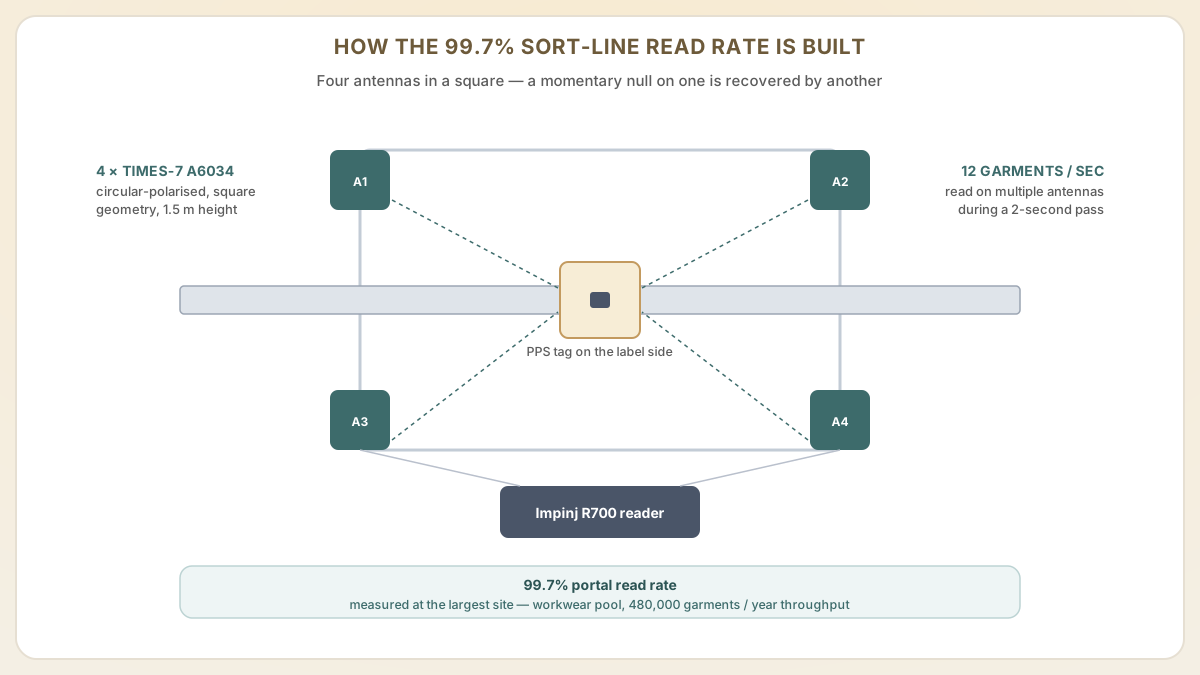
- An Impinj R700 fixed reader drives four Times-7 A6034 circular-polarised antennas in a square around the conveyor at 1.5 m height.
- Garments move at 12 per second and are read on multiple antennas during the 2-second pass, so a null on one antenna is recovered by another.
- The 99.7% portal read rate is measured at the largest site — the workwear pool at 480,000 garments per year.
250 versus 120 cycles — the durability delta
The whole case rests on one measured gap: the PPS housing carries the chip through the chemical wash, tunnel-finisher heat and extractor G-force that broke the legacy textile-laminated tag.
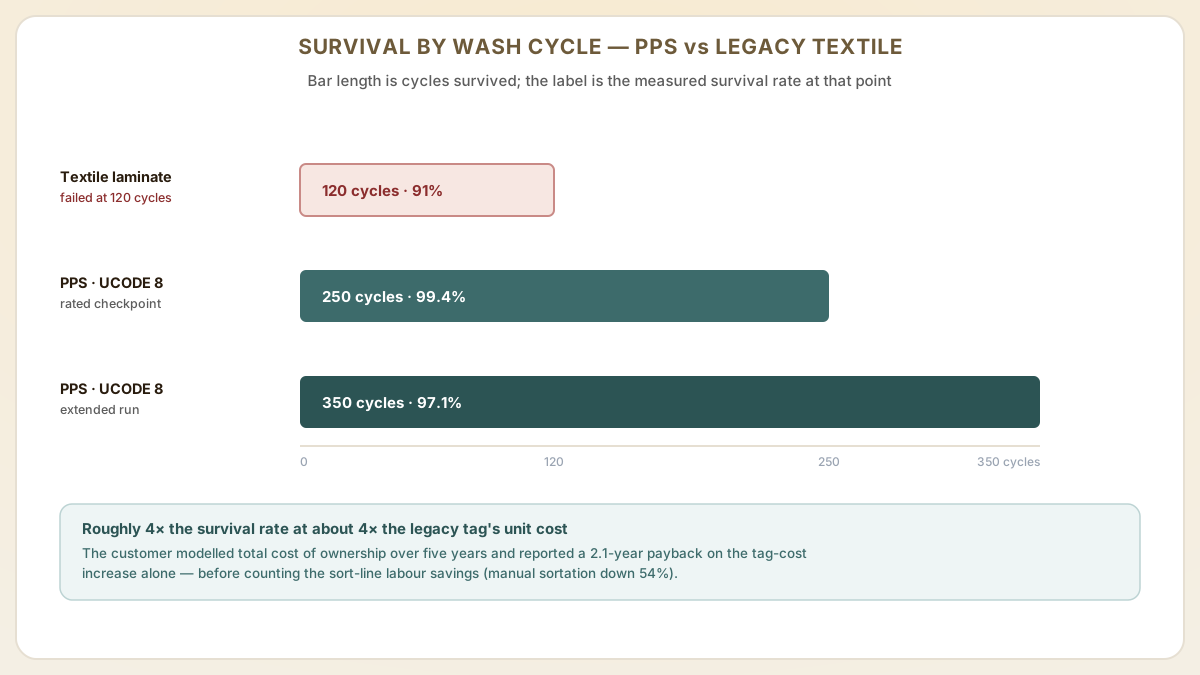
- The PPS-housed UCODE 8 tag held 99.4% survival at 250 cycles and 97.1% at 350, where the legacy textile-laminated tag had already failed at 91% by cycle 120.
- Roughly 4× the survival rate at about 4× the unit cost — a 2.1-year payback on the tag-cost increase alone, before sort-line labour savings.
- End-of-life is tag delamination from the garment label, not chip failure; chips often survive into the 400+ cycle range and are sometimes re-attached.
The deployment at a glance — chip, housing and measured results
One table for the reviewer who wants the specification and the numbers together. Every figure is the customer's own measured or shipped value — nothing here is modelled.
| Attribute | Value | Notes |
|---|---|---|
| Chip | UCODE 8 — UHF RAIN, ISO/IEC 18000-63 + EPC Gen2v2 | 128-bit EPC + 64-bit TID |
| Housing | PPS injection-moulded, heat-sealed | 26 × 11 × 2.6 mm |
| Operating temperature | -25 °C to +200 °C continuous, +220 °C peak | Survives tunnel finishers |
| Survival | 99.4% at 250 cycles · 97.1% at 350 | vs textile-laminated 91% at 120 |
| Sort-line read rate | 99.7% at 12 garments/sec | Impinj R700 + 4 Times-7 A6034 antennas |
| Labour & write-offs | Manual sortation -54% · lost-garment write-offs -38% YoY | After RFID-driven sortation |
| Unit cost / MOQ | $0.42–0.55 / tag (FOB Shenzhen, 1 M MOQ) | About 4× the legacy tag; 2.1-year payback |
| Scale | 1.8 M garments · 3 sites · 14,000 B2B accounts | Workwear / kitchen / healthcare pools |
What transfers — where this PPS + UHF pattern fits
The deciding factors here — chemical wash, high-temperature finishing and a hands-free sort line — recur across textile-service verticals. The same pattern moves cleanly onto any of them; the laundry-tag solution documents the workflow end to end.
- Healthcare linen and scrubs — the same chemical-wash, high-temperature and ozone-disinfection profile the PPS housing was chosen to survive.
- Hospitality linen (hotel sheets, food-and-beverage napery) — high wash frequency where lost-item write-offs dominate the cost case.
- Workwear and cleanroom garment rental — tunnel-finisher heat and extractor forces are exactly the failure modes textile lamination could not take.
- Any UHF sort line where hands-free portal throughput beats HF tap-scanning — the full laundry-tracking workflow shows the reader and portal build.
Useful next pages
Use these linked product, guide and comparison pages to keep the next click specific and practical.
The exact SKU shipped to this customer
Identical specification, available in MOQ from 50,000 tags.
Compare laundry-tag chemistries before you commit
The PPS vs silicone vs textile trade-off in depth.
FAQ
Can these tags survive ozone treatment?
Yes. The PPS housing is chemically inert to ozone at the concentrations used in commercial laundry (<5 ppm). The customer's healthcare-uniform pool runs ozone disinfection on every cycle and survival data is indistinguishable between the workwear pool (no ozone) and healthcare pool (ozone every cycle) over 250+ cycles.
What read-rate degradation should we expect on heavily-wrinkled garments?
Within 1 percentage point at the portal. The PPS tag is rigid and small (26 × 11 mm) so wrinkling around the tag is minimal even on bunched-up garments in a sorting bin. The dominant read-rate impact is metal interference (steel buttons, zip pulls). The customer's portal antennas are positioned to read the garment label side, which carries the tag, avoiding the metal-heavy seam side.
Is the PPS housing food-safe for kitchen wear?
PPS itself is FDA-compliant for indirect food contact (21 CFR 177.2415) and the customer's kitchen-uniform pool has run on this tag for 18 months with no compliance findings. The tag is heat-sealed onto the inner garment label, not in food-contact surfaces.
How is end-of-life tag recovery handled?
When a garment is retired, the PPS tag is mechanically cut from the garment label and recycled as a separate plastic waste stream. The chip itself is not recoverable in a useful form (it would need re-bonding to a new antenna), so the tag is treated as recyclable plastic. The customer is currently piloting a chip-reuse programme with Proud Tek where retired tags are returned for chip salvage and re-bonding to new antennas at 40% of new-tag cost.
Sources & references
Primary standards, OEM datasheets and regulatory documents cited by this article. All URLs were verified on the access date shown below.
- NXP UCODE 8 UHF RAIN RFID IC — product page and datasheet
Chip-level reference for the UCODE 8 128-bit EPC + 64-bit TID and its operating specification.
- ISO/IEC 18000-63:2015 — UHF RFID Type C air interface
UHF RAIN air-interface standard for the 860-960 MHz portal reads described.
- GS1 EPC UHF Gen2 (EPC Gen2v2) air-interface protocol
EPC Gen2v2 protocol the UCODE 8 tag and Impinj R700 reader implement.
- 21 CFR 177.2415 — Poly(phenylene sulfide) resins (indirect food additives)
FDA indirect-food-contact clearance cited for the kitchen-uniform pool's PPS housing.
Proud Tek is a Shenzhen-based RFID & NFC manufacturer supplying hotel chains, transit operators, event venues and retail brands worldwide. Every order includes free samples, RF testing and dedicated project support.
Get a Quick Quote
Tell us about your project and we'll respond within one business day. Fields marked (asterisk) are required.