
Pharma Compliance
Pharmaceutical Cold Chain RFID for Vaccines
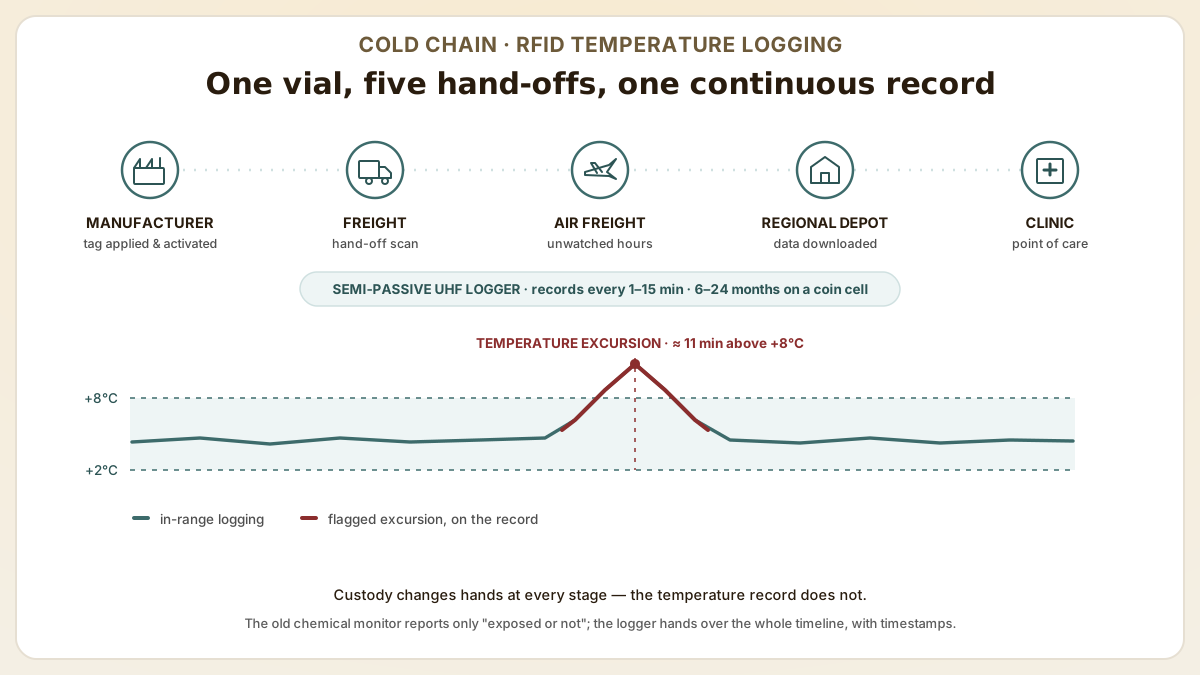
Quick answer
RFID temperature-logging tags monitor vaccines from manufacturer to point of care, logging every 1-15 minutes for 6-24 months on a coin cell. They replace single-use exposed/not-exposed indicators with a verifiable digital record that FDA, CDC and WHO programs increasingly accept.
- Vaccine cold-chain failures waste $1-3B in pharmaceutical product annually; RFID temperature loggers create audit-ready records that single-use indicators cannot.
- Modern semi-passive UHF RFID tags log temperature every 1-15 minutes for 6-24 months on a tiny coin cell, surviving the full cold-chain journey.
- FDA, CDC and WHO Vaccine Vial Monitor (VVM) programs increasingly accept RFID-logged temperature data alongside traditional VVMs.
At a glance
Use these short answers to decide whether this page matches the project before moving into the detail.
Key takeaway
Vaccine cold-chain failures waste $1-3B in pharmaceutical product annually; RFID temperature loggers create audit-ready records that single-use indicators cannot.
Why does pharma need temperature-logging RFID?
A traditional chemical vial monitor tells you only whether a vaccine was exposed — never when, for how long, or by how much. RFID temperature loggers replace that single...
Next step
Ready to move forward? Start your inquiry to get specific answers for this project.
Get a cold-chain RFID quoteWhy does pharma need temperature-logging RFID?
A traditional chemical vial monitor tells you only whether a vaccine was exposed — never when, for how long, or by how much. RFID temperature loggers replace that single verdict with a continuous, timestamped history, which is exactly what a quality investigation needs. A vaccine vial spends most of its life unsupervised: hours on a loading dock, a flight, a regional depot, a delivery van that may or may not have held its temperature between +2°C and +8°C. Cold-chain pharmaceuticals (vaccines, monoclonal antibodies, biologics, mRNA therapies) lose efficacy when exposed to out-of-range temperatures, and a traditional chemical VVM shows only a binary 'exposed/not exposed' state. RFID tags log continuous temperature history — far more useful for investigation and quality assurance.
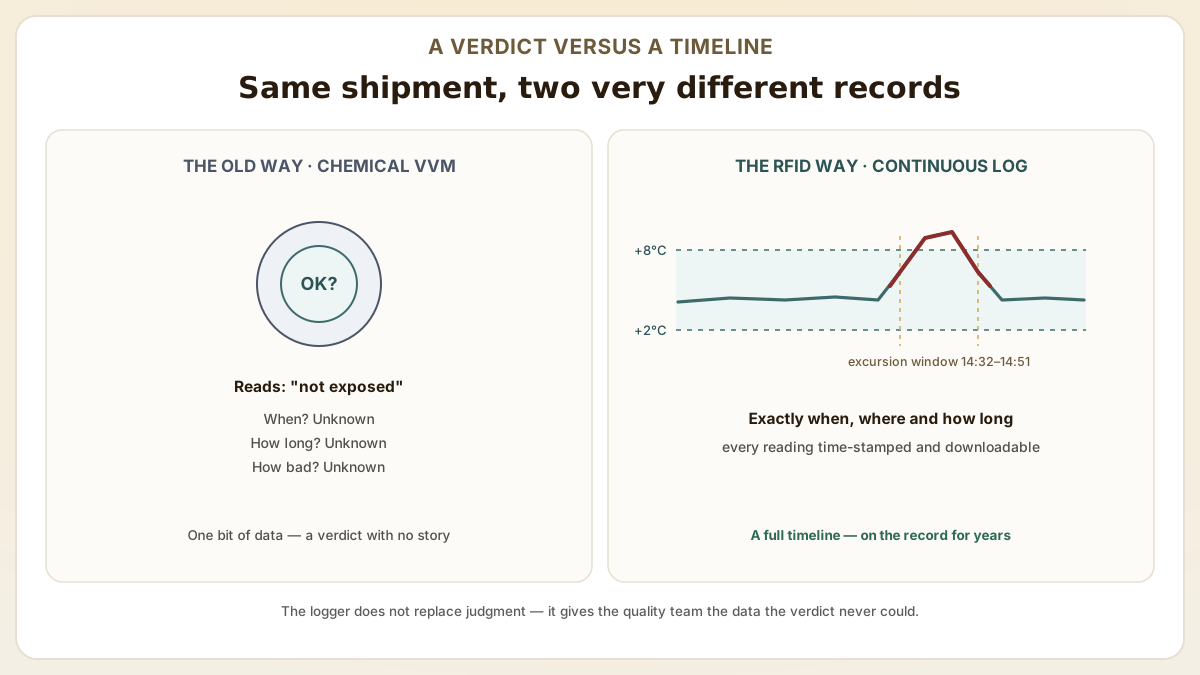
- Granular temperature history: logs every 1-15 minutes throughout the cold chain, so an investigation can see exactly when, where and how long a product was out of range.
- Persistent audit trail: data downloaded to the backend at receiving creates a permanent record. Investigators can verify product quality years later.
- Real-time alerts (active loggers): semi-active RFID with a cellular gateway alerts the supply-chain team within minutes of out-of-range exposure, allowing in-transit intervention.
- Fewer false rejections: logger data lets the quality team see whether an exposure was a harmless 5-minute blip or a genuine 30-minute problem before discarding product, rather than binning it on an uncertain VVM verdict.
- Regulatory acceptance: FDA, CDC and EMA increasingly accept RFID-logged data alongside (or in place of) VVM, and the WHO Cold Chain Equipment program endorses RFID logger use.
What chip and tag work for cold-chain logging?
Cold-chain tags differ from standard RFID in three ways: a temperature sensor on the chip, larger memory for the log history, and a battery for periodic sensing between reads. The five categories below cover most commercial offerings, from passive inlays that read only on demand to active cellular loggers that report in real time.
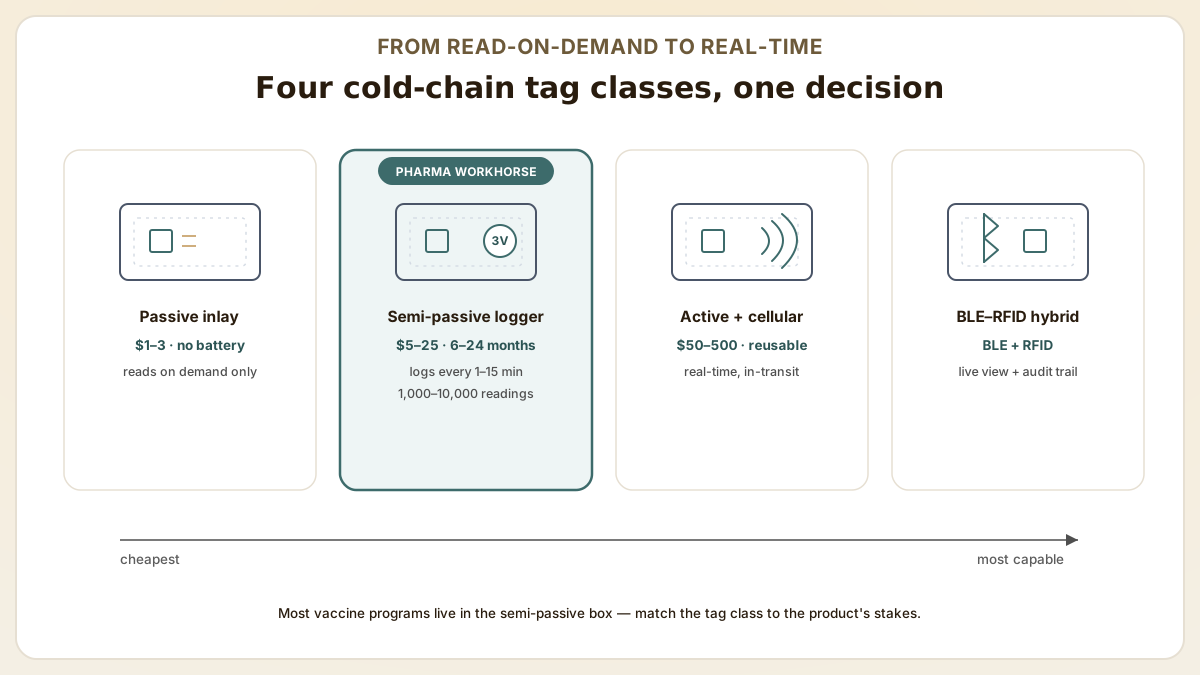
- Passive temperature inlay ($1-3 per tag): standard UHF plus a thermal sensor, no battery. Reads temperature only when activated by a reader — cheapest, but no continuous logging.
- Semi-passive logger ($5-25 per tag): a small coin-cell battery powers continuous temperature sensing every 1-15 min; memory holds 1000-10000 readings. The tag stays inactive between reads, extending battery life to 6-24 months. The pharma workhorse.
- Active logger with cellular ($50-500 per tag): a full datalogger with a cellular modem for real-time alerts and in-transit visibility. Reused across many shipments to amortize the cost.
- BLE-RFID hybrid: BLE broadcasts temperature to a phone or gateway in transit; RFID handles hand-off scanning. Combines real-time visibility with audit-trail completeness.
- Choose based on cold-chain criticality: high-value biologics (mRNA, monoclonals) justify active loggers; bulk vaccine shipments use semi-passive; mature distribution chains may use passive. A vaccine with 4-hour excursion tolerance does not need 30-second logging, but a CAR-T cell therapy does.
How do you implement cold-chain RFID at scale?
A cold-chain RFID rollout works only when the manufacturer, distributor and dispensary follow the same five-step playbook. Custody changes hands at every stage; the temperature record does not. The sequence below mirrors successful pharma cold-chain programs at major manufacturers.
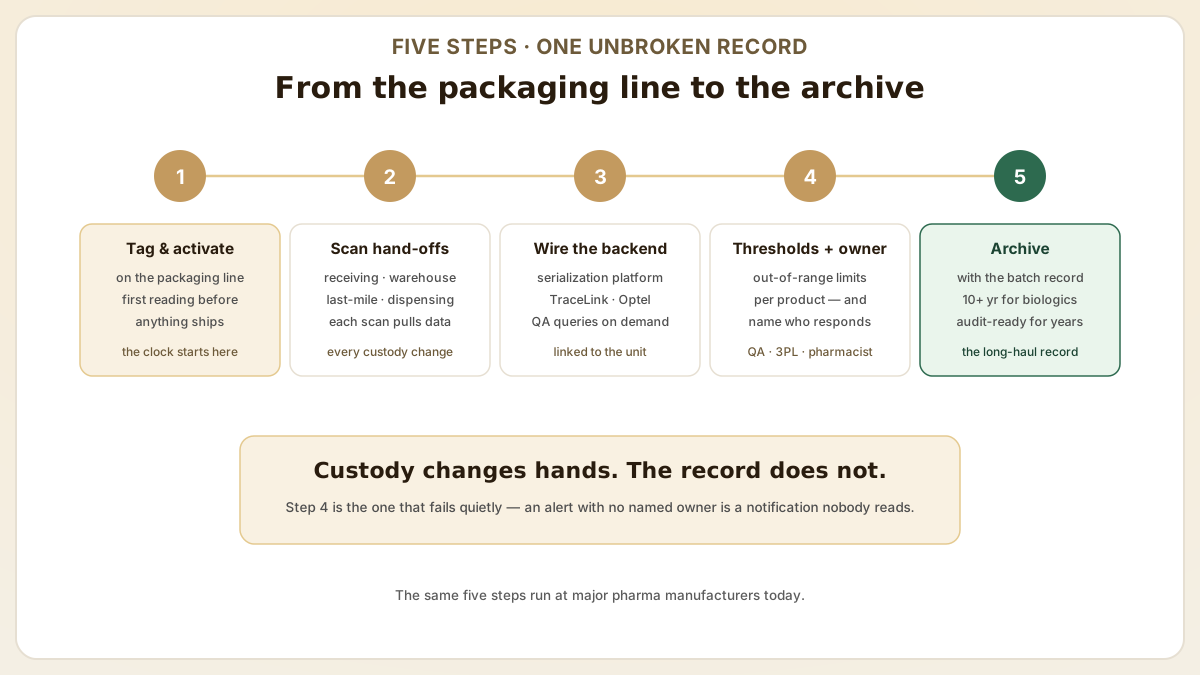
- Tag at the manufacturer: apply and activate the cold-chain tag on the packaging line, capturing the first temperature reading before shipment.
- Scan at every custody change: distributor receiving, regional warehouse, last-mile delivery and final dispensing each download the latest slice of temperature data.
- Backend integration: temperature data flows into the pharma serialization platform (TraceLink, Optel, etc.) and links to the unit's serialization record, so the quality team can query it on demand.
- Alert thresholds and a named owner: define out-of-range thresholds per product and specify who responds — manufacturer QA, distributor compliance or the dispensary pharmacist. An alert with no owner is a notification nobody reads.
- End-of-life data archive: completed cold-chain records are archived with the serialization batch for the regulatory retention period, typically 10+ years for biologics.
Which standards and authorities frame the cold-chain audit?
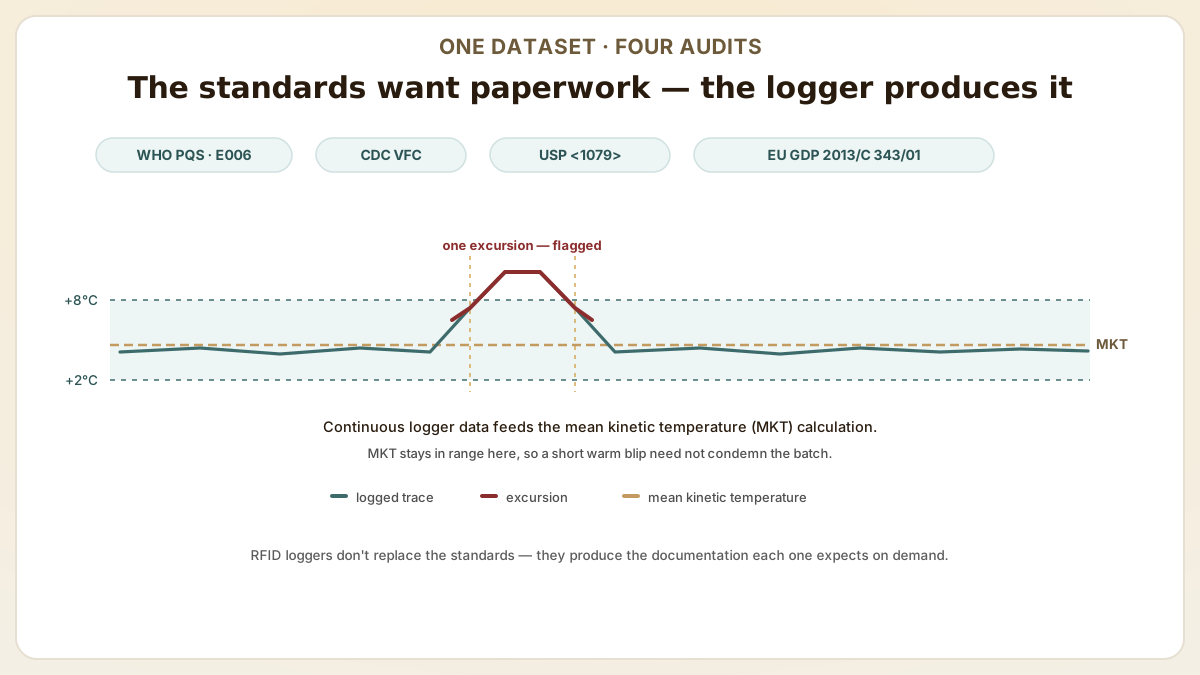
Cold-chain temperature monitoring sits inside a tightly written set of standards, and RFID loggers do not replace any of them — they produce the documentation each one expects on demand. The four most-cited references are CDC's Vaccine Storage and Handling Toolkit (Pink Book Chapter 5), WHO's PQS (Performance, Quality and Safety) catalogue, USP General Chapter <1079> and the EU GDP guidelines (2013/C 343/01).
- Storage bands (WHO, CDC): both anchor refrigerated vaccines to +2°C to +8°C and frozen vaccines to -50°C to -15°C (varies by product). Industry-published cold-chain guides report more than 30% of pharmaceutical deliveries arriving with some degree of damage or spoilage in the $76B global pharmaceutical logistics delivery market — the gap between specification and reality is precisely what RFID logger data is meant to surface.
- USP <1079> Good Storage and Distribution Practices: defines mean kinetic temperature (MKT) calculations and excursion-tolerance modelling. RFID logger data feeds the MKT calculation directly; without continuous logging, MKT defaults to assumptions that often force unnecessary product discard.
- EU GDP (Guidelines on Good Distribution Practice of medicinal products for human use, 2013/C 343/01): requires continuous temperature monitoring throughout the distribution chain and 'documented evidence of temperature mapping' for any storage or transport unit holding medicinal product. RFID logger data plus a temperature-mapping report is the standard EU GDP audit deliverable.
- CDC Vaccines for Children (VFC) program: providers must document continuous temperature monitoring with a digital data logger (DDL) meeting CDC's specifications, including a buffered probe and minimum recording interval. Many providers now layer RFID on the secondary packaging to close the gap between the DDL inside the unit and per-package shipment-level history.
- Excursion-handling protocol: WHO and CDC both require vaccines suspected of excursion to be labelled 'DO NOT USE', stored separately, and held until viability is determined. RFID logger data lets the manufacturer's QA team evaluate against the product's published Stability Budget without product release delay — typically reducing 'precautionary discard' by 30-60% based on industry practice.
Vendor and product landscape — what hospitals and 3PLs actually deploy
The cold-chain RFID logger market is mature and well-published. Sensitech (a Carrier company), ELPRO and Berlinger are among the names that show up most often in pharma RFP lists, and the WHO PQS catalogue lists the pre-qualified data loggers most NGO and government-procured vaccine programs draw from. Five buyer questions consistently separate workable vendors from non-starters.
- WHO PQS pre-qualification status: WHO PQS lists data loggers (electronic shipment indicators, electronic refrigerator monitors) under category E006. NGO and government cold-chain procurement (UNICEF, Gavi, PAHO) typically requires PQS-listed devices. Commercial pharmaceutical 3PL programs are more flexible, but PQS listing remains a quality filter.
- Calibration certificate and traceability: data loggers must arrive with NIST-traceable (US) or accredited-lab (EU EN ISO/IEC 17025) calibration certificates. Sensitech, ELPRO and Berlinger publish per-unit certificates; lower-cost vendors sometimes ship batch certificates that can fail a GDP audit for individual-shipment release.
- Temperature accuracy and resolution: pharmaceutical loggers should hit ±0.3-0.5°C accuracy in the +2 to +8°C range and ±1°C in -25 to +60°C. Disposable, waterproof, pre-calibrated loggers covering the typical -15 to +50°C pharma range are widely available; ELPRO ECOLOG-PRO series and Sensitech TempTale are the published industry references.
- Logging interval and battery model: 1-15 minute intervals on a coin cell typically last 6-24 months, per industry-published specifications; active loggers with cellular drop to 30-90 days. Match the interval to product stability data rather than over-sampling.
- Data export and 21 CFR Part 11 audit support: pharma QA teams need PDF and CSV exports plus an audit trail of who viewed or exported data. ELPRO LIBERO and Sensitech ColdStream publish 21 CFR Part 11-aligned audit features; lower-end consumer loggers do not.
Useful next pages
Use these linked product, guide and comparison pages to keep the next click specific and practical.
Cold-chain pharma RFID supply
Temperature-logging tags, semi-passive loggers and pharma cold-chain integration.
Cold-chain regulatory and industry references
Public references for cold-chain QA, GDP and WHO PQS programs.
FAQ
How long does a cold-chain RFID logger battery last?
Semi-passive loggers with 5-15 minute logging interval: 6-24 months on a coin cell. Active loggers with continuous cellular reporting: 30-90 days. Battery life depends heavily on logging interval and ambient temperature; cold storage extends battery life vs warm.
Can I reuse cold-chain RFID loggers?
Yes — semi-passive and active loggers are reusable for 50-200 shipment cycles depending on construction. Returnable-logger programs reduce per-shipment cost from $20-50 (single-use) to $1-3 (reused) once the reverse-logistics flow is established.
Does cold-chain RFID replace traditional VVMs?
Increasingly yes for pharmaceutical cold chain. Some vaccine programs (CDC VFC, WHO bulk procurement) still require VVM as a redundant indicator. Best practice runs both: VVM as visual final check, RFID as primary audit record.
What's the regulatory acceptance of RFID temperature data?
FDA accepts RFID-logged data as part of GMP/GDP records (subject to 21 CFR Part 11 controls when records are electronic). EMA accepts under EU GDP 2013/C 343/01. WHO Pre-Qualification program accepts loggers listed under PQS category E006. Some emerging markets still require traditional VVMs alongside RFID. Always verify per-market requirement before relying on RFID alone.
How do mean kinetic temperature (MKT) calculations interact with RFID logger data?
USP General Chapter <1079> defines mean kinetic temperature as a single calculated temperature representing the cumulative thermal stress on a product over a logging period. Continuous logger data plugged into the standard MKT formula (Arrhenius-based) lets quality teams release product even after short excursions, provided the calculated MKT remains within the labelled storage range. Without continuous logger data, conservative defaults force much higher discard rates.
What are typical industry loss-rate baselines for vaccine cold chain?
Industry-published cold-chain guides cite that more than 30% of pharmaceutical deliveries arrive with some degree of damage or spoilage in the $76B global pharmaceutical logistics delivery market. WHO and Gates Foundation working papers have placed vaccine wastage between 10-50% in low- and middle-income country distribution chains depending on product and infrastructure. Continuous RFID logging plus disciplined excursion-handling typically halves the discard rate in well-run programs.
Proud Tek is a Shenzhen-based RFID & NFC manufacturer supplying hotel chains, transit operators, event venues and retail brands worldwide. Every order includes free samples, RF testing and dedicated project support.
Get a Quick Quote
Tell us about your project and we'll respond within one business day. Fields marked (asterisk) are required.