
Distributor Programs
Verifying ISO 9001/14001 RFID Manufacturers
Quick answer
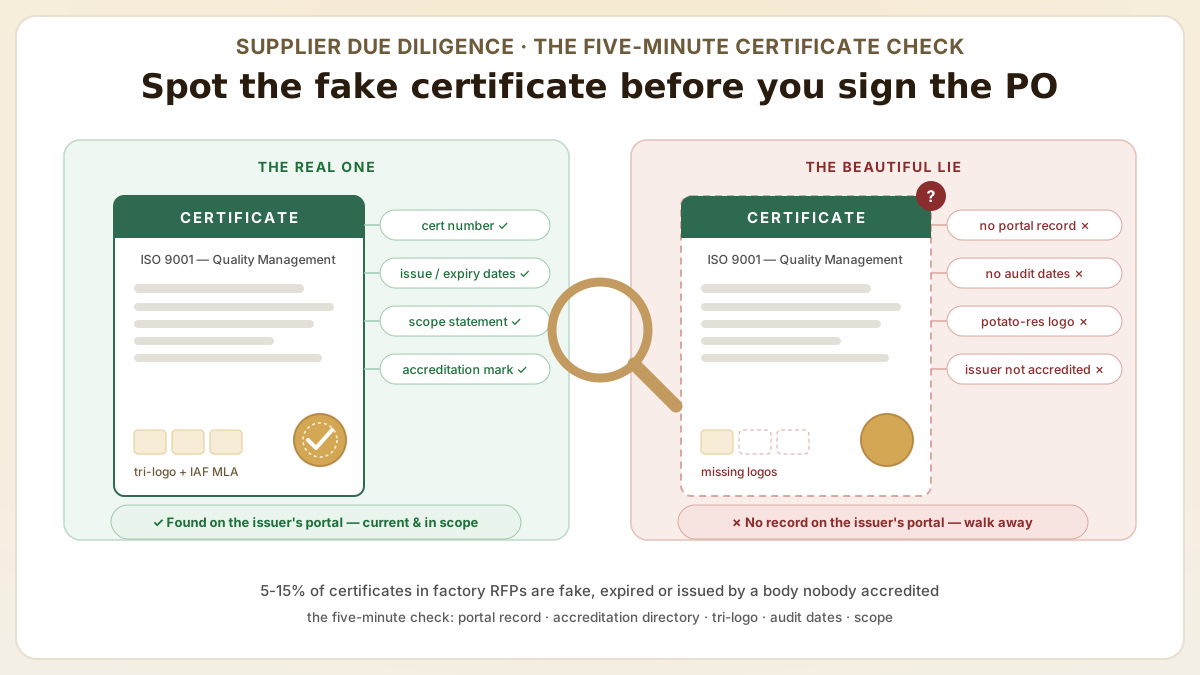
5-15% of certificates in RFID factory RFPs are fake, expired or issued by non-accredited bodies — a 5-minute portal check catches most of them. ISO 9001 (quality), ISO 14001 (environment), BSCI (social compliance) and RoHS / REACH (substance restriction) are the stack that separates serious RFID factories from gray-market suppliers; this guide shows how to verify each, plus the sector certifications that gate automotive, medical and radio-equipment markets.
- 5-15% of certificates received in factory RFPs are fake, expired or issued by non-accredited bodies — that is not a rounding error, that is compliance liability wearing a nice suit.
- ISO 9001 (quality), ISO 14001 (environment), BSCI / SA8000 (social compliance) and RoHS / REACH (substance restriction) form the core certification stack for export-grade RFID factories. Serious suppliers hold all of them; anything less is set dressing.
- Every certification has an issuing-body database accessible online — 5 minutes of verification per certificate is the highest-ROI procurement step distributors can take.
At a glance
Use these short answers to decide whether this page matches the project before moving into the detail.
Key takeaway
5-15% of certificates received in factory RFPs are fake, expired or issued by non-accredited bodies — that is not a rounding error, that is compliance liability wearing a nice suit.
What certifications matter for RFID factories?
Five certification families separate export-grade RFID factories from gray-market suppliers: quality, environment, labor, materials and — for the encoding crowd — securi...
Next step
Ready to move forward? Start your inquiry to get specific answers for this project.
Request RFID factory certificationsWhat certifications matter for RFID factories?
Five certification families separate export-grade RFID factories from gray-market suppliers: quality, environment, labor, materials and — for the encoding crowd — security. The forged versions are easy to admire: the logo is crisp, the seal is shiny, the signature has a confident little flourish, and the issuing body turns out to be a website registered the week before the quote went out. Forgers have gotten very good at the theater of compliance and no better at the substance of it. Different export markets demand different combinations, so verify the certs your customers will ask for — not the ones that happen to look prettiest in the PDF.
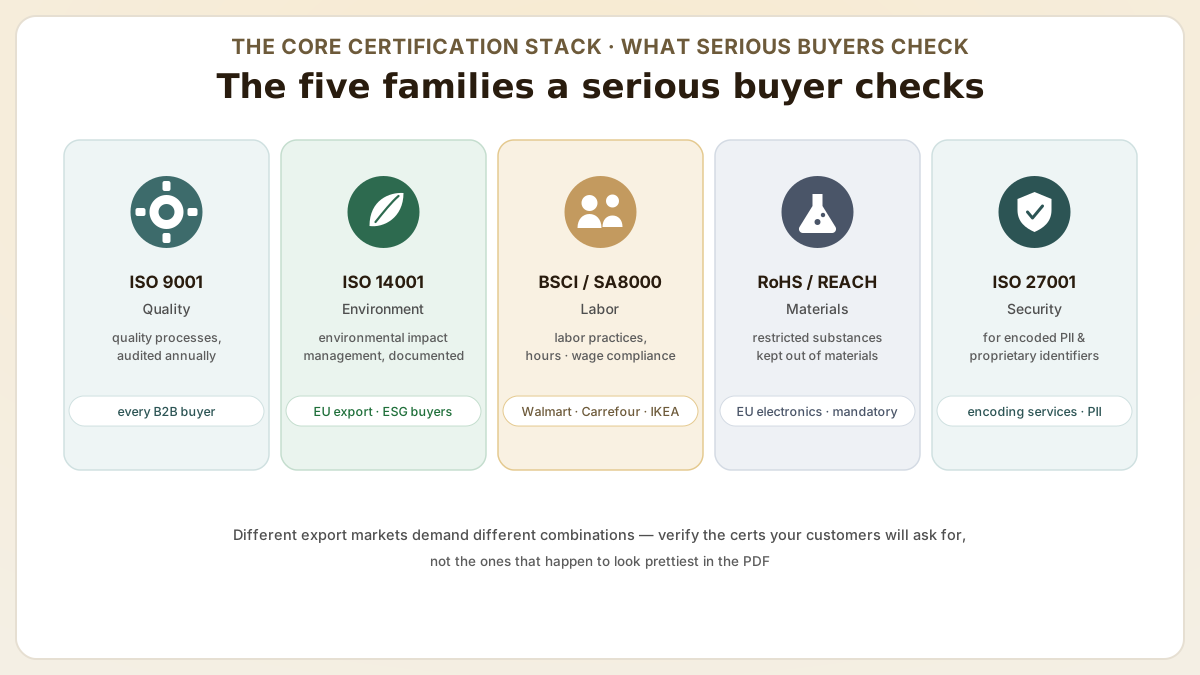
- ISO 9001 (Quality Management): documented quality processes, audited annually. Required for almost every B2B procurement on Earth — the baseline expectation, like a factory having a roof.
- ISO 14001 (Environmental Management): documented environmental impact management. Increasingly non-negotiable for EU export and ESG-conscious buyers.
- BSCI / SA8000 (Social Compliance): labor practices, working hours, wage compliance. The price of admission for major US and EU retail buyers — Walmart, Carrefour, IKEA and friends.
- RoHS 3 + REACH (Substance Restriction): materials free of restricted substances — lead, cadmium and the rest of the periodic table's troublemakers. Required for any electronics export to EU.
- ISO 27001 (Information Security): for distributors handling encoded data with PII or proprietary identifiers. Less common in tag manufacturing; more critical for encoding services.
How do you verify a certificate is real?
Every certification body publishes a verification portal, and the portals are refreshingly boring to use. Five quick checks catch most fake certificates at roughly 5 minutes per cert — about the time it takes to reheat a coffee, and a spectacular exchange rate for peace of mind.
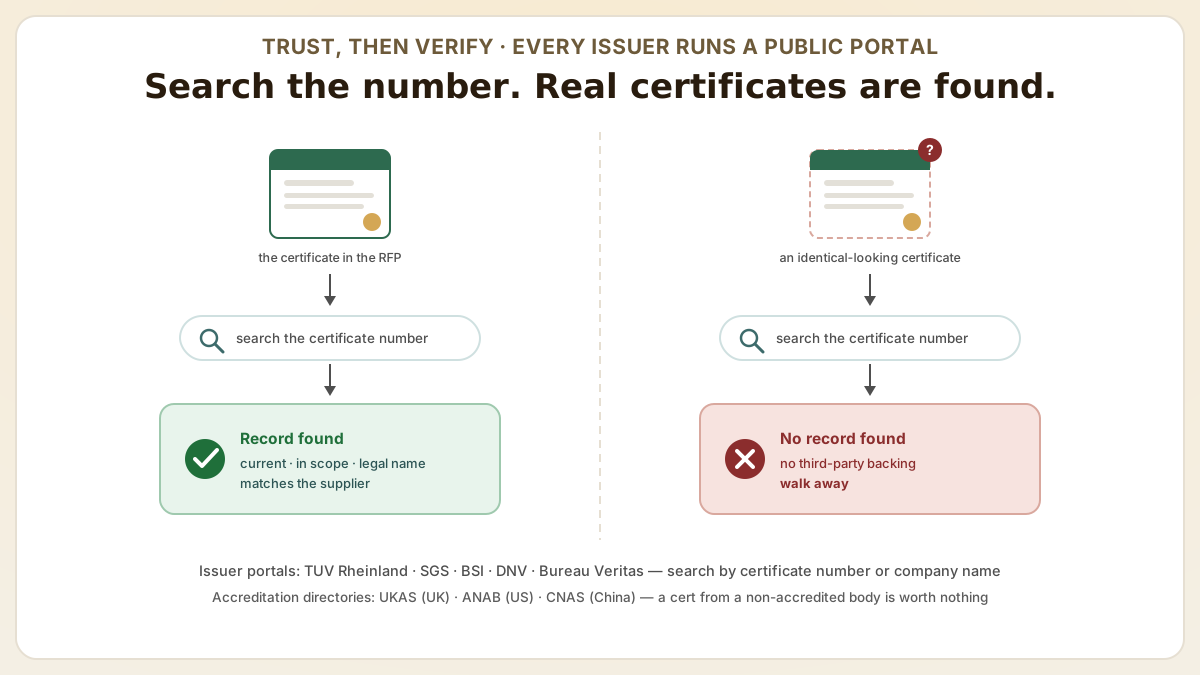
- ISO 9001 / 14001: verify on the issuing certification body's website (TUV Rheinland, SGS, BSI, DNV, Bureau Veritas all have public portals). Search by certificate number or company name — if it's real, it's there.
- Cross-check the certification body itself is accredited: each country has an accreditation body (UKAS in UK, ANAB in US, CNAS in China). A certificate from a non-accredited body is worth exactly what you'd pay for a screenshot of one.
- BSCI: verify on the amfori.org BSCI portal. Each member factory has a current audit score and history. A lapsed membership is the paperwork equivalent of a gym card last swiped in 2019.
- RoHS / REACH: testing reports from accredited labs (SGS, Intertek, TUV). Verify the lab's accreditation too — some 'lab reports' are as forged as the certificates they vouch for.
- Audit cycle: real certificates show a surveillance audit within the past 12 months. Certificates more than a year old without surveillance are likely lapsed — and hoping you won't check the date.
What's the difference between accredited and self-issued?
Anyone can print a certificate; accreditation is the part that makes someone else willing to stand behind it. Truly — your nephew could design a stunning one this afternoon. Some 'certifications' are issued by certifying bodies that are not themselves accredited, and the distinction feels academic right up until an audit comes around — that is the moment an impressive letterhead stops being impressive.
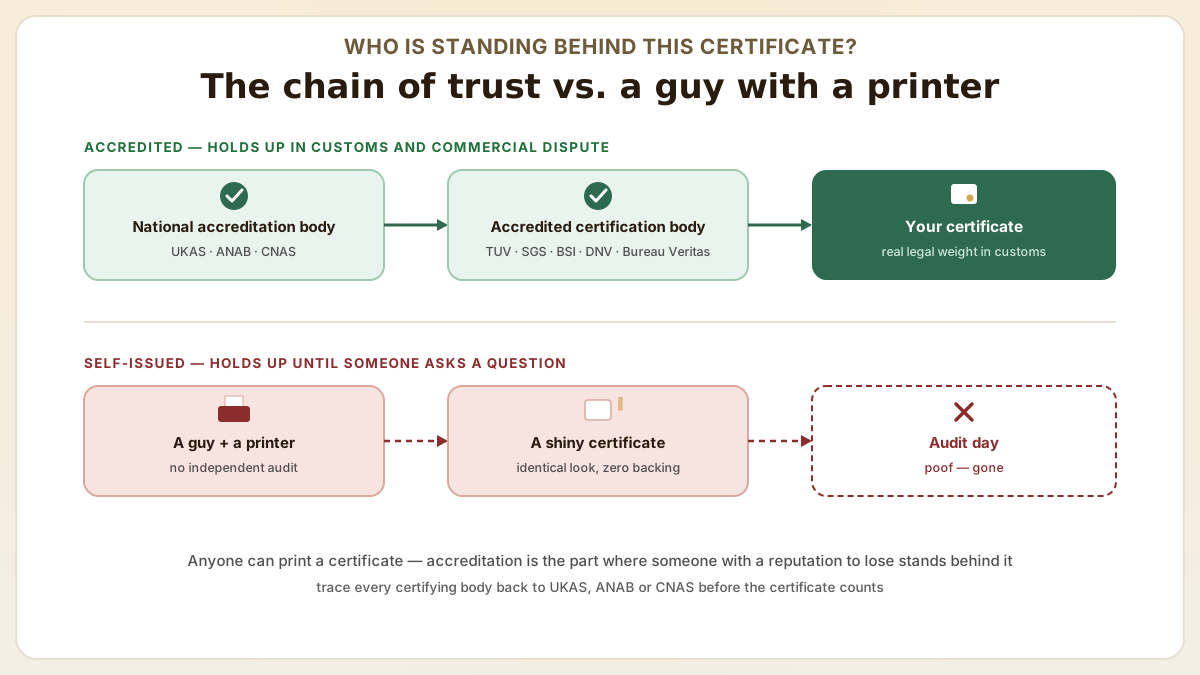
- Accredited certification body: itself audited by the national accreditation body (UKAS, ANAB, CNAS). Issued certificates have legal weight in commercial dispute and customs clearance — every claim traceable up the chain to someone with a reputation to lose.
- Non-accredited certification body: issues certificates that look identical but carry no third-party validation. Can be commissioned and paid for without independent audit — pay the fee, skip the scrutiny.
- Self-issued 'certificates': vendor declarations of compliance (DoC). Useful as supplier statement but not equivalent to third-party certification — and no substitute for one.
- Common scam: certificates from impressive-sounding but fictional certifying bodies. Always trace the certifying body to the national accreditation body's directory; fictional bodies have a way of not appearing there.
Sector-specific certifications that gate market access in 2026
Beyond the ISO 9001 / 14001 / BSCI / RoHS / REACH baseline, six certifications are gatekeepers for specific verticals — velvet ropes, each guarding one market. Buying from a factory that lacks them locks you out of the corresponding customer segment until they invest in certification — typically 6-12 months of audit prep per standard. There is no expedite fee on an audit calendar: a certificate either exists today or it is a future plan wearing a present-tense logo.
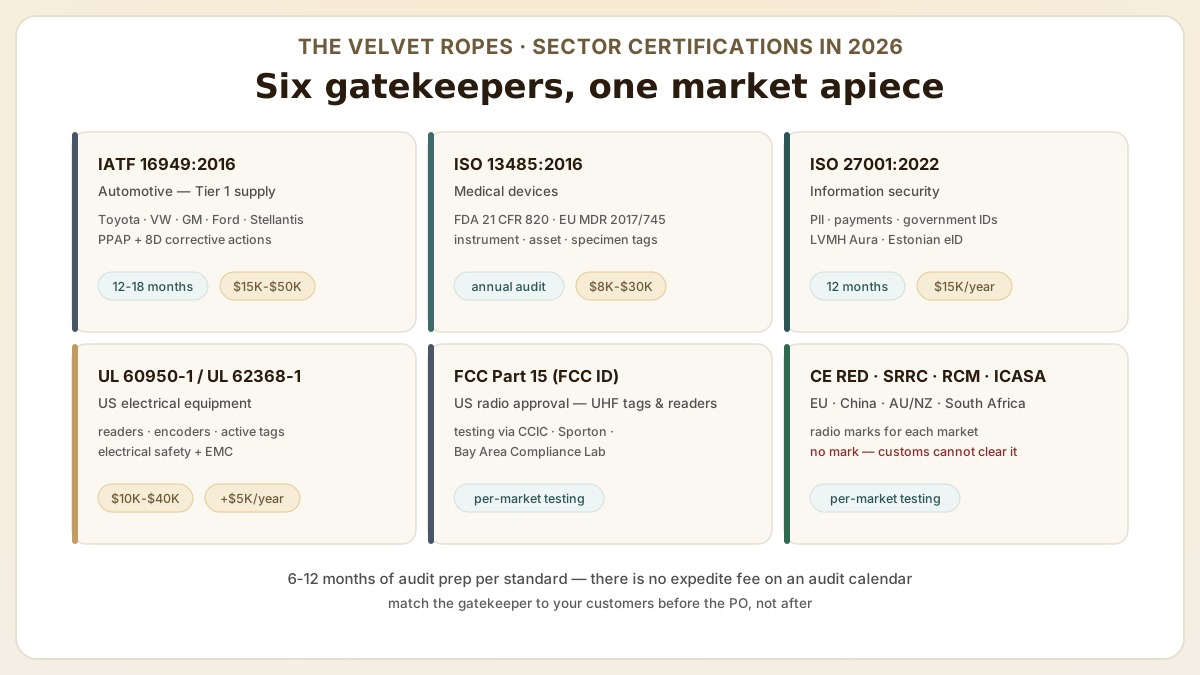
- IATF 16949:2016 — automotive sector (Toyota, VW, GM, Ford, Stellantis Tier 1 supply). Required for any RFID tag going into vehicle assembly, dealer inventory, or OEM aftermarket. Mandates PPAP submissions and 8D corrective actions — the automotive world's love language. Full implementation takes 12-18 months; certification cost $15K-$50K.
- ISO 13485:2016 — medical devices (FDA 21 CFR 820 and EU MDR 2017/745 compatibility). Required for surgical-instrument tracking RFID, hospital-asset tags, blood-bag and specimen labels. Annual audit; cert cost $8K-$30K depending on factory size and product class.
- ISO 27001:2022 — information security management. Required for factories that encode PII, payment credentials, government IDs or proprietary serialisation (LVMH Aura, Estée Lauder Aprivacy, Estonian eID, etc.). 12-month implementation; ongoing $15K/year for surveillance audits.
- UL listing (e.g., UL 60950-1 / UL 62368-1) — required for any RFID reader, encoder or active tag sold into the United States as electrical equipment. Listing covers electrical safety and EMC; lab fees $10K-$40K plus $5K/year for the follow-up service that keeps it honest.
- FCC Part 15 / CE RED / RCM / ICASA / SRRC — radio-equipment regulatory marks. FCC ID required to sell any UHF tag or reader in the US; CE + RED required in EU; SRRC for China; RCM for Australia/NZ. Without these the customs broker cannot clear the product — the shipment becomes a very expensive paperweight at the border. Factory should hold or arrange testing through CCIC, Sporton, Bay Area Compliance Lab or similar.
| Certification | Gates access to | Typical timeline | Typical cost |
|---|---|---|---|
| IATF 16949:2016 | Automotive Tier 1 (vehicle assembly, dealer inventory, OEM aftermarket) | 12-18 months | $15K-$50K |
| ISO 13485:2016 | Medical devices (FDA 21 CFR 820, EU MDR 2017/745) | Annual audit | $8K-$30K |
| ISO 27001:2022 | Encoding PII, payment credentials, government IDs | 12-month implementation | $15K/year ongoing |
| UL 60950-1 / UL 62368-1 | US market for readers, encoders, active tags | Listing + yearly follow-up | $10K-$40K + $5K/year |
| FCC Part 15 / CE RED / RCM / ICASA / SRRC | Customs clearance for radio equipment (US, EU, China, AU/NZ, ZA) | Per-market testing | Via CCIC, Sporton, Bay Area Compliance Lab or similar |
Step-by-step verification workflow that catches forged certificates in 5 minutes
An hour of structured certificate verification before signing a first PO catches 5-15% of submitted certificates that turn out to be expired, fake, or issued by non-accredited bodies. Run this workflow on every supplier — yes, even the one your best contact swears by. A glowing recommendation tells you someone liked the supplier, not that anyone verified the paperwork — and the forger is counting on that difference.
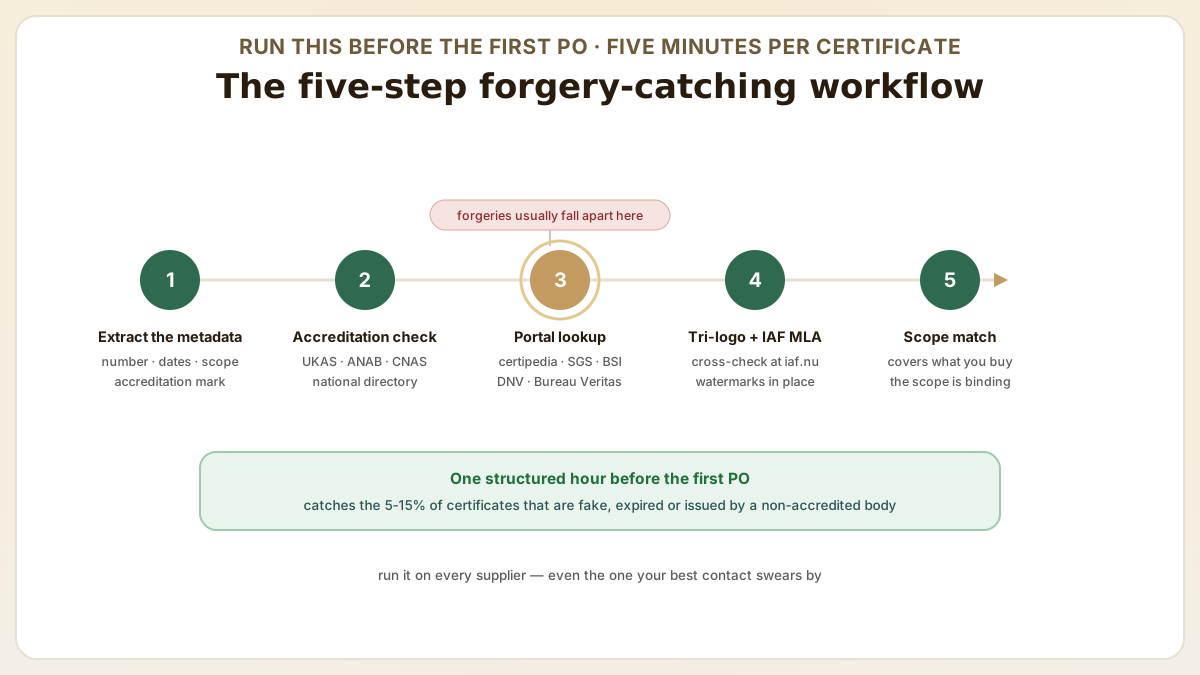
- Step 1Step 1 — extract the metadata: certificate number, issuing body, issue date, expiry date, scope statement, accreditation mark (UKAS, ANAB, CNAS, DAkkS, etc.). A real certificate wears all of these clearly at its corners; missing metadata is the single most common forgery tell.
- Step 2Step 2 — verify the issuing body is accredited. UKAS (United Kingdom): ukas.com/find-an-organisation. ANAB (United States): anab.ansi.org/credential-directory. CNAS (China): english.cnas.org.cn (use the directory of accredited certification bodies). If the body is not on the national accreditation directory, the certificate is worth nothing in customs or commercial dispute.
- Step 3Step 3 — verify the certificate on the issuing body's portal. TUV Rheinland: certipedia.com. SGS: sgs.com/en/our-company/certified-clients-and-products. BSI: pgplus.bsigroup.com/certificate-validation. DNV: dnv.com/certificates. Bureau Veritas: certifications.bureauveritas.com. Search by certificate number; should return a current, in-scope record matching the supplier's legal name. Forged paperwork usually falls apart right here.
- Step 4Step 4 — check accreditation logos and watermarks. Accredited certificates carry a tri-logo (issuing body + national accreditation body + IAF MLA mark). Forgeries often miss the IAF MLA logo or place it incorrectly. Cross-reference the IAF (International Accreditation Forum) signatory list at iaf.nu.
- Step 5Step 5 — verify the scope of certification matches what you intend to buy. ISO 9001 scope 'electronic components manufacturing' covers RFID; scope 'plastic injection moulding' does not, even if the factory makes RFID tags as a side hustle. The scope statement is binding — out-of-scope production is not certified.
Useful next pages
Use these linked product, guide and comparison pages to keep the next click specific and practical.
Certified RFID product lines
Products manufactured under ISO 9001 / ISO 14001 / RoHS and customer-required certifications.
Audit-ready facility
Documentation, audit reports, and certificate verification available on request.
Request certificates and audit pack
We share current ISO certificates, RoHS test reports, and BSCI audit summaries with qualified buyers.
Accreditation body directories
National accreditation bodies where you can verify whether an issuing certification body is itself accredited.
FAQ
How long are RFID factory certifications valid?
ISO 9001/14001: 3-year cycle with annual surveillance audits. BSCI: 1-year cycle (annual re-audit). RoHS/REACH: per-batch testing; certificates valid until material/process change. Always verify the most recent certificate, not a flattering historical issuance from a better era.
Can I trust a Chinese factory's English-translated certificates?
Translations are usually accurate but verify the underlying Chinese-language original on the issuing body's portal. Translation fraud (quietly translating one cert as another) does occur with low-quality suppliers. Cross-reference the Chinese certificate numbers and you'll catch it.
What if a factory cannot produce ISO 9001?
Be cautious. Major export-grade RFID factories all hold ISO 9001. Absence indicates either (a) a very small operation, (b) commissioned-out manufacturing, or (c) unwillingness to invest in quality systems. None are good signals for a long-term supply relationship.
Are RFID-specific certifications (ARC, Auburn) the same as ISO 9001?
No — different job entirely. ARC certifies that a specific RFID inlay performs to retail-mandate standards (read rate, range). ISO 9001 certifies the factory's quality management. A factory can have ISO 9001 without ARC, or vice versa. Required certs depend on your customer base.
Why does the factory's certificate show TUV Rheinland but the audit body is a small Chinese firm?
This is a common pattern, and often legitimate: the certificate is issued by an accredited body (TUV, SGS, BSI) but the on-site audit is subcontracted to a local affiliate. Subcontracted audits are legitimate if the local firm is qualified under the issuing body's audit-team criteria — TUV Rheinland Greater China and SGS-CSTC are real subsidiaries, for example. Pure third-party subcontracting outside the issuing body's network is a red flag. Ask for the actual audit team's lead-auditor ID and verify on the issuing body's portal.
Are SDoC (Supplier Declaration of Conformity) and self-issued certificates worth anything?
Limited, but not zero. FCC permits SDoC for low-risk Part 15 devices (e.g., low-power RFID readers below certain power levels), and EU CE marking is partly an SDoC framework. SDoCs are legally binding statements by the supplier, so they carry liability — but they do not have the third-party validation of an accredited audit. For ISO 9001 / 14001 / 27001 / 13485 there is no SDoC route — these MUST be accredited third-party certificates or they don't count for retail mandates and regulated markets.
Proud Tek is a Shenzhen-based RFID & NFC manufacturer supplying hotel chains, transit operators, event venues and retail brands worldwide. Every order includes free samples, RF testing and dedicated project support.
Get a Quick Quote
Tell us about your project and we'll respond within one business day. Fields marked (asterisk) are required.