
Distributor Programs
RFID OEM White-Label
Your Brand on Our Tags
Quick answer
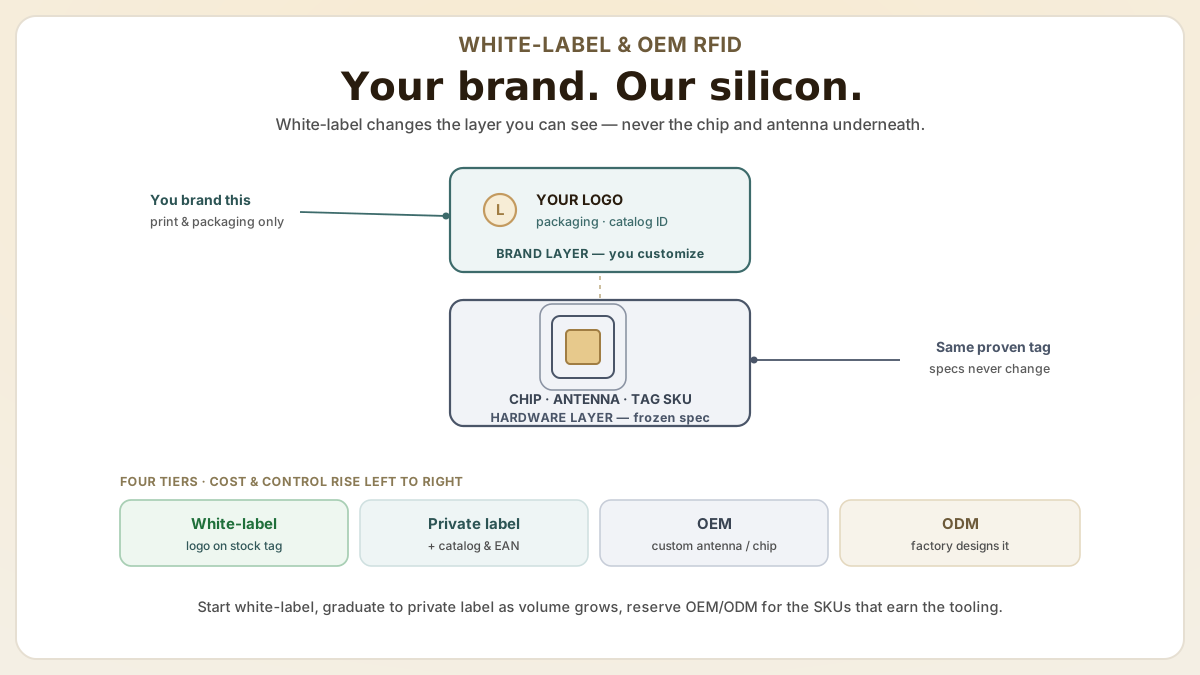
RFID white-label programs put your brand on factory-standard tags, cards and wristbands at a 5-15% premium over generic — dropping to 2-5% past 100K units — on a typical 1K-10K MOQ, same proven silicon, your name on the box. True OEM adds custom form factors and chip combinations but only pencils out above roughly 500K-1M lifetime units. Between a clean launch and a pallet of misprints stand MOQ negotiation, print-ready artwork and a few quality-control checkpoints.
- White-label RFID programs let distributors brand standard products with their own logo, packaging and printed catalog ID — typical MOQ 1K-10K units depending on customization depth.
- Cost premium over generic-branded equivalents is 5-15% at low MOQ, dropping to 2-5% at 100K+ volume — manageable margin impact for the brand value gained.
- OEM beyond white-label includes proprietary form factors and chip combinations — typical MOQ 50K-500K units with 10-30% premium and 12-16 week lead time.
At a glance
Use these short answers to decide whether this page matches the project before moving into the detail.
Key takeaway
White-label RFID programs let distributors brand standard products with their own logo, packaging and printed catalog ID — typical MOQ 1K-10K units depending on customization depth.
What does white-label vs OEM mean for RFID?
White-label means the factory's standard product with your branding on it; OEM means a product the factory builds to your spec — one word in the trade, two very differen...
Next step
Ready to move forward? Start your inquiry to get specific answers for this project.
Get a white-label RFID quoteWhat does white-label vs OEM mean for RFID?
White-label means the factory's standard product with your branding on it; OEM means a product the factory builds to your spec — one word in the trade, two very different invoices. A distributor emails the factory asking for an 'OEM program,' picturing their logo on a standard tag, ready in a few weeks; the factory, taking 'OEM' literally, quotes custom tooling, wafer reservations and a lead time measured in seasons. Both sides are right — they are just talking past each other. Getting the vocabulary straight up front is the cheapest negotiation you will ever run. The four tiers below climb from lowest cost and risk to highest.
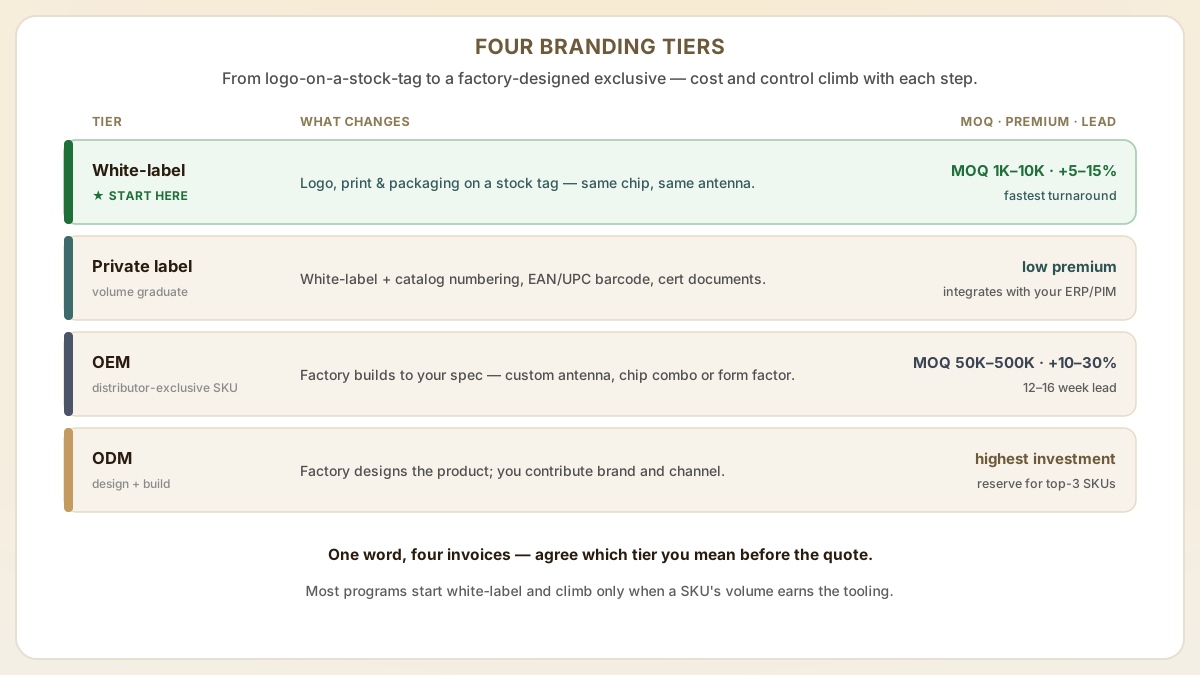
- White-label: factory-standard product with distributor's logo and branding. Same tag SKU, same chip, same antenna — only printing and packaging change. Lowest cost premium and fastest turnaround.
- Private label: white-label plus distributor-specific catalog numbering, EAN/UPC barcode and certification documentation. Useful when distributor needs to integrate with own ERP/PIM.
- OEM: factory builds a unique product to distributor's spec — proprietary antenna design, chip combination, form factor, or material. Highest cost and longest lead time but creates a distributor-exclusive SKU.
- ODM (Original Design Manufacturer): factory designs and manufactures a product the distributor sells under their brand. Distributor contributes brand and channel; factory contributes engineering and production.
- Most distributor programs start with white-label (low risk, fast turnaround), graduate to private label as volume grows, and reserve OEM/ODM for top-3 SKUs that warrant the investment.
What does white-label cost vs generic?
White-label costs 5-15% more than generic at first-order volume, and that premium is built from four line items you can negotiate one at a time: printing, packaging, catalog coding and setup. None of them is mysterious once you see the stack, and each shrinks as volume climbs. If you are still pricing the bare tag underneath, the 2026 cost-per-RFID-tag breakdown is the companion read. The components below show where the premium actually goes.
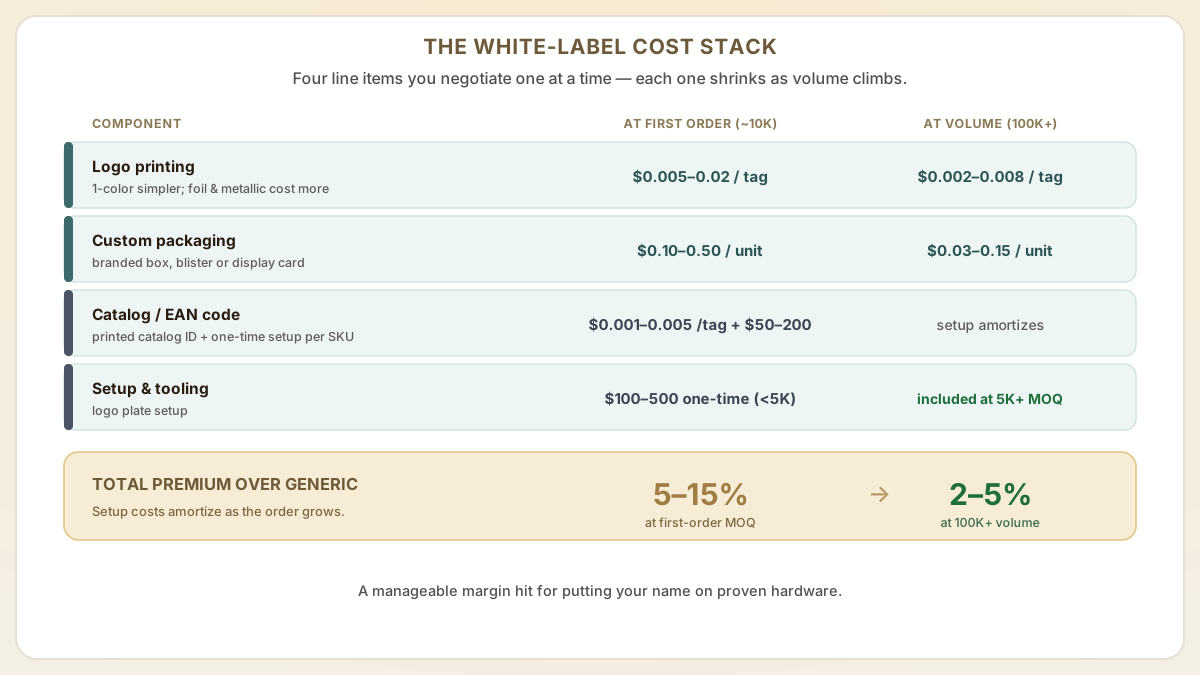
- Logo printing: $0.005-0.02 per tag at 10K volume; $0.002-0.008 at 100K volume. Single-color simpler than 4-color; foil and metallic effects cost more.
- Custom packaging: $0.10-0.50 per retail unit for branded box, blister or display card. Reduces to $0.03-0.15 at 50K+ volume.
- Custom catalog/EAN code: $0.001-0.005 per tag for printed catalog ID. Plus one-time $50-200 setup fee per SKU.
- Setup and tooling: most factories include logo plate setup in the unit price at 5K+ MOQ. Below 5K, expect $100-500 one-time setup fee.
- Total premium over generic: typically 5-15% at first-order MOQ; drops to 2-5% at 100K+ volume as setup costs amortize.
How do you set up a white-label program?
Setting up a white-label program runs through five repeatable steps: negotiate the MOQ, ship factory-ready brand assets, approve a sample run, inspect the first production lot, then clear customs. Distributors who skip a step usually pay for it later — 4-6 weeks of rework is the going rate for discovering your logo drifted after the full run shipped. If the factory itself is still unvetted, run the China RFID factory audit checklist before you send artwork. The five steps below, in order.
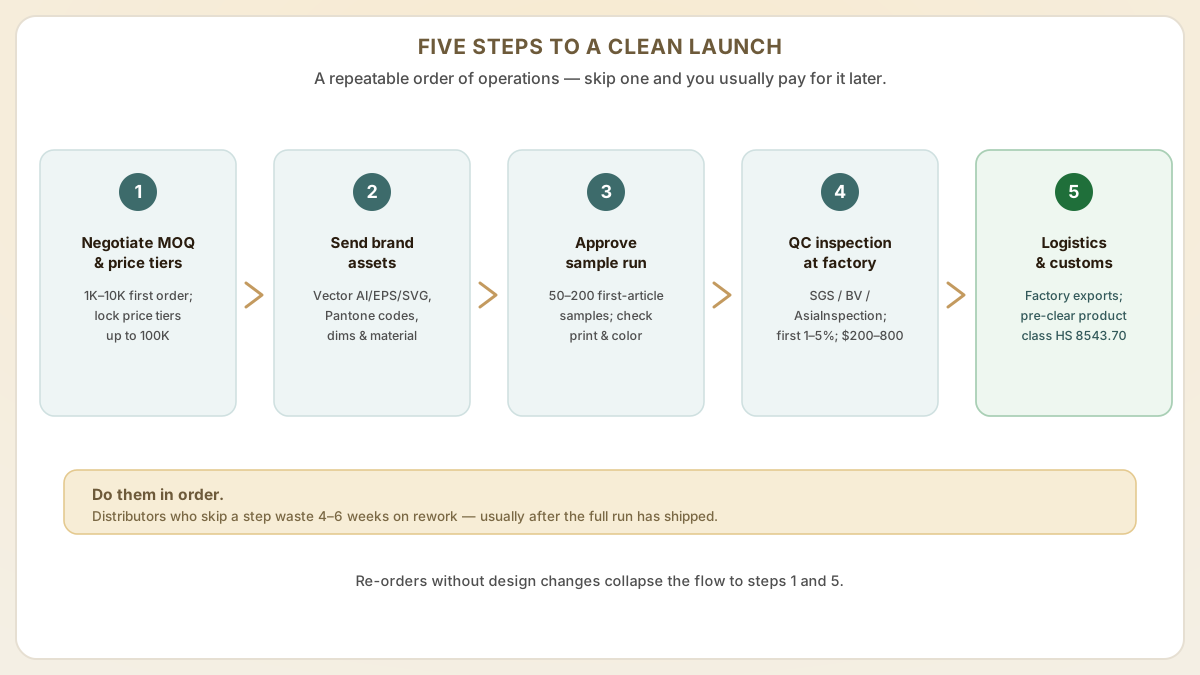
- Negotiate MOQ and pricing tiers: typical first MOQ 1K-10K units. Negotiate price tiers up to 100K so you do not need to renegotiate as volume grows.
- Send brand assets in factory-ready format: vector logo (AI/EPS/SVG) at print resolution, Pantone color codes (not RGB/Hex), packaging dimensions and material spec.
- Approve sample run: factory ships 50-200 first-article samples. Review printing alignment, color accuracy, packaging quality. Approve or revise before mass production.
- Run quality-control inspection at factory: third-party inspector (SGS, Bureau Veritas, AsiaInspection) verifies first 1-5% of production. $200-800 per inspection, well worth it for first orders.
- Set up logistics and customs: factory typically handles export documentation; distributor handles import clearance. Pre-clear product class (HS code 8543.70 for RFID) to avoid customs delays.
What can go wrong in a white-label program?
Five failure modes cause most white-label disputes — color mismatch, logo drift, silent chip substitution, packaging shrinkage and lead-time slip — and every one has happened to a real distributor, usually on a first order, usually right after they promised a customer it was handled. Each has a specific contractual fix, listed with it. Read the red column below as a checklist of clauses to sign before the first order, not after the dispute.
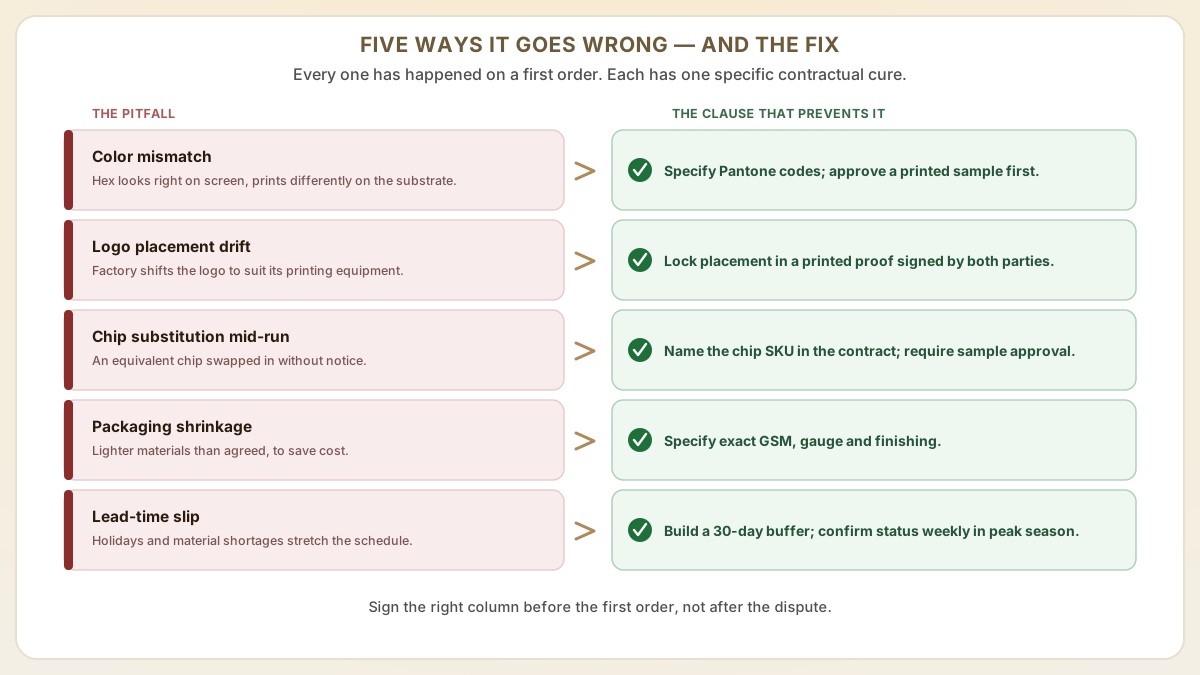
- Color mismatch: hex codes look correct on screen but print differently on different substrates. Always specify Pantone codes and approve printed samples before mass production.
- Logo placement drift: factories may shift logo position to optimize for their printing equipment. Lock placement in a printed proof signed by both parties.
- Chip substitution mid-run: factories may substitute equivalent chips (e.g., NXP UCODE 8 → UCODE 9) without notice. Specify chip SKU explicitly in the contract; require sample approval before any substitution.
- Packaging shrinkage: factory uses lighter packaging materials than agreed to save cost. Specify exact GSM (paper weight), gauge (plastic) and finishing (lamination, foil).
- Lead-time slip: Chinese New Year, factory holidays, or material shortages stretch lead time. Build a 30-day buffer into customer commitments and confirm production-status weekly during peak season.
Tooling, plate fees and lead-time math for OEM RFID programmes
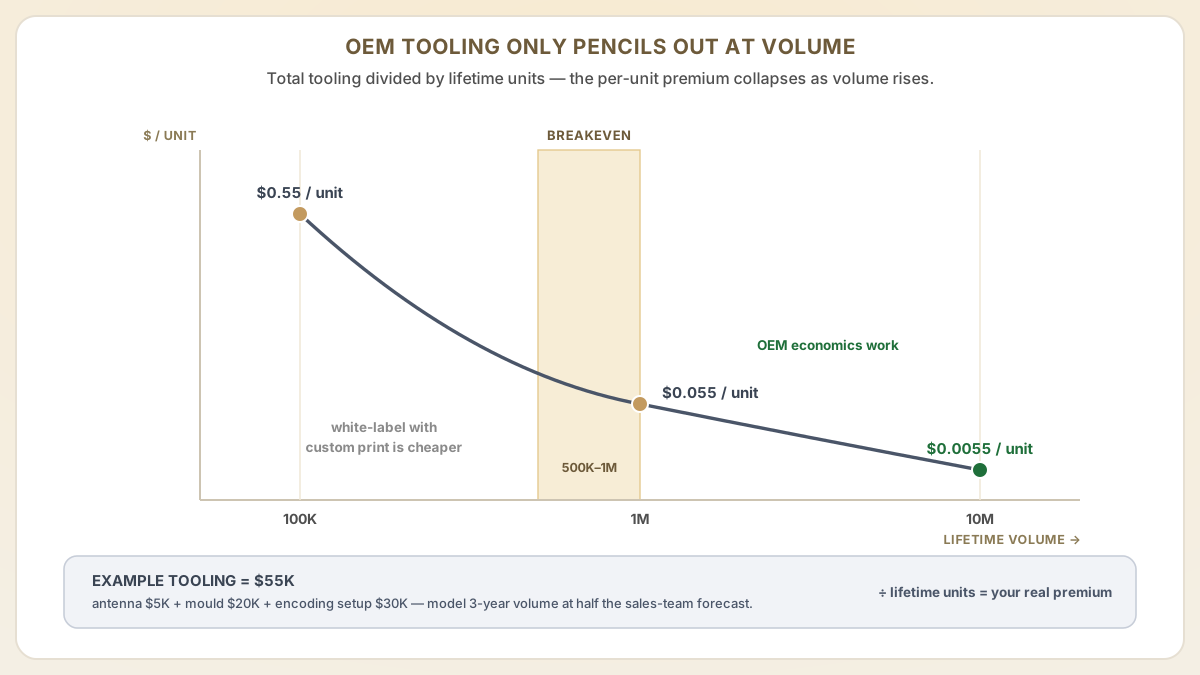
Moving from white-label to true OEM is a step-change, not a step: a custom antenna order is a six-figure investment on a 12-16 week lead time, not the four-week reorder distributors expect. Five cost drivers explain the jump — antenna tooling, wafer reservation, encoding infrastructure, moulds and your own GS1 prefix. The math only closes at volume, which is why the amortization curve below matters more than any single line item; a programme aimed at a Walmart RFID mandate is exactly the volume that makes it pencil out.
- Antenna tooling — custom UHF antenna design (e.g., on-metal, near-field, or specific dipole tuning) requires die-cut tooling at $3K-$15K and FR4 / PET substrate masters at $1K-$5K. Lead time 4-6 weeks before first sample. Avery Dennison Smartrac, Identiv, HID and Confidex all charge similar tooling on private antenna designs; expect to amortize over 200K-1M units to make the per-unit math work.
- Chip combination and wafer reservation — locking in a specific NXP UCODE 9, Impinj M730 / M770 or Alien Higgs-9 SKU on a custom antenna requires the factory to reserve wafer allocation. NXP and Impinj quote 12-26 week lead time for dedicated wafer slots; rolling forecast of 3M+ chips per quarter typically required to get on the allocation list.
- Encoding key infrastructure — for serialised programmes (NTAG 424 DNA SUN, MIFARE DESFire EV3 with diversified keys, EPC SGTIN with brand-specific Company Prefix from GS1), the OEM line needs an HSM (hardware security module like Thales payShield, Utimaco SecurityServer, or AWS CloudHSM) plus key-management workflow. One-time setup $25K-$120K and ongoing $1K-$5K per month for key escrow and rotation.
- Mould and form-factor — custom card / fob / wristband / hard tag housing (PVC, ABS, PC, silicone, PPS) requires injection moulds at $5K-$50K depending on cavity count and mould complexity. ABS cards run $3K-$8K; silicone wristbands $5K-$15K; PPS hard tags $15K-$50K. Mould life 200K-1M shots before refurbishment.
- GS1 Company Prefix and SGTIN allocation — true brand-OEM programmes need their own GS1 Company Prefix ($250-$10,500 USD/year depending on prefix length and product count) so that EPC tag IDs are unambiguously yours, not the factory's. Required for any retail mandate (Walmart, Target, Macy's, Decathlon) and for brand-protection programmes that need to survive supplier change.
Print-ready artwork and chip-substitution clauses that prevent costly rework
OEM disputes come down to two recurring root causes: artwork that was never print-ready, and chips swapped without telling you. Five contract and prepress controls eliminate 90% of rework cycles — get them into the spec sheet and the purchase order, not a follow-up email nobody signs. The anatomy of a truly print-ready file is below; the chip-substitution clause is the one worth reading twice.
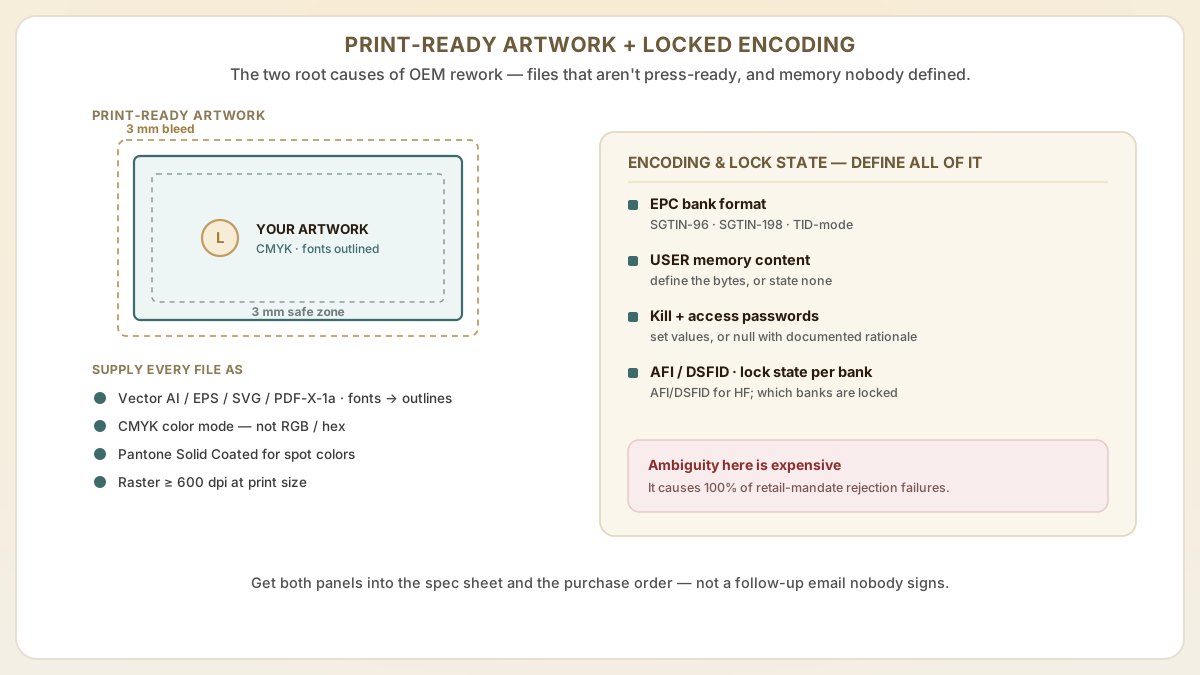
- Vector artwork in factory-ready format — supply AI / EPS / SVG / PDF/X-1a at production resolution with all fonts converted to outlines. Use CMYK colour mode (not RGB / hex), Pantone Solid Coated codes for spot colours, and 3 mm bleed plus 3 mm safe zone on every edge. Avoid raster logos below 600 dpi at print size; PNG and JPG cause visible pixelation on RFID inlay laminates.
- Pantone match and substrate-aware colour proofing — a logo specified Pantone 286 C reads differently on white PVC, on PET inlay laminate, on silicone wristband, and on uncoated paper card. Always require a printed proof on the actual production substrate, signed by both parties, before mass production. Use a Pantone Solid Coated/Uncoated guide for visual comparison; do not rely on screen-rendered colour.
- Chip-substitution clause — write into the contract: 'Factory shall not substitute the specified chip SKU (e.g., NXP UCODE 9 SL3S1205) without written approval. Acceptable alternates pre-listed: Impinj M730 / M750 / NXP UCODE 8. Substitution to any other chip requires re-qualification by buyer at factory cost, including 200-tag sample shipment and read-range testing.'
- Encoding format and lock state — specify exact EPC bank format (SGTIN-96, SGTIN-198, TID-mode), USER memory content if any, kill-password and access-password values (or null with documented rationale), AFI / DSFID for HF, and lock state per memory bank. Ambiguity here causes 100% of retail-mandate rejection failures.
- Packaging spec and pallet build — specify roll core ID (typically 76 mm / 3 inch for inlay), units per roll (1K-5K), labels per row, roll outside diameter limit (300 mm typical), inter-leaf paper if any, master carton dimensions and weight, pallet stacking pattern, ISPM 15 heat-treatment stamp on wood pallets, and shrink-wrap class. Vague packaging spec causes container damage in 5-15% of first shipments.
Useful next pages
Use these linked product, guide and comparison pages to keep the next click specific and practical.
RFID labels for OEM / white-label programs
RAIN RFID labels and inlays available with custom converted formats and OEM artwork.
NFC products for white-label resellers
NFC stickers, cards, and keyfobs configurable for distributor-branded SKUs.
Talk to us about an OEM program
Distributor pricing, MOQ flexibility, and white-label artwork support.
GS1 Company Prefix and SGTIN reference
Official GS1 prefix licensing portal — required for any OEM programme selling into Walmart, Target, Macy's or other retail RFID mandates.
FAQ
What's the smallest MOQ for a white-label RFID program?
Typical 1K-10K units. Some factories accept 500-unit MOQ for low-complexity printing (logo only) at premium pricing. Below 500 units, white-label is usually not viable; consider stocking generic and adding a printed sticker yourself.
Can I use my own chip with a factory's antenna design?
Yes for most chip families — UHF EPC Gen2 chips are interchangeable across antenna designs. HF/NFC requires more careful matching; specify in writing. Factory typically charges $0-200 setup fee for chip change.
How long does a first white-label order take?
8-14 weeks total: 2-3 weeks for design approval and sample run, 4-8 weeks for mass production, 2-3 weeks for QC and shipping. Re-orders without design changes ship in 4-6 weeks.
Do I own the artwork after the program ends?
Standard contracts give the distributor full IP ownership of their artwork and SKU codes. Factory cannot use distributor's branding or SKU on other clients' products. Confirm this in the contract; some factory standard terms have hidden artwork-reuse clauses.
Do I need my own GS1 Company Prefix for an OEM RFID programme?
If you sell into Walmart, Target, Macy's, Kohl's, Dick's Sporting Goods, Decathlon, Inditex / Zara or any other retail-mandate channel — yes, mandatory. Your tag's EPC SGTIN must encode YOUR Company Prefix, not the factory's. Prefix cost $250-$10,500 USD/year through GS1 US (gs1us.org) or your country's GS1 member organisation. Without it, your tags collide with another buyer's at point-of-sale and you fail Walmart's RFID compliance audit. For closed-loop applications (your own warehouse, your own laundry, your own asset tracking) you can use the factory's prefix but should still ask for one of their reserved ranges in writing.
How does the OEM tooling cost amortise — what's the real per-unit premium?
Take total tooling (antenna $5K + mould $20K + encoding setup $30K = $55K) divided by lifetime volume. At 100K units lifetime you add $0.55/unit (uneconomic). At 1M units you add $0.055/unit (acceptable). At 10M units you add $0.0055/unit (negligible). Most distributor OEM programmes pencil out only above 500K-1M lifetime volume; below that, white-label with custom print and stocked SKUs is the better economic structure. Always model 3-year lifetime volume conservatively (50% of sales-team forecast) before committing tooling capital.
Sources & references
Primary standards, OEM datasheets and regulatory documents cited by this article. All URLs were verified on the access date shown below.
- GS1 EPC Tag Data Standard (TDS)
Defines SGTIN-96 / SGTIN-198 EPC encoding used for RAIN RFID retail mandates.
- GS1 Company Prefix — identification keys
The licensed Company Prefix is the basis for brand-owned GTIN/EPC identifiers required by retail RFID mandates.
Proud Tek is a Shenzhen-based RFID & NFC manufacturer supplying hotel chains, transit operators, event venues and retail brands worldwide. Every order includes free samples, RF testing and dedicated project support.
Get a Quick Quote
Tell us about your project and we'll respond within one business day. Fields marked (asterisk) are required.