
Distributor Programs
China RFID Factory Audit
What to Inspect

Quick answer
Before placing a $100K+ first order, a factory visit and audit reveal what RFP responses are carefully worded to avoid — real production capacity, QC discipline, working conditions and management quality.
- A factory audit surfaces the capacity, QC and compliance gaps a paper RFP is carefully worded to hide. A 1-2 day visit buys you out of 6-12 month problems.
- The checklist covers five physical zones — production line, QC station, raw-material storage, finished-goods warehouse and a management interaction — plus a document review. Bring comfortable shoes.
- Budget $1.5K-5K for a self-audit visit (flight + 2 days), or $3K-8K for a third-party audit (SGS, Bureau Veritas) if you cannot travel personally. Either way, it is the cheapest insurance you will buy.
At a glance
Use these short answers to decide whether this page matches the project before moving into the detail.
Key takeaway
A factory audit surfaces the capacity, QC and compliance gaps a paper RFP is carefully worded to hide. A 1-2 day visit buys you out of 6-12 month problems.
Why audit a factory before committing volume?
Every supplier's RFP deck looks the same: a confident capacity figure, a wall of certificate logos, and one hero photo of a production line lit like a car commercial. Th...
Next step
Ready to move forward? Start your inquiry to get specific answers for this project.
Schedule an RFID factory visitWhy audit a factory before committing volume?
Every supplier's RFP deck looks the same: a confident capacity figure, a wall of certificate logos, and one hero photo of a production line lit like a car commercial. The floor is where that story either holds up or quietly comes apart — where the 'fully automated line' turns out to be three benches and one very patient operator. You only learn which by standing on it. A factory audit is the highest-ROI step in the whole procurement process: a $3K visit routinely catches problems that would otherwise compound into $100K+ of failed shipments, late deliveries and quality disputes over a multi-year supplier relationship.
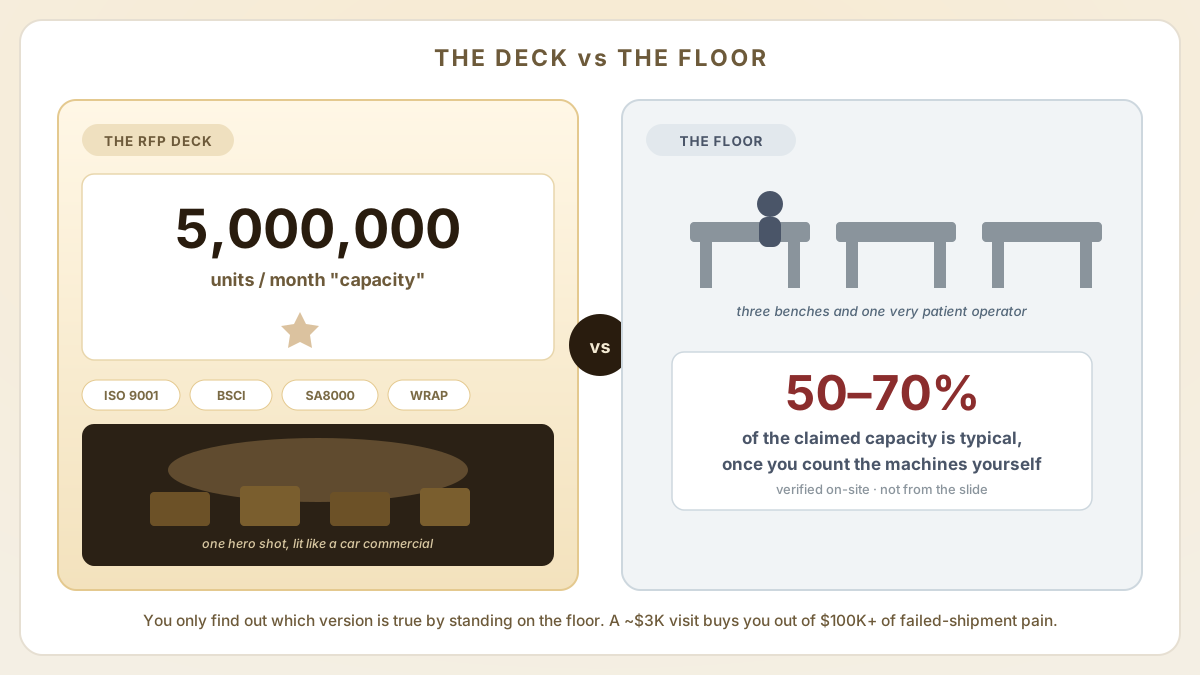
- Capacity verification — the paper RFP says 'X million units/month' with great confidence; on-site reveals the real machine count, shift schedule and current load. Verified capacity is often 50-70% of the number on the slide.
- QC discipline — walking the line shows you actual operator behaviour, real defect rates and how rejects are genuinely handled. A polished QC report rarely survives contact with the daily reality.
- Raw-material sourcing — see where the inlays actually come from. Authorised NXP/Impinj distributors, or the gray market? A mismatch is a supply-continuity risk you quietly inherit.
- Working conditions and labour compliance — BSCI / SA8000 audits reveal whether the supplier passes the social-compliance checks your buyers will, in turn, demand of you.
- Management quality — meet the people. Decision-making speed, English fluency and problem-solving instinct are all visible only in person, never on a slide.
What to inspect on the production floor
A 2-3 hour walk-through covers most of what you need. Bring a checklist, take photos (with permission), and gently resist the tour's gravitational pull toward the one spotless corner every factory keeps for exactly this occasion. The five zones below are the critical inspection points — walk them in flow order.
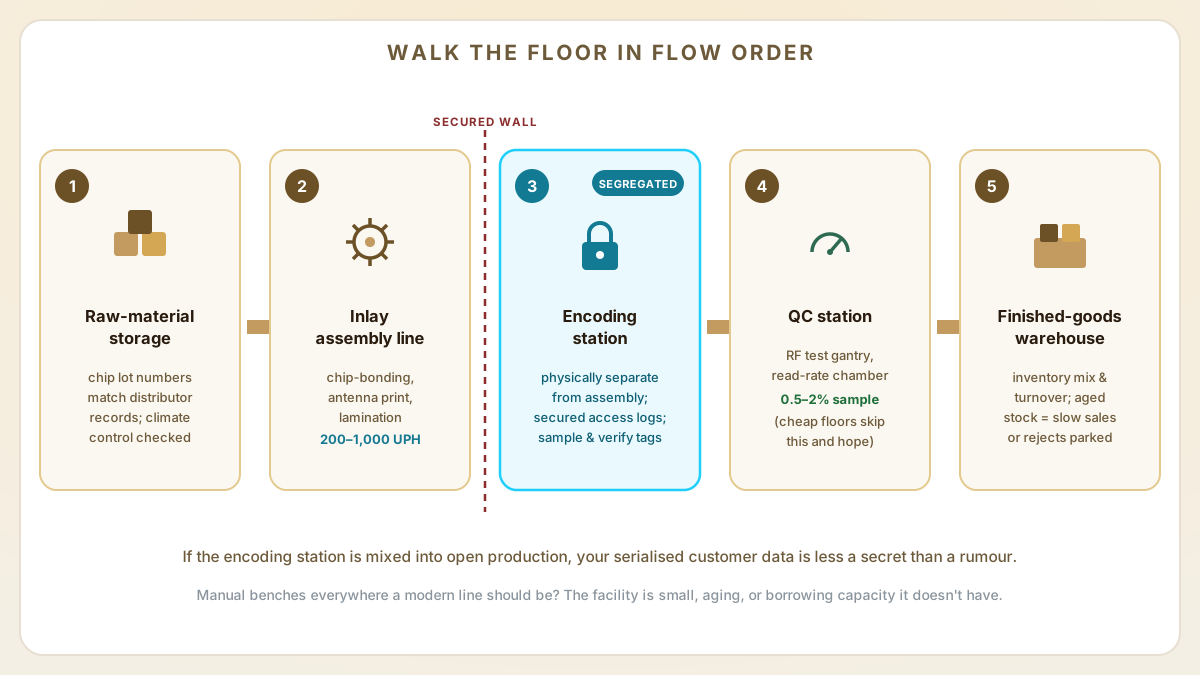
- Inlay assembly line — confirm the chip-bonding equipment, antenna-printing process and lamination machinery are real and running. Modern factories automate chip-bonding at 200-1000 units/hour; a row of manual benches tells you the facility is small, aging, or borrowing capacity it doesn't have.
- Encoding station — it should be physically separated from assembly to prevent cross-contamination of encoded data. Ask to see the encoding logs, then pull a few finished tags and check they are programmed correctly. 'The system does that automatically' is not a log.
- QC station — look at the actual measurement equipment (RFID test gantry, read-rate sample chamber). Reputable factories run 0.5-2% sample inspection; the cheaper ones skip QC entirely and hope.
- Finished-goods warehouse — read the inventory mix and turnover. A warehouse full of aged inventory means either slow sales or quality-rejected batches parked 'temporarily' since around last spring.
- Raw-material storage — chip lot numbers should match the supplier's authorised-distributor records. Check climate control too; inlays enjoy a damp warehouse about as much as you would.
Documents to review during the visit
On-site document review is where paper RFP claims meet daylight. Ask for the originals; a cheerful 'I'll email it over later' is the paperwork equivalent of a cheque that's in the post — do not accept copies-of-copies.
- Business license — the original, Chinese-government-issued, with a current registration date. Check the registered capital (a rough capacity proxy) and the business scope, which must actually include RFID / electronics, not just 'trading'.
- ISO 9001 certificate — the real one on the wall, with its audit cycle and last surveillance-audit date. Verify it on the issuing body's portal while you are standing there, not from the taxi afterwards.
- Customer references — invoice or PO copies for 2-3 named reference customers, prices redacted. 'My biggest customer is Brand X' is a lovely sentence; without paper, it is just a sentence.
- Quality records — the last 3 months of QC inspection logs. Spot-check defect rates and rework actions; a sudden quality cliff and a suspiciously perfect 100%-pass record are both tells.
- Export records — customs export declarations for 2-3 recent shipments. This is what confirms the factory actually exports at the volumes it claims, rather than merely aspiring to.
RFID-specific factory checklist your generic auditor will miss
SGS, Bureau Veritas, TUV Rheinland and AsiaInspection run thousands of generic factory audits annually — and will happily run one for you that never once mentions an RFID chip, unless you brief them up front. These five checkpoints separate a real RFID converter from a printing house with a chip-bonding side line.
- Chip authenticity — request the factory's wafer purchase records (lot numbers traceable to NXP, Impinj, Alien, or authorised distributors Avnet, Arrow, Mouser). Gray-market chips (sometimes Fudan FM11RF08 sold as MIFARE Classic) carry $0.005-$0.015 per chip cost advantage but expose buyers to backdoor risk and brand-protection takedowns. Cross-check 5 random reels' lot numbers on the chip-vendor portal, on the spot.
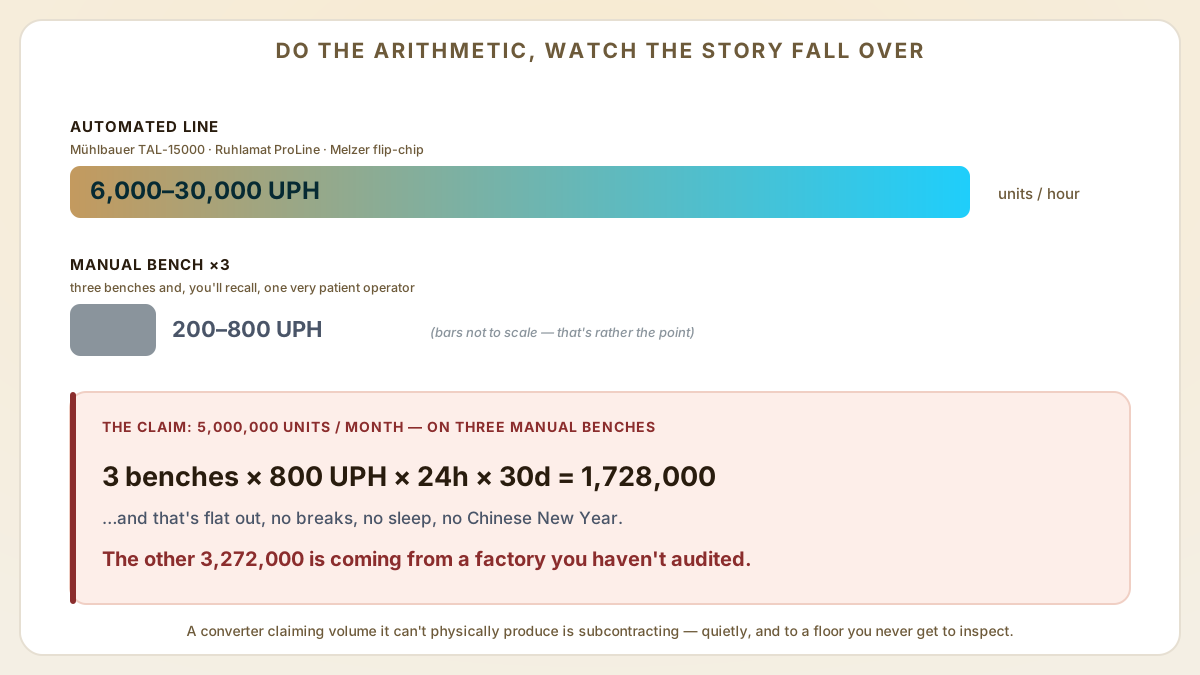
- Inlay assembly capability — verify automated chip-bonding machines (Mühlbauer TAL-15000, Ruhlamat ProLine, Melzer flip-chip lines) versus manual benches. Modern auto lines run 6,000-30,000 UPH (units per hour); manual benches run 200-800 UPH. A factory claiming 5M units/month on three manual benches is renting the work out to someone else — do the arithmetic and watch the story fall over.
- RF performance test gantry — request to see the read-rate sample chamber (Voyantic Tagformance, CISC RFID Xplorer, MTI MT-242025) calibrated within the past 12 months. Factories without RF test capability cannot ARC-certify or guarantee tag performance and are a hard stop for retail-mandate work (Walmart RFID, Macy's, Decathlon supply).
- Encoding-line segregation — for any pre-encoded order (URLs, EPC, customer-specific data), the encoding station should be physically separate from open production with secured access logs. Co-located encoding creates data-leak risk for serialised brand-protection programmes (LVMH, Estée Lauder NTAG 424 DNA SUN deployments).
- Quality records and yield — ask for last 3 months of QC daily logs, scrap rate by SKU, customer complaint log and corrective-action records (CAPA). Sustained scrap rate above 2% on UHF inlay or above 1% on HF cards points to chip-bonding equipment maintenance issues. 100% yield records are mathematically implausible — that's manipulation, not excellence.
Useful next pages
Use these linked product, guide and comparison pages to keep the next click specific and practical.
Audit-ready RFID label production
RAIN RFID and HF inlay / label converting at our certified facility.
ISO and certification scope
ISO 9001, ISO 14001, RoHS, and customer-driven certifications across our SKUs.
Schedule a factory audit
Send us an audit checklist — we'll prepare documentation and a virtual tour or in-person visit.
Audit standards reference (amfori, SMETA, SA8000)
Public verification portals for BSCI / SMETA / SA8000 / WRAP factory audits commonly required by Walmart, Disney, IKEA, Carrefour and Tesco.
Related reading
More RFID sourcing guides from the blog.
FAQ
Do I need a translator for a factory audit?
Helpful but rarely essential at the top-tier RFID factories — their sales and management speak English. For a deep technical review (QC processes, machinery), a translator earns their fee. Budget $200-400/day for a Mandarin-English translator who actually knows the vocabulary, not just the pleasantries.
Can I do a video-call audit instead of visiting?
Great for follow-ups, not for first-time qualification. Video shows you precisely what the factory wants you to see and not one pixel more. An in-person visit lets you walk where you want, ask line operators direct questions, and read the management in the room.
How do I find a good third-party auditor in China?
SGS, Bureau Veritas, TUV Rheinland and AsiaInspection cover most industrial cities at $1K-3K per audit day. Spell out the RFID-specific criteria up front (chip authenticity, ARC compliance, and so on) — a generic factory audit will sail right past our category's specifics.
What's the typical factory audit cost?
Self-audit: $1.5K-5K (round-trip flight to Shenzhen/Guangzhou + 2 nights hotel + meals). Third-party audit: $3K-8K (auditor + travel + report). Worth it for any first-time engagement above $50K annual volume — and cheap next to a single bad shipment.
Should I audit during Chinese New Year prep season (December-January)?
No. Production capacity is at peak utilisation, management is distracted, and what you see bears little resemblance to the other ten months of the year. Best audit windows are March-May and September-October. Avoid Chinese New Year (late January-mid February), Mid-Autumn Festival (mid-September), and Golden Week (October 1-7) — half the people you need to meet are home with family.
How do I cross-verify the BSCI / SMETA score the factory claims?
BSCI: amfori.org/services/audit-search (free login required, members-only directory shows current grade A-E and audit date). SMETA: sedex.com members portal (your account or your customer's account can pull factory reports directly). SA8000: sa-intl.org/programs/sa8000 certified-suppliers database. WRAP: wrapcompliance.org/certifications. If the factory cannot give you the auditor name, audit ID and report-issue date so you can verify, treat the certificate as decorative until proven otherwise.
Proud Tek is a Shenzhen-based RFID & NFC manufacturer supplying hotel chains, transit operators, event venues and retail brands worldwide. Every order includes free samples, RF testing and dedicated project support.
Get a Quick Quote
Tell us about your project and we'll respond within one business day. Fields marked (asterisk) are required.
Social-compliance audits buyers will inherit from your supplier choice
Sell into Walmart, Target, Costco, Disney, IKEA, Carrefour, Tesco or Marks & Spencer and you don't just inherit the brand's logo on your PO — you inherit its social-compliance audit obligations. The factory's existing audit posture quietly decides whether you can ship within four weeks or spend three months retrofitting paperwork you didn't know you needed.