
NFC Chip Memory Comparison
Which NFC Chip Has the Most Memory?
Quick answer
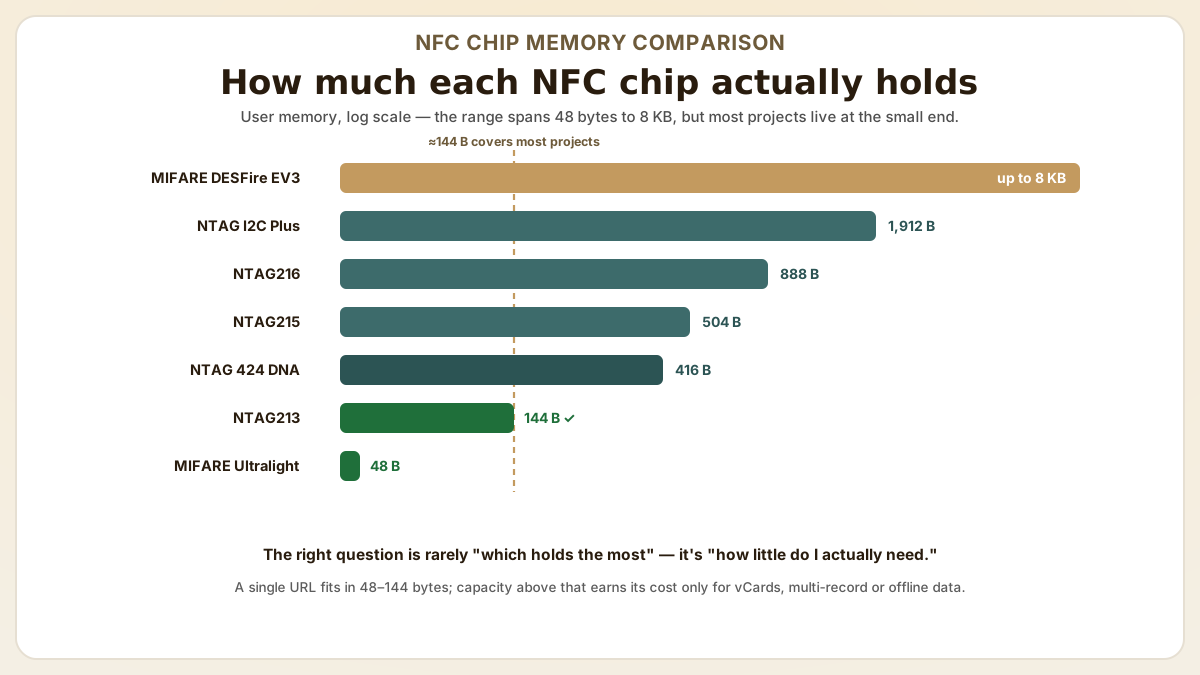
MIFARE DESFire EV3 holds the most NFC memory at up to 8 KB; among sticker-friendly chips NTAG I2C Plus leads at 1,912 bytes and NTAG216 at 888 bytes — but most projects need far less, since a short URL fits in 48-144 bytes. This guide compares user memory across 11 NFC chips and shows how to size for URLs, vCards, DPP and offline data.
- NTAG I2C Plus offers up to 1,912 bytes — the largest user memory in the popular NTAG family, designed for IoT applications requiring substantial on-tag data storage alongside NFC communication.
- ICODE DNA offers 256 bytes (2,048 bits in 64 blocks × 4 bytes per NXP ICODE DNA datasheet) — a cryptographically-authenticated NFC chip with AES-128 + 32-byte originality signature, suited for brand-protection and digital product passport applications on ISO/IEC 15693 / NFC Forum Type 5 infrastructure.
- For most applications, 144-888 bytes is sufficient. NTAG213 (144 bytes), NTAG215 (504 bytes), and NTAG216 (888 bytes) cover the vast majority of URL, vCard, and multi-record NFC use cases.
At a glance
Use these short answers to decide whether this page matches the project before moving into the detail.
Key takeaway
NTAG I2C Plus offers up to 1,912 bytes — the largest user memory in the popular NTAG family, designed for IoT applications requiring substantial on-tag data storage alongside NFC communication.
How do NFC chip memory compare?
'Which chip has the most memory?' is one of the most common questions an NFC vendor fields, and one of the most over-weighted. Nine times out of ten the thing being stor...
Next step
Ready to move forward? Start your inquiry to get specific answers for this project.
Get NFC chip recommendationsHow do NFC chip memory compare?
'Which chip has the most memory?' is one of the most common questions an NFC vendor fields, and one of the most over-weighted. Nine times out of ten the thing being stored is a single web link, and the real question was never about capacity at all. The comparison below answers the literal question — largest to smallest — but keep one thing in mind as you read: most projects need far less than they think.
| Chip Model | User Memory | Best For |
|---|---|---|
| MIFARE Ultralight | 48 bytes | Basic tap-and-go (short URLs, UID only) |
| MIFARE Ultralight EV1 | 48-128 bytes | Single-use tickets, basic access tokens |
| NTAG210/212 | 48-128 bytes | Minimalist URL records, counters |
| NTAG213 | 144 bytes | Standard URLs, Wi-Fi records, short text |
| NTAG215 | 504 bytes | vCards, longer URLs, Amiibo, multiple NDEF records |
| NTAG216 | 888 bytes | Detailed vCards, multi-record payloads, text content |
| NTAG 424 DNA | 416 bytes | Authenticated URLs, brand protection, DPP |
| NTAG I2C Plus | 1,912 bytes | IoT data exchange, sensor data, configuration |
| ICODE SLIX2 | 2,528 bits (316 bytes) | Library books, inventory labels |
| ICODE DNA | 2,016 bytes | Authentication, high-security product passports |
| MIFARE DESFire EV3 | 2-8 KB | Multi-app cards (transit, access, payment) |
How much NFC memory do you actually need?
Far less than the spec sheet tempts you to buy. Map the payload to its real byte count and the smallest chip that fits usually wins on cost and reliability — a single URL lives happily in 48-144 bytes. The sizing ladder below runs from a short URL to a multi-record tag; programming the tag is where the byte math gets real.
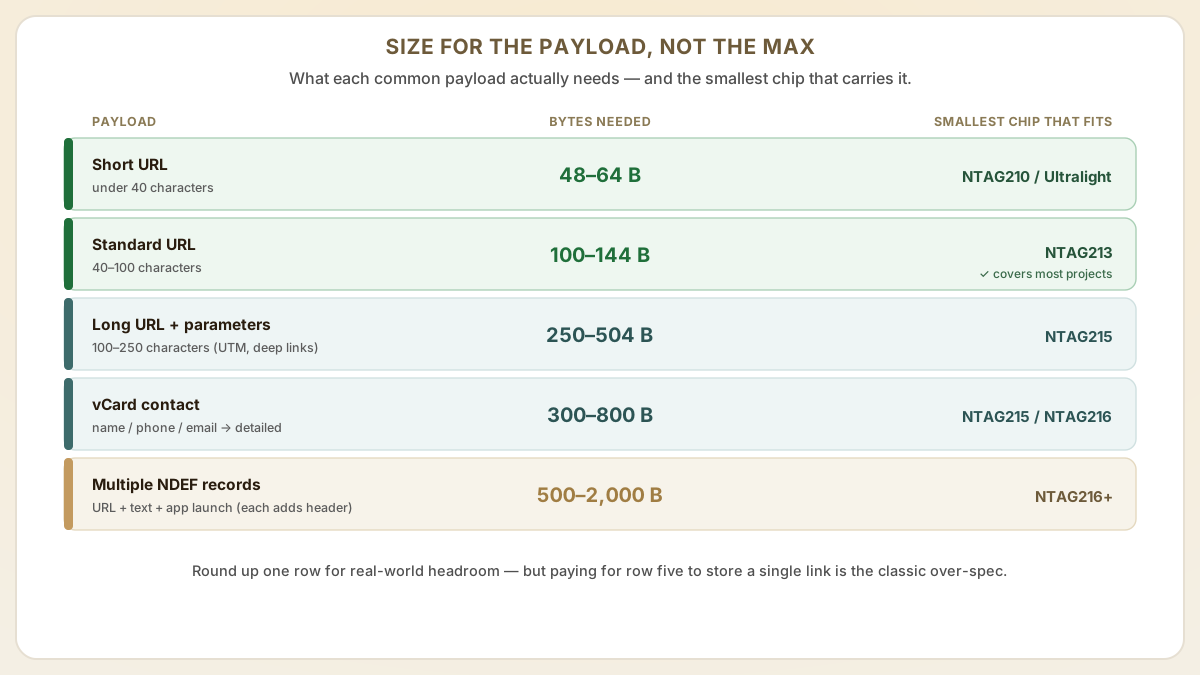
- Short URL (under 40 characters) — 48-64 bytes. A URL like 'https://proudtek.com' fits on even the smallest NFC chips. Use NTAG210 or MIFARE Ultralight for minimum cost.
- Standard URL (40-100 characters) — 100-144 bytes. Most website URLs, social media profile links, and Google Review URLs fit within NTAG213's 144 bytes.
- Long URL with parameters (100-250 characters) — 250-504 bytes. URLs with UTM tracking parameters, deep links, or query strings may require NTAG215.
- vCard contact record — 300-800 bytes depending on detail level. A basic vCard (name, phone, email) fits in NTAG215. A detailed vCard with multiple phone numbers, addresses and notes needs NTAG216.
- Multiple NDEF records — 500-2,000 bytes. Storing multiple records on one tag (URL + text + app launch) requires NTAG216 or higher. Each additional NDEF record adds header overhead.
What NFC memory sizing mistakes do procurement teams make?
Choosing NFC chip memory is straightforward when the use case is clear, but these five common mistakes cause expensive over-spec or last-minute scope changes mid-deployment. Each one below pairs with the discipline that prevents it.
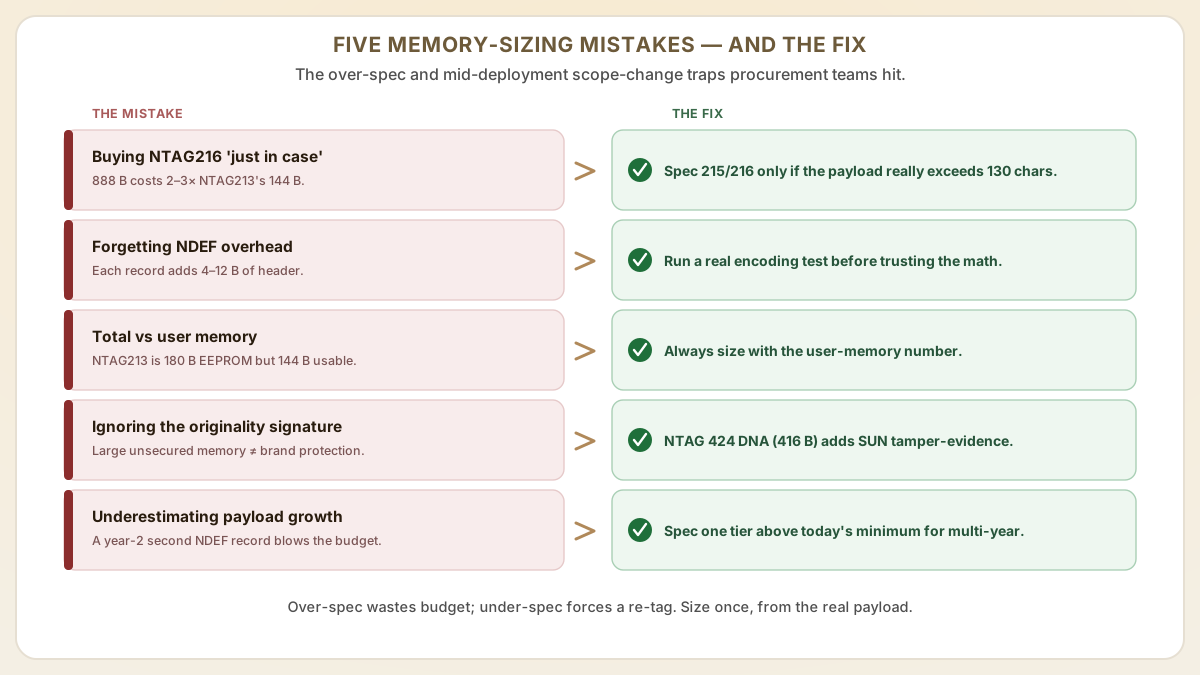
- Buying NTAG216 "just in case": NTAG216 (888 bytes) costs 2-3x more than NTAG213 (144 bytes). Most marketing URL applications fit comfortably in NTAG213. Only spec NTAG215/216 if your payload genuinely exceeds 130 chars.
- Forgetting NDEF overhead: each NDEF record carries 4-12 bytes of header. A single 100-char URL uses ~110 bytes; two 50-char URLs use ~120 bytes. Run a real encoding test before assuming the math.
- Confusing total memory with user memory: NTAG213 is sometimes described as 180 bytes (correct: total EEPROM) when only 144 bytes are user-writable. Always work with the user-memory number when sizing.
- Overlooking the originality signature requirement: NTAG 424 DNA has 416 bytes of user memory and adds tamper-evident SUN authentication. For brand-protection, the secure chip beats large-memory unsecured chips even when payload fits both.
- Underestimating future payload growth: programs deployed with NTAG213 today often need NTAG215+ when adding a second NDEF record (e.g., adding offline contact info to a URL tag) in year 2. Spec one tier above today's minimum if the program is multi-year.
When does on-tag memory matter vs cloud-resolved URLs?
The default architecture for modern NFC programs is 'small URL on tag, rich data in cloud'. But there are real use cases where on-tag memory matters — and procurement teams who don't know the line over-spec or under-spec. The map below sorts the default from the four exceptions; for the passport case specifically, see NFC digital product passports.
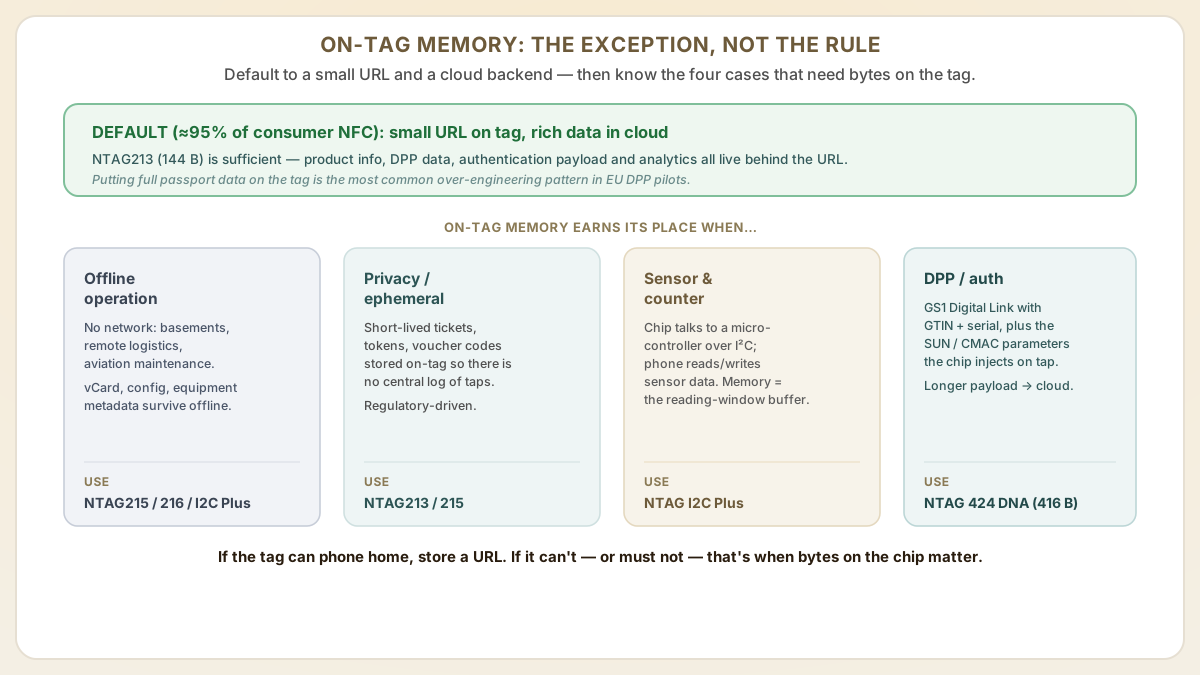
- Cloud-resolved URL pattern: the tag stores a 50-150 byte URL like `https://id.gs1.org/01/{GTIN}/21/{serial}` or a brand-controlled resolver. All product info, DPP data, authentication payload and analytics live behind the URL. NTAG213 is sufficient. This is the right architecture for ~95% of consumer-facing NFC programs.
- Offline data needs on-tag memory: applications that must operate without network connectivity (industrial maintenance in basements, remote logistics, military / aviation maintenance records) need on-tag data. NTAG215, NTAG216 or NTAG I2C Plus carry vCard, configuration, equipment metadata that survives without backend access.
- Privacy and ephemeral payloads: short-lived tickets, temporary tokens, voucher codes are sometimes stored on-tag (NTAG213/215) so the system has no central log of who tapped what. Decision is regulatory-driven (transit, healthcare).
- Sensor and counter applications: NTAG I2C Plus interfaces with a microcontroller via I²C, letting smartphones read/write sensor data (temperature, status). This is on-tag memory used as a transient buffer, not a persistent record. Memory size matters because the buffer must hold the sensor reading window.
- DPP / authentication payloads: NTAG 424 DNA's 416 bytes of user memory plus the SUN URL template are sufficient for a GS1 Digital Link with serial + cryptographic CMAC parameters. Any longer DPP payload should live in the cloud — putting full passport data on-tag is the most common over-engineering pattern in 2024-2026 EU DPP pilots.
How does memory size trade off against price, security and form factor?
Memory is one of four variables procurement teams balance — and the one that tends to get the most attention for the least reason. The trade-offs below are the ones that show up in real vendor RFP responses.
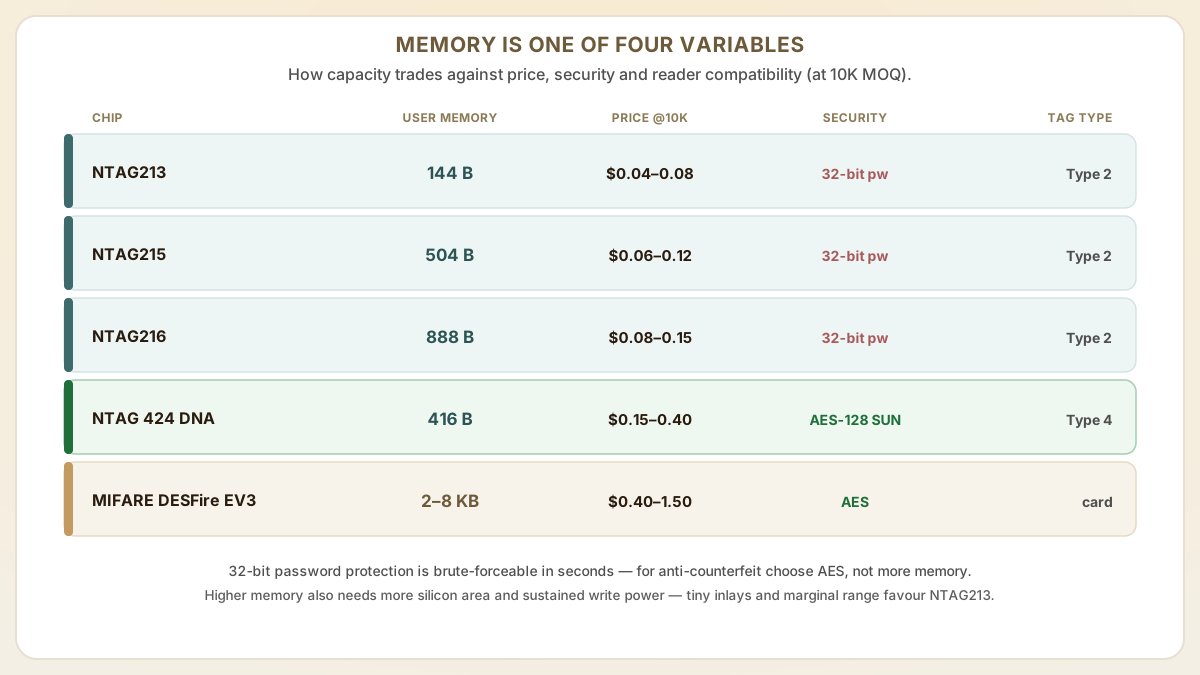
- Memory vs price: at 10K MOQ, NTAG213 ($0.04-0.08) → NTAG215 ($0.06-0.12) → NTAG216 ($0.08-0.15) → NTAG 424 DNA ($0.15-0.40) → DESFire EV3 ($0.40-1.50). Each step up roughly 1.5-3x. Don't pay for memory you won't use.
- Memory vs security: NTAG213/215/216 have only 32-bit password protection (brute-forceable in seconds). NTAG 424 DNA has AES-128 SUN/CMAC with 416 bytes user memory. ICODE DNA has 256 bytes (2,048 bits per NXP datasheet) + AES-128 — at higher cost and narrower smartphone support (ISO 15693, not ISO 14443).
- Memory vs form factor: high-memory chips need more silicon area, which can constrain the smallest form factors. NTAG213 fits inside ring jewelry; NTAG216 needs a small inlay; DESFire EV3 typically lives in a card or larger sticker. For tiny form factors (e.g., 8-12 mm round inlays), NTAG213 is often the only realistic choice.
- Memory vs reader compatibility: NTAG 213 / 215 / 216 are NFC Forum Type 2 tags; NTAG 424 DNA is NFC Forum Type 4. Both are parsed by standard smartphone APIs (iOS Core NFC, Android NfcAdapter) with no special drivers. ICODE 15693 vicinity tags require NFC-V capability that not all readers expose; older Android handsets sometimes lack NFC-V handling. Confirm reader / phone support before committing on ICODE.
- Memory vs power harvesting: high-memory writes need more sustained RF power. Long-write operations on NTAG216 or DESFire occasionally fail at marginal range where short writes on NTAG213 succeed — this is one reason multi-record tags can feel less reliable in field tap tests even though the chip itself is fine.
Useful next pages
Use these linked product, guide and comparison pages to keep the next click specific and practical.
NFC tags by memory capacity
Choose the right memory size for your application.
FAQ
Which NFC chip has the most memory?
Among standard NFC Forum tags, MIFARE DESFire EV3 offers the most memory at up to 8 KB (8,192 bytes). For non-card NFC sticker format, NTAG I2C Plus offers 1,912 bytes and ICODE DNA offers 256 bytes (2,048 bits per NXP datasheet) — the ICODE DNA value isn't best-in-class for memory; specify it when you need ISO 15693 AES-128. For the popular NTAG2xx family commonly used in stickers and labels, NTAG216 has the most memory at 888 bytes.
Is 144 bytes enough for an NFC tag?
Yes, for most common use cases. NTAG213's 144 bytes of user memory is sufficient for: a URL up to approximately 130 characters, a Wi-Fi credential record, a simple text message, or a phone number record. The majority of NFC marketing, smart home, and business card applications work well within 144 bytes. Only vCards with extensive detail or multi-record payloads require larger memory.
Can I store images or videos on an NFC tag?
No. NFC tags have far too little memory to store images or videos directly (even the largest chips offer only 8 KB, while a single photo is typically 2-10 MB). Instead, store a URL on the NFC tag that links to the image or video hosted online. When someone taps the tag, their phone opens the URL and loads the media from the internet.
Does NTAG 424 DNA's smaller memory matter for EU Digital Product Passport use cases?
Almost never, if you encode correctly. The 416 bytes of user memory on NTAG 424 DNA is more than enough for a GS1 Digital Link URL with GTIN + serial (`https://id.gs1.org/01/{14-digit GTIN}/21/{serial}`) plus the SUN/CMAC dynamic parameters that the chip injects on tap. The full Digital Product Passport payload — material composition, carbon footprint, recyclability data, repair instructions — lives in the cloud and is fetched by URL resolution. Only choose a higher-memory chip for DPP if you genuinely need offline-readable passport data on the tag (rare; some industrial battery and aerospace use cases). For 95%+ of DPP pilots, NTAG 424 DNA's combination of cryptographic SUN authentication and 416 bytes is the right answer.
Why does NTAG 424 DNA have less user memory than NTAG216 if it's more advanced?
Because NTAG 424 DNA spends silicon area on cryptographic engines, secure key storage and the SDM/SUN message generator that NTAG216 doesn't need. The chip allocates more memory to internal security-critical structures (5 AES-128 keys, file system, secure counters, tamper status file) and less to open user memory. The trade-off makes sense: NTAG216 is the right answer when you need maximum NDEF payload (888 bytes for vCards / multi-record), and NTAG 424 DNA is the right answer when you need cryptographic anti-counterfeit (416 bytes is more than enough for a GS1 Digital Link URL plus SUN parameters). They're solving different problems.
Sources & references
Primary standards, OEM datasheets and regulatory documents cited by this article. All URLs were verified on the access date shown below.
- NXP NTAG 213/215/216 datasheet
User memory 144/504/888 bytes (180/540/924 bytes total EEPROM); NFC Forum Type 2, 32-bit password.
- NXP ICODE DNA (SL2S6002) datasheet
2,048-bit (256-byte) user memory, AES-128, 32-byte originality signature; ISO/IEC 15693.
Proud Tek is a Shenzhen-based RFID & NFC manufacturer supplying hotel chains, transit operators, event venues and retail brands worldwide. Every order includes free samples, RF testing and dedicated project support.
Get a Quick Quote
Tell us about your project and we'll respond within one business day. Fields marked (asterisk) are required.