
Artwork Guide
Hotel Key Card Artwork And Printing Checklist
Quick answer
A complete hotel key card artwork brief typically gets a quotable proof in 7–10 days; a high-level creative direction takes 4–6 weeks. This checklist locks the fields a production planner needs: CR80 format, Pantone colours with ΔE ≤ 2.0 tolerance, finish-stack order, 2 mm bleed and 3 mm safe area, and PMS-aligned numbering. It then walks proof review, three-stakeholder sign-off and delivery handling.
- Artwork moves fastest when compatibility and numbering rules are already stable. Otherwise every revision triggers a repeat tool-up.
- A hotel key card has to serve branding, front-desk issue flow and replacement handling at the same time; any artwork that wins on only one of them fails in operation.
- A clean checklist prevents revision loops and produces a proof the brand team and the operations team can both approve on the first review.
At a glance
Use these short answers to decide whether this page matches the project before moving into the detail.
Complete brief wins
A full brief typically reaches a quotable proof in 7–10 days; a high-level creative direction needs 4–6 weeks, because each supplier question round costs 3–5 business da...
Non-negotiable file specs
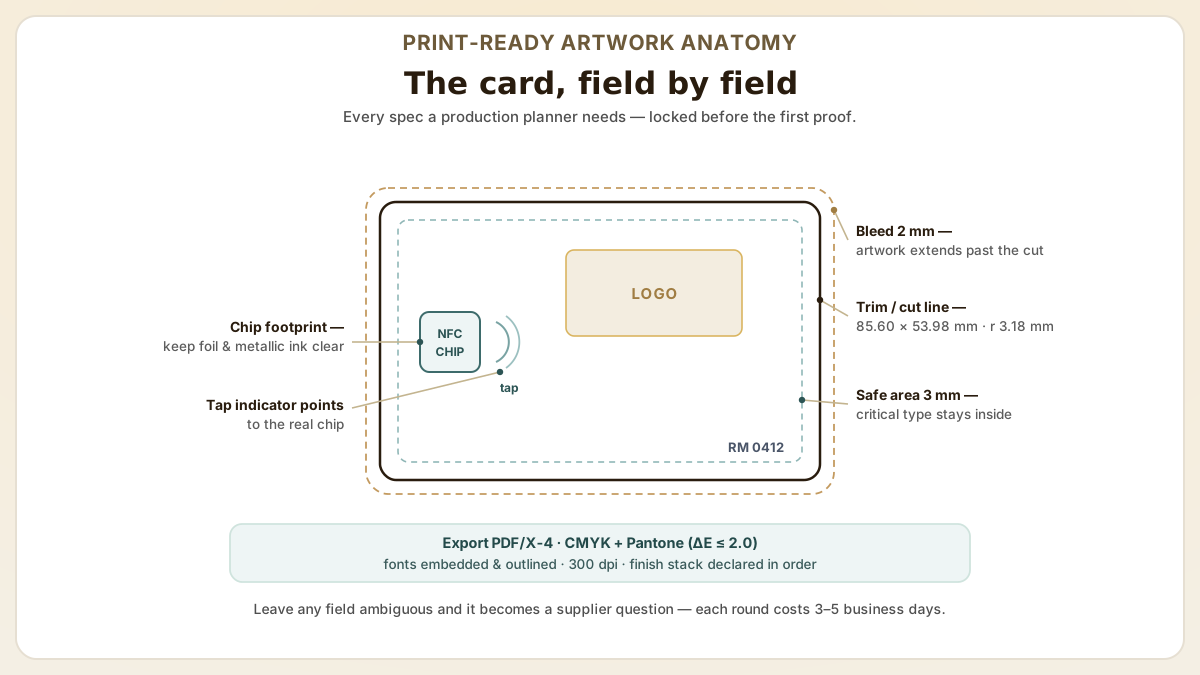
CR80 (85.60 × 53.98 mm, 3.18 mm corner radius), 2 mm bleed, 3 mm safe area, 300 dpi, CMYK with Pantone spots at ΔE ≤ 2.0, fonts embedded and outlined, PDF/X-4 export.
Next step
Ready to move forward? Start your inquiry to get specific answers for this project.
Ask about hotel card artwork- Numbering before artwork
-
Lock printed-vs-encoded serial rules, PMS checksum alignment and loyalty-variant count (typically 2–5 SKUs) before design starts — a numbering change usually forces a full artwork re-layout.
- Proof and timeline
-
One soft proof plus one hard proof is normal for a clean brief; the full workflow reaches a press-ready PDF/X-4 in 10–14 working days, reviewed under D50 (5,000K) lighting.
What a production-ready hotel card brief looks like
The first print brief is the document that decides whether the proof cycle takes ten days or six weeks, because every field the brief leaves ambiguous becomes a field the supplier's production planner has to ask back about. And each question round typically costs 3–5 business days as it traverses sales, engineering, pre-press and production scheduling. A complete brief answers every question a production planner would otherwise ask, and reduces the round-trip count from four or five emails to one. Hotels that send the full brief below typically receive a quotable proof in 7–10 days; hotels that send a high-level creative direction typically need 4–6 weeks to reach the same proof quality.
- Card format: CR80 landscape (85.60 × 53.98 mm, used by the overwhelming majority of hotels) or CR80 portrait (occasional boutique choice for photography-led artwork). Rounded corner radius (3.18 mm is standard, 4.0 mm for some European properties, square corners rare). Substrate and thickness carried forward from the material selection decision. Do not leave this open in the artwork brief.
- Print faces: front-only, front-and-back, or full-bleed wrap. Specify which face carries the room number (if printed), loyalty tier, regulatory text (language-specific privacy notices, lost-card return address), and the NFC tap hotspot indicator if the property uses one. Back-face real estate is crowded. Plan it as carefully as front-face.
- Colour spec: CMYK with Pantone references for any spot colours that must hit exactly (hotel-group reds like Hilton HON, Marriott Bonvoy gold, IHG blue, luxury blacks, foil golds). Include Delta-E tolerance in the brief (typical ΔE ≤ 2.0 for critical brand colours), because 'close enough' printing can produce a brand-colour drift that the chain's guidelines refuse.
- Fonts: embedded and outlined on every AI or PDF delivery. Do not rely on the supplier having the foundry licence. Commercial foundries (Monotype, Adobe, independent type designers) increasingly audit licensed use at print houses, and an unlicensed font at the supplier is the property's brand-compliance risk, not the supplier's.
- Print method: offset (sheet-fed or web, highest fidelity), digital (HP Indigo or similar, good for variable data), UV-LED (required for wood and some bio-composite), dye-sub (fast, limited fidelity), screen print, thermal transfer. Dictated by the substrate and by the finish stack. Confirm print method explicitly; do not let the supplier choose based on press availability.
- Finish stack: matte or gloss lamination (0.025–0.050 mm typical), spot UV (40–60 micron), foil stamping (hot foil most common, cold foil for sustainability-positioned chains), embossing (up to 0.5 mm raise), debossing, laser engraving on wood. Declare the order of operations in the brief, since finishes interact (see the finish-interactions section below) and wrong-order stacks almost always force a re-proof.
- Bleed and safe area: 2 mm bleed (artwork extends 2 mm past the cut line on all four sides), 3 mm safe area (no critical type or logo within 3 mm of the cut line). Non-negotiable. Artwork that ignores the safe area runs into the corner-rounding path and loses letters to the die-cut, which is the second most common reason for proof rejections after colour drift.
- Chip position and tap indicator: specify the chip's location relative to the card face (usually centred or offset 10–15 mm from the short edge), and whether the artwork includes a printed NFC tap indicator. Artwork that covers the chip antenna with heavy metallic foil or dense metallic ink detunes the antenna and should trigger a chip-position review.
- Anti-counterfeit and tamper-evident features: luxury and ultra-premium chains increasingly specify micro-text (readable only at 15× magnification), guilloche patterns, UV-reactive ink (typically invisible under ambient light, visible under 365 nm UV), optically variable inks (ink colour shifts at viewing angle, common on high-end Marriott EDITION and St. Regis cards), or holographic foil strips as anti-cloning deterrents. Most of these add US$0.08–0.25 per card and constrain the print method (UV-reactive inks require UV-LED presses; optically variable inks require specific offset presses with screen capability). Declare them in the brief, not at proof review, or the supplier will have to re-tool.
Numbering rules that actually survive production
Serial numbering is where artwork meets operations, and it is the single most common point where the artwork brief and the PMS workflow silently diverge. Get numbering wrong and the front desk ends up hand-writing room numbers on the card sleeve, or the re-issue flow fails when the printed number does not match the PMS's expected serial format. Resolve numbering before the artwork enters design, not after the proof arrives, because a numbering rule change usually forces a full artwork re-layout. The printed-versus-encoded rule itself belongs in the encoding guide, locked before design starts.
- Unique serials: decide whether every card carries a unique printed number, and whether that number is visible to the guest (front-face small type) or hidden (UV-ink under laminate, rear-face small type in a back-corner, thermal print overlay on demand). Chain hotels usually print unique serials visibly for inventory audit; boutique hotels often omit printed serials entirely and rely on chip UID.
- Room-range numbering: some properties print the room number on the card (common for resorts with suite naming, rare for chain hotels). This ties inventory tightly to room mapping. Any room renumbering project (renovation, floor re-sort, building expansion) has to re-order cards. Avoid unless the brand justification is strong, because the operational lock-in is real.
- Loyalty-tier variants: gold, platinum, suite, club-floor, elite and chain-status cards often carry different artwork (ink colour, foil placement, edge colour, back-face copy). Decide up-front how many variants the supplier produces (typically 2–5), and how re-ordering per variant works. Most chains require each variant as a separate SKU with its own artwork proof, which means a five-variant set is five proof reviews, not one.
- Variable-data printing capability: UV digital printers (HP Indigo, Xeikon, Konica Minolta AccurioLabel) handle variable data (serials, room numbers, guest-name personalisation) natively; traditional offset printers do not. If numbering is variable or per-card, the print method is effectively chosen for you. Plan for UV digital or dye-sub from the start, not offset.
- Checksum alignment: if the PMS expects a specific serial format (printed number must equal encoded serial, printed number must be a 7-digit zero-padded code, printed number must be a derived checksum of the encoded UID), document that in the brief. Numbering mismatches are the single most common reason for re-issue confusion at the desk ('this card says 0423 but the PMS can't find 0423') and the fix is usually a reprint rather than a PMS config change.
- Sequential vs randomised ranges: chain properties typically prefer sequential ranges (simpler inventory audit); anti-theft-sensitive properties prefer randomised non-sequential ranges (harder to guess the next valid serial). Pick before the brief, because changing later invalidates any printed inventory audit log.
Substrate-specific artwork tolerances
PVC is forgiving: it accepts almost every print method, finish stack, colour range and type size. Wood, PLA, rPET, bio-composite and stone paper are not. Artwork has to be designed for the substrate rather than adapted to it later, because substrate-driven changes at proof stage almost always force a full artwork revision rather than a tweak. The tolerance table below is the one the design team should work from, not the generic PVC tolerances that typical brand guidelines assume. The chart below sets each substrate's real limits; lock the material in the material-selection guide before the artwork round begins.
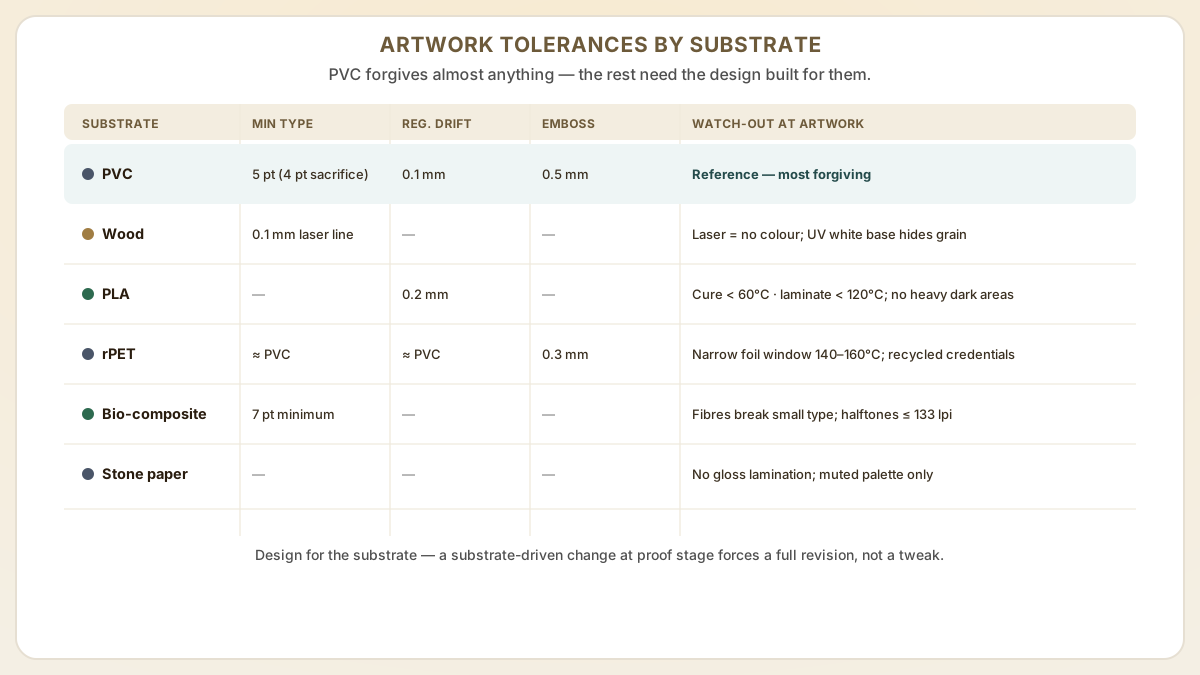
- PVC: full CMYK with heavy coverage, fine detail at 300 dpi resolution, small type down to 5 pt readable under good lighting, 4 pt with sacrifice. Recycled PVC tolerates the same specifications with a slight fidelity reduction on dark coverage (5–10% ink drift on 100% black areas) and a marginally rougher surface that catches gloss lamination slightly differently. Usually invisible but occasionally matters for metallic inks.
- Wood: laser engraving gives crisp monochrome results with 0.1 mm line fidelity but loses all photographic detail and colour. UV printing with a white base layer restores colour but hides the grain that justified the choice in the first place. Typical compromise is selective white-base under logo areas only, with bare wood everywhere else. Decide which signal matters (grain visibility or photography) before the artwork round starts, because trying to do both usually produces a card that does neither well.
- PLA: keep print temperatures below 60°C during UV curing and lamination (standard UV-LED arrays at 40–50°C work fine; thermal laminators above 120°C soften PLA). Avoid large solid dark areas that trap heat during curing. Allow for slightly softer colour registration than PVC (typical 0.2 mm drift vs 0.1 mm on PVC), which matters for tight multi-colour type or fine foil placement.
- rPET: prints similarly to PVC with dye-sub and UV, slightly less forgiving on hot foil (adhesion window narrower. Typical 140–160°C vs PVC's 130–170°C), and embossing depth limited to 0.3 mm vs PVC's 0.5 mm before the substrate cracks. Good choice when the brand wants recycled-content credentials with near-PVC artwork fidelity.
- Bio-composite: coarse visible fibres mean small type below 7 pt becomes unreliable (the fibres break the letterforms visually), and halftones above 133 lpi often appear muddy. Lean on typography-driven designs with bold weights, simple logo marks, and large solid colour blocks, not photographic artwork or fine-detail illustrations.
- Stone paper: matte finish by default, does not take gloss lamination well (the laminate delaminates at the edges over time), tolerates photographic artwork but in a muted palette because the substrate's own grey-white tone shifts colour slightly. Works for outdoor-brand properties and adventure resorts; rarely the right choice for luxury chains.
Finish interactions that bite in the proof round
The difference between a beautiful proof and a problematic proof is usually the interaction of two or more finishes, because each finish layer bonds to the layer below it and the bond quality depends on order, temperature and surface energy. Most proof failures are not colour or type errors. They are finish-interaction errors that only appear after the proof has cured for 24–48 hours. The list below is the one experienced hotel-card pre-press staff carry in their heads and the one artwork briefs should pre-empt. The diagram below shows the stack order that holds — and the one that peels.
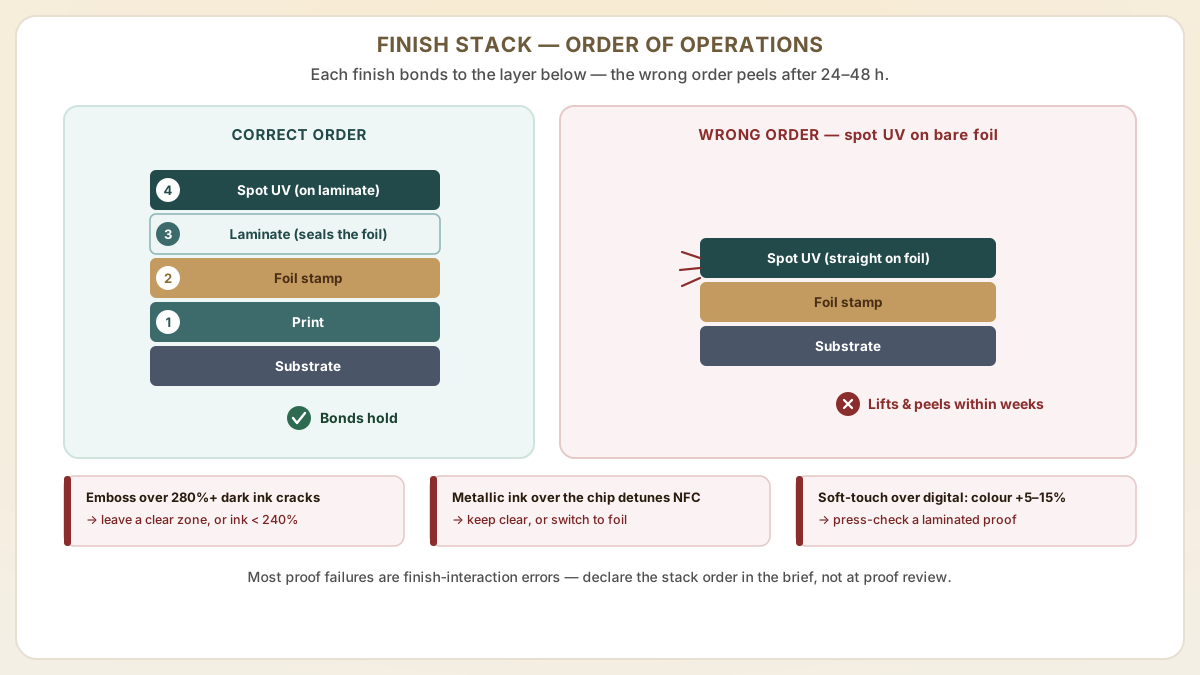
- Spot UV over foil stamp: the UV coating bonds less well to foil (particularly holographic foil) than to a laminate surface, producing visible lift or peeling within weeks of guest handling. Specify foil first, laminate over the foil to seal it, then apply spot UV on the laminated surface. Not directly on the foil. Re-ordering the stack fixes this almost every time.
- Embossing over full-bleed dark print: embossing stretches the substrate around the raised area by 2–5%, and heavy dark ink coverage (typically 280%+ total ink) cracks visibly at that stretch. Design a 1–2 mm clear zone around the emboss area, reduce total ink coverage in the emboss region to below 240%, or accept a visible cracking pattern in the finished card.
- Soft-touch laminate over digital print: soft-touch laminates amplify colour shifts from digital presses (HP Indigo in particular) by 5–15% on red and blue saturations. Always press-check a laminated proof, not a bare digital print, and budget for a colour-adjustment pass after the first laminated sample lands.
- Laser engraving on pre-printed wood: the engraving burns through the print layer and exposes bare wood, which looks intentional if planned and looks like a manufacturing defect if not. Specify engraving zones as artwork voids (no print in the engraving footprint) so the engraver does not clip the logo's printed counterpart, and confirm the engraving depth (typical 0.15–0.25 mm) matches the desired visual weight.
- Magnetic-stripe compatibility: some legacy lock estates still carry a magnetic stripe alongside the chip (typical position: back face, top edge, 10 mm from top, 12.7 mm wide, HiCo or LoCo). A stripe constrains the back-face artwork, rules out embossing in the stripe zone, and requires a solvent-resistant ink on the stripe-adjacent area because oxide-cleaning chemicals lift standard inks.
- Metallic ink over chip antenna: heavy metallic inks (silver, gold, copper) contain conductive pigments that detune NFC antennas when printed over the chip area. Keep metallic ink coverage to typographic accents outside the chip footprint, or switch to foil stamping (which is thinner and usually does not affect the antenna).
- Varnish over Pantone spot: some Pantone colours (particularly fluorescents and pastels) shift visibly under UV varnish because the varnish filters wavelengths differently than the ink assumes. Press-check any Pantone-critical artwork under the final varnish, not bare.
Proof review: what to actually check when the sample arrives
A proof review that only checks colour and copy misses the operational and compliance issues that block production. Numbering mismatches, lock-incompatibility on substrate, finish-interaction defects, regulatory mark absences. Use the checklist below as the default proof review cadence, with each item assigned to a named reviewer rather than a generic 'the team will check'. Proof reviews that skip steps here routinely surface the missed issue at pilot instead, where the rework cost is 10–20× higher. Run the checklist below under D50 lighting, with a named reviewer on each line.
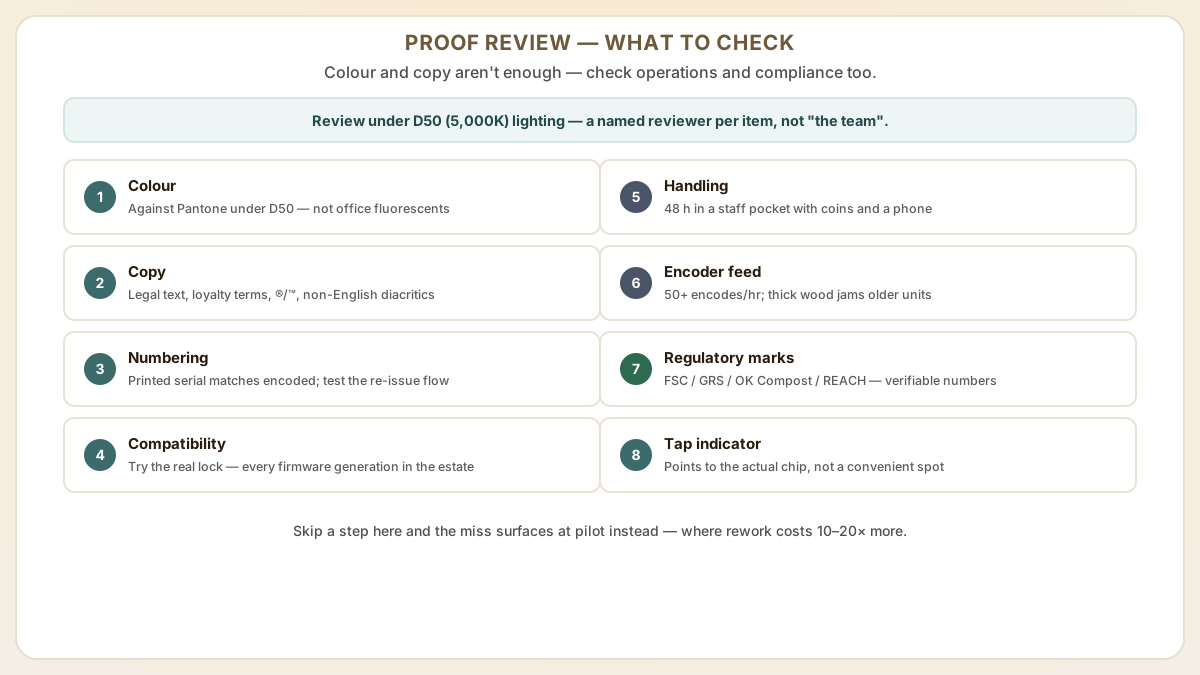
- Colour: check against the approved Pantone references under D50 lighting (5,000K, neutral daylight standard), not office fluorescents or lobby warm-light LEDs. Colour that reads right under a warm-lobby 2700K lamp can read cold under 6500K daylight, and chain brand guidelines specify D50 as the reference. A lightbox or printer's colour-review booth is the correct environment; improvising under desk lamps produces colour-approval drift.
- Copy: proofread legal text (lost-card return address, privacy notice), loyalty-programme terms and trademark symbols, and room-numbering format. Verify non-English characters if the property serves international guests (Cyrillic, Mandarin, Arabic, accented European). Missing diacritics are a common silent failure.
- Numbering: confirm the printed serial matches the encoded serial in the way the PMS expects. Test by encoding a sample card and verifying the re-issue workflow treats the printed number as the search key. Numbering mismatches surface loudest at peak check-in, which is the worst time to discover them.
- Compatibility: try the proof card on the real lock. Every lock-firmware generation in the property's estate, not just a reference lock. Wood and PLA cards can pass a reference bench encoder and fail a real lock by 5–10%, and the failure mode only appears under real tap conditions.
- Handling: ride the card in a staff pocket for 48 hours with coins and a phone. If the finish scuffs, the guest will see the same scuff in week one. A card that looks perfect on the press-check table is not yet a card that survives real use. The handling test is the proxy for the first month of guest wear.
- Encoder handling: confirm the card feeds reliably through the front-desk encoder at peak-check-in speed (50+ encodes per hour, typical Friday afternoon). Thick wood cards (1.0–1.2 mm) sometimes jam on older Saflok or VingCard encoders; rigid bio-composite cards sometimes fail feed-through on high-speed inline encoders.
- Regulatory: confirm any required compliance marks (FSC logo on certified wood with C-number, GRS on recycled PVC, TÜV OK Compost on PLA, REACH/RoHS on EU-market cards) are present, legible, correctly placed and carry verifiable certificate numbers. Unverifiable marks are a compliance risk, not a cosmetic detail.
- Tap indicator and wayfinding: if the card includes a printed NFC tap indicator or 'tap here' wayfinding text, confirm it points to the actual chip position, not to a design-convenient spot on the card that happens to be empty of chip.
- Multi-lot consistency check: if the proof is the first of multiple production lots across a year, compare the proof side-by-side with any archived sample from prior orders of the same design to confirm the new lot has not drifted on colour, finish sheen, edge cleanliness or foil tone. Suppliers change press operators, ink batches and laminate suppliers over time without announcement; a 12-month-old archive card held next to the new proof under D50 lighting catches drift that a bare proof review cannot. Properties that run this check at every proof cycle typically stay on-brand across 3–5 years; properties that do not usually notice the drift only when a returning loyalty guest says 'my last card was warmer than this'.
Artwork sign-off workflow across three stakeholders
Hotel card artwork almost always involves three approvers (brand (marketing/creative), operations (front desk/housekeeping), and compliance (legal/sustainability)) and often a fourth for chain properties (corporate procurement). The most common reason for proof cycles to stretch from two weeks to two months is non-linear sign-off: brand reviews first, operations reviews after, compliance reviews last, and each stage raises changes that reopen the previous stage. A linear sign-off workflow, with each stakeholder group reviewing against a pre-agreed scope, prevents the conflicting-feedback loops that cause most proof delays. The workflow below keeps the four sign-offs linear, each against its own scope.
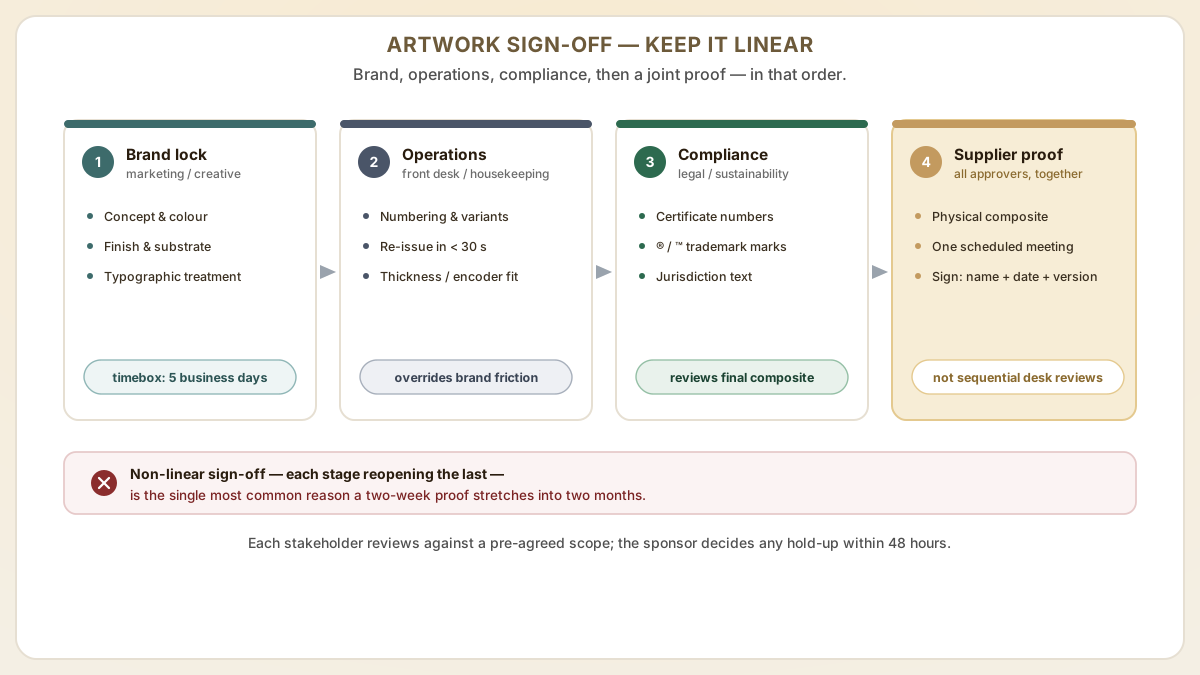
- Step 1Step 1 — brand lock: marketing approves concept, colour, finish direction, substrate choice and typographic treatment. No operational review yet, because operational feedback at this stage triggers a brand rework. Timebox to five business days with a named approver; any brand feedback after this lock is treated as a scope change, not a refinement.
- Step 2Step 2 — operations review: front desk and housekeeping confirm numbering, loyalty variants, replacement-card simplicity (how does the desk re-issue this card in under 30 seconds?), and staff-handling implications (thickness, rigidity, encoder compatibility). Change requests here almost always override brand preferences that cause issue-flow friction. 'but the brand wanted a 1.2 mm card' loses to 'the encoder jams on 1.2 mm' every time.
- Step 3Step 3 — compliance sign-off: sustainability claims with verified certificate numbers, trademark use (TM or ® marks on brand names), any jurisdiction-specific text (GDPR privacy notice in EU, CCPA in California, Mandarin legal required for mainland China properties), and any regulatory labelling for the substrate (PVC recycling code, PLA compostability logo). Compliance reviews the final composite, not the brand-only proof, because claims need the final substrate and print context.
- Step 4Step 4 — supplier proof: the physical proof goes through all three (or four) approvers again as a single composite review, ideally in one scheduled meeting rather than sequential desk reviews. Any divergence resets the cycle to whichever earlier step surfaced the issue, which is why the earlier steps must be thorough.
- Step 5Documentation: each sign-off is captured with approver name, title, date and the exact asset version (filename + SHA or version tag), stored in a single shared folder. Weeks later when someone asks 'why does the card say X', the log answers in one line. Without this log, the property rebuilds the sign-off context from memory, which usually produces disagreement and a reprint.
- Step 6Escalation path: if any approver holds up the workflow past the agreed timebox, the project sponsor decides within 48 hours — not 'we'll circle back next week'. Proof cycles that drift past six weeks usually have an unresolved approver, not an unresolved artwork question.
Step-by-step artwork workflow: blank brief to press-ready in 14 working days
The list below is the linear sequence experienced hospitality pre-press teams run, with each step gated by a deliverable rather than an elapsed time. Properties that follow this sequence reach a press-ready PDF/X-4 in 10–14 working days; properties that skip steps or run them in parallel typically need 4–6 weeks because rework cascades through the cycle. Each step assumes the upstream gates (chip family, lock-firmware compatibility, substrate, numbering rules) are already locked from the material-selection and encoding guides. The 14-day sequence below is that gated path from a blank brief to a press-ready file.
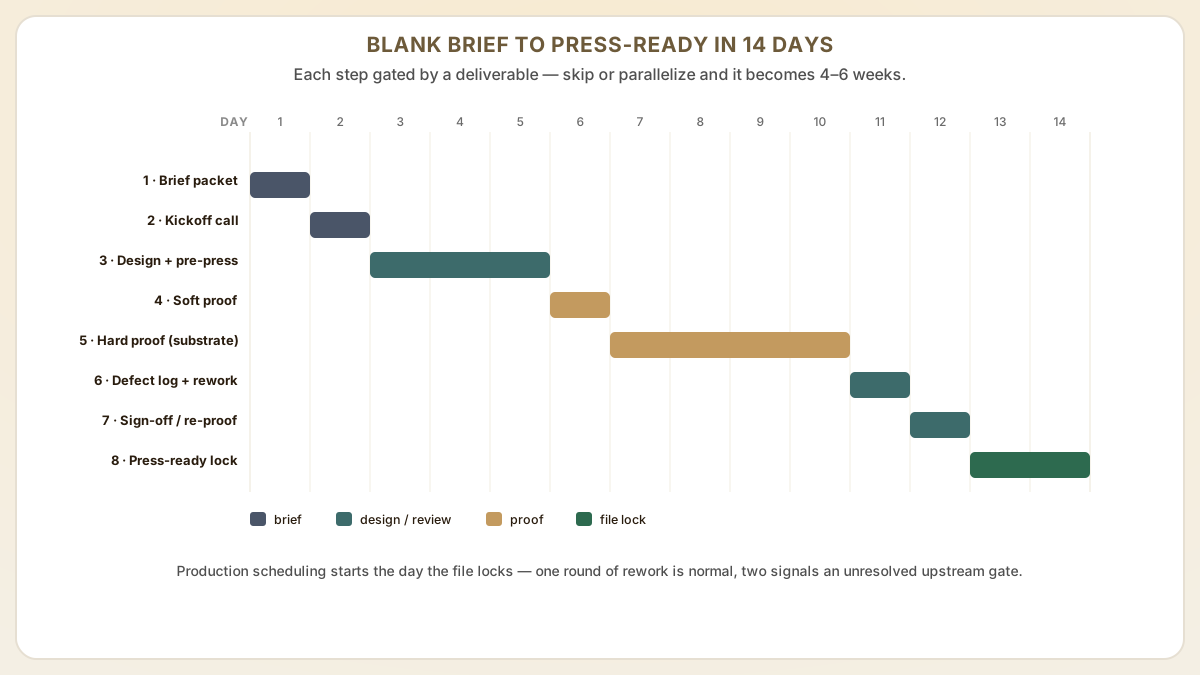
- Step 1Step 1 (day 1) — assemble the brief packet: card format (CR80 landscape, 85.60 × 53.98 mm, corner radius 3.18 mm), substrate, thickness, chip family, encoded-vs-printed numbering rule, loyalty-variant count, finish stack with order of operations, Pantone references with Delta-E ≤ 2.0 tolerance, FSC or GRS certificate numbers if claimed. One PDF, named with property + version tag.
- Step 2Step 2 (day 2) — supplier kickoff call: 30-minute call with the supplier's pre-press lead (not the sales rep), verifying that every brief field is unambiguous and that the supplier's press, finishes and substrate stock can deliver. End the call with a written delivery date for the first proof.
- Step 3Step 3 (days 3–5) — design layout and pre-press mark-up: designer lays out at 100% scale on the supplier's template (with bleed, safe area, chip-position outline, magnetic-stripe footprint if applicable), embeds and outlines all fonts, exports as PDF/X-4 per ISO 15930-7. Internal review by brand owner against the brand-standards manual.
- Step 4Step 4 (day 6) — soft proof: supplier returns a colour-managed PDF soft proof showing variant-by-variant artwork. Brand approves the layout, colour direction and finish placement. No sign-off yet on physical fidelity (that comes at the hard proof).
- Step 5Step 5 (days 7–10) — hard proof on real substrate: supplier prints 10–25 samples on production substrate with the full finish stack, including any foil/emboss/spot-UV. Stakeholder review under D50 lighting (5,000K), with the encoder, the lock and a staff-pocket handling test all in scope.
- Step 6Step 6 (day 11) — defect log and rework decision: each reviewer marks defects against the proof-review checklist (colour, copy, numbering, compatibility, handling, encoder feed, regulatory marks, tap indicator). One round of rework is normal; two rounds usually signals an unresolved upstream gate.
- Step 7Step 7 (day 12) — second hard proof if rework was needed; otherwise sign-off documentation: each approver signs the proof packet with name, title, date and exact asset-version tag. Document stored in the property's shared folder for audit.
- Step 8Step 8 (days 13–14) — press-ready file lock: supplier locks the PDF/X-4 against the signed proof and quotes the production run with confirmed lead time, MOQ tier (typical: 1K, 5K, 25K), per-unit price by tier, and shipping-protection spec. Production scheduling begins on the day the file is locked, not earlier.
Pre-press checklist: 15 items to verify before the file leaves the design desk
This is the checklist the pre-press lead runs against the file before shipping it to the supplier, ideally as a printed sheet ticked off by name. Files that pass this checklist almost never fail at the soft-proof stage; files that skip three or more items routinely surface defects at the hard proof and add a full rework cycle (3–5 working days). Use the checklist as a gate, not a courtesy.
- Bleed: 2 mm extension past the cut line on all four sides, no exceptions. PSPrint and most US printers default to 0.125 inch (3.18 mm); confirm the supplier's standard before the brief.
- Safe area: 3 mm interior margin from the cut line, no critical type or logo inside this zone.
- Resolution: all raster artwork at 300 dpi or higher at 100% scale. Vector preferred (AI/CDR/PSD) per industry pre-press standards.
- Colour mode: CMYK with named Pantone spot colours for any brand-critical hue. RGB swatches are a rejection trigger.
- Total ink coverage: ≤ 280% in heavy coverage areas, ≤ 240% in any region under emboss to prevent cracking.
- Fonts: every font embedded AND outlined. Do not rely on the supplier holding a foundry licence.
- Bleed marks and registration: included on the export, not stripped out.
- Chip footprint marker: chip-position outline visible on the layout; metallic ink coverage outside the chip antenna zone.
- Magnetic-stripe void (if applicable): solvent-resistant ink in the stripe-adjacent area, no embossing or foil within the 12.7 mm stripe footprint.
- Numbering placement: variable-data fields tagged with the correct serial format, leading-zero rules, and PMS-aligned check digit if required.
- Loyalty-variant differentiator: each variant exported as a separate file with its own version tag, not as colour-swap layers in one master file.
- Compliance marks: FSC logo with valid C-number for certified wood, GRS logo for recycled PVC, TÜV OK Compost for PLA, REACH and RoHS marks for EU-market cards. Each mark traceable to a verifiable certificate.
- Tap indicator and wayfinding: if the design uses a printed NFC indicator, the indicator points to the actual chip location, not to a generic graphic anchor.
- PDF export profile: PDF/X-4 per ISO 15930-7, with all transparency flattened only if the supplier requires it; otherwise leave live.
- File naming and version tag: property + variant + date + designer initials, with a SHA or version tag captured in the sign-off log so the supplier and the property can refer to the same file unambiguously.
Packaging, delivery and the first 48 hours at the property
Artwork quality fails most often in the last inch: the sleeve, the courier box and the front-desk drawer. Because a card that looks perfect in the press-check booth can arrive at the property with scuffed corners from inadequate packaging, fade within a week from sunlit storage, or sit in a humidity-exposed drawer and warp. The details below are what separate a clean handover from a scramble, and they belong in the artwork brief rather than in a post-production conversation.
- Sleeves: decide whether cards ship and issue in branded sleeves, plain sleeves or loose. Branded sleeves add US$0.03–0.08 per card and 1–2 weeks of delivery lead time (the sleeves are a separate print job); plain sleeves save both but lose the branded handover moment; loose cards save all packaging cost but risk handling damage in transit and require careful front-desk handling.
- Bundling: most properties want cards bundled in 100s or 250s, with a coversheet showing serial range, loyalty variant and production lot number. Large chains standardise bundle size group-wide (typically 250s) for encoder cartridge compatibility; boutique properties often improvise 100s to fit smaller drawers. Specify the bundle size in the brief, because changing it post-quote usually costs a pick-and-pack re-run.
- Shipping protection: wood, PLA and bio-composite cards need more protective packaging than PVC because the substrates are more vulnerable to edge damage and humidity. Specify double-wall cartons, desiccant sachets (typical 5 g silica per 1,000 cards) for humid-destination shipments, and vibration-damping inserts for premium-substrate shipments. Wood cards shipped in standard single-wall cartons arrive with visible corner dings on 2–5% of the order.
- First-48 storage: confirm with operations exactly where the cards go on arrival. A sunlit lobby cabinet is enough to fade PLA in two weeks, a humid back-of-house drawer warps wood cards, a temperature-cycled storage room near a kitchen can laminate-crack PVC over six months. Specify cool, dry, dark storage as the default, and verify the property has appropriate space before the first shipment lands.
- First-issue audit: the first 50 cards issued from the new stock should be audited by the duty manager for print defects (colour drift, type misalignment, foil lift), serial mismatches (printed number vs encoded UID), and finish problems (corner scuffs, lamination bubbles). If defects appear at any rate above 1%, stop issue, document the defect photographically and call the supplier before the front desk burns through the order.
- Re-order trigger: set a replenishment threshold at the property that triggers the next order before stock runs below a defensible reserve. Typical trigger is 6 weeks of expected card burn for PVC (covers 2–3 week production plus safety), 10–12 weeks for wood or bio-composite (covers 4–6 week production plus larger safety buffer). Premium materials with longer lead times need higher thresholds, and chains with long shipping distances (US-to-Asia resort, EU-to-Caribbean) need another 1–2 weeks of buffer.
- Sustainability-claim storage: if the cards carry a reporting-grade sustainability claim (FSC, GRS, TÜV OK Compost), store the batch certificates at the property (or corporate) for the audit window (typically 3–5 years for LEED, ISO 14001). Without the certificates on file, the claim can be pulled during audit, which is worse than not making the claim in the first place.
Useful next pages
Use these linked product, guide and comparison pages to keep the next click specific and practical.
Hospitality pillars
Solution pages that anchor the artwork decision in the broader hotel stack.
Related hotel playbooks
Material, encoding and sample planning guides that pair with the artwork decision.
Compare context for visible design trade-offs
Compare pages that frame the artwork and substrate trade-offs.
External pre-press references
Authoritative pre-press and brand-color references for hotel artwork briefs.
FAQ
When should hotel teams start detailed artwork work?
After the card format (CR80 orientation, thickness, corner radius), chip family (DESFire EV3 vs MIFARE Classic vs Ultralight C), compatibility path (confirmed lock-firmware list with supplier antenna tuning), and numbering rules (printed vs encoded, checksum alignment, variant count) are all locked and documented. Starting artwork before these are stable almost always forces a repeat revision cycle, because one upstream change — chip family swap, card thickness change from 0.76 to 0.84 mm, serial format change from 6 digits to 8, loyalty-variant count increase from 3 to 5 — invalidates design decisions downstream and typically adds 10–15 business days of rework. Treat 'artwork ready to start' as a gate, not a default state.
What does a useful hotel card print checklist actually include?
Every field a production planner would otherwise ask about: format, colour, finishes, numbering, compliance marks and packaging. In full: card format and thickness (CR80, 0.76 or 0.84 mm, corner radius 3.18 mm), print faces (front-only, front-and-back, full-bleed wrap), colour spec with Pantone references and Delta-E tolerances (typically ≤2.0 for critical brand colours), font licensing (embedded and outlined, no reliance on supplier foundry licences), print method (offset, digital, UV-LED, dye-sub, screen, thermal), finish stack with explicit order of operations (lamination, spot UV, foil, emboss, engrave), bleed (2 mm) and safe area (3 mm), numbering rules with PMS alignment, loyalty variant count with per-variant artwork, substrate-specific tolerances, compliance marks with certificate numbers (FSC, GRS, TÜV OK Compost, REACH, RoHS), packaging format (sleeves, bundling, shipping protection), and a named approver for each sign-off step with timebox. A brief missing any of these items is the reason the proof cycle takes six weeks instead of ten days.
Does a printed serial number have to match the encoded serial?
Only if the PMS workflow expects them to match. Some properties use the printed number only for the front desk to distinguish cards in a stack or for visual inventory audit, while the chip encoding uses a different serial (chip UID, encoded sector-data UID, diversified key reference). Others require the two to match exactly so the PMS re-issue flow (guest reports lost card, desk staff reads the printed number, PMS looks up the card in the system and invalidates it) works from the printed number alone. Decide this during the encoding brief (before the artwork brief) and document the rule with the PMS vendor, not the card supplier, because the PMS config determines which numbers are searchable. Numbering mismatches caught at pilot stage are the single most common reason for PMS-workflow confusion at peak check-in.
What finish combinations cause the most proof problems?
Spot UV over foil stamping is the most common issue. The UV coating bonds less well to foil than to a laminate surface, producing visible lift or peeling within weeks of guest handling. The fix is to stamp the foil first, laminate over the foil to seal it, then apply spot UV on the laminated surface. Embossing over heavy dark ink (280%+ total ink coverage) is the second most common; the substrate stretches 2–5% around the emboss and heavy ink cracks visibly, so leave a 1–2 mm clear zone or reduce ink coverage below 240% in the emboss region. Soft-touch laminate over digital print amplifies colour shifts 5–15% on reds and blues; metallic ink over the chip antenna detunes the NFC read; laser engraving on pre-printed wood burns through the print layer and exposes bare wood. Pre-empt all of these in the finish-stack section of the brief rather than discovering them in the proof round.
How does artwork change for wood or PLA cards?
Wood loses photographic detail under laser engraving (crisp monochrome at 0.1 mm line fidelity, zero colour) and hides grain under UV-printed white bases (the white layer masks the very grain that justified the wood choice). Decide which signal matters (grain visibility or photography) before artwork starts. PLA tolerates fewer finishing temperatures (below 60°C during UV curing, below 120°C during lamination), dislikes heavy dark coverage that traps heat, and shows slightly softer colour registration than PVC (0.2 mm drift typical). Bio-composite loses readability on small type below 7 pt because visible fibres disrupt letterforms, so lean on bold typography and simple marks rather than photographic artwork. The material decision should be locked before artwork begins, because artwork that works on PVC often does not transfer to wood or bio-composite without a full redesign. The substrate constrains the design language, not the other way around.
Who has to sign off on hotel card artwork?
Three stakeholder groups as a minimum, often four for chain properties. Brand (marketing/creative), operations (front desk/housekeeping), compliance (legal/sustainability) and corporate procurement (for chain pricing and contractual terms). A linear workflow (brand lock first with timebox, then operations review for numbering and handling, then compliance sign-off on claims and trademarks, then physical-proof review by all approvers together) prevents the cross-team conflict that causes the most proof delays. Sequential feedback from the same group across stages (brand wants one thing in week one, different in week three) is the single most expensive pattern, because each re-review of earlier stages typically restarts the supplier's pre-press work. Capture each sign-off with name, title, date and exact asset version (filename + version tag), and define an escalation path to the project sponsor for any approver who holds up the workflow past the agreed timebox.
What is the most common avoidable mistake in hotel card artwork?
Pushing full artwork revisions before the card format, chip family, compatibility path and numbering rules are stable. Every upstream change (chip swap, thickness change, serial format change, loyalty-variant count change, substrate swap) forces an artwork change, which forces a proof change, which forces another sample cycle and another stakeholder sign-off loop. Turning a 10-day proof into a 6-week proof. Stabilise compatibility, substrate and numbering first (in the sample-planning and material-selection guides that precede artwork), then artwork moves on a predictable cadence with clean hand-offs. The tempting inversion ('let's start artwork while we sort out the chip') almost always adds more weeks than it saves.
What does the production timeline look like once the file is locked?
For PVC at 1K–5K MOQ tier, plan 2–3 weeks of production after the press-ready file lock, plus shipping (typical 5–10 days domestic, 3–5 weeks ocean for trans-Pacific). Wood, PLA and bio-composite cards add 1–2 weeks because the substrates are lower volume in the supply chain and require more careful handling. Reference IHG MIFARE Ultralight C cards in stock at specialist hospitality distributors quote same-day shipping for 200-card sleeves at ~US$0.32 per card; custom-printed and chain-branded runs at 5K–25K typically quote 4–6 weeks production plus transit. Build the property's reorder threshold (6 weeks of expected card burn for PVC, 10–12 weeks for wood) around the worst-case lead time, not the average.
How many proof rounds are normal before the file locks?
One soft proof and one hard proof for a clean brief. Two hard proofs if the first hard surfaces a finish-interaction defect or a colour drift outside Delta-E ≤ 2.0. Three hard proofs is a flag that an upstream gate (chip family, substrate, numbering rule) is unstable, and the project sponsor should pause artwork rather than burn another sample cycle. Each rework round adds 3–5 working days at the supplier and 2–3 days of internal sign-off, so a project that hits four hard proofs typically lands 4 weeks past the 14-day target. Track the round count as a project KPI, not just the elapsed days.
Sources & references
Primary standards, OEM datasheets and regulatory documents cited by this article. All URLs were verified on the access date shown below.
- ISO/IEC 7810 — Identification cards — Physical characteristics
定义 ID-1 尺寸与出血/安全区计算的卡片物理基准。
- ISO/IEC 10373-1 — Identification cards — Test methods — General characteristics
印刷耐磨、附着力、色牢度等通用测试方法,作为"耐用性评估"章节依据。
- ISO 12647-2 — Graphic technology — Process control for offset lithographic printing
- ISO 15930-7 — PDF/X-4 — Complete exchange of CMYK and named colour printing data
PDF/X-4 交付规范,用于"可打印文件交付" artwork hand-off 章节。
- Idealliance G7 Methodology — Calibration & Process Control for Color Printing
G7 色彩校准方法论,多供应商多工艺房卡色彩一致性管控的引用来源。
- Fogra — Process Standard Offset (PSO) and FograCert
- Pantone Matching System — Solid Coated / Uncoated Guides
专色配色系统,用于"品牌色再现"章节支撑 Pantone-to-CMYK 替换决策。
Proud Tek is a Shenzhen-based RFID & NFC manufacturer supplying hotel chains, transit operators, event venues and retail brands worldwide. Every order includes free samples, RF testing and dedicated project support.
Get a Quick Quote
Tell us about your project and we'll respond within one business day. Fields marked (asterisk) are required.