
Pharma Anti-Counterfeit NFC
NFC Pharmaceutical Labels
DSCSA Anti-Counterfeit

Quick answer
NFC pharmaceutical labels embed NXP NTAG 424 DNA (AES-128 + Secure Dynamic Messaging) — or NTAG 424 DNA TagTamper (TT) for EU FMD Article 5 anti-tampering device compliance. On top of the mandated GS1 DataMatrix serialization carrier (GTIN + serial + lot + expiry). They are the cryptographic authentication layer that DSCSA (U.S. Drug Supply Chain Security Act, FDA full enforcement Nov 2024 with stabilisation period) and EU FMD (Falsified Medicines Directive 2011/62/EU + Delegated Regulation 2016/161) require for unit-level pharmaceutical anti-counterfeit, paired with EMVS (European Medicines Verification System) end-point decommissioning at dispensing. NFC sits ON TOP of the regulator-mandated DataMatrix — not in place of it — providing per-pack cryptographic non-reproducibility that DataMatrix cannot, plus patient-engagement on adherence / pharmacovigilance / clinical-trial IMP unblinding. It serves as the chip / DSCSA-FMD-architecture / EMVS / GBA-ICH-E6 / hospital-CLMA-BMA reference for pharmaceutical manufacturers and regulatory teams.
- Cryptographic AES-128 SUN authentication on top of mandated GS1 DataMatrix — NFC sits ON TOP of regulator-mandated serialization carrier (DSCSA / EU FMD), not in place of it. Catches 'counterfeit-carrier-with-genuine-serial' attack class that EMVS dispensing-verification + DataMatrix-only checks cannot detect.
- EU FMD Article 5 anti-tampering device (ATD) compliance via NTAG 424 DNA TagTamper CTTES bit or destructive-antenna bridge tag — destructive-on-removal architecture defeats label-transfer-to-counterfeit attack. Operates independently of GS1 DataMatrix serialization carrier.
- Patient-engagement + pharmacovigilance + clinical-trial IMP layered on per-pack cryptographic authentication — adherence tracking for chronic-disease therapy (oncology / HIV / cardiovascular / diabetes), in-context FDA MedWatch + EMA EudraVigilance reporting, ICH E6(R2) GCP investigational-product accountability, hospital CLMA / BMA via HL7 FHIR MedicationAdministration.
Used in these industries
Deployments where this product is referenced on our industry landing pages.
At a glance
Use these short answers to decide whether this page matches the project before moving into the detail.
DSCSA + EU FMD regulatory framework
U.S. DSCSA (Drug Supply Chain Security Act, PL 113-54): unit-level serialization, GS1 DataMatrix encoding GTIN + serial + lot + expiry, T3 (transaction information / his...
GS1 DataMatrix is the mandated carrier; NFC sits ON TOP
FDA DSCSA implementation guidance + EU FMD Delegated Regulation 2016/161 Article 3 specify printed GS1 DataMatrix as the data carrier — NFC is NOT an approved DSCSA / FM...
Next step
Ready to move forward? Start your inquiry to get specific answers for this project.
Request quote and samples- Counterfeit drug market context
-
- WHO estimates 10% of medicines in low- and middle-income countries are substandard or falsified.
- Counterfeit pharmaceuticals generate USD 4.4B annually in criminal revenue.
- Estimated 250,000 child deaths per year from fake antimalarials alone.
- Counterfeit DataMatrix replication using commercial printing equipment is trivial; visual inspection cannot distinguish genuine from counterfeit barcode.
- Patient medication non-adherence costs U.S. healthcare system ~USD 300B annually.
- NTAG 424 DNA cryptographic anti-counterfeit
-
- NXP NTAG 424 DNA (NT4H2421Gx): AES-128 + Secure Dynamic Messaging — per-tap unique CMAC URL.
- Each tap generates unique signature verified against secure cloud backend; cryptographic identity cannot be cloned.
- Replay attacks rejected via monotonic counter; previous URL captured fails counter check.
- Counterfeiter who replicates serial-lot-expiry in DataMatrix still cannot produce valid SDM signature without genuine chip's AES-128 key.
- Catches 'counterfeit-carrier-with-genuine-serial' attack class that EMVS dispensing-verification cannot.
- NTAG 424 DNA TagTamper — EU FMD Article 5 ATD
-
- NTAG 424 DNA TagTamper (TT, NT4H2421Tx): cryptographically signed CTTES (Closed Tamper TagTamper Status) bit — flags 'sealed' / 'opened' on every tap.
- Article 5 ATD requirements technology-agnostic — destructive-antenna bridge tag or NTAG 424 DNA TT both compliant.
- Operates independently of GS1 DataMatrix serialization carrier — orthogonal architecture.
- Pharmacist + dispensing pharmacy staff verify ATD status pre-dispense alongside EMVS unique-identifier check.
- Defense-in-depth pharma anti-counterfeit
-
- Layer 1: GS1 DataMatrix serialization for regulatory traceability.
- Layer 2: NFC cryptographic authentication for per-pack integrity.
- Layer 3: tamper-evident closure (NTAG 424 DNA TagTamper CTTES bit or destructive-antenna bridge tag).
- Layer 4: overt security print (hologram, colour-shift ink, microtext) for pharmacist visual checks.
- Layer 5: covert markers (taggants, UV ink, chemical signatures) for forensic lab verification.
- NFC occupies the per-pack cryptographic authentication layer — pennies per pack, deployable across all DSCSA / FMD saleable units.
- Cold-chain vaccine + temperature-logging integration
-
- Ultra-cold mRNA vaccines (-70 °C, -20 °C storage): NFC authentication coexists with USDA-validated temperature indicators.
- Berlinger Fridge-tag, Sensitech TempTale, LogTag UTRIX — log excursions against WHO VVM (Vaccine Vial Monitor) schedule.
- Consumer-tap verification page surfaces both authentication status and cold-chain custody summary — patient trust in the specific vial.
- WHO PQS E006 cold-chain compliance reference; EU GDP (Good Distribution Practice) alignment.
- Patient adherence + pharmacovigilance
-
- Each dose (bottle opening, blister-pop, auto-injector activation) logged to patient's NFC-linked account — adherence data for chronic-disease therapy areas.
- Oncology, HIV, cardiovascular, diabetes — non-adherence drives multi-billion-dollar hospitalisation and mortality costs.
- EHR integration: Epic MyChart, Cerner HealtheLife; mHealth: Apple HealthKit, Google Fit — adherence data surfaces to prescribing physician.
- In-context adverse-event reporting: FDA MedWatch (US), EMA EudraVigilance (EU), local regulator post-market surveillance — short reporting path increases pharmacovigilance signal density.
- Clinical-trial investigational medicinal product (IMP)
-
- ICH E6 (R2) Good Clinical Practice — investigational product accountability + serialization-compatible IMP handling.
- Blinded patient packs + emergency unblinding at investigator request via controlled-reveal authentication backend.
- IRT (Interactive Response Technology) dispensing confirmation — randomization-compatible blinded pack management.
- Expired-stock identification + return reconciliation through NFC-tracked IMP packaging.
- Hospital closed-loop medication administration (CLMA / BMA)
-
- HL7 FHIR MedicationAdministration resource integration — NFC tap at bedside replaces or supplements 1D barcode scan.
- Workstation-on-wheels NFC reader: pack authenticity confirmation + GTIN-to-formulary match + recall status + administration timestamp to EHR.
- High-risk medications (oncology IV, opioid, high-alert look-alike-sound-alike pairs): wrong-patient + wrong-drug error reduction.
- Joint Commission National Patient Safety Goals compliance support.
- Pharmaceutical-grade substrate + USP compliance
-
- Pharmaceutical-grade label substrate meets USP <661.1> — plastic packaging materials in contact with drug products.
- Compatible with carton, bottle, blister packaging formats.
- Tamper-evident die-cut design — peeling fractures NFC antenna, defeats label-transfer-to-counterfeit attack.
- Dual-interface label: NFC chip + printed GS1 DataMatrix on single substrate.
- Procurement and integration
-
- MOQ 10,000 pieces; lead time 15-20 business days; per-tag cost USD 0.40-1.20 depending on chip variant (DNA vs DNA TT).
- AES-128 key provisioning at NXP secure facility — coordinated through Proud Tek as part of first production batch.
- GS1 DataMatrix encoding configurable per regulator-specific format (DSCSA, FMD, ANVISA, Chestny ZNAK, etc.).
Commercial terms
- MOQ
- Varies by SKU — stock items from 100 pcs; custom production typically 200-1,000 pcs
- Lead time
- Production 2-3 weeks after artwork and encoding sign-off; reorders on a 3-4 week cycle
- Samples
- Free samples and RF test report with every order; courier at customer cost
- Payment
- 50% T/T deposit, 50% before shipment; Net 30/60 for established accounts; LC for large orders
- Shipping
- FOB Shenzhen / Yantian; DHL, FedEx or EMS air freight; sea LCL / FCL for volume
- Response
- Itemized quote within one business day, Mon-Fri (UTC+8)
Why pharma needs NFC on top of GS1 DataMatrix — not instead of
- DSCSA + EU FMD mandate GS1 DataMatrix as the serialization carrier — NFC is not approved as a substitute. NFC adds per-pack cryptographic authentication on top.
- DataMatrix is trivially photocopied; NTAG 424 DNA SDM signatures cannot be reproduced without extracting AES-128 key from chip silicon (impractical at any normal adversary budget).
- EU FMD Article 5 ATD requirements technology-agnostic — NTAG 424 DNA TagTamper CTTES or destructive-antenna bridge tag both compliant; operates orthogonally to DataMatrix carrier.
Defence-in-depth pharma anti-counterfeit architecture
DataMatrix only / hologram only / single-layer security
- DataMatrix alone: trivially photocopied; replay attack defeats EMVS verification
- Hologram: visually replicable within months of launch
- Single-layer security: counterfeiters defeat one layer, system fails
- Acceptable as regulatory baseline; insufficient for high-risk therapy areas
- EMVS catches duplicate decommissioning; doesn't catch counterfeit-with-genuine-serial
Defence-in-depth: DataMatrix + NFC + TT + overt + covert (this page)
- Layer 1: GS1 DataMatrix serialization (regulator-mandated)
- Layer 2: NFC cryptographic per-pack authentication (NTAG 424 DNA SDM)
- Layer 3: tamper-evident closure (TT CTTES bit or destructive antenna)
- Layer 4: overt security print (hologram, colour-shift, microtext)
- Layer 5: covert markers (taggants, UV ink, forensic lab markers)
- Each layer catches a different attack class — counterfeiter must defeat all five
What cryptographic SDM authentication actually catches
- Counterfeit-carrier-with-genuine-serial: defeated by AES-128 SDM cryptographic non-reproducibility.
- Tag-transfer-to-counterfeit-package: defeated by tamper-evident die-cut + destructive antenna.
- Replay attack with previously-tapped URL: defeated by monotonic counter.
- Bulk DataMatrix counterfeit: defeated by per-pack cryptographic SDM signature.
From paper Rx label 1990s to NFC + DSCSA + EU FMD + GBA convergence
- 1990s-2000s
Pharmaceutical anti-counterfeit relies on holograms + paper batch labels + serial-number stickers — visual security features.
- 2011
EU Falsified Medicines Directive (2011/62/EU) publishes — establishes legal framework for unique identifier + anti-tampering device + EMVS.
- 2013
U.S. DSCSA (Drug Supply Chain Security Act) enacted — establishes 10-year phased serialization roadmap to unit-level traceability.
- 2016
EU FMD Delegated Regulation 2016/161 publishes — detailed rules for unique identifier (Article 3) + anti-tampering device (Article 5).
- 2017-2019
NXP NTAG 424 DNA + DNA TT launch with AES-128 SUN + CTTES tamper-loop. Pharmaceutical early adopters begin pilot programmes layering NFC on top of DataMatrix.
- 2024
U.S. DSCSA full enforcement effective November 2024 with stabilisation period through late 2025. EU EMVS in steady-state operation across member states.
- 2026 Today
Cross-buyer reference experience on branded-Rx-mfr, generics-mfr, specialty-biologics, narcotics-CSA, and controlled-substance-vault programmes shows converge on NTAG 424 DNA / 424 DNA TT + dual-interface label (NFC chip + printed GS1 DataMatrix per DSCSA / FMD / ANVISA / Chestny ZNAK regulator-specific format) + USP <661.1> pharmaceutical-grade substrate + tamper-evident die-cut + cloud-backend SDM verification + EMVS-compatible decommissioning + EHR / IRT / ICH E6 (R2) integration as the operator-side template.
How tap-to-verify authentication works
The verification is cryptographic, not visual. When a pharmacist or patient taps the pack, the NTAG 424 DNA chip generates a per-tap signed URL with an AES-128 key that is provisioned at NXP's secure facility and never leaves the silicon. A counterfeit that copies the printed DataMatrix cannot produce a valid signature, so the backend rejects it — the control that catches the counterfeit-carrier-with-genuine-serial attack that DataMatrix-only and EMVS-only checks pass. Chip-level detail is in the NTAG 424 DNA SUN + CMAC reference.
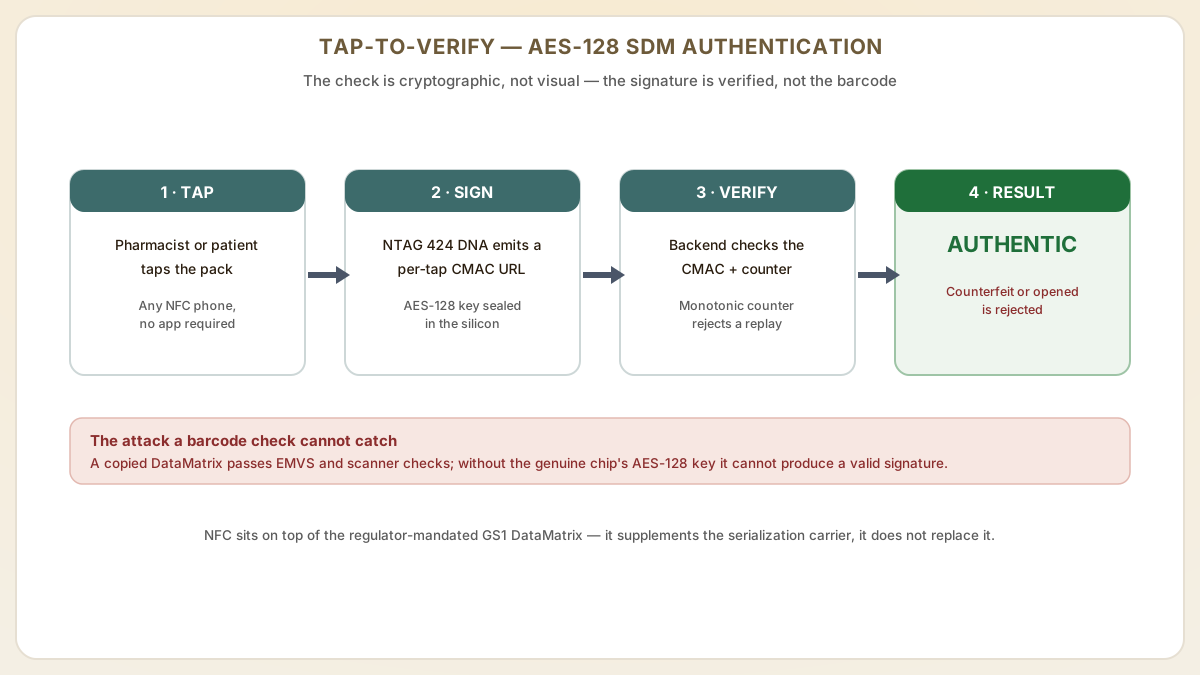
- Secure Dynamic Messaging generates a new CMAC URL on every tap; the backend tracks a monotonic counter, so a previously captured URL is rejected as a replay.
- The AES-128 key is provisioned into the chip at NXP's secure facility and never exported — copying the packaging does not copy the key.
- This defeats the counterfeit-carrier-with-genuine-serial attack: a valid serial in a copied DataMatrix passes EMVS until decommissioning, but cannot produce a valid signature.
- NFC is not an approved DSCSA or EU FMD serialization carrier — it operates on top of the mandated GS1 DataMatrix, and provides the Article 5 anti-tampering device via TagTamper.
Where NFC sits in the pharma anti-counterfeit stack
NFC does not replace the regulator-mandated GS1 DataMatrix; it is a layer above it. DSCSA and EU FMD require the printed DataMatrix serialization carrier, and the NFC chip adds the per-pack cryptographic authentication and the Article 5 anti-tampering device that a barcode cannot provide. The general-purpose Article 5 device is the NTAG 424 DNA TamperTag; the pharmaceutical industry page covers the full DSCSA / FMD / EMVS deployment.
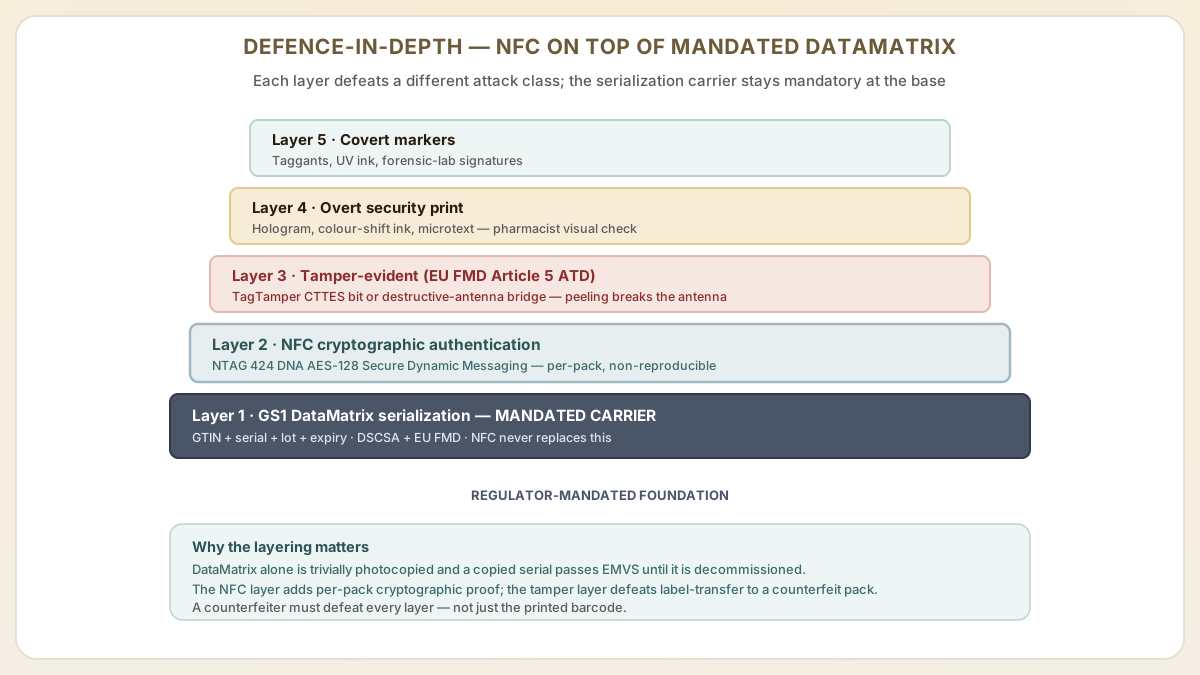
- Layer 1 — GS1 DataMatrix serialization (GTIN + serial + lot + expiry): the regulator-mandated carrier for DSCSA and EU FMD.
- Layer 2 — NFC AES-128 Secure Dynamic Messaging: the per-pack cryptographic authentication a barcode cannot provide.
- Layer 3 — tamper-evidence: a TagTamper CTTES bit or a destructive-antenna bridge, compliant with EU FMD Article 5.
- Layers 4-5 — overt security print (hologram, colour-shift, microtext) for pharmacist checks and covert markers (taggants, UV ink) for forensic verification.
NFC pharmaceutical label — the spec sheet
Chip, interface, serialization carrier, tamper device and commercial terms in one place — the specification a regulatory or packaging team reviews before a pilot.
| Attribute | Value | Notes |
|---|---|---|
| Chip | NTAG 424 DNA (NT4H2421Gx) · DNA TagTamper (NT4H2421Tx) | AES-128 SUN / SDM; TagTamper for the Article 5 ATD |
| Interface | NFC smartphone tap (no app) + printed GS1 DataMatrix | Dual-interface on a single substrate |
| Serialization carrier | GS1 DataMatrix — GTIN + serial + lot + expiry | Regulator-mandated; NFC sits on top, not instead |
| Authentication | AES-128 Secure Dynamic Messaging — per-tap CMAC + monotonic counter | Replay rejected; non-reproducible without the chip key |
| Tamper (Article 5 ATD) | TagTamper CTTES bit or destructive-antenna bridge | Peeling fractures the NFC antenna |
| Substrate | Pharmaceutical-grade per USP <661.1> | Carton, bottle and blister formats |
| Regulatory scope | DSCSA (US) · EU FMD 2011/62/EU + 2016/161 · EMVS | ANVISA / Chestny ZNAK / SFDA DataMatrix variants |
| Integrations | EHR (Epic, Cerner) · HL7 FHIR · IRT · ICH E6 (R2) · FDA MedWatch / EMA EudraVigilance | Adherence, pharmacovigilance, IMP, hospital CLMA / BMA |
| MOQ / lead time | 10,000 pieces · 15-20 business days | USD 0.40-1.20 per tag by variant; AES-128 key provisioning at NXP |
| Cold-chain | Coexists with WHO VVM temperature indicators | -70 °C / -20 °C mRNA vaccine storage |
Useful next pages
Use these linked product, guide and comparison pages to keep the next click specific and practical.
Related NFC label products
Other NFC solutions for authentication and supply chain tracking.
Industry applications
Industry deep-dives where this SKU is commonly specified.
Chip-level technical reference
Deep-dive specifications for NTAG 424 DNA pharmaceutical applications.
FAQ
How does the NFC label prevent drug counterfeiting?
Each NTAG 424 DNA chip contains factory-programmed cryptographic AES-128 keys that generate a unique digital signature with every tap. Signature verified against secure cloud backend in real time. Unlike barcodes or QR codes, the NFC chip's cryptographic identity cannot be cloned, copied, or reproduced. A counterfeit label fails the authentication check and displays fraud alert to pharmacist or patient. Catches 'counterfeit-carrier-with-genuine-serial' attack class that DataMatrix-only and EMVS-only verification cannot detect.
Does the label meet DSCSA and EU FMD requirements?
The label carries both a printed GS1 DataMatrix barcode (encoding GTIN, serial number, lot, expiry per GS1 standards) for scanner-based verification AND an NFC chip storing the same serialized identifier. Dual-interface design satisfies both DSCSA unit-level traceability and EU FMD Article 3 unique identifier + Article 5 anti-tampering device requirements. NTAG 424 DNA TagTamper variant provides the Article 5 ATD compliance independently of the DataMatrix carrier.
Can patients check the medication authenticity themselves?
Yes — any NFC-enabled smartphone (iPhone XS+ or modern Android) verifies the medication by tapping. Phone opens verification page showing authentic / counterfeit / opened status, product details, lot number, expiry date. No app download required; verification through standard mobile browser. Patient-engagement layer adds dosage instructions, drug-interaction warnings, refill reminders, multilingual support, in-context FDA MedWatch / EMA EudraVigilance adverse-event reporting.
Is NFC an approved DSCSA or EU FMD serialization carrier?
No — GS1 DataMatrix remains mandatory. NFC is NOT an approved DSCSA or EU FMD serialization carrier. FDA DSCSA implementation guidance + EU FMD Delegated Regulation 2016/161 Article 3 + global convergence around GS1 GTIN + serial + lot + expiry format all specify printed DataMatrix (or legacy 1D linear + DataMatrix dual code). NFC delivers per-pack cryptographic authentication that DataMatrix cannot, plus compliant Article 5 ATD via TagTamper or destructive-antenna construction. NFC sits on top of regulator-mandated DataMatrix, NOT in place of it. Vendors claiming NFC-only pharma compliance misrepresent the regulatory architecture.
How does NFC authentication interact with hospital CLMA / BMA workflows?
NFC-serialized unit-dose packaging integrates with closed-loop medication administration (CLMA) and bedside medication administration (BMA) flows using HL7 FHIR MedicationAdministration resources. At bedside, nurse taps unit-dose pack against NFC-enabled workstation-on-wheels (or institution-issued phone); authentication backend returns (a) pack authenticity confirmation, (b) GTIN-to-formulary match against patient's prescribed medication, (c) lot-level recall status, (d) administration timestamp logged to patient's EHR. Replaces or supplements traditional 1D-barcode scan with cryptographically verifiable per-dose authentication. For high-risk medications (oncology IV, opioid, high-alert look-alike-sound-alike pairs) substantially reduces wrong-patient and wrong-drug administration errors that drive Joint Commission National Patient Safety Goals compliance findings.
How does NFC support clinical-trial investigational medicinal product (IMP) handling?
NFC-serialized IMP packaging supports ICH E6 (R2) Good Clinical Practice — blinded patient packs with emergency unblinding via controlled-reveal authentication backend; IRT (Interactive Response Technology) dispensing confirmation; expired-stock identification; randomization-compatible blinded pack management. The same tag serves: (a) randomization-compatible blinded patient packs; (b) emergency unblinding at investigator request; (c) IRT dispensing confirmation; (d) expired-stock identification — all through controlled reveal logic in the authentication backend. NFC eliminates manual paper-log IMP accountability and provides cryptographic chain-of-custody for GCP compliance.
What is the MOQ, lead time and sample process for pharmaceutical labels?
MOQ is 10,000 pieces, lead time 15-20 business days, and per-tag cost USD 0.40-1.20 depending on chip variant (NTAG 424 DNA or DNA TagTamper). AES-128 key provisioning is performed at NXP's secure facility and coordinated as part of the first production batch, and the printed GS1 DataMatrix is configured to the regulator-specific format (DSCSA, EU FMD, ANVISA, Chestny ZNAK, and others). Samples of blank and pre-encoded labels are available for packaging-line and reader-integration testing before the production run.
Sources & references
Primary standards, OEM datasheets and regulatory documents cited by this article. All URLs were verified on the access date shown below.
- Drug Supply Chain Security Act (DSCSA, PL 113-54) — FDA Title II serialization, unit-level traceability, T3 trading-partner data framework
U.S. pharmaceutical serialization framework — full enforcement Nov 2024 with stabilisation period through late 2025.
- Directive 2011/62/EU — Falsified Medicines Directive (FMD)
EU pharmaceutical anti-counterfeit directive — establishes legal framework for unique identifier + anti-tampering device + EMVS.
- Commission Delegated Regulation (EU) 2016/161 — detailed rules for unique identifier and anti-tampering device
EU FMD detailed rules — Article 3 unique identifier (GS1 DataMatrix) + Article 5 anti-tampering device (technology-agnostic — NTAG 424 DNA TT compliant).
- GS1 General Specifications — DataMatrix encoding for healthcare
GS1 DataMatrix encoding (GTIN + serial + lot + expiry) for DSCSA / FMD / global pharmaceutical serialization.
- NXP NTAG 424 DNA product page and data sheet (NT4H2421Gx) — AES-128 SUN / SDM cryptographic authentication + TagTamper CTTES tamper bit
Authoritative chip-level reference for cryptographic authentication layer + EU FMD Article 5 ATD compliance.
- NXP AN12196 — NTAG 424 DNA + TagTamper features and hints (SDM / SUN URL generation, CTTES status)
Application note covering SUN URL generation, SDM commands, CTTES tamper-loop architecture.
- WHO Global Surveillance and Monitoring System for substandard and falsified medical products
Global epidemiology of counterfeit / substandard pharmaceutical incidents; basis for the USD 4.4B counterfeit market estimate.
- ICH E6 (R2) Good Clinical Practice — integrated addendum covering electronic records, investigational product accountability
Clinical-trial framework for investigational medicinal product (IMP) handling; basis for blinded / unblinding / IRT integration.
- USP <661.1> — Plastic packaging materials in contact with drug products
Pharmaceutical-grade substrate compliance reference for NFC pharmaceutical labels in direct contact with drug packaging.
- European Medicines Verification System (EMVS) — pan-European pharmaceutical end-point verification operator
EU FMD end-point decommissioning system; NFC authentication operates orthogonally to EMVS unique-identifier verification.
Proud Tek is a Shenzhen-based RFID & NFC manufacturer supplying hotel chains, transit operators, event venues and retail brands worldwide. Every order includes free samples, RF testing and dedicated project support.
Get a Quick Quote
Tell us about your project and we'll respond within one business day. Fields marked (asterisk) are required.