
RFID Conference Badges
RFID Conference Badges
Attendee Tracking
Quick answer
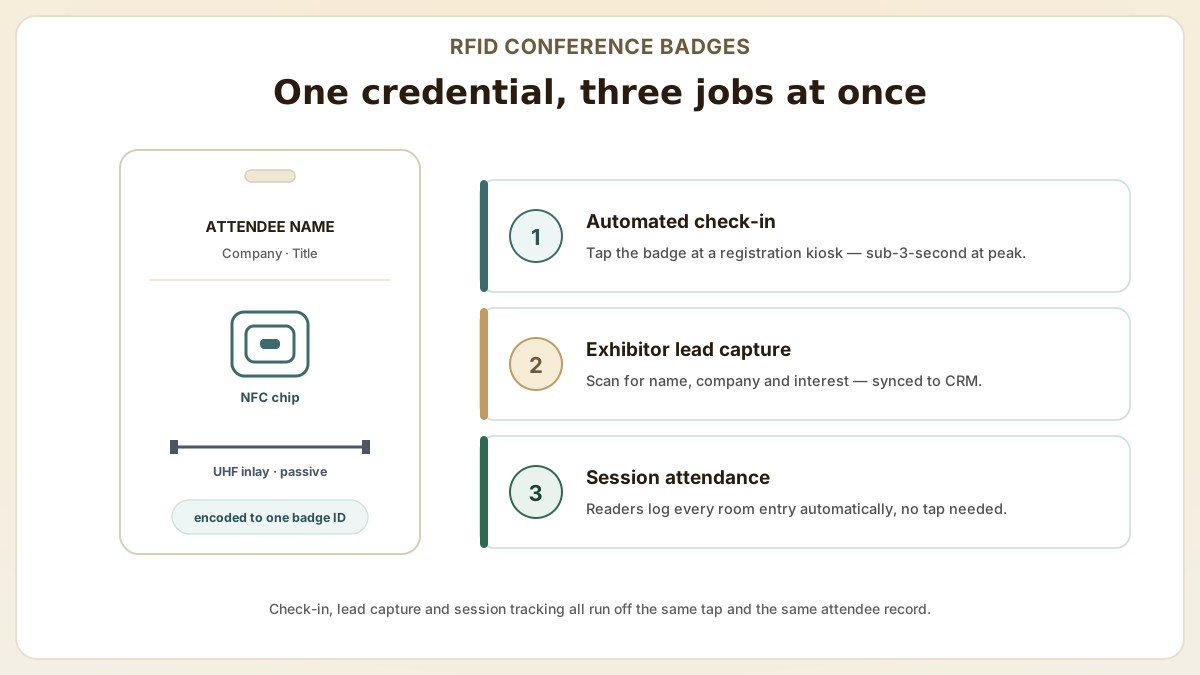
RFID conference badges swap printed name tags for a $0.15-1.20 NFC or UHF credential that checks attendees in with one tap and captures leads at $3-5 each. Session attendance logs itself at the door — turning the humble name tag into the hardest-working piece of plastic at the show.
- Automated check-in: attendees tap their RFID badge at registration kiosks to check in instantly, eliminating paper sign-in sheets and reducing queue times from minutes to seconds.
- Exhibitor lead capture: exhibitors scan attendee badges to capture contact details and interest data in real time, replacing manual business card collection with digital lead lists.
- Session attendance tracking: RFID readers at session room entrances automatically record which sessions each attendee joins, providing organizers with accurate attendance data for content planning and CPE/CME credit issuance.
At a glance
Use these short answers to decide whether this page matches the project before moving into the detail.
Key takeaway
Automated check-in: attendees tap their RFID badge at registration kiosks to check in instantly, eliminating paper sign-in sheets and reducing queue times from minutes to seconds.
Which RFID badge technology options work for conferences?
Walk into any conference an hour before the doors open and the scene is always the same: a registration desk bracing for the rush, a wall of lanyards sorted by last name...
Next step
Ready to move forward? Start your inquiry to get specific answers for this project.
Order RFID conference badgesWhich RFID badge technology options work for conferences?
Walk into any conference an hour before the doors open and the scene is always the same: a registration desk bracing for the rush, a wall of lanyards sorted by last name, and a volunteer reprinting a badge for someone whose title changed last week. The little rectangle around each attendee's neck looks like a name tag, but it is quietly doing the job of a turnstile, a business-card scanner, and an attendance register at once. Which badge technology you pick is the decision that determines how well it pulls off that triple shift. The five options below trade cost against durability and read range.
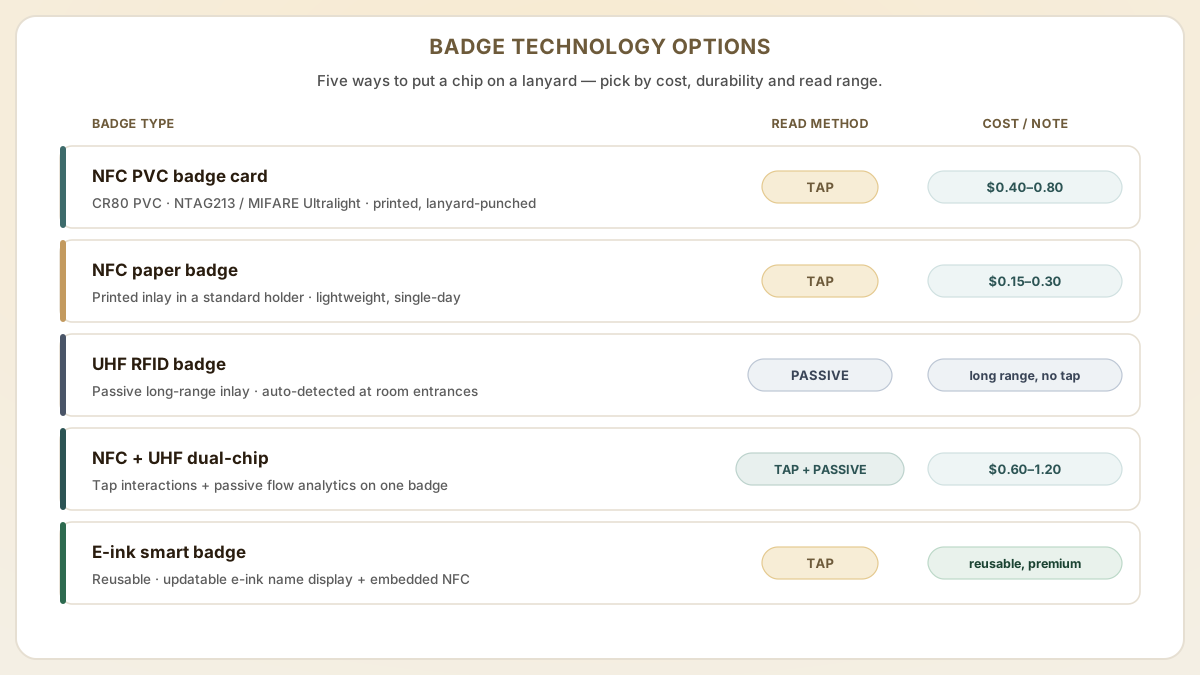
- NFC PVC badge cards. CR80-size PVC cards with embedded NFC chips (NTAG213 or MIFARE Ultralight), custom printed with attendee name, company, and event branding. Durable for multi-day conferences. Lanyard-hole punched.
- NFC paper badges: lightweight printed badges with embedded NFC inlays, inserted into standard badge holders. Lower cost per unit than PVC, suitable for single-day events or when combined with a reusable badge holder.
- UHF RFID badges: badges with UHF RFID inlays for passive long-range tracking. UHF readers at room entrances detect badges automatically without requiring attendees to tap, enabling seamless session tracking.
- Dual-chip badges: NFC + UHF RFID combination badges. NFC handles tap-based interactions (check-in, lead capture, contact exchange) while UHF provides passive detection for flow analytics and session tracking.
- Smart badge with e-ink. Premium electronic badges with e-ink displays showing attendee name and company, plus embedded NFC. Name updates dynamically, and the badge is reusable across events.
How does it integrate with event management platforms?
Modern RFID badges plug straight into the platform you already run registration on: the badge ID becomes the key every downstream system reads from. One tap does in a second what a printed QR-code sign-in makes a phone camera hunt and focus for — and the same tap updates registration status, lead lists, and session logs at once. Five integration points do the heavy lifting.
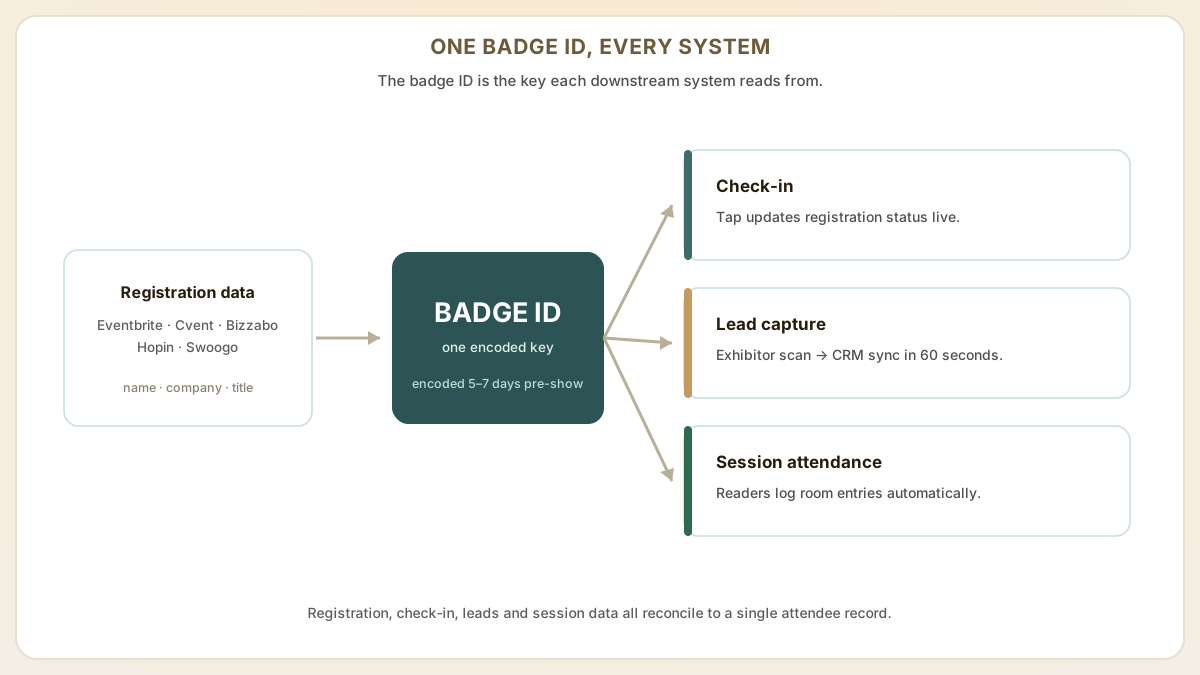
- Registration sync: attendee data from Eventbrite, Cvent, Bizzabo, Hopin, or Swoogo is mapped to RFID badge IDs during badge encoding. Check-in taps update registration status in real time.
- Lead capture apps: exhibitors use mobile apps (iCapture, Attendify, Bizzabo Lead Capture) connected to RFID scanners to capture attendee badge data. Scanned leads export directly to CRM systems.
- Session attendance: RFID reads at session entries generate attendance records linked to the event management platform, enabling automated CE/CPE credit issuance, speaker evaluation surveys and content popularity analytics.
- Networking features: tap-to-exchange contact details between attendees using NFC badges. Both parties receive the other's information via app notification or email, replacing business card exchanges — and with them the post-event stack of cards nobody ever follows up on.
- Post-event analytics: RFID data provides session attendance heat maps, peak traffic times, popular booth locations, and attendee journey mapping for post-event reporting to sponsors and stakeholders — including the candid record of which session quietly emptied the room.
What conference RFID badge implementation steps actually matter?
Successful conference RFID rollouts follow a repeatable five-step playbook, and skipping any one of them is the leading cause of day-one badge failures and exhibitor complaints. The pain is front-loaded: encode early, wire reader infrastructure with redundancy, and rehearse the reissue desk before the doors open. The steps below are ordered the way the show clock forces them.
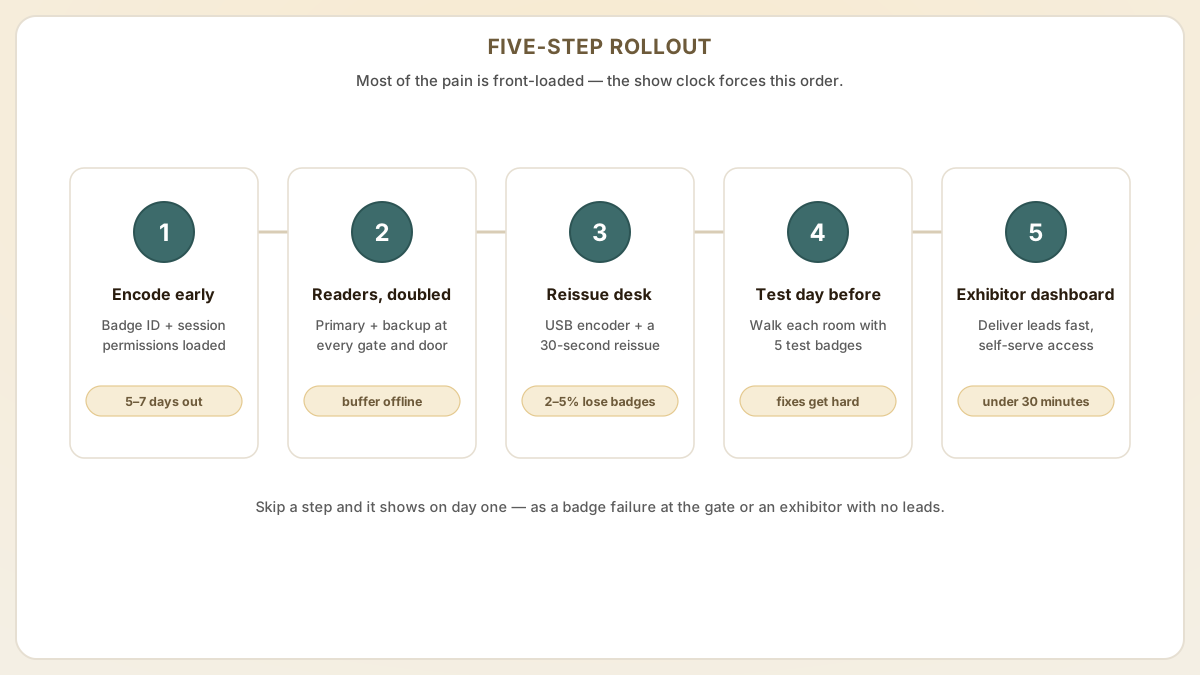
- Step 1Pre-event: encode badges 5-7 days before the show with the attendee ID and pre-allocated session permissions. On-site encoding bottlenecks registration the moment lines exceed 200 attendees per hour.
- Step 2Set up reader infrastructure with redundancy: every gate, session room door and lead-capture station needs a primary and backup reader. Conference WiFi is unreliable; readers should buffer reads locally and sync when network returns.
- Step 3Train staff on lookup and reissue procedures: 2-5% of attendees lose or break badges. Have a staffed help desk with a USB encoder, replacement badges, and a 30-second reissue procedure documented.
- Step 4Test session-room workflows the day before opening: walk every room with 5 test badges and verify the reader, projector trigger (if any), and CRM sync work end-to-end. Same-day fixes are nearly impossible at large events.
- Step 5Provide exhibitors with a self-serve lead dashboard: deliver lead-capture data to exhibitor accounts within 30 minutes of scan, not at end-of-event. Real-time delivery is the #1 driver of exhibitor satisfaction and renewal.
Real conference deployments — CES, NRF Big Show, MWC, IBC, SXSW, Cvent benchmarks
RFID conference badge deployments at the largest professional events in the world set the operational benchmarks. Knowing how the biggest shows do it tells you what your 500-5,000 attendee event should aim for. Several of these shows also pair badges with event wristbands for the social and music tracks, on one shared attendee record.
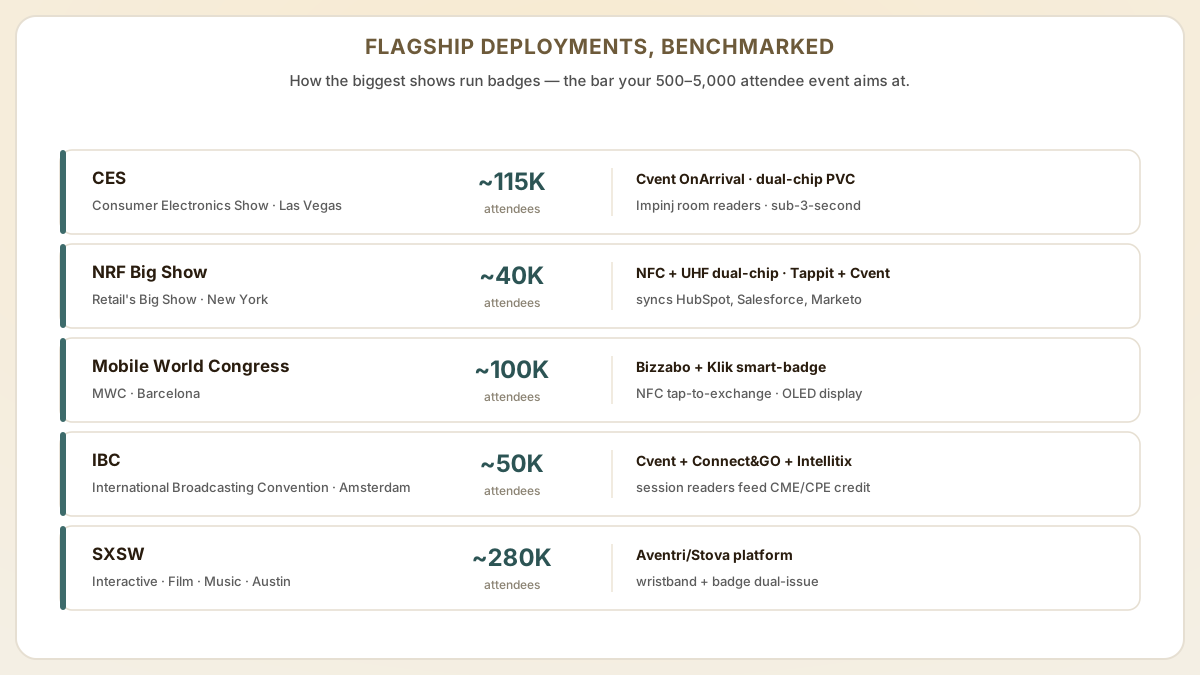
- CES (Consumer Electronics Show, Las Vegas, ~115K attendees) — RFID badges delivered via Cvent OnArrival with NTAG 213 + UHF dual-chip in PVC. Session-attendance tracking via Impinj fixed readers at room entrances; lead-capture via Cvent LeadCapture mobile and ATR Magnetics handheld scanners on exhibitor floor. Sub-3-second check-in time at peak.
- NRF Big Show (Retail's Big Show, NYC, ~40K attendees) — RFID badges with NFC + UHF dual-chip; session attendance via Tappit + Cvent integration. Cvent ICapture exhibitor lead capture syncs to HubSpot, Salesforce and Marketo within 60 seconds.
- Mobile World Congress (Barcelona, ~100K attendees) — Bizzabo + Klik smart-badge integration with NFC tap-to-exchange contact details directly between attendee badges; cloud delivery of contact lists immediately to attendee email. Klik smart-badge model shows the future of smart badges with built-in OLED display + LED status.
- IBC (International Broadcasting Convention, Amsterdam, ~50K attendees) — Cvent OnArrival + Connect&GO + Intellitix mixed deployment; session-room RFID readers feed CME/CPE credit accreditation directly to the engineering professional bodies (SMPTE, IBE, IEEE).
- SXSW (Austin, ~280K interactive/film/music attendees) — Aventri/Stova platform with NFC wristband + badge dual-issue; smart wristband for music/film access, badge for interactive panel access. Single attendee record across both credentials. Intellitix and Tappit handle the cashless-payment overlay where applicable.
Lead-capture economics and ROI math exhibitors actually care about
Exhibitor renewal is the single biggest commercial driver behind RFID badge investment, and the quality of lead-capture data moves renewal rates more than any other variable. The cost-and-value math below comes from public CEMA, IAEE and SISO benchmarks — and it is unsentimental: a lead delivered in the first hour outperforms the same lead handed over at teardown. The comparison below lines the numbers up.
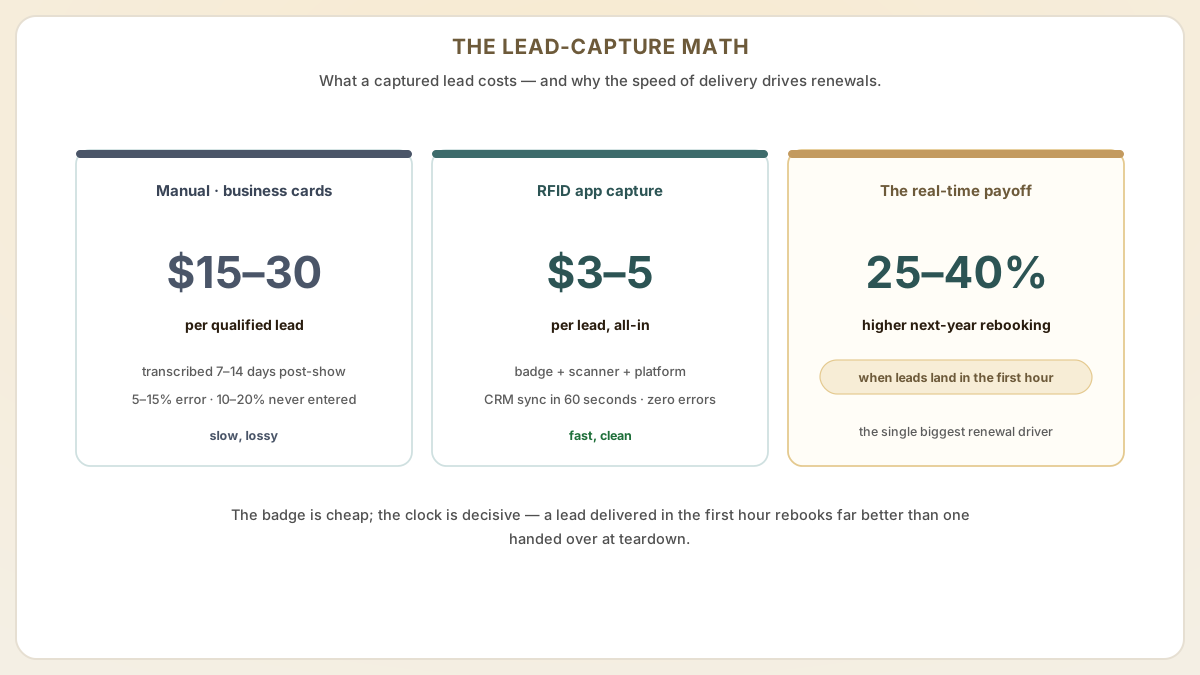
- Manual lead capture (business cards transcribed post-show) — typically $15-$30 per qualified lead by the time you account for staff time, transcription error rate (5-15%) and 7-14-day delay in CRM entry. The biggest hidden cost is lost-card rate (5-15%) and never-transcribed cards (10-20%).
- RFID lead capture via mobile app (Cvent iCapture, Tappit, Connect&GO, Bizzabo Lead Capture, Aventri/Stova OnArrival) — typically $3-$5 per lead capture all-in including badge cost, scanner rental and platform license. CRM sync within 60 seconds; zero transcription error.
- Real-time lead delivery vs end-of-show — exhibitor renewal data from CEMA shows that exhibitors who get leads in the first hour have 25-40% higher next-year rebooking than those who get leads at end-of-show. Real-time delivery is the single biggest renewal driver.
- Lead qualification metadata — RFID badge scan can attach 5-10 qualification fields (interest level 1-5, budget timeframe, decision-maker yes/no, request for follow-up, sample requested). This metadata typically converts to 10-25% sales pipeline lift vs cold contact lists.
- Per-attendee economics — Klik, Snöball, Brella and Grip add AI matchmaking on top of NFC tap-to-exchange, raising attendee satisfaction NPS by 15-30 points. Attendees who network successfully (via badge tap) renew their conference attendance at 2-3x the rate of those who don't.
Useful next pages
Use these linked product, guide and comparison pages to keep the next click specific and practical.
Conference RFID badge products
Custom NFC and RFID badges for professional events.
Event platform and lead-capture references
Authoritative event-management platforms and industry associations for benchmarking.
FAQ
What is the cost of RFID conference badges?
RFID conference badge costs depend on badge type and quantity. NFC paper badges with embedded inlays: $0.15-0.30 per badge. PVC NFC badge cards with full-color printing: $0.40-0.80 per card. Dual-chip (NFC + UHF) badges: $0.60-1.20 per badge. Volume pricing applies at 500, 1,000 and 5,000+ pieces. These costs compare favorably to traditional printed badges when factoring in the value of automated check-in and lead capture.
How do exhibitors capture leads from RFID badges?
Exhibitors use a smartphone app or dedicated RFID scanner at their booth. When an attendee visits the booth, the exhibitor scans or taps the attendee's RFID badge. The scan captures the attendee's name, company, email, title, and registration data from the event management platform. Exhibitors can add notes and interest tags. Lead data exports as a CSV or syncs directly to Salesforce, HubSpot or other CRM systems.
Can RFID badges track session attendance automatically?
Yes. UHF RFID badges are detected automatically by readers installed at session room entrances. Attendees simply walk through the doorway. NFC badges require a tap at a reader station outside the room. Both methods record which sessions each attendee joins, providing organizers with accurate per-session attendance data for content planning, fire marshal compliance, and professional credit issuance.
How do RFID conference badges integrate with GDPR and US data-privacy laws?
RFID badge data (badge UID + scan timestamps + scanner location) is personally identifiable when joined to the attendee registration record, so GDPR (EU), CCPA/CPRA (California), Quebec Law 25 and most US state privacy laws apply. Event organisers must include explicit consent for badge tracking in the registration terms and offer attendees an opt-out (typically a non-RFID badge or a badge with the antenna deactivated). Lead-capture data sharing with exhibitors requires explicit opt-in at the time of badge scan in many jurisdictions. The major event-platform vendors (Cvent, Bizzabo, Stova, Hopin) have built-in consent flows; if you build your own platform, get privacy counsel involved early.
Which budget should we expect for a 1,000-attendee conference RFID badge program?
Roughly $8,000-$25,000 all-in for a 1,000-attendee single-day or 2-day event. Breakdown: PVC NFC badges $400-$800 (1,000 x $0.40-0.80), lanyards/pouches $400-$1,000, on-site badge encoding service $800-$2,500, gate/session readers (rental) $1,500-$5,000, exhibitor lead-capture handhelds rental ($75-$150 per scanner x 30-100 scanners), event-platform license fee $3,000-$10,000 (Cvent, Bizzabo, Stova). Multi-day events (3-5 days) typically spend $20K-$60K. Larger conferences (5K-15K attendees) run $50K-$300K. For trade shows with paid lead-capture revenue, the ROI is usually positive in year one.
Sources & references
Primary standards, OEM datasheets and regulatory documents cited by this article. All URLs were verified on the access date shown below.
- GDPR Art. 4 — Definitions of personal data
Personal data includes identification numbers and location data — a badge UID joined to scan logs qualifies.
- California Consumer Privacy Act (CCPA)
- IAEE — International Association of Exhibitions and Events
Industry research on exhibitor ROI and lead-capture benchmarks.
Proud Tek is a Shenzhen-based RFID & NFC manufacturer supplying hotel chains, transit operators, event venues and retail brands worldwide. Every order includes free samples, RF testing and dedicated project support.
Get a Quick Quote
Tell us about your project and we'll respond within one business day. Fields marked (asterisk) are required.