
RFID Tag Lifespan
How Long Does an RFID Tag Last?
Quick answer
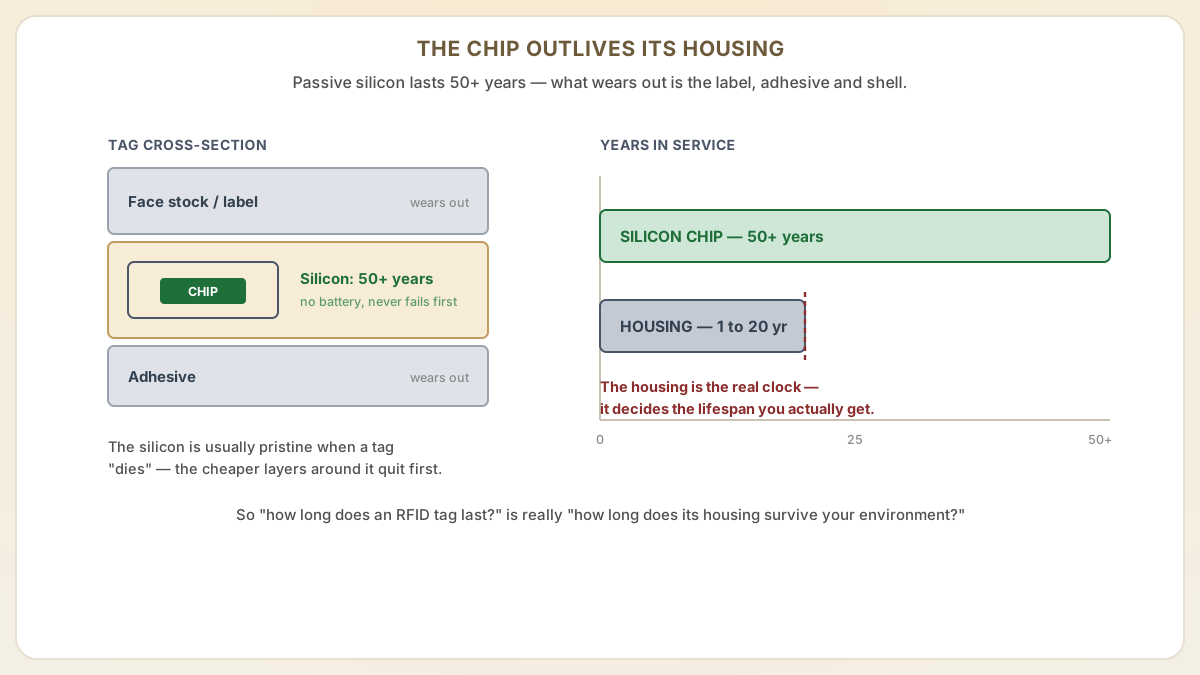
An RFID tag lasts anywhere from one day (disposable labels) to 20+ years (ruggedized industrial tags) — because the silicon chip almost never fails first; the housing around it does. This guide breaks lifespan down by tag type, environmental stressors, active-tag battery life, and the failure modes that actually retire tags in the field.
- Passive RFID chips last indefinitely. The silicon microchip has no battery and no moving parts, with a theoretical lifespan exceeding 50 years. The practical limitation is always the physical tag housing, not the chip itself.
- Housing determines real-world lifespan. A paper RFID label may survive 1-3 years in a warehouse. A molded ABS industrial tag survives 10-20+ years in outdoor environments. A laundry tag survives 50-500 wash cycles depending on material — PPS 300-500, textile 200-300, silicone 50-100.
- Match tag construction to your environment. Selecting the right tag material, encapsulation and adhesive for your operating conditions maximizes lifespan and minimizes replacement costs.
At a glance
Use these short answers to decide whether this page matches the project before moving into the detail.
Key takeaway
Passive RFID chips last indefinitely. The silicon microchip has no battery and no moving parts, with a theoretical lifespan exceeding 50 years. The practical limitation is always the physical tag housing, not the chip itself.
What's the RFID tag lifespan by product type?
Every few weeks a buyer sends us a photo of a tag that died young and asks whether the chips were defective; they almost never are. Pop the housing open and the silicon...
Next step
Ready to move forward? Start your inquiry to get specific answers for this project.
Find the right tag for your environmentWhat's the RFID tag lifespan by product type?
Every few weeks a buyer sends us a photo of a tag that died young and asks whether the chips were defective; they almost never are. Pop the housing open and the silicon is usually pristine — what quit is the cheaper stuff wrapped around it, the label or the adhesive or the encapsulation. That reframes the question entirely: how long an RFID tag lasts is really how long its housing survives your environment, so every range below is, underneath, a housing range.
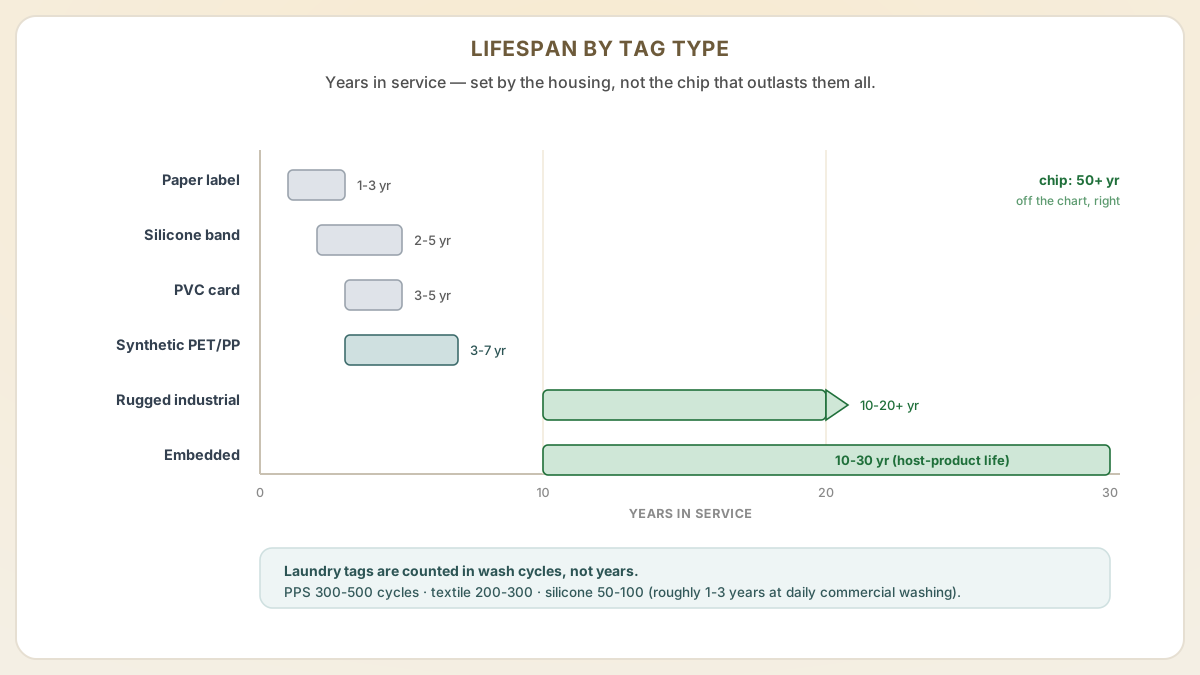
- Paper UHF RFID labels — 1-3 years in indoor warehouse and retail environments. Paper face stock is susceptible to moisture, tearing and UV degradation. Adhesive may lose bond strength over time, especially on dusty or oily surfaces.
- Synthetic RFID labels (PET/PP) — 3-7 years. Polyester or polypropylene face stock resists moisture, mild chemicals and UV exposure better than paper. Suitable for outdoor shipping containers, vehicles and equipment.
- PVC RFID cards — 3-5 years with daily use (access control, hotel keys). The PVC body withstands normal wear from pocket/wallet storage and daily tapping. The internal chip and antenna have unlimited electrical lifespan.
- Silicone RFID wristbands — 2-5 years for reusable programs (resort access, gym membership). Silicone resists UV, water and moderate chemicals. The closure mechanism (snap, buckle) is typically the first point of wear.
- RFID laundry tags — 200-300 industrial wash cycles for textile builds, 300-500 for PPS (1-3 years in a commercial laundry with daily washing). Encapsulation protects the chip from water, detergent and heat up to 85 C.
- Rugged industrial RFID tags — 10-20+ years. ABS, polycarbonate or ceramic-encapsulated tags designed for outdoor exposure, extreme temperatures (-40 to +250 C for specialty tags), chemical contact and mechanical impact.
- Embedded RFID tags: product lifetime. RFID chips embedded in manufactured goods (tools, equipment, vehicles) during production last the useful life of the host product, often 10-30 years.
Which environmental factors affect RFID tag lifespan?
A tag's spec sheet describes the lab it was tested in; your facility is rarely that polite. Five forces do most of the damage — temperature, moisture, UV, chemicals, and mechanical stress — and they rarely act alone. The map below pairs each force with the failure it causes; the ones that push past a tag's rating, like autoclave-grade heat, need purpose-built construction.
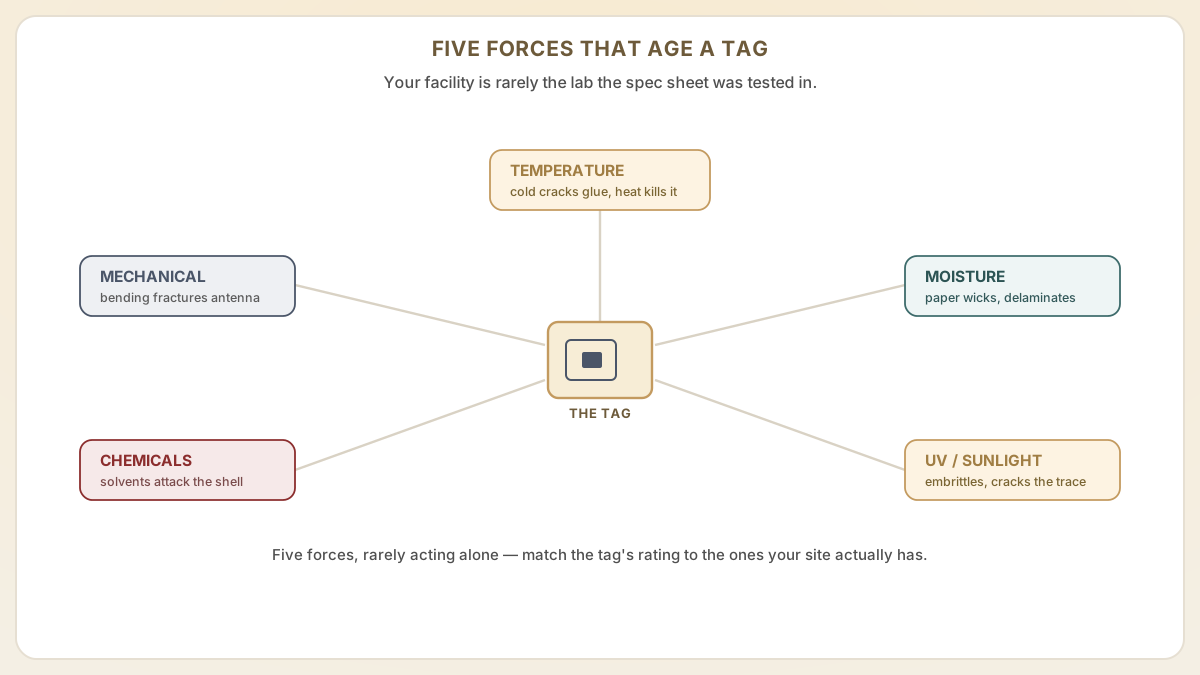
- Temperature: standard RFID tags operate reliably from -20 to +85 C. Extreme cold makes adhesives brittle. Extreme heat (autoclaves, industrial ovens) requires high-temperature specialty tags rated to 200-300 C.
- Moisture and water: paper labels degrade quickly in wet environments. Encapsulated tags (silicone, ABS, epoxy) resist moisture indefinitely. Submersion in water is survivable for sealed tags but degrades paper and some adhesives.
- UV exposure: outdoor sunlight degrades paper and standard plastic tag materials over months to years. UV-stabilized synthetic materials (PETG, polycarbonate) resist solar degradation for 5-10+ years.
- Chemicals: industrial environments with solvents, acids, oils or cleaning chemicals require chemically resistant tag encapsulation (PTFE, special epoxies). Standard adhesive labels fail quickly in chemical exposure environments.
- Mechanical stress: tags subject to bending, abrasion, impact or vibration need flexible or ruggedized construction. Rigid tags crack under flexing. Flexible tags tolerate bending but may delaminate under extreme repeated stress.
How do you maximize RFID tag service life?
Most premature tag failures are not chip defects — they are deployment choices that stress the inlay. These five practices typically double or triple field service life with no chip-cost premium — and the refresh-cycle habit at the end pairs well with knowing your per-tag cost math. The levers below are ordered by how much life they buy back.
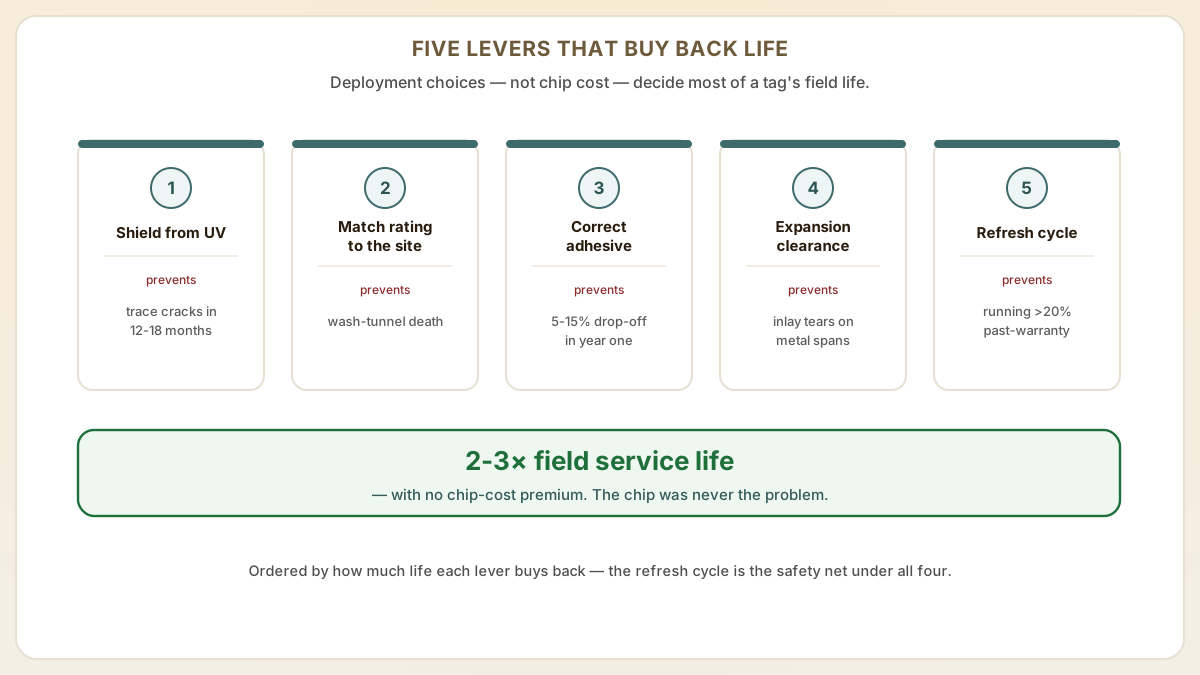
- Avoid direct UV exposure for outdoor tags: standard PET inlays embrittle under UV, cracking the antenna trace within 12-18 months. Outdoor-rated tags use UV-stabilized polymer or ceramic substrates that survive 5-10+ years.
- Match the tag rating to the actual environment, not the lab spec: a tag rated for 'industrial' use may not survive a real wash tunnel at 90 °C. Field-test tags in your environment for a full quarter before committing to a 100K-tag order.
- Mount with the recommended adhesive only: pressure-sensitive adhesives are spec'd for specific surface types (metal, glass, rough wood). Wrong adhesive choice causes tag drop-off rates of 5-15% in the first year.
- Leave thermal-expansion clearance for metal-mounted tags: metal expands 0.1-0.3% over a 50 °C swing. Tags glued to spans longer than 200 mm without expansion gaps tear the inlay over annual cycles.
- Replace passive infrastructure first: faded barcodes get a new label; broken tags should also get a refresh cycle. Build a 3-5 year refresh cycle into facility budgets so you never run more than 20% past-warranty tags.
Active vs passive lifespan — battery chemistry and BLE beacon refresh planning
Active and BLE tags introduce battery chemistry into the lifespan equation — the one part of an RFID tag that actually keeps a clock running. Knowing the realistic battery life by tag class helps facility teams budget refresh cycles and avoid surprise dead-tag failures. The chart below ranks the classes from the immortal passive tag down to the sensor logger that sips hardest.
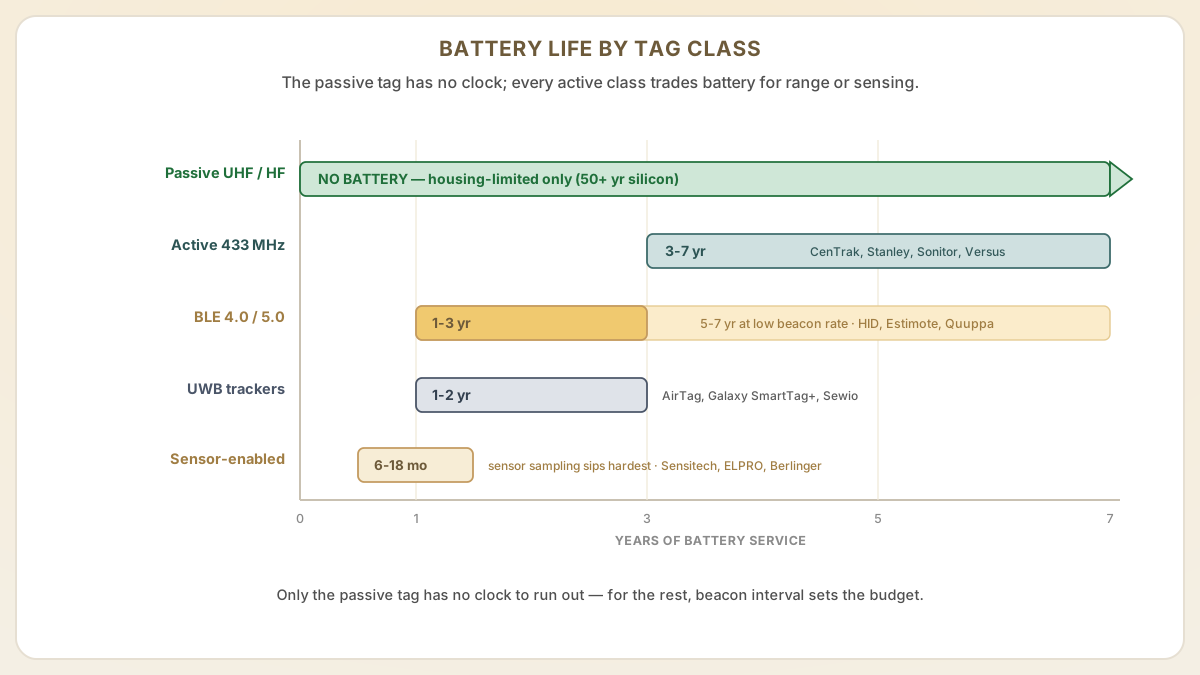
- Passive UHF and HF/NFC — no battery, electrical lifespan effectively unlimited (50+ years for the silicon). Lifespan is purely the encapsulation/housing failure mode (UV, abrasion, chemical, water).
- Active RFID 433 MHz tags (CenTrak, Stanley Healthcare, Sonitor, Versus) — typically use lithium-thionyl-chloride (Li-SOCl2) primary cells; 3-7 years typical service life depending on beacon interval (1 second beacon = 18-24 months; 30-second beacon = 5-7 years). Healthcare patient/asset trackers most common deployment.
- BLE 4.0/5.0 beacons (HID Bluzone, Estimote, Quuppa, Apple AirTag, Google Find My) — typically run on CR2032 or CR2477 coin cells; 1-3 years typical service life at 1-second beacon interval, 5-7 years at lower beacon rates. Low-cost ($5-30 unit), commodity battery, designed for user-replaceable battery in most enterprise models.
- UWB (Ultra-Wideband) trackers (Apple AirTag, Samsung Galaxy SmartTag+, Estimote UWB, Sewio) — CR2032 chemistry, 1-2 year battery life under continuous tracking, longer for periodic beaconing. Higher accuracy (10-30 cm) than BLE but at higher power cost.
- Sensor-enabled active tags (temperature, humidity, vibration, shock) — same battery chemistry but higher power draw from sensor sampling. 6-18 month battery life common for cold-chain temperature loggers (Sensitech TempTale, ELPRO LIBERO, Berlinger TempTale4 USB).
Failure-mode taxonomy — what kills tags in the field and how to detect it early
Tag failures aren't random. They cluster around 5-7 well-understood failure modes, each with a tell-tale symptom you can catch on a routine read-range check before it becomes a data outage. Knowing the taxonomy helps you write better RFP specs, run better field tests and design smarter refresh cycles. The taxonomy below pairs each mode with its early-warning sign.
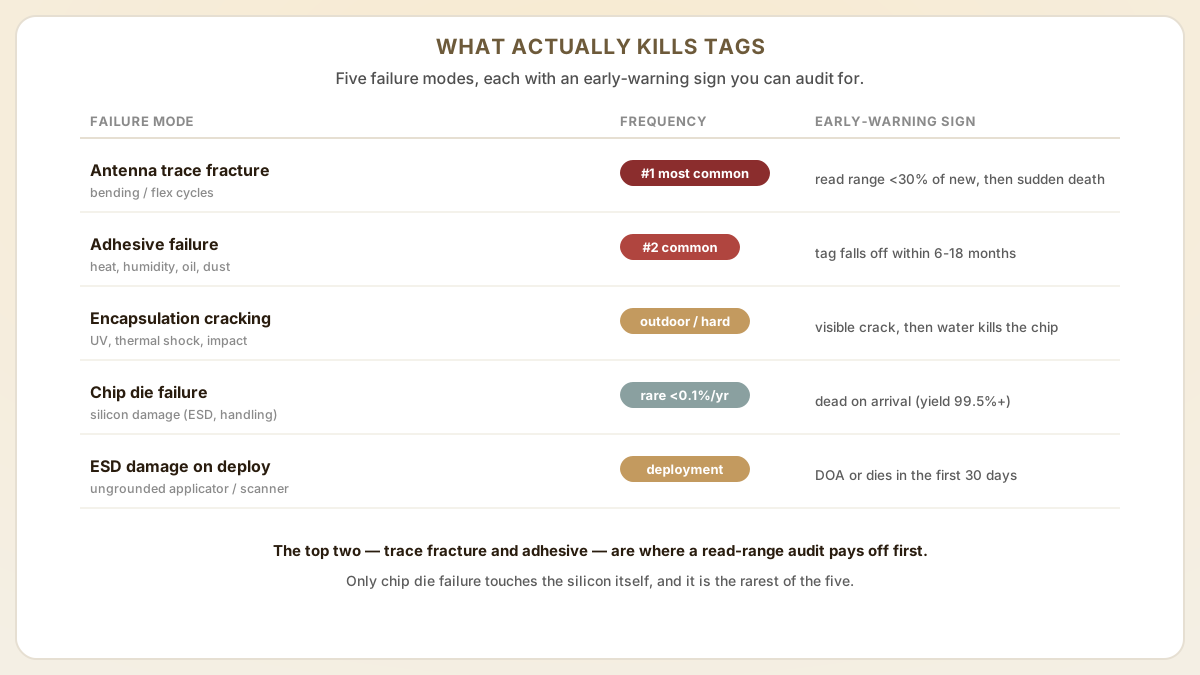
- Antenna trace fracture — the #1 failure mode for paper and PET inlays. Caused by repeated bending, flex, or expansion-contraction cycles. Detection: read range drops to <30% of new-tag baseline, then sudden full failure. Mitigation: choose tags rated for the specific flex cycle count (ISO 10373) of your application.
- Adhesive failure — #2 failure mode. Pressure-sensitive adhesive degrades under heat, humidity, oil, dust contamination. Symptoms: tag falls off within 6-18 months. Mitigation: surface preparation (isopropyl alcohol clean), correct adhesive class (rough surface vs smooth, low surface energy plastic vs metal vs glass), thermal cycling tolerance.
- Encapsulation cracking — for hard-tag and outdoor applications. UV embrittlement, thermal-shock cracking, mechanical impact. Symptoms: visible crack in tag housing, then water/contamination intrusion kills chip. Mitigation: use UV-stabilised PC/ABS housings, thermal-shock-rated encapsulation (-40 to +85 °C minimum).
- Chip die failure — least common. Static electricity discharge during manufacturing or rough handling can kill the silicon. Manufacturing yield typically 99.5%+; field failure rate <0.1% per year for properly handled tags.
- ESD damage during deployment — improperly grounded handheld scanners or applicator equipment can ESD-kill chips during application. Symptoms: dead-on-arrival tags or failure within first 30 days. Mitigation: ESD-protected applicator equipment, anti-static wristbands, ESD-safe handling procedures.
Useful next pages
Use these linked product, guide and comparison pages to keep the next click specific and practical.
RFID tags for every lifespan requirement
From disposable labels to lifetime-rated industrial tags.
Tag durability standards and lifecycle test methods
Authoritative test standards and lifecycle benchmarks.
FAQ
Do RFID tags have batteries that run out?
Standard RFID tags (passive tags) have no battery. They are powered entirely by the electromagnetic energy from the reader at the moment of scanning. This means there is no battery to run out, and the chip has an essentially unlimited electrical lifespan. Active RFID tags (used in some real-time location systems) do contain batteries with typical lifespans of 3-7 years, but these are a specialized minority of RFID deployments.
How do I know when to replace RFID tags?
Replace RFID tags when they fail to read reliably during normal scanning operations. Signs of tag degradation include: reduced read range (the reader must be closer than before), intermittent reads (tag is detected sometimes but not consistently), adhesive failure (label peeling off), and visible physical damage (torn antenna, cracked housing). For preventive maintenance, replace paper labels every 2-3 years in warehouse environments.
Can RFID tags survive being washed in a washing machine?
Standard RFID paper labels and PVC cards will not survive a washing machine cycle. However, purpose-built RFID laundry tags are specifically designed for repeated industrial washing at temperatures up to 85 C with commercial detergents. PPS versions survive 300-500 wash cycles; textile 200-300; silicone 50-100. If you need RFID tags on items that will be washed, choose laundry-rated tags from Proud Tek.
How does autoclave or sterilisation cycle count affect RFID tag lifespan?
Sterile-environment RFID tags (HID LinTRAK MR, Xerafy Mercury, Confidex Ironside Steam) are typically rated for 100-200 sterilization cycles at 134 °C / 18 minutes / 2.1 bar (standard hospital autoclave) or 121 °C / 30 minutes (lower-temperature). Read rate stays >98% throughout the rated cycle count. After the rated count, antenna trace fatigue and encapsulation cracking start to drop read rate. Plan a 1.2-1.5x safety factor for replacement: a tag rated for 200 cycles should be replaced at 130-160 actual cycles to maintain 99.9% read rate.
How do I know when to retire passive UHF tags from a 5+ year deployment?
Set up a quarterly read-rate audit: run a Voyantic Tagformance or CISC RFID Xplorer measurement on a sample of deployed tags. When sample-average read range drops to <70% of new-tag baseline, start a tier 1 replacement (next 6-12 months). When sample-average read range drops to <50% of baseline, start tier 2 (immediate replacement). Tag refresh costs are dramatically lower than data-quality outages — a Walmart-style retail mandate that loses 10% read rate to ageing tags causes more revenue loss in a single quarter than the entire 100K-tag refresh budget.
Proud Tek is a Shenzhen-based RFID & NFC manufacturer supplying hotel chains, transit operators, event venues and retail brands worldwide. Every order includes free samples, RF testing and dedicated project support.
Get a Quick Quote
Tell us about your project and we'll respond within one business day. Fields marked (asterisk) are required.