
Premium Clear NFC Cards
Transparent NFC Cards
Visible-Antenna Design

Quick answer
Transparent NFC cards swap opaque PVC for optical-grade polycarbonate or PETG, making the 13.56 MHz chip and antenna coil a visible design element. They keep ISO/IEC 7810 ID-1 geometry at 0.76 mm, so standard printers, wallets, and lanyards still work. Polycarbonate gives 5+ years of wallet life; chip options run NTAG213 through NTAG424 DNA and MIFARE DESFire EV3, from MOQ 100.
- Optical-grade polycarbonate (or PETG) card body replaces opaque PVC — the embedded NFC chip and antenna coil become visible design elements, not hidden components. ISO/IEC 7810 ID-1 geometry preserved so standard printers, wallets, and lanyards still work.
- Chip options from NTAG213 (business-card URL / vCard) through NTAG216 (888 B payload) and NTAG424 DNA (AES-128 SUN anti-counterfeit) to MIFARE DESFire EV3 (access credential) — the same clear body serves business-card, membership, and secure-access use cases.
- Premium finishing: white-ink underbase for vibrant CMYK, screen-printed metallic inks (gold / silver / copper / rose gold), spot UV, hot-foil, and laser-etched logos — effects that are not achievable on opaque stock and make the card a brand statement in its own right.
Used in these industries
Deployments where this product is referenced on our industry landing pages.

At a glance
Use these short answers to decide whether this page matches the project before moving into the detail.
Substrate and material tiers
Optical-grade polycarbonate (PC) is the flagship substrate — the same material family used in passport data pages, bulletproof glazing, and premium banking cards; higher...
Geometry and ISO conformance
ISO/IEC 7810 ID-1 (85.60 × 53.98 mm) with 0.76 mm nominal thickness — standard card-printer, wallet, and lanyard geometry preserved. ISO/IEC 10373-1 durability test fami...
Next step
Ready to move forward? Start your inquiry to get specific answers for this project.
Request quote and samples- Chip options
-
- NTAG213 (144 B user memory, NFC Forum Type 2 Tag) — the default for transparent NFC business cards carrying a URL, vCard, or Wi-Fi credential.
- NTAG216 (888 B) — expanded payloads: long URL + multi-record NDEF, vCard with social links, or a small loyalty record.
- NTAG424 DNA (AES-128 SUN) — when the clear card doubles as anti-counterfeit / brand-authenticity credential for luxury programmes.
- MIFARE Classic 1K / DESFire EV3 — when the transparent card is also the access credential for a members-only venue, hotel, or club.
- MIFARE Ultralight EV1 — disposable / single-issue tier for events and one-time invitation-card use.
- Antenna as design element
-
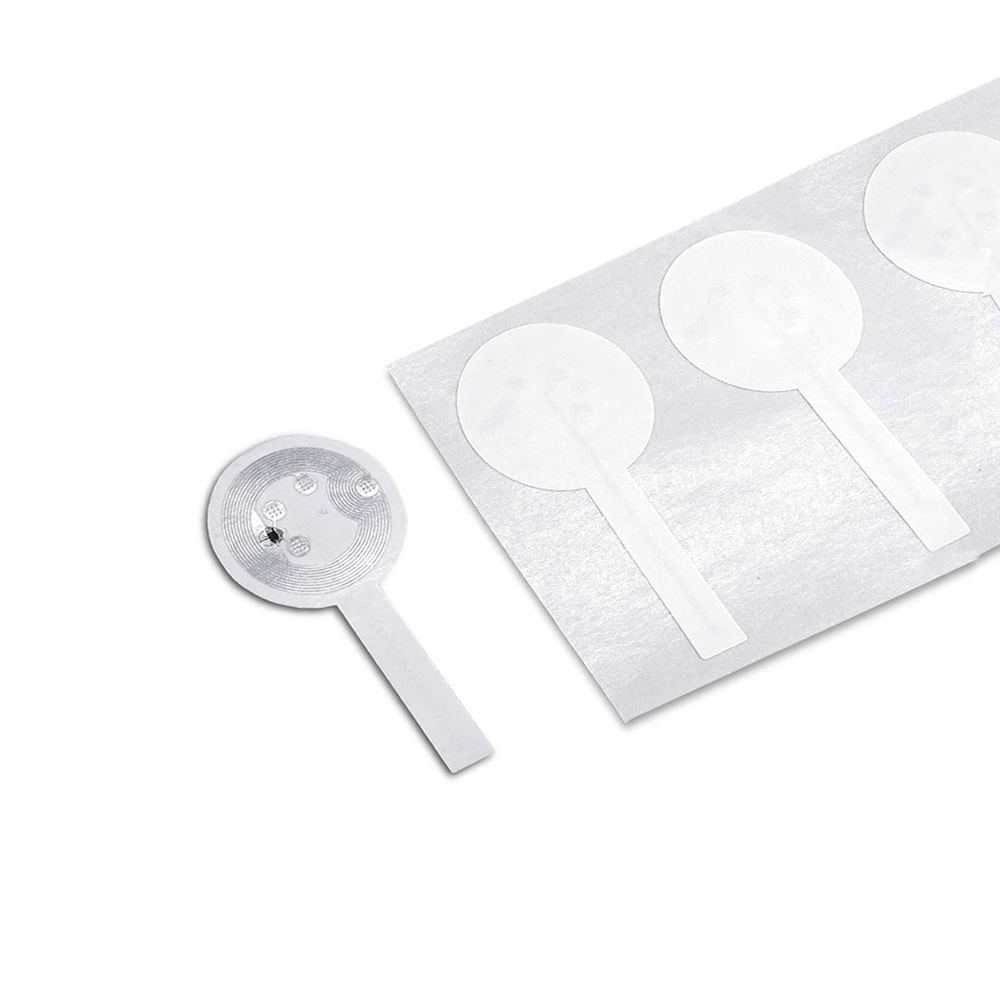
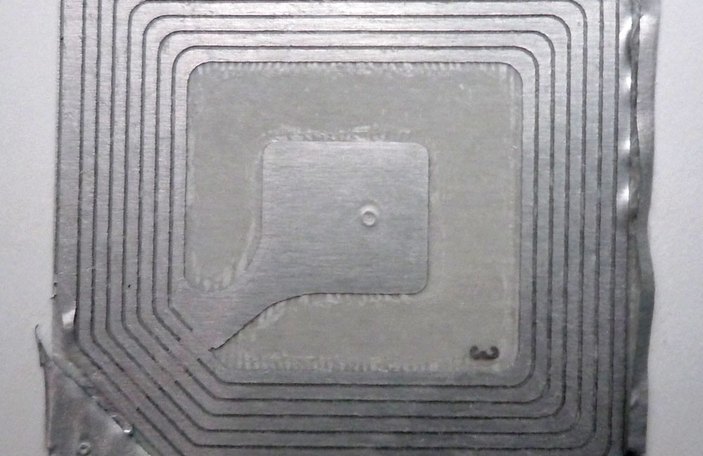
- Copper, silver-coloured, or black coil options are explicit design choices on transparent cards — unlike in PVC cards, the coil is visible and part of the finished aesthetic.
- Coil geometry (rectangular single-loop vs multi-turn inset) affects both visual impression and read range; Proud Tek supplies reference samples across geometries.
- Ink stack and printing
-
- White-ink underbase is mandatory for full-colour CMYK print on clear stock — without it, colour passes through the card and appears washed out. Proud Tek uses registered white + CMYK UV inks.
- Screen-printed metallic inks (gold, silver, copper, rose gold) and spot UV layers produce the floating-metal effect characteristic of premium clear cards.
- Hot-foil stamping (gold / silver / holographic) and spot-varnish finishes are compatible with PC and PETG bodies where the stripe zone is unlaminated.
- Laser engraving and selective opacity
-
- CO2 or fibre laser etches text, logos, and patterns into the PC surface with ~0.1 mm precision and permanent frosted appearance — zero ink involved, so no chip-of-print wear over the card's life.
- Selective frost zones act as base layers for subtle photo prints and give the card design hierarchy between fully-clear and frosted-opaque regions.
- Programme fit and positioning
-
- Luxury retail VIP / membership: the card itself is an on-brand cue — recipients keep it and show it rather than stow it.
- Hospitality premium tier: transparent hotel keys for suite-floor, concierge-level, or brand-signature programmes.
- Art-gallery patron / museum member cards: the clear body aligns with the aesthetic of the host institution; an NTAG-linked URL opens the member portal.
- Designer / architect / creative-agency business cards: the clear body is a portfolio statement that pairs with the digital profile the tap opens.
- Private members' clubs and executive-networking programmes: the transparent card signals exclusivity in a pocketful of opaque credentials.
- Interaction flow — no-app tap
-
- Any iPhone with iOS 14+ (Core NFC Background Tag Reading) and any modern Android opens the NTAG's NDEF URI in the default browser without an app install.
- GS1 Digital Link URI grammar is compatible for brands that want the same URL to serve anti-counterfeit verification, loyalty enrolment, and product information.
- Security posture
-
- For marketing / business-card use, NTAG213 / 216 Originality Signature (NXP proprietary) is sufficient — it verifies the chip is genuine NXP silicon, not a clone.
- For luxury / authenticity use, NTAG424 DNA with SUN (Secure Unique NFC) message on every tap provides cryptographic anti-counterfeit with AES-128 — each tap produces a one-time message that the verification server validates against the master key.
- Durability and lifecycle
-
- Polycarbonate cards routinely deliver 5+ years of wallet life and withstand higher temperatures (e.g. hot-car / sunlit kiosk exposure) than PVC; ISO/IEC 10373-1 bend / torsion tolerances are met with margin.
- PETG sits between PVC and PC on durability and cost — suitable for 3-5 year membership cycles; PVC clear is possible for disposable / short-run promotional use but not recommended for flagship membership.
- Procurement realities
-
- MOQ 100 for plain clear stock with NFC chip only; MOQ 200 for screen-printed designs; MOQ 500 for multi-ink-layer full-custom designs.
- Lead time 15-18 business days from artwork approval; laser engraving adds 2-3 business days; NTAG424 DNA factory key-injection adds 2-3 business days.
- Sustainability and end-of-life
-
- Polycarbonate and PETG both recycle cleanly into their respective material streams where local infrastructure accepts them; clear cards do not mix with PVC recycling.
- Some luxury programmes specify r-PET or bio-PC for ESG alignment; Proud Tek supports both on request, with trade-offs in clarity and finish that are flagged at the sampling stage.
- Typical pricing
-
USD 0.60–2.50 /pc by material (typical FOB Shenzhen range) — firm quote in one business day.
Commercial terms
- MOQ
- Varies by SKU — stock items from 100 pcs; custom production typically 200-1,000 pcs
- Lead time
- Production 2-3 weeks after artwork and encoding sign-off; reorders on a 3-4 week cycle
- Samples
- Free samples and RF test report with every order; courier at customer cost
- Payment
- 50% T/T deposit, 50% before shipment; Net 30/60 for established accounts; LC for large orders
- Shipping
- FOB Shenzhen / Yantian; DHL, FedEx or EMS air freight; sea LCL / FCL for volume
- Response
- Itemized quote within one business day, Mon-Fri (UTC+8)
Why a transparent card — positioning and practical impact
- A transparent card is a conversation-starter — recipients notice it, examine the visible antenna, and typically tap it on their phone immediately (any iPhone on iOS 14+ or modern Android opens the link without an app install). The engagement delta versus a white PVC card is large and immediate.
- Luxury and premium brands use the transparent form factor to visually separate a VIP / membership tier from the base programme without changing the functional payload.
- In a wallet of identical PVC cards, the clear card is picked out by touch and sight in seconds — a small but measurable reduction in point-of-interaction friction.
Polycarbonate vs PETG vs clear PVC — material tier choice
PETG / clear PVC — mid-tier, promotional / short-cycle use
- PETG: excellent clarity, lower material cost than PC
- 3-5 year wallet cycle; suitable for short-run VIP promos, event credentials, annual-renewal programmes
- Compatible with all standard transparent printing techniques
- Clear PVC exists but is reserved for disposable or very-short-run programmes — not recommended for membership
- Typical at MOQ 200-1,000 promotional batches
Optical-grade polycarbonate (PC) — flagship membership / VIP use
- Polycarbonate: highest clarity, highest heat / impact tolerance — passport, high-security banking card heritage
- 5+ year wallet cycle; the default for flagship luxury / hospitality / club programmes
- ISO/IEC 10373-1 flex and UV tolerances exceeded with margin
- Pairs naturally with laser-etched logos, hot foil, spot UV
- Typical at MOQ 200-50,000 membership batches
The white-ink underbase — why transparent card printing is its own craft
- Without the white underbase, CMYK printed directly on clear PC / PETG appears washed out — light passes through the card rather than reflecting off it.
- Laser-etched zones (cut at ~0.1 mm precision) require no ink and produce a permanent frosted mark that cannot wear off — the preferred technique for one-up personalisation (member names, numbers).
- Selective-frost zones give designers an opaque substrate for photo imagery inside an otherwise clear card.
Where transparent NFC cards are deployed
- Luxury retail VIP membership (fashion, jewellery, watchmaking): the card itself is a brand statement; tap opens the member portal, appointment booking, or trunk-show invitation.
- Hospitality premium tier: transparent hotel keys for suite floor, concierge level, or brand-signature programmes.
- Art-gallery / museum patron cards: aesthetic alignment with the host institution; tap opens member portal, event RSVPs, or audio-guide release.
- Creative-industry business cards (design, architecture, fashion, technology): the clear body is a portfolio statement; tap opens digital profile, case studies, booking link.
- Private members' clubs and executive networking: visual differentiation inside a stack of opaque cards; tap surfaces member benefits and event access.
Design and ordering checklist
- Substrate: PC (flagship, 5+ year wallet cycle) vs PETG (mid-tier promotional, 3-5 year cycles).
- Antenna colour and visibility — coil as design element vs hidden behind frost.
- Ink stack — frost, white underbase, CMYK, metallic / Pantone spot, spot UV, hot foil.
- Laser engraving — zones, depth, per-card personalisation (names, numbers); adds 2-3 business days.
- Chip choice — NTAG213 / 216 / 424 DNA / MIFARE DESFire EV3 / Ultralight EV1.
- NDEF payload — URL RTD, vCard, Wi-Fi, GS1 Digital Link for DPP-adjacent authenticity flows.
- MOQ and lead time — MOQ 100-500 depending on customisation; 15-18 business days + engraving / key-injection as applicable.
Useful next pages
Use these linked product, guide and comparison pages to keep the next click specific and practical.
Related premium card products
Where transparent sits in the premium-card hierarchy and the anti-counterfeit pairing options.
Chip-level technical reference
Deep-dive specifications for the chips paired with transparent bodies.
FAQ
Is the transparent card as durable as a standard PVC card?
Often more durable. Polycarbonate (PC) is the same material used in passport data pages and bulletproof glazing; it exceeds PVC on impact resistance and heat tolerance. ISO/IEC 10373-1 bend, torsion, and UV-exposure tests are passed with margin, and 5+ year wallet lifecycles are the norm. PETG sits between PVC and PC and is appropriate for 3-5 year promotional programmes.
Can I print full-colour artwork on a transparent card?
Yes — with a white-ink underbase in every zone that carries colour. Without the underbase, CMYK passes through the clear substrate and appears washed out. Proud Tek registers the white underbase precisely to the artwork so graphics reproduce vibrantly on clear stock. Alternatively, frosted / selective-opacity zones provide a semi-opaque surface with a softer aesthetic and no hard-edged white boundary.
Is the NFC chip visible inside the transparent card?
The silicon module is ~1 mm square and sits almost invisible; the antenna coil is the visible element. Many designers treat the coil as a design asset and choose copper, silver, or black to match the brand palette. For operators who want the coil hidden, frosted overlays or placed artwork conceal it completely. Both approaches are supported at no cost difference.
Which chip should a transparent business card use?
NTAG213 (144 B) for a single URL, short vCard, or Wi-Fi credential is the most cost-effective choice. NTAG216 (888 B) gives headroom for a long URL, multi-record NDEF, or a vCard with photo-link + social handles. NTAG424 DNA is the right answer when the card also needs to authenticate provenance (luxury / anti-counterfeit use). For access-credential use alongside the tap-to-share flow, MIFARE DESFire EV3 is the chip.
What is the MOQ and lead time?
MOQ is 100 for plain clear stock with an NFC chip only (no printing), 200 for screen-printed designs, and 500 for full-custom multi-ink-layer designs. Lead time is 15-18 business days from artwork approval; laser engraving adds 2-3 business days; NTAG424 DNA factory key-injection adds 2-3 business days. Samples with your design are available before committing to a production run.
Sources & references
Primary standards, OEM datasheets and regulatory documents cited by this article. All URLs were verified on the access date shown below.
- ISO/IEC 7810 — Identification cards — Physical characteristics
ID-1 form-factor geometry preserved on transparent card bodies.
- ISO/IEC 10373-1 — Test methods for identification cards — Part 1: General characteristics
Durability / bend / UV test framework that PC and PETG transparent cards must pass.
- ISO/IEC 14443 — Identification cards — Proximity cards
13.56 MHz air interface that NTAG / MIFARE chips in transparent cards operate over.
- NXP NTAG213 / NTAG215 / NTAG216 product data sheet
Chip-level spec for the NTAG family most commonly embedded in transparent NFC cards.
- NXP NTAG 424 DNA product data sheet
AES-128 SUN authentication chip used when transparent cards double as anti-counterfeit / authenticity credentials.
- NFC Forum Type 2 Tag Operation Specification
NDEF operating layer that makes transparent-card taps readable on any modern smartphone without an app.
- GS1 Digital Link 1.3 URI Syntax
Standardised URL grammar used when transparent-card NDEF payloads bind GTIN / serial / lot into the tap target.
- Apple Core NFC — Background Tag Reading
iOS 14+ feature that enables the no-app tap flow consumers experience on transparent NFC business / membership cards.
- Android Developers — NFC guide
Android NFC / NDEF behaviour for consumer taps on transparent cards.
- Covestro (Bayer MaterialScience) Makrolon polycarbonate for ID cards — material overview
Canonical polycarbonate reference — the PC grade used in flagship transparent cards shares the same material family as passport data pages and secure banking cards.
Proud Tek is a Shenzhen-based RFID & NFC manufacturer supplying hotel chains, transit operators, event venues and retail brands worldwide. Every order includes free samples, RF testing and dedicated project support.
Get a Quick Quote
Tell us about your project and we'll respond within one business day. Fields marked (asterisk) are required.