
Tamper-Evident NFC Labels
RFID Tamper-Evident Label
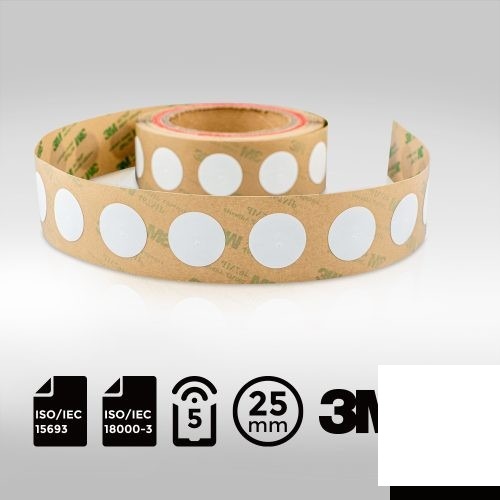
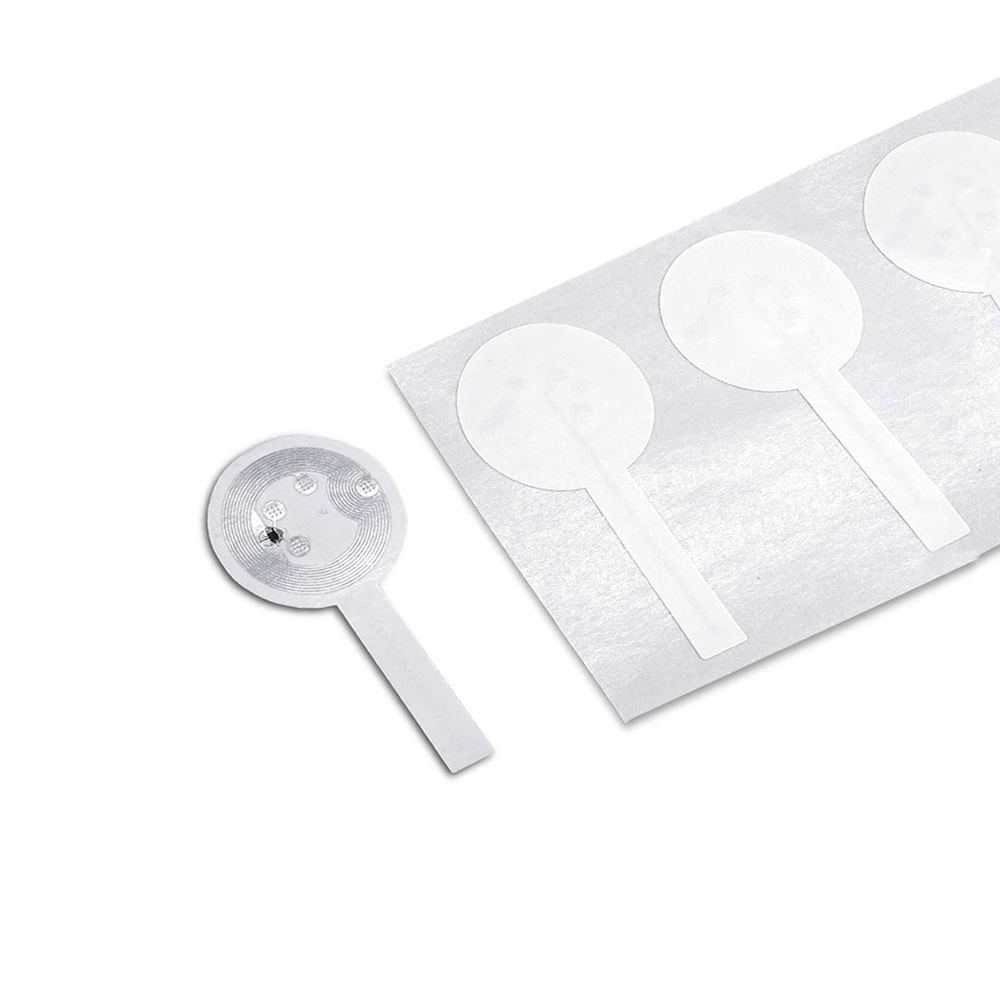
Destructible Antenna

Quick answer
RFID tamper-evident labels pair an NFC chip with a destructive antenna or TagTamper CTTES register, with AES-128 SUN cloud authentication. A genuine seal reads live; a tampered one reads dead or reports 'tampered', and cloud verification returns in under 2 seconds with a false-positive rate under 0.1%. It suits pharmaceutical packaging (EU FMD Article 5 ATD), wine, electronics, luxury goods and warranty seals, backed by VOID-pattern, fragmentation and thermochromic visual indicators.
- Tamper-evident by design — NFC antenna printed on brittle substrate that fractures when peeled, permanently disabling chip and providing clear visual + electronic evidence of tampering. NTAG 424 DNA TagTamper variant adds AES-128 cryptographic authentication + persistent CTTES register.
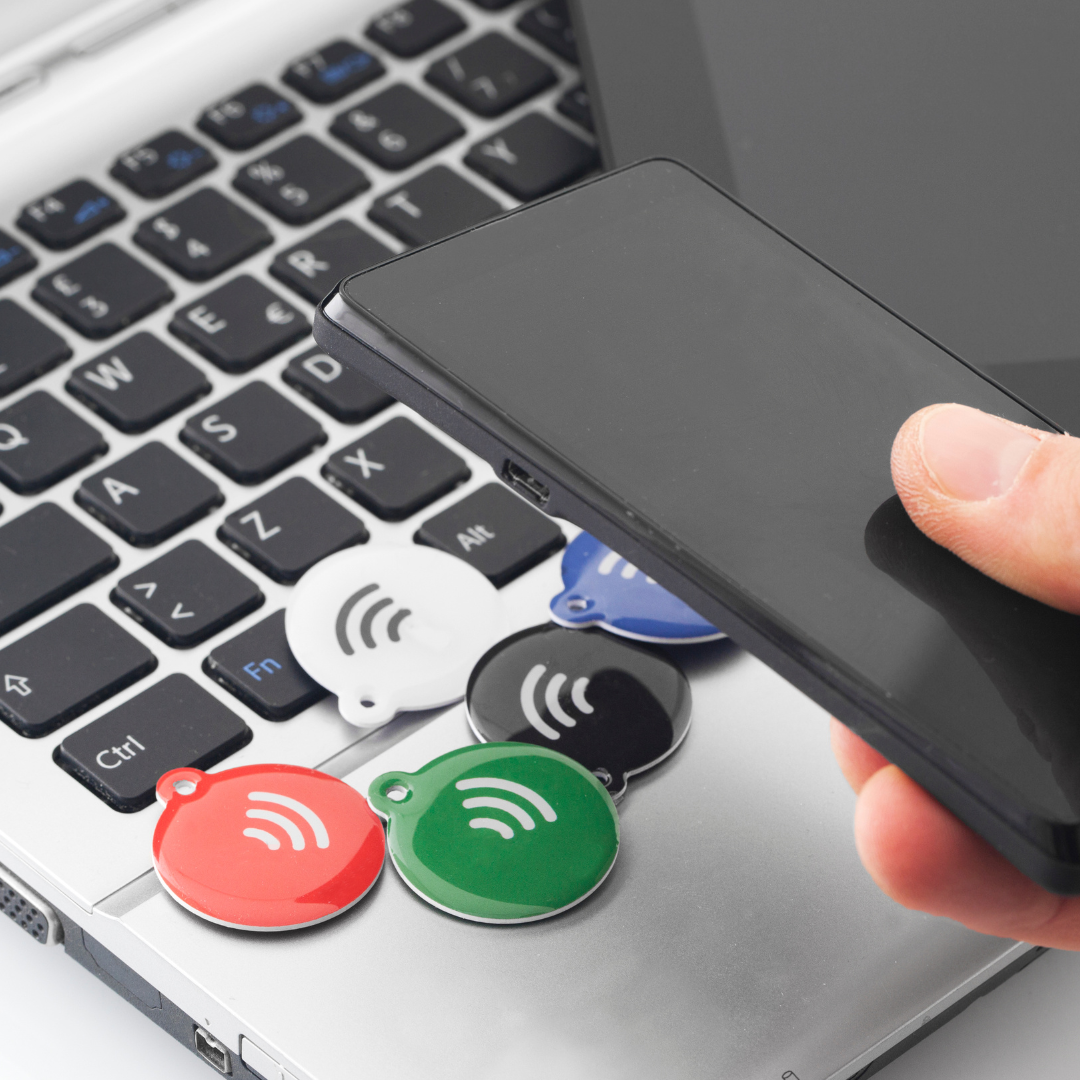
- NFC authentication — consumers and inspectors tap the label with a smartphone (no app required) to verify product authenticity against a cloud database, instantly detecting counterfeits and diverted goods.
- Dual verification — visual tamper indicators (VOID pattern, fragmentation, colour change) combined with electronic NFC status (active = sealed, dead = tampered) provide two independent layers of tamper evidence.
Used in these industries
Deployments where this product is referenced on our industry landing pages.

At a glance
Use these short answers to decide whether this page matches the project before moving into the detail.
Chip silicon
NXP NTAG213 — destructive-antenna tier (single-use seal) NXP NTAG424 DNA — destructive-antenna + AES-128 SUN cryptographic
Tamper-detection mechanism — destructive antenna
Antenna printed on frangible silicone-release PET / brittle film Peel force fractures antenna at multiple points permanently
Next step
Ready to move forward? Start your inquiry to get specific answers for this project.
Request quote and samples- Tamper-detection mechanism — NTAG 424 DNA TagTamper
-
- Antenna routes through breakable bridge at sticker edge
- Peel severs bridge → CTTES register permanently set to 'tampered'
- Chip remains alive — every tap reports 'tampered' via SDM payload
- Survives re-bridge attacks with conductive paste
- Forensic-grade evidence beyond physical tamper
- Visual tamper indicators
-
- VOID pattern reveal — hidden text appears when label lifted
- Substrate fragmentation — label shatters into pieces
- Thermochromic colour change — heat-gun attack visible
- Holographic foil overlay — overt OVD
- Redundant non-electronic indicators (no phone required)
- Form factors + sizes
-
- 15×15 mm — pharma blister + small carton seal
- 30×15 mm — bottle neck + cap seal
- Ø22-30 mm — wine capsule + spirits closure
- 50×30 mm — electronics box seal
- 100×50 mm — luxury packaging seal
- Custom shapes (logo silhouette / void-pattern die-cut) from MOQ 5,000
- Substrate + adhesive
-
- Frangible PET face stock — brittle by design
- Silicone-release pre-fragmented inner layer
- Standard temp range −25 °C to +70 °C
- Cold-chain pharma variant (<−20 °C) on request
- High-temp polyimide variant (>70 °C industrial) on request
- 12-month unapplied shelf life @ 15-25 °C / <60% RH
- Cloud-authentication architecture
-
- Consumer NFC tap → branded https:// verification URL
- Cloud server validates UID + AES-128 SUN signature (NTAG 424 DNA)
- <2 second authentication response time
- Replay-attack defeated via rotating SUN code
- Geographic-tap logging surfaces grey-market diversion
- PCI DSS out-of-scope (URL only on chip)
- Pharmaceutical regulatory framework
-
- EU FMD Directive 2011/62/EU + Delegated Reg 2016/161 Article 5 ATD
- EU FMD Article 3 Unique Identifier — GS1 DataMatrix mandatory baseline
- FDA DSCSA — printed GS1 DataMatrix is approved serialisation carrier
- NFC tamper layer sits ON TOP of mandated DataMatrix (not in place of)
- ICH E6(R2) GCP — clinical-trial Investigational Medicinal Product (IMP)
- Combined: 2D DataMatrix (serialisation) + tamper-evident NFC (ATD)
- Defence-in-depth anti-counterfeit stack
-
- Overt: holographic foil + brand logo + human-readable serial
- Semi-covert: GS1 DataMatrix + QR code fallback
- Covert: micro-taggant particles in adhesive + UV-reactive ink + microtext
- Cryptographic: NTAG 424 DNA AES-128 SUN dynamic URL
- Per-seal serialisation: unique EPC + cloud-registry binding
- Stacked outer + inner tamper for highest-threat profile
- Application verticals
-
- Pharmaceuticals — prescription drug carton + bottle seals (EU FMD ATD)
- Wine + spirits — bottle neck + capsule + cork seals (refill prevention)
- Consumer electronics — smartphone + laptop + GPU + accessory box seals
- Luxury goods — handbags + watches + sneakers + apparel (Aura Blockchain)
- Warranty + service — equipment housing void-on-removal informational
- Clinical-trial IMP — investigational medicinal product chain-of-custody
- Comparison vs hologram + standard adhesive + QR code
-
- Hologram: USD 0.01-0.03/unit illicit reproduction available — visual deterrent only
- Standard adhesive: peelable + reapplicable — no tamper evidence
- QR code: photographable + reprintable — counterfeit verification websites
- Static NFC NTAG213: UID-clonable + no rotating signature
- NTAG 424 DNA SUN: AES-128 single-use cryptographic — defeats all of the above
- Procurement
-
- MOQ 100 (NTAG213 destructive-antenna)
- MOQ 1,000 (NTAG 424 DNA TagTamper provisioned)
- Lead time 7-12 business days (NTAG213), 15-20 (NTAG 424 DNA)
- Variable digital print: brand artwork + serialisation + lot + expiry
- Encrypted UID-to-key CSV delivered separately (NTAG 424 DNA)
- RoHS / REACH compliant materials
Commercial terms
- MOQ
- Varies by SKU — stock items from 100 pcs; custom production typically 200-1,000 pcs
- Lead time
- Production 2-3 weeks after artwork and encoding sign-off; reorders on a 3-4 week cycle
- Samples
- Free samples and RF test report with every order; courier at customer cost
- Payment
- 50% T/T deposit, 50% before shipment; Net 30/60 for established accounts; LC for large orders
- Shipping
- FOB Shenzhen / Yantian; DHL, FedEx or EMS air freight; sea LCL / FCL for volume
- Response
- Itemized quote within one business day, Mon-Fri (UTC+8)
Why standard labels and holograms fail to protect against counterfeiting and tampering
- Global counterfeiting costs legitimate brands an estimated USD 2-4 trillion annually. Counterfeit pharmaceuticals, electronics, luxury goods and auto parts reach consumers through sophisticated supply chain infiltration that standard packaging cannot detect.
- Holographic security labels are widely counterfeited. High-quality hologram reproduction is available from illicit suppliers for USD 0.01-0.03 per unit, making holograms a visual deterrent but not a reliable authentication mechanism.
- Standard adhesive labels can be carefully peeled, products swapped or tampered with, and the label reapplied — leaving no evidence that the package was opened, enabling refill fraud, product diversion and quality tampering.
- QR code authentication is easily cloned. Counterfeiters photograph or copy the QR code and print identical codes on fake products, redirecting to spoofed verification websites that falsely confirm authenticity.
- Without electronic authentication, field inspectors must rely on visual judgment to distinguish genuine from counterfeit products — a subjective process that misses high-quality counterfeits and creates legal disputes over authenticity claims.
Proud Tek tamper-evident NFC labels — unfakeable, undefeatable product seals
Hologram + standard adhesive label + printed QR code
- Hologram: USD 0.01-0.03/unit illicit reproduction — visual deterrent only
- Standard adhesive: peelable + reapplicable — no tamper evidence
- Printed QR code: photographable + counterfeit verification websites
- Static NTAG213 UID: clone to thousands of blank chips — undetectable
- Visual inspection alone: misses high-quality counterfeits + legal disputes
Destructive-antenna or NTAG 424 DNA TagTamper + cloud authentication (this page)
- Brittle frangible substrate fractures on peel — chip electronically dead
- NTAG 424 DNA TagTamper CTTES bit set permanently — survives re-bridging
- AES-128 SUN cryptographic per-tap signature — defeats clone + replay
- Cloud authentication <2 sec on any NFC smartphone — no app required
- Defence-in-depth: outer destructive + inner TagTamper for highest-threat
- Brittle antenna substrate (silicone-release PET or specialised frangible film) is engineered to fracture at multiple points when any peel force is applied. The NFC antenna circuit breaks permanently, killing the chip — there is no way to reattach or repair the antenna once fractured.
- NTAG213 or NTAG 424 DNA chip with unique, factory-locked UID and optional cryptographic authentication (NTAG 424 DNA provides AES-128 mutual authentication and rotating SUN message codes). Each label is electronically unique and impossible to clone.
- Cloud-based authentication — consumers tap the label with any NFC smartphone (no app required) to reach a verification URL that checks the chip's UID and cryptographic signature against a secure database, confirming authenticity in under 2 seconds.
- Visual tamper indicators include VOID pattern reveal (hidden text appears when label is lifted), substrate fragmentation (label shatters into pieces) and thermochromic colour change — providing immediate visual evidence even without an NFC phone.
- Custom shapes, sizes (from 15 × 15 mm to 100 × 50 mm) and printing — brand artwork, serialisation, regulatory text and variable data (batch, expiry, lot code) printed per-label with full traceability in the production database.
Per-tap data published from a Proud Tek RFID tamper-evident label
- Destructive-antenna: binary alive (sealed) / dead (tampered) — immediate unambiguous evidence.
- NTAG 424 DNA TagTamper CTTES: persistent 'tampered' bit survives re-bridging attacks.
- AES-128 SUN: per-tap rotating cryptographic signature — clone + replay defeated.
- Visual fallback: VOID pattern + fragmentation + thermochromic colour change.
- Defence-in-depth: outer destructive + inner TagTamper stacking for highest threat.
Applications for tamper-evident NFC labels
- Pharmaceuticals — tamper-evident seals on prescription drug cartons and bottles that comply with FDA and EU FMD serialisation requirements while enabling patient-facing authentication via smartphone tap in under 2 seconds.
- Wine and spirits — bottle neck seals that prove the cork has not been removed, preventing refill fraud and enabling provenance verification for premium vintages and limited releases, with 5+ year tamper-function retention in wine-cellar storage (10-18 °C).
- Consumer electronics — box seals on smartphones, laptops, GPU cards and accessories that prevent return fraud (used product returned in resealed box) and grey market diversion, each tap verified by the chip's AES-128 SUN signature.
- Luxury goods — handbags, watches, sneakers and apparel authenticated at point-of-sale and throughout the secondary resale market, protecting brand value and consumer trust against the USD 2-4 trillion annual counterfeit trade.
- Warranty and service — tamper-evident labels on equipment housings that void warranty if the seal is broken (informational, not auto-void per Magnuson-Moss FTC 2018 guidance), providing clear evidence of unauthorised opening or repair.
Two tamper-detection mechanisms — destructive-antenna vs NTAG 424 DNA TagTamper
- Destructive-antenna tamper (analog / irreversible kill). The NFC antenna is printed on a frangible substrate; peel force fractures the antenna and the chip cannot harvest energy. Result: the tag is electronically dead on any subsequent tap. Best suited to pharmaceutical, wine / spirits and luxury product seals where the binary alive / dead test is sufficient and where a 'dead' tag is immediate, unambiguous evidence of tampering.
- NTAG 424 DNA TagTamper (digital / persistent status bit). The antenna routes through a breakable bridge at the sticker edge; when the bridge breaks, the chip's CTTES (Counter Tamper Tamper Event Status) register is permanently set to 'tampered'. Unlike destructive-antenna, the chip remains alive and continues to respond to taps — but every subsequent tap reports the 'tampered' status in the SDM payload, so the verification page shows 'Tampered' even if the sticker is physically reattached.
- Picking between them. Choose destructive-antenna when you need a low-cost seal on single-use packaging (pharma blister, wine capsule, unboxing carton) and a dead tag is sufficient proof. Choose NTAG 424 DNA TagTamper when you need forensic evidence beyond physical tamper — e.g. the product must continue to carry its DPP / warranty / authenticity data after opening, or when counterfeiters might try to re-bridge the antenna with conductive paste and resell a 'tampered' product as new.
- Cost and MOQ differential. Destructive-antenna labels ship at 100-piece MOQ in standard sizes for most NTAG213 variants. NTAG 424 DNA TagTamper labels carry a higher per-unit cost and 1,000-piece MOQ reflecting AES-128 key provisioning and the crypto-diversified production workflow. Most customers in pharma and luxury specify NTAG 424 DNA TagTamper; most in wine / spirits and general unboxing carton specify destructive-antenna.
- Combined defence in depth. For the highest threat profile (high-value pharma, limited-release luxury) both can be stacked — destructive-antenna layer on top plus an NTAG 424 DNA TagTamper chip underneath. Any peel attack destroys the visible outer tag AND marks the underlying chip's tamper bit; defeats common attacks like heat-gun hologram removal and sophisticated re-application.
RFID tamper-evident timeline — from hologram-only baseline to AES-128 SUN cryptographic seal
- 1980s — Hologram baseline + VOID sticker
Holographic security labels become standard anti-counterfeit visual deterrent on pharmaceutical + electronics packaging. VOID-pattern release liner emerges as standard tamper-evidence sticker tech.
- 2011 — EU FMD Directive 2011/62/EU adopted
EU Falsified Medicines Directive establishes Article 5 Anti-Tampering Device (ATD) requirement on prescription medicine packaging — technology-agnostic but raises bar above plain VOID stickers.
- 2016 — EU Delegated Reg 2016/161 + EMVS go live
EU Delegated Regulation 2016/161 specifies ATD + Article 3 Unique Identifier (GS1 DataMatrix) requirements; EMVS (European Medicines Verification System) end-point decommissioning workflow launched.
- 2018 — NXP NTAG 424 DNA + AN12196 + iOS 12 background NFC
NXP launches NTAG 424 DNA AES-128 SUN; Apple iOS 12 enables background NDEF reading on iPhone XS / XR — cryptographic tamper-evident with consumer-tap verification becomes consumer-grade.
- 2019-2020 — NTAG 424 DNA TagTamper variant launches
NXP releases NTAG 424 DNA TagTamper (NT4H2421Tx) — adds bridge-antenna CTTES register. Persistent digital tamper status survives re-bridging attacks. Premium pharma + luxury early adopters.
- 2022-2023 — DSCSA full enforcement preparation + Aura Blockchain Consortium
FDA DSCSA full enforcement preparation drives adoption of GS1 DataMatrix + tamper-evident NFC stack. LVMH-led Aura Blockchain Consortium publishes luxury-goods reference architecture using NTAG 424 DNA.
- 2024 — DSCSA Nov full enforcement + EU ESPR DPP framework
FDA DSCSA full enforcement begins November 2024; EU Reg 2024/1781 ESPR Digital Product Passport framework adopted — tamper-evident NFC labels become DPP carrier-ready for textile / battery / electronics phased rollout.
- 2026 — Today: RFID tamper-evident standard pharma + luxury practice
From buyer conversations across premium-pharma-blister, vintage-wine-capsule, single-cask-spirits, luxury-handbag-seal, electronics-box-seal, clinical-trial-IMP and warranty-equipment-housing programmes converge on destructive-antenna + NTAG 424 DNA TagTamper + visual VOID-pattern + GS1 DataMatrix companion as the default architecture.
Useful next pages
Use these linked product, guide and comparison pages to keep the next click specific and practical.
Related RFID label and tag products
Other NFC label products for authentication, tracking and identification.
FAQ
How does the tamper-evident mechanism work electronically?
The NFC antenna is printed or etched on a brittle substrate that fractures when peel force is applied. When the antenna circuit breaks, the NFC chip can no longer harvest energy from the reader's RF field, so it becomes permanently unresponsive. A genuine sealed label responds to an NFC tap; a tampered label does not. This binary alive / dead status is impossible to fake — you cannot repair a fractured printed antenna.
Can the NTAG 424 DNA chip prevent sophisticated cloning attacks?
Yes. The NTAG 424 DNA chip generates a unique, rotating SUN (Secure Unique NFC) message code with every tap, using AES-128 cryptographic keys stored in the chip's secure memory. Even if an attacker intercepts one tap's data, the code changes on the next tap. The cloud server validates the rotating code, detecting replay attacks and cloned UIDs immediately. This is the highest level of NFC authentication available.
What happens if the label is damaged accidentally (not tampered)?
Accidental damage that fractures the antenna will trigger the same tamper-evident response — the chip becomes unreadable. This is by design — the system errs on the side of security. Products with accidentally damaged labels can be verified through alternative channels (batch / lot lookup, customer service) and relabelled by authorised personnel. The false-positive rate from accidental damage in normal handling is typically under 0.1%.
Can I use tamper-evident NFC labels to satisfy FDA DSCSA and EU FMD anti-tampering requirements?
NFC labels alone are not an approved serialisation data carrier for FDA DSCSA or EU FMD; both regulations require a printed 2D data matrix (GS1 DataMatrix or EAN-13 equivalent) as the serialisation carrier. NFC tamper-evident labels satisfy the separate EU FMD anti-tampering device (ATD) requirement under Delegated Regulation (EU) 2016/161, Article 5 — the ATD is independent of the serialisation data carrier and must clearly signal tampering on the pack. Most EU pharma programmes combine a printed 2D DataMatrix (serialisation carrier) with a tamper-evident NFC or adhesive seal (ATD); the NFC layer adds patient-facing authentication and supply-chain anomaly detection value beyond ATD compliance.
How long does the tamper-evident seal retain its function in storage?
Shelf life of the unapplied label is 12 months under standard warehousing conditions (15-25 °C, <60% RH). The NFC chip itself has >10-year data retention and >100,000 write-cycle endurance per NXP datasheet. Once applied to the finished product, the tamper-evident function remains active for the product's shelf life provided the pack stays within the label's rated environmental envelope: standard PET face stock is rated −25 to +70 °C; for cold-chain pharma (<−20 °C) specify a low-temperature adhesive variant, and for high-temperature supply-chain (>70 °C industrial spare parts) specify a high-temperature polyimide face stock. Field reports on wine-bottle capsule seals show 5+ year tamper-function retention in typical wine-cellar storage (10-18 °C).
Sources & references
Primary standards, OEM datasheets and regulatory documents cited by this article. All URLs were verified on the access date shown below.
- NXP NTAG 424 DNA TagTamper — NFC Forum Type 4 Tag with tamper-loop detection (CTTES register) and AES-128 SUN/SDM messaging
Primary chip silicon — NTAG 424 DNA TagTamper (NT4H2421Tx) with bridge-antenna CTTES register for persistent tamper-status digital evidence.
- NXP AN12196 — NTAG 424 DNA and NTAG 424 DNA TagTamper features (including tamper-loop register behaviour)
Reference application note for SUN URL templating + tamper-loop CTTES register behaviour + AES-128 cryptographic per-tap signature.
- EU Commission Delegated Regulation (EU) 2016/161 — safety features on the packaging of medicinal products (anti-tampering device requirement, Art. 5)
EU Delegated Reg 2016/161 — Article 5 ATD requirement (technology-agnostic) + Article 3 Unique Identifier (GS1 DataMatrix mandatory) + EMVS end-point decommissioning.
- EU Falsified Medicines Directive 2011/62/EU — unique identifier and anti-tampering device framework
EU FMD Directive — establishes Article 5 ATD framework. NFC tamper-evident layer satisfies ATD; mandated GS1 DataMatrix satisfies serialisation Article 3 UI.
- FDA Drug Supply Chain Security Act (DSCSA) — unit-level serialization and traceability requirements
FDA DSCSA — full enforcement Nov 2024. Printed GS1 DataMatrix is approved serialisation carrier; NFC tamper layer sits ON TOP of mandated DataMatrix (not in place of).
- GS1 DataMatrix — 2D barcode specification used as the approved serialization data carrier for FDA DSCSA and EU FMD
GS1 DataMatrix — 2D barcode mandated as serialisation data carrier under FDA DSCSA + EU FMD Article 3 UI. NFC tamper-evident layer is independent ATD layer.
- ISO/IEC 14443-4 — Identification cards — Contactless IC proximity cards — Part 4: Transmission protocol (air interface used by NTAG 424 DNA)
ISO/IEC 14443-4 — RF transmission protocol underlying NTAG 424 DNA TagTamper consumer-tap verification.
- OECD — Trade in Counterfeit and Pirated Goods: illicit-trade figures cited as driver for product-authentication programs
OECD counterfeit-trade analysis — USD 2-4T annual cost to legitimate brands. Establishes economic case for tamper-evident anti-counterfeit programmes.
- ICH E6(R2) Good Clinical Practice — Investigational Medicinal Product (IMP) handling
ICH E6(R2) GCP — IMP handling framework for clinical trials. Tamper-evident NFC labels support IMP chain-of-custody + drug-accountability requirements.
- FDA 21 CFR Part 11 — Electronic Records; Electronic Signatures
FDA 21 CFR Part 11 — Electronic records / electronic signatures framework. Tamper-evident NFC tap-log feeds Part 11-validatable backend audit trail (system-level validation customer responsibility).
Proud Tek is a Shenzhen-based RFID & NFC manufacturer supplying hotel chains, transit operators, event venues and retail brands worldwide. Every order includes free samples, RF testing and dedicated project support.
Get a Quick Quote
Tell us about your project and we'll respond within one business day. Fields marked (asterisk) are required.